Tag Archives: Moldova

Mulling What’s Next

If you’re an older American looking to continue pursuing a life of service and adventure after spending two years as a Peace Corps Volunteer, you can find lots of helpful resources online.

IMG_0815

I know because I’ve been searching through them myself as Champa and I enter the final lap of our time in Moldova. Just like our younger colleagues, we’re thinking about what we’ll do after ringing the traditional farewell bell here this summer. While many of them have been checking out graduate schools or possible jobs, though, we’ve been looking for ideas that better fit our stage of life.

Let me share some of what I’ve found:Screen Shot 2018-01-31 at 9.31.05 PM

Senior Nomads, a blog by retired Seattle couple Debbie and Michael Campbell, chronicles their full-time travels since 2013, staying in Airbnbs while visiting more than 68 countries. As Debbie noted in a recent post, they now spend money on airfares, Airbnbs and travel insurance instead of a home. They’ve been able to spend lots of time every year with their children and grandchildren and to keep in touch with friends while pursuing a life that, at least to me, feels a lot more interesting than playing golf every day.Screen Shot 2018-01-31 at 9.31.28 PM

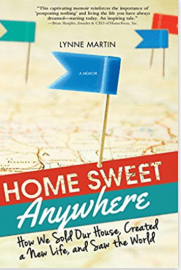
Lynne Martin has been pursuing similar adventures with her husband Tim, which she describes  on her website, Home Free Adventures. Lynne’s book, Home Sweet Anywhere: How We Sold Our House, Created a New Life, and Saw the World, inspired us several years ago when we were contemplating leaving the conventional workplace to become “not exactly retired” ourselves

There are numerous websites devoted to “senior travel,” each with its own niche. TripAdvisor compiled some of the best in its article 20 Baby Boomer Travel Bloggers Having More Fun Than Millenials. (Their title, not mine.) If you’re looking for practical tips, also check out Rick Steves’ article about Savvy Senior Travelers. If you’re dreaming of becoming a travel writer yourself, you’ll find lots of advice online.

Screen Shot 2018-01-31 at 9.33.06 PM

Other sites offers leads about short- or longer-term employment overseas. Transitions Abroad is a good one for English teachers. Modern-Day Nomads highlights “top travel jobs & inspiration for globetrekking, creative professionals.” (It hasn’t been updated recently but its listings for November included one for a seasonal sous chef at Denali National Park.)

Champa and I want to continue providing service after Peace Corps. I’ve been finding new inspiration for this at Encore.org, which promotes “second acts for the greater good.” I’m thinking now about how I can best apply my own skills to make a similar impact, whether back home in Durham or more broadly. Screen Shot 2018-01-31 at 9.33.37 PMMy niece, Juliana, will be enrolling this fall at Duke’s Fuqua School of Business, with a special interest in social entrepreneurship; I may need to borrow some of her course materials.

Good online resources exist to help older Americans find volunteer opportunities. HandsOn Triangle serves our North Carolina community. Similar sites exist elsewhere. AARP’s Create the Good serves older volunteers nationwide. Screen Shot 2018-01-31 at 9.34.56 PMThere are also excellent organizations and websites aimed at older volunteers, such as the Executive Service Corps and Reserve. Most seek to match older Americans with positions that make good use of their particular skills.

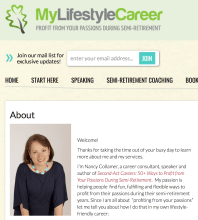
I regularly find interesting articles on Next Avenue and from journalists such as Richard Eisenberg and Kerry Hannon who cover retirement issues. Screen Shot 2018-01-31 at 9.35.33 PMMy favorite writer covering this field is Nancy Collamer (my sister), whose “My Lifestyle Career” site and recent 100 Great Second-Act Career Resources cover many of the issues I’ve discussed here, as well as “flexible gigs,” online courses for seniors and resources for everyone from foodies to pet lovers.
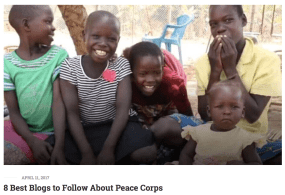
Screen Shot 2018-01-31 at 9.36.14 PMFor the next five months, Champa and I will remain focused on the rest of our Peace Corps service. Here, too, plentiful online resources exist to motivate us. Not long ago, one RPCV group selected the 8 Best Blogs to Follow About Peace Corps, a list that included the blog you’re reading now. IMG_2013(Thanks, Friends & RPCVs of Guyana!)
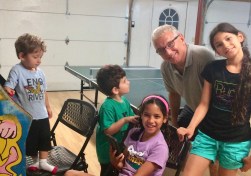
Champa and I are most looking forward to taking a break and spending time with our family and friends after being away for so long. We really miss them, as you can tell from these photos we took during our trip home last summer. Simultaneously, we know we will eventually catch our breath and get serious about “what’s next?”

If anyone reading this has suggestions or wants to share something from their own lives, we’ll read your comments with interest — and perhaps others will, too.

IMG_6227


Weekly (No-)Book Club

Screen Shot 2018-01-27 at 9.14.18 AMYou May Want to Marry My Husband by Amy Krouse Rosenthal was one of the most widely read — and heartbreaking — essays ever to appear in the New York Times “Modern Love” column, which published it ten days before Rosenthal died of cancer this past March. The actress Debra Winger later recorded a podcast of the author describing her husband’s devotion and her desire for him to find new happiness after her impending death.

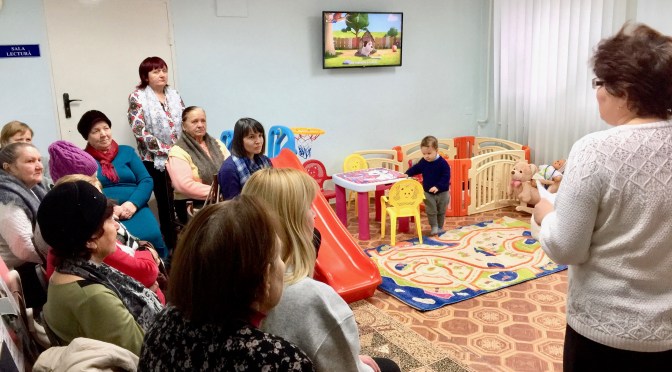
Screen Shot 2018-01-27 at 9.15.25 AMOn Tuesday afternoon, her words broke hearts again, this time among members of my weekly English conversation class. We read sections of the article aloud, listened to part of the podcast and then listened to another “Modern Love” podcast about how a woman dealt with her husband’s mid-life crisis.

This was a change of pace from some of the other articles I’ve assigned recently in my weekly class at the Ialoveni library for advanced English speakers who want to improve their reading and conversaton skills. Our previous selection was The School, a chilling 2007 article in which C.J. Chivers described a Chechan terrorist attack on a school in the Russian town of Beslan, which resulted in the deaths of at least 385 people.

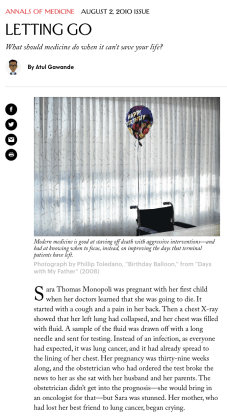
Before that we read three essays by humorist David Sedaris, a Walter Isaacson article describing the science behind Mona Lisa’s smile and Atul Gawande’s article about how he and other physicians need to do more to help dying patients and their families. We’ve also discussed travel destinations, teenage anxiety and the linguistic implications of emojis.

Screen Shot 2018-01-27 at 9.15.49 AMI originally planned the class as a more conventional book club, where we might read Harry Potter novels or other full-length works likely to appeal to Moldovan readers. When I spoke with a Moldovan friend who runs an English-language center, however, he warned me students wouldn’t have enough time to read the books, which would also be expensive for them to buy. Screen Shot 2018-01-27 at 9.17.08 AM
He suggested I choose long articles instead, which the students could download or read online.

It was great advice. My students, who range from a Moldovan online journalist to an art student, are generally able to handle even the longer articles, and they come ready to share reactions and opinions that often fascinate me. Screen Shot 2018-01-27 at 9.16.25 AMOur discussion about the Gawande article, for instance, led to a great conversation about how our two cultures handle death, not only in medical settings but more generally.
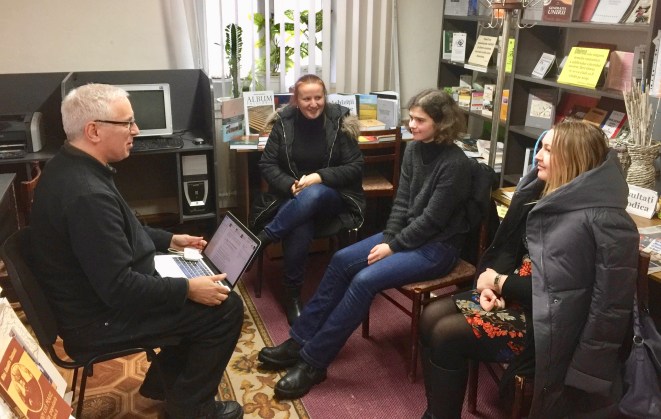
For our class next Tuesday I’ve assigned an extraordinary Cincinnati Enquirer series on Seven Days of Heroin. If you’re in Ialoveni and would like to join the discussion, please come to the class. If you’re back in the States and want to participate, (16:30 locally; 9:30 a.m. Eastern time on Feb. 6), please let me know and I’ll try to include you online.

IMG_1057

‘Bebeteca’ for Families

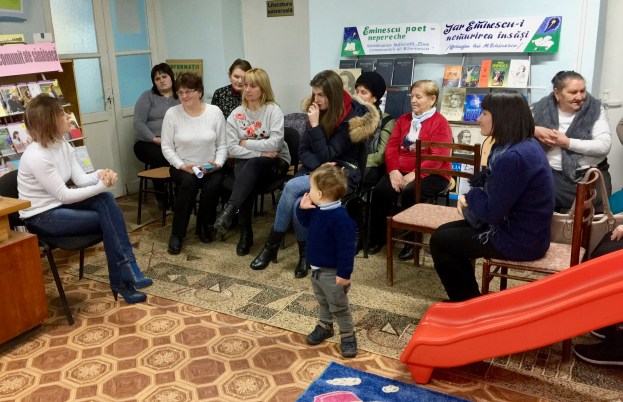
Ialoveni’s library has something new for local families: “Bebeteca,” a colorful children’s room where kids can play while adults enjoy educational discussions with guest speakers.

IMG_0749

On Sunday, Jan. 28, Rusalina Russu will speak at 1 p.m. at Bebeteca about how she grew up in Ialoveni and became one of Moldova’s best-known television personalities, hosting a show about families. The program is free and the public is invited to attend. [ADDED: Here’s a short post about her talk along with several fun photos of the moms and kids.]

Last week, local doctor Diana Slivinschi, above, discussed children’s infectious diseases. Future speakers are scheduled to discuss topics ranging from dental care for children to planning trips with kids or how Ialoveni provides support to vulnerable families. At some programs, librarians will read stories aloud with the children. The library’s Facebook page will provide details.


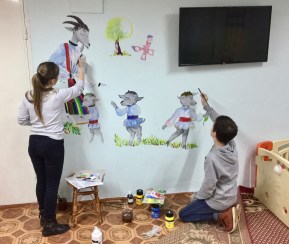
Parents and grandparents can enjoy the discussions while their kids play with toys and books the library has bought along with children’s furniture and a wall-mounted TV. IMG_0869Students from Ialoveni’s School of Art, upstairs from the library, are painting the room with an original mural featuring characters from national children’s stories.

“We are excited to offer this new programs for families in Ialoveni,” Valentina Plamadeala, director of BPO “Petre Ştefănucă” said. IMG_0832“We want to offer mothers and families the chance to meet, have fun and learn something new. We also hope they will explore the library while they’re here and borrow some books or sign up for our free programs, from learning English to making simple animated movies.”
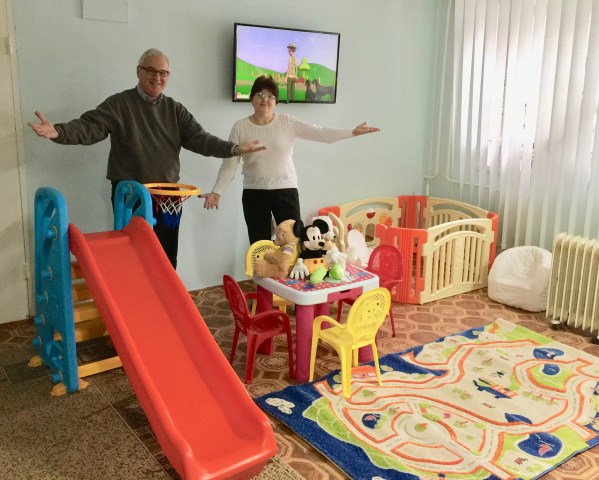
Plamadeala said story-telling programs at libraries are popular in many countries, including Romania, but a new idea in Moldova. She hopes the Ialoveni program may inspire other libraries in Moldova to launch similar efforts.

IMG_0688

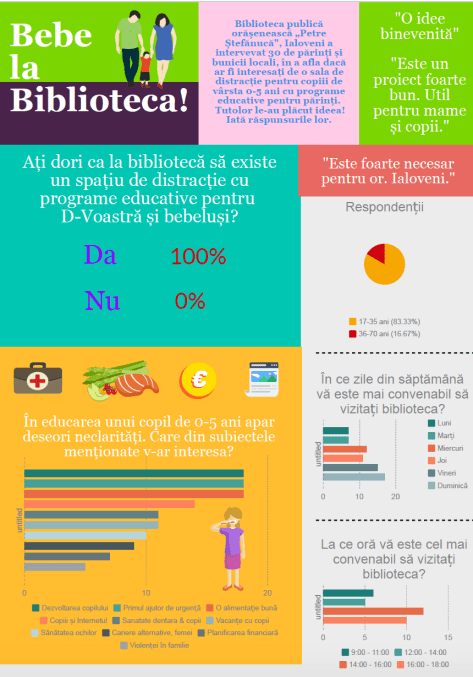
Responding to information gathered in a community survey, BPO “Petre Ştefănucă” created the new space with the support of a U.S. Peace Corps grant and a small project Plamadeala implemented through the “Together for the Community” program of the Association of Librarians in the Republic of Moldova and the National Library of Moldova in partnership with the Novateca National Program.

Librarian Lidia Rusu and Peace Corps Volunteer David Jarmul developed the project, purchased the materials and worked with the rest of the library staff to create the room and organize the programs.

(A Romanian version of this article was posted by the library, which used the infographic below to describe its survey results showing wide community support for the project idea .)

Screen Shot 2018-01-24 at 10.06.30 AM

Dates of Departure

Champa and I now know when we will finish our Peace Corps service: on July 3.

IMG_0784

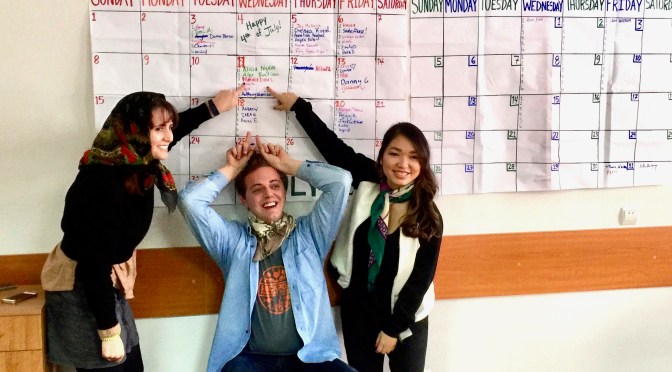
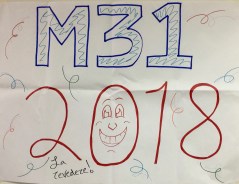
We and the other members of our Moldova 31 group gathered at a Close of Service (COS) Lottery on Saturday afternoon to take turns choosing dates this summer when we’ll each wrap up. Peace Corps staggers our departures to better manage all of the logistics.

IMG_0807Everyone’s name was placed in a hat, with the three married couples each listed together. As people’s names were called, they selected one of the available departure slots on a large calendar.

IMG_0780Ours were among the first names called. We chose an early date because we plan to take a two-week trip with some friends and then head home to reoccupy our house in North Carolina, which will be vacated shortly before then by our tenants. IMG_0816Many of our fellow M31 volunteers are also planning COS trips, a tradition among departing volunteers worldwide. Some members of our group need to return home quickly to begin jobs or graduate school. One just accepted a new Peace Corps assignment in Tonga.
When all of us first met at a hotel in Philadelphia in May 2016, one of our Peace Corps “stagers” said we were meeting our new “government-issued family.” During our time together in Moldova, we’ve become that and more.

IMG_0805

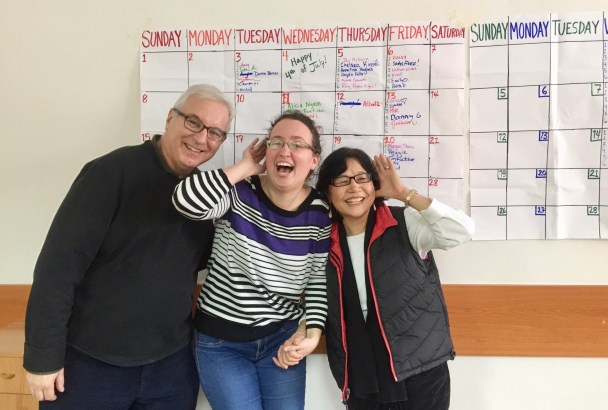
We all had fun on Saturday posing for funny photos next to our departure dates, as we’re doing here with our friend Ingrid, and for a group photo together. Most of us then continued the party at the Smokehouse Restaurant launched by two former volunteers.

IMG_0790

I found it all bittersweet. Now that Champa and I have an actual date, the approaching end of our Peace Corps service is no longer an abstraction. We know when we will reunite with our family and friends in America, and we cannot wait to see them, but we also know we’ll have to say goodbye to our host family and Moldovan friends, and to the other volunteers with whom we’ve shared this unforgettable journey.

The countdown has started. 163 days to go.

IMG_0812

Visiting Gagauzia

If foreign tourists only visited New York City, they wouldn’t understand upstate New York, much less the rest of the country. Likewise if they visited my home town of Durham but skipped the rest of North Carolina.

Screen Shot 2018-01-16 at 2.49.50 PMThe same is true here in Moldova, even though the whole country is only slightly larger than Maryland. This past weekend, Champa and I were reminded of this when we visited Comrat, a small city that is the capital of Moldova’s autonomous region of Gagauzia.IMG_0640

Comrat has notable red wines and a lovely church, but it’s best known in Moldova as the home of the Gagauz people, an Orthodox Christian ethnic minority that left Bulgaria years ago to escape persecution from the Ottoman Empire. Almost all Gagauz people speak Russian instead of Romanian and they have no interest in Moldova reuniting with Romania, which is a popular idea in our part of the country. IMG_0653To the contrary, many have unhappy memories of Romanian rule.
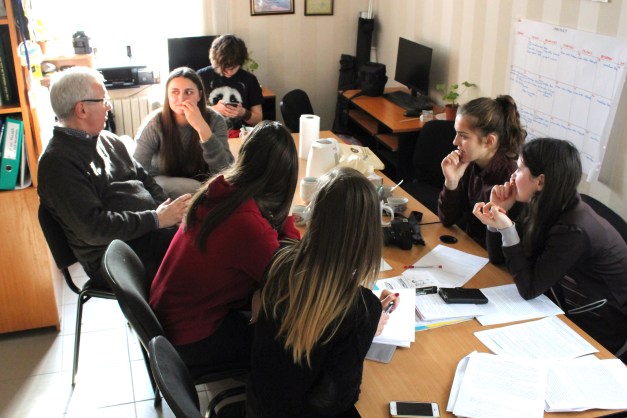
When I served previously as a Peace Corps Volunteer in Nepal, it took me nearly a year until my American eyes adjusted enough to notice the different facial features of people in various ethnic groups. Here in Moldova, where we are well into our second year, I was struck by how Gagauz faces showed similarities with the Balkans, in ways I don’t usually see in Ialoveni.

IMG_1216

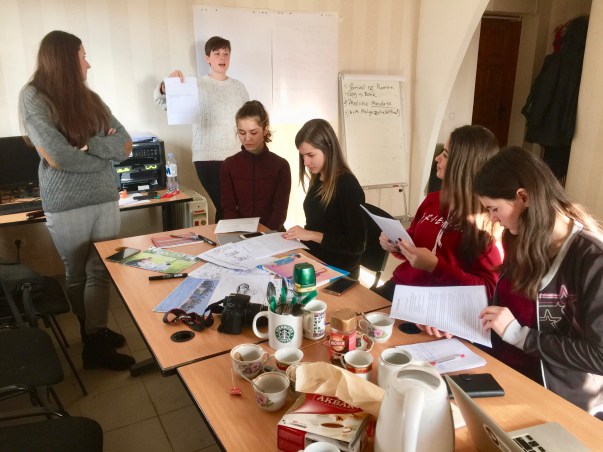
We traveled to Comrat by bus so I could help teach a journalism class led by Haley, a member of my Peace Corps group who is working with Miras Moldova, an NGO that advances Gagauz culture. At her request, I discussed my career as a journalist and communicator, and we then worked together with the students to review projects they have been developing on topics such as Gagauz cuisine and traditional medical practices.


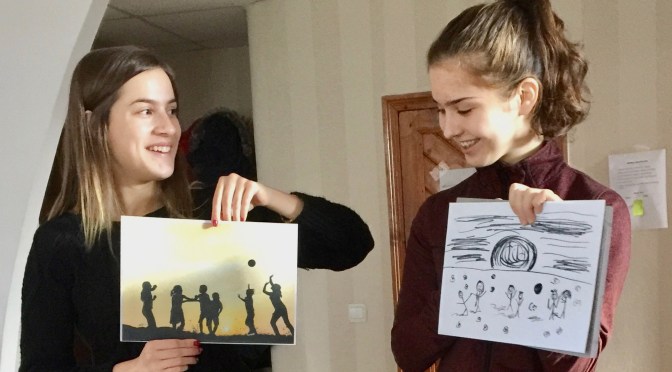
Haley and her partner Anna Celac also organized fun activities such as the one you see above, which challenged one student to draw a copy of a picture, guided only by verbal cues from her partner instead of seeing the original. The students also asked Champa to teach them some Nepali, as you can see in the video clip below (also on YouTube.)

IMG_0635

Two other Peace Corps Volunteers in Comrat joined us, Haley and Anna for dinner at Haley’s house, where we spent the night. Haley cooked a fabulous meal and we loved meeting her host mother, a Gagauz journalist herself who remains active well into her 70s.

All in all, it was a short but fascinating reminder that even a small country can have big internal differences, in this case not “red states” vs. “blue states” but “bună ziua” vs. “Здравствуйте.”

Martin and Mihai

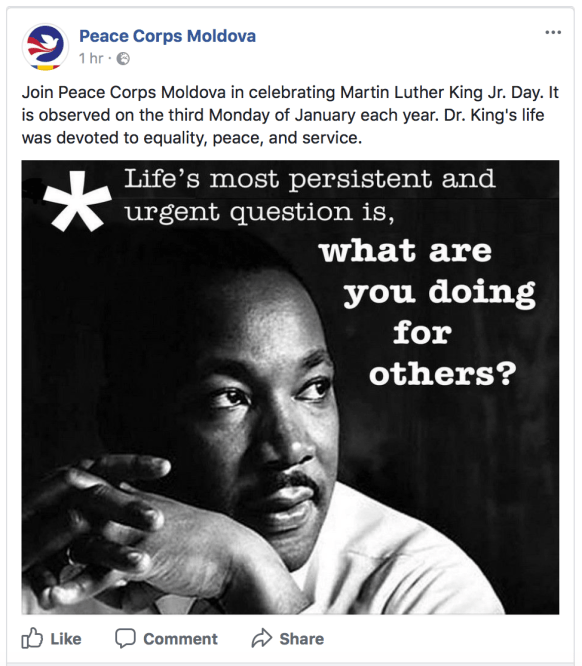
While Americans were commemorating Martin Luther King, Jr. on Monday, many Moldovans were celebrating the birthday of Mihai Eminescu.

IMG_0671

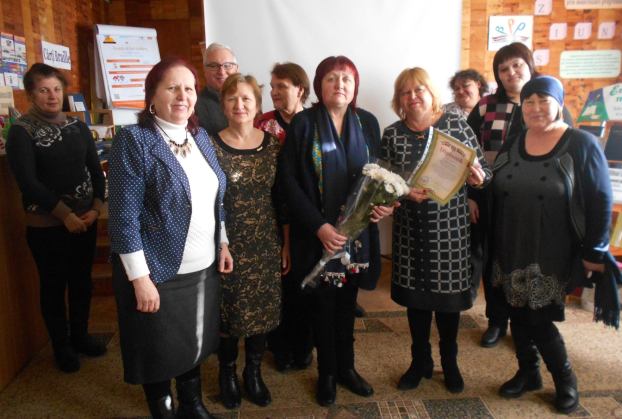
If you don’t know recognize his name, well, at least one of my work partners didn’t know who Dr. King is. She and others at the library, some of whom had heard of him, were more interested in the birthday of our colleague Raisa, who you see receiving flowers.

26757746_1416684575127946_2528655102570275300_o

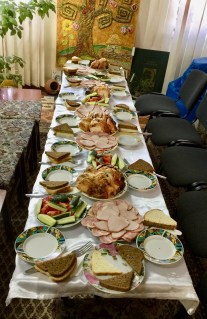
We celebrated Raisa with a big lunch and the singing of both “Happy Birthday to You” and La mulți ani trăiască.

IMG_0658It was my latest reminder that even though Dr. King is a hero of mine and many other Americans, our country is not the center of the universe, as much as we might like to think otherwise. To be sure, Dr. King is known and honored in many parts of the world, which is richly deserved, but people everywhere generally care most about their own lives and communities.
IMG_0536A few days ago, a friend back home wrote to ask whether Moldovan newspapers were coming up with their own phrases for “shithole.” I was sorry to disappoint him: Not a single Moldovan friend has mentioned the recent controversy to me. Keep in mind that I work with librarians and other friends who are well-educated. Undoubtedly some Moldovans have been following the controversy, but the ones I know don’t care about American politics unless it affects them personally, which it rarely does. At least they know where America is, which is more than most Americans know about Moldova.
Screen Shot 2018-01-15 at 10.08.50 PM

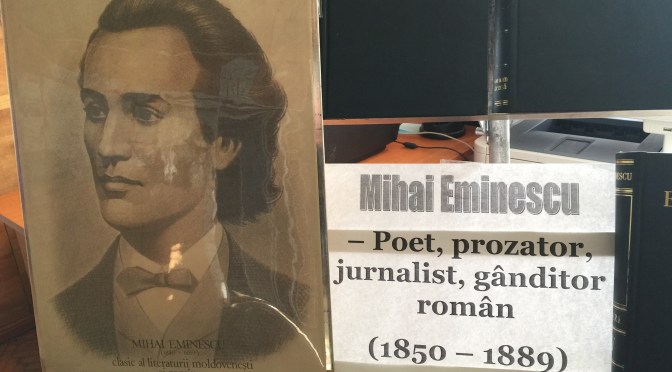
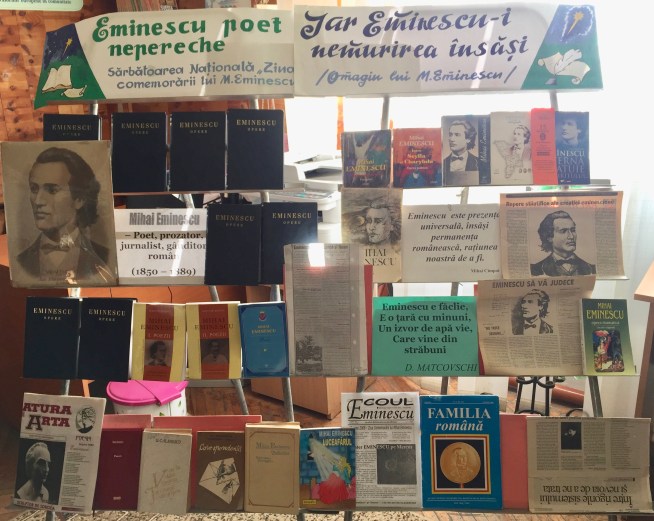
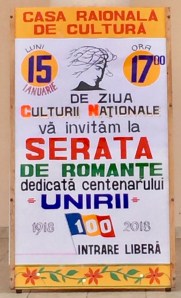
As you’ve probably guessed from the photos by now, Mihai Eminescu was a famous poet, perhaps the greatest ever to write in the Romanian language. He is beloved by many Moldovans not only for his beautiful work but also as a symbol of the cultural ties between Romania and Moldova, which was part of Romania until it was taken over by the Soviet Union. Ialoveni organized a big show in his honor on Monday evening, featured in the poster you see above.

So that’s the story of Martin and Mihai … unless, of course, you live elsewhere in the world. In that case, feel free to replace Mihai with someone from your country.


Chicken Soup for Christmas

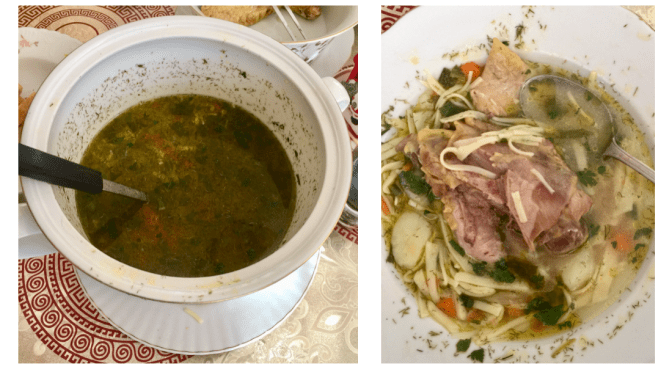
There’s no better way to celebrate Christmas than with a big, steaming bowl of chicken noodle soup.

IMG_0484

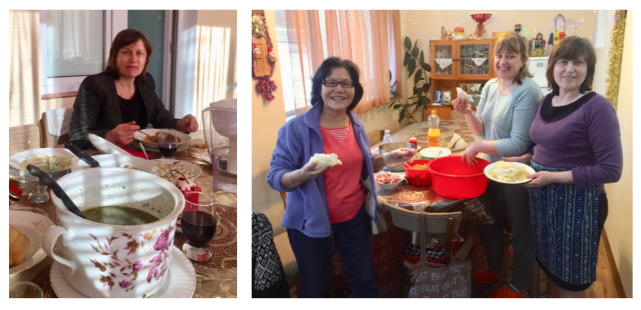
Our host mother, Nina, prepared the soup on Sunday as a traditional dish for Orthodox Christmas, which comes two weeks after December 25. That’s Nina below behind the tureen filled with the delicious soup, which tasted like what my grandmother used to make for us when I was a kid.

Screen Shot 2018-01-08 at 10.13.41 AM

My Grandma Sarah was born near Odessa, Ukraine, not far from Moldova, as I described in a previous post. Many of the foods I’ve seen in Moldova resemble what she used to serve at our family gatherings in New York. Her stuffed cabbage, for instance, was similar to Moldovan sarmale, although with beef instead of pork. Champa helped make the sarmale you see in the photo above.

Screen Shot 2018-01-08 at 9.56.45 AM

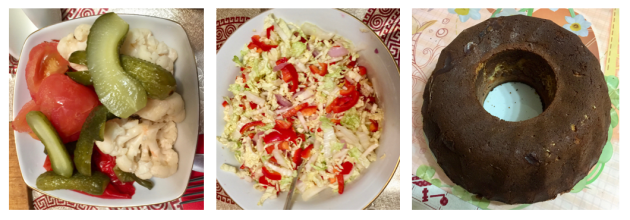
Sunday’s baked chicken, pickled vegetables and salad all looked familiar, too. I made an apricot bundt cake with jam I bought in Sofia last week. IMG_0494We also had a plate of Romanian cookies and American Oreos, which we found in a store in Bucharest.
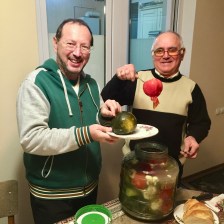
Many Moldovans also celebrate Christmas on December 25, as well as New Year’s, so the past two weeks have been filled with celebrations. (While I’m writing this on Sunday night, a neighbor’s fireworks are exploding outside my window.) IMG_0478Our host family generously invited us to join two Christmas feasts this weekend, together with their niece and the couple you see here. That’s Liviu in the green jacket showing us a pickled tomato and watermelon with our host dad, Mihai. Viorica sang several songs after dinner, with the voice of an angel, as you can hear in the brief video below, with Nina continuing to bring out more food for us.

So to summarize: chicken soup for the Christmas soul, an angel and childhood memories brought to life. There was no better way to celebrate.


Homes on the Road

We stayed at an Airbnb apartment instead of a hotel when we visited Sofia, Bulgaria last week. We also stayed at Airbnbs when we visited Tbilisi, Georgia and Sibiu, Romania in 2017.

IMG_0397
The living room of our Airbnb in Sofia, Bulgaria. (Sorry for the mess.)

All three apartments were central located, with kitchens, living rooms, washing machines and comfortable beds. All cost much less than hotels, although more than local hostels. IMG_0302All three hosts were helpful and responsive. The woman who welcomed us to our apartment in Sofia told us about a wonderful local Nepalese restaurant, Gurkha, where we ended up having a delicious meal and conversation with the owner, as you can see in the photo.

Champa and I still use hotels, such as when we stayed in Bucharest for a couple of nights last week and weren’t sure when we would arrive. But we now prefer staying in Airbnbs because they provide us with extra room and a local contact to help us learn about a city.

IMG_8635
Our Airbnb in Tbilisi, Georgia

Many of our fellow Peace Corps Volunteers in Moldova use Airbnbs, too, when traveling or coming to stay in the capital, Chișinău.

I describe all of this because some Americans are still uneasy about staying in a private home instead of a hotel, whether through Airbnb or another service. Others include HomeAway, Couchsurfing, FlipKey, VRBO and Roomorama.

The concept may seem especially novel to some older travelers. As one wrote on the Senior Planet website, “At first glance, Airbnb looked to me like a site for freewheeling hipsters.” That writer tried Airbnb and became a fan, saying, “I’ve learned something new about myself: I really enjoy staying in a ‘real’ neighborhood and being a traveler, not a tourist.”

IMG_4127
Champa and our guide, Florin, at the Airbnb we used in Sibiu, Romania, also shown in the photo at the bottom of this post.

We feel the same way and are not unique. Airbnb says more than one million of its users are now over 60, as are 10 percent of its hosts. Its 2016 report said some older Airbnb hosts now depend on this extra income to remain in their homes.

This past year, the Freebird Club launched an Airbnb-like service especially for older travelers and hosts. More broadly, older Americans have begun turning to a variety of flexible gigs and part-time jobs. In her latest list of 100 Great Second-Act Career Resources, career expert Nancy Collamer (my sister) identifies many of these.

One of my favorite blogs, The Senior Nomads, describes how a retired Seattle couple, Michael and Debbie Campbell, has spent several years staying at Airbnbs while traveling around the world. They explain: “As we were closing in on retirement, we felt we had ‘one more adventure in us’ so in July of 2013 we rented our house, sold our sailboat and one of our cars, and reduced our stuff until it fit in a small storage unit. We waved goodbye to our family and friends and set off to explore the world!”


This past summer, when we visited home, Champa and I experimented with the “sharing economy” in another way, by using a car-sharing service. We rented a blue Toyota Camry on Turo from a guy in Virginia for about half of what we would have spent with a car rental company. We had a great experience and would use the service again.

Serving as older Peace Corps Volunteers has opened our eyes in so many ways, and not only about Moldova. We’ve also become more comfortable with new online travel resources favored by people our children’s age. It turns out they work nicely for us, too. If you’ve had an interesting experience of your own with these resources, good or bad, I invite you to share them with a comment.

IMG_4129

Less News is Good News

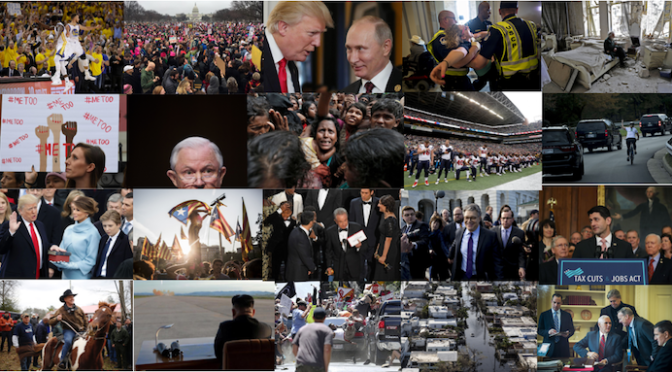
If you spent too much time obsessing about all of the big news stories in 2017 — the tax bill, the hurricanes, Charlottesville, #MeToo, North Korea and everything about President Trump, as well as about sports, entertainment and other fields — perhaps you’ve resolved to turn down the volume in  2018.

I am happy to tell you that change is possible! However, you may need to join the Peace Corps to break your habit.

As a volunteer serving in Eastern Europe, I have been living for more than a year and a half now without the nonstop chatter of American cable news stations. These channels aren’t widely available here in Moldova; much of the content comes from Russia or Romania, as well as locally. Champa and I don’t even have a television, much less English-language newspapers or magazines.

This has been a huge change for me. I used to run a university news office, paying close attention to what was happening not only on our campus but around the world. My office’s “rapid response” team tracked events and jumped quickly to highlight faculty experts who could discuss the latest political drama, natural diaster or social trend. I monitored the news throughout the day. It was both my job and a passion.

If I’d been home this past year, I probably would have been following every twist and turn in the Russia investigation, along with other stories. Instead, I’ve been focused more on what we’re doing at our post, such as with my robotics and entrepreneurship teams for local students, and with Champa’s costume project for her school’s drama program.

I still get my daily fix of American news, mainly via the online New York Times and Washington Post, both of which offered great overseas rates. Champa and I also watch monologues from the previous night’s comedy shows, such as Stephen Colbert. We often view these while eating dinner. I can’t believe I’ve become one of those people who gets news from late-night comedians, but I have, albeit with a seven-hour time difference.

This may still sound like plenty of news but it’s nothing compared to what I used to ingest. And guess what? Just like an obese person who went on a diet, I now feel lighter and healthier.

I’ll never quit the news altogether. I’m still a curious person who wants to know what’s going on. I still get outraged by some of what I see. But I’m thankful my time as a Peace Corps Volunteer has led me to step back a bit. I’m a lot happier never seeing people argue on a cable news program or CNN flog a story hour after hour.

When we return home next summer, I’m going to resist reverting to my old habits. I’ll try to stick with my new diet. If you come to visit us in North Carolina and see me staring at the news again for more than a few minutes, please snatch the remote control out of my hand.


‘Wealthy’ Neighbors

When your neighbor appears wealthier than you, it affects how you view your own life. I’ve seen this in both of the countries where I’ve served as a Peace Corps Volunteer, in how Nepalis view India and how Moldovans view Romania.

Most Americans probably view India and Romania as developing economies, which they are relative to ours. But in Nepal, India is the wealthier neighbor next door, as is China to the north. In Moldova, which was once part of Romania, many people look admiringly at their western neighbor’s economy, which has prospered since joining the European Union in 2007. This is especially true in our home city of Ialoveni, which has strong cultural ties with Romania. In some other parts of Moldova, the outward focus is more on Russia, whose economy is also much wealthier.

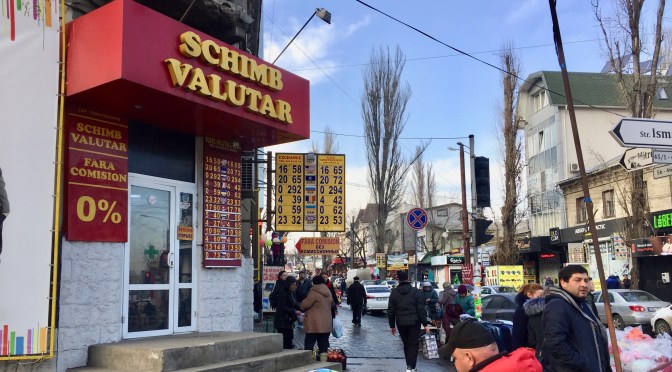
Many Moldovans are eligible for dual citizenship with Romania. If they can obtain a Romanian passport, they can work in EU countries. Every day, they line up outside the Romanian Embassy, which is located down the block from the Peace Corps office. In between are passport photo shops, travel companies and employment agencies.

The three high school students who were on my Diamond Challenge entrepreneurship team last year are all studying now at universities in Romania. Several of the girls on my current team may study in Romania, too. A young man from Ialoveni who I tutored in English is now there as well, as are people from across Moldova. Many others are in Italy, Germany, France and other Western countries, as well as in Russia and other countries to the East.

IMG_4529
Before we came to Moldova, we visited our nephew Shankar and other members of our family in Nepal who live near its eastern border. India is on the left side of the river behind us in this photo.

It all reminds me of what I’ve seen in Nepal, where India is a larger, wealthier and more powerful neighbor — and one much more accessible than China for most Nepalis. A large percentage of Nepal’s adult population has left to work across the border or elsewhere, especially in the Gulf, although there are also Indians who come to work in Nepal.

When Champa and I visited Nepal before we came to Moldova, we spent several days at her sister’s home in a small village near the Indian border. In the evening, we could look across the river into India and see homes whose brighter lights contrasted with those on our side, where electricity was weak and  irregular. We often had to use candles and flashlights. So did the family next door, which had a television and other nice things purchased by their son who worked abroad.

Here in Moldova, many of my colleagues at the library earn a bit more than $100 per month. Monthly pensions for retirees are far lower. Highly-educated employees at the local county government earn only a few hundred dollars per month. No wonder some Moldovans look lookingly at their counterparts in Romania, whose GDP per capita in 2016 was $9,474 compared to $1,900 for Moldova, according to the World Bank. (For the United States, it was $57,467.)

IMG_4063
We saw Romania’s economic growth for ourselves when we visited Transylvania last spring.

All I can say is that what I’ve seen here in Moldova feels familiar to me, as does the irony that the same Romanians whose economic situation seems better may aspire themselves to get a green card to live and work in the United States. Likewise for people from India and other countries whose economies look impressive to their poorer neighbors but remain behind our own and, of course, include wide disparities in income and opportunity.

It’s all relative, and we’re not immune from these comparisons ourselves. When Champa and I flew home from Nepal last time, we stopped for several hours in the oil-rich Gulf state of Qatar, whose Doha airport felt like a palace compared to many of ours in the United States. I was impressed, if not a little jealous, even though I was glad to leave and continue home.

Our sense of other people and places begins with our own lives. Wealth, like beauty, is in the eye of the beholder.