

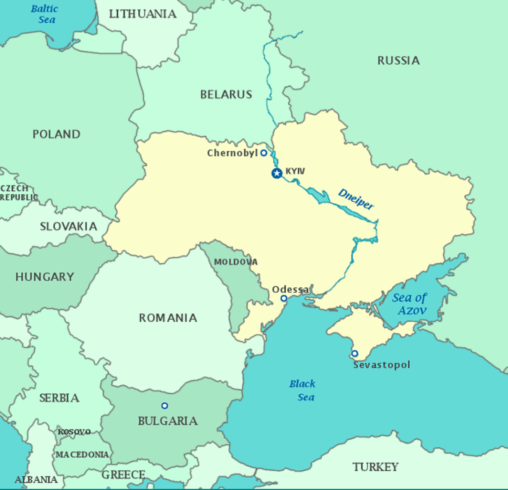
There’s a new epilogue to the story of a girl from Odessa who fled with her family to America in the early 1900s to escape the pogroms that were killing and persecuting Jews in Ukraine and others parts of the Russian empire.
 That girl was my grandmother, Sarah.
On Saturday, Champa and I visited Odessa to pay our respects to Grandma Sarah’s memory while touring this great Black Sea port city. I was the first of her children or grandchildren to return in the many years since Grandma Sarah’s family — my family — arrived with nothing at New York’s Ellis Island. She used to describe their journey as resembling this closing scene from “Fiddler on the Roof,” a film she loved:
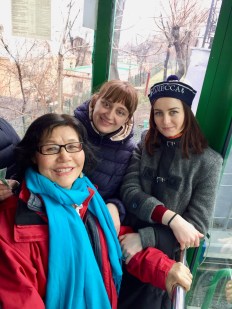
Champa and I hired an excellent driver, Marcel, to make a long day trip there with our host sister, Alisa (wearing the blue Odessa souvenir hat), and her cousin Natalia.
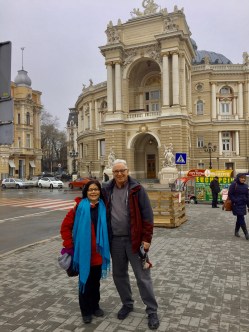 We left Ialoveni early, crossing the Moldovan-Ukrainian border at Palanca since Peace Corps does not allow volunteers to travel through the disputed territory of Transnistria. We were lucky to arrive near Odessa’s opera house, shown behind us, just before a noon performance of Tchaikovsky’s “Sleeping Beauty” was beginning.
  We bought the cheapest seats, less than 40 cents apiece, so we could glimpse the theater for a few minutes. It was magnificent.
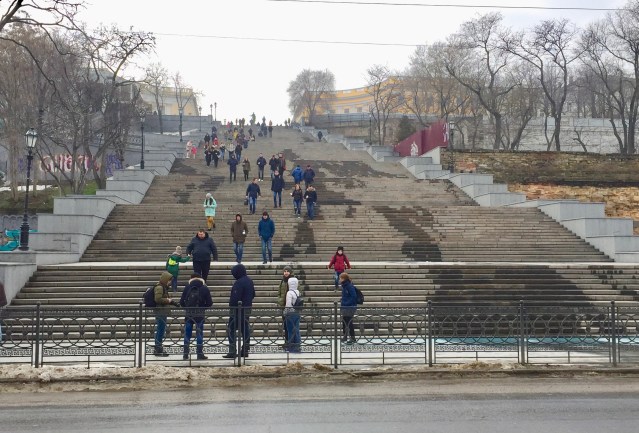
We then walked to another local landmark, the Odessa Steps that figure prominently in the famous scene from Sergei Eisenstein’s 1925 film Battleship Potemkin, shown in the following clip. On one side of the steps is a plaque honoring their cinematic significance; on the other is a funicular we rode to ascend after visiting the port below, a major freight and passenger transportation hub for Ukraine.
Throughout Odessa’s central area we saw beautiful buildings, parks, shops and statues commemorating figures such as Catherine the Great (below) and Duke de Richelieu, the French-born governor who helped Odessa grow to become the third largest city in the Russian empire. We thought of our two daughters-in-law when visiting the “Mother-in-Law Bridge” and ate a late lunch of traditional Ukrainain food at Kumanets.


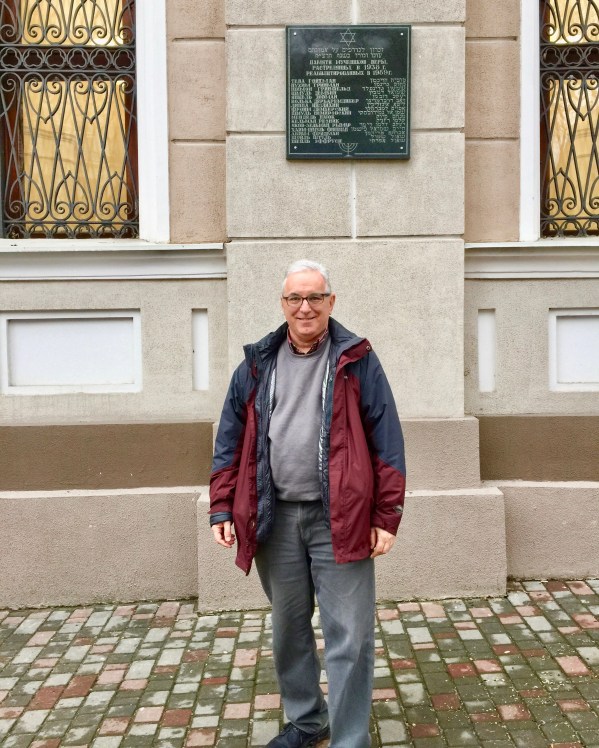
We ended our trip with a visit to Odessa’s largest synagogue, where I left a donation in my grandmother’s honor. It had taken more than a century but one of her descendants had finally made it back to revive her memory in this fascinating city, which we really enjoyed visiting.


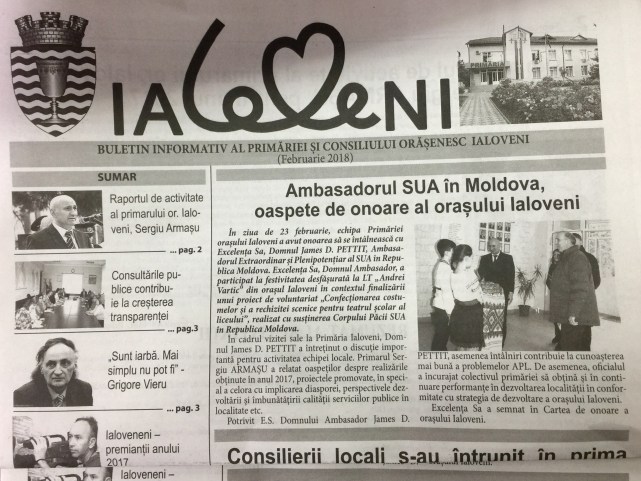


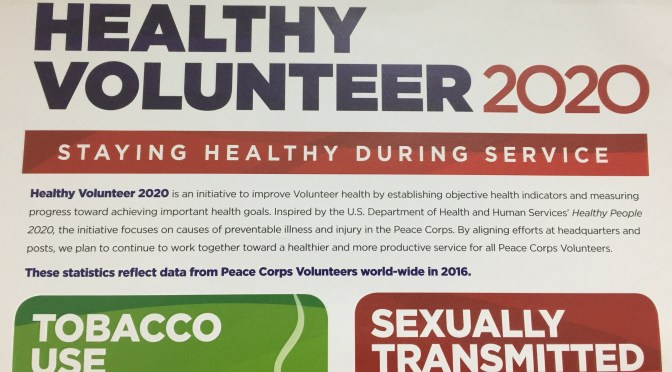


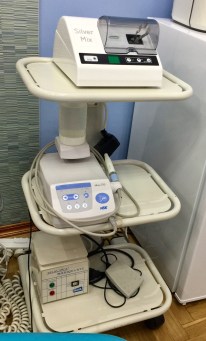 But then again, I’ve felt in good hands medically with Peace Corps Moldova since we arrived here. The chief medical officer, Dr. Iuliana, is a jewel: skillful, thorough, caring and endlessly dedicated to keeping volunteers heathy. She pays attention to everyone’s mental health as well as their physical condition, knowing how stressful Peace Corps service can sometimes be.
 We get our medical care for free here, with no monthly premiums or other costs. During our pre-service training, the medical team ran workshops on everything from water purification to traffic safety. When we moved to our posts, they gave us water filters and well-stocked medical kits. They continue to fill prescriptions, address concerns and provide routine services in a clinic within the Peace Corps building. When necessary, they send volunteers to local specialists such as Dr. Drugalin or, occasionally, back home or elsewhere for treatment, coordinating with the Peace Corps medical office in Washington.
 We were in good shape when we applied to become volunteers, although that didn’t stop the Washington medical office from putting us through the wringer before clearing us for service. We had to submit form after form, with documentation, over several months before we were finally approved.
  I understood why the medical office was so cautious, especially with two older applicants, but the process was exhausting.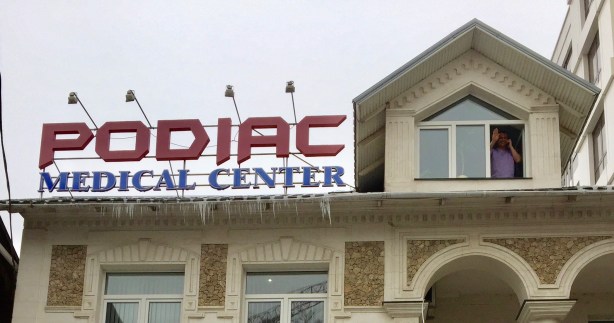






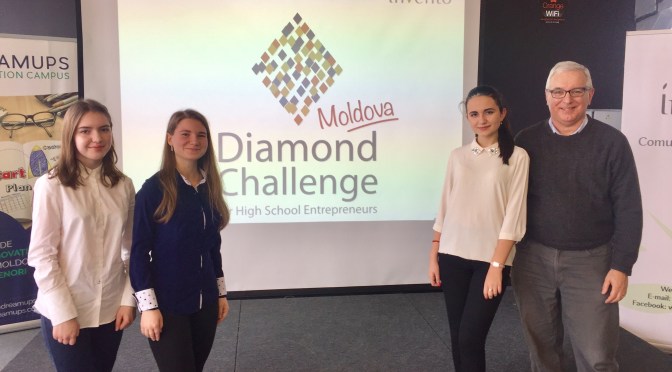


 I also discussed speech-making generally and the particular format of entrepreneurial pitches. I divided the students into groups to practice their presentations, as you can see in the photos here.
 When I was running a university communications office before joining the Peace Corps, I used to tell scientists and professors the same thing, as in this 2014


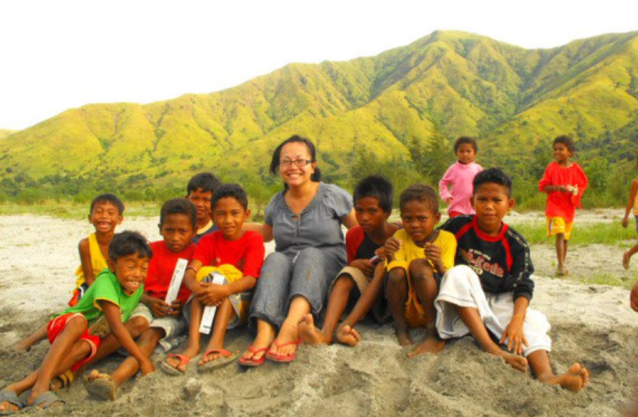
 Indeed, Peace Corps itself touts the career
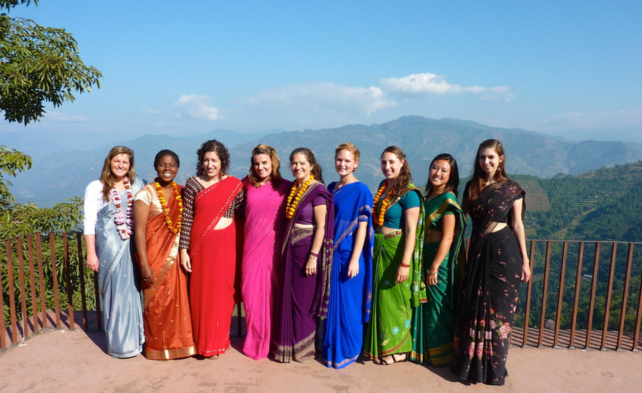
 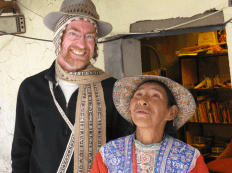 All of this is consistent with the changes I’ve seen myself since I first served as a volunteer in Nepal in the late 1970s. My friends and I didn’t talk much about resumes, grad school applications and job prospects. America was the world’s dominant economic power then. Jobs were plentiful.
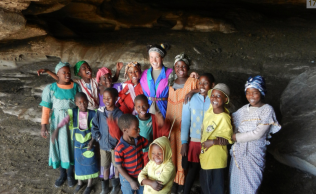


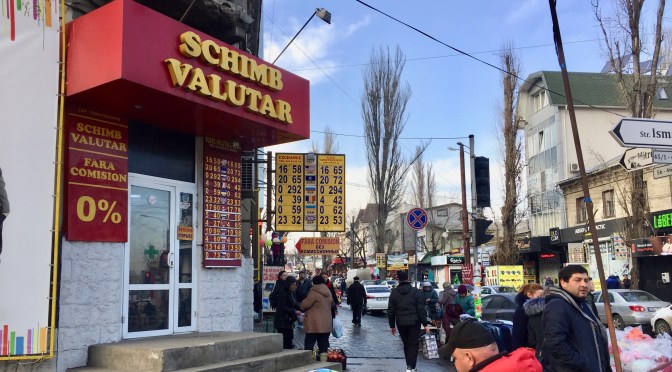

 the latest exchange rates for the Moldovan leu relative to the U.S. dollar, the Euro, the Russian ruble and other currencies. The dollar has now slipped well below 17, continuing a slow descent I’ve
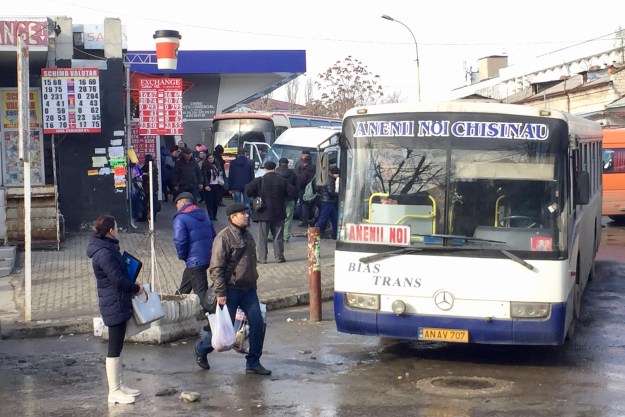
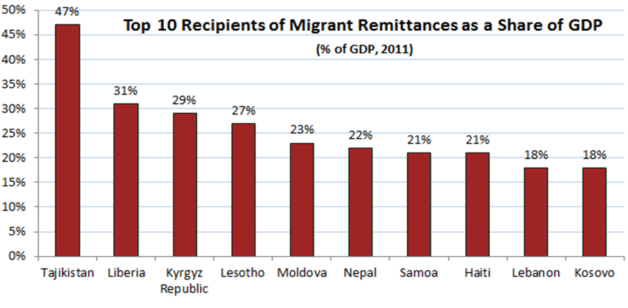
  It’s no coincidence this sign is adjacent to one showing exchange rates. In fact, it’s key to understanding the deeper meaning of the photo. It’s like the MoneyGram sign across the street, which says “transfer de bani,” or money transfer, or the Western Union sign up the block.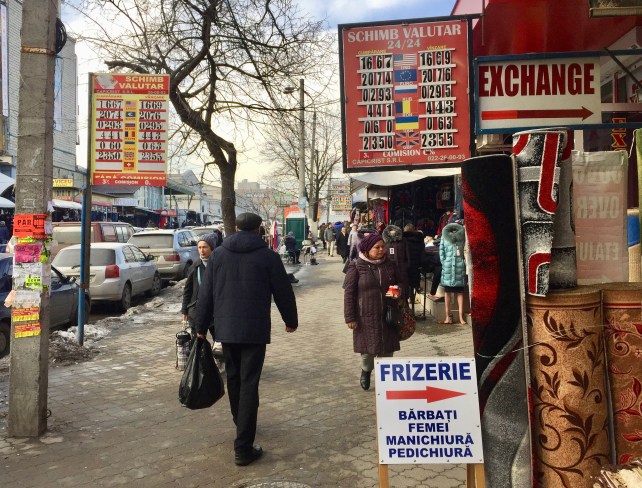








 My niece, Juliana, will be enrolling this fall at
  There are also excellent
  My favorite writer covering this field is Nancy Collamer (my sister), whose “My Lifestyle Career” site and recent
  For the next five months, Champa and I will remain focused on the rest of our Peace Corps service. Here, too, plentiful online resources exist to motivate us. Not long ago, one RPCV group selected the
  (Thanks, Friends & RPCVs of Guyana!)

 "Not Exactly Retired"