Tag Archives: Moldova

My Favorite Books

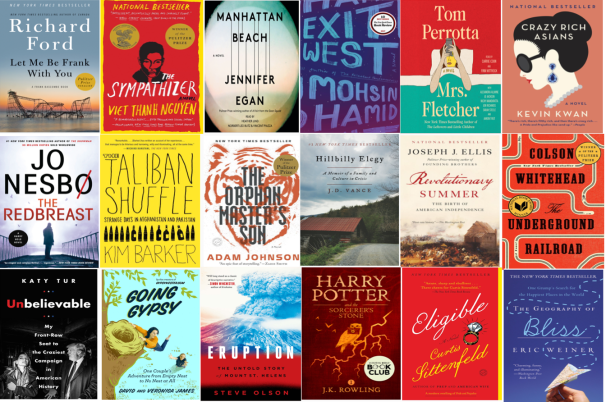
‘Tis the season for year-end lists of favorite books. Here’s mine from Moldova. I downloaded almost all of these books onto my Kindle for free through the online OverDrive system which, as I’ve written previously, is the best thing that ever happened to a Peace Corps Volunteer who likes to read.


I could fill my Top Ten list just with recent novels I read this year. My three favorites were Exit West, Mohsin Hamid’s brilliant depiction of two refugees from a war-torn Arab country; The Orphan Master’s Son by Adam Johnson, which captures the brutal insanity of North Korea; and The Underground Railroad, Colson Whitehead’s chilling exploration of slavery in antebellum America. All three novels haunted me for weeks.

I also loved Manhattan Beach, which Jennifer Egan sets on the waterfront of New York, showing us a different side of the city while telling a harrowing yet moving family saga. Richard Ford’s Let Me Be Frank With You and Richard Russo’s Everybody’s Fool are gentler but wonderfully written, with compelling protagonists struggling to make sense of their aging years. Viet Thanh Nguyen in The Sympathizer and Karan Mahajan in Association of Small Bombs both took me to communities I barely knew before. Tom Perrotta’s Mrs. Fletcher was funny and wise. Carl Hiaasen’s Razor Girl was even funnier. All ten of these novels were a pleasure.


I also loved three older novels: Disgrace by J.M. Coetzee, whose depiction of a man’s life upturned by accusations of sexual misconduct seemed especially timely now; Redeployment by Phil Klay, rightly hailed as one of the best novels about the Iraq war; and Smiley’s People by the great John LeCarre, who published an acclaimed autobiography this year.

I’ll give a partial thumbs-up to three other novels: Moonglow by Michael Chabon; The Sandcastle Girls by Chris Bohjalian; and Everything I Never Told You by Celeste Ng. Bohjalian’s book is about the Armenian genocide, and I read it shortly before we visited Armenia. Like the others, I thought it was good, not great. I was even less enthusiastic about Jenny Lawson’s Let’s Pretend This Never Happened, which was snarkily funny in places but somehow didn’t click for me.


I also read some great nonfiction this year. My favorite book was Hillbilly Elegy by J.D. Vance. I know it’s come in for criticism for its depiction of dysfunctional white families in Appalachia, but I found it insightful following our election last year. Arlie Russell Hochschild covered some of the same issues in Louisiana in Strangers in Their Own Land, which I enjoyed but found less compelling. Bruce Springsteen’s autobiography, Born to Run, was a treat from cover to cover. So was reporter Katy Tur’s recent Unbelievable, about covering the Trump campaign, although its uneven text reflected the haste with which it presumably was written. (Sorry, always an editor.)

I’m in a science book club back home, so I’ll give a shout-out to my favorite science book of the year: Steve Olson’s Eruption: The Untold Story of Mount St. Helens. It wove geology, politics, history and personal stories into a narrative I would have found engaging even if Steve weren’t a good friend.

I’m also a history fan. In Revolutionary Summer, Joseph Ellis offered a fresh look at how early military defeats under George Washington nearly ended the American Revolution in its early days. In The Wright Brothers, David McCullough showed how the two aviation pioneers were nothing less than admirable, illustrating what’s best in the American character at a time when I needed to be reminded.


I’ll also give a hat tip to two novels I read just for fun. In Crazy Rich Asians, Kevin Kwan poked fun at the super-rich families of Singapore and Hong Kong. I’m looking forward to seeing the movie version when it comes out next year. Another comedy of manners featuring people with too much money was Eligible, Curtis Sittenfield’s modern adaptation of Pride and Prejudice. Once again: well-done fluff that kept me turning the pages.

Detective and mystery novels are great page-turners, too, and I read several good ones this year, including books by John Grisham (The Litigators), David Baldacci (The Guilty), Paula Hawkins (Girl on a Train) and Jonathan Kellerman (The Murderer’s Daughter). My favorite was Jo Nesbo’s The Redbreast, which dealt with neo-Nazis emerging from the shadows, in this case in Norway, yet another case of novels unexpectedly touching on today’s news.

Then there were travel and adventure books. I’d missed The Old Patagonian Express by one of my favorite travel writers (and former Peace Corps Volunteer), Paul Theroux. It described his trip across Latin America. Eric Weiner’s entertaining The Geography of Bliss explored why some countries are happier than others, with Moldova featured at the opposite end of the happiness scale. In The Taliban Shuffle, Kim Barker described her adventures as a foreign war correspondent, a tale recently adapted by Tina Fey in the film Whiskey Tango Foxtrot. David and Veronica James in Going Gypsy and Kristin Newman in What I Was Doing While You Were Breeding described extended trips they made after leaving the workplace. All gave me new perspective on my own recent adventures.

Screen Shot 2017-12-07 at 9.05.02 PM

Among the books I expected to like better but never finished were The Shadow Land by Elizabeth Kostova; The Handmaid’s Tale by Margaret Atwood; Still Here by Laura Vapnyar; Sweet Tooth by Ian McEwan and Homegoing by Yaa Gyasi. The biggest clunker for me was Marie Kondo’s The Life-Changing Magic of Tidying Up, which extolled the virtues of simplicity and decluttering while bloating a 10-page idea into an entire book.

Finally, and I’m embarrassed to admit this, 2017 was the year when I finally got around to reading some of the Harry Potter books. I blasted through both Sorcerer’s Stone and Chamber of Secrets and am looking forward to reading the others in the year ahead. That is, if I can find time after we get home and start binge-watching all of the movies we’ve missed.

Thanks to the Durham County Library and the Duke University Libraries, together with the OverDrive system, for providing these great books for free. Which others did I miss? I welcome your suggestions and will look forward to reading some of them in the year ahead. If you’re a reader, too, I hope you’ll try some of the books I’ve recommended here. Happy reading in 2018!

Getting Into Costume

IMG_9434

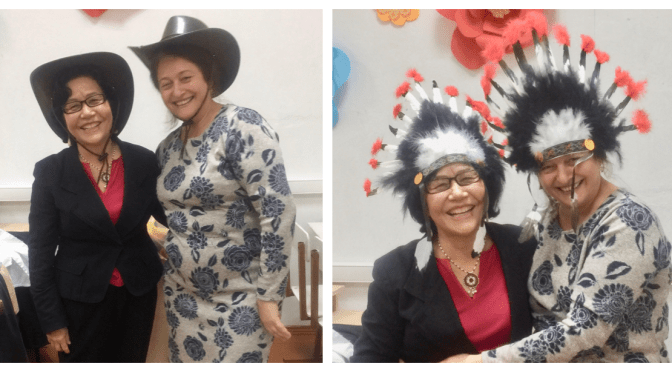
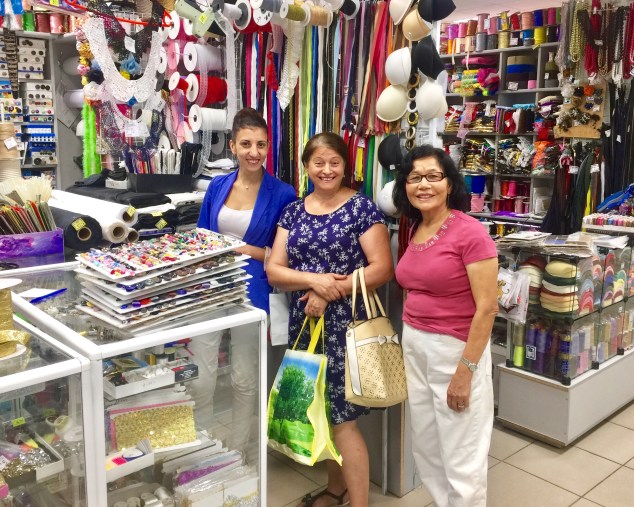
Cowboys, Indians, pirates and other characters have begun arriving at Champa’s school. Her grant project to create a costume and prop wardrobe for its drama program is progressing nicely, with many of the costumes now completed.


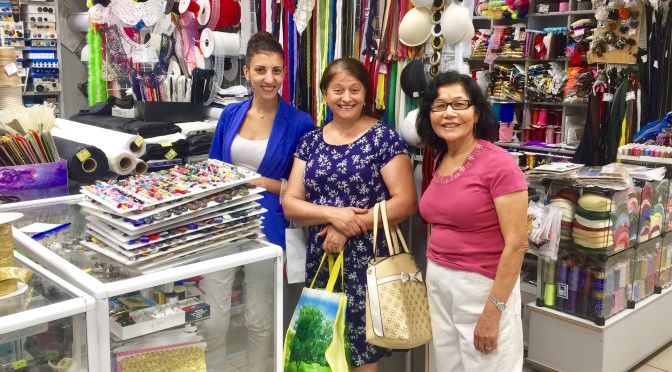
The school, LT “Andrei Vartic” in Ialoveni, Moldova, recently received its first batch of stage props, including some great hats. As you can see in these photos, Champa and I had fun trying them on with her project partner Ana Doschinescu, in the white and blue dress, and another teacher, Tamara Vîrlan.

Ana, Tamara and Champa can’t wait until the project is completed and students start using the props and costumes on stage. We’ll keep you posted.

Screen Shot 2017-11-30 at 10.30.04 AM


Story Time at the Library

Readers, I seek your assistance — the first and only time Champa or I will make such a request while we are serving in Moldova as Peace Corps Volunteers.

IMG_8014

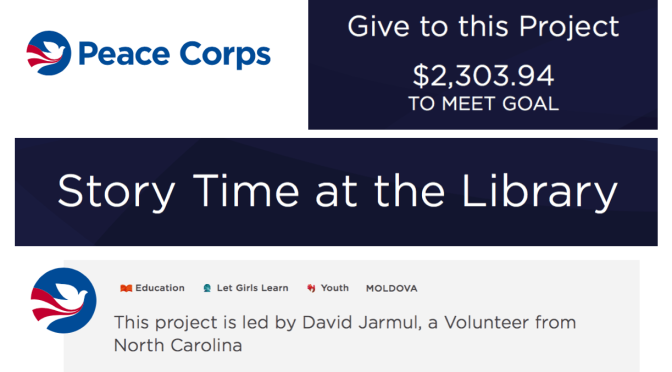
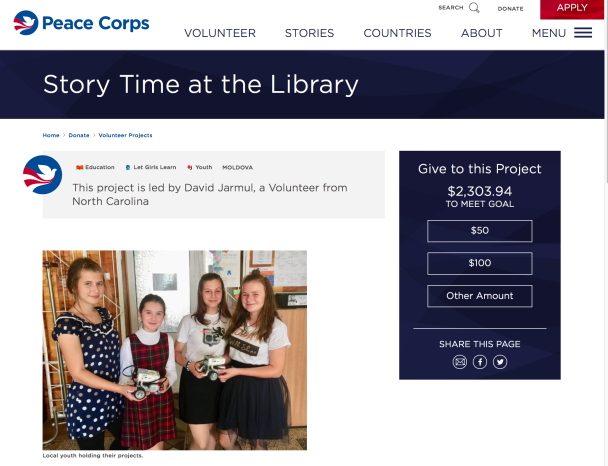
The library where I work in Ialoveni has launched a project to create a “Story Time at the Library” program for toddlers along with educational programs for adults. They’ve already raised nearly $1,000 locally — a lot of money here — but need $2,303.94 more to create a kid-friendly room with small chairs, educational toys, art materials and the like.

Screen Shot 2017-12-01 at 6.26.53 AM

I’ve worked with the library and Peace Corps to launch a fundraiser through the Let Girls Learn program championed by Michelle Obama.

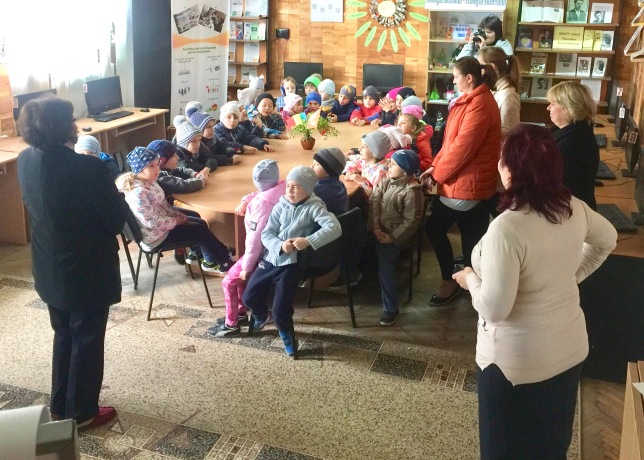
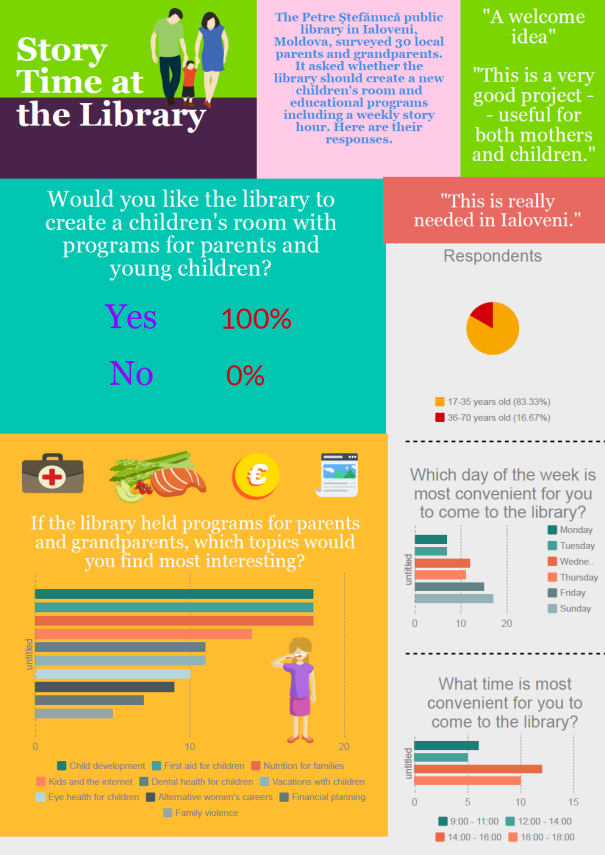
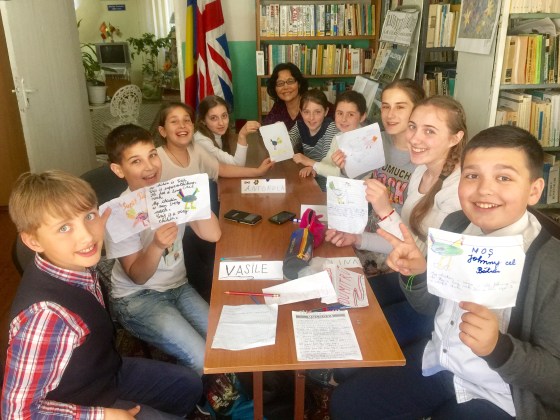
As you can see in the infographic, the librarians did a survey showing overwhelming community support for the idea, which is similar to the story times held at many public libraries in the States. Their target audience is kids a bit younger than those you see in the photo above of a school group recently visiting the library.

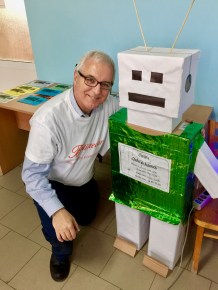
The project is just the latest example of how Ialoveni’s library is trying to redefine itself for the modern world and become a vital community resource. During the past year alone it has expanded beyond books to create programs for video animation, advocacy, computer coding and robotics, together with new services for special-needs users.

Screen Shot 2017-12-01 at 6.11.59 AM

You can learn more about the project and donate here. Your contribution is tax-deductible in the United States. You can donate in honor or memory of someone and, if you choose, share your contact information with me. You can also send words of encouragement to the project team. I will be administering the funds.

If you’ve enjoyed reading this blog, support what the Peace Corps is doing or just want to support a great cause for the holidays, I hope you will make a donation. On behalf of the mothers, children, families and librarians of Ialoveni: Mulțumesc (Thank you)!


What Tourists Expect

If you go to a restaurant in Moldova, don’t be surprised if the waiter doesn’t give you a big smile, offer menus to everyone at your table or serve all of the entrees together.

IMG_3673

The waiter may also not be concerned about negative reviews on TripAdvisor or Yelp. Why? Because he may not know about these websites. Expedia? Lonely Planet? Maybe not those, either. Similarly, the woman working at a nearby hotel may not understand that you prefer to book a room online instead of calling her on the phone.


Moldova has so much to offer to foreign visitors: delicious food and wine, magnificent monasteries, beautiful countryside and travel options ranging from eco-tourism to adventure travel. Its hotels, restaurants and travel destinations are a bargain, and some offer warm and attentive service. Its people can be wonderfully gracious and generous, too. But it remains among the least-visited countries in Europe.

At a meeting several months ago, several of us serving as Peace Corps Volunteers here discussed whether we could do anything to help improve the situation.

Screen Shot 2017-11-28 at 3.21.14 PM

We knew we had no money to address big problems like Moldova’s poor roads. However, as Americans who have made lots of travel decisions ourselves and are familiar with Moldova’s charms and challenges, we decided we could contribute in another way: We could help the owners of hotels, restaurants and tourist destinations understand what we and others expect in terms of customer service and how we use the Internet when deciding where to spend our travel dollars, whether in Moldova or someplace else.

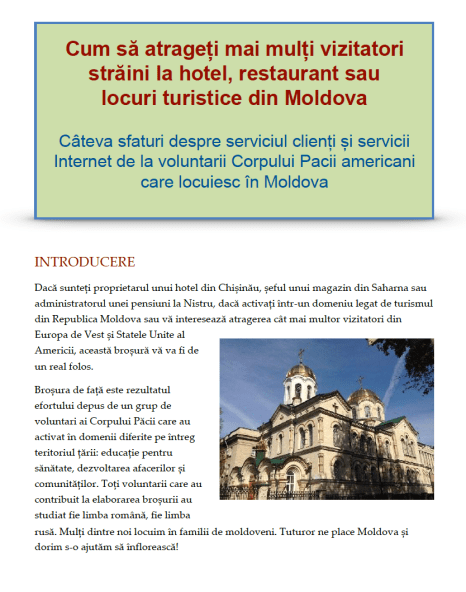
Screen Shot 2017-11-28 at 7.53.16 PMSince that meeting, our group has been working with the Moldova Competitiveness Project of USAID and the leadership of ANTRIM, Moldova’s national inbound tourism association. After months of work and numerous drafts in both English and Romanian, we recently completed our project: an illustrated Romanian-language brochure for Moldovan businesses seeking to attract tourists from abroad. ANTRIM has posted the brochure online and will be sharing it with its members. USAID said it looks forward to supporting the project, too.

IMG_9211

If you don’t speak Romanian, here’s the brochure’s message in a nutshell: Customer service is critically important, so smile at your customers and take good care of them. Build a strong online presence and try to attract favorable reviews.

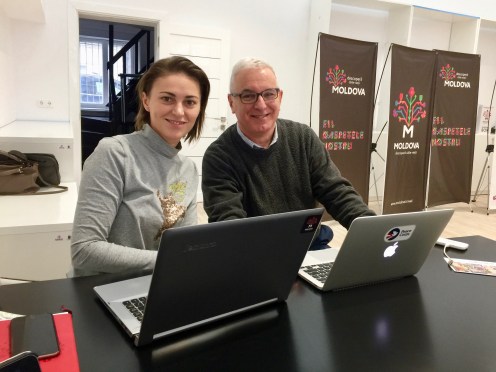
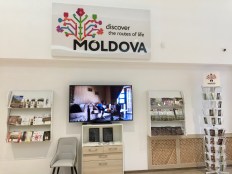
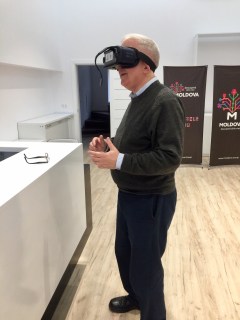
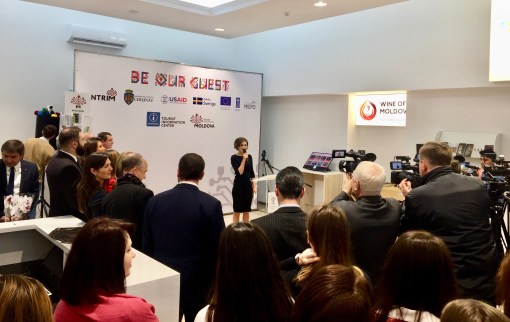
IMG_9213I recently put the final touches on the brochure with Natalia Țurcanu, the head of ANTRIM, who you see above with me in their lovely new tourism center in the heart of Chișinău. Located on the city’s main street, the center offers brochures, maps, advice and even virtual-reality tours, as you can see in the photo. USAID and others provided support for the center, which was launched with the big press conference where you see Natalia speaking in the photo below.

She hopes our brochure may lead to workshops or other training programs to help Moldova’s tourist operators get better at using the Internet and providing consistently great customer service. IMG_9218Our group is ready to assist if she wants her people to hear this directly from American travelers.

Our Peace Corps team included current volunteers Shannon Skelly and William Winter, and recently departed volunteers Chris Flowers, Lisa Gill, Stephen Gill, Jessica Randall and Denise Riegel. Natalia has been our invaluable partner at ANTRIM. Sergiu Botezatu, Natalia Curnic, Ana Efros and Diana Lazar provided assistance through USAID’s Moldova Competitiveness Project and Chemonics International Inc. At Peace Corps Moldova, Felicia Cenușă guided the final translation, Violeta Frimu-Patel was our program manager and Tracey Hébert-Seck provided support and encouragement as the country director.

IMG_8865

If you know anyone in Moldova who might benefit from the brochure, I hope you will share it with them. Be sure to smile when you ask.

Screen Shot 2017-11-28 at 3.19.46 PM


Talking Turkey


I ate Thanksgiving turkey twice on Thursday — first when I usually eat breakfast, then for dinner.

IMG_9391

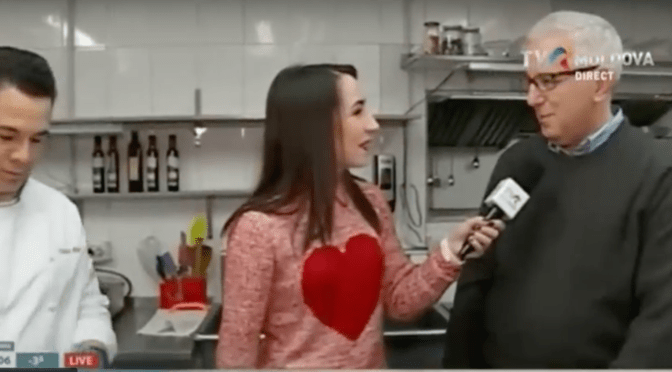
The early meal was for a television story on TVR Moldova explaining our holiday to viewers across Moldova and Romania. Cătălina Russu, a television reporter who lives in Ialoveni, invited me to join her as she broadcast a live story from Jeraffe, one of Chișinău’s top restaurants.

As her story began, as shown in the first clip above (also on YouTube), we discussed Thanksgiving foods and traditions while the chef, Nestor Perez, prepared a turkey roll stuffed with herbs and butter. I had not previously met Nestor, who lived in America for many years after leaving Venezuela and now lives here with his Moldovan wife. Thanksgiving Menu 2017After our first segment, we all took a break and then moved from the kitchen to a table to eat the cooked turkey with pistachio-infused rice.

I shared my own Thanksgiving menu (seen here) with Cătălina and showed her how American kids use their fingers to make turkey pictures for placemats. The highlight, though, was Nestor’s food, shown in the second clip above (also on YouTube). It was fabulous despite the early hour. You can see for yourself in Cătălina’s story, which is easy to follow even if you don’t speak Romanian.

As soon as her second segment was finished, the cameraman and another reporter pulled up chairs so they could try the turkey, too. By 9:30 a.m., I was done and heading back to Ialoveni by bus to prepare the next round. (Around the same time, my Peace Corps Volunteer colleague Anne was discussing Thanksgiving on another television program here.)

I bought the turkey for our meal from a local farmer, who delivered it on Wednesday to our host mother. I found sweet potatoes at a downtown store. IMG_9393Champa discovered dried cranberries in the market, which I cooked with juice and brandy to make a sauce. One of our local stores now sells Parmesan cheese, so I bought some and combined it with mashed potatoes in a casserole. For my peach pie, I used slices of local peaches we’d bought last summer and froze. We made cookies with chocolate chips and brown sugar we bought when we were home last summer. We bought the Armenian and Georgian wine during our recent trip there.

We were prepared, in other words, and had even finished the desserts and some other items earlier in the week. Our host family and a Peace Corps Volunteer from Minnesota, Cindy, arrived in the evening. We then ate too much, laughed too much and went around the table to each say why we give thanks.

IMG_9414

It was such a lovely day. The only thing that could have been better would have been sharing Thanksgiving with our family back home, who we missed even more than usual throughout the day. We’re thankful we will be back together with them next year — and thankful to have found another wonderful family while we’re here.

Libraries Turn the Page

In both America and Moldova, libraries are racing to redefine themselves and remain relevant in an online world.

IMG_9072Back home, where people now routinely download books and find information on the internet, libraries are emphasizing their roles in providing expertise and bringing people together, whether with story times for kids, study spaces for students or programming for retirees.

IMG_9175Here in Moldova, the transition has been even more challenging. Library budgets and salaries are tiny. Many library buildings are old, with collections dating to Soviet times. There are no resources to buy books, much less comfy sofas or cappucino machines.

Last week, the library where I work in Ialoveni showed how some Moldovan libraries are moving forward despite these challenges. Together with the local Consiliul Raional, or county government, it organized a “library day” to showcase its recent innovations.

IMG_9151

Under the leadership of director Valentina Plamadeala, speaking above, the library now has a film animation class, a club that produces crafts from recycled materials, a robotics program and a workshop to teach modern advocacy techniques. It’s organizing a new weekly story time for toddlers that will also provide educational programming for parents and grandparents. It hopes to provide new programs for people with special needs, building on a Braille collection it recently added. The library is reaching out to its community in interesting ways, too, using videos, infographics and social media.

IMG_9089

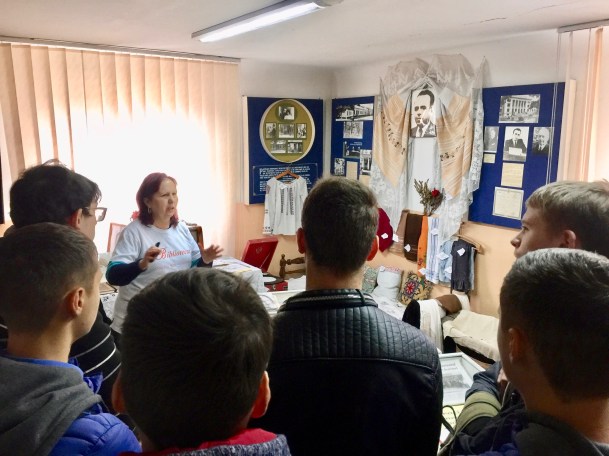
Located near the city’s main traffic circle, Ialoveni’s library is named for Petre Ştefănucă, a folklorist and local hero who died in a Soviet gulag. At last Tuesday’s event, I was moved as librarian Larisa Petcu, above, showed off the small museum that honors his memory, telling local high school students about him. I was also impressed by the presentations from some other nearby libraries that participated in the event. Cătălina Russu, a reporter for TVR Moldova, also attended and produced the video shown at the beginning of this post (also available on YouTube; at 1:35, I speak briefly in English.)

Novateca, a program managed by the nonprofit organization IREX with support from the Bill and Melinda Gates Foundation in partnership with USAID, has been a driving force behind the modernization of Moldova’s public libraries, building on similar programs in neighboring Romania and Ukraine. Since it began operations here five years ago, Novateca has provided thousands of computers and other resources, trained librarians across the country, increased public support for libraries and promoted a more expansive vision of their role in a civil society.

IMG_9182

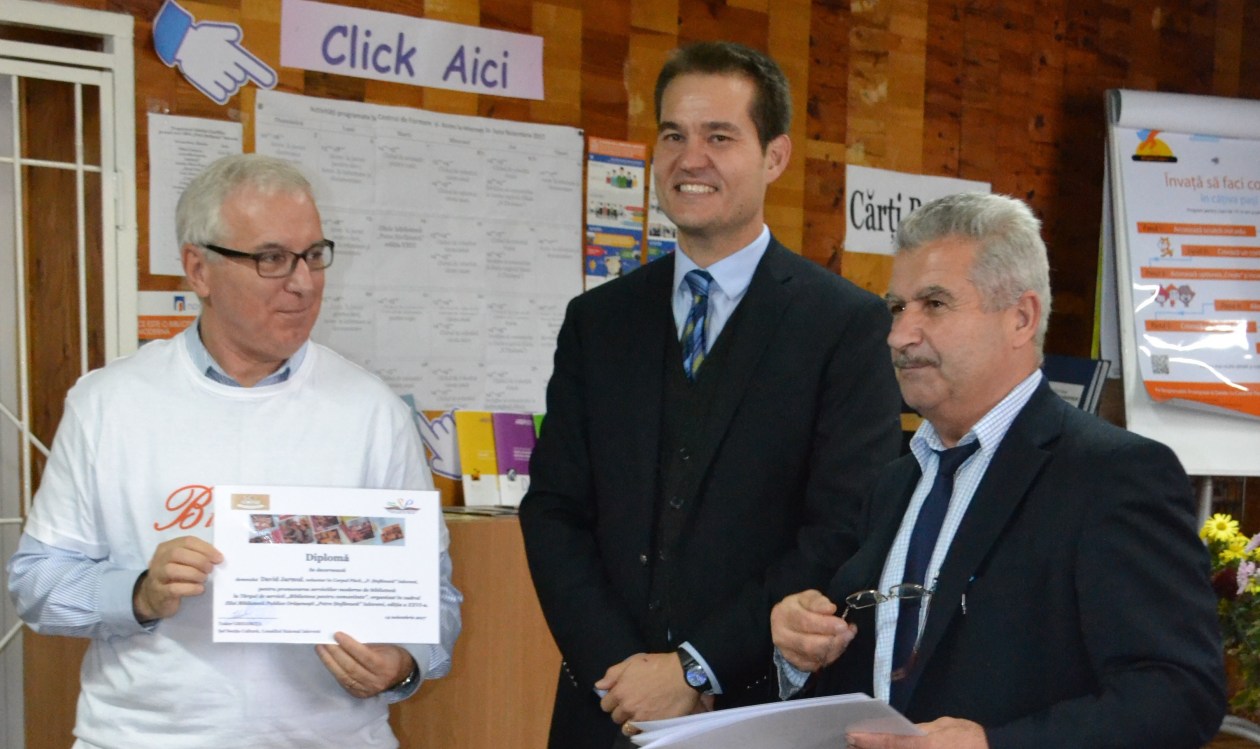
I’ve become a big fan of Novateca’s work and was pleased to see its director, Evan Tracz — himself a former Peace Corps Volunteer, in Turkmenistan — at last Tuesday’s event. (He’s in the center of the photo below, awarding certificates to me and others with Tudor Grigoriță of the Consiliul Raional.) Evan and his team have had a transformative impact. Novateca is now winding down its activities as its funding comes to an end. Many of us hope Moldova’s libraries will continue making progress without them.

I have great respect for the people I work with at Ialoveni’s library. They are doing so much with so little, earning less in a year than some American librarians make in a couple of weeks. They keep looking for better ways to serve the community here without a coffee maker in sight, much less a cappucino machine.

DSC_0202

200 Posts: Top Ten

This is my 200th post on Not Exactly Retired, which I started in mid-2015.IMG_0992 As we’ve traveled around the United States, spent time in Nepal and served as Peace Corps Volunteers in Moldova, the blog’s audience has kept growing, with more than 26,000 visits so far. Thanks to all of you who have joined us on our journey!

FullSizeRender 808“Not Exactly Retired” advances two of the three official goals of Peace Corps: to promote a better understanding of other peoples on the part of Americans, and vice versa. (The other goal is to “help the people of interested countries in meeting their need for trained men and women.”)

Here’s a Top Ten list of the blog’s most popular stories so far, as measured by views. There’s more to come, so stick around — and if you know anyone who might enjoy Not Exactly Retired, please tell them about it and invite them to subscribe.

IMG_6043

The Most-Viewed Stories on Not Exactly Retired

  1. Peace Corps After 50 (featured on PBS/NextAvenue)
  2. Peace Corps: Now vs. Then (comparing service in Nepal and Moldova)
  3. Funny Peace Corps Videos (the joys of pooping in a hole)
  4. Moldova’s Marathon (a recent story about runners here)
  5. Are Volunteers Over-Connected? (from WorldView Magazine)
  6. Older Peace Corps Volunteers (a 5-part series about Moldova)
  7. Message in a Bottle (discovering your impact on someone, decades later)
  8. Life is Calling (making a big change doesn’t need to be scary)
  9. Reading in OverDrive (how to read books on your e-reader for free)
  10. The Smokehouse Experiment (former PCVs open a restaurant here)

Other popular stories have focused on the perils of downsizing after decades of American life, Thanksgiving in Moldova, an amazing Romanian salt mine and the adventures a friend and I experienced years ago while backpacking across Afghanistan, Nepal, Sudan and other places.

Not surprisingly, most of the blog’s views have come from readers in the United States, followed by Moldova. Rounding out the Top Ten are Romania, the United Kingdom, Nepal, Canada, Germany, Ecuador, India and the Philippines, all with at least 100 views.

Are you enjoying “Not Exactly”? Do you have any reactions to these lists? Requests for future stories? As always, I welcome your feedback and comments.


Champa’s Projects

Composting. Arts and crafts. Helping kids with special needs.

These are just some of the things Champa has been doing here when she isn’t teaching English at her school. Recently Peace Corps Moldova asked her and several other eduction volunteers to highlight their out-of-class activities for a conference. Her presentation reminded me of how busy she’s been. These photos tell the story:

IMG_5067

Champa hosts a weekly English conversation class at our local library.

IMG_6996

She participates sometimes in a weekly club at the library where local women create hats and other objects from recycled materials.

IMG_7975

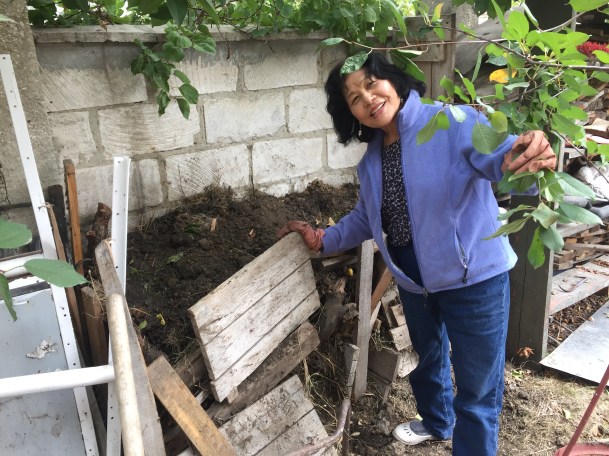
She’s helping a local NGO compost its food scraps and start a vegetable garden and has also started a compost pile with our host family, shown above.

IMG_1897

For International Children’s Day, Champa organized a project in which local residents described in a few words what the day meant to them. (That’s our city’s mayor in the blue shirt and tie, helping her.)

IMG_4450

She is managing a Peace Corps small grants project at her school to create a costume and prop wardrobe for its drama program. She’s posing above with her school partner Ana and in the bottom photo with Ana and Ina, the project’s designer.

Champa also volunteers weekly at a local center for special-needs kids and, of course, does all of her regular work at the school, as well as participating in community cultural events, hanging out with our host family and sharing all of the shopping and cooking with me. She doesn’t like calling attention to herself but today I’m making an exception.

IMG_6969

Journalism Club

The “5 W’s” — who, what, where, when and why, plus how — are the language of journalism, no matter what language you speak.

IMG_4630 copy

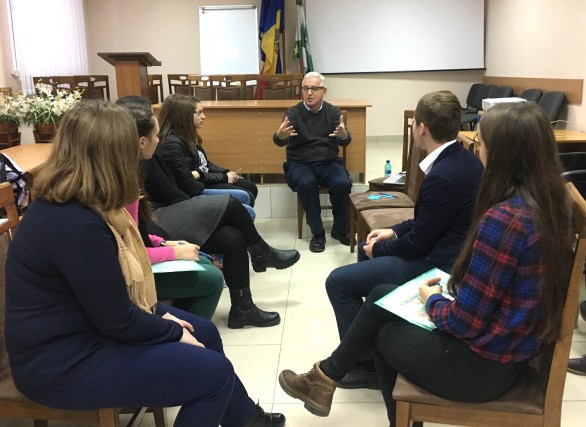
This past Friday, teenagers in a journalism club in the Moldovan town of Călărași answered all five of these questions with flair when I challenged them to write stories and headlines in just a few minutes.

IMG_8904One student described an imaginary murder. Another imagined a fight in a local store. Others chose more peaceful or funny scenarios. All did a great job of answering the 5 W’s, which are care, ce, unde, cand and de ce in Romanian, plus cum for “how.”IMG_4614 copy
A fellow Peace Corps Volunteer, Shannon, invited me to the club, which she and her Moldovan partner Cristina started recently. (That’s the two of them in the photo below.) One of our other volunteer colleagues, Haley, has also started a journalism club, in Comrat.

Shannon’s group meets weekly in the Călărași primăria, or town hall, where she works. Only some of the participants are considering journalism as a career but all are interested in it and eager to learn. Shannon invited me to lead a lesson and share some of my experiences in journalism and communications.

IMG_8927

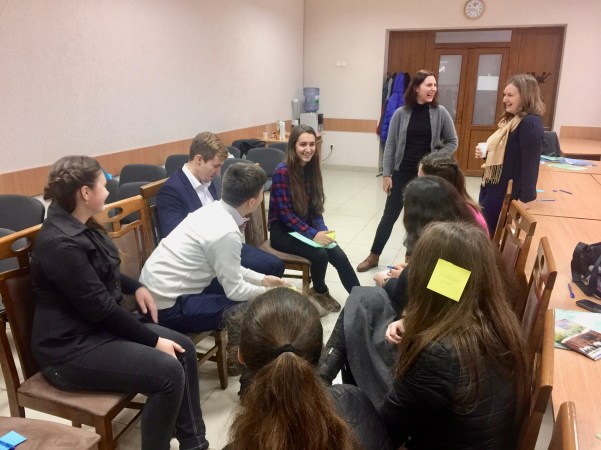
As you can see from the photos, we had a great time, beginning with an “icebreaker” in which people had to guess the name of a famous person someone wrote on a post-it note and placed on their forehead or behind them.

I also enjoyed traveling to Călărași by minibus, seeing the town, and then returning later that afternoon by rail, my first time on a Moldovan train.

All in all, I can report the experience was wonderful, warmhearted, winning, welcome and worthwhile. Hugely.

IMG_8916

The Smokehouse Experiment

Smokehouse, a restaurant opened here in Moldova by two former Peace Corps Volunteers, shows how some PCVs contribute even more to a country after they finish their service.  It’s serving up optimism with a side of slaw

WorldView, the magazine of the National Peace Corps Association, just published this article I wrote about Smokehouse. You can read it below or link to this PDF version: WorldView – Smokehouse Experiment.

Screen Shot 2017-11-09 at 3.08.30 PMScreen Shot 2017-11-09 at 3.08.50 PM