
The president I have long admired as the greatest in American history would have agreed with the federal judge’s order yesterday requiring the White House to restore the press credentials of CNN, MS NOW and Politico.
I wrote my college thesis about Abraham Lincoln’s relations with the press during the Civil War. Lincoln was not a First Amendment absolutist. He shut down presses and authorized arrests of journalists in response to specific incidents. But even when confronted with provocations that genuinely threatened military operations and public order, he remained committed to the principle of press freedom as a foundation of democracy.
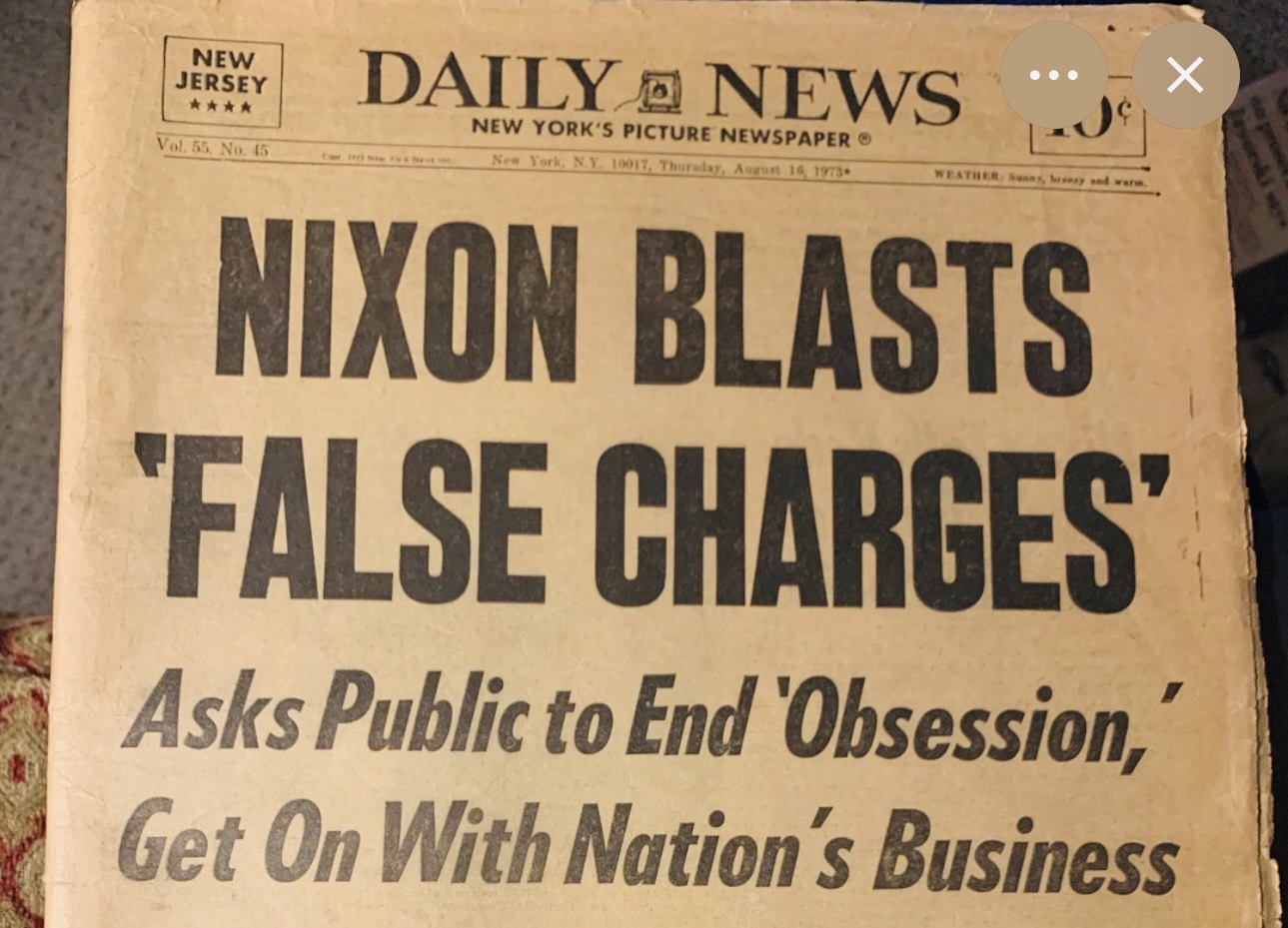
I chose my thesis topic in the wake of the Watergate scandal, when President Richard Nixon placed journalists on an enemies list, tapped their phones and tried to block the release of the Pentagon Papers. I opposed these actions but wondered whether a president might ever be justified in curtailing press freedom. The Civil War seemed like the perfect “stress test” to explore this question.
Little did I imagine that my research would remain pertinent more than half a century later.
My thesis won a prize from Brown University and professors encouraged me to publish it. Instead, I put it in a box, backpacked around the world with a friend, joined the Peace Corps in Nepal and forgot about it until I discovered it in our attic a few days ago. It was revelatory to reread it and be reminded of a president who confronted threats to his administration with extraordinary power, but also knew when to step back.

False reports and fabricated stories were common in newspapers during the Civil War. Press reports falsely claimed that Northern generals were drunk on the battlefield or that Confederate General Robert E. Lee was leaving his army in disgust. The falls of Richmond, Atlanta and other cities were described before they occurred. Many of these abuses were perpetrated to make a stock market killing or to foment dissent.
One incident illustrates how bad things were and how Lincoln responded. On May 18, 1864, the New York World and Journal of Commerce published a proclamation signed by Lincoln and Secretary of State William Seward. Its words captured Lincoln’s familiar blend of the poetic and the practical, imploring God for wisdom and guidance. It praised General Grant’s recent military successes in Virginia. Finally, it said the tremendous casualties suffered in that campaign required the government to launch a new military draft for an additional 400,000 troops.
A presidential call for so many troops was explosive. The country was already reeling. Less than a year earlier, draft riots in New York claimed 119 lives and caused extensive property damage (top illustration). The reaction to a major new draft would surely be worse.
The proclamation was a hoax that went far beyond the usual criticism of Lincoln as a “hairy baboon” or his advisers as butchers. Lincoln initially ordered the newspapers suppressed and their editors imprisoned.

A quick investigation revealed that the editors had been duped. They thought the proclamation was a legitimate dispatch from the Associated Press, which they received on the AP’s official paper just minutes before their deadlines.The actual instigators were the city editor of The Brooklyn Eagle and his colleague, who exploited their familiarity with Lincoln’s literary mannerisms and the workings of the AP system to trigger a crisis. Both men confessed and spent several months in prison. Once the facts emerged, Lincoln released the editors of the two papers, despite pressure from members of his cabinet to keep them imprisoned.
The incident illustrates an important pattern in how Lincoln responded to press provocations. Like other presidents, he thought the media criticized his administration unfairly and failed to give it appropriate recognition for its achievements. When forced by circumstances, such as this incident or others in which papers published sensitive military details, he told his team to respond. But Lincoln generally resisted pressure for broader crackdowns. The newspapers tested his patience but he remained dedicated to his vision of a government of the people, by the people and for the people, grounded in basic rights such as freedom of the press.

The contrast with today’s White House is striking. Our current president has repeatedly treated critical coverage as a personal affront. He has publicly mocked reporters and acted to undermine news organizations whose coverage he considers unfair.
I ended my thesis with these words: “In the various personal and emotional ways in which Lincoln limited his own government’s eventual policy, he displayed deep personal kindness and generosity. Nowhere was his basic benevolence better demonstrated than in his personal discomfort and lenience towards disloyalty and the press. He authorized an essentially dangerous Constitutional policy, but he managed it with the grace and simple human kindness which have helped to mark his final place in history.”
Bottom line: Lincoln’s restraint toward the press was the best possible approach under extraordinary circumstances. His “grace and simple human kindness” proved to be what the country needed.
That was my conclusion when I wrote my thesis in the shadow of the Nixon administration and it feels even more relevant today. The enduring issue isn’t whether a president should ever be angry with the press. Lincoln certainly was. It’s whether a president is using his immense power to protect legitimate national interests or to punish journalists for being journalists.
Subscribe to Not Exactly Retired. It’s free.


 Ovidiu Covaciu, who manages a large Facebook group and produces materials that promote vaccination, was among several speakers who called on reporters to resist what he termed a “false balance” between actual facts and the false claims promoted by vaccination opponents. Mihai Craiu, a pediatrician who uses social media to communicate with the public, said he discusses vaccination regularly but not exclusively, preferring to mix it with other topics.
 Other speakers discussed topics ranging from the factors affecting “vaccine hesitancy” among parents to Moldova’s efforts to increase HPV vaccination.


 One student described an imaginary murder. Another imagined a fight in a local store. Others chose more peaceful or funny scenarios. All did a great job of answering the 5 W’s, which are care, ce, unde, cand and de ce in Romanian, plus cum for “how.”


