Tag Archives: Moldova

Grant Fishing

Did Confucius ever submit a grant proposal?

IMG_1548Some accounts say he wrote the famous aphorism: Give a man a fish, and you feed him for a day. Teach a man to fish, and you feed him for a lifetime.

If he were living in today’s world, though, Confucius might have said: Give money to people and you help them for a short time. Teach them to write grants and they can keep going for years. (Or something like that.)

Grant writing has become an essential skill for public institutions and nonprofit organizations here in Moldova. IMG_1550With salaries and budgets that are tiny by American standards, they look to external sources for additional support, especially for projects. Potential funders range from USAID and other agencies affiliated with foreign governments to international NGOs, local embassies and others. Civic.md compiles many of their initiatives.

On Monday evening, our Ialoveni library learned its robotics team was among the winners in the latest round of a small grant competition for local youth that also provides valuable experience for the young reviewers. The Ialoveni team will  receive 5,500 lei, or a bit more than $330, to buy the supplies it needs to continue participating in national robotics competitions and perhaps to also organize a small local competition.

IMG_1551

My library partner, Lidia Rusu, in the white sweater below, has gained a lot of experience writing grants over the past several years. She’s also received training from Novateca on other forms of fund-raising and advocacy, doing so well that Novateca recruited her to train librarians elsewhere. I was impressed as she worked with several boys on our robotics team to prepare this latest proposal. We discussed it but they did almost all of the work themselves, including the budget and narrative sections. They also presented it effectively to the review committee you see here at Ialoveni’s Consiliul Raional, or county government.

IMG_1558

The new grant isn’t a lot of money, but it’s enough to keep the library’s robotics program moving forward. Equally important, both Lidia and the boys honed their grant preparation skills and received positive feedback that will encourage them to pursue more grants in the future. Next time they may reel in some bigger fish.


Odessa Steps and Roots

Screen Shot 2018-03-11 at 10.12.50 AM

There’s a new epilogue to the story of a girl from Odessa who fled with her family to America in the early 1900s to escape the pogroms that were killing and persecuting Jews in Ukraine and others parts of the Russian empire.

IMG_1676That girl was my grandmother, Sarah.

On Saturday, Champa and I visited Odessa to pay our respects to Grandma Sarah’s memory while touring this great Black Sea port city. I was the first of her children or grandchildren to return in the many years since Grandma Sarah’s family — my family — arrived with nothing at New York’s Ellis Island. She used to describe their journey as resembling this closing scene from “Fiddler on the Roof,” a film she loved:

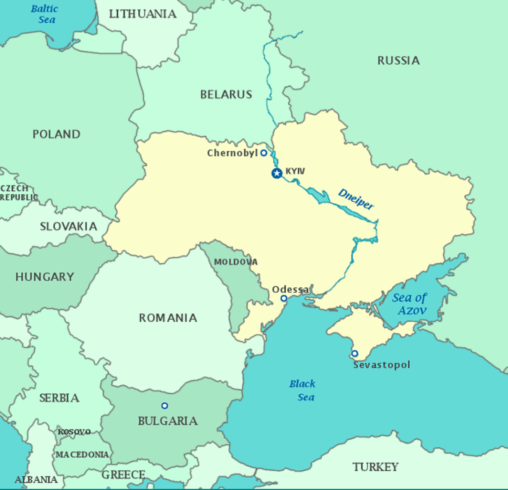
Champa and I hired an excellent driver, Marcel,  to make a long day trip there with our host sister, Alisa (wearing the blue Odessa souvenir hat), and her cousin Natalia.

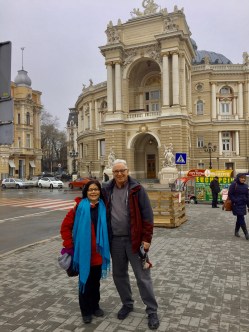
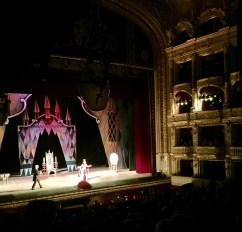
IMG_1588We left Ialoveni early, crossing the Moldovan-Ukrainian border at Palanca since Peace Corps does not allow volunteers to travel through the disputed territory of Transnistria. We were lucky to arrive near Odessa’s opera house, shown behind us, just before a noon performance of Tchaikovsky’s “Sleeping Beauty” was beginning.  IMG_1600We bought the cheapest seats, less than 40 cents apiece, so we could glimpse the theater for a few minutes. It was magnificent.
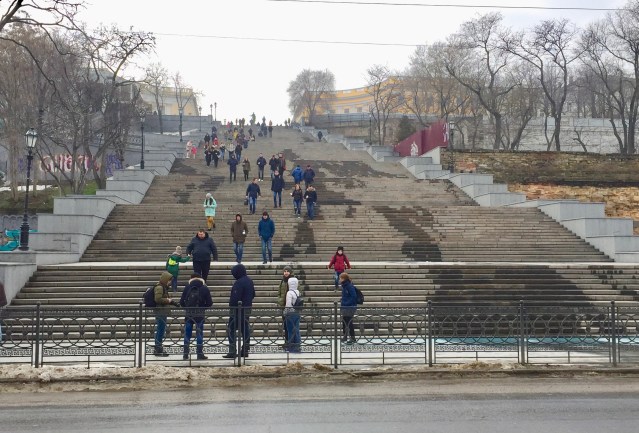
We then walked to another local landmark, the Odessa Steps that figure prominently in the famous scene from Sergei Eisenstein’s 1925 film Battleship Potemkin, shown in the following clip. On one side of the steps is a plaque honoring their cinematic significance; on the other is a funicular we rode to ascend after visiting the port below, a major freight and passenger transportation hub for Ukraine.

IMG_1639


Throughout Odessa’s central area we saw beautiful buildings, parks, shops and statues commemorating figures such as Catherine the Great (below) and Duke de Richelieu, the French-born governor who helped Odessa grow to become the third largest city in the Russian empire. We thought of our two daughters-in-law when visiting the “Mother-in-Law Bridge” and ate a late lunch of traditional Ukrainain food at Kumanets.

IMG_1713

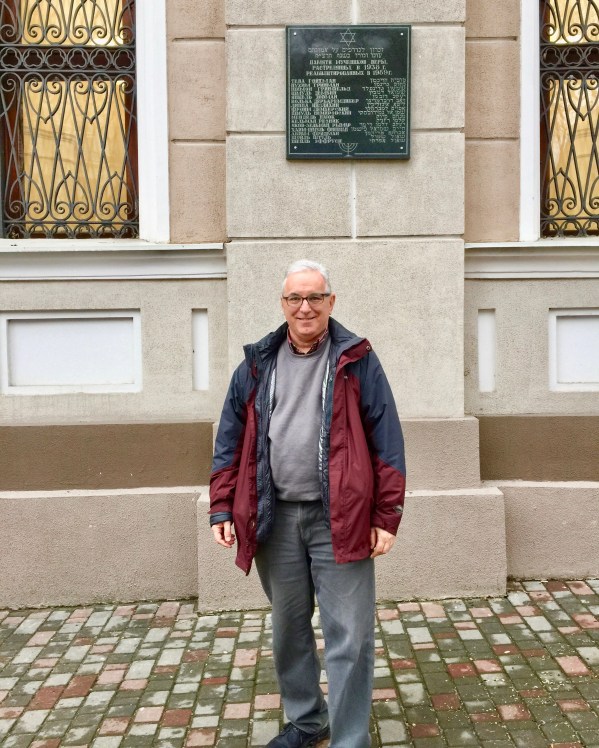
We ended our trip with a visit to Odessa’s largest synagogue, where I left a donation in my grandmother’s honor. It had taken more than a century but one of her descendants had finally made it back to revive her memory in this fascinating city, which we really enjoyed visiting.

Costume Coverage

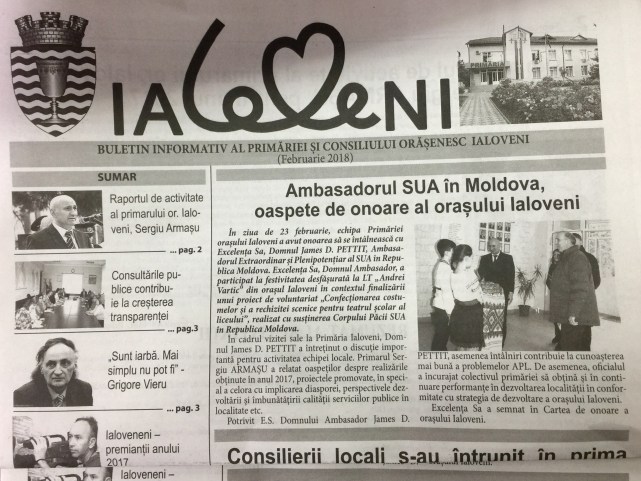
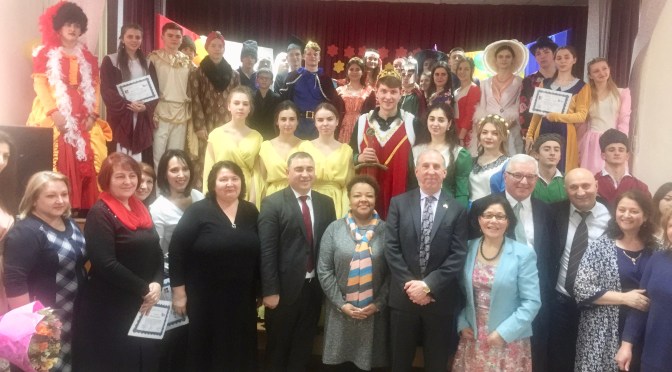
The recent visit of the U.S. ambassador and Peace Corps guests to see the beautiful new costumes at Champa’s school was featured in a national television story, on a local news site and in the latest issue of Ialoveni’s monthly newspaper. (A translation of the newspaper article follows below; my previous post features a video about the event.)

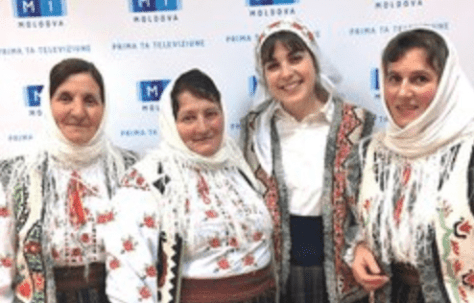
TVR Molodova covered the costume event with this story (also available on YouTube):

The news site Ialoveni Online covered the events with the story excerpted below (in Romanian). You can use Google Translate to translate it online, if needed.

Screen Shot 2018-03-08 at 9.20.24 AM

The city’s monthly newspaper published two articles, both shown here. The first is about the ambassador’s discussions at the primăria, or city hall, which followed the costume event. The second, which I’ve translated below, is about the costume celebration and earlier library visit by Peace Corps guests, and about the work the two of us have been doing in Ialoveni.

Thank you again — vă mulțumim frumos! — to our extraordinary partners at the school and the library who made all of this possible and were so welcoming to their American guests.

IMG_1530

IMG_1537

Translation of second article:

Interesting Achievements of Peace Corps Volunteers in Ialoveni

Theoretical High School Andrei Vartic in Ialoveni had a gala festival to launch a volunteer project by its students, parents and teachers with support from the U.S. Peace Corps and volunteer Champa Jarmul.

Attending the event was his Excellency James D. Pettit, the U.S. ambassador to Moldova. The project produced 43 costumes that can be used by actors in dramatic presentations. The event featured a series of short scenes in which student actors presented heroes from the works of Shaespeare, V. Alecsandri and I. Creangă.

The celebration honored the volunteers. Thanks were expressed by school director Valentina Sacara and project coordinator Ana Doschinescu to all those who contributed to making this dream a reality.

A delegation from Peace Corps Moldova led by director Tracey Hébert-Seck visited Ialoveni’s Petre Ștefănucă public library. Peace Corps Volunteer David Jarmul presented some of the library’s activities, such as its robotics club, “Bebeteca” children’s room and infographics. The guests were impressed by the many activities carried out in collaboration with the volunteers.

Library director Valentina Plamadeala thanked David and Champa Jarmul for their diverse cultural activities at the library and in the community, for the beautiful projects they brought to Ialoveni and for their hours of English language training at the library.

Our Medical Care

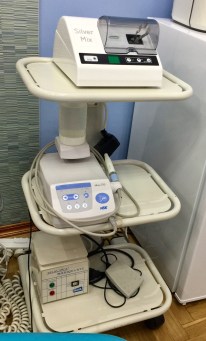
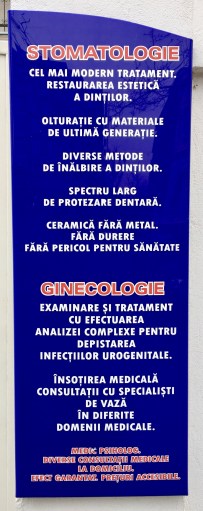
I went to the dentist for a minor procedure on Tuesday and, as you can see, his office looked a lot like a modern dental office you might find in America.

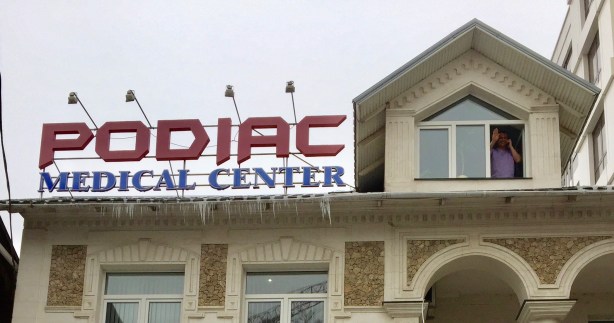
Dr. Vlad Drugalin provided excellent care, speaking English with me, Russian with his assistant and Romanian when the three of us chatted together. I felt in good hands from the moment I entered his office, located in the building shown below.

IMG_1509But then again, I’ve felt in good hands medically with Peace Corps Moldova since we arrived here. The chief medical officer, Dr. Iuliana, is a jewel: skillful, thorough, caring and endlessly dedicated to keeping volunteers heathy. She pays attention to everyone’s mental health as well as their physical condition, knowing how stressful Peace Corps service can sometimes be.
I also think highly of her colleague, Dr. Diana, and their new assistant Tatiana. The three of them are a great team, working in coordination with but somewhat separate from the rest of Peace Corps Moldova. All of our medical interactions are confidential.

IMG_1517We get our medical care for free here, with no monthly premiums or other costs. During our pre-service training, the medical team ran workshops on everything from water purification to traffic safety. When we moved to our posts, they gave us water filters and well-stocked medical kits. They continue to fill prescriptions, address concerns and provide routine services in a clinic within the Peace Corps building. When necessary, they send volunteers to local specialists such as Dr. Drugalin or, occasionally, back home or elsewhere for treatment, coordinating with the Peace Corps medical office in Washington.
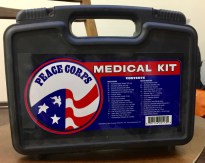
Champa and I have enjoyed good health here. We both fell on the ice a few weeks ago but, fortunately, didn’t break anything. We’ve had a few colds and stomach issues, but never had to stay overnight in Dr. Iuliana’s “TDY.” When I think back to my experience as a young Peace Corps Volunteer in Nepal, when I had pneumonia twice and parasitic infections repeatedly, I know how lucky we’ve been.

IMG_1527We were in good shape when we applied to become volunteers, although that didn’t stop the Washington medical office from putting us through the wringer before clearing us for service. We had to submit form after form, with documentation, over several months before we were finally approved. IMG_1488I understood why the medical office was so cautious, especially with two older applicants, but the process was exhausting.
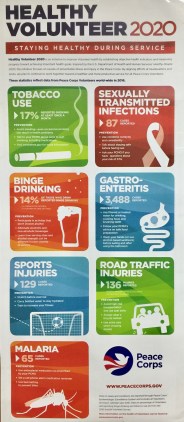
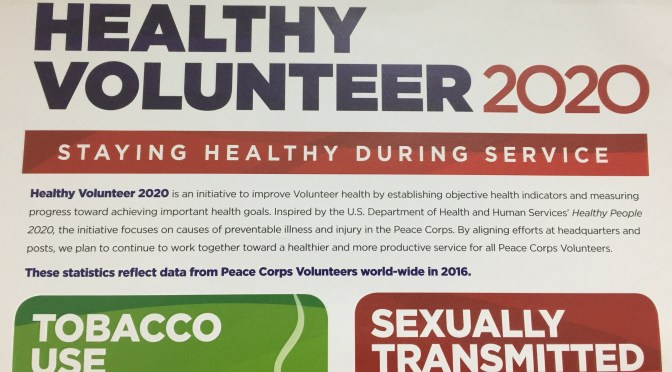
To be sure, Peace Corps confronts many medical challenges with its volunteers around the world, everything from sore throats to giardiasis, malaria or sexual assault. When I was in the Peace Corps medical office on Tuesday, picking up forms to bring with me to the dentist, I saw the poster shown here.

Champa and I have managed to avoid all of the dangers highlighted on the poster, at least so far. However, we still have four months to go. Fingers crossed. Sănătate.

[Postscript: The day after I posted this,

IMG_1515


Volunteer Voices

Everyone’s Peace Corps experience is different. I want to pause from our own narrative to share some stories from my fellow volunteers, all of whom contributed to the Peace Corps Moldova Stories site. Most recently:

Screen Shot 2018-03-01 at 8.03.42 AM

Scott Ondap, a health education volunteer from California, described his experience serving as a godparent to the child of his adult Moldovan host sister. That’s Scott holding the baby at the baptism, together with PCV Ellen Kim.

Screen Shot 2018-03-01 at 10.54.11 AM

Hayley Guy, an English education volunteer from Florida, shared a funny but inspiring story about coming all the way to Moldova to overcome her anxiety about singing in public. She described how she unexpectedly found herself singing and dancing on a Moldovan television show.

Screen Shot 2018-03-01 at 8.10.40 AM

Haley Bader from Virginia and Danny Gottfried from Massachusetts (shown here) helped students highlight problems facing people with disabilities. My favorite moment in Haley’s lovely story is when a disabled young man bends a nail with his hands.

Screen Shot 2018-03-01 at 8.23.22 AM

Donna Barnes, a volunteer and associate professor in the Department of Psychiatry at Howard University, helped organize a kite festival to raise awareness in her village about nutrition. She described how “we had singing, dancing, even a flash mob.”

Screen Shot 2018-03-01 at 8.24.26 AM

Claire Worley, a health education volunteer from Georgia, joined with other PCVs and local friends to celebrate Thanksgiving with foods and traditions from both countries. “It turned out to be the best Thanksgiving I have ever celebrated,” she wrote.

Screen Shot 2018-03-01 at 8.31.46 AM

The site has many other good stories, recently including Amir Feinberg’s heartfelt account of his first days as a new teacher, Rebecca Stuch learning to live around farm animals and Alex Bostian’s students forming a giant peace sign to celebrate the International Day of Peace. Grace Myers described how “every day holds a new small adventure for me” and Kaylin Stinski shared a recipe for veggie pizzas she made with her host mother.

As I explained previously, I’ve been assisting with editing these stories and some of the material on Peace Corps Moldova’s Facebook page, working with Liuba Chitaev and others..

Screen Shot 2018-03-01 at 8.33.39 AM

Beyond Moldova, the central Peace Corps Stories site shares the voices of volunteers worldwide. It’s currently highlighting the winners of an international video competition, including my own favorites from Cambodia, Guatemala and Guinea. Another great resource is the Peace Corps Worldwide site, which connects to dozens of books and other writing from returned volunteers.

As I discussed when writing recently about how I used Oprah Winfrey’s Golden Globes speech in a training workshop, we humans make sense of our world through stories. Peace Corps Volunteers have some of the best. Check them out.


Costume Party (Video)

On Friday, the U.S. ambassador and other guests celebrated the new costumes Champa and her Ialoveni school partners created over the past several months — a colorful and emotional day we will never forget. This video is also on YouTube.


Ialoveni’s Diamonds (Video)

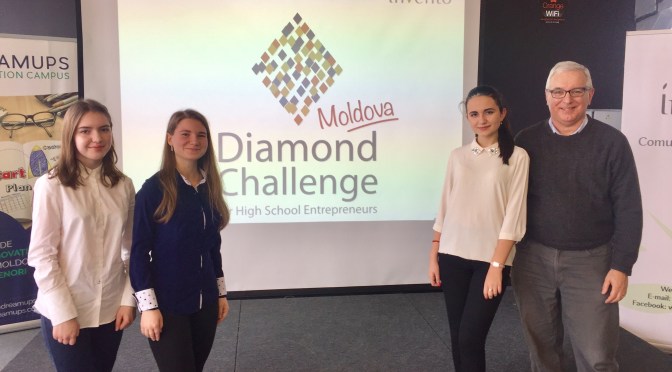
Three Ialoveni girls took second prize nationally in the 2018 Diamond Challenge Moldova competition for young entrepreneurs. I mentored the team, which produced a Facebook site to help teenagers learn about careers. The video is also on YouTube.

The Power of Stories

On Saturday, I used Oprah Winfrey’s magnificent recent speech at the Golden Globes to teach a group of Moldovan high school students about the power of stories.

Screen Shot 2018-02-11 at 7.51.48 AM

I was leading a workshop to prepare them for pitches they’ll be giving next weekend at the annual Diamond Challenge competition for young entrepreneurs, which several of us have been supporting as Peace Corps Volunteers. Most of the students knew about Oprah (who doesn’t?), so they were interested when I showed how she began her remarks on the #MeToo movement:

“In 1964, I was a little girl sitting on the linoleum floor of my mother’s house in Milwaukee watching Anne Bancroft present the Oscar for best actor at the 36th Academy Awards. She opened the envelope and said five words that literally made history: ‘The winner is Sidney Poitier.’ Up to the stage came the most elegant man I had ever seen. I remember his tie was white, and of course his skin was black, and I had never seen a black man being celebrated like that. I tried many, many times to explain what a moment like that means to a little girl, a kid watching from the cheap seats as my mom came through the door bone tired from cleaning other people’s houses.”

IMG_1141

Oprah used that story to establish a personal connection with her audience, emotionally as well as intellectually. She then continued to tell stories, notably about Recy Taylor, a young black mother who was raped in Alabama by “brutally powerful men. For too long, women have not been heard or believed if they dare speak the truth to the power of those men. But their time is up. Their time is up.”

Like millions of people watching back home, I found Oprah’s words deeply moving. As a former speechwriter, I also admired how she celebrated the power of our own voices. In her case, she praised “all the women who have felt strong enough and empowered enough to speak up and share their personal stories.”

IMG_1149

As I told the students on Saturday, effective speeches often open with personal examples. I showed them videos of previous Moldovan teams that won Diamond Challenge competitions. All of them began with members describing how they faced a problem themselves, leading them to develop a product or service to overcome it.

IMG_1152I also discussed speech-making generally and the particular format of entrepreneurial pitches. I divided the students into groups to practice their presentations, as you can see in the photos here.

My main point was that humans make judgments with both their heads and their hearts. You usually can’t convince them only with statistics and rational arguments, although those are important, too. You need to make them care.

IMG_1144When I was running a university communications office before joining the Peace Corps, I used to tell scientists and professors the same thing, as in this 2014 article in Inside Higher Ed. I urged them to “come down from Mt. Olympus and share their stories.” Instead of trying to dazzle us with their intellects, I said, they should share their own experiences: “If you are a physician-scientist who is concerned about national health policy, this means telling us what happened yesterday to Mrs. Jones, the woman who said she can’t afford the medication you prescribed.”

I believe this passionately. For better or worse, humans make sense of the world through stories. It’s why I tell stories on this blog.

IMG_1142 2

Here’s another rhetorical technique I love: Closing a blog post or speech by circling back to the opening sentence. In fact, I’ll do that now by turning again to Oprah, who closed her Golden Globes speech by saying, “I want all the girls watching here, now, to know that a new day is on the horizon!” See, she did it, too.

Few of us will ever speak as brilliantly as Oprah Winfrey. However, we all can learn from her, whether it’s for an international entrepreneurship competition, a business conference or a local meeting. If you want to convince your audience, make them care. Tell them a story.

***

Subscribe to Not Exactly Retired. It’s free!


Why PCVs Serve

If you think Americans sign up to become Peace Corps Volunteers because they’re altruistic and want to help people around the world, you’re right but not completely right.

A national survey of more than 11,000 Returned Peace Corps Volunteers (RPCVs) several years ago found their top three reasons for joining were “wanting to live in another culture,” “wanting a better understanding of the world,” and “wanting to help people build a better life.”

nepal

Simultaneously, the survey reported “a significant generational shift” in the importance volunteers place on acquiring job skills and experience during their service. Volunteers who served more recently placed “a greater emphasis on career development as a motivation for joining the Peace Corps,” it said.

Just 30 percent of volunteers who served in the 1960s identified “wanting to develop career and leadership skills” as an important motivation.” Among volunteers who served in the 2000s, 68 percent cited this motivation, with 36 percent saying it was “very important.” Growing numbers of applicants also want to expand their language skills.

philippines.png
A few years ago, a volunteer who returned from Guatemala wrote: “I’m sure that my Peace Corps service helped me gain acceptance to a selective master’s degree program (because my grades as an undergraduate were disappointing, at best). Over the years, many people have told me that having the words ‘Peace Corps’ on my resume would only help me.”

vanuatuIndeed, Peace Corps itself touts the career benefits of service. Its recruitment materials emphasize the importance of selfless service and cultural outreach but also highlight medical benefits, student loan deferrals, tuition reductions and career networking opportunities.
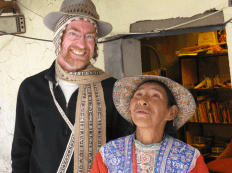
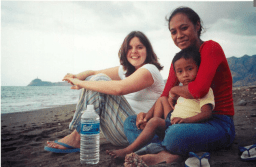
peruAll of this is consistent with the changes I’ve seen myself since I first served as a volunteer in Nepal in the late 1970s. My friends and I didn’t talk much about resumes, grad school applications and job prospects. America was the world’s dominant economic power then. Jobs were plentiful.timor-leste
Before I joined Peace Corps this second time, I met regularly at my university with undergraduates who were considering Peace Corps, serving as an informal advisor for the campus placement office. At first, I was taken aback by how many of their questions were about how Peace Corps service might afftect their career paths. Would it help them get into law school, or a public health program or the Foreign Service? They asked whether I agreed with advice like this from The Princeton Review: “Altruism distinguishes a strong medical school applicant from a mediocre one. Volunteer work and community service [such as] the Peace Corps … speak most strongly to this quality.”south-africa

I always responded positively. Seeing how impressive these students were, I also came to understand their questions reflected new economic realities, not a diminishment in the applicant pool’s sincerity. Just like my colleagues now in Moldova, most of whom are much younger than me, they were wonderful people and every bit as committed as those who served before.

I’ve developed even greater admiration for today’s generation of PCVs as political winds back home shift towards “making America great again.” They face a more challenging economic environment than my generation did but have still chosen to devote more than two years of their lives to serve others. Yes, doing so may enhance their resumes and career prospects. That’s also true for young people who choose to serve in Teach for America or, for that matter, the Marines. Life is complicated.

So, too, for me. Champa and I joined the Peace Corps mainly to serve others, and to serve our country, after having so many blessings in our American lives. But we also were looking for some adventure and an interesting transition away from the conventional workplace.

mexico
The Guatemala RPCV, Taylor Dibbert, emphasized what he and many of us ultimately consider most important about Peace Cops service: “Volunteers are doing important, unglamorous work that’s consistently underappreciated – from health to education, agriculture, the environment and more. Besides, volunteers are connecting with foreigners from across the globe and humanizing the U.S. for thousands upon thousands of non-Americans.”

Political winds and job markets will continue to evolve. What endures, he wrote, is “the culture of altruism, adventure and patriotism that has permeated the Peace Corps since the organization’s inception.”

I think he’s right, perhaps even completely right.

[All photos except featured image are from the Peace Corps online library.]

***

How else has Peace Corps changed? My post Peace Corps: Now vs. Then identified six of the biggest changes I’ve seen. Subscribe to receive all of this blog’s future posts. 

Money Transfers

Every picture tells a story. Can you guess what this one is telling you?

IMG_1047

As you can see, it shows two shops, which are next to the traffic circle in Ialoveni, where Champa and I are serving as Peace Corps Volunteers. The yellow sign with the numbers showsIMG_1048 the latest exchange rates for the Moldovan leu relative to the U.S. dollar, the Euro, the Russian ruble and other currencies. The dollar has now slipped well below 17, continuing a slow descent I’ve discussed previously.

But something else is going on here, too. Look more carefully above the open door of the shop on the left. There’s a blue sign saying “Lucru legal în Europa!” In Romanian, that means “Work legally in Europe!”

IMG_1041It’s no coincidence this sign is adjacent to one showing exchange rates. In fact, it’s key to understanding the deeper meaning of the photo. It’s like the MoneyGram sign across the street, which says “transfer de bani,” or money transfer, or the Western Union sign up the block.

Everywhere you look in Moldova, banks and shops offer to transfer and exchange money. They are so ubiquitous, in fact, that you barely notice them after awhile, just like the fast food joints that cover our landscape back home.

IMG_1094

In the above photo in Moldova’s capital, Chișinău, there’s not only the shop with the red “Schimb Valutar” and “Exchange” signs but another one further up the block. Look carefully; it’s there. There are even more shops and signs as you get closer to places with lots of travelers, like the central bus station.

Moldova gets few foreign tourists, so the shops aren’t looking primarily to attract them. Nor are there many Moldovan tourists looking to buy Euros or dollars before heading on vacations in the other direction.

IMG_1098

No, all of this is a reminder of how many Moldovans have left their homeland to work abroad — especially in Western Europe but also in Russia and other eastern countries, as well as in the United States, Israel and elsewhere. As I’ve described previously, many of them must leave behind spouses and children, a story we hear again and again when we talk with our Moldovan friends.

When these foreign workers come home to visit, they often bring much of their earnings with them, or they may send money home with a trusted friend. Many also rely on banks and money transfer companies, comparing the fees, exchange rates and service to get the best deal.

Screen Shot 2018-02-03 at 8.43.46 AM

India and China, with their huge populations, are the world’s top “remittance-receiving” countries in overall dollars, followed by Philippines and Mexico. When calculated on a per capita basis or as a percentage of GDP, however, Moldova’s foreign workers are among the world’s leaders, as illustrated in the graph above, which is based on World Bank data. (I could not find a graphic with more recent data but there’s no doubt Moldova is still high on the list.)


Just like back home, much of this industry has moved online, for paying bills as well as for transferring and exchanging money. In fact, when I glanced last week at this yellow kiosk in the entrance to our local Market Victoria, I was startled to see bitcoin now listed as one of the options.

IMG_1043

You can certainly find money-exchange shops in the United States, too, especially in places with lots of foreign-born workers. I must have walked obliviously past the Western Union sign at my Harris-Teeter supermarket in Durham dozens of times until I needed to send money to someone in China. Then I noticed it. Every picture tells a story when you’re finally ready to see it.