Tag Archives: David Jarmul

Talking Turkey


I ate Thanksgiving turkey twice on Thursday — first when I usually eat breakfast, then for dinner.

IMG_9391

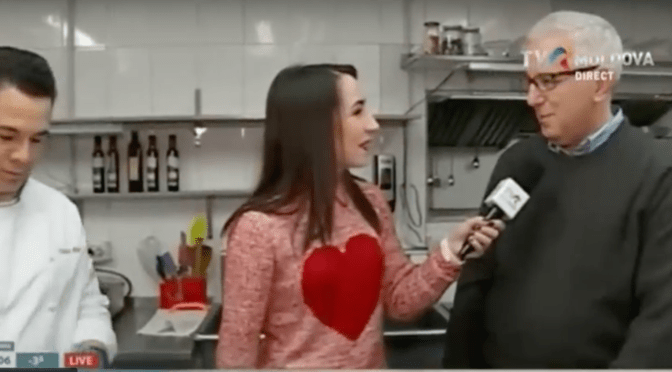
The early meal was for a television story on TVR Moldova explaining our holiday to viewers across Moldova and Romania. Cătălina Russu, a television reporter who lives in Ialoveni, invited me to join her as she broadcast a live story from Jeraffe, one of Chișinău’s top restaurants.

As her story began, as shown in the first clip above (also on YouTube), we discussed Thanksgiving foods and traditions while the chef, Nestor Perez, prepared a turkey roll stuffed with herbs and butter. I had not previously met Nestor, who lived in America for many years after leaving Venezuela and now lives here with his Moldovan wife. Thanksgiving Menu 2017After our first segment, we all took a break and then moved from the kitchen to a table to eat the cooked turkey with pistachio-infused rice.

I shared my own Thanksgiving menu (seen here) with Cătălina and showed her how American kids use their fingers to make turkey pictures for placemats. The highlight, though, was Nestor’s food, shown in the second clip above (also on YouTube). It was fabulous despite the early hour. You can see for yourself in Cătălina’s story, which is easy to follow even if you don’t speak Romanian.

As soon as her second segment was finished, the cameraman and another reporter pulled up chairs so they could try the turkey, too. By 9:30 a.m., I was done and heading back to Ialoveni by bus to prepare the next round. (Around the same time, my Peace Corps Volunteer colleague Anne was discussing Thanksgiving on another television program here.)

I bought the turkey for our meal from a local farmer, who delivered it on Wednesday to our host mother. I found sweet potatoes at a downtown store. IMG_9393Champa discovered dried cranberries in the market, which I cooked with juice and brandy to make a sauce. One of our local stores now sells Parmesan cheese, so I bought some and combined it with mashed potatoes in a casserole. For my peach pie, I used slices of local peaches we’d bought last summer and froze. We made cookies with chocolate chips and brown sugar we bought when we were home last summer. We bought the Armenian and Georgian wine during our recent trip there.

We were prepared, in other words, and had even finished the desserts and some other items earlier in the week. Our host family and a Peace Corps Volunteer from Minnesota, Cindy, arrived in the evening. We then ate too much, laughed too much and went around the table to each say why we give thanks.

IMG_9414

It was such a lovely day. The only thing that could have been better would have been sharing Thanksgiving with our family back home, who we missed even more than usual throughout the day. We’re thankful we will be back together with them next year — and thankful to have found another wonderful family while we’re here.

Libraries Turn the Page

In both America and Moldova, libraries are racing to redefine themselves and remain relevant in an online world.

IMG_9072Back home, where people now routinely download books and find information on the internet, libraries are emphasizing their roles in providing expertise and bringing people together, whether with story times for kids, study spaces for students or programming for retirees.

IMG_9175Here in Moldova, the transition has been even more challenging. Library budgets and salaries are tiny. Many library buildings are old, with collections dating to Soviet times. There are no resources to buy books, much less comfy sofas or cappucino machines.

Last week, the library where I work in Ialoveni showed how some Moldovan libraries are moving forward despite these challenges. Together with the local Consiliul Raional, or county government, it organized a “library day” to showcase its recent innovations.

IMG_9151

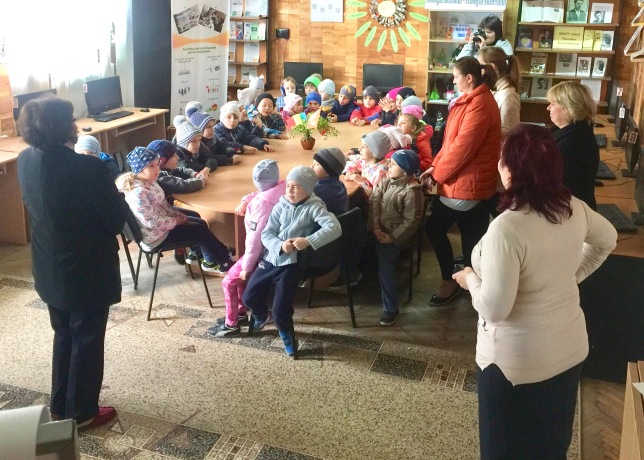
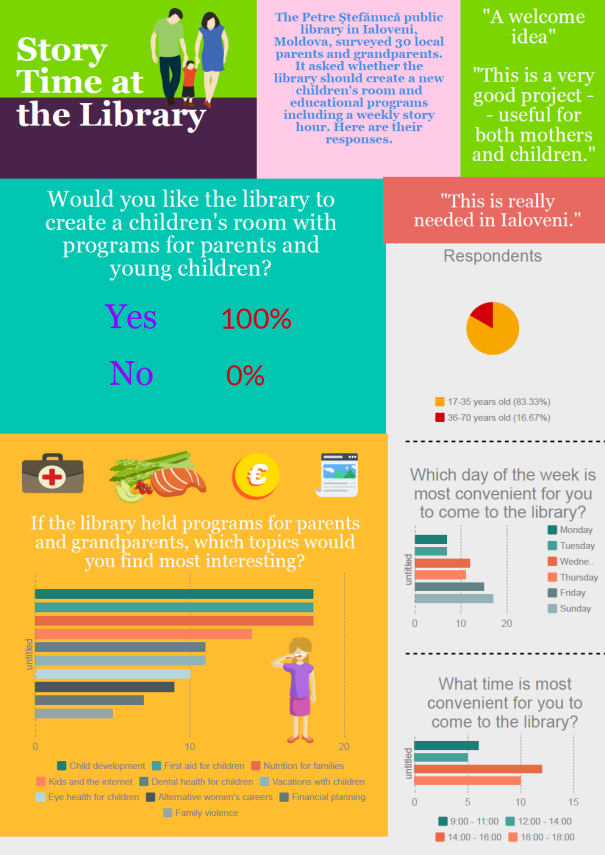
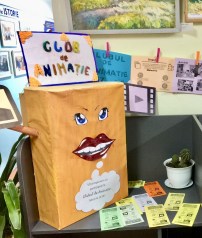
Under the leadership of director Valentina Plamadeala, speaking above, the library now has a film animation class, a club that produces crafts from recycled materials, a robotics program and a workshop to teach modern advocacy techniques. It’s organizing a new weekly story time for toddlers that will also provide educational programming for parents and grandparents. It hopes to provide new programs for people with special needs, building on a Braille collection it recently added. The library is reaching out to its community in interesting ways, too, using videos, infographics and social media.

IMG_9089

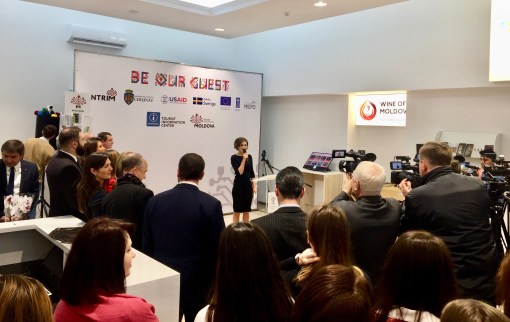
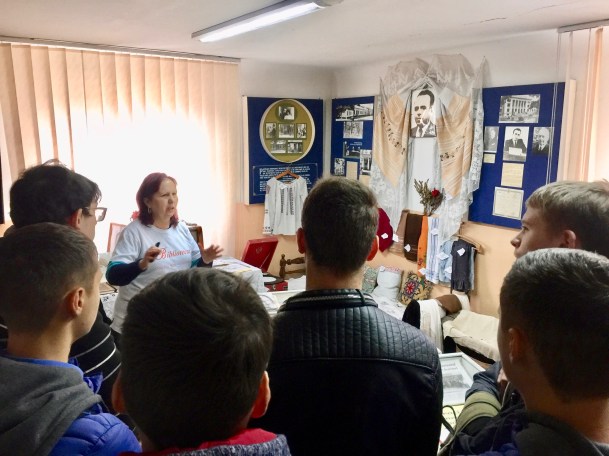
Located near the city’s main traffic circle, Ialoveni’s library is named for Petre Ştefănucă, a folklorist and local hero who died in a Soviet gulag. At last Tuesday’s event, I was moved as librarian Larisa Petcu, above, showed off the small museum that honors his memory, telling local high school students about him. I was also impressed by the presentations from some other nearby libraries that participated in the event. Cătălina Russu, a reporter for TVR Moldova, also attended and produced the video shown at the beginning of this post (also available on YouTube; at 1:35, I speak briefly in English.)

Novateca, a program managed by the nonprofit organization IREX with support from the Bill and Melinda Gates Foundation in partnership with USAID, has been a driving force behind the modernization of Moldova’s public libraries, building on similar programs in neighboring Romania and Ukraine. Since it began operations here five years ago, Novateca has provided thousands of computers and other resources, trained librarians across the country, increased public support for libraries and promoted a more expansive vision of their role in a civil society.

IMG_9182

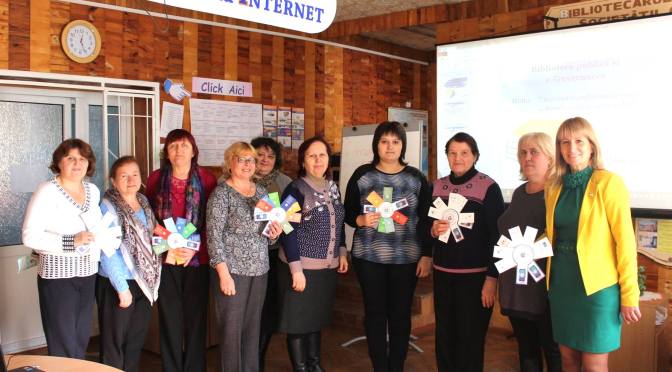
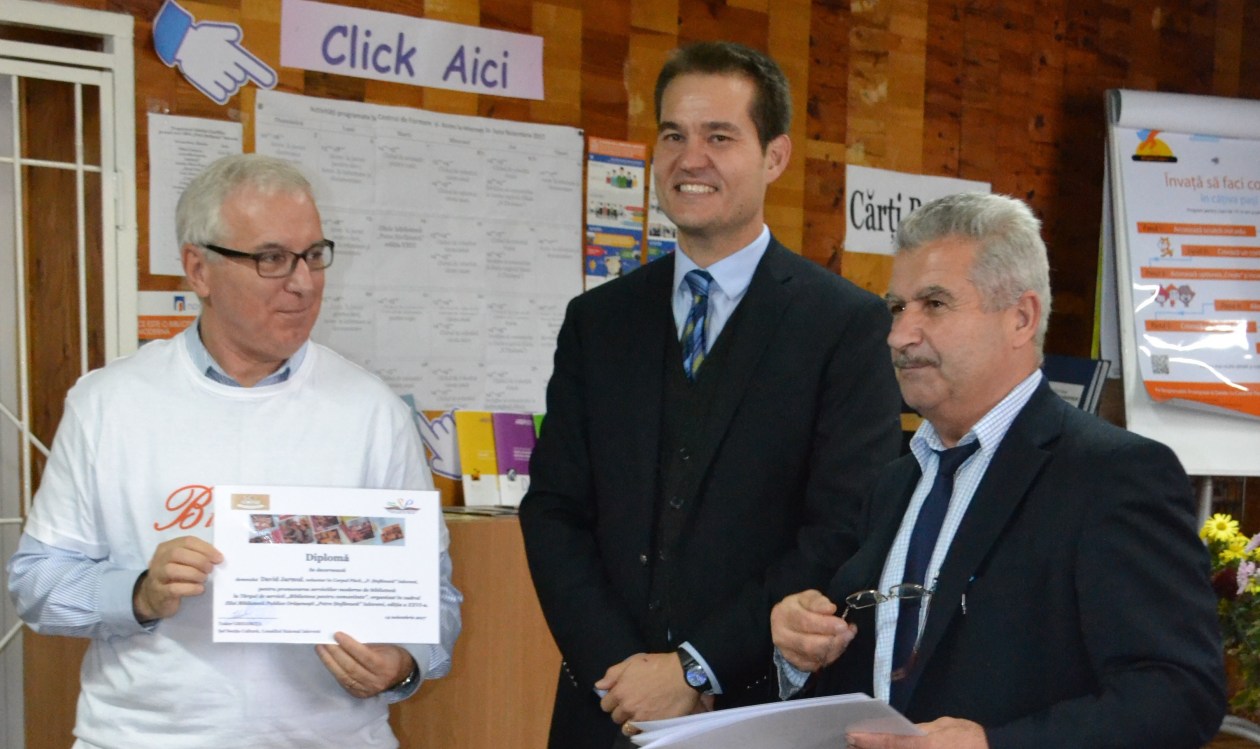
I’ve become a big fan of Novateca’s work and was pleased to see its director, Evan Tracz — himself a former Peace Corps Volunteer, in Turkmenistan — at last Tuesday’s event. (He’s in the center of the photo below, awarding certificates to me and others with Tudor Grigoriță of the Consiliul Raional.) Evan and his team have had a transformative impact. Novateca is now winding down its activities as its funding comes to an end. Many of us hope Moldova’s libraries will continue making progress without them.

I have great respect for the people I work with at Ialoveni’s library. They are doing so much with so little, earning less in a year than some American librarians make in a couple of weeks. They keep looking for better ways to serve the community here without a coffee maker in sight, much less a cappucino machine.

DSC_0202

Sumo Robots Video

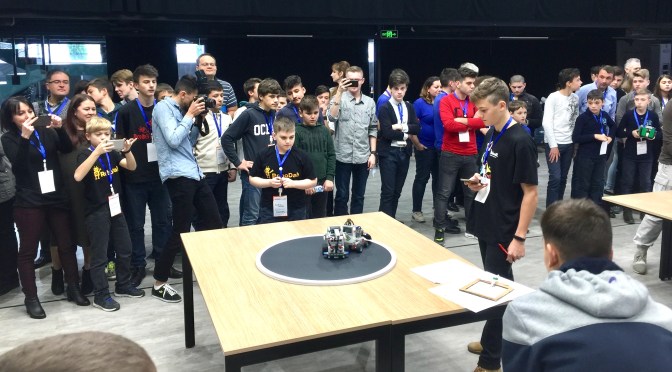
Student teams from across Moldova battle with “SumoBots” they built and programmed. Our Ialoveni library team participated in this educational competition at Tekwill in Chișinău. The video is also viewable on YouTube.

200 Posts: Top Ten

This is my 200th post on Not Exactly Retired, which I started in mid-2015.IMG_0992 As we’ve traveled around the United States, spent time in Nepal and served as Peace Corps Volunteers in Moldova, the blog’s audience has kept growing, with more than 26,000 visits so far. Thanks to all of you who have joined us on our journey!

FullSizeRender 808“Not Exactly Retired” advances two of the three official goals of Peace Corps: to promote a better understanding of other peoples on the part of Americans, and vice versa. (The other goal is to “help the people of interested countries in meeting their need for trained men and women.”)

Here’s a Top Ten list of the blog’s most popular stories so far, as measured by views. There’s more to come, so stick around — and if you know anyone who might enjoy Not Exactly Retired, please tell them about it and invite them to subscribe.

IMG_6043

The Most-Viewed Stories on Not Exactly Retired

  1. Peace Corps After 50 (featured on PBS/NextAvenue)
  2. Peace Corps: Now vs. Then (comparing service in Nepal and Moldova)
  3. Funny Peace Corps Videos (the joys of pooping in a hole)
  4. Moldova’s Marathon (a recent story about runners here)
  5. Are Volunteers Over-Connected? (from WorldView Magazine)
  6. Older Peace Corps Volunteers (a 5-part series about Moldova)
  7. Message in a Bottle (discovering your impact on someone, decades later)
  8. Life is Calling (making a big change doesn’t need to be scary)
  9. Reading in OverDrive (how to read books on your e-reader for free)
  10. The Smokehouse Experiment (former PCVs open a restaurant here)

Other popular stories have focused on the perils of downsizing after decades of American life, Thanksgiving in Moldova, an amazing Romanian salt mine and the adventures a friend and I experienced years ago while backpacking across Afghanistan, Nepal, Sudan and other places.

Not surprisingly, most of the blog’s views have come from readers in the United States, followed by Moldova. Rounding out the Top Ten are Romania, the United Kingdom, Nepal, Canada, Germany, Ecuador, India and the Philippines, all with at least 100 views.

Are you enjoying “Not Exactly”? Do you have any reactions to these lists? Requests for future stories? As always, I welcome your feedback and comments.


Journalism Club

The “5 W’s” — who, what, where, when and why, plus how — are the language of journalism, no matter what language you speak.

IMG_4630 copy

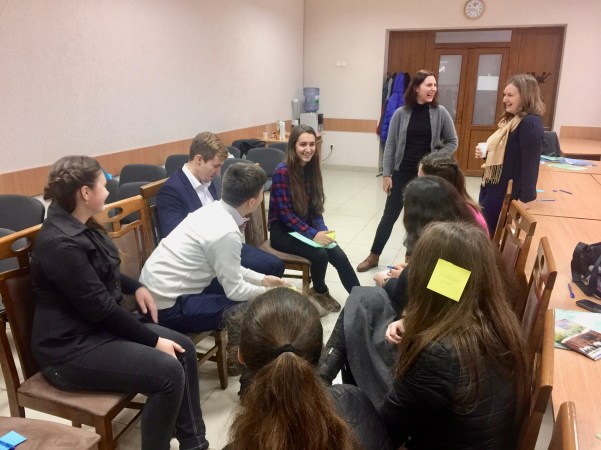
This past Friday, teenagers in a journalism club in the Moldovan town of Călărași answered all five of these questions with flair when I challenged them to write stories and headlines in just a few minutes.

IMG_8904One student described an imaginary murder. Another imagined a fight in a local store. Others chose more peaceful or funny scenarios. All did a great job of answering the 5 W’s, which are care, ce, unde, cand and de ce in Romanian, plus cum for “how.”IMG_4614 copy
A fellow Peace Corps Volunteer, Shannon, invited me to the club, which she and her Moldovan partner Cristina started recently. (That’s the two of them in the photo below.) One of our other volunteer colleagues, Haley, has also started a journalism club, in Comrat.

Shannon’s group meets weekly in the Călărași primăria, or town hall, where she works. Only some of the participants are considering journalism as a career but all are interested in it and eager to learn. Shannon invited me to lead a lesson and share some of my experiences in journalism and communications.

IMG_8927

As you can see from the photos, we had a great time, beginning with an “icebreaker” in which people had to guess the name of a famous person someone wrote on a post-it note and placed on their forehead or behind them.

I also enjoyed traveling to Călărași by minibus, seeing the town, and then returning later that afternoon by rail, my first time on a Moldovan train.

All in all, I can report the experience was wonderful, warmhearted, winning, welcome and worthwhile. Hugely.

IMG_8916

The Smokehouse Experiment

Smokehouse, a restaurant opened here in Moldova by two former Peace Corps Volunteers, shows how some PCVs contribute even more to a country after they finish their service.  It’s serving up optimism with a side of slaw

WorldView, the magazine of the National Peace Corps Association, just published this article I wrote about Smokehouse. You can read it below or link to this PDF version: WorldView – Smokehouse Experiment.

Screen Shot 2017-11-09 at 3.08.30 PMScreen Shot 2017-11-09 at 3.08.50 PM

The Surprise of Travel

The modest roadside cafe we saw outside the Armenian village of Sevkar lacked a sign in English, much less a website. It was hardly the place you’d expect two older Americans to stop for lunch. But we did, unexpectedly, while traveling last week and it turned out to be a highlight of our trip. It also provided a reminder about how we all need to look beyond our plans and checklists to embrace life’s surprises.

It was before noon and we were the only customers there. The owner led us into his kitchen, pointed to some bowls of meat and asked what we’d like him to barbecue over his charcoal fire. IMG_8603Then, as the meat sizzled, he sliced bread, tomatoes, onions and cheese onto a plate and took them outside to a wooden table, where he invited us to sit.

The barbecue was beyond delicious, as was everything else. Here along a small road in northern Armenia, we enjoyed one of the best meals of our lives.

This happened only because we asked our driver to find somewhere to stop early for lunch so we could spend our remaining Armenian money before crossing the border into Georgia.

This is one of the things I love most about traveling. No itinerary can anticipate many of the experiences that end up making a trip memorable.

Here’s another example: While in Armenia we also came across an area filled with small stone cairns, which reminded us of the mani stones people in Nepal pile along trekking paths. Beside them were hundreds of cloth and plastic ribbons wrapped around trees and bushes, which people placed for good wishes and luck. They, too, fascinated us, even though we’d actually come to see the adjacent Geghard monastery, partially carved out of a mountain.

IMG_8797

We were surprised at a Jewish synagogue, too. Its caretaker in Tbilisi, Georgia, gave Champa and me a private tour, even opening the ark to show us some of their Torah scrolls. He told us about Tbilisi’s small Jewish community and took the photo you see here.

IMG_8766

While near Tbilisi, we also discovered wine ice cream, from this woman at Mtskheta. We thought it was a gimmick but I bought a cone and it was wine ice cream, and pretty tasty, too.

IMG_8483

We also were surprised by people like this New Zealand woman, Lesley, who we met at an Armenian restaurant that provided a demonstration of traditional lavash baking. We discovered she lived previously in Turkmenistan, where she was friends with a young American woman who is now in our Peace Corps group in Moldova.

IMG_8532

Then there was the woman with the red jacket you see talking with Champa. She is a physical therapist from the Philippines who works in Dubai. She and her husband came to Armenia for a brief vacation while renewing their visas. They were among several foreign nationals we met in Armenia who work in the Gulf. Who knew? The two Chinese women in the foreground, who took selfies and texted nonstop during our tour, are air hostesses for a Gulf airline.

It’s humbling for a planner like me to acknowledge that my detailed trip itineraries often fail to anticipate what Champa and I will remember most about a trip. As I wrote when I started this blog, one of my goals in being “not exacty retired” is to recognize the richness of life’s surprises and make the most of them, especially when traveling. “After being tied to calendars and project schedules for so many years,” I wrote then, “I wanted to embrace the unknown.”

Now, two and half years later, and especially after returning from a great trip, I feel that way even more. Spreadsheets are great but, in both the dictionary and on the road, serendipity will always come first.

Armenia and Georgia

IMG_8593

Moldova wasn’t the only country I barely knew before joining the Peace Corps. I also was unfamiliar with Armenia and Georgia, which Champa and I visited this past week during her school’s fall break.

Guess what: They’re beautiful, fascinating, filled with surprises and much easier to visit than you might expect, especially if you’re an American whose idea of “foreign travel” is limited to typical (and expensive) destinations such as Paris or London. Many of us who grew up during the Cold War tended to equate the Soviet Union with Russia, but it included so much more than that.

Screen Shot 2017-11-06 at 8.15.32 PM

As you can see on the map, Armenia and Georgia are located on the other side of the Black Sea from Moldova. All three countries are small former Soviet states that declared their independence in 1991. They share many traditions, from Orthodox Christianity to cheese pastries, but Armenia and Georgia each have their own distinct identity. Both are more prosperous than Moldova, especially in their capitals, Yerevan and Tbilisi. IMG_8386Their histories range from Armenia’s genocide to Georgia’s famous son, Joseph Stalin. They are Caucasian in the original sense of that word, with the Caucasus Mountains and striking landscapes.

We flew from Moldova’s capital, Chișinău, via Kiev to Yerevan, where we spent our first full day visiting three friends serving in Peace Corps Amernia: Brent and Dee Beardsley and Karen Jean Hunt, all seen here with us. We then toured some of Armenia’s most famous sites, including the temples at Garni and Geghard, shown above, the cathedral and other treasures of Echmiadzin and the ruins at Zvartnots. We drove past countryside like you see below.

IMG_8413

Next we hired a car to drive us north across the Georgian border to Tbilisi, a trip of about six hours including stops at Lake Sevan, Dilijan and a nondescript roadside cafe that served some of the best barbecue we’ve ever eaten. We checked into an Airbnb, shown below, and immediately tried some of Georgia’s cuisine, including its khinkali dumplings that reminded us of Nepal’s momos. The next day we toured Tbilisi and the nearby sites of Jvari and Mtskheta, enjoying still more churches, a synagogue, outdoor markets and a cable car ride.

We loved Yerevan and Tbilisi. Both offer amazing sights, rich history, good hotels and restaurants, lively nightlife, friendly people and reasonable prices. We felt completely safe and had little trouble communicating; many people in both capitals speak at least some English.

During our tours, we met more tourists from Dubai and Abu Dhabi than the United States. That’s a shame. Americans are missing out on a great travel experience: two welcoming countries that are relatively easy to reach and require no visas. As I wrote previously about Transylvania in Romania, if you’re the kind of person who enjoys looking beyond the beaten path, consider visiting Armenia and Georgia — and Moldova! — before they are “discovered.”

I won’t tell anyone if you need to peek again at the map to be sure where they are.

Cultural Festival Video

60-second video captures the highlights of an annual cultural festival in Ialoveni where school groups sing, dance and act. Tick, tick, tick … Also available on YouTube.


Keeping Kids Safe Online

IMG_8215

Just like parents in America, Moldova’s moms and dads worry what their kids are seeing and doing on the internet.

On Sunday, some of them learned techniques for protecting their children’s privacy and for avoiding online threats such as predators and sexual content. They participated in a special SuperCoders event where they discussed E-safety while their kids got a fun introduction to computer coding.

At Biblioteca publică orăşenească „Petre Ştefănucă” in Ialoveni, where I work as a Peace Corps Volunteer, 19 kids took part in the program sponsored by Orange Moldova, the country’s largest telecommunications company. Orange Moldova teamed up with Novateca to organize similar sessions at 37 public libraries across Moldova over three weeks.

IMG_8186Ranging in age from 10 to 14, Ialoveni’s kids used a Romanian version of the colorful Scratch software developed at the MIT Media Lab to encourage young people to think creatively, reason systematically and work collaboratively. The software resembled some of the Hour of Code games I’ve used previously at the library.  As before, the kids loved it and began solving fun problems within minutes. Meanwhile, their parents were in an adjacent room discussing topics ranging from cyber bullying to the importance of changing passwords regularly.

In the brief video clip below, my library colleague Lidia Rusu asks the kids in Romanian whether they’re tired of programming. You can figure out their response without my translation.

[Video clip also viewable on YouTube.]