Located between Romania and Ukraine, Moldova is a small country with a fascinating culture and history. I wrote about it often while serving there as a Peace Corps Volunteer in 2016-18 and continue to write about it occasionally. I’ve gathered some of these posts below. Moldova also features prominently in my book, Not Exactly Retired: A Life-Changing Journey on the Road and in the Peace Corps.
I served twice as a Peace Corps Volunteer — in Nepal and Moldova — and have been active in the Peace Corps community. Here are some of my posts about what it means to be a Volunteer and how Peace Corps service has changed
We just visited Ljubljana and Zagreb for the first time, so first things first:
Ljubljana is pronounced Loo-blee-aa-nuh. It’s the capital of Slovenia (not Slovakia; that’s Bratislava) and has fewer than 300,000 people.
Zagreb is the capital and biggest city in Croatia, with about 700,000 people. Yet many American travelers to Croatia never go there. They typically visit Dubrovnik or someplace else along Croatia’s coast.
Both Slovenia and Croatia were part of Yugoslavia, along with Serbia, Bosnia and Herzegovina, Montenegro and Macedonia, which is now called North Macedonia.
If you already knew all of this, I apologize for the review. I didn’t. I knew Slovenia was the home of First Lady Melania Trump and basketball star Luka Dončić. I recognized Dubrovnik as the location for Kings Landing in Game of Thrones. I knew the name of Yugoslavia’s former leader, which was the same as one of the Jackson 5: Tito.
Pathetic, I know, but I’ve embarked on a trip to remedy my ignorance. During the next several weeks, Champa and I will be exploring the Balkans and then traveling to Italy.
We started in Slovenia, a small gem nestled between Italy, Austria, Hungary and Croatia. Ljubljana is green and charming, with cobbled streets, historic buildings and a castle. The city center is car-free. Boats glide along the Ljubljanica River. Bicycles ply the streets.
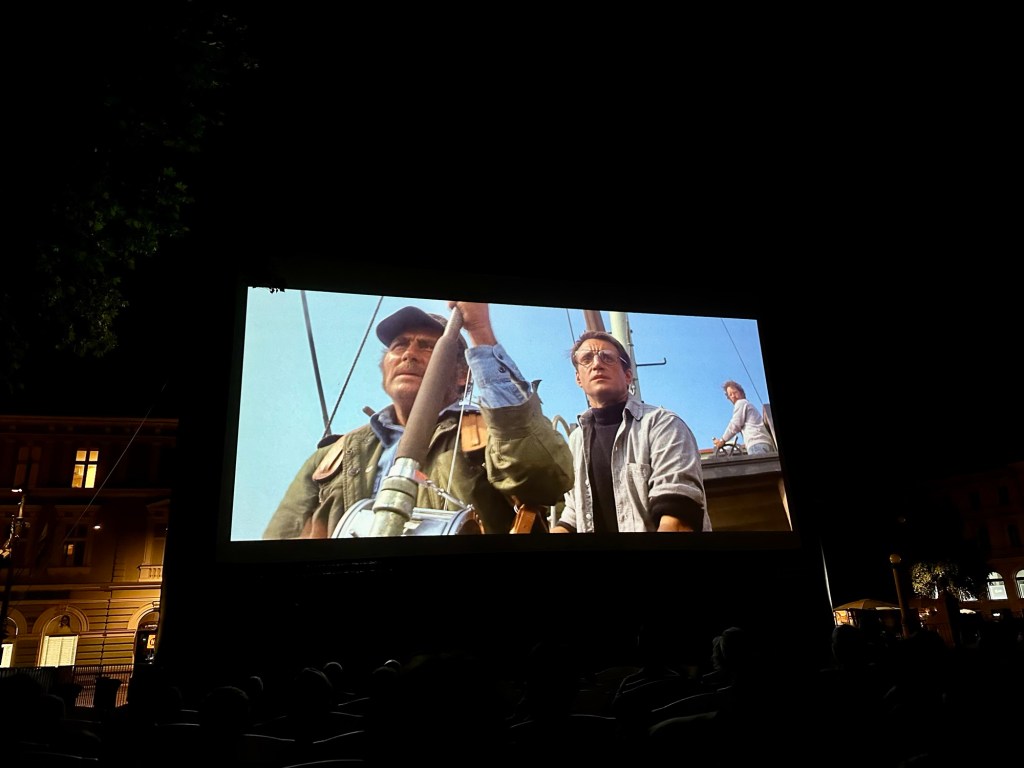
We watched a free outdoor showing of Jaws and then walked back late to our hotel, feeling completely safe.
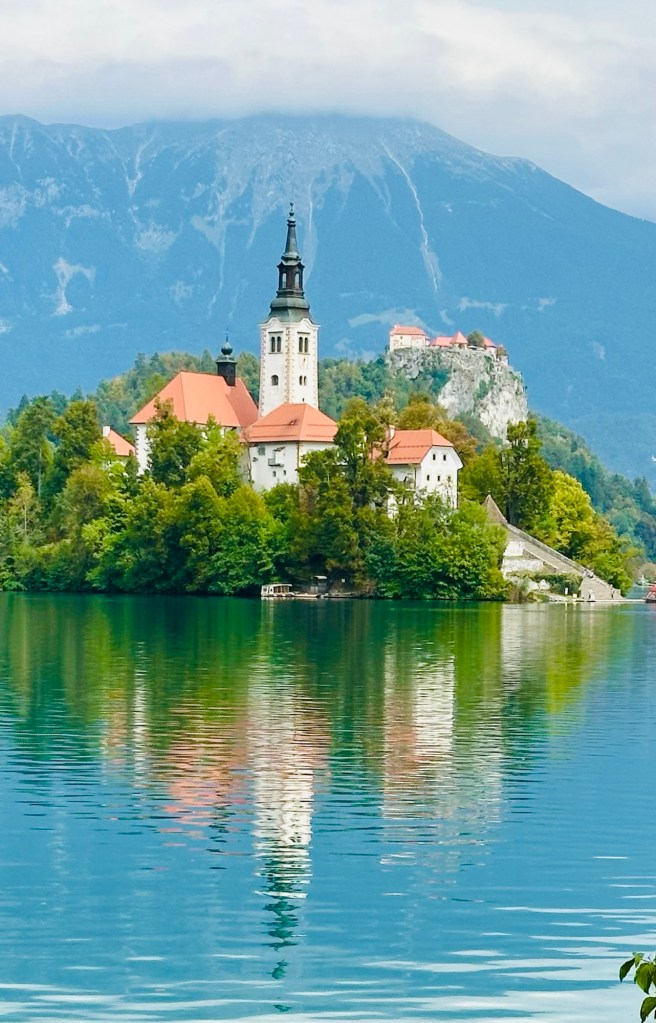
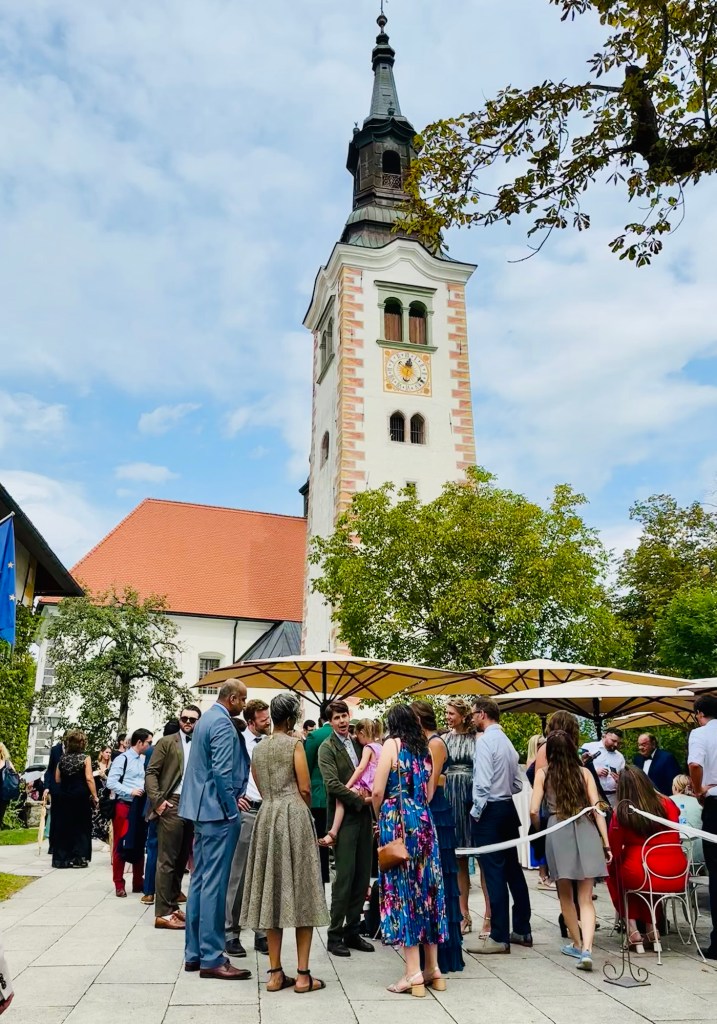
We also traveled to Lake Bled, a gorgeous spot framed by mountain peaks and a hilltop castle. We walked around the lake (about 6 km) and took a boat to a small island with a historic church. We were joined there by 200 guests about to witness the marriage of two Americans, one of whose family is Slovenian. I doubt I’ll ever see a more fantastic destination wedding.
We loved Ljubljana and Slovenia, although we weren’t there for long. We traveled next to Zagreb, a two-hour ride on FlixBus.
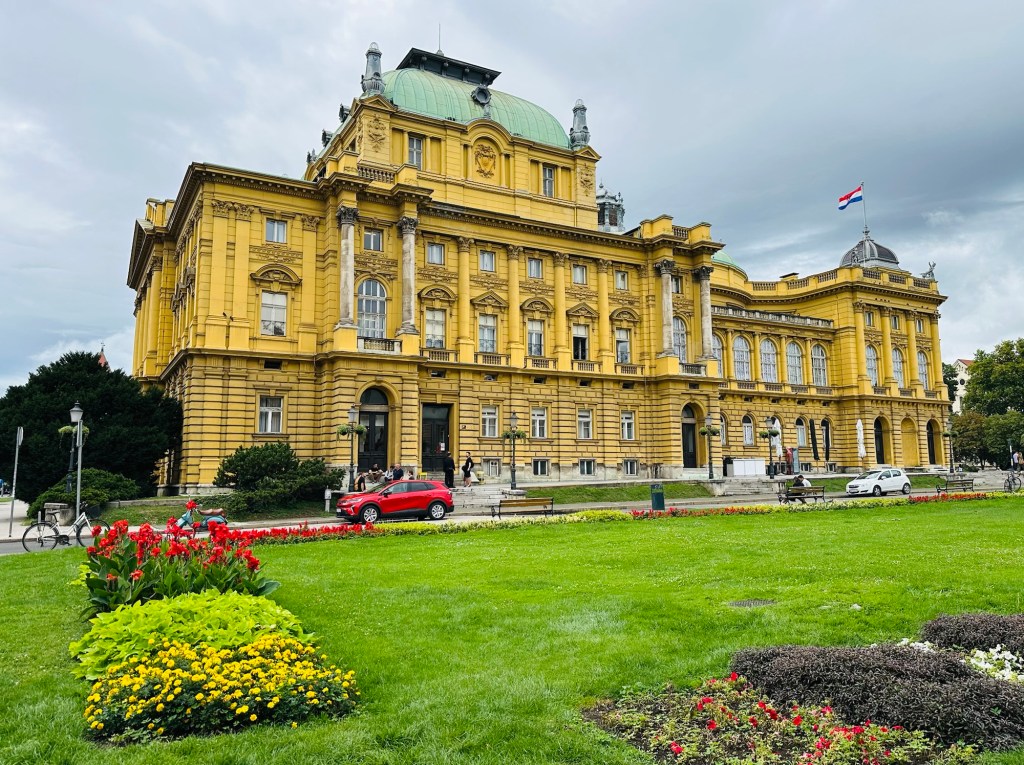
Zagreb is bigger, reminding us of Moldova in places with its brutalist apartments. Much more striking are its Gothic-Baroque Old Town and the grand buildings of its Lower Town, which are more Austrian and Hungarian.
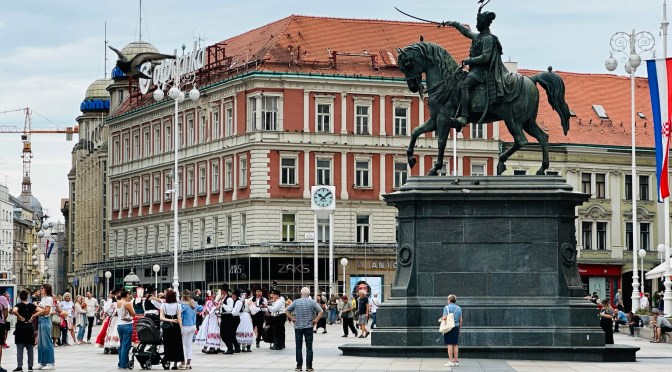
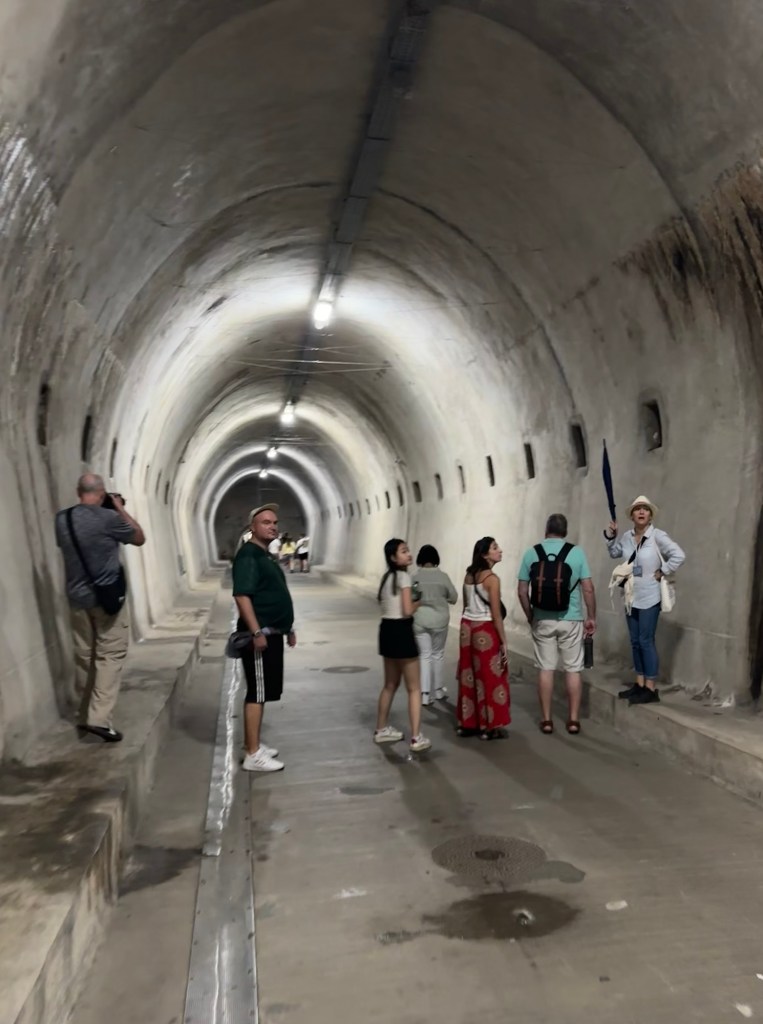
We saw the large statue of national hero Ban Josip Jelačić in the central square, with dancers beside it (top photo). We watched a canon explode at noon at Lotrščak tower and then walked inside a giant tunnel built for protection against wartime bombs.
We visited the Museum of Broken Relationships and pondered the many forms of heartbreak.
Some sights were unexpected, such as a statue honoring the prostitutes of the city’s former red light district, which Champa is admiring in the photo, or a shop featuring Croatia as the birthplace of the men’s necktie (a dubious honor, in my opinion).
We also came across a shop selling spices and other products to the city’s growing Nepalese community, some of whom we chatted with.
As we embark on our Balkan adventure, our initial stops in Ljubljana and Zagreb confirm something I’ve discussed previously, which is that Americans who stick to familiar destinations are missing out on some amazing places. Both cities were beautiful, fascinating and relatively inexpensive.
As Tito himself might have said, visiting them is as easy as one, two, three, and as simple as Do, Re, Mi.
One decade ago this month I walked away from a job I loved to shake up my comfortable life and try something new.
I stepped down as the head of news and communications at Duke University, surprising my outstanding team. We’d been working together for years to respond to research discoveries, sports championships, weather emergencies, campus protests and more, as well as to the rise of social media and other dramatic changes to the media landscape.
With Keith Lawrence at the Durham Bulls Athletic Park. The photo I’m holding, signed by my colleagues, shows a sign tracking the number of days since Duke’s last scandal.
Duke sent me off with a big reception at a local theater and, as shown in the photo, an informal farewell at the Durham Bulls baseball stadium.
Less than a week later, Champa and I embarked on an 11,000-mile drive around the United States, followed by an extended trip to Nepal. That’s where the two of us met in 1977 when I was a Peace Corps Volunteer, posted to the same school where she was teaching.
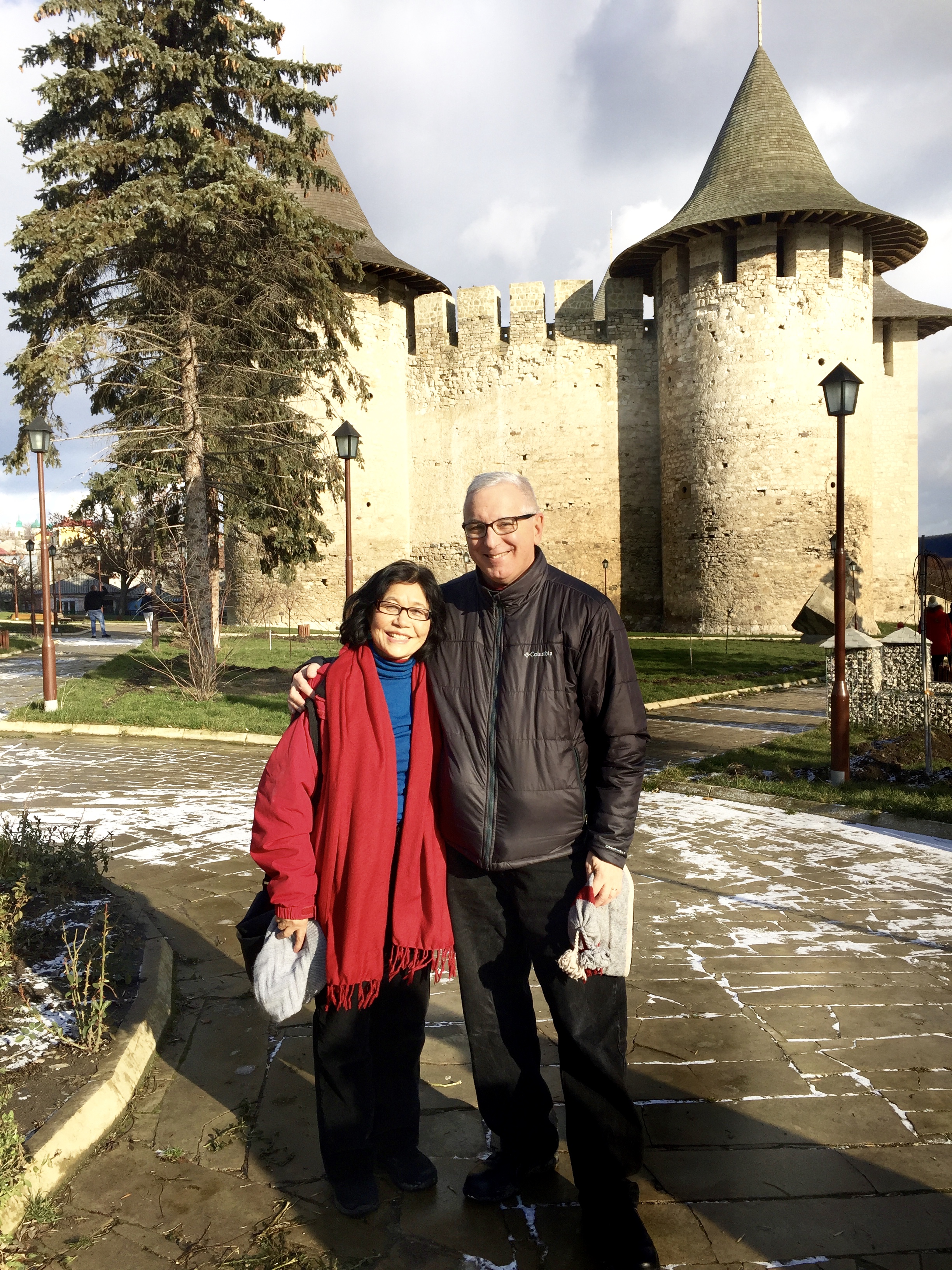
Visiting the Soroca Fortress in Moldova.
Finally, after a short break, we got rid of much of our stuff, rented our house and moved to Moldova, in Eastern Europe, to begin serving together as Peace Corps Volunteers.
I chronicled our three-year adventure on this blog and in my book. Since returning to Durham in 2018, we’ve continued pursuing our “not exactly retired” lifestyle, joining a growing number of older Americans who have been redefining retirement as more than leisure — and redefining themselves in the process.
Several news outlets profiled us as examples of this trend, which in our case has meant extensive travel, volunteering and spending time with family and a network of friends that reaches around the world.
I’ve never looked back.
I enjoyed my career and still miss my Duke colleagues, some of whom recently lost their jobs because of federal funding cuts, but I knew it was time for a change. Just like when I graduated college and chose to backpack across Europe, Asia and Africa with a friend instead of following my classmates to graduate school, I wanted to grab life and see what else it offered.
Visiting Tallinn Town Square in Estonia.
As I’ve approached this ten-year milestone, I know how lucky I’ve been. I left my job before the Covid pandemic and current funding crisis. Champa and I finished our service in Moldova before the pandemic and war in neighboring Ukraine forced the Peace Corps to halt its operations. We’ve been fortunate with our finances, health and family responsibilities. We could have encountered some disaster while traveling abroad, or at home, but we’ve been fine.
I launched this blog to share with friends our initial drive around the United States, never expecting it to continue so long or to reach people in more than 100 countries. I’ve loved hearing from readers with questions about the Peace Corps or early retirement, or just seeking encouragement to make a leap themselves.
Some of the other older volunteers who served with us in Peace Corps Moldova.
As I’ve told them repeatedly, my message is not “join the Peace Corps!” That’s a good choice for some people but not for others, assuming they get past the rigorous application process. Rather, I’ve urged readers to be intentional about their lives, to choose instead of drift, regardless of their interests. We all have dreams, whether it’s to launch a business, start a nonprofit or master a new skill. It’s often possible to pursue that dream, even on a limited scale, while respecting the real-world complexities that come with it.
Champa and I plan to keep going as long as we can. We’re traveling more than usual now so as to remain outside the United States during its current turmoil. You’ll see soon where we’re heading next. As we approach the next election, however, and as we get older, we will reevaluate. One of the main benefits of the past ten years is how comfortable we’ve become with uncertainty and change.
Delivering food for the Food Bank of Central & Eastern North Carolina during the pandemic.
Veering from our traditional American lives has enriched us immeasurably. These riches have come not in additional paychecks but in the people we’ve met, the places we’ve seen and the memories we’ve made, all while remaining centered with our family and friends. As we’ve learned on the road, we are far from unique in doing this. Many other older people with widely varying budgets and circumstances are also traveling off the beaten path and blazing their own trails.
I know how privileged we are to be among them. Not everyone can do this; family obligations, finances, medical limitations and other constraints are real. But it is possible to resist letting fear or habit prevent us from living with purpose. We can choose to make room for what truly matters to us.
Visiting the new school we recently helped build in Samalbung, Nepal.
An old Peace Corps slogan says: Life is calling. How far will you go? As we wrap up our first decade of being “not exactly retired,” Champa and I are grateful for how far we’ve gone and still looking forward to whatever comes next.
It’s a phrase that may be familiar to older Americans wondering how long they’ll be able to maintain a busy lifestyle:
“While I’m still able.”
I realized recently that I’ve been saying it myself when running into old friends. They’ll say something like: “I follow you online and you sure do keep busy traveling and everything else.”
“Well,” I’ll respond, “I want to do it while I’m still able.”
When I said this again the other day, it made me think of Supermarket Sweep, the television show in which contestants race to fill their carts with as much as possible within a brief time. Grab the steaks! Get some lobsters! Don’t let time run out on you!
I thought: Is this what I’ve become — someone frantically filling their cart before the buzzer sounds?
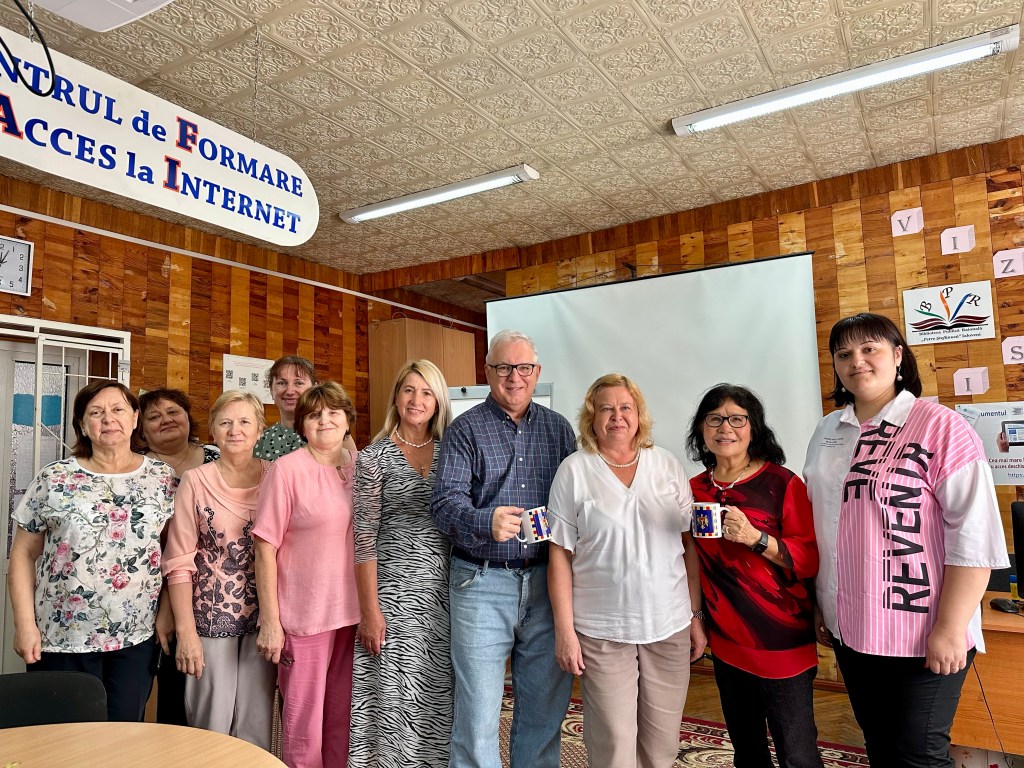
One of my volunteer projects is with this group in Moldova.
I know it can look that way. During the past year, I’ve taken several big trips, which I’ve written about here. I volunteer with local nonprofits, serve on boards, write this blog and a newsletter, go to local events and spend time with family and friends.
This may all just add up to an “active retirement” but I wonder sometimes whether I’m trying to prove something, to myself above all. Maybe I’m compensating for the fact that I no longer have the title and recognition of a formal job. Indeed, when I return these days to the campus where I used to work, few people recognize me. They just see a random retired guy.
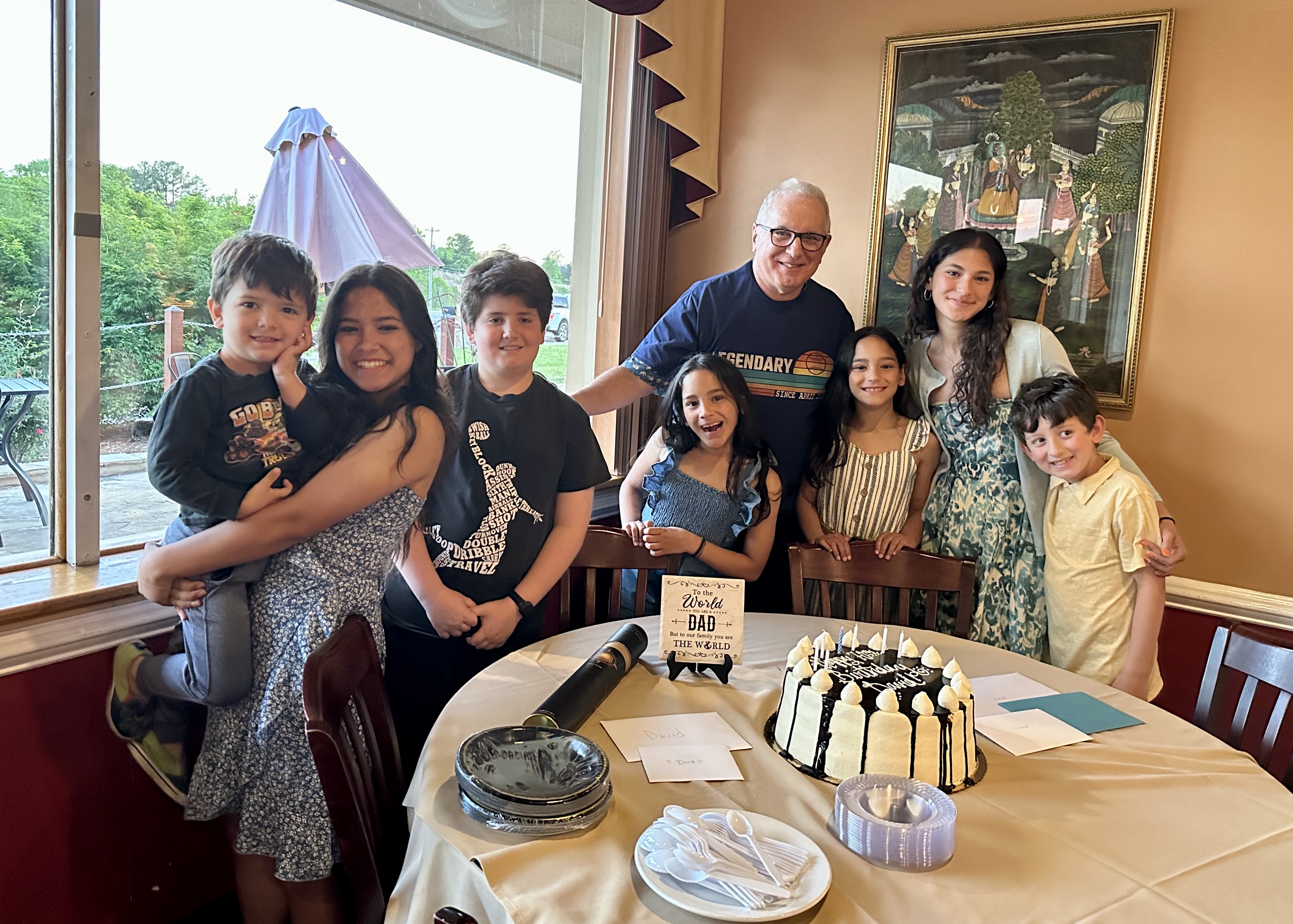
Celebrating my 70th birthday with my seven grandchildren
So maybe I’ve been filling up my schedule as a way to say: Hey, I’m still here. Or perhaps I’m overreacting to medical challenges I’ve had over the past couple of years, or to turning 70. My clock is ticking and I hear it even without hearing aids.
Whatever my motivations, I’ve been busy, perhaps too busy.
Speaking at a local retirement community
An older friend told me recently she’s been wrestling with the same issue. She said she’s finding it hard to juggle numerous volunteer roles with the informal help she provides to friends, family responsibilities, travel and everything else. She laughed that it’s hardly what she expected in “retirement.”
I have no regrets about my own “not exactly retired” life, which I’ve pursued since walking away from a busy job at the age of 62. I recognize how fortunate I’ve been to do this. But it’s never been a retirement in the sense of kicking back. Shortly after I began serving as a Peace Corps Volunteer in 2016, I wrote about my inability to ease up and move beyond the packed schedule of my previous life. I noted then how “I keep checking my cell phone for messages. I don’t go home until I’ve completed every item on my mental ‘to do’ list.”
I concluded that post by humorously vowing to pay closer attention when the Peace Corps staff told me again to be patient. “Really,” I promised, “I may even put a reminder in my electronic calendar.”
Visiting the Suomenlinna fortress in Helsinki
Now, seven years later, I remain just as persistent about making my days productive, whether it’s assisting a local community group or traveling to some foreign destination with Champa. I’m doing this mainly for myself but, at some level, I suppose I am also asserting my own relevance in a world that can make older people feel invisible.
In any case, I’m determined to make the most of this precious “not exactly retired” stage of my life when I no longer have the responsibilities of a formal job but am still able to contribute and thrive. All of these activities give my life meaning and I plan to keep doing them while I’m still … well, you know.
I saw while traveling in Moldova and the Baltics recently what President Biden asserted in his Oval Office speech last night: Russian aggression in Ukraine threatens security and democracy far beyond Ukraine.
“If we don’t stop Putin’s appetite for power and control in Ukraine, he won’t limit himself just to Ukraine,” Biden said in his speech, which linked the conflict there to the horrific crisis in the Middle East (which I’ve also been feeling personally).
Street sign in Tallinn, Estonia
Moldova and the three Baltic countries — Lithuania, Latvia and Estonia — have not forgotten what it was like living as Soviet states under Russian domination. They treasure their independence and strongly support Ukraine. They understand what’s at stake, and so should we.
Champa and I saw Ukrainian flags everywhere during our trip this month — on public buildings, on churches, in shops.
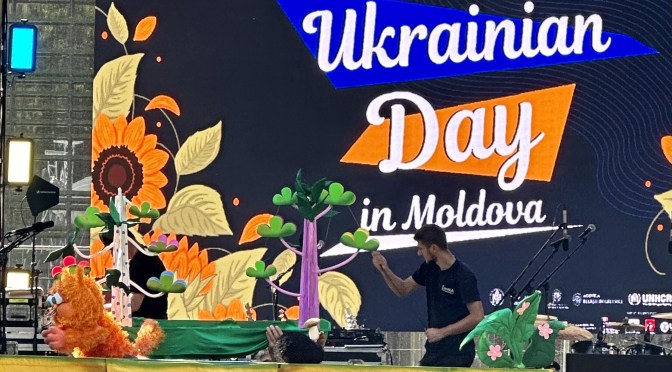
Chişinǎu, Moldova’s capital, hosted a “Ukrainian Day” while we were there. Ukrainian families that fled there after the Russian invasion celebrated their homeland with dances, food and traditional costumes.
This young woman wore a dress and wig that resemble Ukraine’s flag.
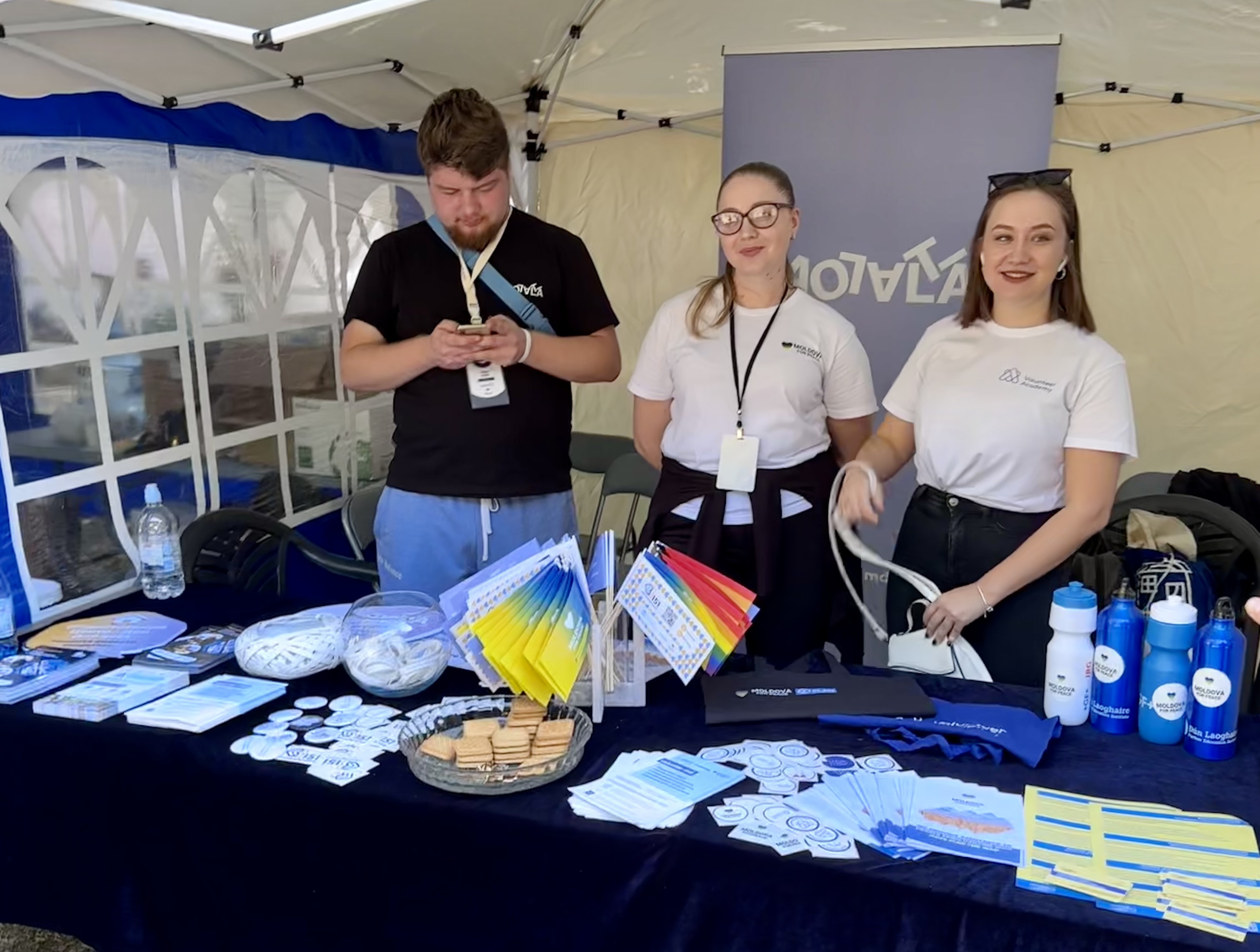
Social service groups set up booths to provide refugees with resources and information.
We saw Ukrainian assistance centers throughout our trip, such as at this storefront in Latvia’s capital, Riga.
Ukrainians even receive special parking benefits in Riga.
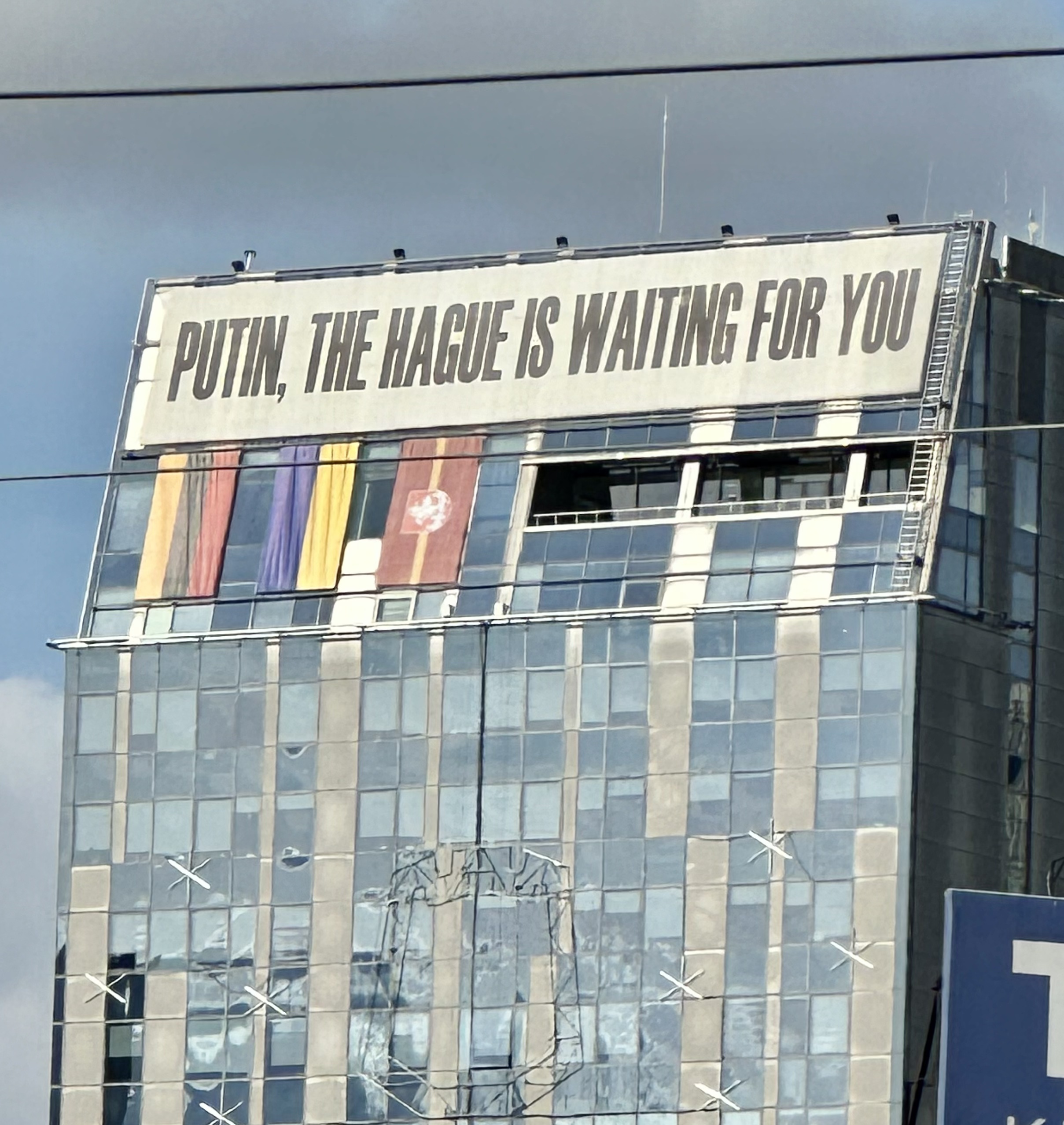
This message atop a building in Vilnius, Lithuania, reflected the popular sentiment that Russia is committing war crimes in Ukraine.
My friends in Moldova, and those on the front lines in Ukraine, don’t know anything about the dysfunction in our Congress. They just need help, and fast. As Biden said, “there are innocent people all over the world who hope because of us, who believe in a better life because of us, who are desperate not be forgotten by us, and who are waiting for us.”
The three Baltic countries differ. Lithuania is mainly Catholic. Estonia has a language similar to Finnish. Latvia has the world’s tallest women. (Really.)
Yet all three impressed us when we toured them last week with a local travel company. Since gaining independence from the Soviet Union in 1991 and then joining the European Union and NATO, they’ve enjoyed far more prosperity and stability than the former Soviet state we know best, Moldova.
They’re also really interesting to visit, as you can see in the dozen examples below:
Picturesque churches, castles and squares abound. These are just a few of the ones we visited.
Cobblestone streets are also plentiful. They’re charming (but challenging when you’re recovering from hip surgery). This street is in Estonia’s capital, Tallinn.
Some old forts and castles look like Game of Thrones. This one is at a national park in Lithuania.
Lutheran and Catholic churches predominate, but there are also many Russian Orthodox churches, like this one in Tallinn.
Jewish synagogues are scarce. The Holocaust all but wiped out the vibrant Jewish presence here. We visited Jewish museums in Lithuania’s capital, Vilnius, and Latvia’s capital, Riga.
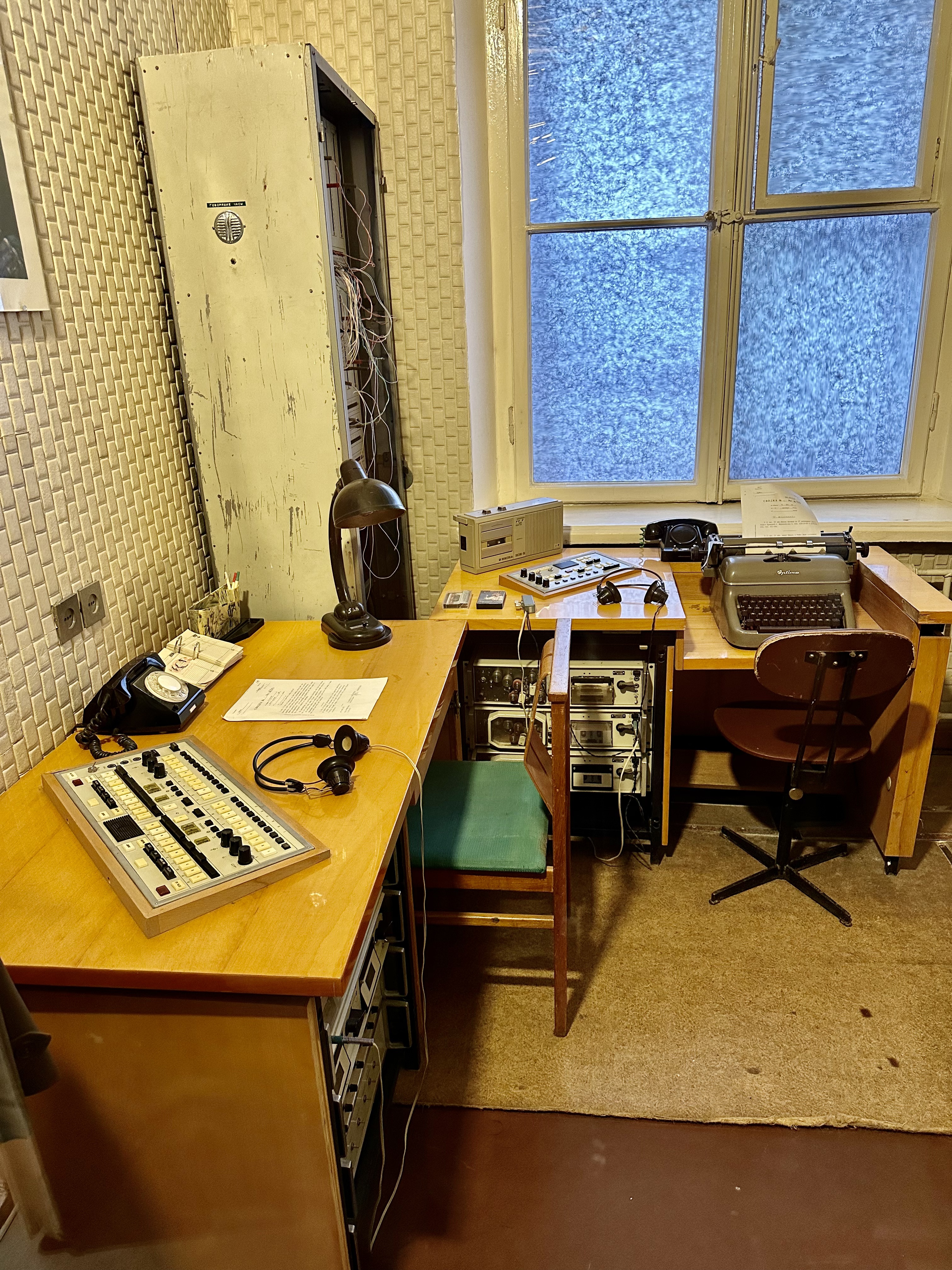
The Nazi occupation was followed by decades of Soviet oppression. The Museum of Occupations and Freedom Fights in Vilnius included this exhibit showing how the KGB bugged and monitored Lithuanian citizens.
Soviet domination was portrayed artistically in this exhibit of old propaganda posters at the Kumu Art Museum in Tallinn.
Traditional baths and saunas are celebrated in the Baltics. This historic display in Latvia shows what people added to their baths.
If you ask for “hot chocolate,” don’t expect something like cocoa. You’ll be served a delicious cup of melted chocolate.
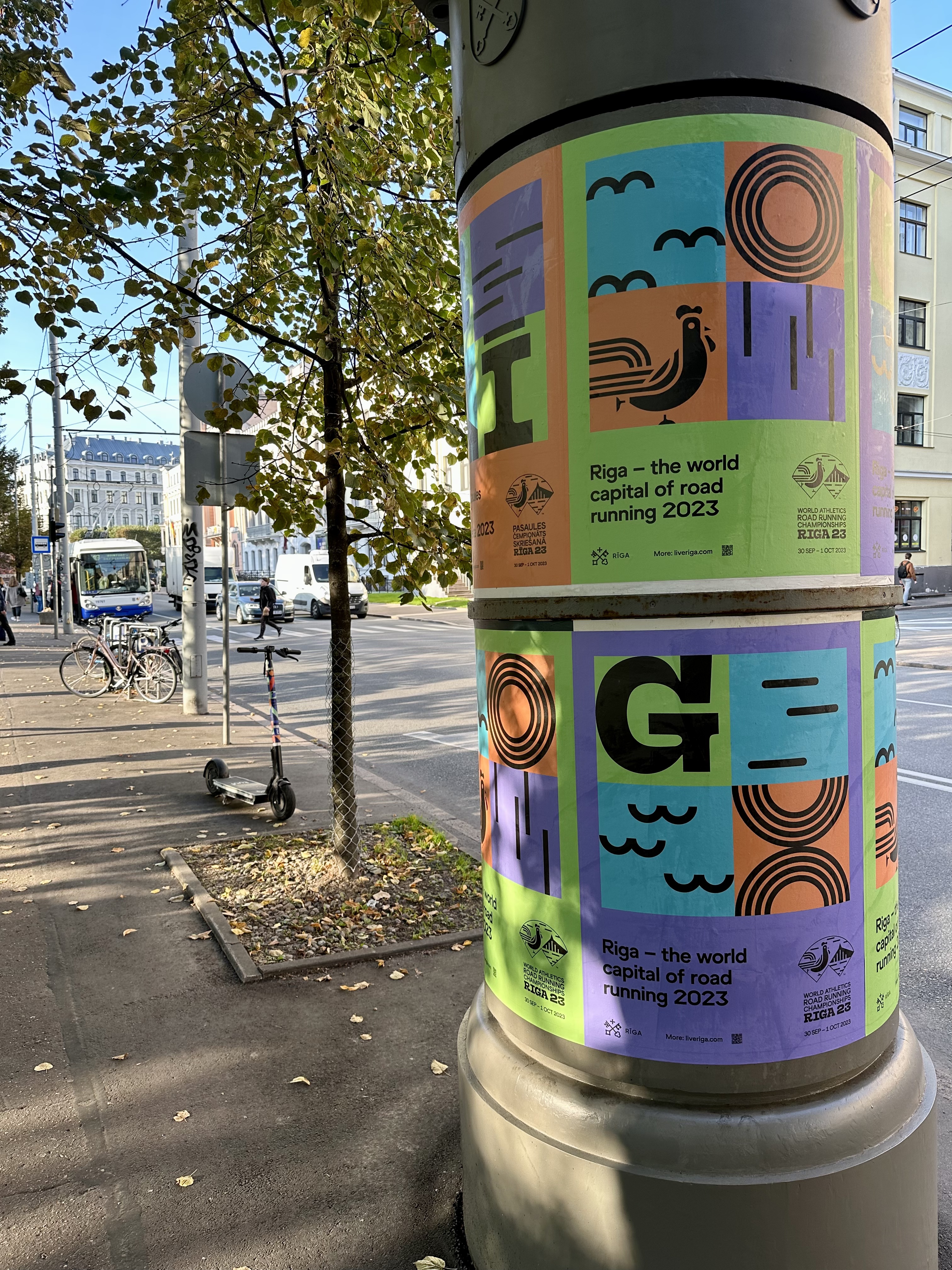
Riga hosted the World Athletics Road Running Championships while we were there. Our hotel was filled with world-class runners, including Olympic champions.
The rappers 50 Cent and Busta Rhymes came to Riga shortly after we left.
The Hill of Crosses is a pilgrimage site with more than 200,000 crosses in Siauliai, Lithuania.
You cross easily from one Baltic country to the other. This sign marks a border between Lithuania and Latvia.
Finally, meet John from Australia, 89 years old, who traveled solo with our group, including this stop at the Baltic Sea. He inspired Champa and me to keep pursuing our own travels for as long as we can.
They’re leading lives I’ve sometimes imagined for myself: American expats in Moldova who are running businesses, managing programs, assisting refugees and tackling other challenges far from home.
Many of them first came to Moldova as Peace Corps Volunteers, like us. Unlike us, they’ve made a new home here. We’re friends with several of them and it’s been fascinating this week to catch up on our lives.
Chris Flowers, a fellow former Volunteer, is now the country director for the American Councils, managing educational and cultural programs. He recently married a Moldovan attorney, Diana, who’s done heroic work assisting refugees, especially since Russia invaded Ukraine. We met up with them at an Uzbek restaurant.
David Smith opened and ran an American-style barbecue restaurant for several years. He’s also been active in the local small business community and writes a newsletter with excellent analyses of what’s happening in Moldova. He, too, married a Moldovan woman.
Andrew Blakely was two years behind me in leaving Duke University to serve in Peace Corps Moldova. Now he’s back with Church World Service, managing programs to assist Ukrainian refugees and others. He’s working with Casey O’Neill, who previously served in the Peace Corps group between ours.
Bartosz Gawarecki is here, too, working with refugees near Bălți, where he served as a Peace Corps Volunteer. Bartosz is the president of Friends of Moldova. When the war broke out, he left his business in Michigan to join David and others in rapidly creating some of the first centers to provide desperate Ukrainian families with food and assistance.
That’s Bartosz in the photo, in the white shirt, along with Joseph Lutz of Indiana, who’s returned as a Peace Corps Response Volunteer. He and I are working together, with Marjory David, on a project to establish a national Jewish museum here.
The American expat community also includes diplomats, teachers, missionaries and others, along with a Facebook group and other community resources. On Sunday, we reunited with a couple from Alabama, Kathryn and Brian, who lived near us in Ialoveni. They’ve devoted their lives to helping vulnerable young women avoid trafficking, a serious problem here. They live now in Chișinău and continue to pursue this mission along with efforts to promote better foster care and education for young people with disabilities.
I admire Kathryn and Brian, as I do everyone I’ve mentioned in this post. While so many Americans tear each other apart back home, they’re quietly making the world a better place. I could also have highlighted other Returned Peace Corps Volunteers (RPCVs) here, including Courtney Jackson, who’s working with refugees, or Kelsey Walters, who’s raising a family with her Moldovan husband and promoting new agricultural approaches. (Apologies to those not mentioned.)
Back in December, when Champa and I were in Nepal, we had lunch with another RPCV, Anne Kaufman, who served in Peace Corps Nepal a year behind me in the late 1970s. She married a Nepali man, Raju, and has lived mostly in Kathmandu, working with development organizations and raising two daughters. For me, she represented the road not taken, the life I might have had if Champa and I had remained in Nepal instead of moving to America.
I don’t regret our decision. I’ve loved our life back home, especially our family, but this trip has been a reminder that it’s also possible to pursue a rich, impactful existence abroad, especially if it’s in a country you already know. The roads before us are far wider than many Americans realize.
Yesterday we returned to our Peace Corps workplaces and learned, after more than five years, that our impact has endured more than we’d realized.
Champa’s big project as a Volunteer was to help her school’s drama program create a magnificent wardrobe of costumes and props, which were unveiled in a colorful public ceremony in 2018 (see video).
When we returned to the school yesterday, current students greeted us wearing some of the same costumes — Romeo, Juliet, a king and more. The school has been using them regularly and added to the collection.
Champa stopped by an English class and reunited with some of her old students.
Earlier we visited the library where I worked. The librarians proudly showed us a trophy room they’ve created to display all of the awards won by the robotics team I helped to establish with Lidia Rusu (above).
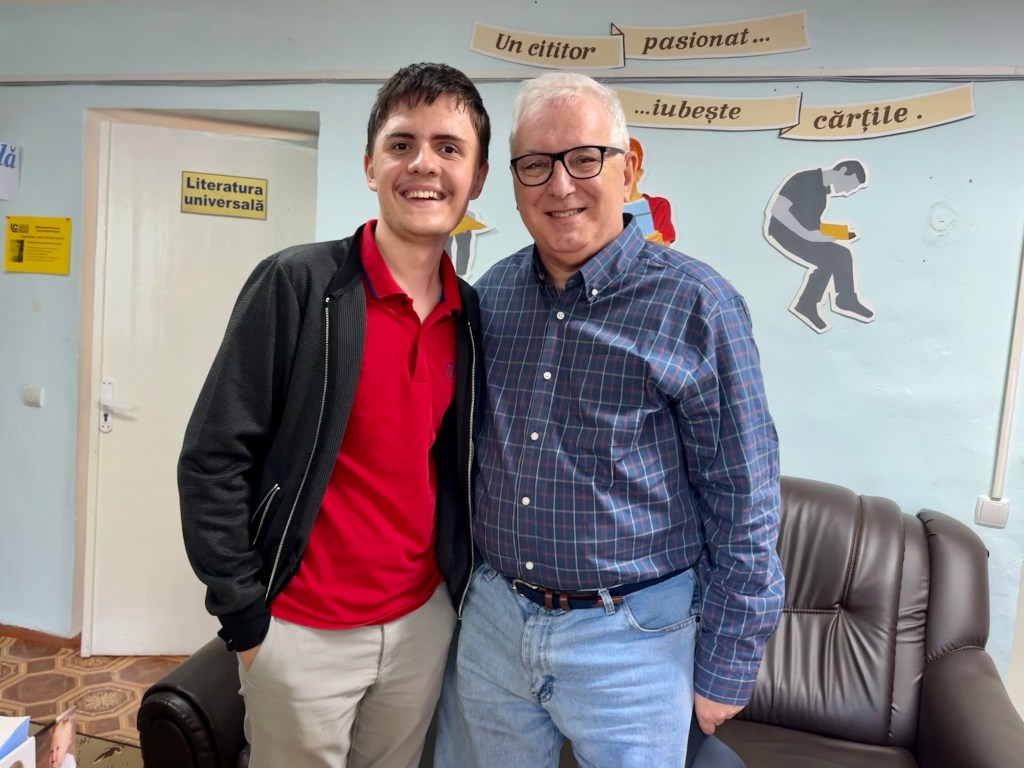
One of my younger robotics students, Alexandru, dropped by to thank us, too. He is now a high school senior, serving as a community youth leader.
Valentina Plamadeala, the library director, in white blouse, hosted a champagne reception for us (at noon; I love Moldova). She posted on Facebook a list of the many projects we did together, several of which are still thriving, notably the Bebeteca room we created for local moms (see video.)
Our reunions in Ialoveni, the small city near Moldova’s capital where we served from 2016-18, were intensely emotional. We were moved to see how we’d touched people’s lives.
At Champa’s school, one of her fellow English teachers, Elena Antociuc, read a certificate saying, “We sincerely appreciate the time you spent guiding us to new perspectives by collaborating with us in search for the best solutions.”
The certificate concluded: “We’re proud to be part of your international family.”
Ialoveni, we’re even prouder to be part of your family, now and forever. As we told Champa’s costume collaborator Ana Doschinescu, at a dinner her beautiful family hosted for us, our lives are so much richer because of all of you. Thank you for keeping us in your hearts.
More than five years since we completed our service as Peace Corps Volunteers, we returned to Moldova on Sunday night.
We endured flight cancellations, an all-nighter at JFK Airport, an unexpected stop in Istanbul and lost luggage when we arrived in Chișinău. In a larger sense, our return was delayed by the pandemic, the war in Ukraine and health setbacks.
But now we’re finally here, and so is our luggage. We couldn’t be happier.
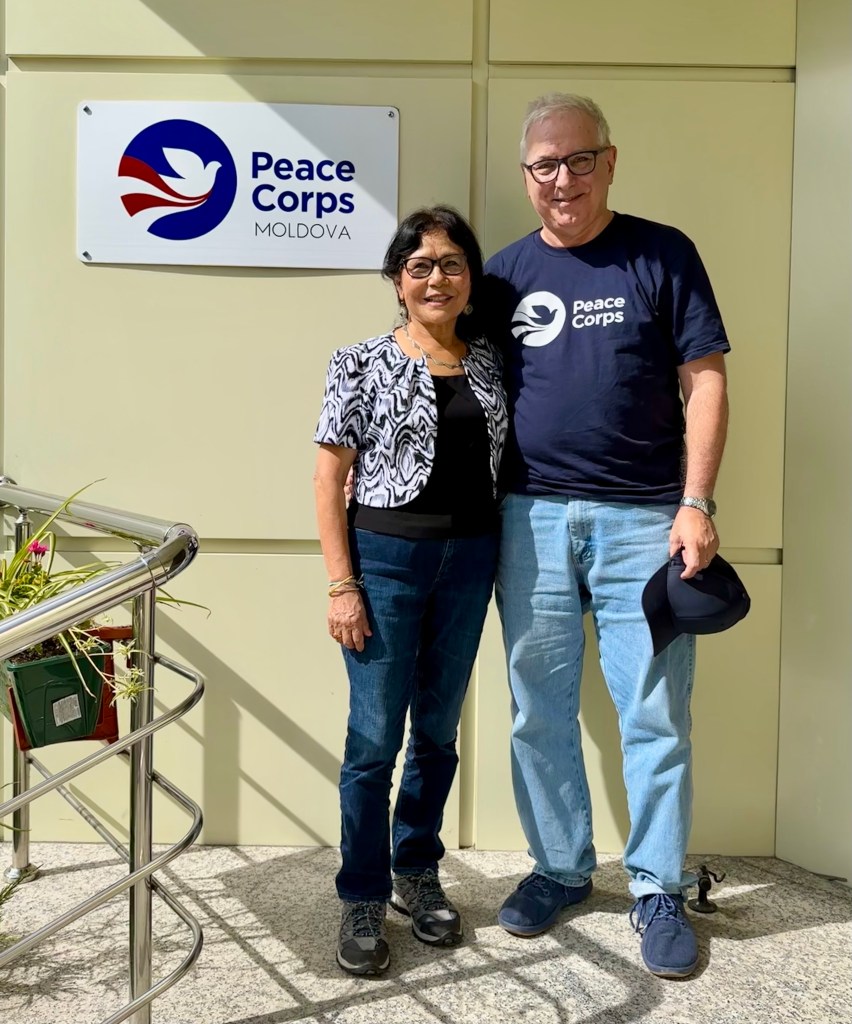
Our first jet-lagged stop on Monday was at the Peace Corps office, to hug old friends and discuss the virtual project I began several weeks ago to help create a national Jewish museum.
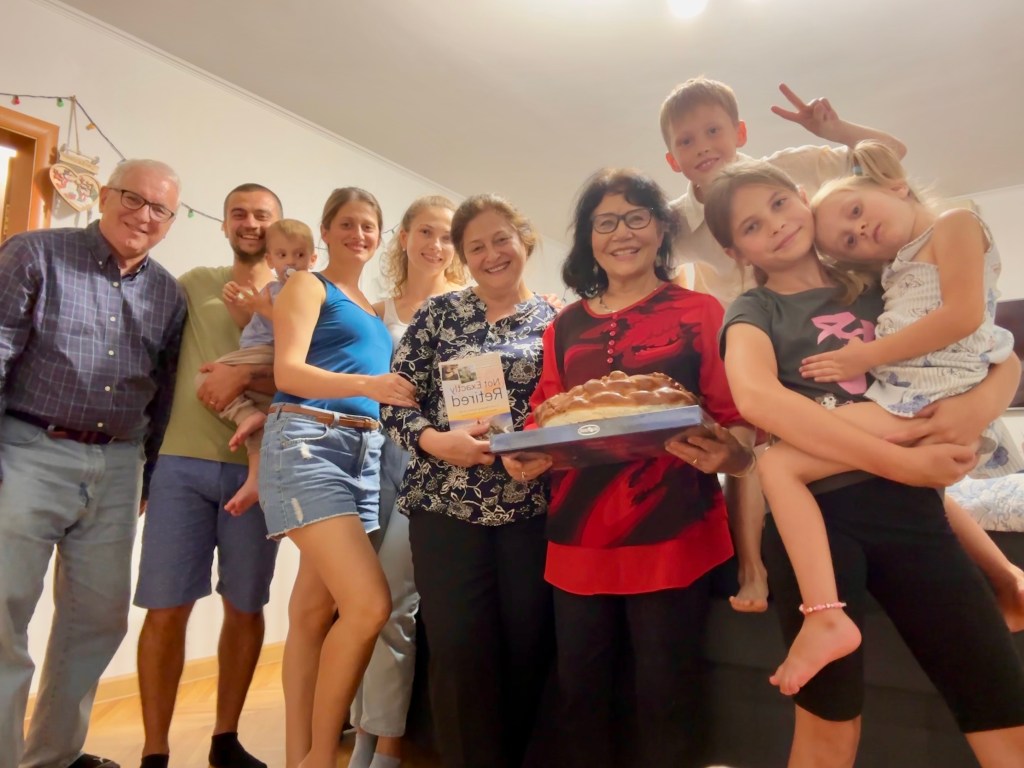
Then we reunited with our host family in Ialoveni, just outside the capital, for a delicious Moldovan dinner prepared by our host mother, Nina. That’s her in the top photo with her daughter, Alisa, showing off their copies of Not Exactly Retired with personal inscriptions from the author.
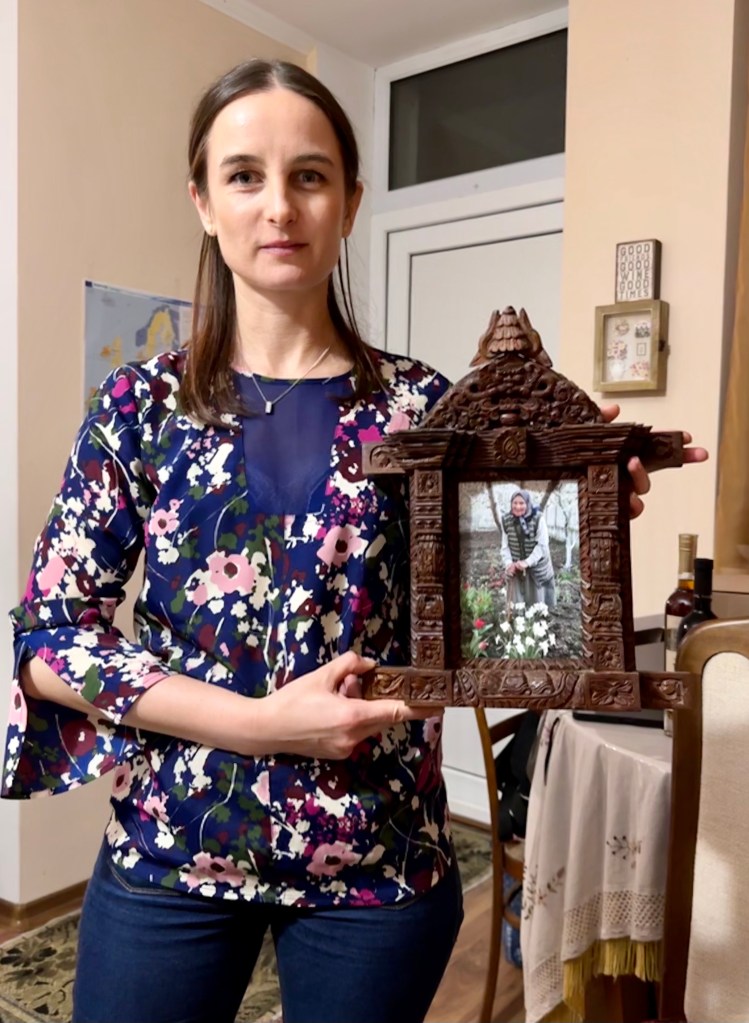
Among our other gifts was this carved wooden picture frame from Nepal displaying a photo of our beloved Bunica, Nina’s mom, who passed away before we could see her again.
Nina’s husband, Mihai, and son, Andrei, joined us for this group photo after dinner. We left with our own bag of gifts, including some of Ialoveni’s famous chocolates.
We also enjoyed reuniting with the family dog, Boss, who remembered us.
On Tuesday morning we attended a ceremony where U.S. Ambassador Kent Logsdon announced a major grant to restore one of the central structures in Chișinău’s large Jewish ceremony. Irina Shikhova, below, with whom I’m working on the museum project, was among the other speakers.
It was an inspiring event and great to finally meet Irina after several Zoom meetings. I also met Marjory and Joseph, two Peace Corps Response Volunteers working on the project.
Champa and I are staying at an Airbnb downtown. We’ve been eating placinte and friptura, drinking local wine and exploring how Moldova has changed over the past five years. More on that later.
For now, we’re just soaking it all in. Moldova, we’ve missed you!





























 "Not Exactly Retired"