
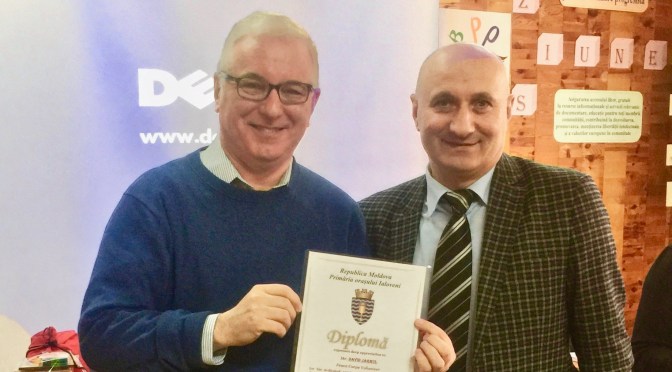
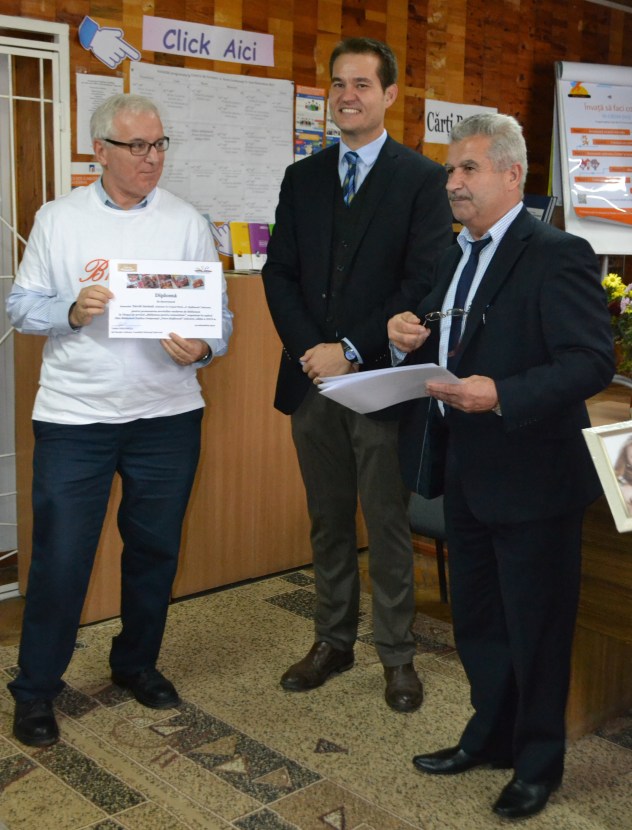
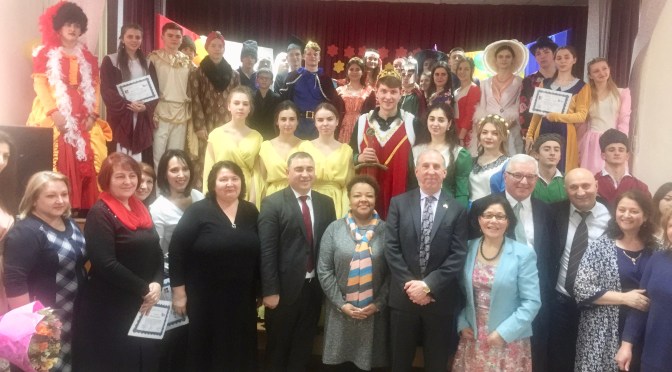
I got my latest certificate on Friday, an especially nice one from our city’s mayor, Sergiu Armașu. He gave it to me during an event honoring library projects, librarians and volunteers from across the district. Our library in Ialoveni, the district capital, hosted the program.
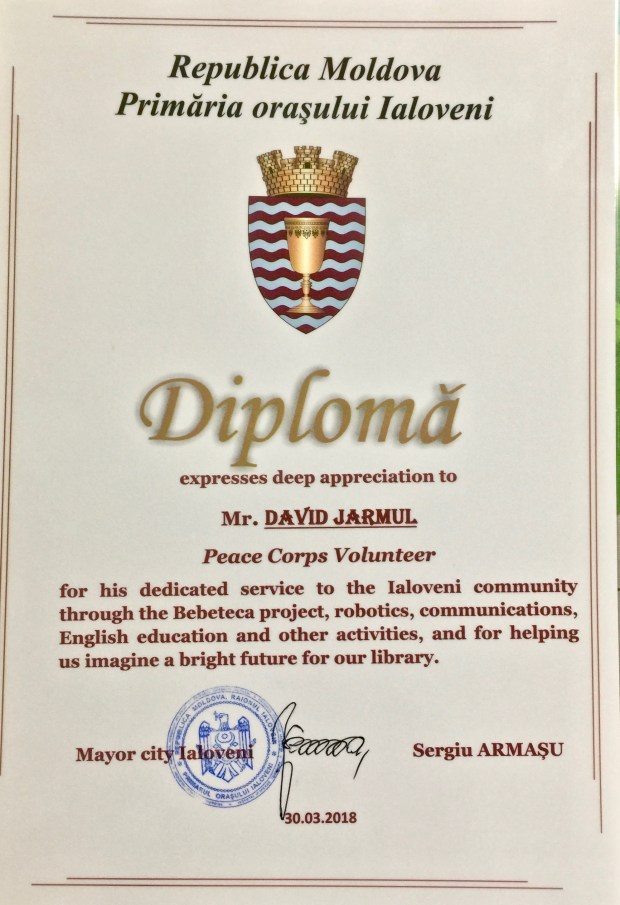
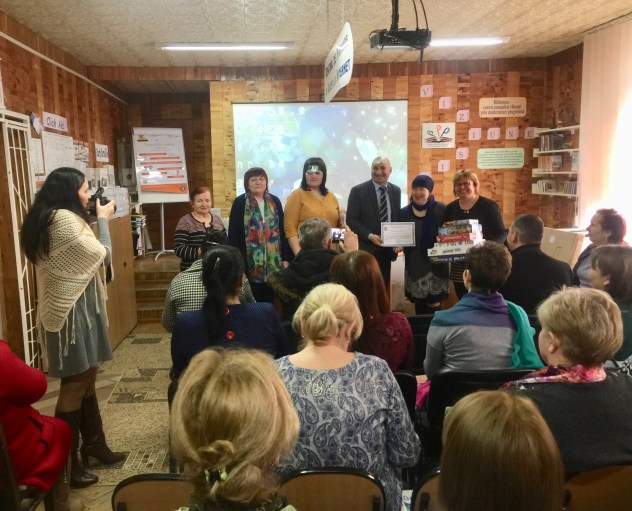
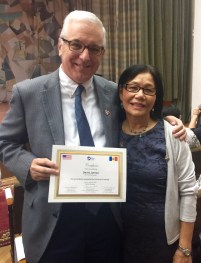 Certificates and diplomas are a big deal here in Moldova. They are awarded at sporting competitions, school ceremonies and other events. A certificate typically includes the official stamp of the organization and may be laminated.
Moldovans start collecting certificates as students. By the time they graduate from high school, they often have a thick folder of them, which they may proudly show to you.
This seemed strange to me at first. During our Peace Corps training, the local librarian arranged for us to meet some kids in our village. She asked one of the girls, a talented artist, to show us her certificates from painting competitions. The girl explained the certificates one by one.
As I thought about her later that evening, I recalled the many trophies and medals my two sons accumulated from their sports teams, science fairs and other activities. Their trophies filled two large boxes when we cleaned out our house before joining the Peace Corps. I also had my own stash of certificates, diplomas and congratulatory letters.
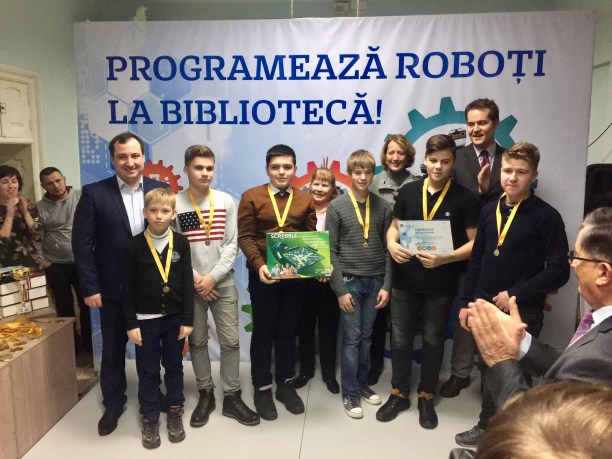
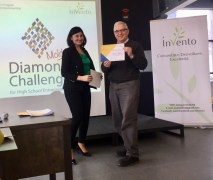 In other words, as the walls of many American doctors’ offices make clear, our traditions are similar in many ways. Here in Moldova, though, certificates are way more popular, not to mention cheaper, than sports trophies. Kids here sometimes also receive medals, like the boys on our robotics team shown below.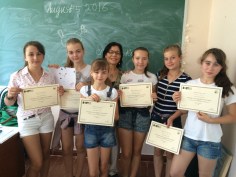
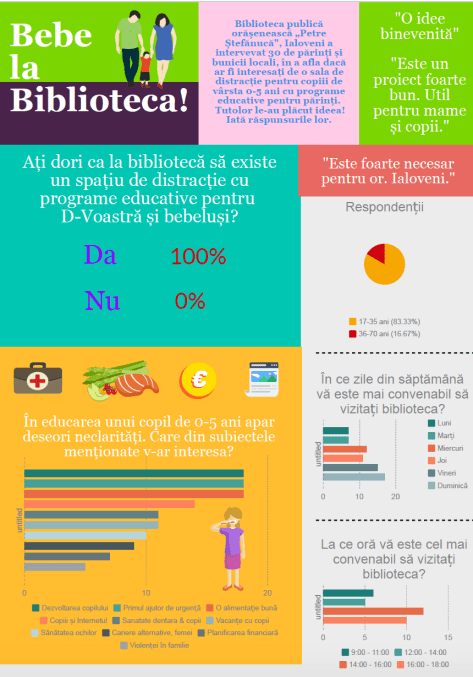
Last month, before Champa’s school held its big celebration of its new drama costumes, we needed to produce nearly 30 certificates to give to the teachers, students and parents who assisted the project. We also needed certificates for my partners in our library’s Bebeteca project. I was able to laminate all of these certificates with a machine at the Peace Corps office, which has undoubtedly been put to good use over the years.
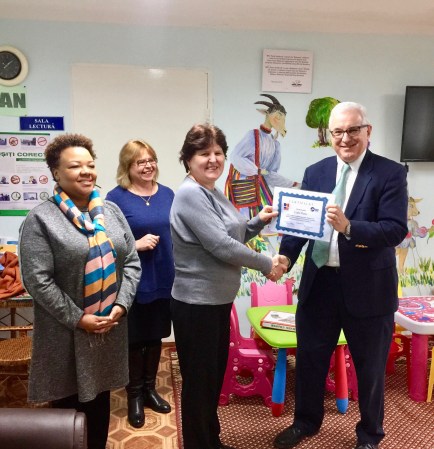 Certificate ceremonies in Moldova are usually filled with pride and appreciation. The speeches are heartfelt, the smiles are genuine and the certificates themselves are lovely. The moment is always captured with a poza — a pose for the camera.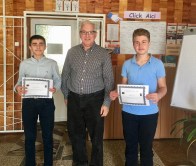
After they receive a certificate, Moldovans may use it to prove their eligibility to receive a job promotion or a raise in salary, or to apply for a new position. More often, they hold onto it as a souvenir of a memorable activity.
When I told a Moldovan friend what I planned to write in this article, she laughed and said, “I don’t want a certificate. Give me some cash.” She had a point, just as one might reasonably ask whether Moldova’s teachers would be better off receiving fewer flowers and bigger paychecks. As a foreign visitor, these questions are not for me to answer. I can only say I have come to enjoy these certificate ceremonies as a distinctive part of Moldova’s culture.
Champa and I now have our own folder of certificates, which we look forward to bringing home to America with us. They’ll be laminated memories of our time here.

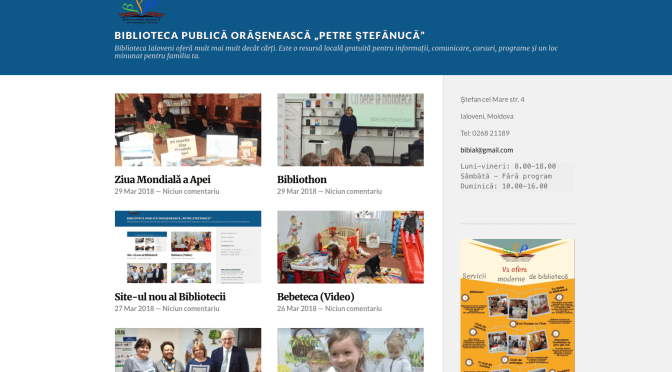
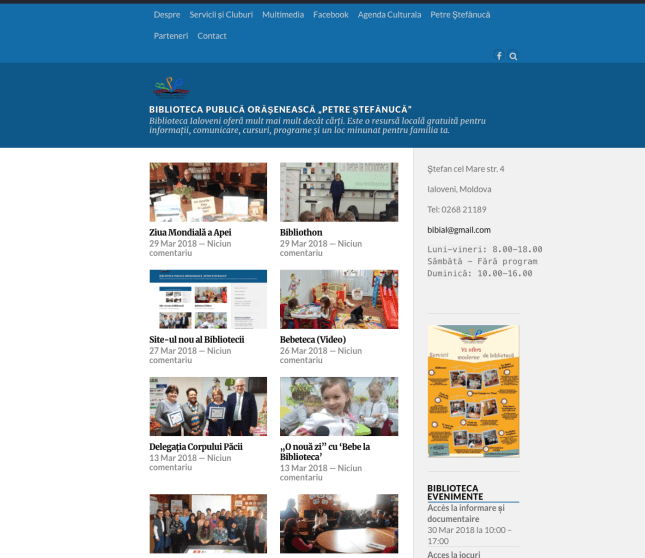
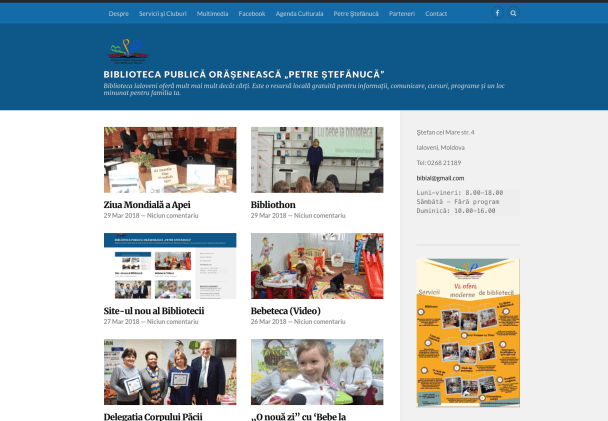
 The new site features the library’s many new services, such as its clubs for robotics and film animation, and its “Bebeteca” room for kids and families. It highlights a library blog that previously existed on a separate site and was often overlooked. There’s an automated calendar that lists upcoming events.
 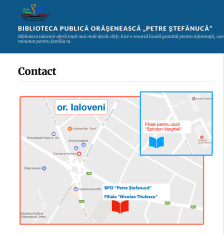 A map provides directions. An online exhibit offers a video, photo exhibits and historical information about the library’s namesake, folklorist Petre Ștefănucă. A multimedia section shows YouTube videos about the library. Another section provides the annual work plans for the main library and its two branches.




 Some accounts say he wrote the famous aphorism: Give a man a fish, and you feed him for a day. Teach a man to fish, and you feed him for a lifetime.
 With salaries and budgets that are tiny by American standards, they look to external sources for additional support, especially for projects. Potential funders range from USAID and other agencies affiliated with foreign governments to international NGOs, local embassies and others.




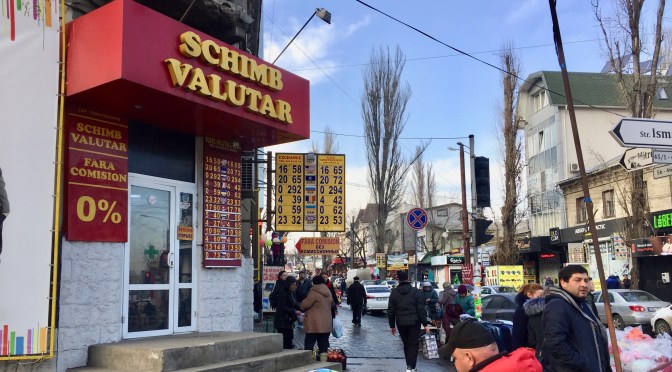
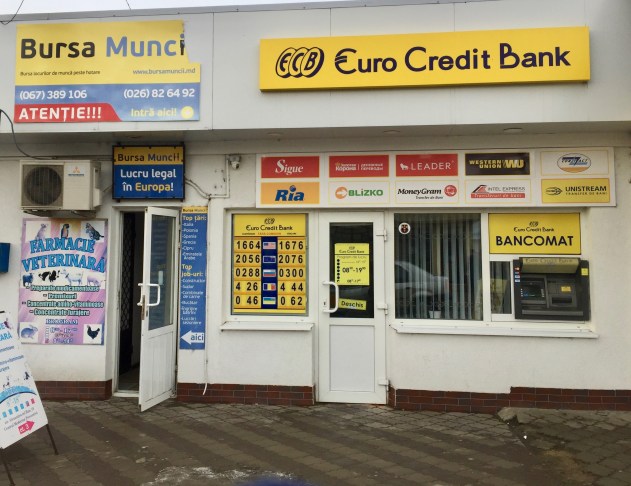
 the latest exchange rates for the Moldovan leu relative to the U.S. dollar, the Euro, the Russian ruble and other currencies. The dollar has now slipped well below 17, continuing a slow descent I’ve
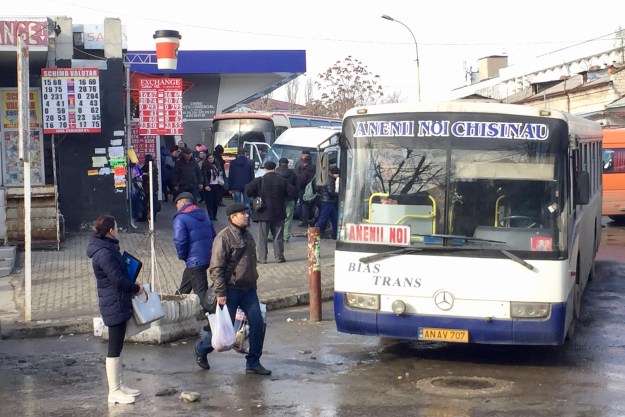
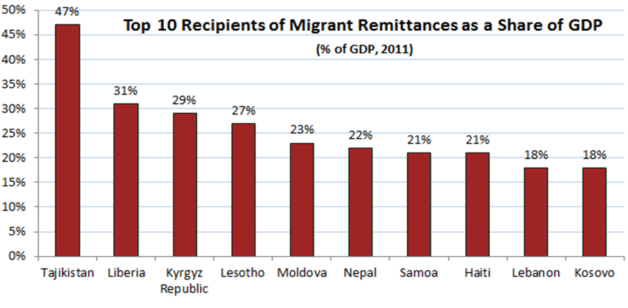
  It’s no coincidence this sign is adjacent to one showing exchange rates. In fact, it’s key to understanding the deeper meaning of the photo. It’s like the MoneyGram sign across the street, which says “transfer de bani,” or money transfer, or the Western Union sign up the block.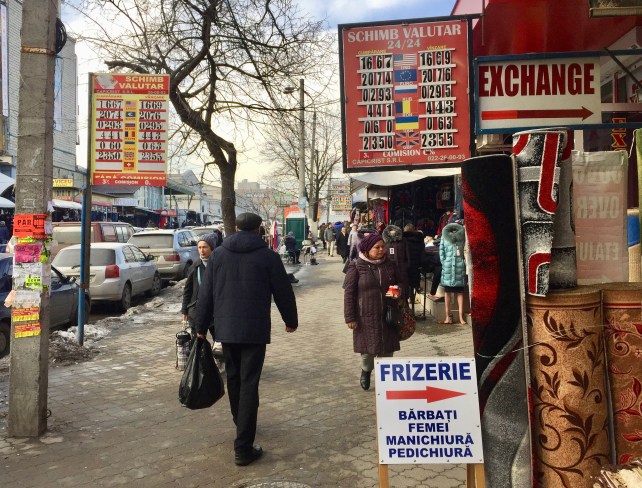





 On Tuesday afternoon, her words broke hearts again, this time among members of my weekly English conversation class. We read sections of the article aloud, listened to part of the podcast and then listened to another “Modern Love” podcast about how a woman dealt with her husband’s mid-life crisis.


 I originally planned the class as a more conventional book club, where we might read Harry Potter novels or other full-length works likely to appeal to Moldovan readers. When I spoke with a Moldovan friend who runs an English-language center, however, he warned me students wouldn’t have enough time to read the books, which would also be expensive for them to buy.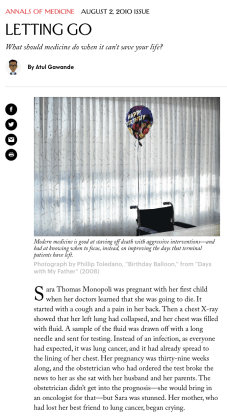
 Our discussion about the Gawande article, for instance, led to a great conversation about how our two cultures handle death, not only in medical settings but more generally.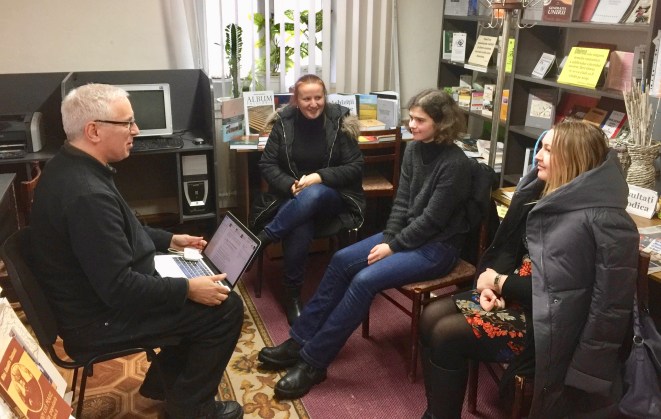


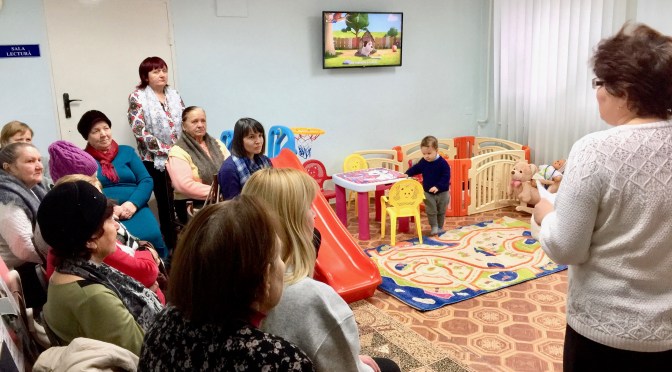
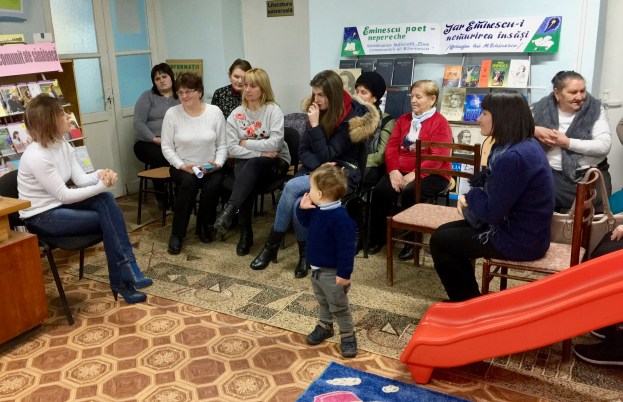


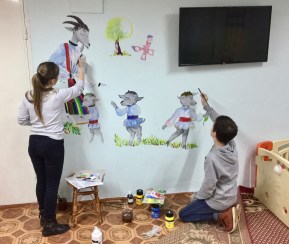 Students from Ialoveni’s School of Art, upstairs from the library, are painting the room with an original mural featuring characters from national children’s stories.
 “We want to offer mothers and families the chance to meet, have fun and learn something new. We also hope they will explore the library while they’re here and borrow some books or sign up for our free programs, from learning English to making simple animated movies.”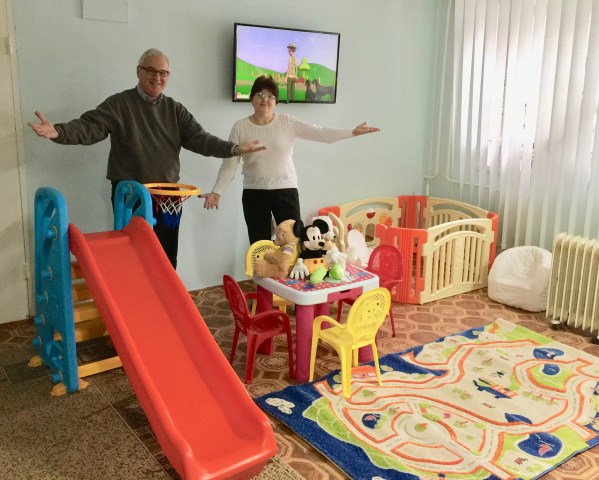

 "Not Exactly Retired"