Tag Archives: Peace Corps

Dollars, Euros and Lei

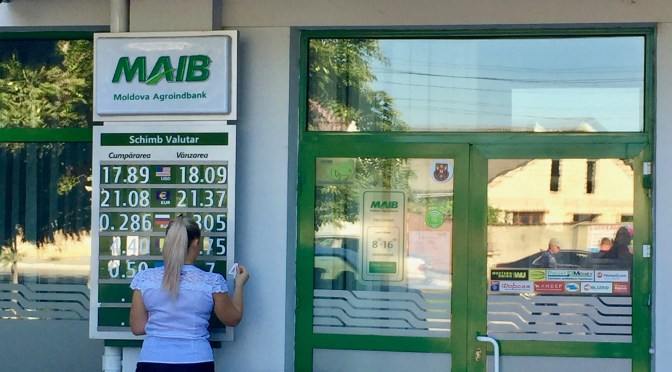
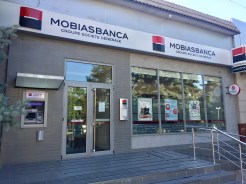
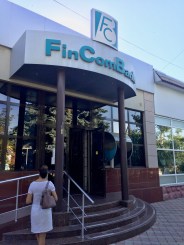
These three photos show what’s happened to the U.S. dollar during the past several months.


I shot all of the photos here in Ialoveni, Moldova: the left one on October 26, the middle one on April 3 and the right one this past Wednesday, August 2. As you can see, a dollar sold here for 19.98 Moldovan lei on October 26, before briefly climbing above 20. Now it sells for only 17.89 lei, a decline of more than 10 percent.

That’s consistent with what’s been happening to the dollar around the world, as the New York Times reported on Tuesday, juxtaposing the dollar’s decline with a rise in the U.S. stock market.

How does this affect Peace Corps volunteers in Moldova? Actually, not much. We are paid in Moldovan lei, buy things in lei and have little reason to track exchange rates. Champa and I have lived comfortably within our Peace Corps budget, so have never sold U.S. dollars for lei except when we first arrived and exchanged a small amount. We rarely use our credit cards since Moldova is largely a cash economy. We also don’t buy much online, transactions generally calculated in dollars anyway.

IMG_6690.jpg

Many Moldovans work abroad and send money home, so exchange rates matter to them. IMG_6681However, they generally pay more attention to the Euro than the dollar; indeed, prices for some goods and services here are quoted in Euros rather than lei, as we learned when we considered renting an apartment. The Euro has not fluctuated as much as the dollar recently. IMG_6679
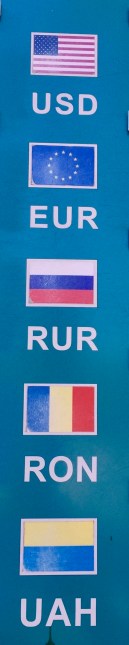
Banks and money exchange centers here also focus on the Romanian leu, the Russian ruble and the Ukrainian hryvnia — not so different from Americans paying attention to neighboring currencies such as the Mexican peso or the Canadian dollar.

Peace Corps Moldova calculates its budget annually, so it’s not affected immediately by currency shifts except in a few ways. For example, a small percentage of volunteer paychecks is designated for personal travel and pegged to exchange rates. The overall impact is so small, though, that many volunteers probably didn’t notice the recent dip. IMG_6680(That included me until I started writing this post.)
Moldova faces serious economic challenges but currency fluctuations here have been far less dramatic than in some Peace Corps countries. The agency’s financial planners elsewhere sometimes have to scramble in response to big swings, as do the State Department and other parts of the U.S. government, along with  international companies, travelers and others.

A few months before we arrived here in June 2016, the dollar was even lower than it is now, so the rise above 20 may have been outside the usual range. I’m told it was a response to Brexit, the U.S. presidential election, Federal Reserve policy and other things I cannot claim to fully understand, much less explain here.

Nor do I really care. For me, a person who enjoys math and numbers, it’s just been something to notice occasionally as I walk to work.

One doesn’t become a Peace Corps volunteer to get rich. For all of us serving in more than 60 countries around the world, our mission is to serve our local communities and promote friendship between Americans and other people. Ultimately, that’s the currency that matters, not the ones shown on the ever-changing bank signs.



A New Way to Rent a Car

We rented a car during our recent trip home but not through a conventional car-rental company like Hertz, Avis or Budget.

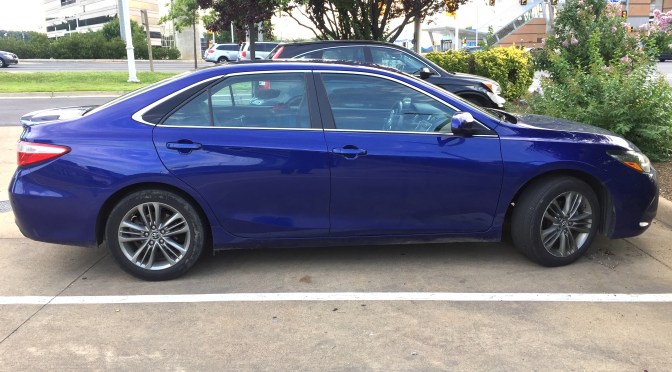
IMG_5857Instead, we rented our blue Toyota Camry through a new online company called Turo, which is like an Airbnb for car rentals. It cost us about half of what we would have spent otherwise, including the cost of the insurance. We interacted mainly with the car’s owner — Kim Dinh, shown here — instead of waiting in line at a rental car counter for an overworked agent to upsell me and ask me to write my initials on forms.

I’d planned to rent a car the usual way and was looking forward to it since we are not allowed to drive “in country” while serving as Peace Corps volunteers. Months before we left for our vacation back home, I began checking prices on travel websites and with the rental car companies. We wanted a mid-sized car since we would have several suitcases. We’d begin and end our trip at Dulles Airport near Washington, D.C., where we flew from Moldova on Turkish Airlines.

The sites didn’t vary much in their offerings and prices. They also were consistent in failing to provide clear information about what it would cost to buy complete insurance coverage, including liability. Champa and I no longer have a personal auto insurance policy to cover our car rentals, since we got rid of our cars when we joined the Peace Corps.
IMG_5852The car rental companies were generally opaque about what they’d charge for different kinds of insurance at Dulles, and what the policies covered. It seemed like they wanted me to make this decision at the counter, when I was hurrying to get my car and unlikely to read the fine print, especially if people were waiting behind me.
As I studied this online, I came across an article describing new companies trying to bring the “sharing economy” to the rental car market. Just as Uber and Lyft have emerged to challenge the traditional taxi industry, so are companies such as Turo, GetAround and FlightCar providing peer-to-peer options for car rentals.

IMG_4129

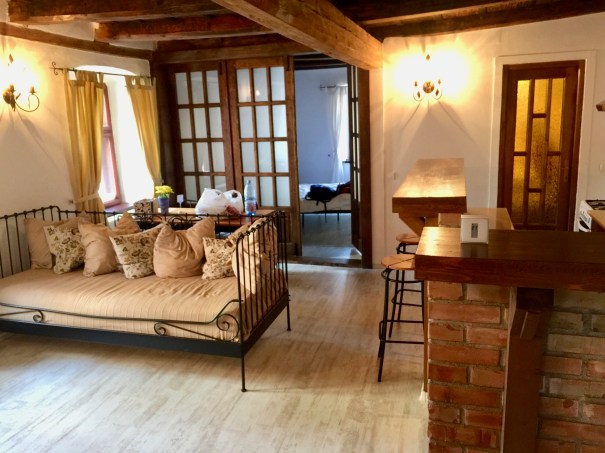
I might have considered this approach too risky or exotic. However, our experience with Airbnb made us comfortable with it. For instance, we stayed in the lovely Airbnb apartment shown above in the historic city of Sibiu during our trip to Transylvania this past April. It had two bedrooms — one for us, one for our guide — and cost less than a single hotel room. We also used a ride-sharing service, Bla Bla Car, to travel from Ialoveni to Transylvania, and had a great experience with that, too.

After reading several favorable articles about Turo, I visited its website and found lots of cars we could rent at Dulles Airport, everything from a Chevy or a Honda Civic to a BMW or a Porsche. I could have even rented a Tesla, a Bentley or, for a mere $899 per day, a Lamborghini Gallardo. (I don’t think the latter includes a Peace Corps sticker.) There was also a clear description of the insurance options offered through Liberty Mutual.

We chose the Camry and the most extensive insurance coverage. Once we reserved this with our credit card, Turo put us in touch with Kim-Dinh, with whom we then worked directly. When we arrived at Dulles, I called Kim-Dinh after we picked up our bags, and he arrived at the terminal curbside a few minutes later. He drove us to a nearby gas station, topped off the tank and inspected the car with me, posting photos to the Turo site. He also lent me his EZPass so I could pay tolls automatically and a magnet to attach my iPhone to his dashboard, so I could see GPS directions more easily. I reimbursed him for the tolls later.

IMG_6541

When we returned at the end of our trip, Kim-Dinh was out of town, so his friend met us at a gas station near a Metro station, shown here. He inspected the car and then gave us a lift to the aiport.

I can’t speak about this service generally or how Turo compares with its competitiors, and I don’t intend this post as an endorsement. However, now that I am back in Moldova, I expect I will recall our experience fondly the next time I am riding a crowded minibus.


Back to America – II

There were at least a dozen reasons why we enjoyed returning to the States earlier this month on vacation from our service in Peace Corps Moldova. I posted six last time; here are six more:

American Food

We’ve eaten well in Moldova but missed American foods. We wasted no time back home in enjoying goodies like those shown above: North Carolina barbecue, New York breakfast treats and Vietnamese pho.

Shenandoahs

We rented a lodge in Virginia’s mountains with our sons and their families. Together we went river rafting, visited Luray Caverns, made S’mores and played games.

Friends

We’ve missed a year with our friends in Durham and Washington, D.C. This was our chance to catch up with them.

Our dog

We also had a joyful reunion with Bailey, our dog. She is doing great with the family taking care of her. Good dog, Bailey!

Sightseeing

In Washington, we visited the new National Museum of African American History and Culture and other sites.

Perspective

Finally, our time away gave us a chance to reflect on our Peace Corps service and then return to Moldova with a renewed sense of commitment.

Now we’re back and gearing up for our second year. I have two important meetings on Tuesday, Champa is starting a grant project and we’re looking forward to all of it. Before long, we’ll need another vacation.


Back to America – I

We just returned to Moldova after visiting our family and friends in the States. It was a great vacation for at least a dozen reasons. Let’s start with six:

Grandchildren

We’ve been dreaming for more than a year about the hugs we’d receive from these six children. We weren’t disappointed.

Family

We saw other family members, too, especially at a big party organized by our son and daughter-in-law in Philadelphia.

Parade

We marched in Philadelphia’s annual Fourth of July parade with returned Peace Corps volunteers from the area. It was great to hear so many people cheering for the Peace Corps, as you can see in this video. (Don’t miss Champa’s flag!)

Nature

We were reminded of America’s natural beauty in places such as Luray Caverns and the Kenilworth Aquatic Gardens.

Changes

America has changed since we left. We wanted to see it with our own eyes.

Peace Corps

We remained engaged with our jobs, giving two talks about the Peace Corps in Durham and meeting with the leaders of the National Peace Corps Association in Washington, D.C.

In my next post, I’ll share six more reasons why we treasured our vacation back home.


Two Talks in Durham

Collage 4 images

Champa and I are coming home for a short vacation with our family. While we’re in Durham, we will be giving two presentations about our Peace Corps experience:

  • A private talk for Duke University friends at 4 p.m., July 10, Office of News and Communications. RSVP (required) to Sakiya Lockett.
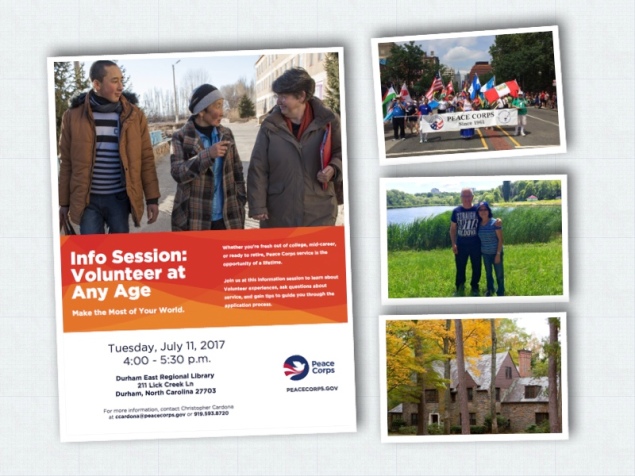
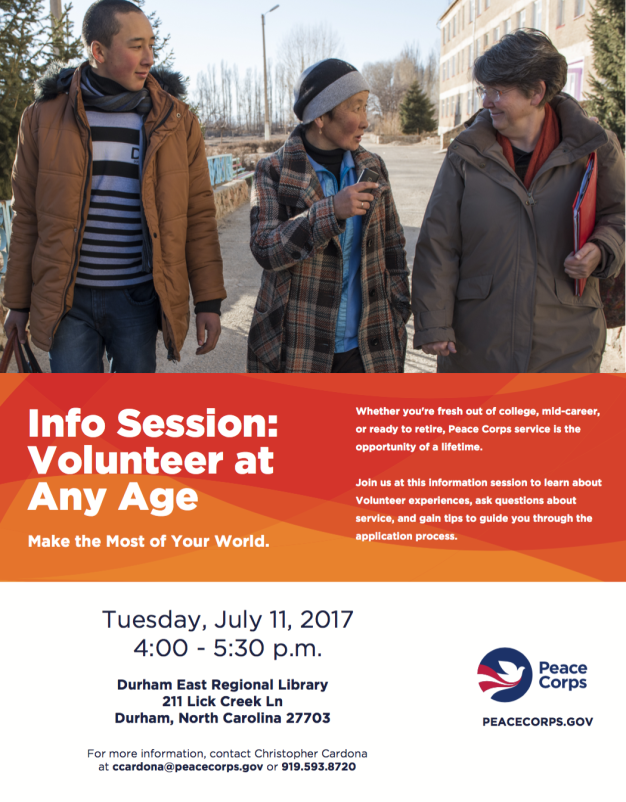
  • A public talk  at 4 p.m. July 11 at the East Durham Regional Library, together with Chris Cardona, a returned volunteer (China) who is the local Peace Corps recruiter. See the poster below for details.

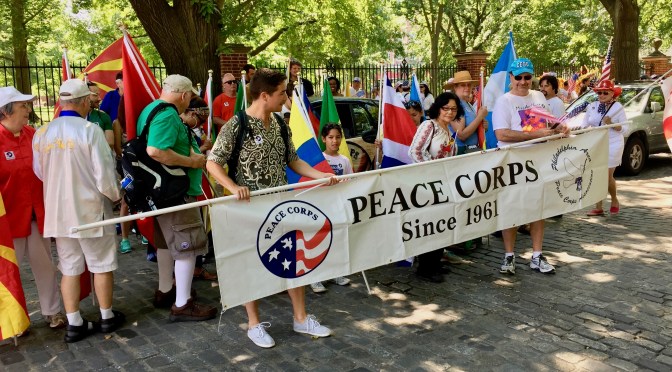
Earlier during our visit we will be joining returned volunteers from the Philadelphia area in marching in that city’s Fourth of July parade. If you’re watching in front of Independence Hall, check out who’s carrying the flags for Moldova and Nepal.

Please come join us if you are in the area!

Screen Shot 2017-06-13 at 10.12.58 AM

My Two Homes

IMG_5801

On Monday, the library where I work in Ialoveni, Moldova unveiled an exhibit about North Carolina — the home state of “Domnul David” and “Doamna Champa.”

The exhibit features brochures about the Wright Brothers monument in Kitty Hawk, the Biltmore mansion in Asheville, the NASCAR museum in Charlotte and attractions across the Triangle. It also offers information about where to taste wine, go fishing or ride a hot-air balloon in North Carolina.

IMG_5796

Before we came to Moldova with the Peace Corps, I gathered these brochures at the North Carolina tourism office on Route 85, just south of the Virginia border. I brought them with me and now finally put them to good use. As I described in an earlier post, Champa and I have also shared souvenir postcards about Durham.

My library colleague, Doamna Stella, and her daughter did a great job of arranging the new exhibit, which is in the center of the library. It’s the latest example of the close ties between Moldova and Carolina du Nord, two places I’m proud to call home.


Navigating Transitions

Champa and I are among the people featured in a new article from journalist Kim Painter about how Americans are navigating the second half of their lives. There are many possible transitions, she writes, but the “big one” is usually leaving one’s life’s work for whatever comes next. Painter also interviewed my sister Nancy Collamer. Her article for Vested appears below and is online here.

Screen Shot 2017-06-24 at 7.06.27 AMScreen Shot 2017-06-24 at 7.07.03 AMScreen Shot 2017-06-24 at 7.07.25 AM


Peace Corps Stories

Many of my fellow Peace Corps Volunteers in Moldova have inspiring stories to share.

Katrina Broughman and Bartosz Gawarecki, for instance, guided young people to organize recycling projects and reduce trash, an effort that has begun spreading nationwide.

Screen Shot 2017-06-13 at 3.07.43 PM

Anne Reid, a former dancer and choreographer from Harlem, launched an African dance class at her local library, leading to other worthwhile projects in her community.

Chrystal Wilson joined with other volunteers to bring young people and others together to talk about sexual assault and harassment, calling attention to the problem of “blaming the victim” when women suffer abuse.

Screen Shot 2017-06-13 at 3.08.32 PM.png

Their stories and others have appeared recently on Peace Corps Stories, which highlights the experiences of volunteers worldwide, from an innovative malaria project in Rwanda to an older American who followed in her daughter’s footsteps and became a volunteer herself as an English teacher in Indonesia. I’ve been helping some of my colleagues here to put their stories into words.

For many years, the Peace Corps communications office in Wahington took the lead in reviewing and editing all of these articles, which volunteers submit from more than 60 countries. Volunteers in Moldova have been among the contributors. “HQ” recently arranged for individual country programs to edit and post articles on their own, to appear on their sections of the site — “Moldova Stories,” “Nepal Stories” and so forth. HQ still edits some articles directly but now also oversees the “local articles” and picks some of the best to feature internationally.

Screen Shot 2017-06-13 at 3.09.49 PMMy country director asked me earlier this year whether I might want to assist with this editing and other communications initiatives for Peace Corps Moldova, as a secondary project to complement my primary job. I’ve been happy to help, working most closely with Liuba Chitaev on the staff, pictured here.
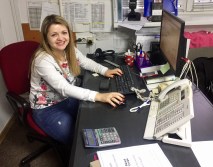
img_2593Together we helped launch a new Peace Corps Moldova Instagram site and Super Moldovans on Facebook. Earlier this month, Liuba and I gave the first-ever presentation on communications for the newest group of trainees.

Volunteers here are doing other kinds of outreach as well, from blogs and videos to projects such as Jessica Randall describing in 100 Instagram posts and on Peace Corps Stories what she likes about Moldova. Clary Estes has been documenting the stories of Moldovans deported during the Stalinist era. Mark Gilchrist has produced a series of newsletters in English, Romanian and Russian.

Screen Shot 2017-06-13 at 3.10.37 PM

Our new projects complement these and other communications efforts, advancing the Peace Corps goals of sharing our American culture with others and expanding understanding among Americans about life in other parts of the world.

I’ve written some “Peace Corps Stories” myself but, just like back home, I enjoy editing as much as writing, especially when I’m working with someone who has a great story but just needs a little nudge, tweak or feedback. There are many more volunteers here with great stories of their own. I hope we’re just getting started.

Body Language

Do you know that person who comes to your staff meetings, pretends to participate but keeps checking his or her smartphone?

Or the two people who whisper to each other during meetings? Or the curmudgeon who rolls his eyes when someone makes a comment?

We have those people in Moldova, too, although they are generally more discreet than back home, at least in the meetings I’ve attended.

IMG_3194

As someone who attended several meetings a day for many years, with a reputation for keeping my own meetings short and sweet, I’m a connoisseur of meeting behavior. I’ve continued taking mental notes since I came to Moldova, at meetings I’ve attended in Ialoveni, Chișinău and elsewhere.

Even though I can’t understand everything people say in Romanian, some of their body language is familiar, although generally more formal and polite. In both countries, a meeting may include someone bemused (or irritated)  by everything. One person may speak with a rhetorical flourish, while another mumbles or reads in a monotone from a notebook and never looks up. Some people address the entire room while others speak only to the person leading the meeting.

Similarly, if a meeting drags on too long, people may start staring ahead, flipping through papers or glancing at their watches, regardless of whether the conversation is in English or Romanian.

IMG_2376

If someone’s cell phone begins ringing, especially if it has a distinctive ring tone, others in the room will quietly chuckle.  The phone’s owner will probably look chagrined and race to turn it off, although sometimes only after whispering “I’m in a meeting” to whoever is calling.

img_0106One big difference in Moldova, though, is that everyone is addressed as “Domnul” or “Doamna” — Sir or Madam. And when it comes time to schedule the next meeting, they’re more likely to check their paper daybooks instead of the electronic calendar on their smartphone.

Here’s one of the best things about meetings in Moldova: There are far fewer Powerpoint presentations. That alone is a good reason to leave America and come here.

Oh, and if you’re reading this on Facebook, rest assured they sneak peeks at that, too. Every meeting I’ve attended has also included an American guy from North Carolina who glances frequently at the Google Translate app on his iPhone. Discreetly, of course.

Children’s Day

Love. Happiness. Fun. Health.

Those are some of the things people wrote on Thursday when Champa asked them to describe in one word the meaning of International Children’s Day, which people celebrated in Ialoveni and across Moldova. The mayor, Sergiu Armașu, in the shirt and tie, helped her gather responses in front of the Casa de Cultură.

Click on the photo of the chart to see all of the responses. American readers may especially enjoy two in the top-right of the photo: “Best Friend Forever” and “iPhone 7.”