Tag Archives: Peace Corps

Talking Turkey


I ate Thanksgiving turkey twice on Thursday — first when I usually eat breakfast, then for dinner.

IMG_9391

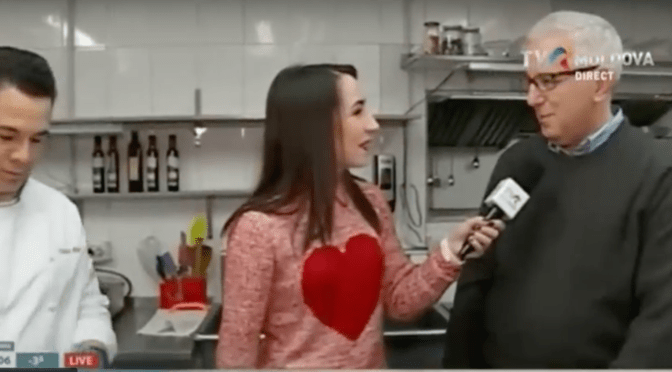
The early meal was for a television story on TVR Moldova explaining our holiday to viewers across Moldova and Romania. Cătălina Russu, a television reporter who lives in Ialoveni, invited me to join her as she broadcast a live story from Jeraffe, one of Chișinău’s top restaurants.

As her story began, as shown in the first clip above (also on YouTube), we discussed Thanksgiving foods and traditions while the chef, Nestor Perez, prepared a turkey roll stuffed with herbs and butter. I had not previously met Nestor, who lived in America for many years after leaving Venezuela and now lives here with his Moldovan wife. Thanksgiving Menu 2017After our first segment, we all took a break and then moved from the kitchen to a table to eat the cooked turkey with pistachio-infused rice.

I shared my own Thanksgiving menu (seen here) with Cătălina and showed her how American kids use their fingers to make turkey pictures for placemats. The highlight, though, was Nestor’s food, shown in the second clip above (also on YouTube). It was fabulous despite the early hour. You can see for yourself in Cătălina’s story, which is easy to follow even if you don’t speak Romanian.

As soon as her second segment was finished, the cameraman and another reporter pulled up chairs so they could try the turkey, too. By 9:30 a.m., I was done and heading back to Ialoveni by bus to prepare the next round. (Around the same time, my Peace Corps Volunteer colleague Anne was discussing Thanksgiving on another television program here.)

I bought the turkey for our meal from a local farmer, who delivered it on Wednesday to our host mother. I found sweet potatoes at a downtown store. IMG_9393Champa discovered dried cranberries in the market, which I cooked with juice and brandy to make a sauce. One of our local stores now sells Parmesan cheese, so I bought some and combined it with mashed potatoes in a casserole. For my peach pie, I used slices of local peaches we’d bought last summer and froze. We made cookies with chocolate chips and brown sugar we bought when we were home last summer. We bought the Armenian and Georgian wine during our recent trip there.

We were prepared, in other words, and had even finished the desserts and some other items earlier in the week. Our host family and a Peace Corps Volunteer from Minnesota, Cindy, arrived in the evening. We then ate too much, laughed too much and went around the table to each say why we give thanks.

IMG_9414

It was such a lovely day. The only thing that could have been better would have been sharing Thanksgiving with our family back home, who we missed even more than usual throughout the day. We’re thankful we will be back together with them next year — and thankful to have found another wonderful family while we’re here.

Libraries Turn the Page

In both America and Moldova, libraries are racing to redefine themselves and remain relevant in an online world.

IMG_9072Back home, where people now routinely download books and find information on the internet, libraries are emphasizing their roles in providing expertise and bringing people together, whether with story times for kids, study spaces for students or programming for retirees.
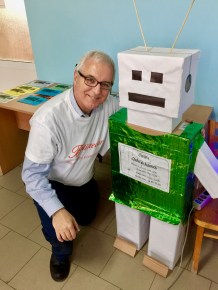
IMG_9175Here in Moldova, the transition has been even more challenging. Library budgets and salaries are tiny. Many library buildings are old, with collections dating to Soviet times. There are no resources to buy books, much less comfy sofas or cappucino machines.
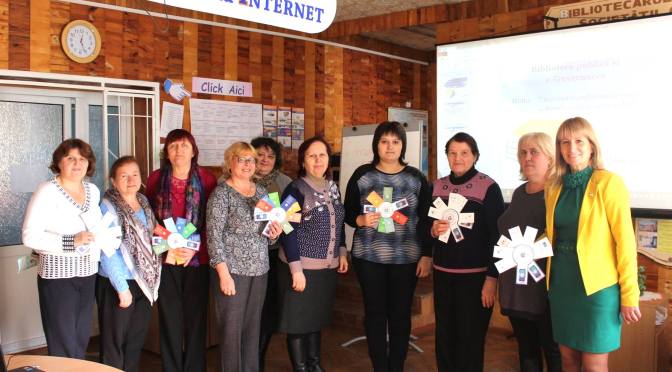
Last week, the library where I work in Ialoveni showed how some Moldovan libraries are moving forward despite these challenges. Together with the local Consiliul Raional, or county government, it organized a “library day” to showcase its recent innovations.

IMG_9151

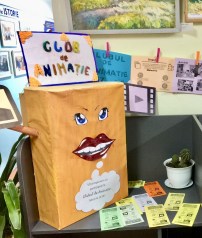
Under the leadership of director Valentina Plamadeala, speaking above, the library now has a film animation class, a club that produces crafts from recycled materials, a robotics program and a workshop to teach modern advocacy techniques. It’s organizing a new weekly story time for toddlers that will also provide educational programming for parents and grandparents. It hopes to provide new programs for people with special needs, building on a Braille collection it recently added. The library is reaching out to its community in interesting ways, too, using videos, infographics and social media.

IMG_9089

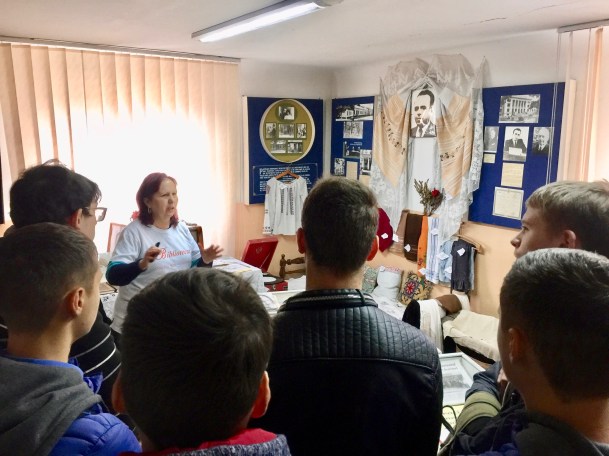
Located near the city’s main traffic circle, Ialoveni’s library is named for Petre Ştefănucă, a folklorist and local hero who died in a Soviet gulag. At last Tuesday’s event, I was moved as librarian Larisa Petcu, above, showed off the small museum that honors his memory, telling local high school students about him. I was also impressed by the presentations from some other nearby libraries that participated in the event. Cătălina Russu, a reporter for TVR Moldova, also attended and produced the video shown at the beginning of this post (also available on YouTube; at 1:35, I speak briefly in English.)

Novateca, a program managed by the nonprofit organization IREX with support from the Bill and Melinda Gates Foundation in partnership with USAID, has been a driving force behind the modernization of Moldova’s public libraries, building on similar programs in neighboring Romania and Ukraine. Since it began operations here five years ago, Novateca has provided thousands of computers and other resources, trained librarians across the country, increased public support for libraries and promoted a more expansive vision of their role in a civil society.

IMG_9182

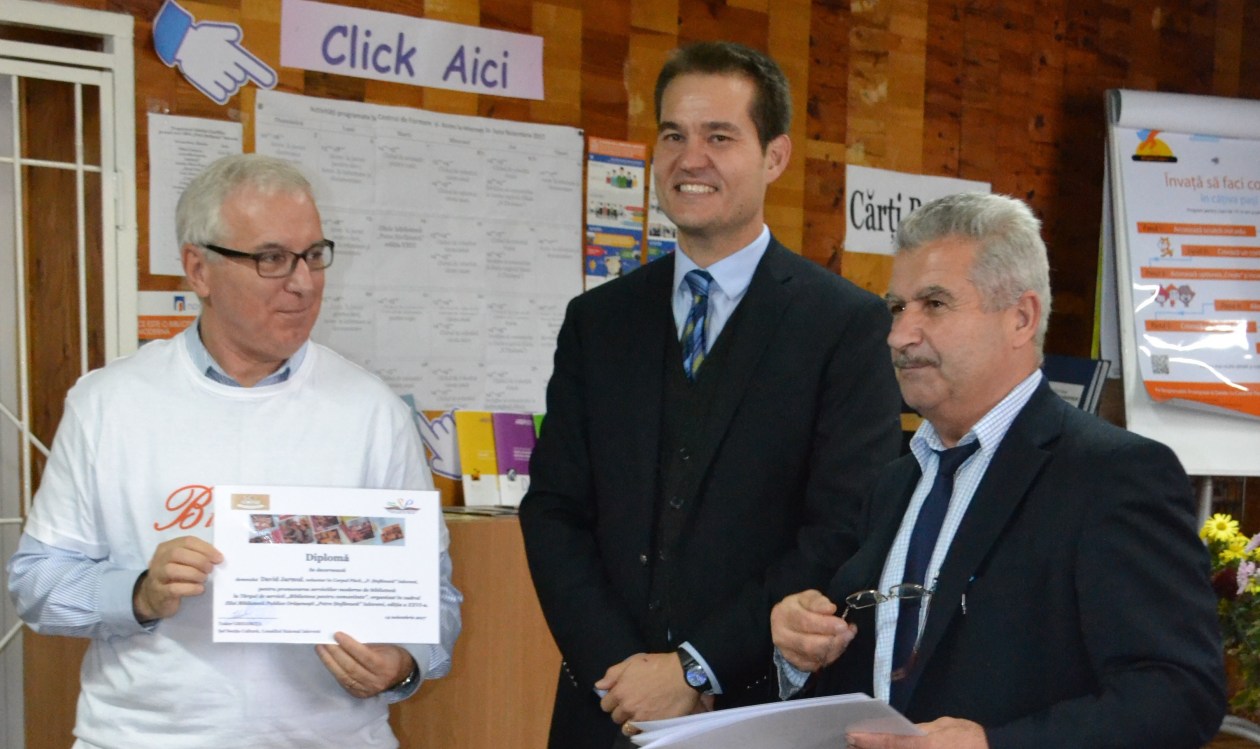
I’ve become a big fan of Novateca’s work and was pleased to see its director, Evan Tracz — himself a former Peace Corps Volunteer, in Turkmenistan — at last Tuesday’s event. (He’s in the center of the photo below, awarding certificates to me and others with Tudor Grigoriță of the Consiliul Raional.) Evan and his team have had a transformative impact. Novateca is now winding down its activities as its funding comes to an end. Many of us hope Moldova’s libraries will continue making progress without them.

I have great respect for the people I work with at Ialoveni’s library. They are doing so much with so little, earning less in a year than some American librarians make in a couple of weeks. They keep looking for better ways to serve the community here without a coffee maker in sight, much less a cappucino machine.

DSC_0202

Sumo Robots Video

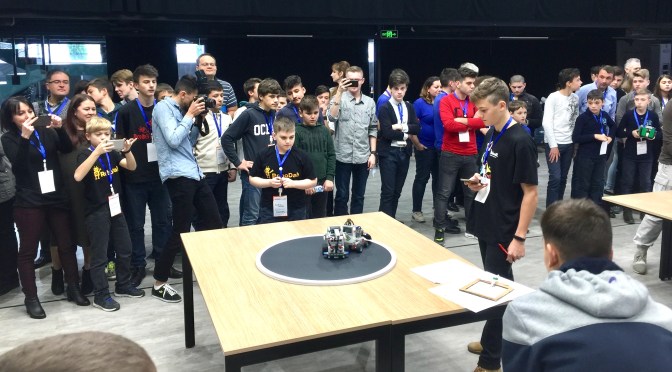
Student teams from across Moldova battle with “SumoBots” they built and programmed. Our Ialoveni library team participated in this educational competition at Tekwill in Chișinău. The video is also viewable on YouTube.

200 Posts: Top Ten

This is my 200th post on Not Exactly Retired, which I started in mid-2015.IMG_0992 As we’ve traveled around the United States, spent time in Nepal and served as Peace Corps Volunteers in Moldova, the blog’s audience has kept growing, with more than 26,000 visits so far. Thanks to all of you who have joined us on our journey!
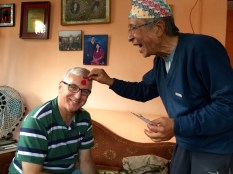
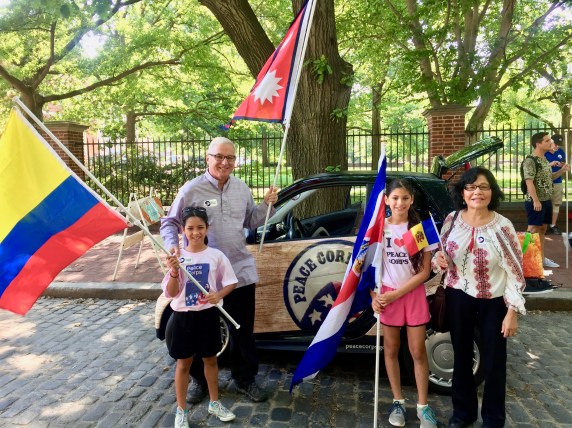
FullSizeRender 808“Not Exactly Retired” advances two of the three official goals of Peace Corps: to promote a better understanding of other peoples on the part of Americans, and vice versa. (The other goal is to “help the people of interested countries in meeting their need for trained men and women.”)
Here’s a Top Ten list of the blog’s most popular stories so far, as measured by views. There’s more to come, so stick around — and if you know anyone who might enjoy Not Exactly Retired, please tell them about it and invite them to subscribe.

IMG_6043

The Most-Viewed Stories on Not Exactly Retired

  1. Peace Corps After 50 (featured on PBS/NextAvenue)
  2. Peace Corps: Now vs. Then (comparing service in Nepal and Moldova)
  3. Funny Peace Corps Videos (the joys of pooping in a hole)
  4. Moldova’s Marathon (a recent story about runners here)
  5. Are Volunteers Over-Connected? (from WorldView Magazine)
  6. Older Peace Corps Volunteers (a 5-part series about Moldova)
  7. Message in a Bottle (discovering your impact on someone, decades later)
  8. Life is Calling (making a big change doesn’t need to be scary)
  9. Reading in OverDrive (how to read books on your e-reader for free)
  10. The Smokehouse Experiment (former PCVs open a restaurant here)

Other popular stories have focused on the perils of downsizing after decades of American life, Thanksgiving in Moldova, an amazing Romanian salt mine and the adventures a friend and I experienced years ago while backpacking across Afghanistan, Nepal, Sudan and other places.

Not surprisingly, most of the blog’s views have come from readers in the United States, followed by Moldova. Rounding out the Top Ten are Romania, the United Kingdom, Nepal, Canada, Germany, Ecuador, India and the Philippines, all with at least 100 views.

Are you enjoying “Not Exactly”? Do you have any reactions to these lists? Requests for future stories? As always, I welcome your feedback and comments.


Champa’s Projects

Composting. Arts and crafts. Helping kids with special needs.

These are just some of the things Champa has been doing here when she isn’t teaching English at her school. Recently Peace Corps Moldova asked her and several other eduction volunteers to highlight their out-of-class activities for a conference. Her presentation reminded me of how busy she’s been. These photos tell the story:

IMG_5067

Champa hosts a weekly English conversation class at our local library.

IMG_6996

She participates sometimes in a weekly club at the library where local women create hats and other objects from recycled materials.

IMG_7975

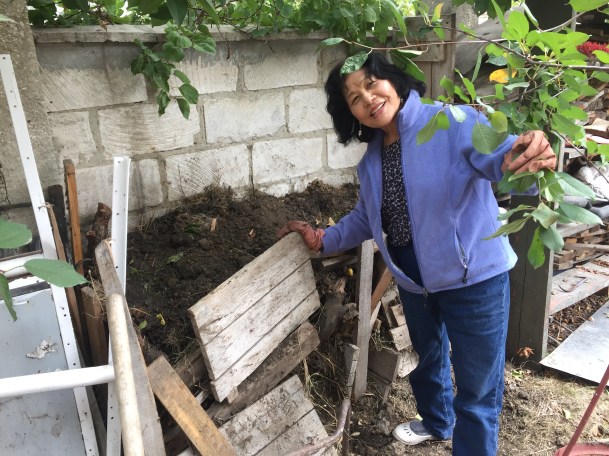
She’s helping a local NGO compost its food scraps and start a vegetable garden and has also started a compost pile with our host family, shown above.

IMG_1897

For International Children’s Day, Champa organized a project in which local residents described in a few words what the day meant to them. (That’s our city’s mayor in the blue shirt and tie, helping her.)

IMG_4450

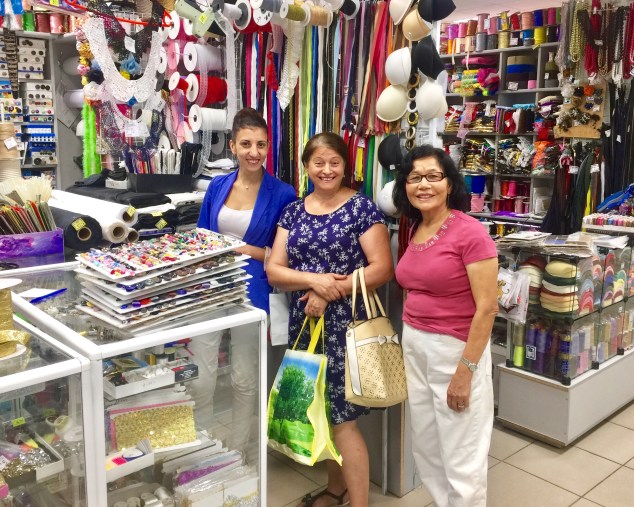
She is managing a Peace Corps small grants project at her school to create a costume and prop wardrobe for its drama program. She’s posing above with her school partner Ana and in the bottom photo with Ana and Ina, the project’s designer.

Champa also volunteers weekly at a local center for special-needs kids and, of course, does all of her regular work at the school, as well as participating in community cultural events, hanging out with our host family and sharing all of the shopping and cooking with me. She doesn’t like calling attention to herself but today I’m making an exception.

IMG_6969

Journalism Club

The “5 W’s” — who, what, where, when and why, plus how — are the language of journalism, no matter what language you speak.

IMG_4630 copy

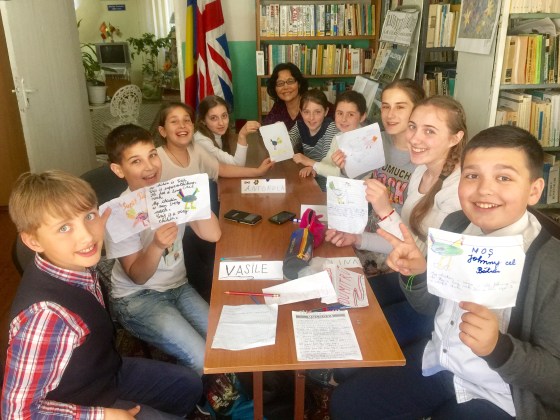
This past Friday, teenagers in a journalism club in the Moldovan town of Călărași answered all five of these questions with flair when I challenged them to write stories and headlines in just a few minutes.

IMG_8904One student described an imaginary murder. Another imagined a fight in a local store. Others chose more peaceful or funny scenarios. All did a great job of answering the 5 W’s, which are care, ce, unde, cand and de ce in Romanian, plus cum for “how.”IMG_4614 copy

A fellow Peace Corps Volunteer, Shannon, invited me to the club, which she and her Moldovan partner Cristina started recently. (That’s the two of them in the photo below.) One of our other volunteer colleagues, Haley, has also started a journalism club, in Comrat.

Shannon’s group meets weekly in the Călărași primăria, or town hall, where she works. Only some of the participants are considering journalism as a career but all are interested in it and eager to learn. Shannon invited me to lead a lesson and share some of my experiences in journalism and communications.

IMG_8927

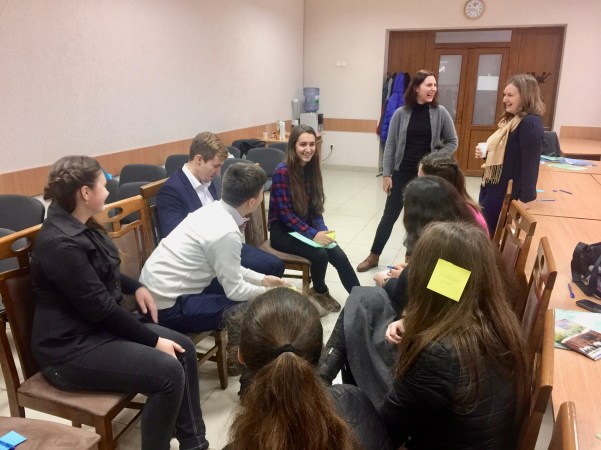
As you can see from the photos, we had a great time, beginning with an “icebreaker” in which people had to guess the name of a famous person someone wrote on a post-it note and placed on their forehead or behind them.

I also enjoyed traveling to Călărași by minibus, seeing the town, and then returning later that afternoon by rail, my first time on a Moldovan train.

All in all, I can report the experience was wonderful, warmhearted, winning, welcome and worthwhile. Hugely.

IMG_8916

The Smokehouse Experiment

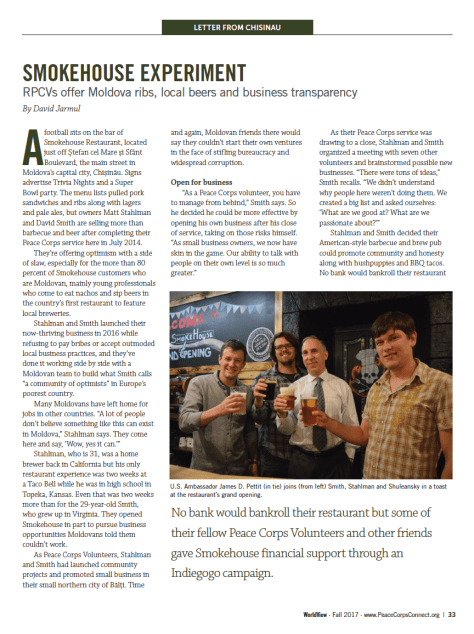
Smokehouse, a restaurant opened here in Moldova by two former Peace Corps Volunteers, shows how some PCVs contribute even more to a country after they finish their service.  It’s serving up optimism with a side of slaw

WorldView, the magazine of the National Peace Corps Association, just published this article I wrote about Smokehouse. You can read it below or link to this PDF version: WorldView – Smokehouse Experiment.

Screen Shot 2017-11-09 at 3.08.30 PMScreen Shot 2017-11-09 at 3.08.50 PM

Cultural Festival Video

60-second video captures the highlights of an annual cultural festival in Ialoveni where school groups sing, dance and act. Tick, tick, tick … Also available on YouTube.


Keeping Kids Safe Online

IMG_8215

Just like parents in America, Moldova’s moms and dads worry what their kids are seeing and doing on the internet.

On Sunday, some of them learned techniques for protecting their children’s privacy and for avoiding online threats such as predators and sexual content. They participated in a special SuperCoders event where they discussed E-safety while their kids got a fun introduction to computer coding.

At Biblioteca publică orăşenească „Petre Ştefănucă” in Ialoveni, where I work as a Peace Corps Volunteer, 19 kids took part in the program sponsored by Orange Moldova, the country’s largest telecommunications company. Orange Moldova teamed up with Novateca to organize similar sessions at 37 public libraries across Moldova over three weeks.

IMG_8186Ranging in age from 10 to 14, Ialoveni’s kids used a Romanian version of the colorful Scratch software developed at the MIT Media Lab to encourage young people to think creatively, reason systematically and work collaboratively. The software resembled some of the Hour of Code games I’ve used previously at the library.  As before, the kids loved it and began solving fun problems within minutes. Meanwhile, their parents were in an adjacent room discussing topics ranging from cyber bullying to the importance of changing passwords regularly.

In the brief video clip below, my library colleague Lidia Rusu asks the kids in Romanian whether they’re tired of programming. You can figure out their response without my translation.

[Video clip also viewable on YouTube.]

Robots Video

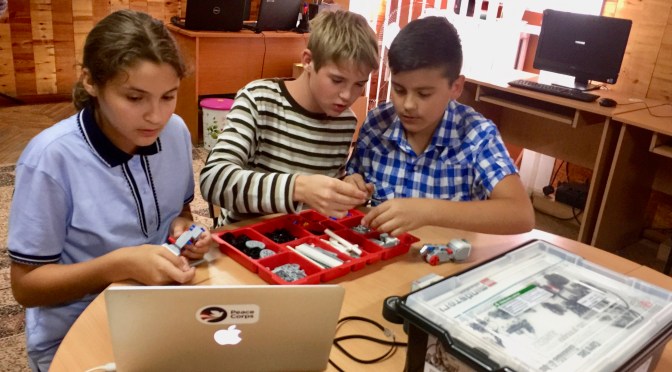
Students at Ialoveni’s library are learning to make, program and operate robots. See post with the full story.