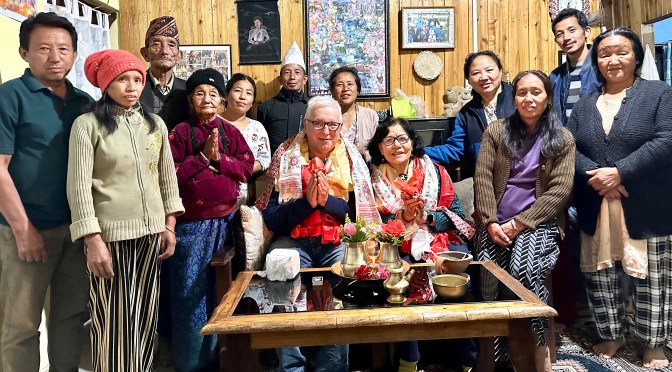
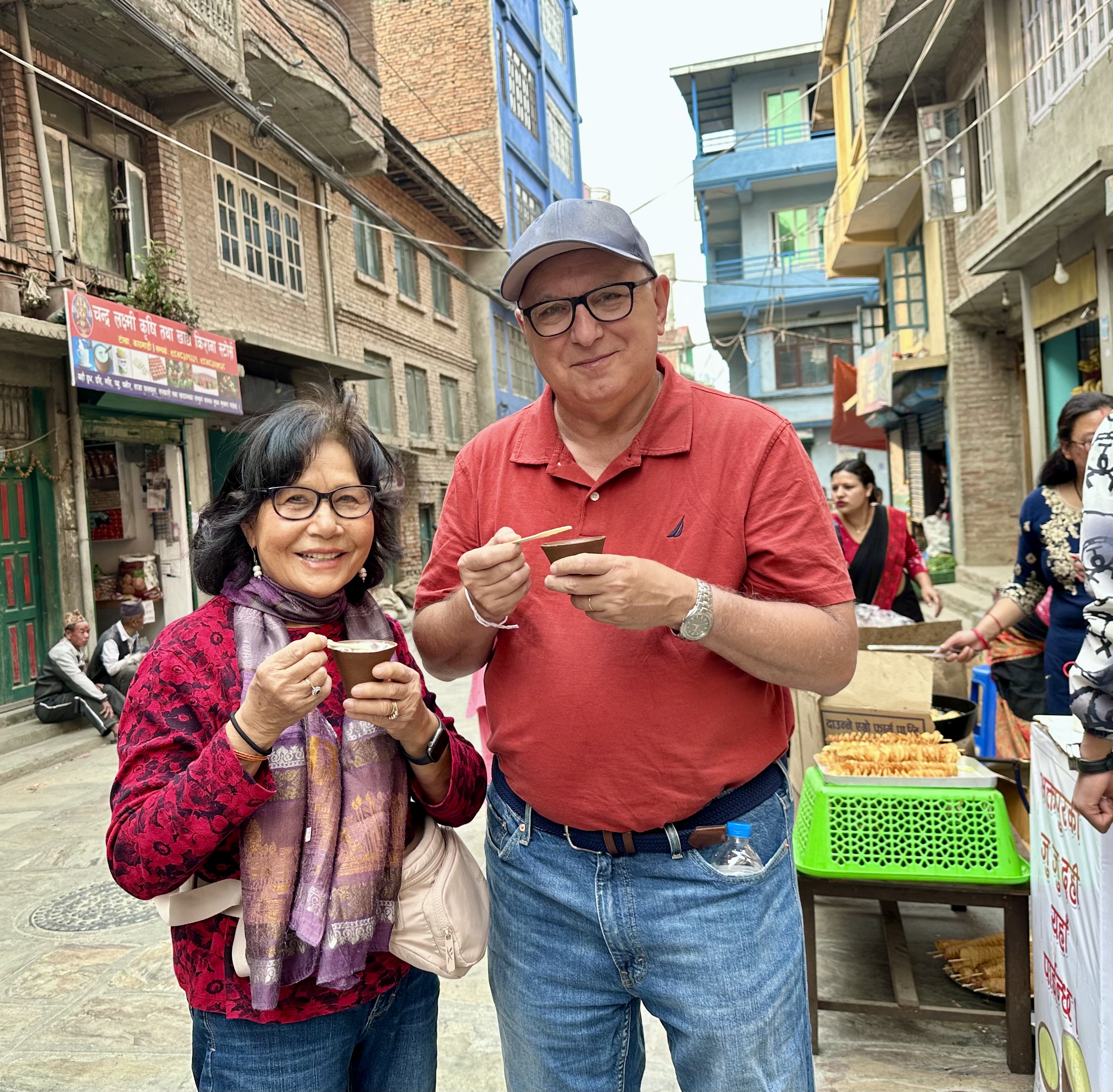
I served twice as a Peace Corps Volunteer — in Nepal and Moldova — and have been active in the Peace Corps community. Here are some of my posts about what it means to be a Volunteer and how Peace Corps service has changed
People are looking for new meaning in retirement, a trend that Not Exactly Retired has explored often. Here are some of the blog’s past posts on downsizing, lifelong education, medical challenges and other topics, along with several media profiles of us that also focused on retirement.
Did you hear what happened to the island nations near Venezuela after U.S. forces captured Nicolás Maduro in Caracas?
No? I didn’t think so. These islands suffered collateral damage but were largely ignored. Call them the Collaterisles.
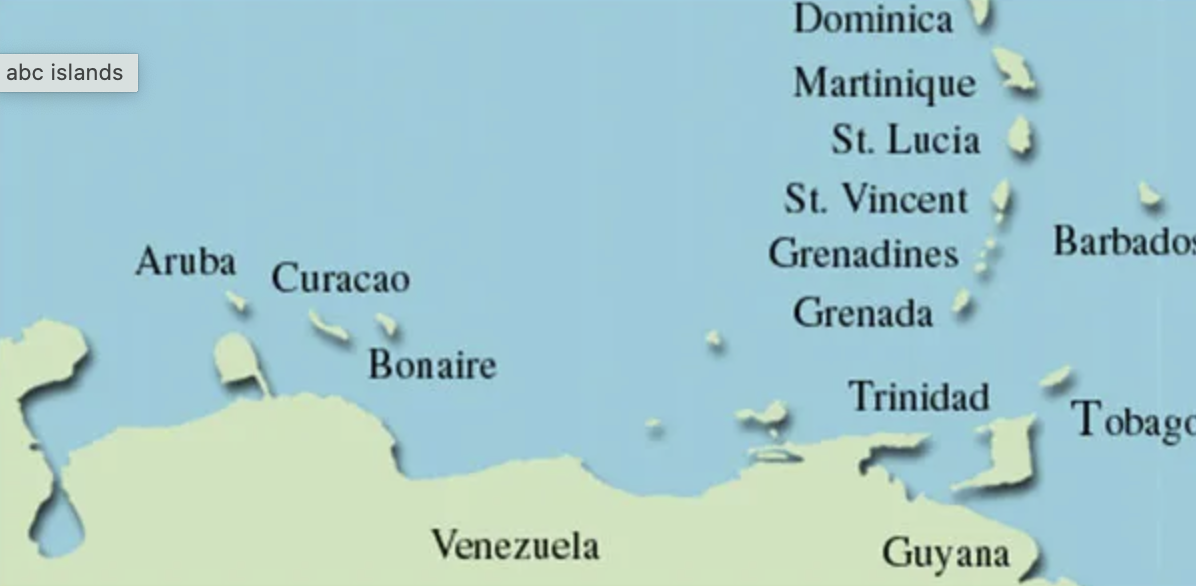
Trinidad and Tobago is just seven miles from the Venezuelan coast. Aruba is 15 miles away. Curaçao, Bonaire and Grenada are a little further.
All were affected by the U.S. military action. American, Delta, United and other airlines canceled flights to the region. Cruise lines canceled visits. Thousands of American tourists were stranded. Local hotels, restaurants and other businesses lost critical income during their peak New Year holiday season.
Nations across the region expressed alarm about the U.S. military action, which they regarded as a violation of international law, but had to navigate the situation carefully. U.S. officials focused on Venezuela and said little about the broader impact.
This didn’t surprise me. It’s what I’ve seen in other countries we’ve visited that suffered collateral damage from U.S. actions.
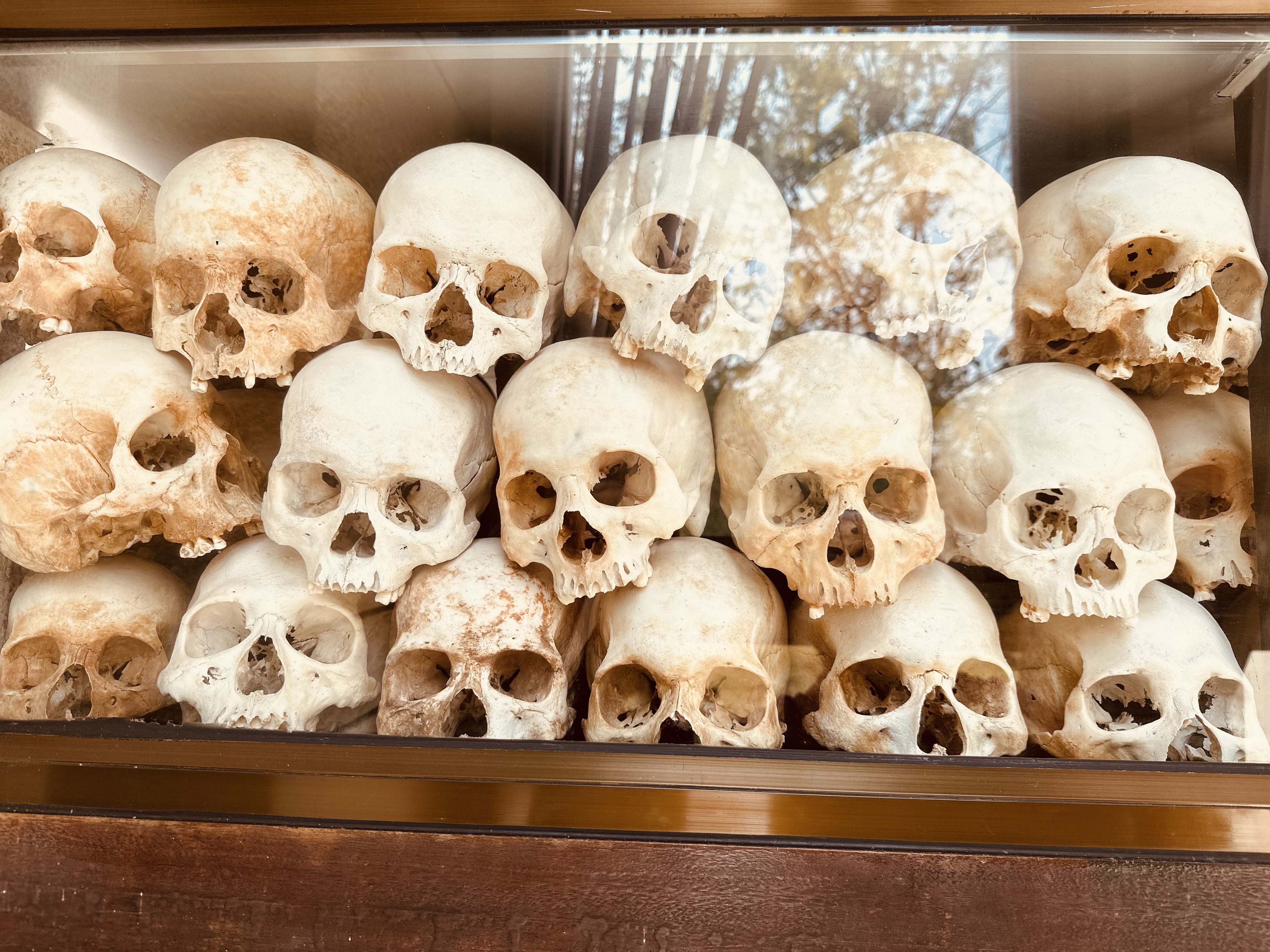
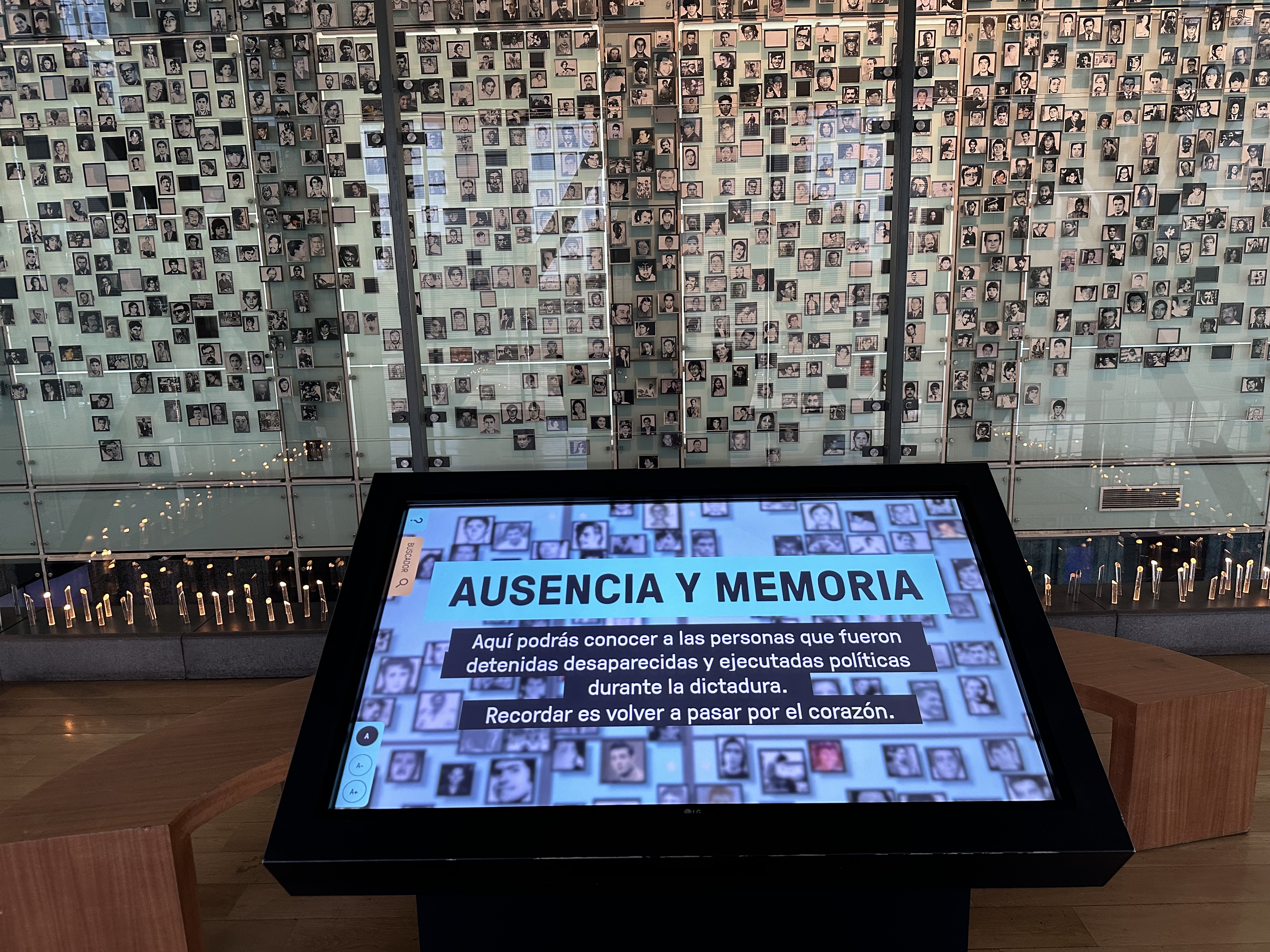
In Cambodia, the Khmer Rouge took power and unleashed a genocide following U.S. actions focused mainly on neighboring Vietnam. We visited the killing fields there, where these skulls, above, are part of a memorial. In Chile, U.S. Cold War concerns led to the overthrow of President Salvador Allende and the emergence of a brutal military dictatorship, as we saw documented at the Museo de la Memoria in Santiago, below.
In the Caribbean, U.S. military interventions have included Cuba, Haiti, the Dominican Republic, Grenada and others, all affecting the wider region. Fortunately, the latest events in Venezuela appear to be having a limited impact on its island neighbors, some of whom were probably happy to see Maduro ousted from power. I don’t claim to be a Latin American expert and I don’t really know, but the script felt familiar when we visited there last month.
Champa and I just returned from a Southern Caribbean cruise we booked mainly to visit friends in Grenada and Trinidad. (The unexpected bonus was escaping a winter storm back home.)
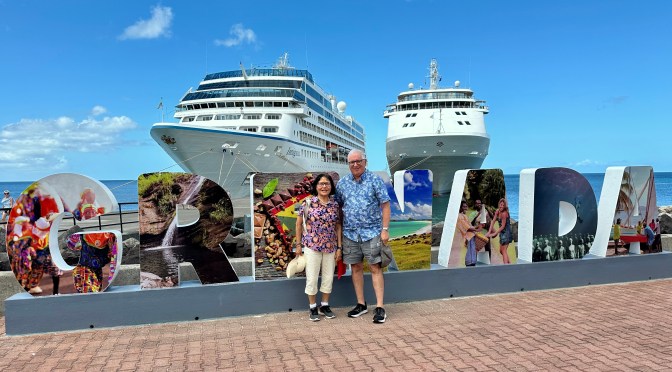
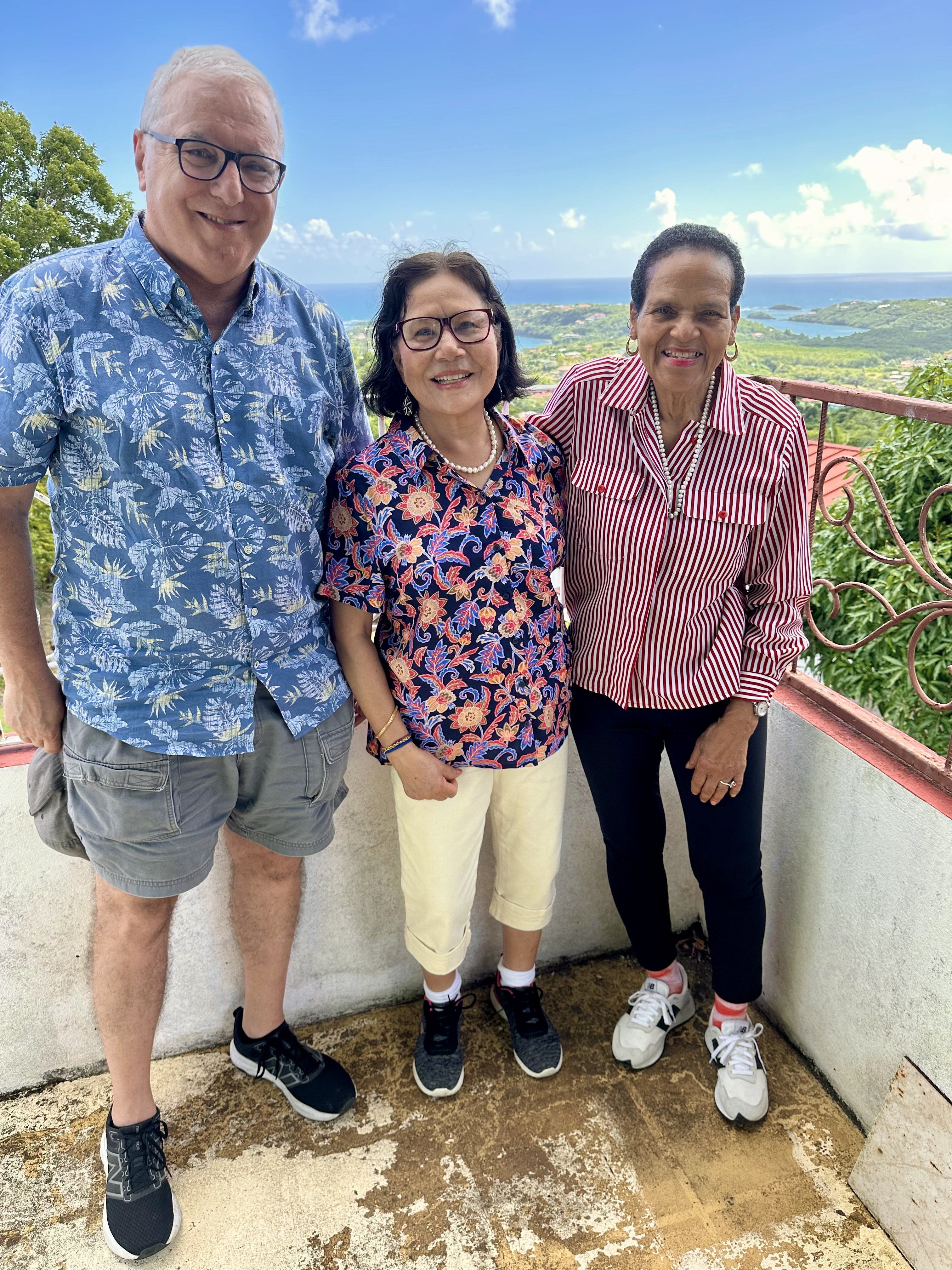
As you can see in the photo, we spent a wonderful day with our Grenadian friend Glenda. Champa worked with her in Maryland many years ago and we’ve been friends ever since. We were delighted to finally visit her beautiful Spice Island home, below, and meet her sister, Carol.
Our planned stop in Trinidad, on the other hand, was canceled because of the situation in Venezuela. Our cruise stopped instead in Antigua, which was lovely but not where we wanted to go. It turned out we would have missed our Trinidadian friends anyway, and we hope to visit them in the future, but it was annoying to have our plans changed by a situation that had nothing to do with Trinidad.
Rescheduling a cruise stop is decidedly a first world problem, but economic hardship for a developing economy is more serious. Genocide and military dictatorships are far worse. All can result when smaller nations get in the way of superpowers pursuing their perceived interests. We also saw this while living in Moldova, which spent decades under Soviet rule and is still resisting Russian domination.
Smaller nations are like the dishes that smash when a bull rampages through a china shop. The bull may not intend harm, or even notice it, but the dishes smash just the same. Halfway around the world from China, Venezuela’s island neighbors illustrate this broken china dilemma. They are shards of truth reflecting how precarious it can be to live nearby when a superpower takes action.
I never expected to become someone who likes cruising.
Whenever I saw a television ad featuring adrenaline-filled action and frantic gaiety on a giant cruise ship, I thought to myself: “that’s not for me.” The idea of being trapped in a confined space with thousands of strangers, visiting ports on a crowded tour bus rather than on my own, was unappealing. I didn’t even need to see the drunken conga line.
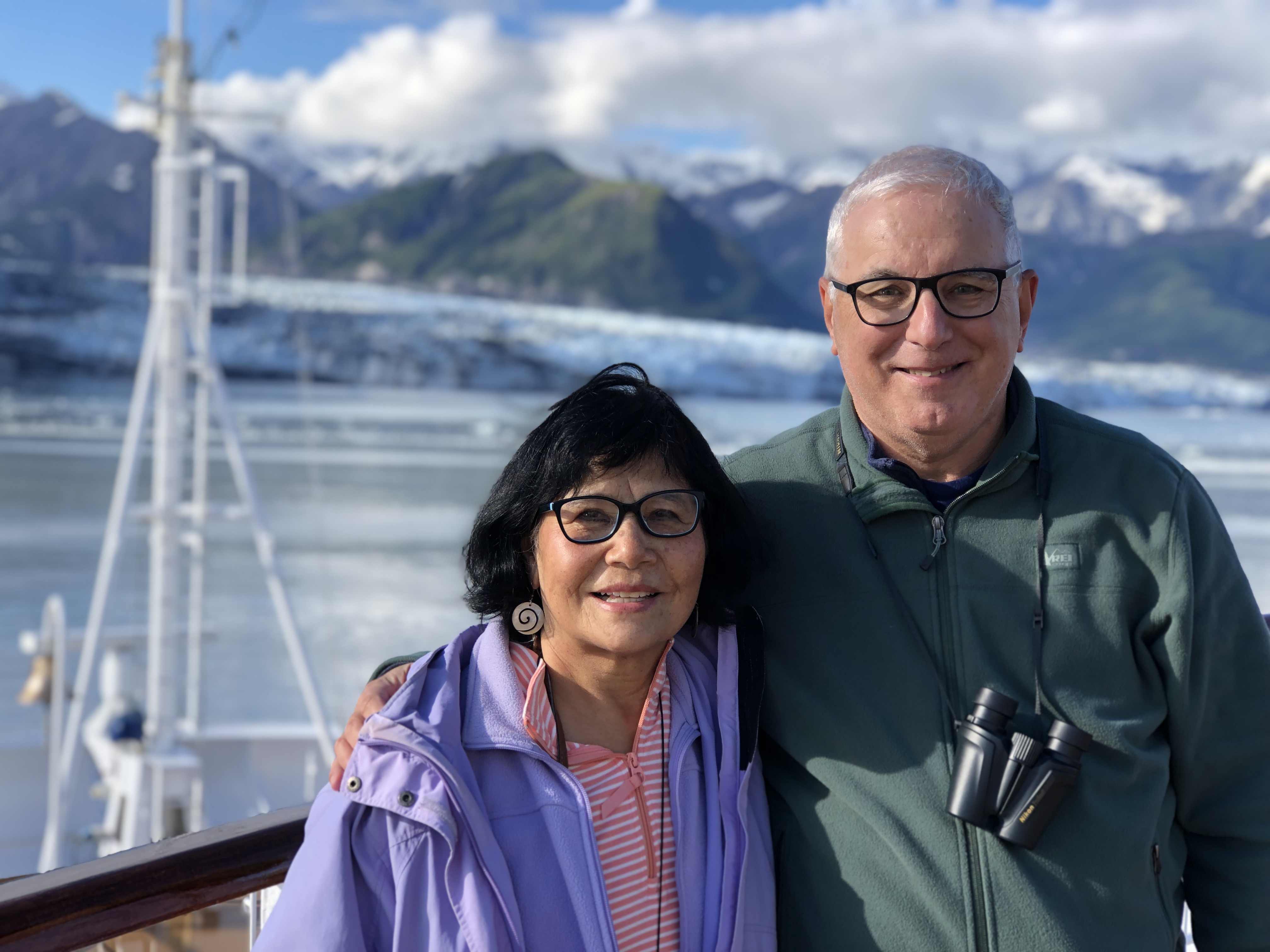
I’ve been surprised, therefore, to discover how much I enjoy an occasional cruise, especially as a way to visit multiple places that are challenging to reach otherwise, such as in Alaska (shown below), the Caribbean or the Greek islands.
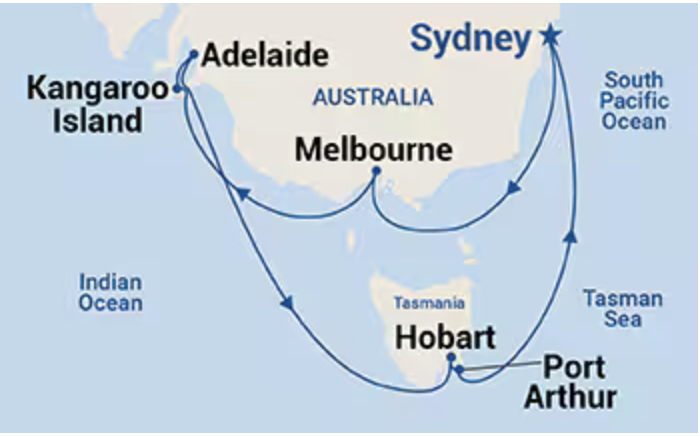
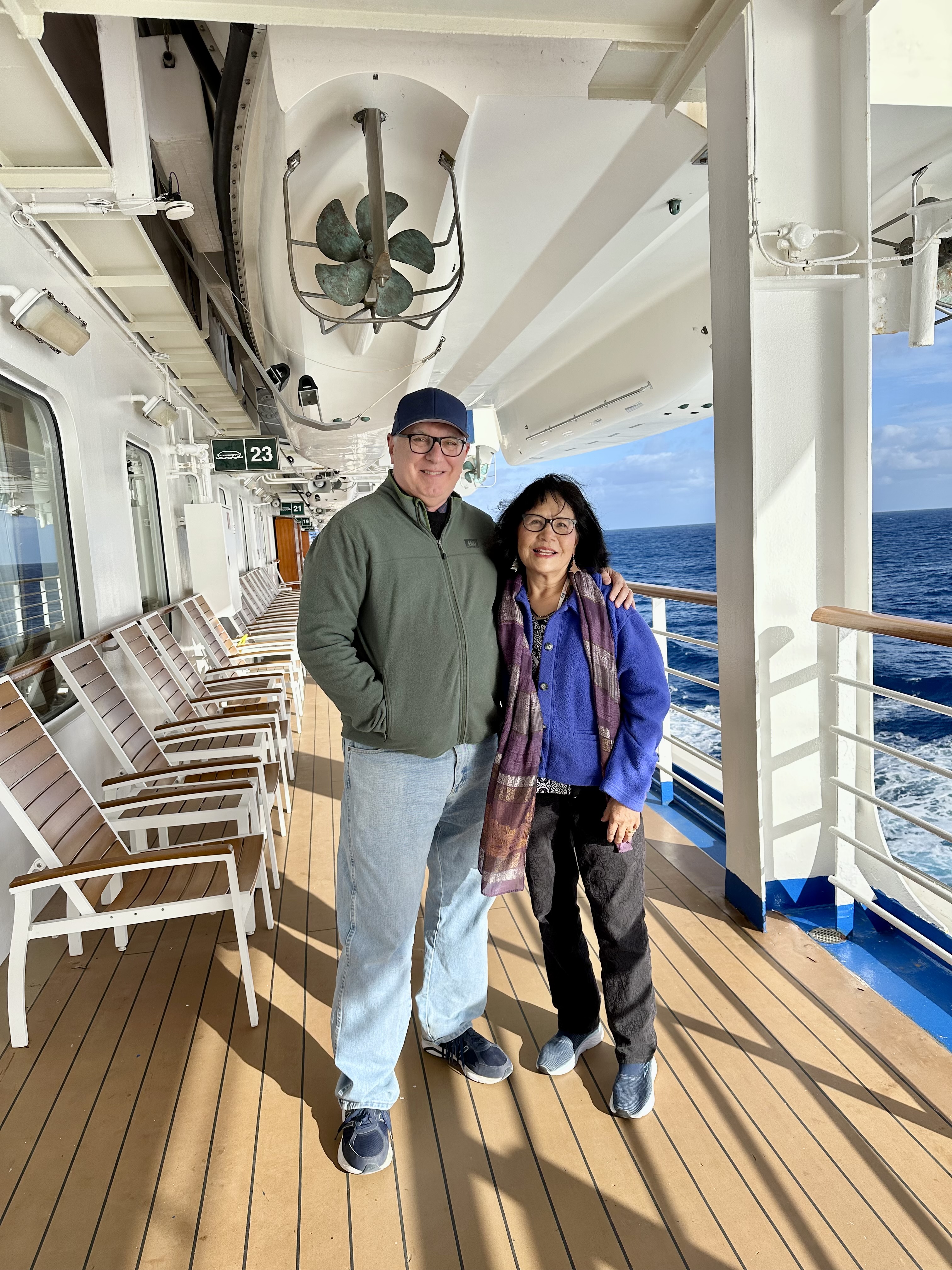
Could I organize such a trip myself? Sure, but it’s easier on a cruise ship, where Champa and I can unpack once and wake up every morning with a new location to explore. We generally have only one day in each port, but that’s enough to get a taste of a place. When we cruised around southeastern Australia a year ago, for instance, we spent several busy hours daily in Melbourne, Adelaide and other stops. We didn’t see everything but we saw a lot.
I planned these excursions myself, studying beforehand what to see and how to get there. We ended up seeing more than we would have on one of the excursions organized by the ship, without a crowd, for a fraction of the price. We made good use of local tourist offices, free walking tours, city apps, Uber, Google Maps and other resources.
Overpriced port excursions aren’t the only thing we avoid on cruise ships, which make much of their money from selling extras. We exercise cruise control with everything. We don’t buy the photo packages, gamble in the casinos, get expensive spa treatments, attend art auctions or shop at the onboard boutiques. Instead of spending hundreds or thousands of dollars during the cruise, like many passengers, we spend little or nothing. We also don’t stay in the fanciest cabins, although we do prefer cabins with a window.
Cruise lines vary widely in what they offer. Some provide all-inclusive experiences with caviar and butlers. We can’t afford those and probably would feel out of place even if we could.
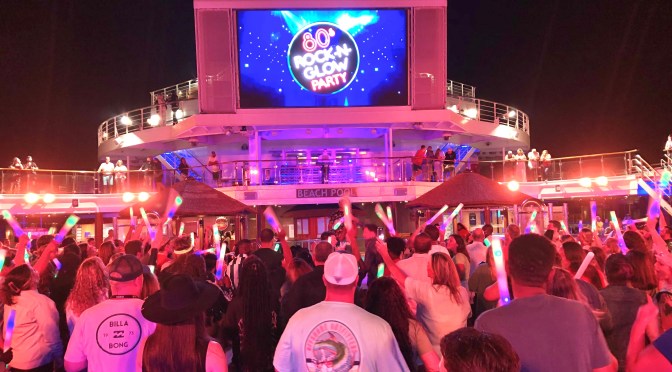
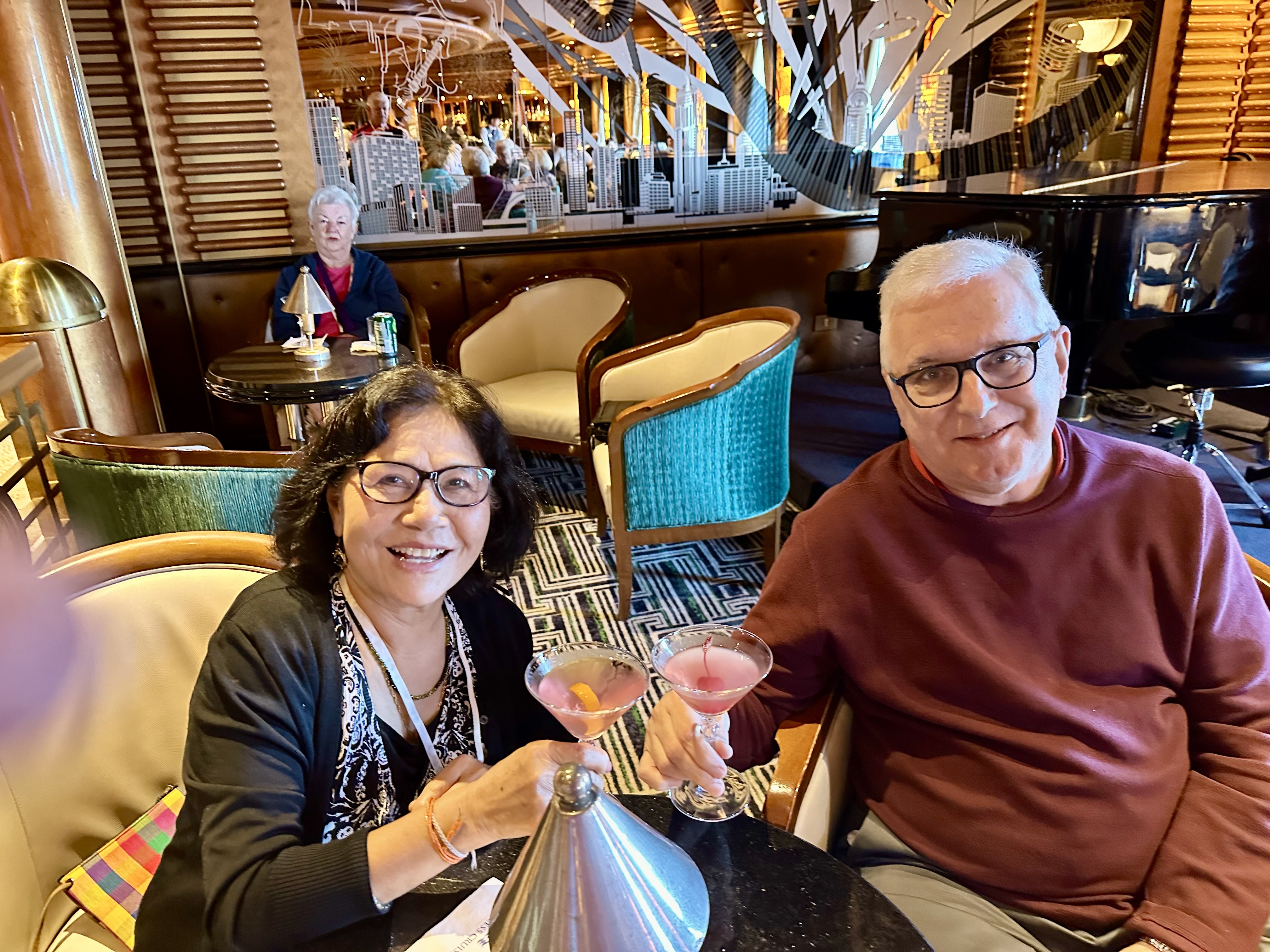
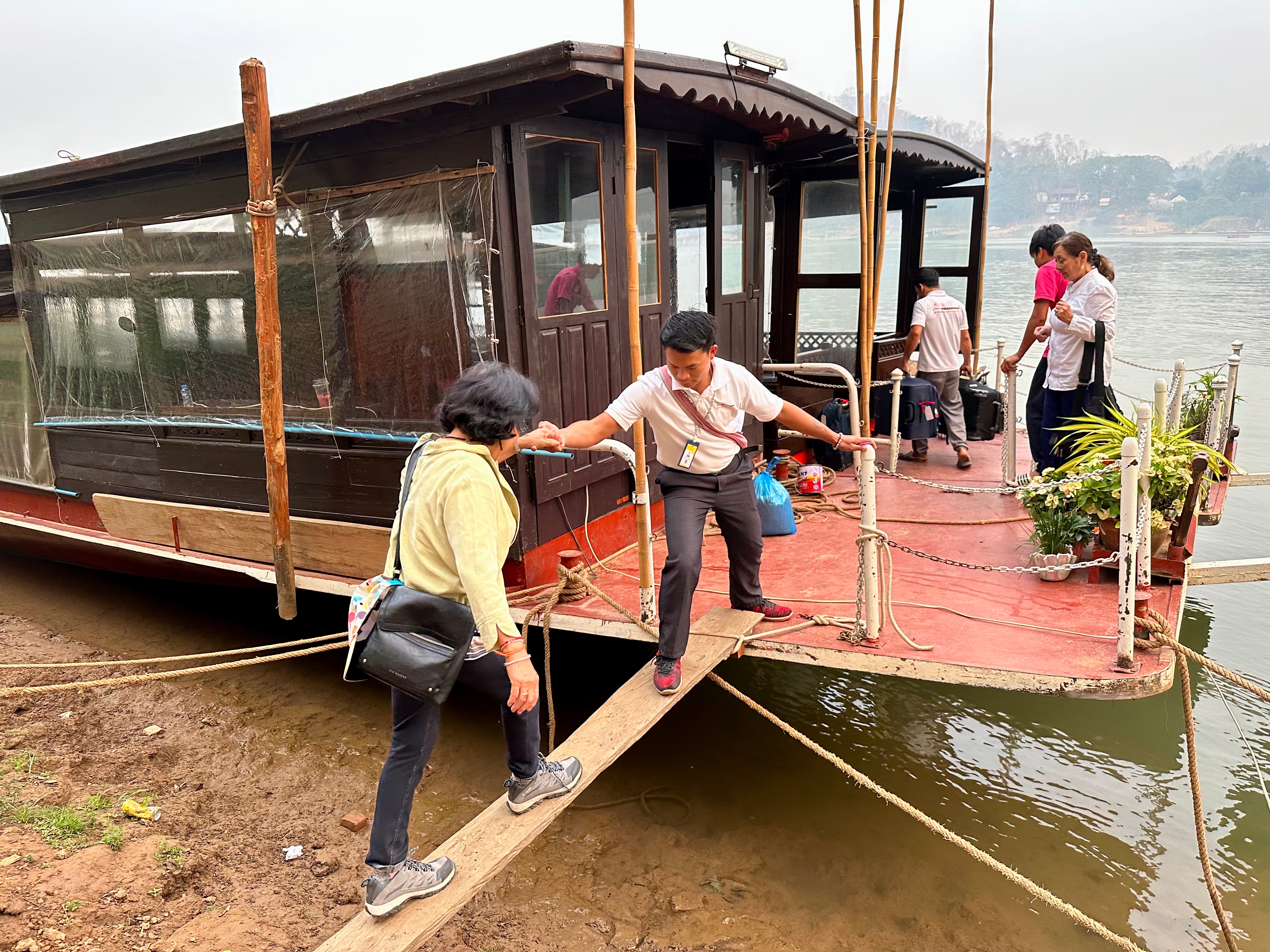
At the other end of the spectrum, we also felt out of place on a Carnival Cruise we took from Charleston to the Bahamas. That ship’s party vibe, as shown in the top photo, was intense and the upselling was relentless. But Charleston was near our home and we got an incredible deal, so we enjoyed it nonetheless. We’ve also sailed on some less conventional ships, such as the one shown here that took us along the Mekong River from Laos to Thailand, or an overnight trip on Vietnam’s Halong Bay. Both of those were memorable and fun.
Are we being cheap or denying ourselves the full cruise experience with our approach? Honestly, it doesn’t feel that way, at least to us. We’re not missing out on anything we care about. We’re eating good meals, watching free shows, listening to free music, working out in the gym, chatting with nice people and relaxing onboard. We have a good time, subsidized by the many passengers who choose to indulge in the various services.
When you view a cruise primarily as transportation, it can be a surprisingly good way to travel in certain situations.
We’re about to leave on our latest cruise, to the southern Caribbean. We chose it because we wanted to visit friends in both Grenada and Trinidad, as well as some neighboring islands. We considered flying or taking long ferry rides from island to island, but it was vastly easier to do this, and probably cheaper, too.
Unfortunately, several ports on our itinerary are near Venezuela. One has already been switched out for security reasons following the U.S. attack there. We’re crossing our fingers that everything goes smoothly.
In the meantime, I’m reviewing the ship’s dinner menu online and considering what to order our first night on board. The lobster bisque looks good.
But we couldn’t avoid them, no matter where we steered.
We passed this van in Galle, Sri Lanka.
When we visited New Zealand at the beginning of the year, we had dinner with a group of Canadians who asked why our country was disrespecting them despite Canada being our closest friend. In Kathmandu, we had lunch with friends who live next door to an apartment complex where USAID employees were in the process of moving out.
People held candles at this October gathering in Frankfurt that celebrated Germany’s reunification and embrace of tolerance and diversity.
In Dubai, we visited at the same time our president was in town toasting the country’s autocratic leaders. In Germany, we attended a candlelight ceremony honoring diversity and cultural inclusion — the same values under siege back home.
Our friends in Moldova, where we served in the Peace Corps, wondered why the United States was slashing its support of their neighbor, Ukraine. Throughout our travels, our hotel televisions aired discussions about the United States turning away from its democratic allies.
Our visit to Sarajevo was a powerful reminder of war and genocide’s impact on future generations.
We spent about half of the year in the United States, where we watched some friends lose their jobs helping developing countries and other friends struggle to continue their life-saving scientific research. Several people I hired at Duke University more than a decade ago were forced out by budget cuts.
When we had dessert at a friend’s house in Durham, one of the other guests told us her fiancé had just been locked up by ICE. Another local friend said she was reluctantly changing careers because there’s so little funding for public health. At a community organization where I volunteer in Durham, they’re facing serious budget pressures. At another Durham nonprofit where I help prepare and serve food, they’re coping with layoffs and program cuts.
We saw road signs for USAID projects in Nepal and other countries we visited.
Both at home and abroad, it’s been impossible to escape the ugliness that defined America this past year and metastasized beyond our shores. Even in remote areas of Nepal, where Champa and I traveled to dedicate a school we helped to build, we saw road signs for USAID projects that have since ended.
We plan to continue pursuing our travel passion in 2026. We’re leaving town again in a few weeks and will embark on an extended Asian trip in March, with West Africa and other destinations to follow. We’re at a stage in life where we want to keep going while we still can, always aware of how privileged we are to do this.
This memorial in Christchurch, New Zealand, recalls how former Prime Minister Jacinda Ardern embraced members of the city’s Muslim community following an attack on a mosque — a striking contrast with what we’ve come to expect at home.
As we look ahead, though, we’ll no longer pretend to ourselves that we can, or should, separate ourselves from what’s happening. That’s proven impossible. Instead, especially as the midterm elections approach, we’ll broaden our volunteer focus and spend more of our non-travel time working to help reclaim our country.
I keep reminding myself that it’s always darkest before the dawn. During this holiday season, at the end of a stressful year, I’m grateful for our family and friends and counting our many personal blessings, but I’m also looking to the horizon.
Top photo: One of our year’s highlights was helping to dedicate the new school in Samalbung, Nepal.
Readership for Not Exactly Retired reached an all-time annual high in 2025. Thanks to all of you! If you enjoy this blog, please tell others about it. As always, we carry no advertising and it’s free to subscribe.
I had two immediate reactions to Saturday’s deadly shooting at Brown University, my alma mater:
Like everyone, I thought first of the victims, the wounded, the traumatized and their families.
But I also wanted to know how the university’s communications team reacted. How fast did it alert the campus? How did it keep people updated? How did it use press conferences, social media and other communications tools?
I focused on these questions because I oversaw news and communications at Duke University for 14 years before becoming “not exactly retired.” One of my most important roles was to help manage the university’s response to weather emergencies, student deaths, campus demonstrations and, most memorably, the false rape charges against Duke’s lacrosse team that dominated national headlines for months.
I worked with Paul Grantham and many others at Duke to develop emergency communications plans, including this website which has since been updated.
As regular readers of this blog know, I don’t write much about Duke. I think it’s a wonderful institution and enjoyed working there. However, I vowed when I left a decade ago that I wouldn’t linger on the sidelines or interfere with my successors. I focused instead on the next stage of my life and personal challenges that had nothing to do with smarmy Fox News reporters, online outrage or deciding what I should say publicly when I didn’t fully know what was happening.
The shooting at Brown has brought crisis communications back to the front of my brain. Ironically, it occurred shortly before the deadly attack on Sydney’s Bondi Beach, where Champa and I went hiking less than a year ago on the famous beach trail to Coogee.
I admire how Brown has responded. It sent an alert to its campus community quickly, with instructions to “lock doors, silence phones and stay hidden.” It posted updates frequently. It replaced its usual home page with emergency information while retaining essential links to admissions, departments and the like.
Brown made clear to panicked students, worried parents and others that “senior administrative leaders from across the University are convened in emergency command to mobilize ongoing response and support for our community.” In other words, it reassured everyone that the leadership was aware of the situation’s gravity and coordinating a response, even as police searched for the shooter and doctors treated the wounded.
At 6:33 p.m., Brown confirmed to the community that two people had died and eight were in the hospital. The university continued posting updates into the night. At 1:53 a.m., President Christina Paxson sent a message providing an overview of this “unimaginably tragic day” and urging the Brown community to “work together to get through this difficult time.”
Other messages provided information about where students could find food, recover personal belongings, speak with a grief counselor or get more information about their classes, which were mostly canceled along with final exams.
In response, my fellow alumni have been overwhelmingly supportive although, predictably, some wasted no time in criticizing. I pulled my own Brown sweatshirt out of the back of my closet and began wearing it as a sign of solidarity, for myself more than anyone.
Champa and I have traveled extensively over the past year, and I’ve been asked whether the people we meet are now avoiding the United States. Some of them have told us they are indeed staying away for political reasons but more have said they fear visiting us because of our endless gun violence. I now understand their concerns more than ever. For me, as for so many Americans before me, the issue has become more personal.
As a communications professional, I also have been reminded how daunting it is for a university, or any institution, to respond to one of these perilous situations, when blood is on the ground, emotions are on edge, facts are fluid and everyone is watching.
No one wants to hear terrible news like this. When it occurs, though, it needs to be communicated quickly, accurately and effectively. Brown’s actions since Saturday will surely come under scrutiny in the days ahead. Mistakes will probably emerge. Critics will express outrage.
As one familiar with this, though, I tip my cap to Brown’s communications team. I know I’m far from Providence and communications have evolved since I left Duke, but I think they’ve mostly gotten it right.
I’m starting my annual Top Ten book list with a confession:
I ended last year’s list with a vow to finally read The Power Broker, Robert Caro’s epic biography of Robert Moses, the ruthless builder of New York’s roads, bridges and parks. Alas, I only made it halfway through this 1,344-page masterpiece.
That’s because there were so many new books I couldn’t wait to read. Now that we’ve reached year’s end, I have ten great ones to recommend, starting with four nonfiction picks.
In Careless People, former Facebook executive Sarah Wynn-Williams provides a devastating look inside the company. She portrays a toxic corporate culture, unfettered power and and leaders “devoid of any normal human feeling.” Mark Zuckerberg, Sheryl Sandberg and their team pursue profit relentlessly while avoiding moral consequences. I wondered about the author’s own role in all of this but still found her account compelling.
Source Code: My Beginnings is an origin story for another tech giant. It’s Bill Gates’s memoir about his early life, ending with him establishing Microsoft. He’s remarkably open about his childhood. He struggles with his immense, but neurologically atypical, intelligence, often acting like a privileged brat. I felt compassion for his parents and teachers but especially for young Bill as he careens through adolescence before finding his calling in the emerging world of personal computers. It’s a surprisingly moving journey.
Original Sin by Jake Tapper and Alex Thompson describes how Joe Biden and his inner circle covered up his physical decline, resisting calls to drop out of the 2024 presidential race. I was disgusted as I read the details of how his enablers misled the country and paved the way for Donald Trump’s return to the White House. I already knew the basic story, of course, but still couldn’t stop reading this account based on more than 200 interviews. It would have been even sharper with a closer examination of the role of the press, including Tapper’s own network, CNN.
Miracles and Wonder: The Historical Mystery of Jesus is my last nonfiction pick. Elaine Pagels, a religious scholar at Princeton, draws on her decades of research to assess why early Christian narratives may have veered from what actually happened to Jesus. The story of his virgin birth, for example, may have emerged to counter claims of his illegitimacy. Accounts of his resurrection may be responding to the humiliating nature of his death. Ultimately, though, the story is one of hope emerging from darkness. I’m not a Christian but I found her analysis fascinating.
My favorite novel of the year was Angel Down, which Daniel Kraus writes in a single sentence divided into paragraphs and sections. It’s a supernatural horror tale set in World War One. Five soldiers encounter an actual angel stranded in No Man’s Land and try to rescue her despite the unimaginable carnage around them. Amid this horror, the soldiers demonstrate greed, paranoia, faith and hope, showing what it means to be human in the most extreme circumstances.
Death plays a central role in another fiction pick, Bug Hollow. Here it’s a single death in a much gentler setting. Michelle Huneven brings us to California to meet the Samuelson family, whose beloved son Ellis drowns in a freak accident shortly after leaving for college. The family is still reeling when Ellis’s former girlfriend appears and reveals she is pregnant, needing help. The characters navigate their grief and, especially after the baby is born, slowly come together to rebuild a family. It’s a powerful story of human resilience.
Another family drama is Vera, Or Faith, the latest from Gary Shteyngart. It’s the story of a socially awkward 10-year-old girl who must navigate both her unusual family and a country racing towards fascism. Vera’s father is a hipster Russian magazine editor, her step-mother a WASP and her biological mother a Korean woman whom Vera longs to meet. She leaves home to find her, confronting an America where white power is enacted into law and women’s rights are trampled. This bittersweet coming-of-age story is filled with Shtenygart’s usual social satire and wit.
Like Vera, the central character in Jennifer Trevelyan’s A Beautiful Family is a young girl who sees life differently. This time it’s in 1980s New Zealand. Young Alix is trying to make sense of both family tensions and the mystery of another girl who drowned in the beach town where her family is staying. Trevelyan tells the story through Alix’s eyes as she slowly gathers clues about what was actually a murder, as well as the truth about her parents’ fragile marriage.
Another of my favorite novels, Daikon, by Samuel Hawley, is set in Japan in the final days of World War II. Its premise is that the United States developed a third atomic bomb in addition to those dropped on Hiroshima and Nagasaki. This bomb fails to explode and ends up in the hands of Japan’s military, which races to reactivate it to drop on the Americans. The urgent task is assigned to a nuclear physicist who wants the war to end but is desperate to rescue his wife from prison. The fate of San Francisco and the war hang in the balance of how he responds.
Last on my Top Ten list is The Doorman by Chris Pavone, which reminded me of Tom Wolfe’s Bonfire of the Vanities with its biting depiction of race, class and wealth in New York City. Interlocking stories play out in an expensive apartment building on the Upper West Side. A loathsome billionaire, his beautiful wife and an arts dealer with a mid-life crisis find their futures wrapped up with the building’s doorman as racial tensions explode nearby. It’s a satiric page turner with a satisfying climax.
Other novels I enjoyed, some of which were published a year or two earlier, included Beautiful Ugly by Alice Feeney; King of Ashes by S.A. Cosby; Hotel Ukraine by Martin Cruz Smith; All the Colors of the Dark by Chris Whitaker; The Midnight Library by Matt Haig; The Quiet Tenant by Clémence Michallon; The Midnight Feast by Lucy Foley; Drowning: The Rescue of Flight 1421, by T.J. Newman; Karla’s Choice by Nick Harkaway; and Wild Houses by Colin Barrett.
Other favorites of the year included books set in countries we visited in 2025. These included A Field Guide to Happiness, by Linda Leaming, and Radio Shangri-La, by Lisa Napoli, both set in Bhutan. Black Butterflies, by Priscilla Morris, and The Tiger’s Wife, by Téa Obreht, both unfold amid war in the Balkans. David Diop’s Beyond the Door of No Return takes place in Senegal, where we hope to visit.
My favorite travel book of the year was On the Hippie Trail, by Rick Steves, which recounts the journey he and a friend made across Asia in the 1970s. That’s what my friend, Mitch, and I did as well, following a similar path. Steves’s book brought back many memories of a trip that transformed my life.
Looking ahead, I hope to finish The Power Broker, and this time I really mean it. I even took this anticipatory photo in The New York Historical gift shop claiming “I finished The Power Broker.” For now, I wish you a great year of reading and, as always, invite you to share your own suggestions in the comments section.
Question 1: Are you more extroverted or introverted?
Question 2: Are you spontaneous or do you prefer plans and schedules?
Question 3: Do you like familiar experiences or, instead, crave novelty?
If you like to travel, as we’ve been actively doing this year, your answers will strongly indicate what kind of travel you prefer.
For instance, you’ll find more extroverts in a Las Vegas club and more introverts on a nature hike. Spontaneous types are happy to see where the road leads while planners prefer itineraries. Some travelers like to return every year to the same beach or cabin while others look for someplace new.
Coimbra, Portugal
The travel industry tailors its offerings to specific personality groups. A luxury hotel seeks people who are not only wealthy but who also want to stay in a Ritz-Carlton, just as a group tour featuring bungee jumping and sky diving won’t focus its advertising on museum lovers.
Travel decisions begin with our personalities, which are determined in turn by genetics, upbringing and other factors. Our personalities go a long way to explaining whether we seek cultural immersion, adventure, social interaction, self-discovery or just some rest and relaxation. They also help determine whether someone wants to travel at all.
Sarajevo, Bosnia and Herzegovina
I’ve been thinking about all of this as Champa and I wrap up a busy year of travel that extended from New Zealand to Bhutan to Albania. I’ve found myself wondering why the two of us enjoy this so much while others do not.
I’ve explained previously that we decided last year to avoid our country’s political chaos while maximizing our remaining years of good health. That remains true but I think there’s a deeper reason for our travel passion, which is that travel scratches our curiosity itch.
I’ve always been a curious person. It’s why I was attracted to journalism, where I could ask people questions about what they did. It’s why I spent my career at institutions devoted to research and education. At Duke University, where I oversaw news and communications for many years, I learned something new every day about politics, business, law, science, sports, the arts and other topics. Curiosity is also why I’m such an active reader. (I’ll be sharing my 2025 Top Ten list soon.)
Champa is curious, too. When we joined the Peace Corps in Moldova after I left Duke, our primary motivation was to provide service. But we also wanted to explore a different culture.
Cooking class in Chiang Mai, Thailand
We’ve kept exploring the world since we returned home in 2018, always seeking out new places. We love to talk with people, learn local history, try exotic foods and broaden our horizons. Sitting on a beach for more than a day or two bores us.
I first focused on personality types more than three decades ago when our office at the National Academy of Sciences had a staff retreat and we all took the Myers-Briggs Type Indicator. Everyone on our team had their own personality traits. Some tended to focus on the “big picture,” others on details. Some were guided by logic, others by their hearts. The one thing we had in common was that we all came out ahead when we blended these perspectives and worked together.
Patagonia, Argentina
In retrospect, this should have been obvious to me. I was a slow learner, but I know now that people have diverse psychological needs and act accordingly, even when it comes to something like travel.
In other words, there’s no “right” way to travel. We are all nourished differently, whether we’re lounging at a spa, playing golf, visiting Disney World or hiking the Himalayas.
Helsinki, Finland
As we look ahead to the new year, Champa and I will continue pursuing the kind of travel that has brought us so much satisfaction. We recognize how privileged we are to do this, something we try to balance with volunteering and service. I hope some of you reading this will have opportunities to travel in ways that work for you or to pursue other activities that bring you joy, whether it’s playing music, working in your garden, hiking with your family or something else.
Of course, I’m curious to learn how it all works out.
Top photo: Watching the fireworks in Sydney, Australia, on New Year’s Eve, 2024/25.