

If you’re an older American thinking of joining the Peace Corps, or someone younger hoping to do so later in your life, get ready to be surprised.
Jim Fletcher, a retired North Carolina real estate broker now serving as a business advisor in Moldova, was “surprised the most by the bathroom conditions around my school. It has seven holes in the ground separated by 3-foot partitions. Occasionally the boys miss the mark so there is urine and fecal matter right there on the floor. Even in the winter the stench is almost unbearable.”

Donna Barnes, who worked for years as a professor at Howard University, was surprised by the lack of open opinions and thought. “There is very little thinking outside the box among most Moldovans,” she said. “It’s almost as though if it is not written somewhere, then it is not something to think about.”
Carla Peterson, who came to Moldova from Arizona, in the maroon blouse below, says her “biggest surprise was finding out I have no affinity for learning another language!”
Lisa Gill, a Peace Corps volunteer along with her husband, Steve, didn’t expect to encounter so much “defeatism and dourness.”

For many of Moldova’s older Peace Corps volunteers, though, the biggest — and most pleasant — surprise has been the close friendships they’ve formed with other volunteers of all ages, as well as with Moldovans.
“I was surprised to have made so many friends,” said Cynthia Katocs, who came from Seattle. “As an older volunteer, my first concern was that I would be isolated around the younger volunteers. To my surprise, I’ve made many wonderful friends among both the older and younger volunteers.”
“It never occurred to me that joining Peace Corps would give me one of the best opportunities for new friendships and in-depth conversations with fellow Americans,” agrees Sandra Dale Woodruff from Tampa. The experience of serving together as volunteers leads to “a growing understanding and greater awareness of our own racial and cultural diversity in the U.S.,” she says.
Older volunteers interviewed by Not Exactly Retired for this series also spoke warmly of their friendships with work partners and neighbors in Moldova, the small former Soviet state where they’ve come for 27 months of training and service. “One woman who I adore always tries to speak English with me as we meet on the street,” Katocs says. “But the most endearing friend I made was a neighbor who always kisses me on both cheeks when she sees me. She always has a kind word to say.”


“Moldovans of all ages have great respects for older people, especially teachers,” says Deeporne Beardsley, who recently completed her service along with her husband, Brent. She is pictured above in Călăraşi with her senior partner teacher Efimia Dragan; on the right is Brent with Vasilii Goncairi, a potter. “It is surprising just how well Moldovans treat older people,” Brent writes from their home in Tucson. “They really look out for them. Moldova is a very poor country, the poorest in Europe, but they are very friendly and share what they have. We were regularly invited to events and celebrations, and given the best seats. We were also given things just because they wanted to share.”
Lisa Gill, who is volunteering with her husband, and others say they’ve encountered some ageism as volunteers, from both Moldovans and Americans. Some say people can’t understand why an older American would leave the comforts of family and home to serve in a developing country.
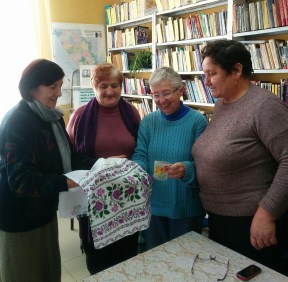 “I’ve been surprised by host country nationals’ reaction to my age,” says Deborah Sesek, a former labor lawyer in Cleveland, shown here (in the blue sweater) attending a meeting with the Association for the Elderly in Ruseștii Noi, where she is posted. “Here in Moldova, most people retire in their late fifties. They assume I was retired before I joined Peace Corps, which isn’t true. When I tell them I was working until I left, they often just shake their heads.”
Having extensive life experience and, in many cases, previous travels, older volunteers are generally familiar with the surprises and bumps that life presents. Tom Harvey, who managed restaurants and worked in other businesses before joining the Peace Corps, said he has “not experienced any cultural shock, which is not to say that Moldovan culture is without its shocking peculiarities.”
What’s most important, many say, is for prospective Peace Corps volunteers of all ages to expect the unexpected — and to embrace it.
“It’s awfully hard to predict what will surprise me,” says Valerie Harden, an older teacher scheduled to come with Moldova’s next Peace Corps group, in mid-2017. “It wouldn’t be much of a surprise if I could predict it ahead of time.”

Julie Allison, from Arkansas, pictured above, will be joining Harden. They are among the latest in a line of older volunteers stretching back more than 50 years to when President Kennedy established the agency. Allison knows she cannot predict the future but hopes “my granddaughters would be proud to say, ‘My grandmother is a Peace Corps volunteer in Eastern Europe!’”
This is the second story in a Not Exactly Retired series about older volunteers serving in the Peace Corps. Thanks to everyone who participated. Unfortunately, we didn’t have room to include all of Moldova’s current and recent older volunteers. You can learn more on the Peace Corps Moldova Facebook page and the Peace Corps website for older potential applicants.


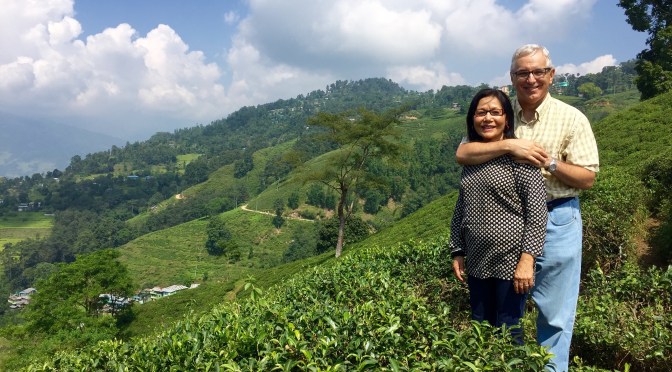


 Before Champa and I began our journey 18 months ago, I spent a career doing communications for nonprofit organizations, much of it ghost-writing articles and speeches for others. For four decades, I largely put my own writing aside.
 Most blogs fail. A 2009 New York Times


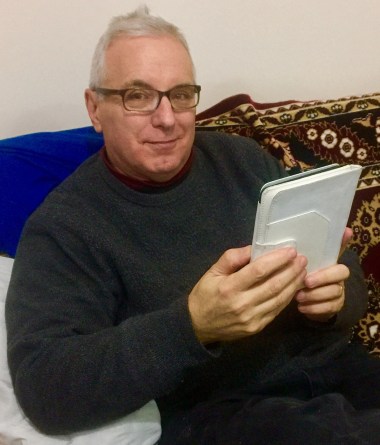

 More than 2,000 Duke users will check out more than 10,000 books from OverDrive this year, according to Aaron Welborn at


 I did something retro on Monday morning: I mailed a letter at the local post office instead of communicating electronically.
 Our post office is in the center of Ialoveni, a block away from the Consiliul Raional, or county center, where I work. That’s typical in Moldova, where almost every town has a government office, a post office and a casa de cultura, or cultural center, along with at least one church, school and market.
 I waited in line behind two elderly customers who were collecting their monthly pensions. The man in front of me was at least 75 years old, possibly much older.


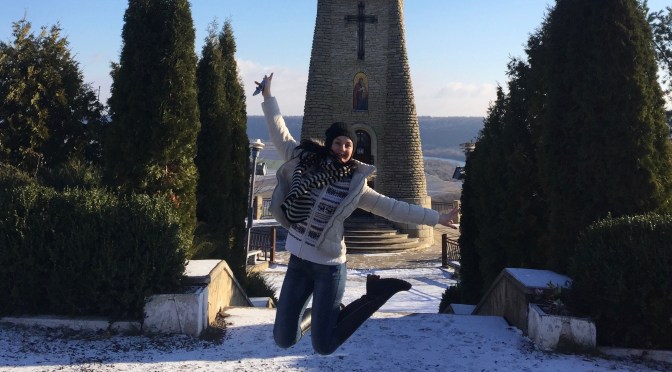


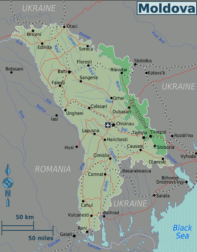 Moldova is so small that we were able to drive from our home in Ialoveni, near the capital city Chisinau, to Soroca in well under three hours, not including stops.
 More than 35,000 people live in Soroca, making it one of Moldova’s larger cities and an important industrial and administrative center. It once had a large Jewish population, now almost entirely gone, and still has a sizable Roma population. Many Roma people live in the neighborhood known as


 If you bought your Thanksgiving turkey at a local supermarket this year, you probably didn’t get the entire bird.
 One of our Peace Corps guests, who once managed a restaurant, made a sweet potato pie and also brought a jar of cranberry sauce sent from home by her daughter. Our main beverage was our family’s house wine, which they call Vin Champa, or Champa Wine, since she helped them make it.
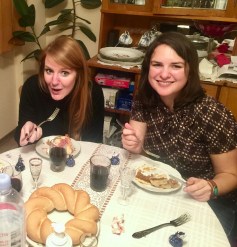 Our Peace Corps friends missed their families, too. Peace Corps encouraged all of us to find ways to get together, so nobody would be alone unless they wanted to be. Champa and I were among those able to host a dinner. Others went together to restaurants, even if it was to eat pizza. Others gathered in the capital city, Chisinau, to watch an American football game airing at a local barbecue restaurant opened by former volunteers.
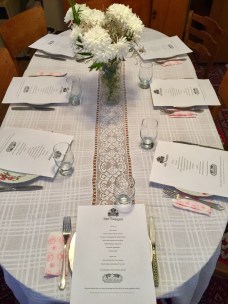 One reason I wanted to host our dinner was because I remembered being invited to a Thanksgiving feast in Kathmandu when I served in Nepal four decades ago. I am still grateful for the turkey and other dishes served by Ashton and Bill Douglass, who was working then for USAID in Nepal. It took a long time, but today I was finally able to repay my debt to them, albeit indirectly.

 "Not Exactly Retired"