Tag Archives: Peace Corps

Lasting Impact

Yesterday we returned to our Peace Corps workplaces and learned, after more than five years, that our impact has endured more than we’d realized.

Champa’s big project as a Volunteer was to help her school’s drama program create a magnificent wardrobe of costumes and props, which were unveiled in a colorful public ceremony in 2018 (see video).

When we returned to the school yesterday, current students greeted us wearing some of the same costumes — Romeo, Juliet, a king and more. The school has been using them regularly and added to the collection.

Champa stopped by an English class and reunited with some of her old students.

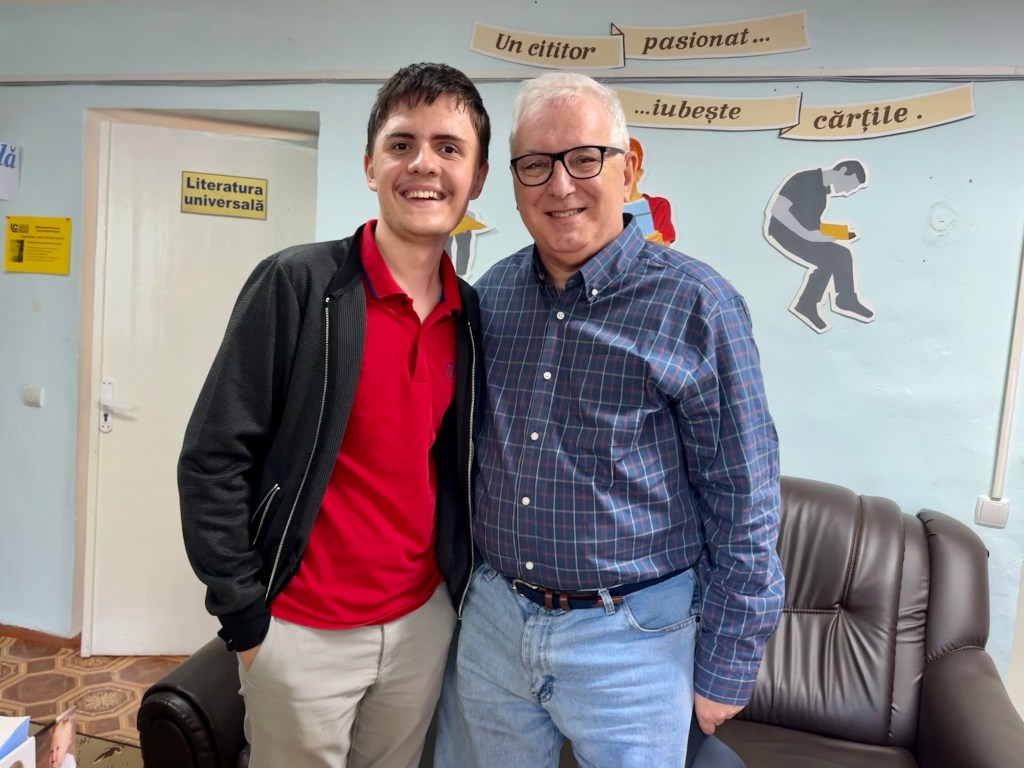
Earlier we visited the library where I worked. The librarians proudly showed us a trophy room they’ve created to display all of the awards won by the robotics team I helped to establish with Lidia Rusu (above).

One of my younger robotics students, Alexandru, dropped by to thank us, too. He is now a high school senior, serving as a community youth leader.

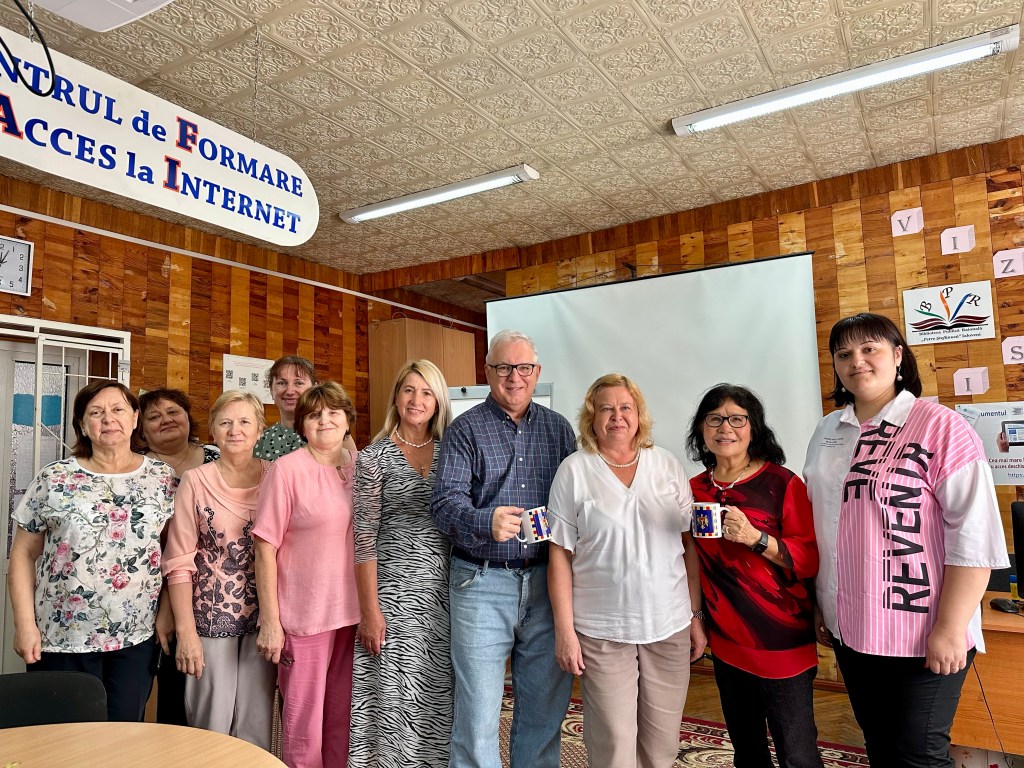
Valentina Plamadeala, the library director, in white blouse, hosted a champagne reception for us (at noon; I love Moldova). She posted on Facebook a list of the many projects we did together, several of which are still thriving, notably the Bebeteca room we created for local moms (see video.)

Our reunions in Ialoveni, the small city near Moldova’s capital where we served from 2016-18, were intensely emotional. We were moved to see how we’d touched people’s lives.

At Champa’s school, one of her fellow English teachers, Elena Antociuc, read a certificate saying, “We sincerely appreciate the time you spent guiding us to new perspectives by collaborating with us in search for the best solutions.”

The certificate concluded: “We’re proud to be part of your international family.”

Ialoveni, we’re even prouder to be part of your family, now and forever. As we told Champa’s costume collaborator Ana Doschinescu, at a dinner her beautiful family hosted for us, our lives are so much richer because of all of you. Thank you for keeping us in your hearts.

Return to Moldova

More than five years since we completed our service as Peace Corps Volunteers, we returned to Moldova on Sunday night.

We endured flight cancellations, an all-nighter at JFK Airport, an unexpected stop in Istanbul and lost luggage when we arrived in Chișinău. In a larger sense, our return was delayed by the pandemic, the war in Ukraine and health setbacks.

But now we’re finally here, and so is our luggage. We couldn’t be happier.

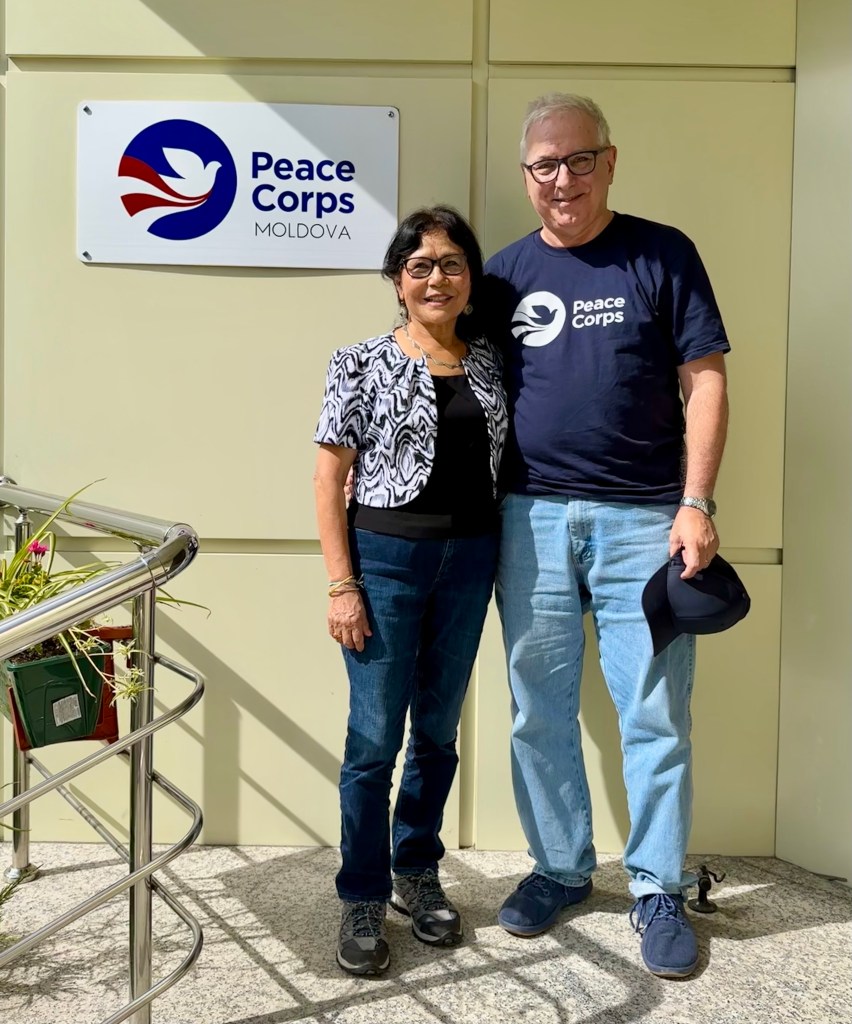
Our first jet-lagged stop on Monday was at the Peace Corps office, to hug old friends and discuss the virtual project I began several weeks ago to help create a national Jewish museum.

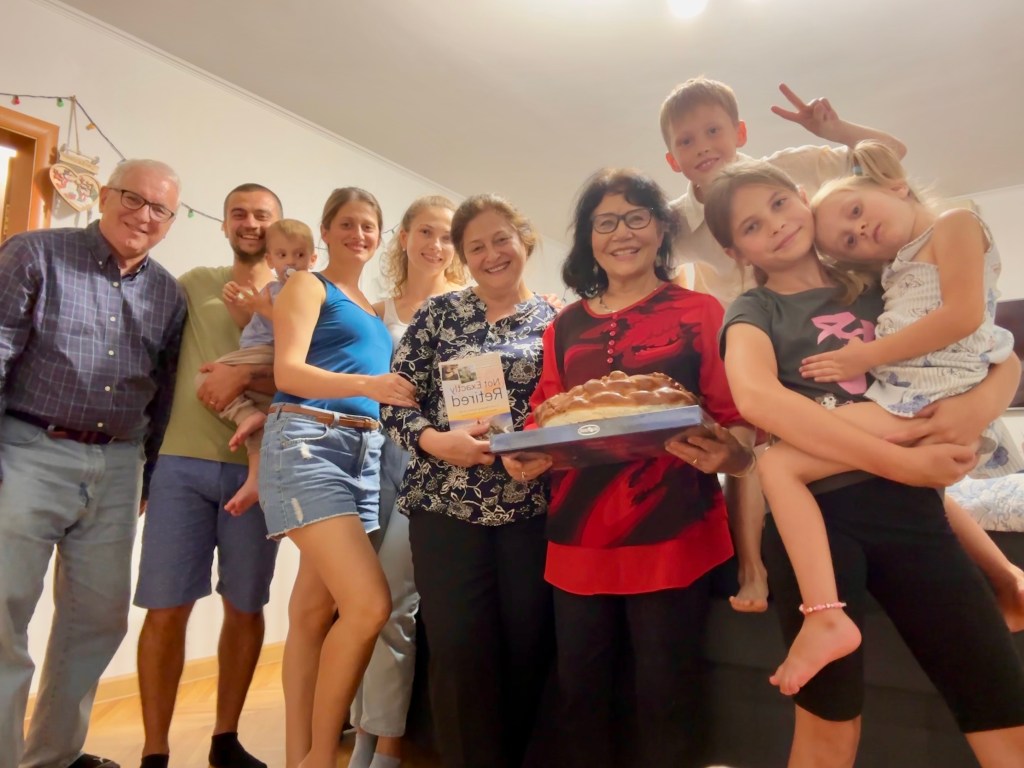
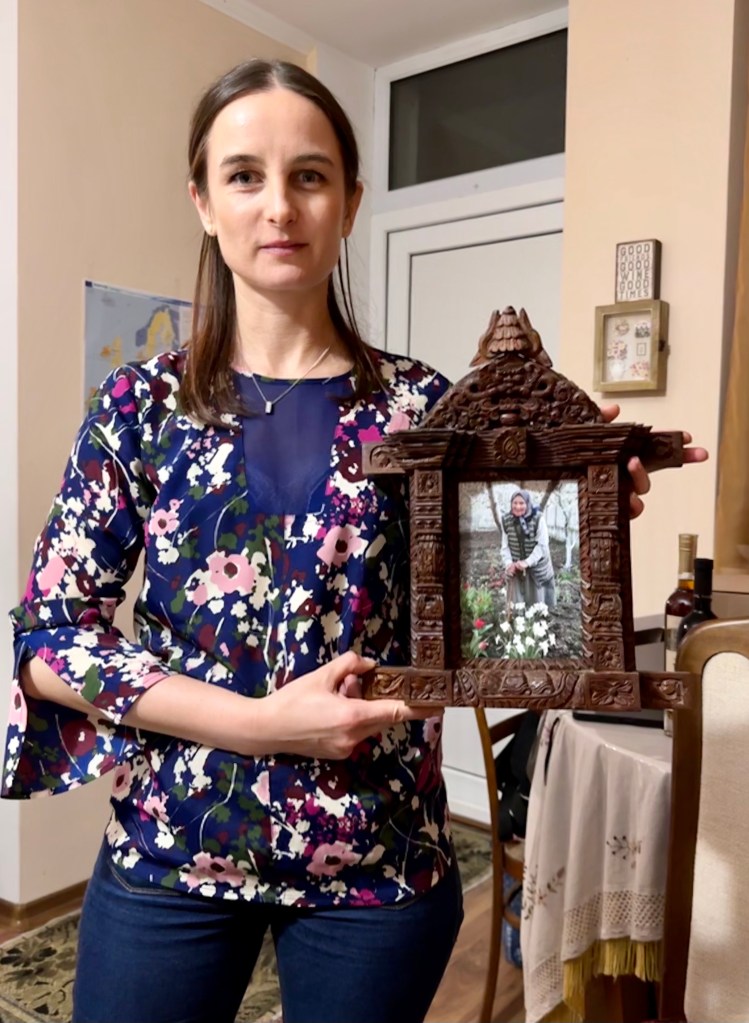
Then we reunited with our host family in Ialoveni, just outside the capital, for a delicious Moldovan dinner prepared by our host mother, Nina. That’s her in the top photo with her daughter, Alisa, showing off their copies of Not Exactly Retired with personal inscriptions from the author.

Among our other gifts was this carved wooden picture frame from Nepal displaying a photo of our beloved Bunica, Nina’s mom, who passed away before we could see her again.

Nina’s husband, Mihai, and son, Andrei, joined us for this group photo after dinner. We left with our own bag of gifts, including some of Ialoveni’s famous chocolates.

We also enjoyed reuniting with the family dog, Boss, who remembered us.

On Tuesday morning we attended a ceremony where U.S. Ambassador Kent Logsdon announced a major grant to restore one of the central structures in Chișinău’s large Jewish ceremony. Irina Shikhova, below, with whom I’m working on the museum project, was among the other speakers.

It was an inspiring event and great to finally meet Irina after several Zoom meetings. I also met Marjory and Joseph, two Peace Corps Response Volunteers working on the project.

Champa and I are staying at an Airbnb downtown. We’ve been eating placinte and friptura, drinking local wine and exploring how Moldova has changed over the past five years. More on that later.

For now, we’re just soaking it all in. Moldova, we’ve missed you!

Jewish Museum of Moldova

If you think of London and Paris as having vibrant Jewish communities — which they do — consider another European capital whose Jewish population was once many times larger in percentage terms.

It’s Chişinǎu, the capital of Moldova, which was nearly half-Jewish at the turn of the last century, before a bloody pogrom in 1903 killed 49 Jews in Chişinǎu, injured hundreds more and led many Jewish families to flee.

Chișinău monument to the Jewish ghetto.

Four decades later, the Holocaust killed most of Moldova’s remaining Jews, only to be followed by Soviet occupation. Today, estimates of Moldova’s current Jewish population range between 7,500 and 20,000, based on different sources, approaches and definitions. Many more Moldovan Jews live in Israel and other countries.

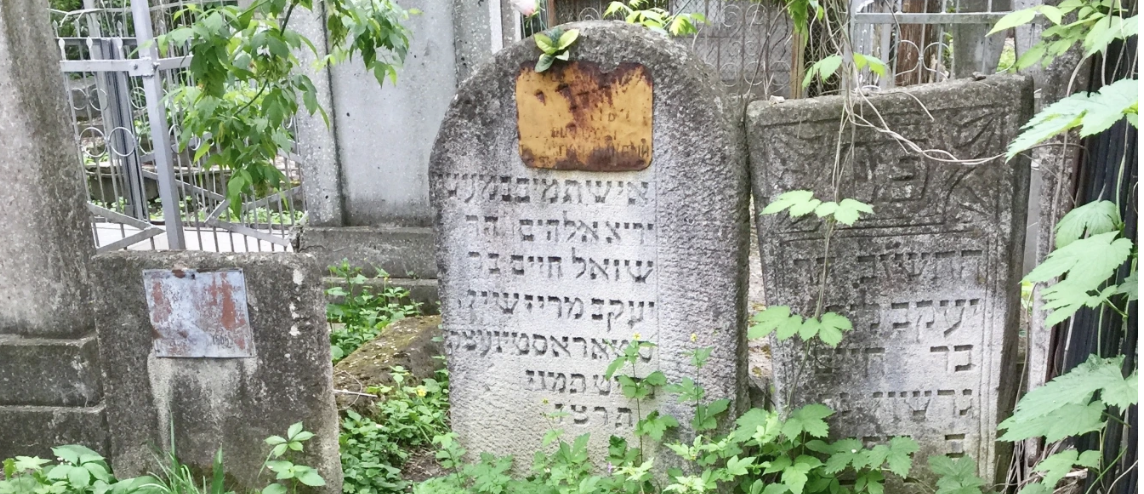
Moldova retains a rich Jewish heritage but, as I discovered while serving there as a Peace Corps Volunteer several years ago, it’s largely hidden amid the broken cemetery stones and synagogue ruins.

Chişinǎu’s Jewish cemetery has more than 23,000 graves.

Now, finally, this is changing. In 2018, Moldova’s government created a national Jewish museum in the capital — focused initially on Chisinau’s large Jewish cemetery but with plans to also establish a building with exhibits and programs.

As the grandson of a Jewish woman who grew up down the road in Odessa, I find this both exciting and overdue. It’s even more inspiring since it’s happening at a moment when Moldova is dealing with the war in neighboring Ukraine and many other challenges.


The Maghid website describes Jewish sites across Moldova.

A few months ago, Peace Corps Moldova asked me whether I might help the museum planners, given my professional background and familiarity with Moldova. I said yes enthusiastically and, earlier in July, began working on a Peace Corps Virtual Project with the museum’s director, Irina Șihova. 

I’m interacting with Irina from my home in North Carolina but plan to visit Chişinǎu with Champa in September (at our own expense). We are also eager to reunite with our host family and other dear Moldovan friends while we’re there.

Irina Șihova in the Jewish cemetery.

Irina is a prominent researcher in Jewish ethnology, culture and history; a museum curator; an educator; and a guide for Jewish families who’ve come to Moldova to explore their family roots. She’s organized dozens of exhibitions and cultural programs and written academic papers and books about Moldova’s Jewish history.

She and I have already done some good work together, brainstorming ideas for museum exhibits and publicizing an upcoming festival in Moldova that will include tours of former Jewish shtetls, a klezmer music concert and the premiere of a musical work commemorating the 1903 Chişinǎu pogrom. We’ll be joined soon by one or two “Peace Corps Response” volunteers who will bring their own expertise to work on-site with Irina and her colleagues.

Torah at Moldova’s national history museum.

I feel privileged to have this opportunity, especially at this early stage of the museum’s development, and plan to post updates on this blog. If you’re interested in the project, or know others with relevant expertise who might want to join this volunteer effort, please write me privately with a direct message or by e-mail. (Please do not post a public message about this here).

Because religion was heavily restricted in Soviet times, some Moldovans have ethnic Jewish heritage but do not practice the religion and may not even know about their family backgrounds. My closest colleague on the Peace Corps staff, for example, told me her Jewish grandparents “never practiced during the Soviet era since any religion was taboo.”

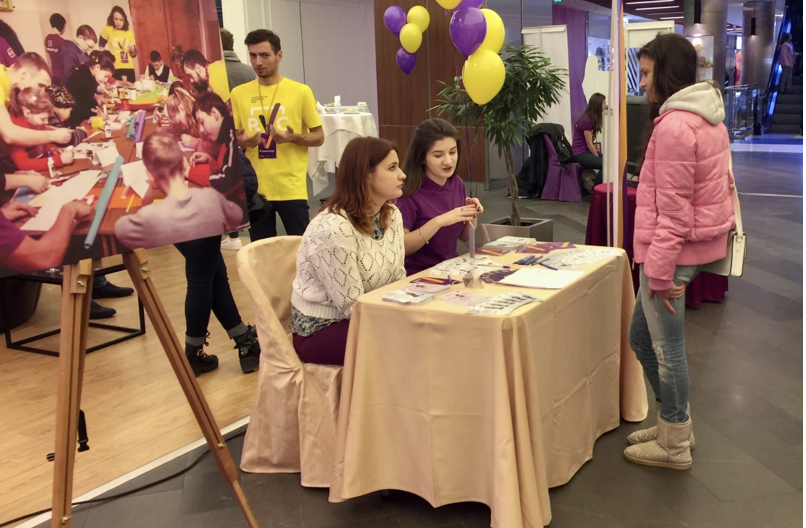
Jewish youth event at the MallDova shopping mall, October 2016

Moldova’s small Jewish community is experiencing a resurgence these days, as you can see in this photo from a youth event we attended. The new museum will make it easier for others in Moldova, Jews and non-Jews alike, and for visitors from around the world, to learn about this heritage and honor those who were lost. 

I hope some of you reading this will visit it one day.

The Good Around Us

I was lucky this past week to encounter the best of humanity just as the 2024 presidential campaign is gaining steam. Two events reminded me of the many good people living among us, no matter what we may see and hear over the next year and a half.

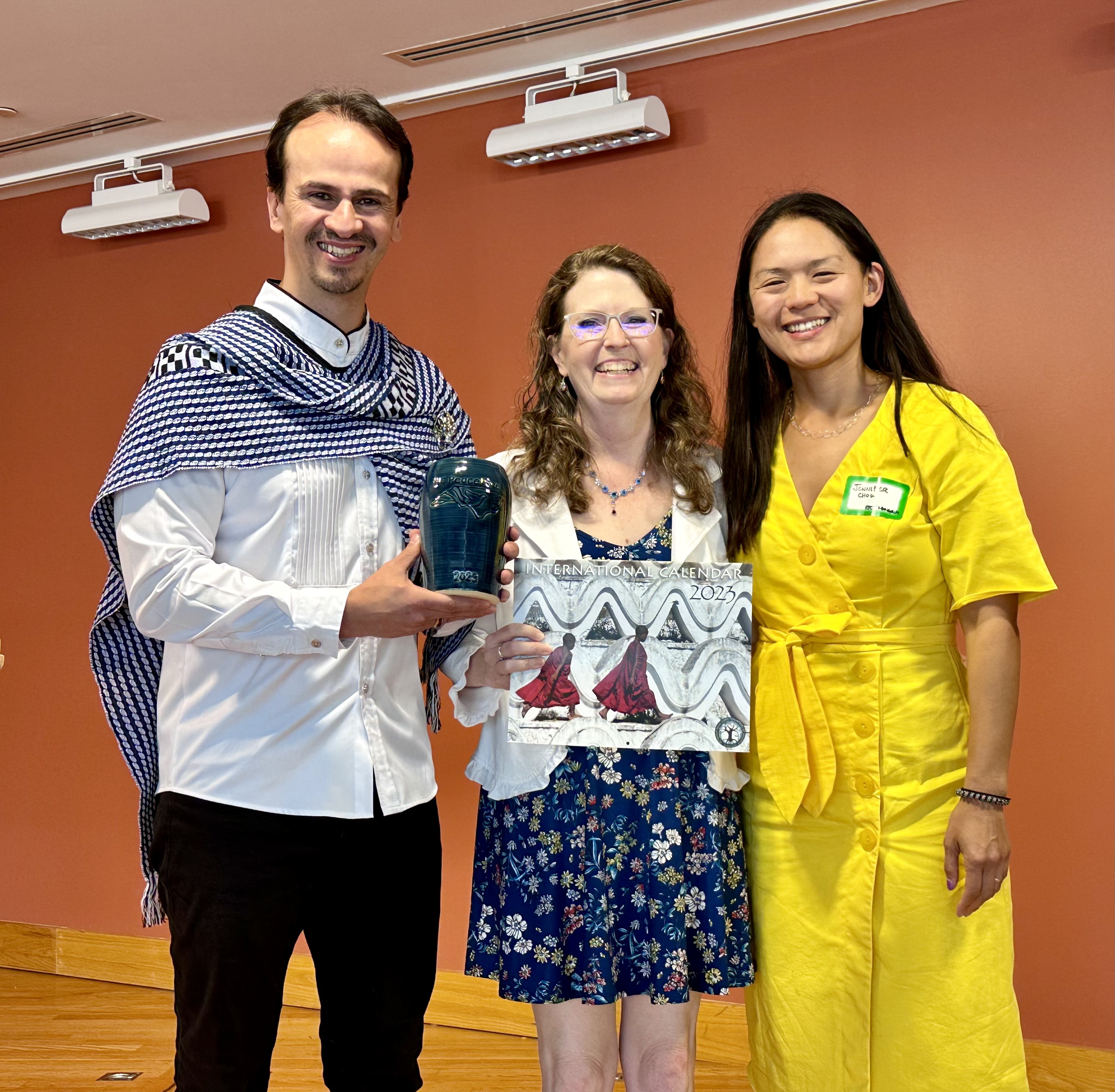
On Sunday, I participated in the North Carolina Peace Corps Association’s annual Peace Prize ceremony, which this year honored a local nonprofit that uses dance to assist disabled veterans and others. The photo shows ComMotion’s Andre Avila and Robin McCall receiving the award from NCPCA Vice President Jennifer Chow.
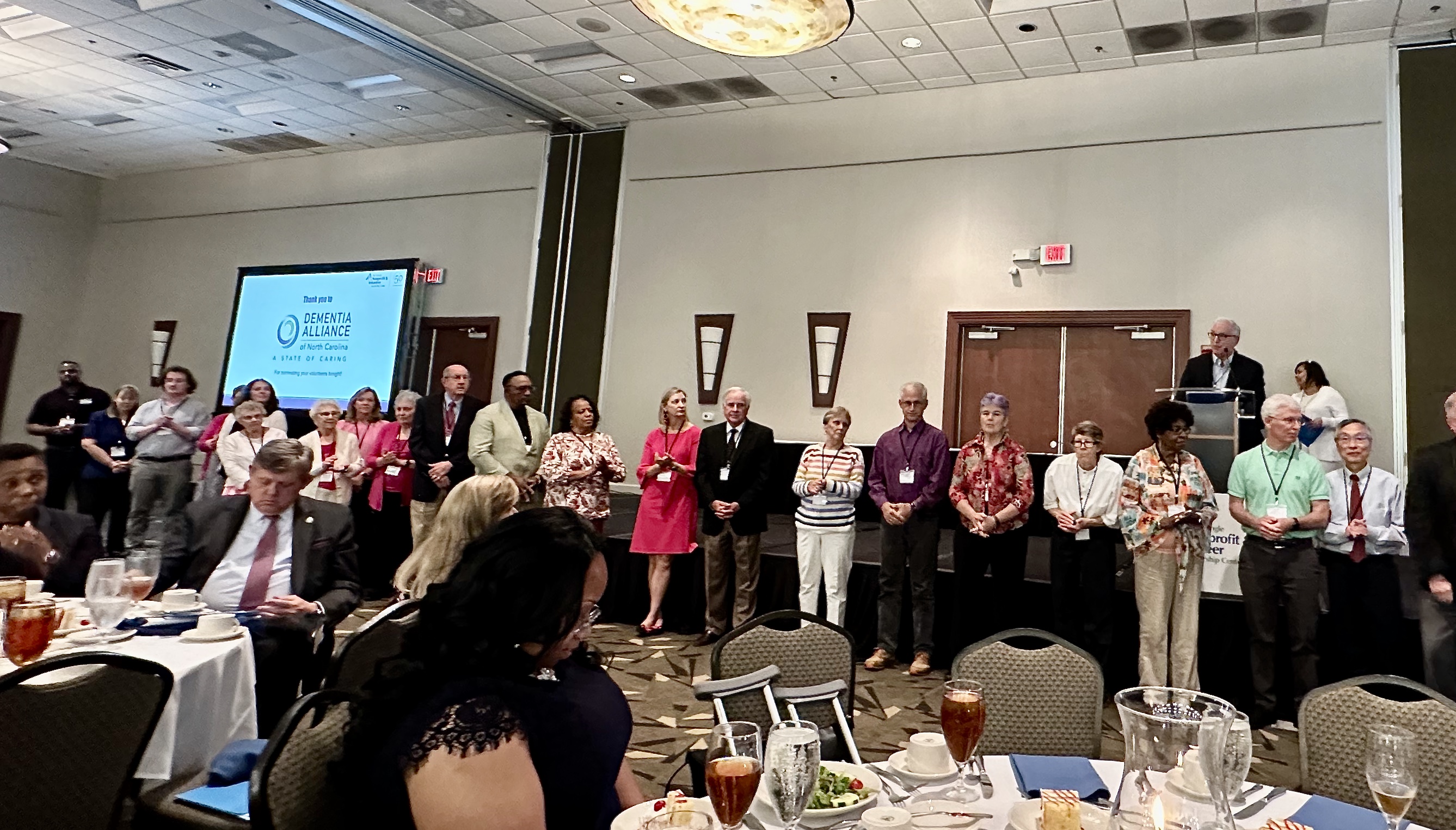
On Monday, I participated in an event organized by the Triangle Nonprofit & Volunteer Leadership Center to honor outstanding local volunteers — people such as Bruce Ballentine, who has been active with Habitat for Humanity and raised more than $7 million to build new homes for families.

Another honoree, Lalit Mahadeshwar, organized volunteer teams with the Hindu Society of North Carolina to provide food packs to needy families during the pandemic. Dr. Shep McKenzie III provides free gynecological exams for Urban Ministries and also tends its vegetable gardens. Myra Blackwell helps lead a baseball league for underserved youth.

Others honored at the event deliver meals to the elderly, provide music for dementia patients, comfort the parents of hospitalized pediatric patients, care for shelter animals and much more. All of their stories made me feel better about people. The photo shows me introducing some of those in the “senior” category.

I served as a judge for the Governor’s Medallion Award for Volunteer Service and also presented the 2023 “Community Partner of the Year” award to the Osher Lifelong Learning Institute (OLLI) at Duke University.

Sarah Cline, the program manager for the AmeriCorps Senior Retired and Senior Volunteer Program (RSVP), joined me in honoring OLLI, which recently teamed up with RSVP and the Durham Center for Senior Life to expand programming for older volunteers. I chair the local RSVP advisory council and have been working with Sarah to encourage more local residents to get involved, as we did in a recent radio interview.

I spend much of my own time volunteering — with RSVP, OLLI, the West End Community Foundation and various Peace Corps and Moldova activities. This past week reminded me how important this work is — for my own emotional well-being most of all.

If you’re an older Durham resident who wants to volunteer, I invite you to send Sarah a message. She’s ready to meet with you and find a great match. If you live elsewhere, you can contact your local RSVP office or take advantage of other volunteer resources.

The upcoming campaign seems likely to challenge our emotional equilibrium, regardless of our personal politics. I have my own strong views but also want to resist cynicism and despair. Volunteering isn’t a perfect vaccine but it does help us feel better about our fellow Americans — and ourselves — while addressing the urgent needs of our communities.

Op-Eds for Ukraine

As the world prepares to mark the one-year anniversary of Russia’s brutal invasion of Ukraine, on Feb. 24, few Americans are better qualified to comment than Returned Peace Corps Volunteers who served there.

These RPCVs lived and worked alongside Ukrainians. They learned the local language. They care deeply about what’s been happening, as do many of us who served in Moldova and other countries affected by the conflict. Some of us also visited Ukraine during our service.

This past week, I helped train a group of Ukraine RPCVs how to write op-ed articles to share their stories. I joined with Dylan Hinson, an RPCV who served in Namibia, in teaching the workshop organized by the RPCV Alliance for Ukraine and the National Peace Corps Association.

This video of my presentation is excerpted from the larger program. If you’re interested in learning more about writing effective op-eds, check out my earlier post. A short YouTube video features Dylan encouraging RPCVs to become op-ed authors.

The Ukraine RPCV group and our Friends of Moldova organization both continue to assist Ukrainians affected by the conflict. Especially as Russia prepares to launch a new military offensive, please consider donating to their life-saving work.

Top photo: The Odessa Opera House, which we visited in 2018.

Seeing in New Ways

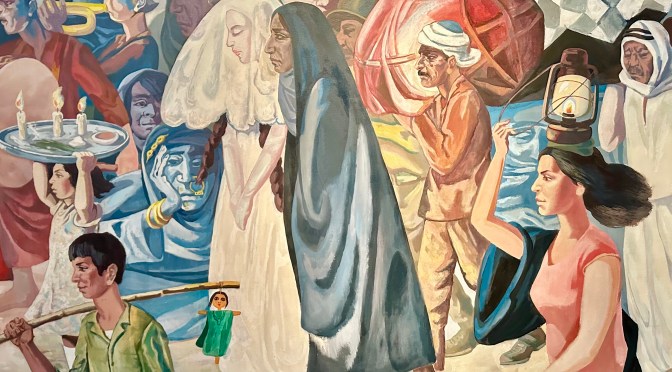
Have you ever thought of Baghdad as a “city of peace” and “a miracle”?

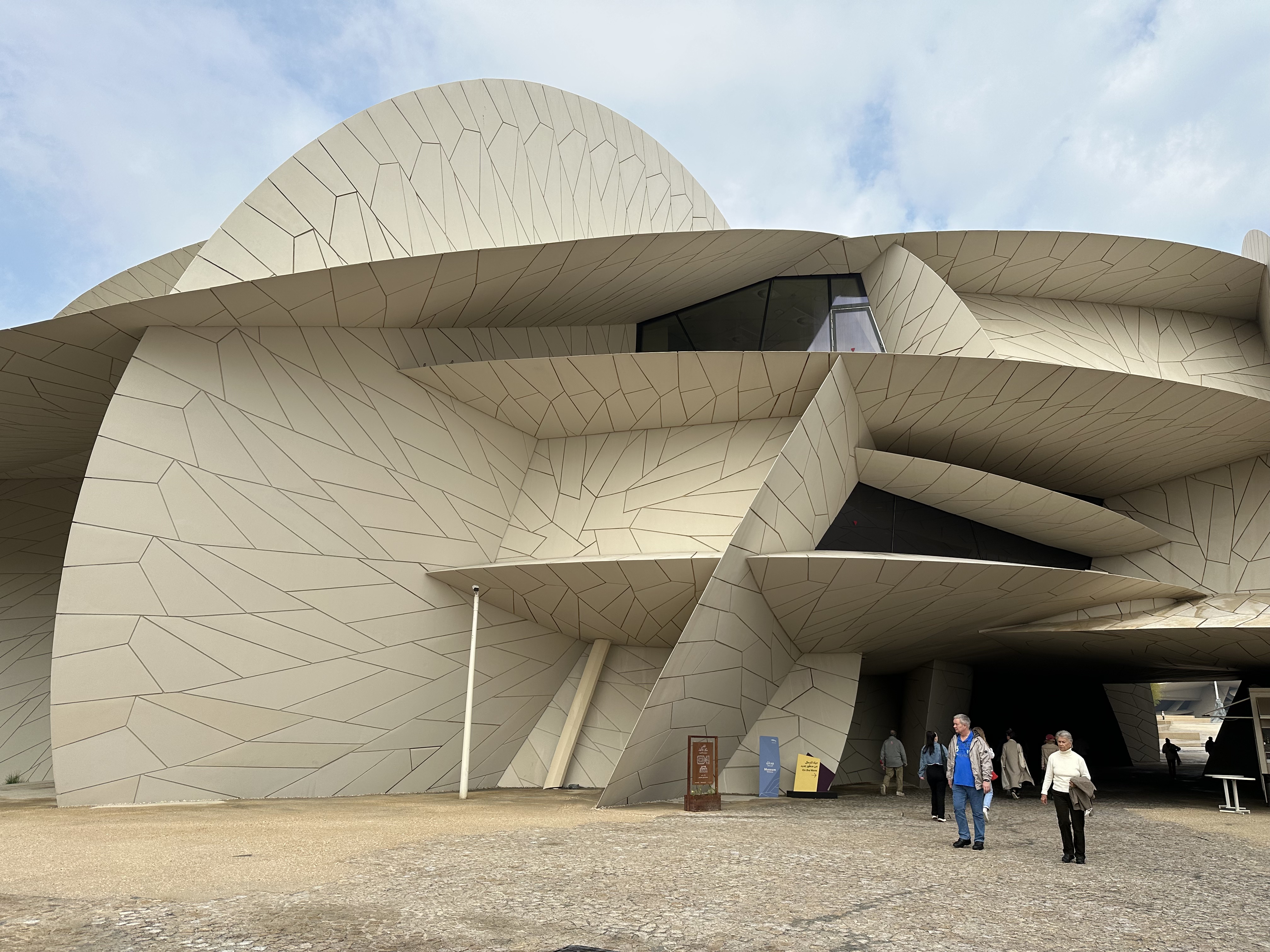
Me neither, but that’s how it was described in an exhibit we visited recently — not in Iraq, but at the National Museum of Qatar.

Several of the exhibits there reminded me that people around the world see things very differently than we do in the United States, regardless of who is “right.” Another one highlighted the collapse of the global pearling industry, which was devastating to Qatar but unknown to me. An exhibit about the “Ramadan Blockade” described how Qatar was blockaded by several neighbors a few years ago. I barely remembered that happening.

The museum, which opened in 2019 with a design evocative of a desert rose, wasn’t the only one in Doha that made me think in new ways. Across town, at the Museum of Islamic Art, an exhibit examined how Lawrence of Arabia and other films have contributed to Western misunderstanding of the Arab world. Another gallery showed how modernity has brought prosperity to Islamic nations while upending local traditions.

Both museums featured stunning architecture and beautiful exhibits. Neither was especially political; on the contrary, both were designed to appeal to broad international audiences. Inevitably, though, they reflected the perspective of a society that, for all of its wealth and rapid modernization, still differs from our own.

This is why I love to travel. It challenges my assumptions and broadens my perspective, no matter where we go.

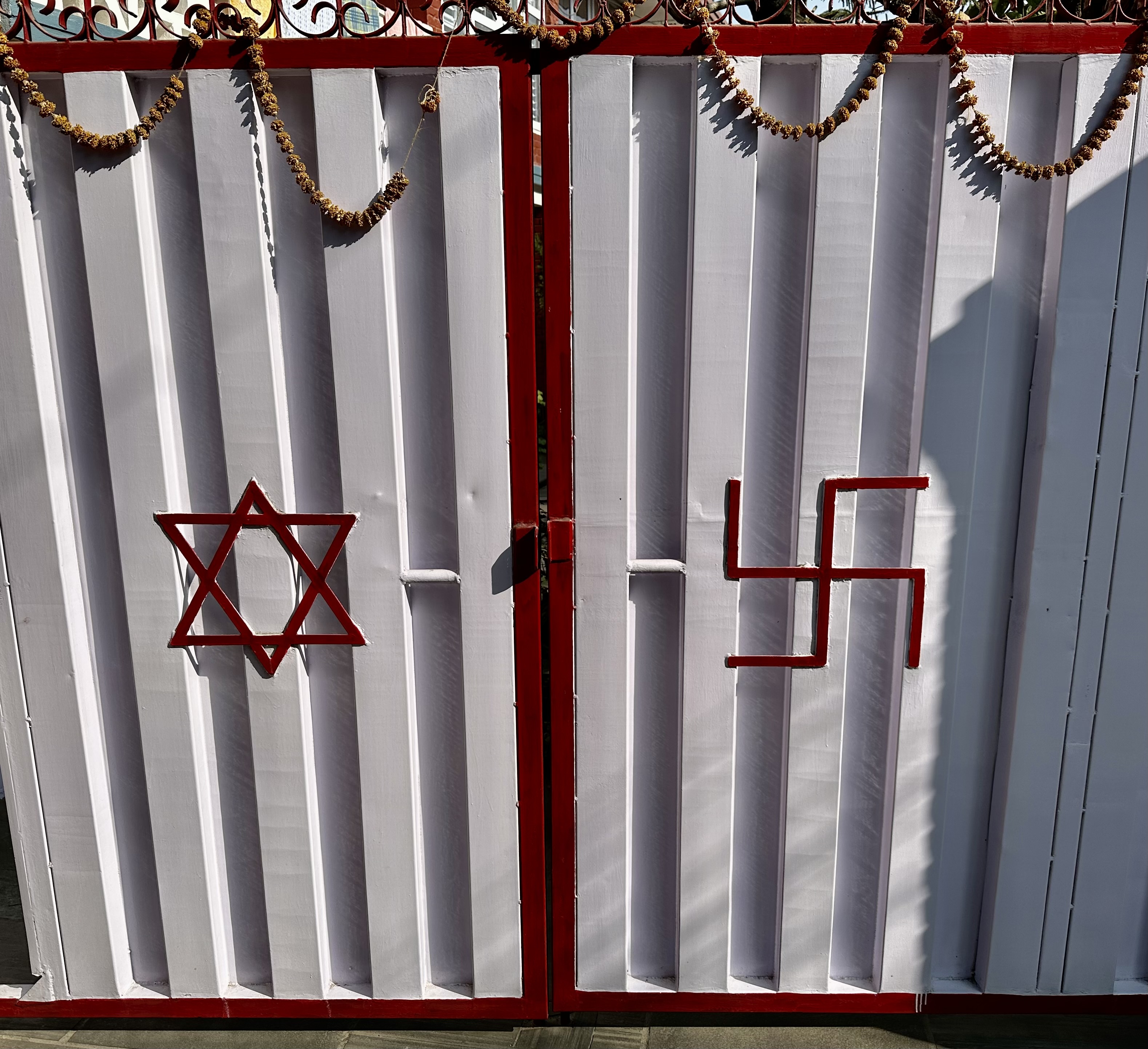
Shortly before we flew to Qatar, for example, we had lunch at the Kathmandu home of two old friends. Here’s what I saw on the gate outside their house:

If you’re startled to see a swastika displayed so proudly, much less beside a Star of David, think about your own vantage point. Swastikas were sacred symbols in Hinduism long before they were linked to Hitler. The six-pointed star, which we associate with Judaism, is also a Hindu symbol. Both symbols are common in Nepal and have nothing to do with Nazism or Judaism, at least in the local context.

Or consider this statue we saw in Ilam, Champa’s home town. It honors Ratna Bantawa, a local Communist leader who opposed Nepal’s former king. Ratna and his brother were denounced as terrorists and killed for their activities. Today Ratna’s memory is celebrated. There’s a road named after him. Communists now play a prominent role in Nepali politics even as “communist” remains an epithet in our own country.

My point here isn’t to debate Iraqi history or communism, just to note how travel changes our perceptions. This latest trip reminded me of something I wrote several years ago after returning to Moldova from a trip to Bulgaria and Romania: “One of the things for which I’m most grateful about serving in the Peace Corps is how it’s made me less fearful about traveling to places that seem exotic or dangerous to some Americans even though they’re actually safe, beautiful, fascinating and cheap.”

As I wrote then, “you hardly need to have served abroad to expand your horizons a bit. … There’s a big world waiting beyond the American comfort zone” for those of us fortunate enough to be able to travel, a privilege the two of us never take for granted.

That big, mysterious, fascinating world is still there and still waiting. Now that the pandemic has eased, I hope more Americans will explore it, as we hope to keep doing ourselves.

Video of Nepal Trip

45 years after we fell in love in Nepal, we returned with our son, his wife and our granddaughters to bring our global family together. Also on YouTube.

Family Reunion in Nepal

We heard the drums as our car pulled up to Champa’s family house in eastern Nepal. Then we saw the dancers. Champa’s brother appeared with an armful of flower garlands. His wife held colorful scarves.

We’d arrived in Ilam, where Champa grew up and the two of us met when I was a Peace Corps Volunteer. Now it was 45 years later and we were traveling with our older son, Paul, his wife Stephanie and their four daughters. It was 9:30 p.m. Our drivers had been navigating the rutted, dusty roads since 4:30 a.m.

Champa with two of the dancers who welcomed us to Ilam.

Our exhaustion gave way to astonishment, then elation as we stumbled out of our two jeeps and entered the courtyard. With flowers and scarves around our necks and drums beating beside us, we joined the traditional Limbu folk dance.

Three days later we encountered an even bigger welcome, this time in the small village of Champa’s late older sister, where several of our nieces and nephews still live. This time we heard the drums as we walked on a mountain path approaching their house. Our extended family was waiting there with flower garlands. Two girls performed a dance. Folded hands and namastes gave way to hugs.

The drums and dancers paused long enough to snap this photo of our arrival in Samalbung.

These were just two of many unforgettable moments during our trip to Nepal, from where we returned a few days ago. We’ll remember our granddaughters seeing Kathmandu’s glorious temples and the monkeys at Swayambhou. There was Maya singing at Ilam’s outdoor Christmas show. Paula playing soccer with local men. The twins laughing with their cousins. School visits. Tea with old friends. Steaming plates of momos. Roosters waking us at sunrise.

We visited a school in Samalbung run by our nephew Santosh and his colleagues.

Paul and Stephanie had wanted to make the trip for years. Now, finally, our global family was brought together. Our worries about the trip never materialized. Everyone stayed healthy. Our family and friends welcomed us at every stop with boundless generosity. The girls fell in love with Nepal, as we’d hoped they would.

We’re still processing the trip. I’ll post more about it soon and also about Qatar, where Champa and I stopped on our way home. For now, I hope you’ll enjoy the photo slide show below.

Nepal, we miss you already.

Not Exactly Retired 2.0

When Champa and I began pursuing a new life of service and adventure seven years ago, it was easy to combine those two goals by serving in the Peace Corps.

After we returned home in 2018, it got harder. I couldn’t find the right kind of volunteer jobs. The pandemic upended our travel plans. I had medical problems, then recovered.

My sister, a retirement coach, told me to take time to figure things out. She was right; lately the pieces have been falling in place. I’ve been busy with several fulfilling volunteer roles and other activities. We have new trips planned. Our health is good.

Not Exactly Retired 2.0 has become clearer and I like how it looks.

I now spend several hours daily on volunteer work. Some of it is occasional, such as preparing meals at Urban Ministries of Durham or working with OLLI at Duke. Often it’s more sustained, like helping Durham’s West End Community Foundation to review its communications strategy or promote a wonderful new exhibit of local elders. (That’s Durham Mayor Elaine O’Neal, right, and her sisters Eileen and Eunice in the image by Jamaica Gilmer at the top of this post.)

I remain active with both Moldova and the Peace Corps. When Russia invaded Ukraine, I helped raise funds for the Friends of Moldova to assist Ukrainian refugees, working with a local Rotary group. When Congress considered new legislation to support the Peace Corps, I wrote this op-ed article to rally support. I also serve on the steering committee of the North Carolina Peace Corps Association.

At AmeriCorps Seniors RSVP, which encourages older Americans to serve as community volunteers, I’ve been working behind the scenes as its advisory council chair to help strengthen its local program. That’s one of my fellow council members, Jason Peace, in the above photo, right, kicking off a speaker series we recently launched to highlight nonprofits where older Durham residents might serve. He’s describing Meals on Wheels, which he heads. Sarah Cline, our RSVP program manager, left, spoke as well.

Even as I’ve established a satisfying portfolio of volunteer work, I’ve begun planning new trips, which I’ll describe in future posts, and spending time with our family and friends, going to the gym and enjoying life.

Our blend of service, travel and adventure isn’t for everyone but it works for us. (Some older travelers make the two of us look like homebodies.) The central message of my book wasn’t “join the Peace Corps!” but to be intentional about this stage of life, regardless of whether your personal happiness lies with volunteering, starting a business, church, golf or something else. In other words: Choose, don’t drift.

I recognize my own good fortune but also feel part of something bigger. As retirement expert Ken Dychtwald put it, “for the first time in history, large numbers of older individuals are not interested in ‘acting their age’ and retreating to the sidelines. They would rather rebel against ageist stereotypes and be productive and involved — even late blooming — in their maturity.”

The path differs for all of us. I’ve learned over the past few years how hard it can be to find. We may not even know the destination until we’ve made the journey, and then the journey begins again.

Payoff for the Heart

When Money interviewed me recently for its retirement newsletter about serving as an older Peace Corps Volunteer, one of the topics was, no surprise, money.

I told the editor that the Peace Corps is “definitely not a luxurious way to launch a retirement. It’s challenging, and you need to join for the right reasons. The main payoff is how it fills your heart. But it’s also a pretty good deal financially as a retirement transition from a regular paycheck.”

Was I on the money? You can read the full interview below.

The “Retire with Money” newsletter is free and available online.