Tag Archives: downsize

Creeping Clutter

It’s Return of the Clutter. Just when you thought it was safe to go home.

Champa and I downsized in a big way when we joined the Peace Corps a decade ago. We donated or trashed most of our books, clothes, furniture and other possessions before moving abroad with two suitcases each.

“It’s been humbling to confront how much stuff we’ve accumulated,” I wrote then. “Getting rid of it has been liberating. We’ve already downsized so much that our house will be nearly empty when we return.”

So it was. When we completed our service in Moldova and returned home in 2018, everything we owned was in a small upstairs storage room of our Durham house, which we’d rented while away. Marie Kondo could have featured us in her hit Netflix series on “tidying up,” which began airing a few months later.

Alas, that was eight years ago. Since then, clutter has crept back, with new kitchen gadgets, clothes, electronics and more.
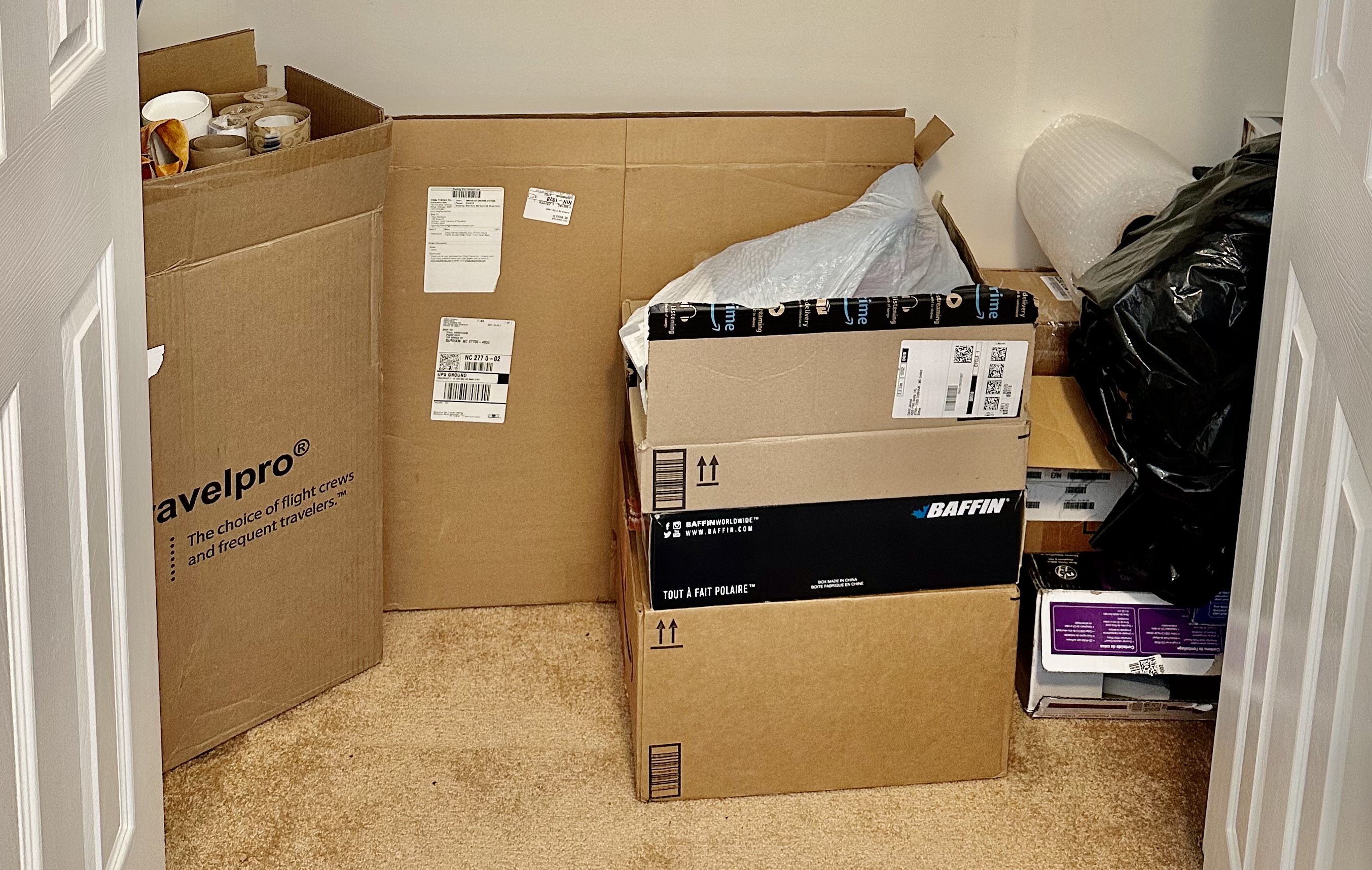
It’s much less than before. We’ve tried to retain what we’d learned in the Peace Corps about living more lightly and purposefully. We’ve refilled empty rooms mainly with used furniture from consignment shops. We bought a single car, a Prius, which we still have. We resisted buying books or other kinds of paper, doing almost everything digitally. We’ve traveled a lot but have few other splurges. Even while traveling, we’ve brought home almost nothing except souvenir magnets.

Nonetheless, the empty space in our house — even emptier since our two sons left to start their own families — has acted like a vacuum. Slowly, steadily, our pile has grown.
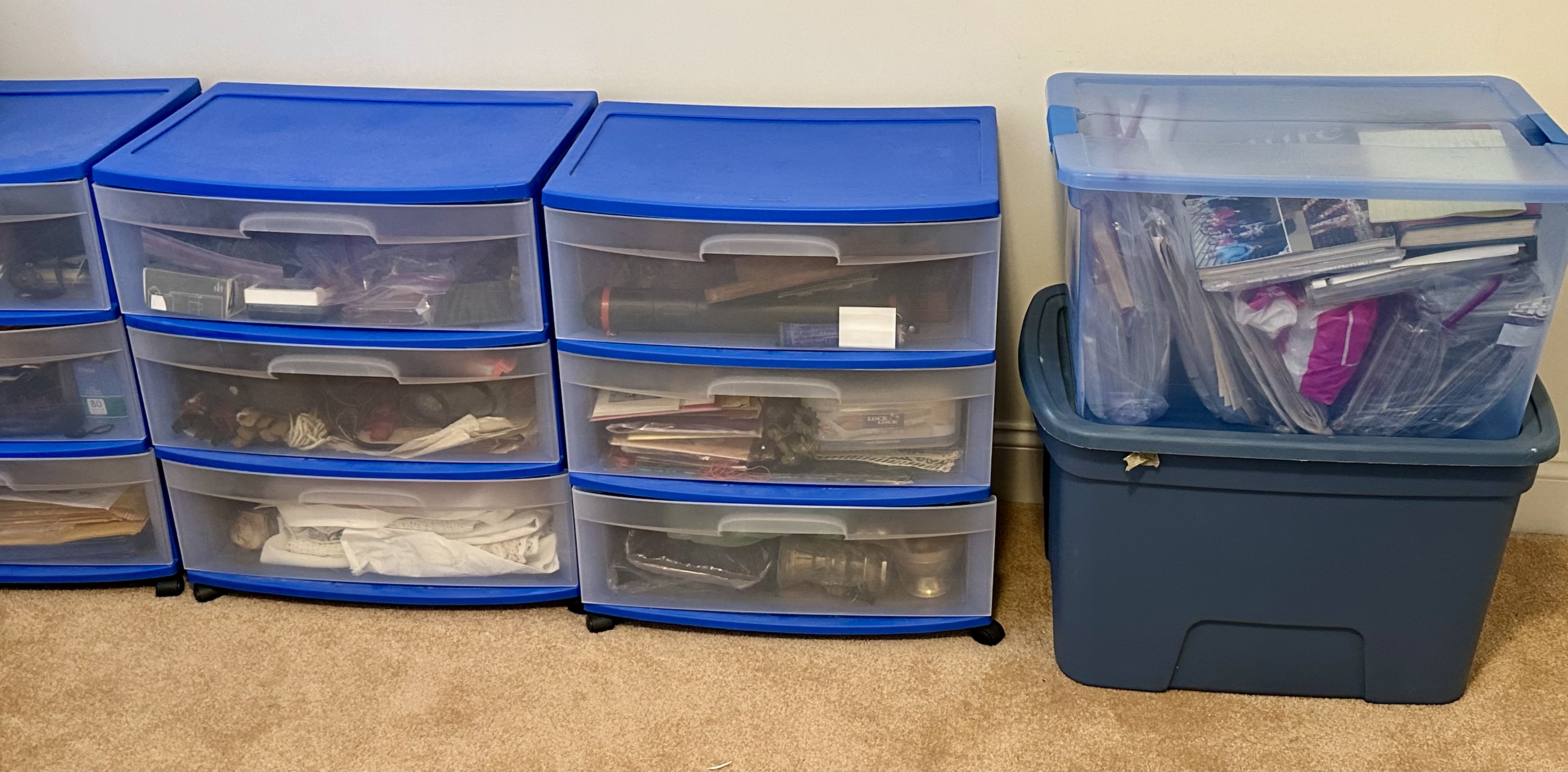
Recently we’ve begun purging again. I just spent several days sifting through the bin of photos and memorabilia I filled when trashing our photo albums last time, top right, above. Back then, I digitized everything but retained copies of several hundred photos. Now I’ve reduced this pile by more than half. I’m about to unload my remaining vinyl records and music CDs. I have few books left but will be thinning those out, too. 

We don’t want to leave our sons with a pile of stuff to sort through later. It’s not fair to them and, as I wrote previously, they and others of their generation have little use for many of the things we consider valuable. I do plan to keep some items that have special significance, but only a few.

For us, Decluttering 2.0 has proven easier than before since we did the hardest work previously. As we’ve seen, though, it isn’t a one-time job, and it isn’t just about “stuff.” Decluttering is also the emotional process of honoring your memories while making space for life’s next stage — space in your heart as well as in your home. Letting go makes it easier to grab whatever lies ahead, just when you thought it was safe to keep holding on.

Subscribe to Not Exactly Retired. It’s free.

Goodbye to Paper

I can’t paper this over any longer: We’ve had reams of fun together, Paper, but now it’s over.

I used to mail about a dozen paper checks every month to pay our bills. Now several months may pass before I write even one.

My mailbox is bare except for occasional junk mail or letters. It’s no longer filled with bills, advertisements, magazines and correspondence.

My bookshelves, which once held many hundreds of books, are emptier, too. They now hold fewer than one hundred books, many of which I helped produce, received from author friends or feel an emotional attachment to. I still read extensively, as you can see in my annual “top ten” lists (such as last year’s), but I generally download books or borrow hardcovers from the library, so our shelves remain uncluttered.

Photos? Yup, those are now digital, too. I had so many photo albums that they almost reached to the ceiling if I stacked them. Then I culled and digitized them — a huge task —and moved them onto storage discs and the cloud. They’re organized in folders that enable me to find and download a desired image quickly, including from my phone. A single plastic bin, below, holds our few remaining paper photos and family mementos.

I handle my finances electronically, too, and often pay friends with Venmo and Zelle. I have paper dollars in my wallet but rarely touch them, although I often use cash abroad. My medical records are online, as are almost all of our personal records. 

Younger readers might hear all of this and respond: “Big deal, Oldster. This is how people live these days.” But it’s a huge change for people of my generation, who grew up and established habits before personal computers and the internet existed. Many of my peers still prefer paper to pixels.

Not me. I have little use for paper or snail mail. I’ve embraced the digital world — not only because it’s displacing paper options so rapidly, but because I prefer it. When I hear someone say, “I like curling up with a real book and turning the pages,” I respect their preference but still choose my Kindle, which is lighter, brighter and more comfortable. It also tracks my place in each book. I do prefer hardcovers for how they display photos and maps. As an author, I also recognize the threat this shift poses to writers and the publishing industry.

I’ve always welcomed new technology but it was my service in the Peace Corps in 2016-18 that forced me to shift completely online. When Champa and I were in Moldova, we did everything electronically, whether conducting business with our American bank, booking travel or chatting online with our family back home. We got some handouts from the Peace Corps and at our posts, but many of those were electronic, too.

After two years of living without paper, it felt normal. Ever since we returned home, it still does, and greener, too. I’m grateful to the Peace Corps for many reasons but didn’t anticipate this one.

Champa and I downsized substantially before we left for the Peace Corps, getting rid of everything except what we could fit into one upstairs storage room and the attic of our house, which we rented. We know we’ll need to downsize again whenever we finally sell our house and move to someplace smaller. Next time, though, we won’t need to get rid of so much paper. It’s already gone.