

When I was growing up in Freeport, Long Island, no one ever told me that approximately 2,000 people wearing Ku Klux Klan robes marched through our village in 1924.
Nor was I taught about the local incident in 1946 when three Black brothers were shot by a white police officer. Two of the brothers died and the third was wounded. The killings sparked civil rights protests and inspired Woody Guthrie to write a protest song.
I had no idea about this history even when I was a teenager and race riots shut down my high school several times. I remember vividly the mobs chanting in front of the school. A bomb exploded. A bus filled with Black students was nearly overturned. A student was stabbed. My best friend’s brother was beaten. Yet even then our town’s racial history remained obscure to me—and I was among the very few white students who enrolled in our school’s African American history class.
I’ve learned more about this history in the years that followed. But now we all find ourselves living through a time when our national leaders are trying to scrub our painful racial legacy from classrooms and public spaces—a trend we must resist for all our sakes. As Bryan Stevenson of the Equal Justice Initiative has said, “I don’t think we can achieve racial justice or dynamic progress in America until we commit to a process of truth and reconciliation. We’ve got to face our history.”
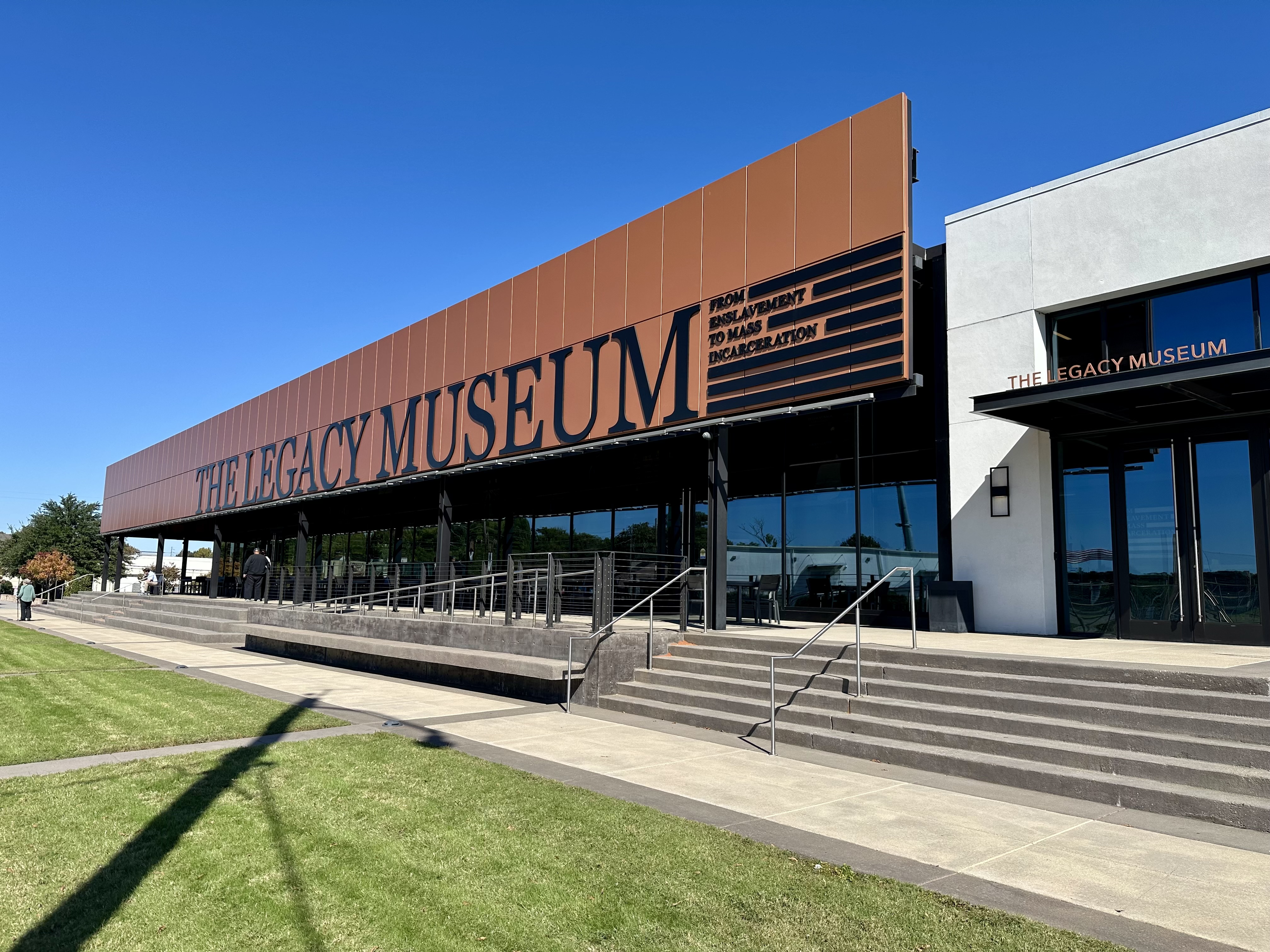
This past week, Champa and I traveled to Montgomery, Alabama, to visit the Legacy Museum and the National Memorial for Peace and Justice, which Stevenson and his colleagues opened in 2018.
Located at a former warehouse where enslaved people were held, the museum provides a deeply immersive history of slavery, segregation, lynchings and the struggle for justice. I found it eye-opening and heartbreaking.
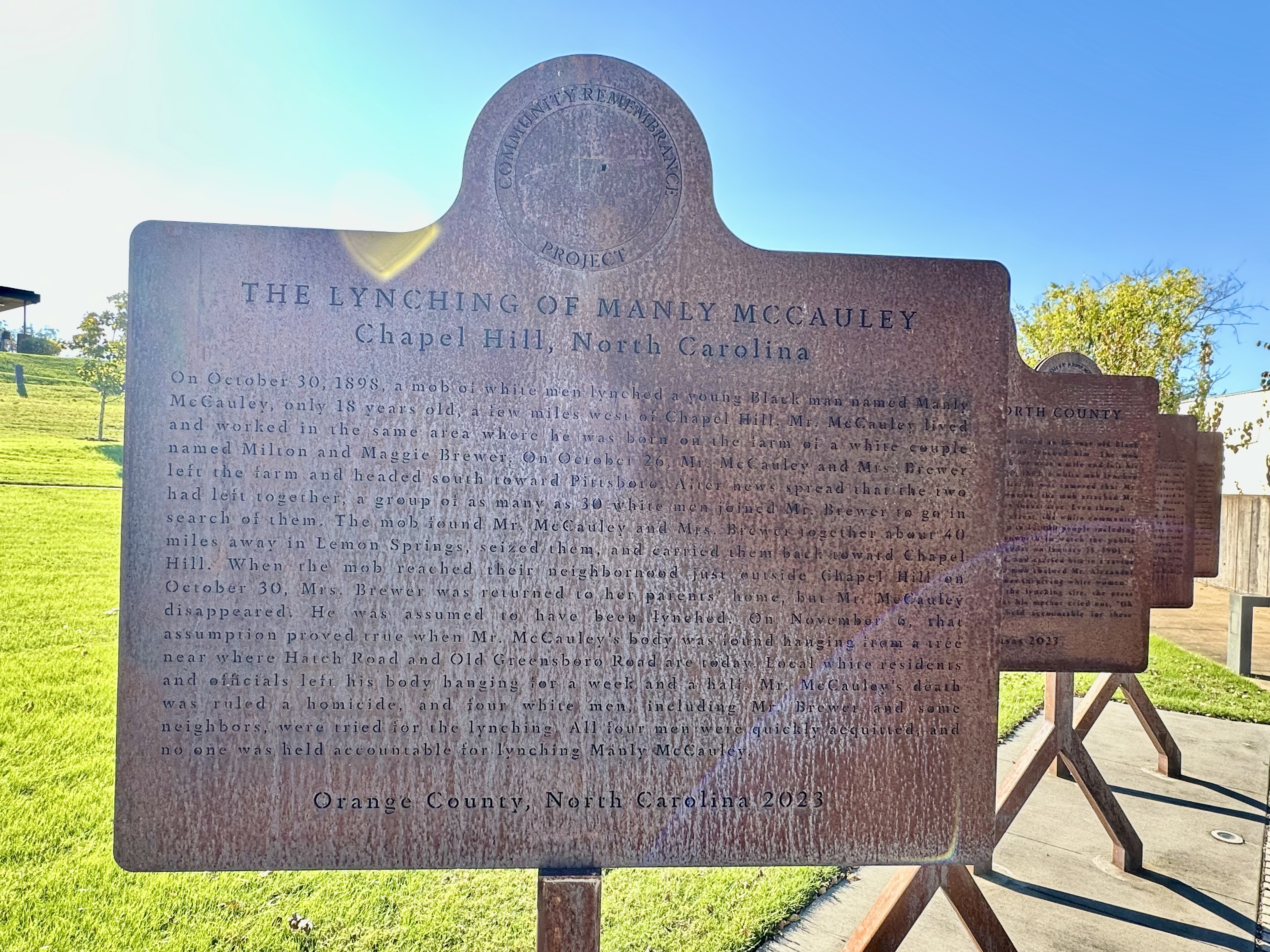
Several blocks away, the National Memorial for Peace and Justice was even more powerful. It honors the victims of racial terror lynchings. Visitors descend through rows of hundreds of steel monuments suspended overhead, evoking bodies hanging from trees. Each bears the name of a lynching victim. Markers represent counties across the country where documented lynchings took place, including several near our home in Durham.
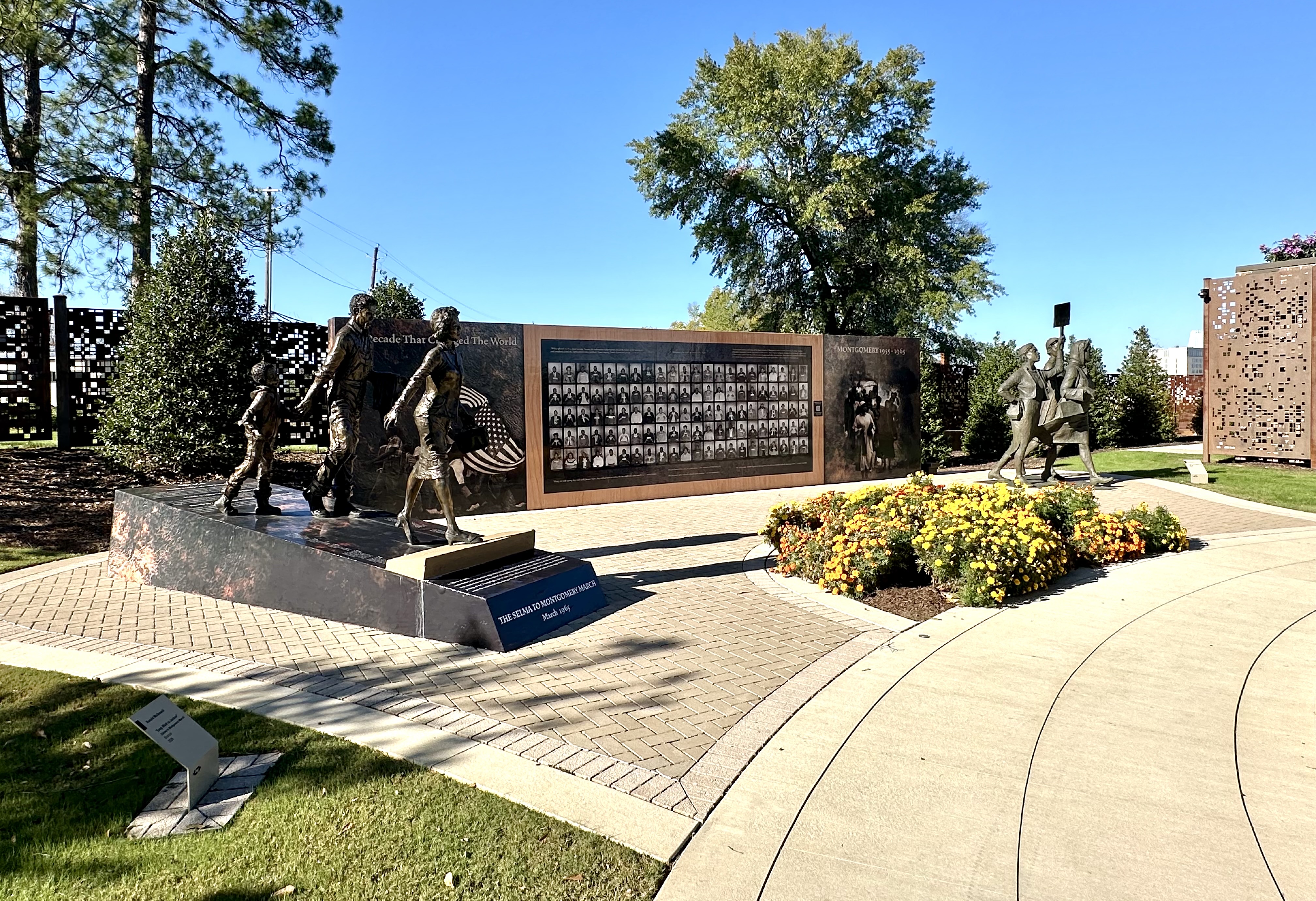
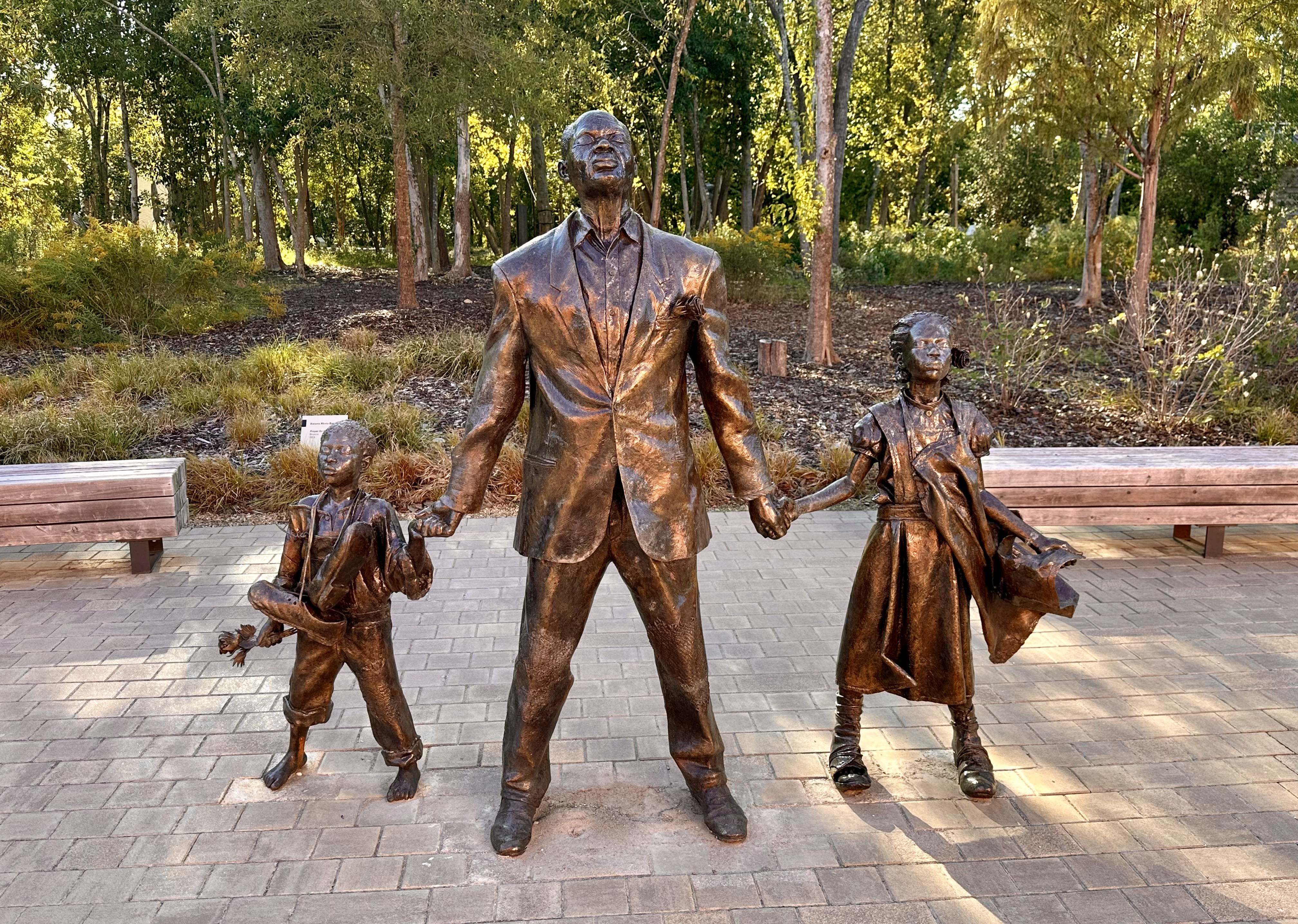
I’ve visited civil rights museums in Washington, D.C., Greensboro and Memphis, all of which were powerful and well worth the trip. But I’ve never been as moved as I was in Montgomery, whose legacy sites also include a sculpture park, top two photos, and Montgomery Square, above, which explores the local bus boycott and the rise of Dr. Martin Luther King Jr. as a national civil rights leader.
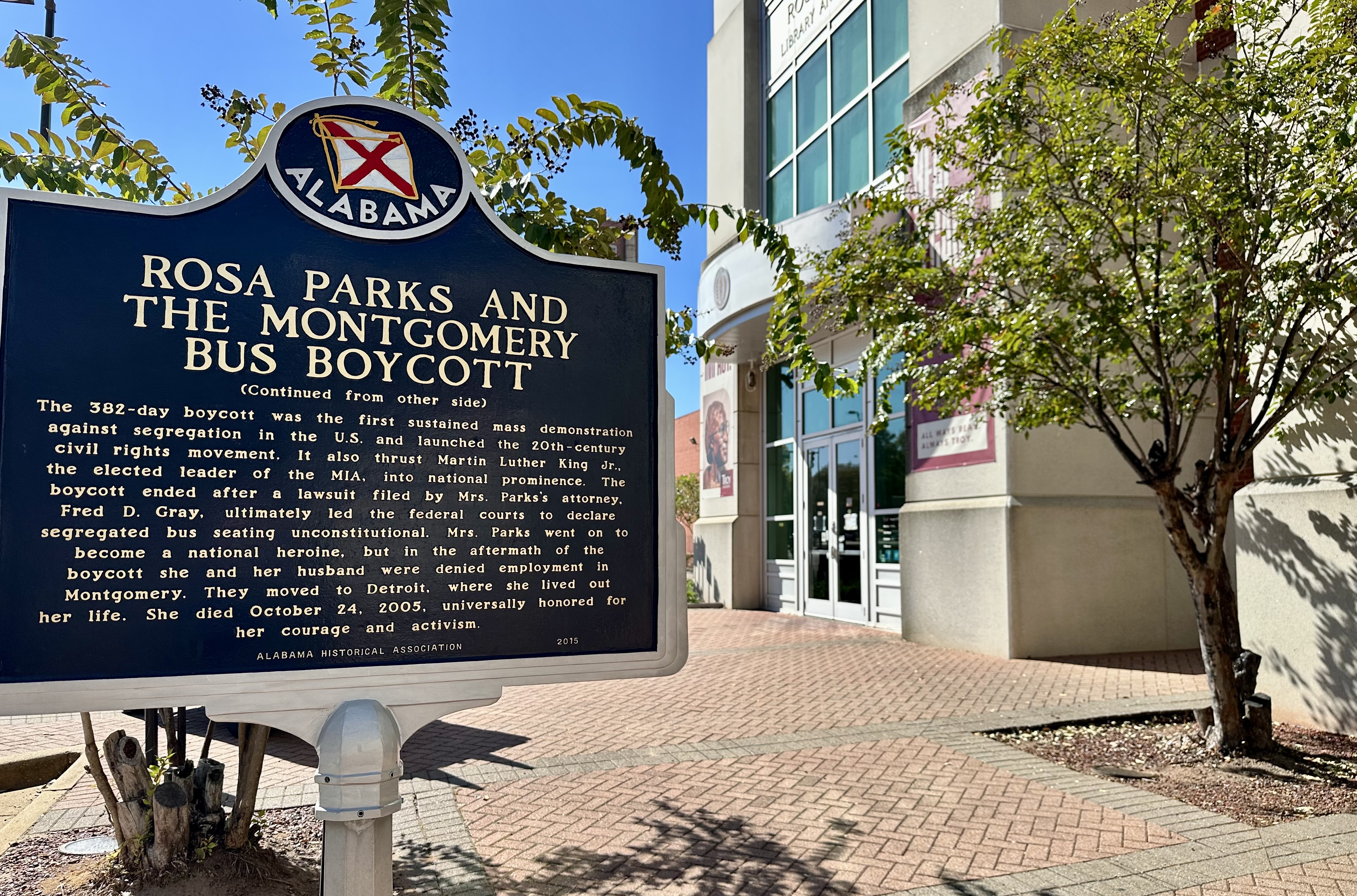
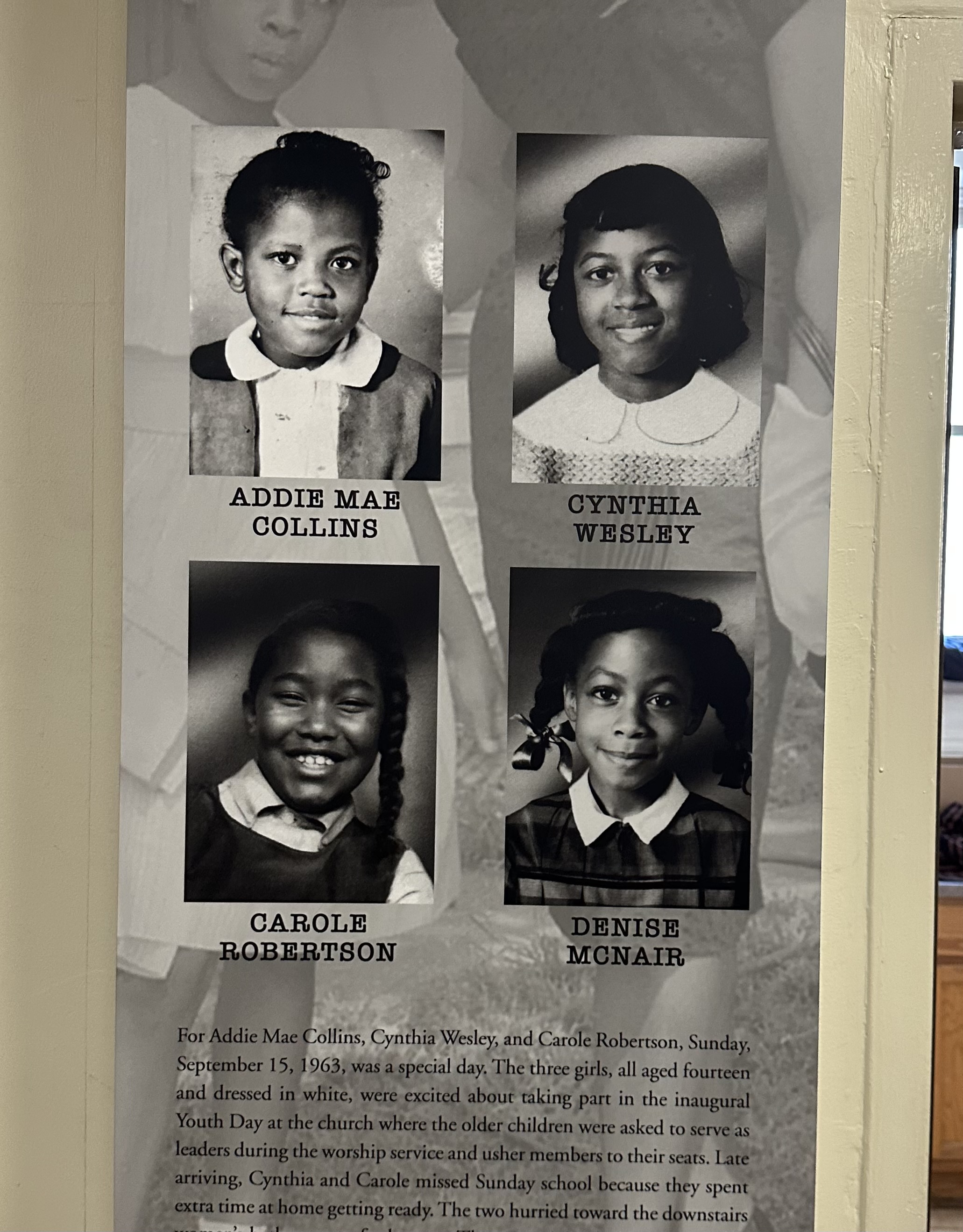
We also visited the nearby Rosa Parks Museum, which honors the woman whose refusal to give up her seat to a white passenger sparked the Montgomery Bus Boycott. After leaving Montgomery, we drove to Birmingham to attend a Sunday morning service at the 16th Street Baptist Church, where four young girls were murdered in a bombing in 1963. We received a warm welcome and were entranced by the service, the sermon, the music, and especially the historical displays in the basement, near where the bomb exploded.
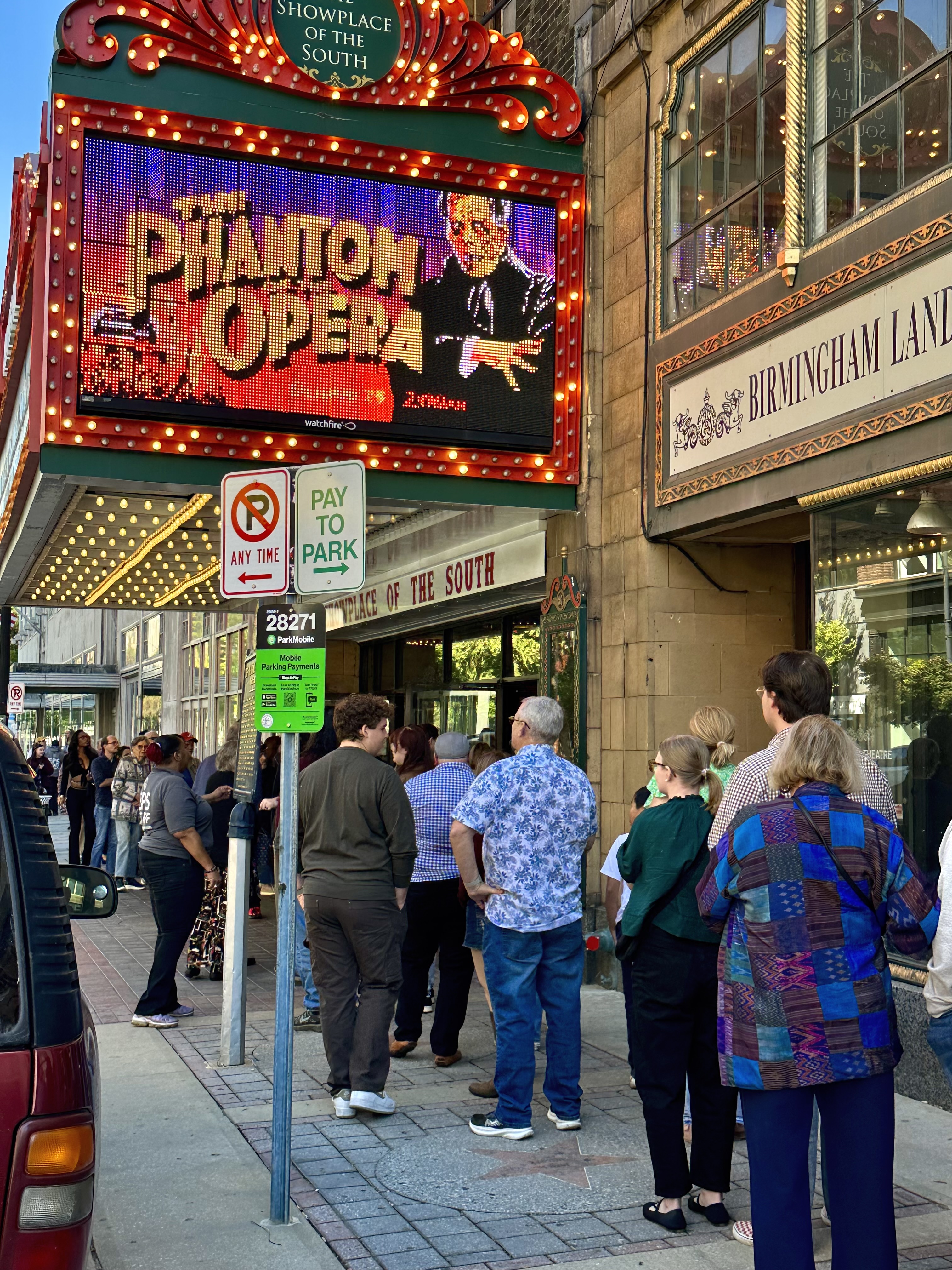
We combined this civil rights pilgrimage with fun stops in Greenville, Chattanooga and Asheville. A highlight was the historic Alabama Theatre in Birmingham, below, where we attended its annual screening of the silent film classic The Phantom of the Opera, accompanied by a live organist.
I encourage readers to visit Montgomery even if it’s far from their homes. I’ve traveled widely and consider these legacy sites to be among the most insightful and haunting places I’ve seen anywhere in our country or around the world. They are a necessary corrective for all of us who grew up without really knowing where we came from.
Subscribe to Not Exactly Retired. It’s free.
