
It’s Return of the Clutter. Just when you thought it was safe to go home.
Champa and I downsized in a big way when we joined the Peace Corps a decade ago. We donated or trashed most of our books, clothes, furniture and other possessions before moving abroad with two suitcases each.
“It’s been humbling to confront how much stuff we’ve accumulated,” I wrote then. “Getting rid of it has been liberating. We’ve already downsized so much that our house will be nearly empty when we return.”
So it was. When we completed our service in Moldova and returned home in 2018, everything we owned was in a small upstairs storage room of our Durham house, which we’d rented while away. Marie Kondo could have featured us in her hit Netflix series on “tidying up,” which began airing a few months later.
Alas, that was eight years ago. Since then, clutter has crept back, with new kitchen gadgets, clothes, electronics and more.
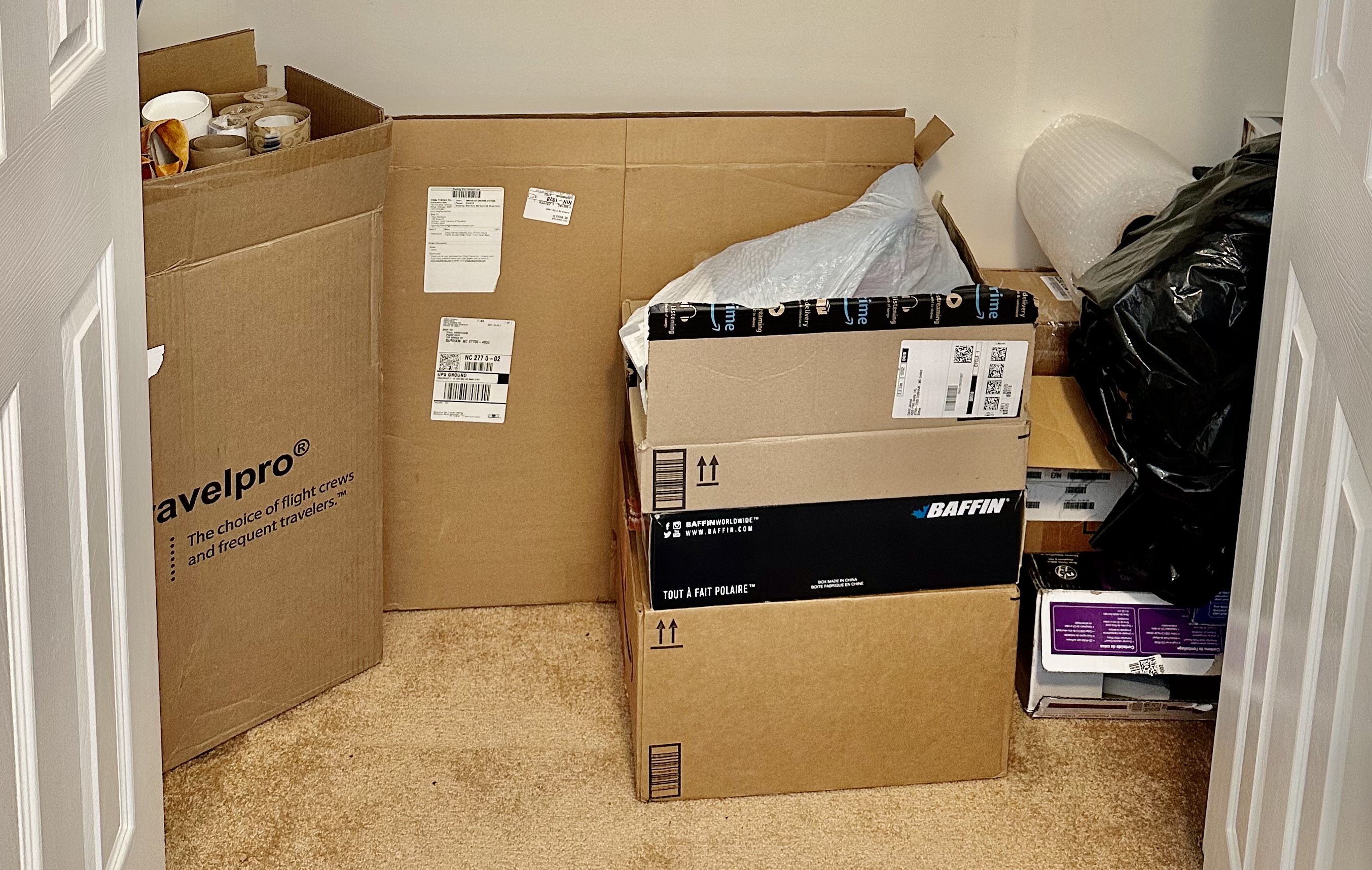
It’s much less than before. We’ve tried to retain what we’d learned in the Peace Corps about living more lightly and purposefully. We’ve refilled empty rooms mainly with used furniture from consignment shops. We bought a single car, a Prius, which we still have. We resisted buying books or other kinds of paper, doing almost everything digitally. We’ve traveled a lot but have few other splurges. Even while traveling, we’ve brought home almost nothing except souvenir magnets.
Nonetheless, the empty space in our house — even emptier since our two sons left to start their own families — has acted like a vacuum. Slowly, steadily, our pile has grown.
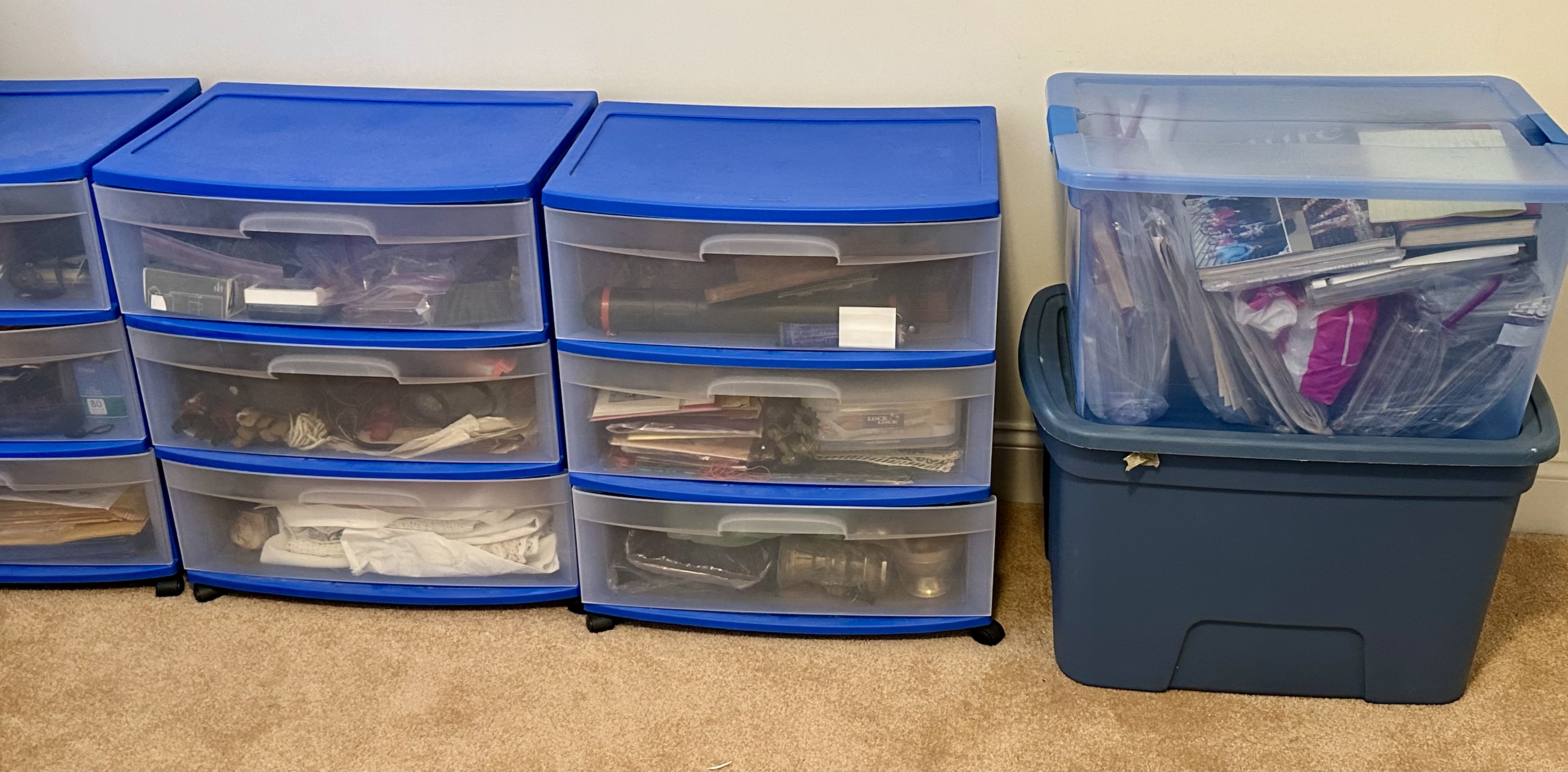
Recently we’ve begun purging again. I just spent several days sifting through the bin of photos and memorabilia I filled when trashing our photo albums last time, top right, above. Back then, I digitized everything but retained copies of several hundred photos. Now I’ve reduced this pile by more than half. I’m about to unload my remaining vinyl records and music CDs. I have few books left but will be thinning those out, too.
We don’t want to leave our sons with a pile of stuff to sort through later. It’s not fair to them and, as I wrote previously, they and others of their generation have little use for many of the things we consider valuable. I do plan to keep some items that have special significance, but only a few.
For us, Decluttering 2.0 has proven easier than before since we did the hardest work previously. As we’ve seen, though, it isn’t a one-time job, and it isn’t just about “stuff.” Decluttering is also the emotional process of honoring your memories while making space for life’s next stage — space in your heart as well as in your home. Letting go makes it easier to grab whatever lies ahead, just when you thought it was safe to keep holding on.

Subscribe to Not Exactly Retired. It’s free.


