
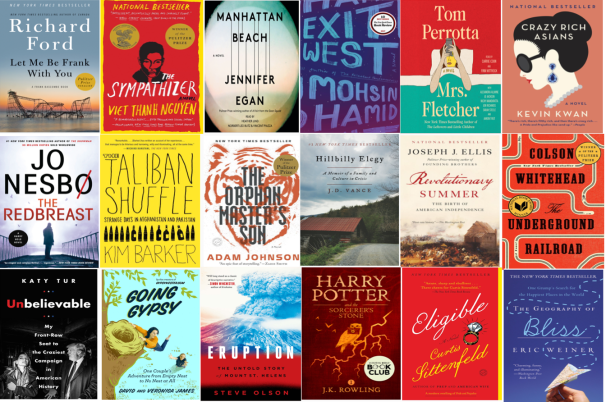
‘Tis the season for year-end lists of favorite books. Here’s mine from Moldova. I downloaded almost all of these books onto my Kindle for free through the online OverDrive system which, as I’ve written previously, is the best thing that ever happened to a Peace Corps Volunteer who likes to read.


I could fill my Top Ten list just with recent novels I read this year. My three favorites were Exit West, Mohsin Hamid’s brilliant depiction of two refugees from a war-torn Arab country; The Orphan Master’s Son by Adam Johnson, which captures the brutal insanity of North Korea; and The Underground Railroad, Colson Whitehead’s chilling exploration of slavery in antebellum America. All three novels haunted me for weeks.
I also loved Manhattan Beach, which Jennifer Egan sets on the waterfront of New York, showing us a different side of the city while telling a harrowing yet moving family saga. Richard Ford’s Let Me Be Frank With You and Richard Russo’s Everybody’s Fool are gentler but wonderfully written, with compelling protagonists struggling to make sense of their aging years. Viet Thanh Nguyen in The Sympathizer and Karan Mahajan in Association of Small Bombs both took me to communities I barely knew before. Tom Perrotta’s Mrs. Fletcher was funny and wise. Carl Hiaasen’s Razor Girl was even funnier. All ten of these novels were a pleasure.


I also loved three older novels: Disgrace by J.M. Coetzee, whose depiction of a man’s life upturned by accusations of sexual misconduct seemed especially timely now; Redeployment by Phil Klay, rightly hailed as one of the best novels about the Iraq war; and Smiley’s People by the great John LeCarre, who published an acclaimed autobiography this year.
I’ll give a partial thumbs-up to three other novels: Moonglow by Michael Chabon; The Sandcastle Girls by Chris Bohjalian; and Everything I Never Told You by Celeste Ng. Bohjalian’s book is about the Armenian genocide, and I read it shortly before we visited Armenia. Like the others, I thought it was good, not great. I was even less enthusiastic about Jenny Lawson’s Let’s Pretend This Never Happened, which was snarkily funny in places but somehow didn’t click for me.


I also read some great nonfiction this year. My favorite book was Hillbilly Elegy by J.D. Vance. I know it’s come in for criticism for its depiction of dysfunctional white families in Appalachia, but I found it insightful following our election last year. Arlie Russell Hochschild covered some of the same issues in Louisiana in Strangers in Their Own Land, which I enjoyed but found less compelling. Bruce Springsteen’s autobiography, Born to Run, was a treat from cover to cover. So was reporter Katy Tur’s recent Unbelievable, about covering the Trump campaign, although its uneven text reflected the haste with which it presumably was written. (Sorry, always an editor.)
I’m in a science book club back home, so I’ll give a shout-out to my favorite science book of the year: Steve Olson’s Eruption: The Untold Story of Mount St. Helens. It wove geology, politics, history and personal stories into a narrative I would have found engaging even if Steve weren’t a good friend.
I’m also a history fan. In Revolutionary Summer, Joseph Ellis offered a fresh look at how early military defeats under George Washington nearly ended the American Revolution in its early days. In The Wright Brothers, David McCullough showed how the two aviation pioneers were nothing less than admirable, illustrating what’s best in the American character at a time when I needed to be reminded.


I’ll also give a hat tip to two novels I read just for fun. In Crazy Rich Asians, Kevin Kwan poked fun at the super-rich families of Singapore and Hong Kong. I’m looking forward to seeing the movie version when it comes out next year. Another comedy of manners featuring people with too much money was Eligible, Curtis Sittenfield’s modern adaptation of Pride and Prejudice. Once again: well-done fluff that kept me turning the pages.
Detective and mystery novels are great page-turners, too, and I read several good ones this year, including books by John Grisham (The Litigators), David Baldacci (The Guilty), Paula Hawkins (Girl on a Train) and Jonathan Kellerman (The Murderer’s Daughter). My favorite was Jo Nesbo’s The Redbreast, which dealt with neo-Nazis emerging from the shadows, in this case in Norway, yet another case of novels unexpectedly touching on today’s news.
Then there were travel and adventure books. I’d missed The Old Patagonian Express by one of my favorite travel writers (and former Peace Corps Volunteer), Paul Theroux. It described his trip across Latin America. Eric Weiner’s entertaining The Geography of Bliss explored why some countries are happier than others, with Moldova featured at the opposite end of the happiness scale. In The Taliban Shuffle, Kim Barker described her adventures as a foreign war correspondent, a tale recently adapted by Tina Fey in the film Whiskey Tango Foxtrot. David and Veronica James in Going Gypsy and Kristin Newman in What I Was Doing While You Were Breeding described extended trips they made after leaving the workplace. All gave me new perspective on my own recent adventures.
Among the books I expected to like better but never finished were The Shadow Land by Elizabeth Kostova; The Handmaid’s Tale by Margaret Atwood; Still Here by Laura Vapnyar; Sweet Tooth by Ian McEwan and Homegoing by Yaa Gyasi. The biggest clunker for me was Marie Kondo’s The Life-Changing Magic of Tidying Up, which extolled the virtues of simplicity and decluttering while bloating a 10-page idea into an entire book.
Finally, and I’m embarrassed to admit this, 2017 was the year when I finally got around to reading some of the Harry Potter books. I blasted through both Sorcerer’s Stone and Chamber of Secrets and am looking forward to reading the others in the year ahead. That is, if I can find time after we get home and start binge-watching all of the movies we’ve missed.
Thanks to the Durham County Library and the Duke University Libraries, together with the OverDrive system, for providing these great books for free. Which others did I miss? I welcome your suggestions and will look forward to reading some of them in the year ahead. If you’re a reader, too, I hope you’ll try some of the books I’ve recommended here. Happy reading in 2018!





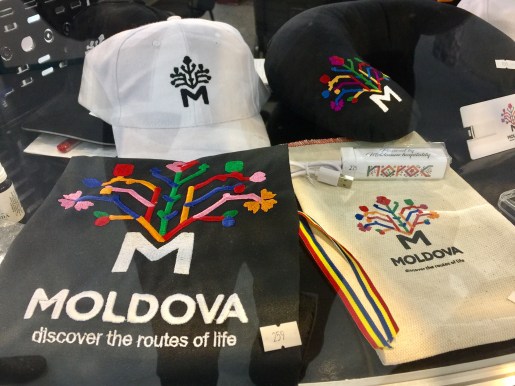


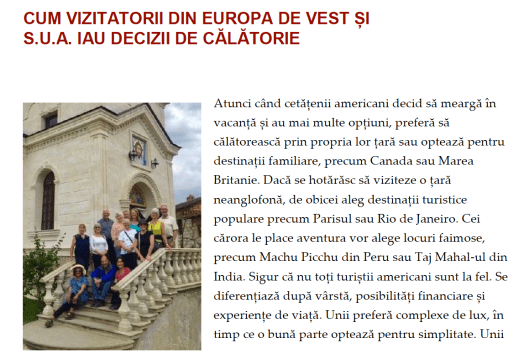
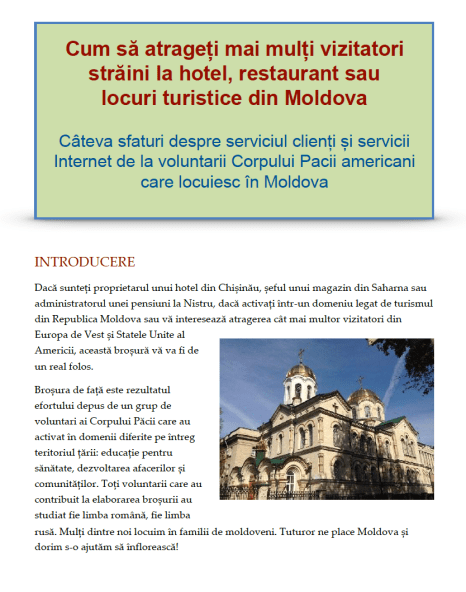 Since that meeting, our group has been working with the Moldova Competitiveness Project of USAID and the leadership of ANTRIM, Moldova’s national inbound tourism association. After months of work and numerous drafts in both English and Romanian, we recently completed our project: an illustrated Romanian-language brochure for Moldovan businesses seeking to attract tourists from abroad. ANTRIM has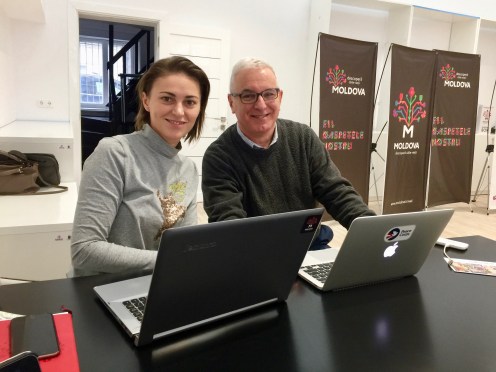
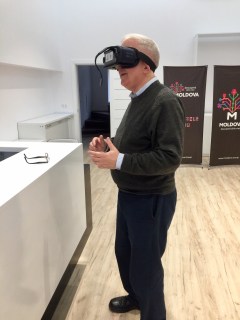
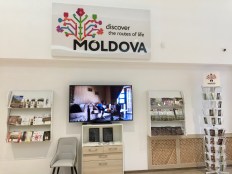 I recently put the final touches on the brochure with Natalia Țurcanu, the head of ANTRIM, who you see above with me in their lovely new
  Our group is ready to assist if she wants her people to hear this directly from American travelers.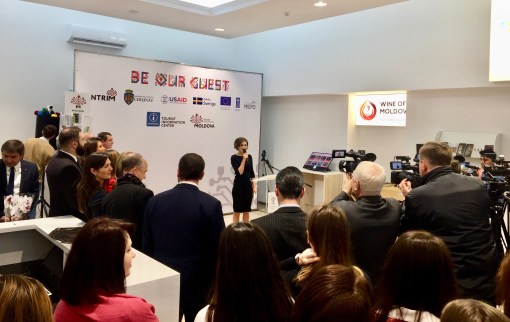




 After our first segment, we all took a break and then moved from the kitchen to a table to eat the cooked turkey with pistachio-infused rice.
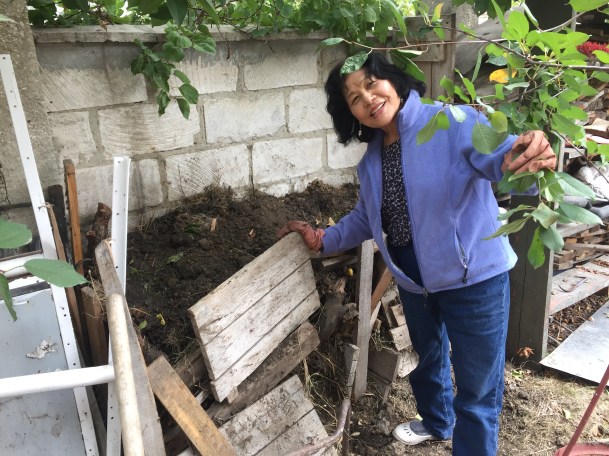
 Champa discovered dried cranberries in the market, which I cooked with juice and brandy to make a sauce. One of our local stores now sells Parmesan cheese, so I bought some and combined it with mashed potatoes in a casserole. For my peach pie, I used slices of local peaches we’d bought last summer and froze. We made cookies with chocolate chips and brown sugar we bought when we were home last summer. We bought the Armenian and Georgian wine during our recent trip there.

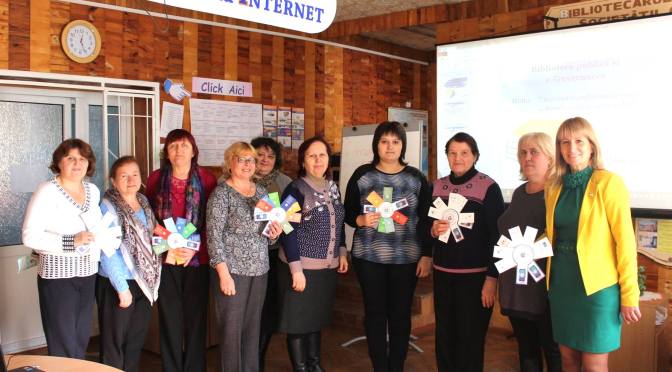
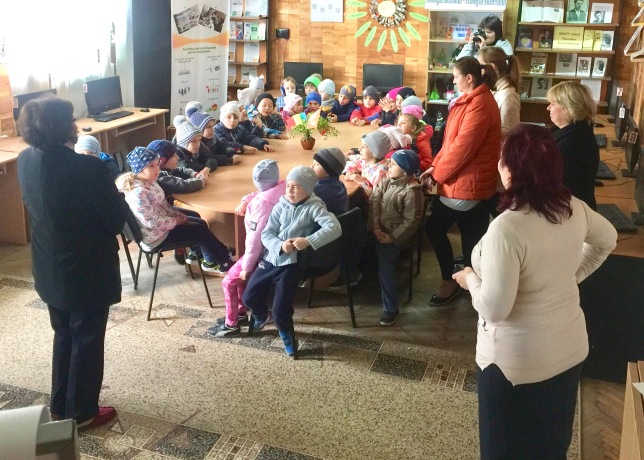
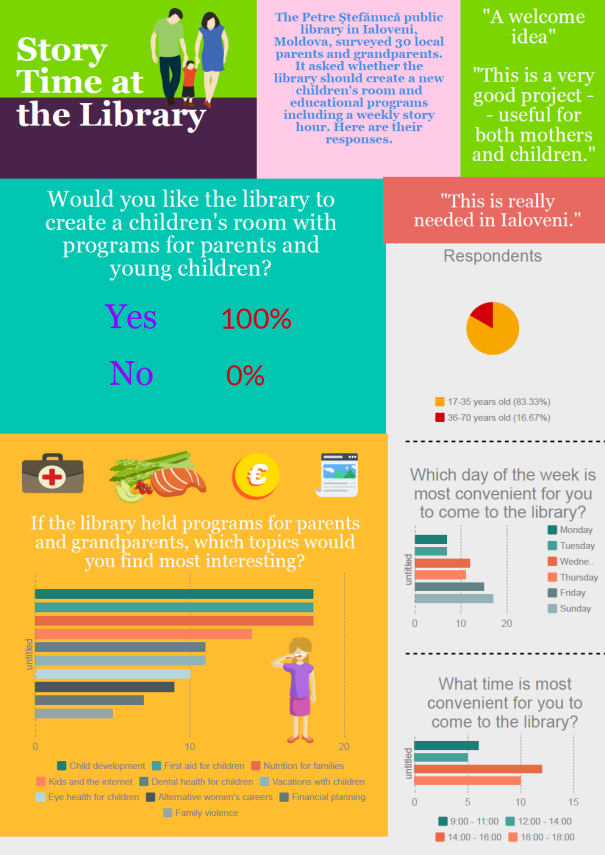
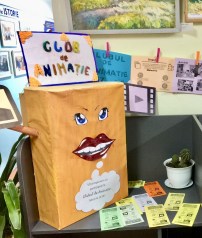 Back home, where people now routinely download books and find information on the internet, libraries are emphasizing their roles in providing expertise and bringing people together, whether with story times for kids, study spaces for students or programming for retirees.
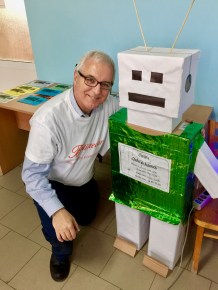 Here in Moldova, the transition has been even more challenging. Library budgets and salaries are tiny. Many library buildings are old, with collections dating to Soviet times. There are no resources to buy books, much less comfy sofas or cappucino machines.
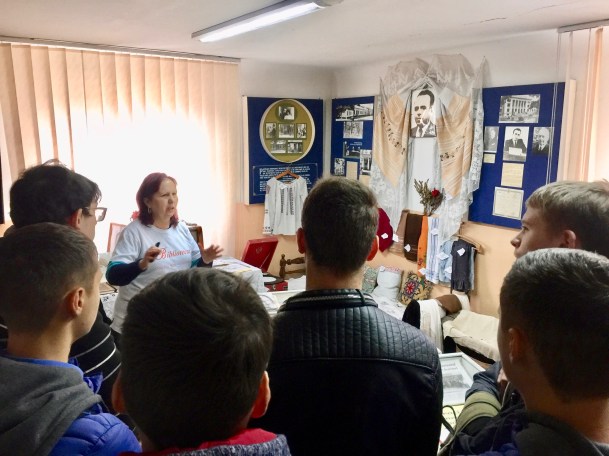

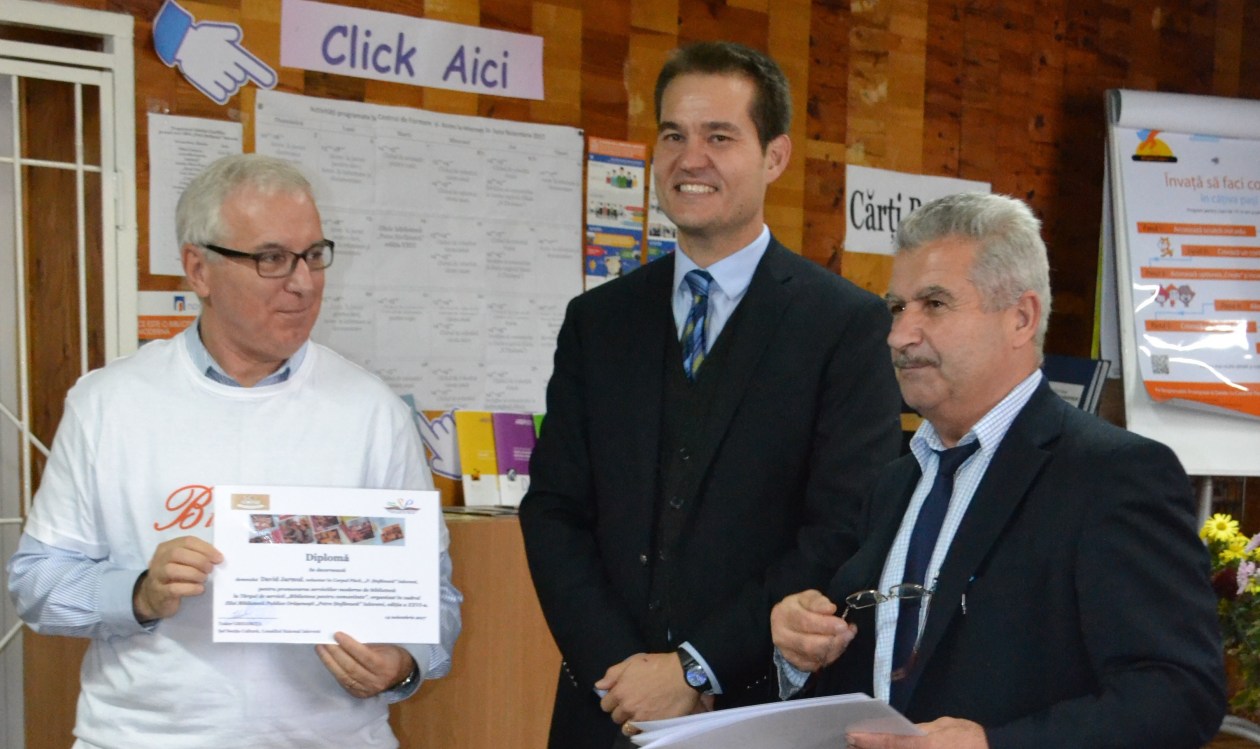

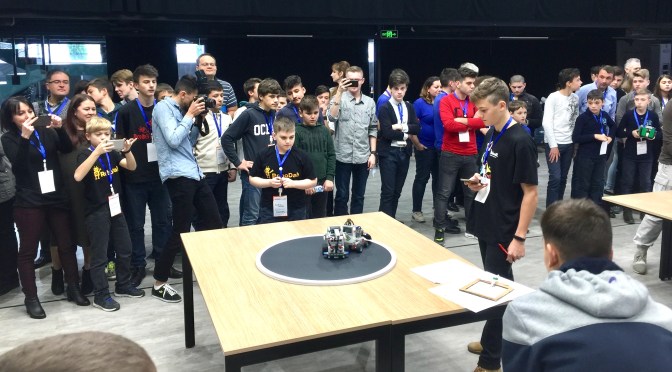


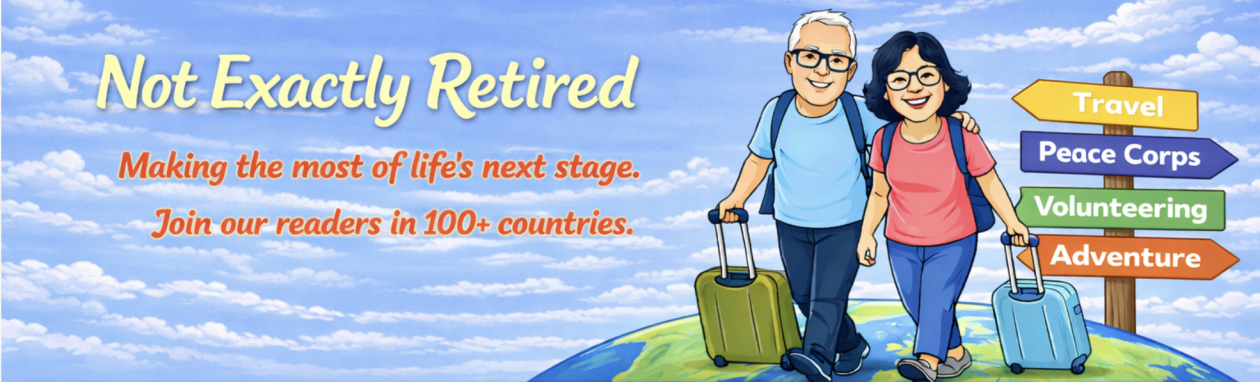
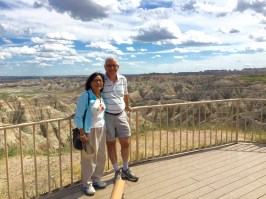 As we’ve traveled around the United States, spent time in Nepal and served as Peace Corps Volunteers in Moldova, the blog’s audience has kept growing, with more than 26,000 visits so far. Thanks to all of you who have joined us on our journey!
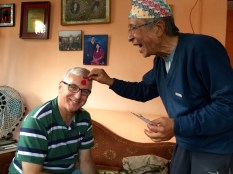 “Not Exactly Retired” advances two of the three official goals of Peace Corps: to promote a better understanding of other peoples on the part of Americans, and vice versa. (The other goal is to “help the people of interested countries in meeting their need for trained men and women.”)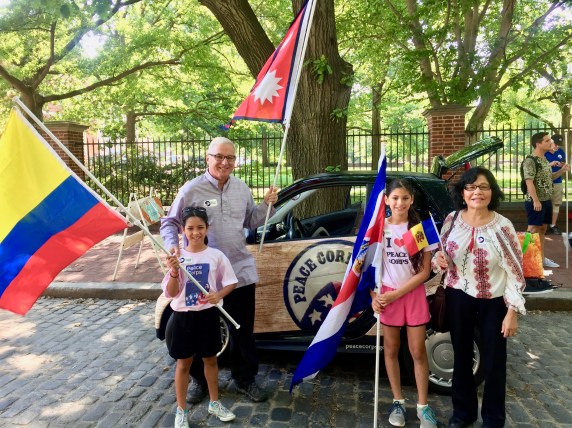

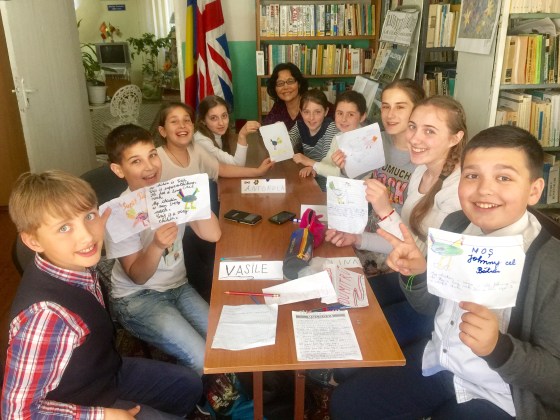





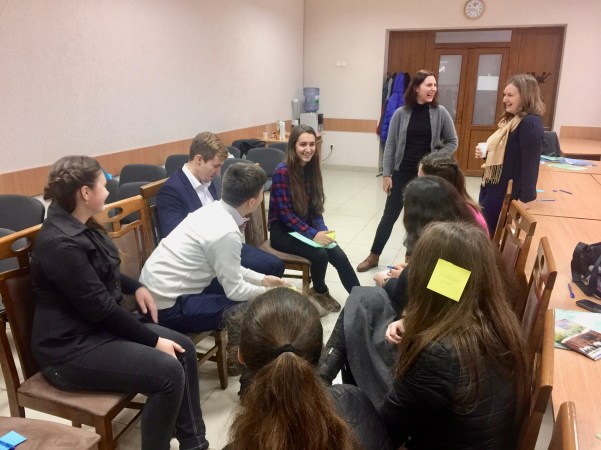
 One student described an imaginary murder. Another imagined a fight in a local store. Others chose more peaceful or funny scenarios. All did a great job of answering the 5 W’s, which are care, ce, unde, cand and de ce in Romanian, plus cum for “how.”


 "Not Exactly Retired"