We visited the Statue of Liberty this past weekend and I found myself wondering whether they will soon be adding “Don’t” to the front of the famous poem by Emma Lazarus.
“Give me your tired, your poor, your huddled masses yearning to breathe free, the wretched refuse of your teeming shore,” the poem says. “Send these, the homeless, tempest-tost to me, I lift my lamp beside the golden door.”
“Don’t give me your tired, your poor” sounds about right these days, the way things are going. For good measure, they could add a warning about immigrants eating dogs and cats.
In the wake of the recent election, I found it disheartening to visit Lady Liberty, which greeted my grandparents more than a century ago. Champa and I went there with our son and his family during a family get-together in New York.
Our four granddaughters were especially excited to see the names of their great-great-grandparents on the Wall of Honor at Ellis Island. These were my dad’s parents, Reuben and Sarah Jarmul, who both came to New York after fleeing religious persecution in Eastern Europe. My mother’s family came from Germany a few decades later, narrowly escaping the Holocaust in Germany.
Today’s refugees will not be so lucky — and their situation is just one of many issues that make me despair about what lies ahead during the next four years.
Several months ago, I wrote about how we were considering a post-election Plan B focused on “slow travel,” which has become popular among older Americans and is substantially less expensive than many people assume. Now this has become our Plan A. We’re going to keep our home in Durham, at least for now, but will spend much of our time elsewhere around the world. We think it’s our best way to stay sane during the next four years.
We could change our minds. Maybe the next Trump presidency will be less tumultuous than we expect. Maybe we’ll experience a health setback, a family crisis or something else. Maybe we’ll get tired of the road. Serving in the Peace Corps and traveling frequently have made us comfortable with uncertainty and foreign adventure.
For now, though, we need to get away, although we’ll remain engaged and seek new opportunities to serve as volunteers. In three weeks, we’re leaving on an extended trip to Australia and New Zealand, and we have other trips planned after that.
As we head for other shores, we’ll keep Lady Liberty in our hearts. My last glimpse of her this past weekend was from the ferry returning us from Ellis Island to New York’s Battery Park. It was sunset and the sky was bathed in red. As I gazed behind us, across the harbor where my grandparents came to find safety and freedom, I watched the statue’s outstretched lamp as it slowly faded into the gathering darkness.
I hope it will shine more brightly when we come back.
I wouldn’t exist today and you wouldn’t be reading this article if my maternal grandparents hadn’t had the foresight to flee Nazi Germany for New York in 1937, narrowly escaping the Holocaust.
Until recently, this was just part of my family history. But as the election approaches and darkness looms on the horizon, I’ve begun wondering whether it’s a cautionary tale.
My mother’s German passport, with Nazi swastikas on the stamp.
I’m not alone. I recently received the e-mail message shown above, with the title “How to Move Out of the US (and Where to Escape to).” It began: “If you’re anything like me, you’re looking at the election year ahead with some trepidation. And who can blame you? Things could go sideways—politically, economically, socially. It’s not a crazy idea to have a Plan B. In fact, it’s prudent.”
The message came from International Living, which helps older Americans relocate to “safe, warm, friendly spots abroad.” Costa Rica, Portugal and Mexico top its current list of “the best countries to retire,” based on living costs, healthcare and other criteria.
My fears about things “going sideways” don’t reach the horrific level of the Holocaust but they’re bad enough that I don’t want to live through them. Am I being melodramatic? Maybe. I hope so. I know I’m privileged to even consider leaving the country and I recognize the need to fight for my beliefs. I have children and grandchildren, along with countless fellow Americans, who can’t leave as easily.
But my anxiety is real and, unrelated to politics, Champa and I were already discussing how we might spend more time abroad. We love to travel and have been fortunate to visit some amazing places, as I’ve chronicled on this blog. However, except when we served as older Peace Corps Volunteers in Moldova, or while visiting our family in Nepal, we’ve generally passed through countries as tourists rather than slowing down to truly experience them.
That’s what we’d like to do now, traveling more slowly and deliberately, while we’re still relatively young and healthy. As I wrote back in November, “I’m determined to make the most of this precious ‘not exactly retired’ stage of my life when I no longer have the responsibilities of a formal job but am still able to contribute and thrive.”
A retirement focused on travel may sound crazy, dangerous, self-indulgent or extravagant to some. But it’s become common, as I’ve seen from numerous websites, videos, online groups, books and other sources, including conversations with people we’ve met on the road.
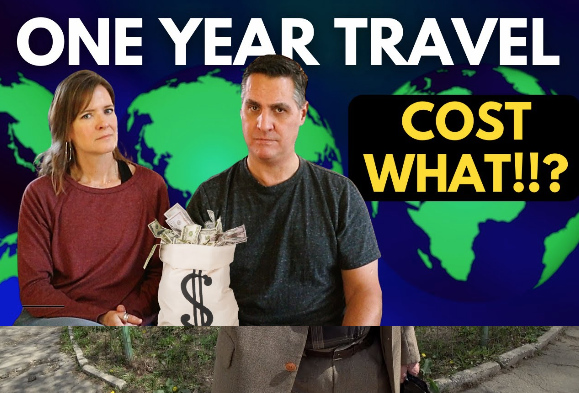
It can also be far cheaper than you might imagine. Brian and Carrie, one of our favorite Internet couples, shown above, spent $29,728 for all of their travel and living costs in 2023. That’s $1,238 monthly each, living in Airbnbs and elsewhere in Spain, Portugal, Croatia and other parts of Europe. They later moved on to Southeast Asia.
We’re also fans of Debbie and Michael Campbell, the Senior Nomads, who have stayed in Airbnbs in 90 countries since leaving their Seattle home in 2013. “We weren’t sure how long we’d be gone,” they write on their website. “Now, over ten years later, we still aren’t sure! But as long as we are learning every day, having fun, are close to our budget, have our health, and are still in love, we’ll keep going.”
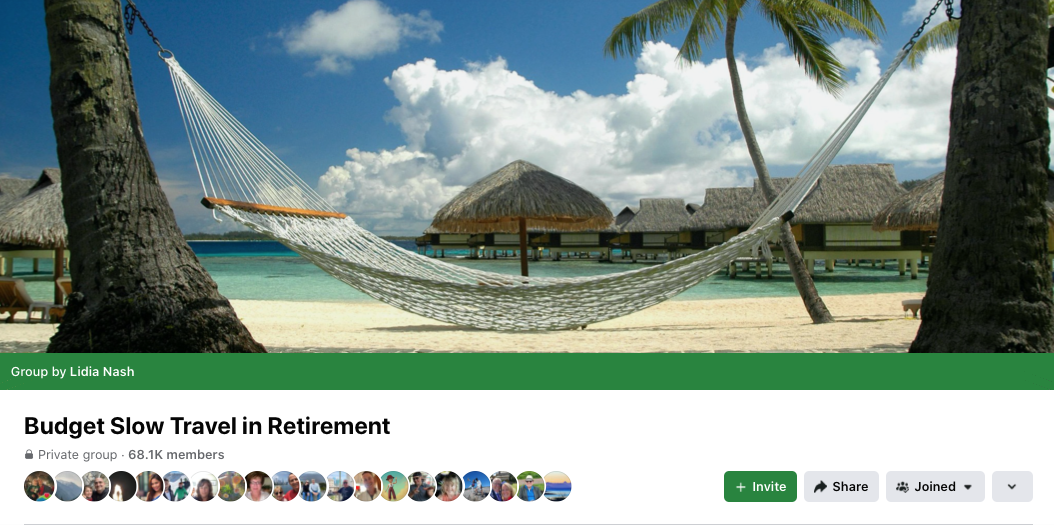
Debbie and Michael’s Facebook group has nearly 14,000 members who share travel tips, swap stories and encourage each other. An even bigger Facebook group is Budget Slow Travel in Retirement, whose 68,000+ members discuss everything from medical insurance to the best ways to keep in touch with grandchildren.
Brian and Carrie’s YouTube series addresses many of these questions while highlighting destinations from Greece to Vietnam. Other good YouTube sites include Kara and Nate and Earth Vagabonds, which targets “slow travel for retired budget travelers.”
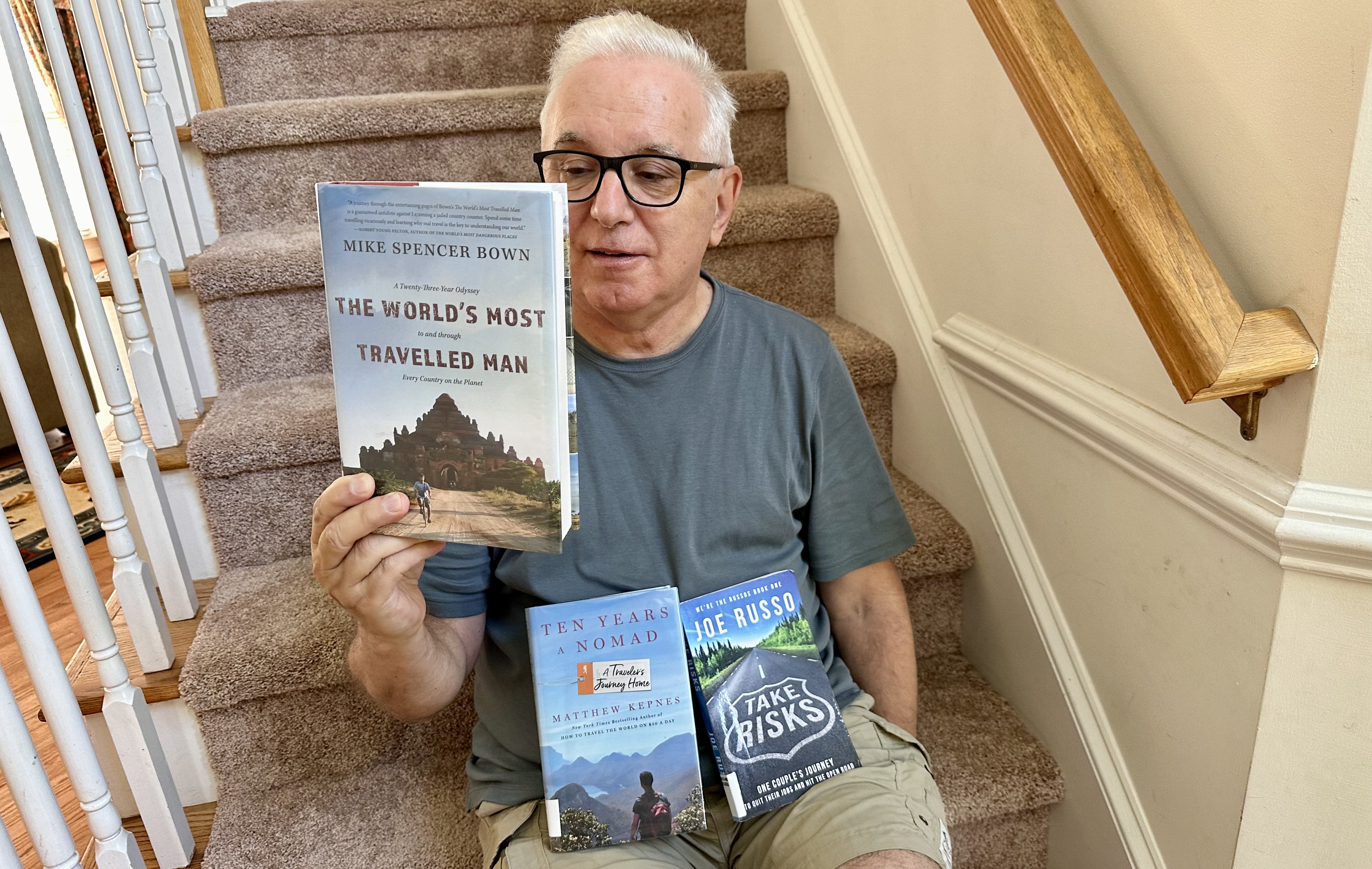
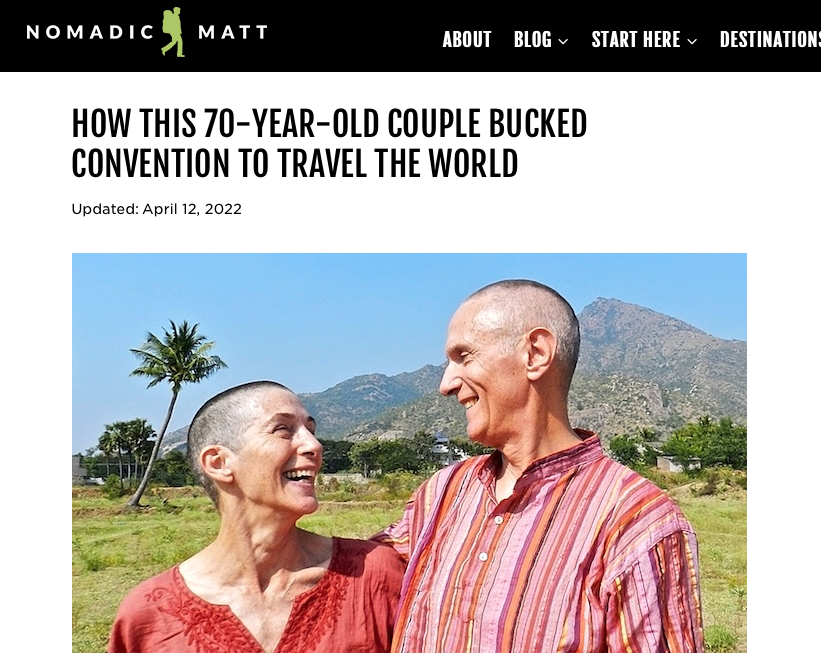
Another travel inspiration is Nomadic Matt, whose blog I’ve followed for years and whose book Ten Years a Nomad I just finished reading. Champa’s reading it now. Matt is younger than us but spent ten years traveling to more than 100 countries and territories. He now offers a variety of guides and products on his website.
I don’t foresee us ever leaving our family, friends and community for good. We’d return regularly, remain connected electronically and keep America in our hearts. But spending a significant part of our time in Nepal and elsewhere over the next four years might be our best way of coping with a post-election nightmare.
Mark Twain famously wrote that travel is fatal to prejudice, bigotry, and narrow-mindedness — the very forces I now see threatening my homeland. I’ll never stop loving America but I also want to live my life and embrace the world.
I recognize my planning may come across as selfish or apocalyptic to some readers. My grandparents probably heard the same thing.
Heartfelt thanks to everyone who responded to my previous post about our project to help build a new school in Nepal. Sixty donors have contributed $12,811. That’s more than halfway to our goal but we still need more help. If you haven’t already, please donate on our GoFundMe site or, to avoid their fees, contact me directly. All donors will have their names honored in the new school. Thank you!
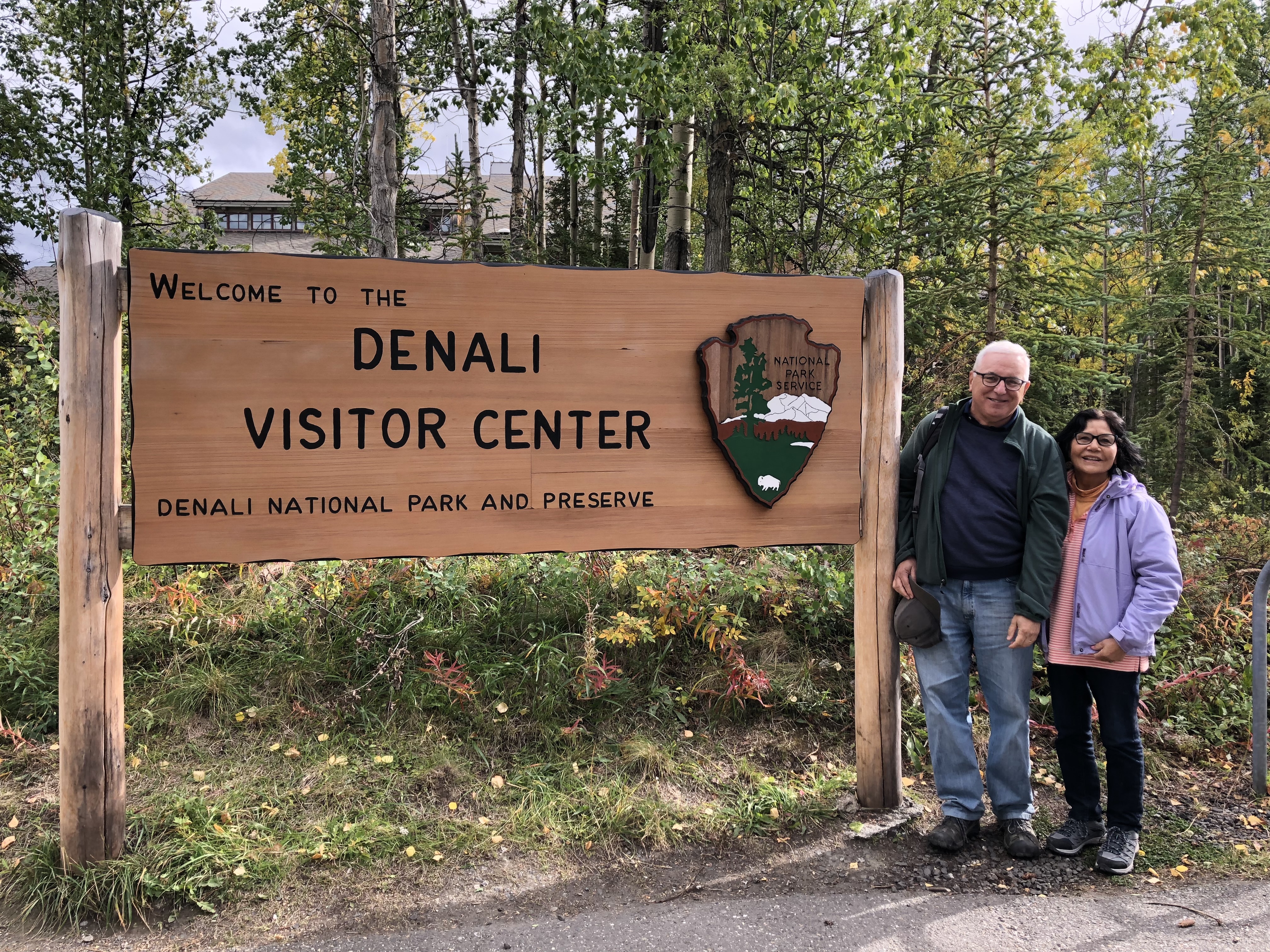
Travel is my passion and I’ve learned a few things while visiting more than 60 countries and all 50 U.S. states. Looking ahead to 2024, I thought I’d share some “lessons learned” you might find helpful, too,
First, some caveats. Your preferences may differ from ours. Champa and I enjoy planning our own trips, exploring cities, hiking in beautiful places and exploring local cultures and food. We’re less interested in theme parks, spas, shopping and luxury. We prefer a new destination over returning to the same beach every year. We join groups only in certain situations. And, especially as older returned Peace Corps Volunteers, we know how fortunate we are to do any of this.
If any of that resonates with you, here are my dozen tips:
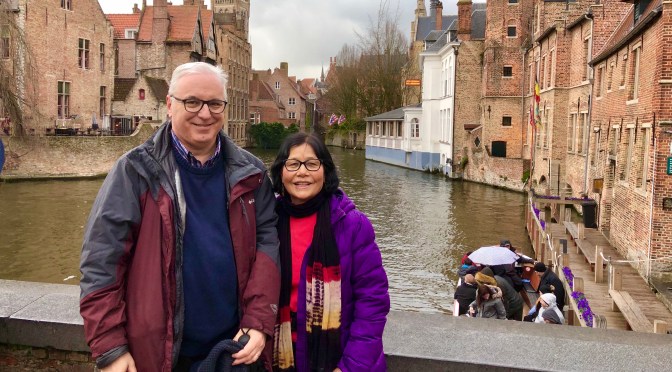
Use local experts. If you’re heading someplace where travel is relatively simple, you can probably plan and book everything yourself. Dozens of sites offer information about where to visit, stay and eat in, say, London or Toronto. It’s easy even in a place like Bruges, above, where English is widely understood. For more challenging spots, you might want to use a local planner, as I did for China, Vietnam and Romania. Local experts are easy enough to find online, do a great job and generally cost much less than a U.S. company (which may be using these same people as subcontractors). Why pay for the intermediary?
Take advantage of online itineraries. I check the online itineraries of trips from Rick Steves, Odysseys Unlimited and other companies. Then I work with a local company, or on my own, to plan the trip. I don’t feel guilty about using their information because I am willing to book their trip if their itinerary and price are good. We did this with an excellent South Africa trip from Friendly Planet.
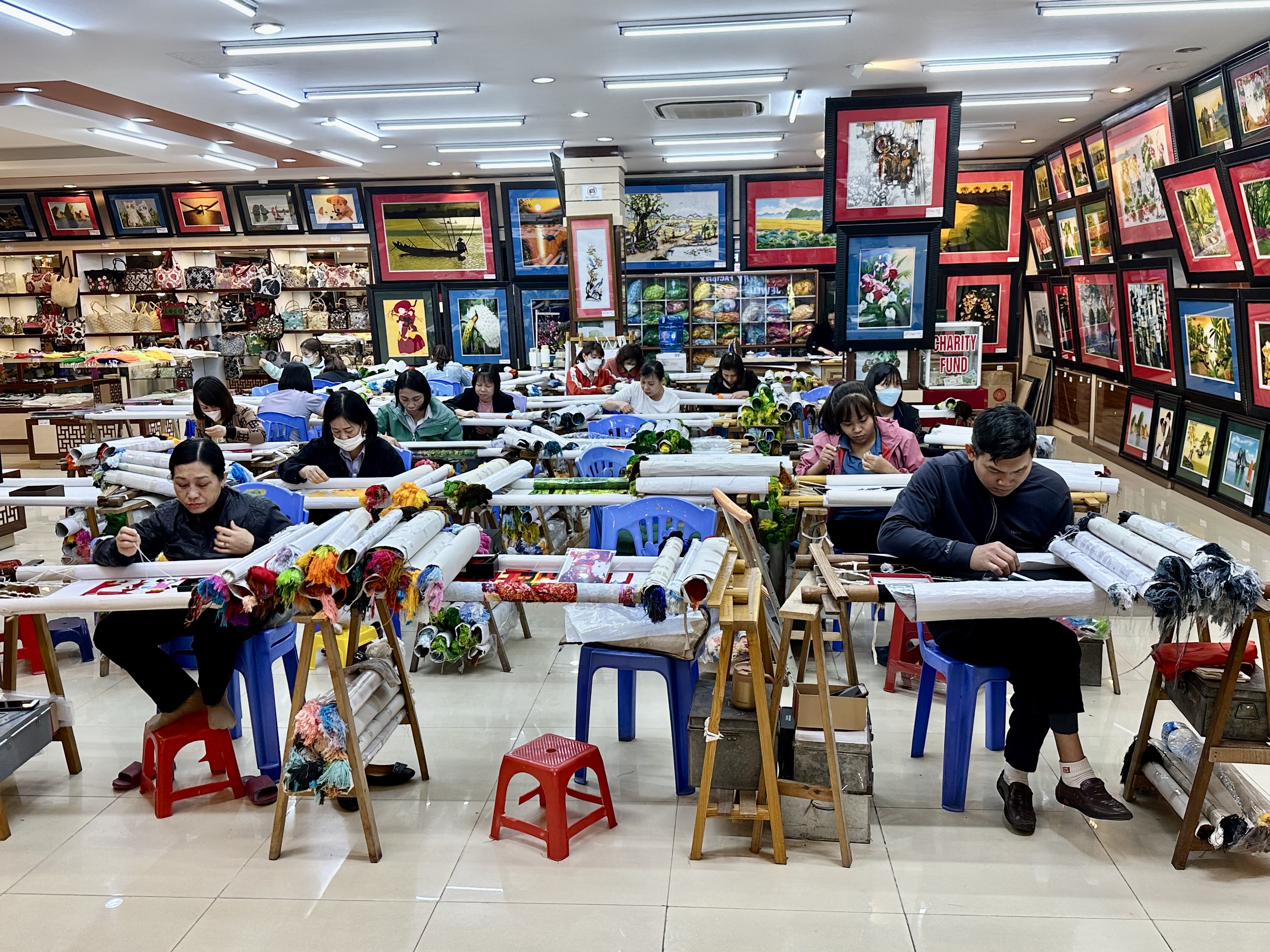
Be wary ofvisits to arts centers. Your planner may suggest visits to local studios specializing in a region’s artistic specialties, such as porcelain or textiles. It can be fascinating to watch these artisans and you’re under no obligation to buy anything from them. But if this is going to make you uncomfortable, spend your time elsewhere. Tell the planner in advance about your preferences and review the itinerary carefully
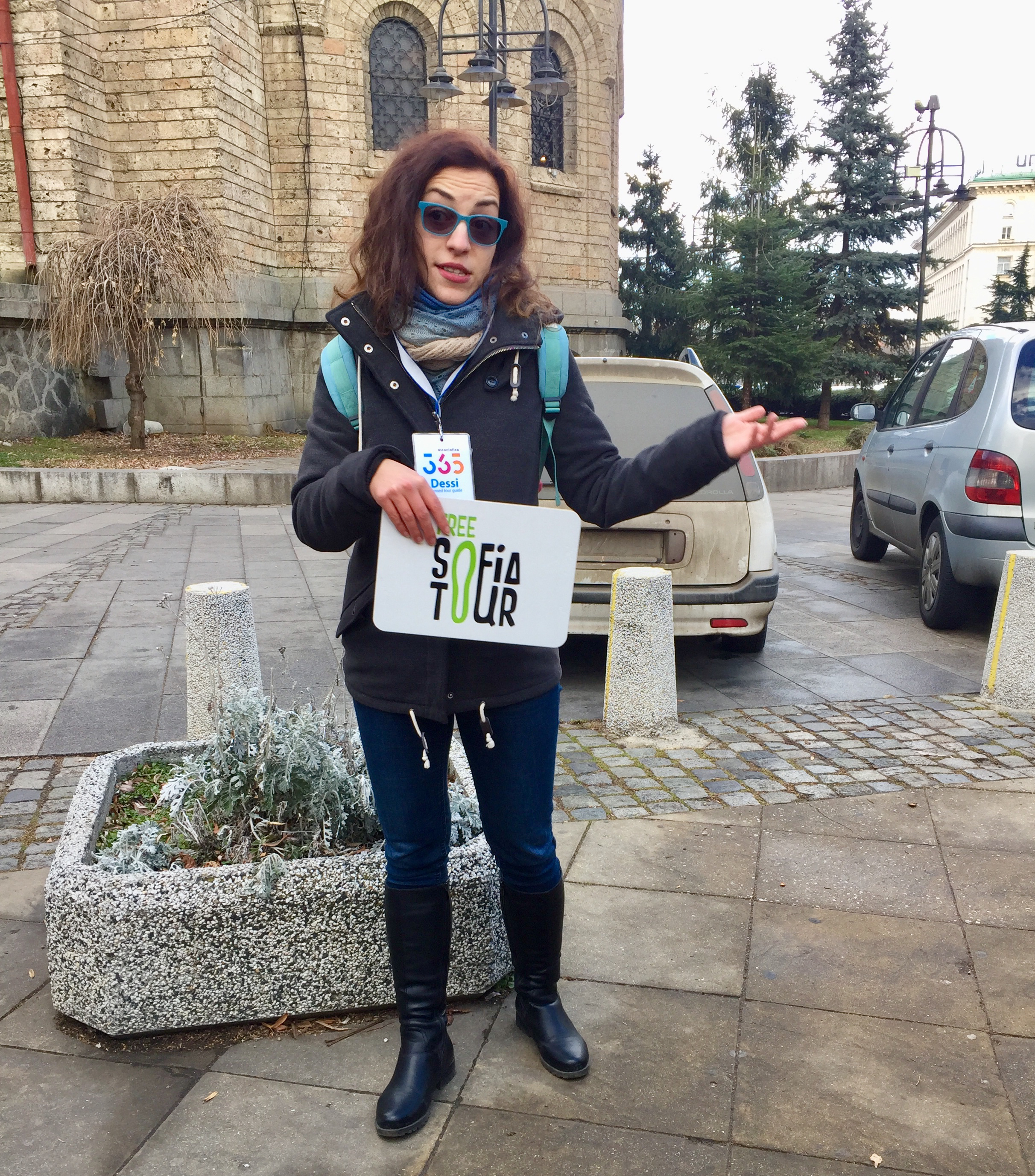
Use free walking tours. As I’ve written previously, I’m a big fan of the free walking tours offered in many popular destinations. The guides work for tips, so are motivated to provide excellent service. (We always tip them generously if they’ve done a good job.) We usually take the tour soon after we arrive. It’s a great way to get the lay of the land and identify local highlights for possible return visits.
Note where walking tours start. If you’re wondering where to stay in a new city, use a trick we learned from our travel heroes, the Senior Nomads: Look for a hotel, Airbnb or hostel near the walking tour’s starting point. This puts you within walking distance of many sights. If these places are too expensive for your budget, you’ll still have a valuable reference point as you consider other locations.
Use Google Maps. You probably use Google Maps already to plan driving trips or find a friend’s house. But it’s more powerful than that. I use it to explore cities on foot and find things I need, like a restaurant in Riga, a winery in Williamette or a tour in Tbilisi. You can also check the weather, find the best times to visit places, create a custom map or download maps for cities where you may have limited Internet access. I stay connected with an international plan from T-Mobile.
Use Google Translate. Online translations have improved dramatically. I now feel much more comfortable traveling in places where I don’t know the local alphabet or language. If I need to communicate, I just speak or type into Google Translate and show the translation. If I can’t understand a local menu or sign, I point my phone camera at the text and read the translation. It’s usually imperfect but good enough.
Charge in local currency. In many countries, cash remains the best way to buy things, whether because of custom (as in Nepal), rapid inflation (Argentina) or limited technology and connectivity. Generally, though, you can pay with a credit card. Be sure to get one that doesn’t add fees every time you use it abroad. If the merchant asks whether you want to process the transaction in dollars or local currency, choose the latter, even though this may seem counterintuitive. The credit card company will convert the charge into dollars at the international exchange rate whereas a transaction made in dollars uses a rate set by local banks or merchants, which is usually worse.
Take advantage of travel credit cards. If you’re a loyal customer of an airline, hotel chain or other travel company, you may already be using their credit card and enjoying the benefits. If you’re less loyal, like me, you can take advantage of introductory offers. United Airlines gave me enough miles to book two long flights after I made some purchases with their Visa card. Before my free year expired, I canceled that card and took advantage of a similar offer from Delta. After Champa and I visit South America next month, we’ll fly home for free.
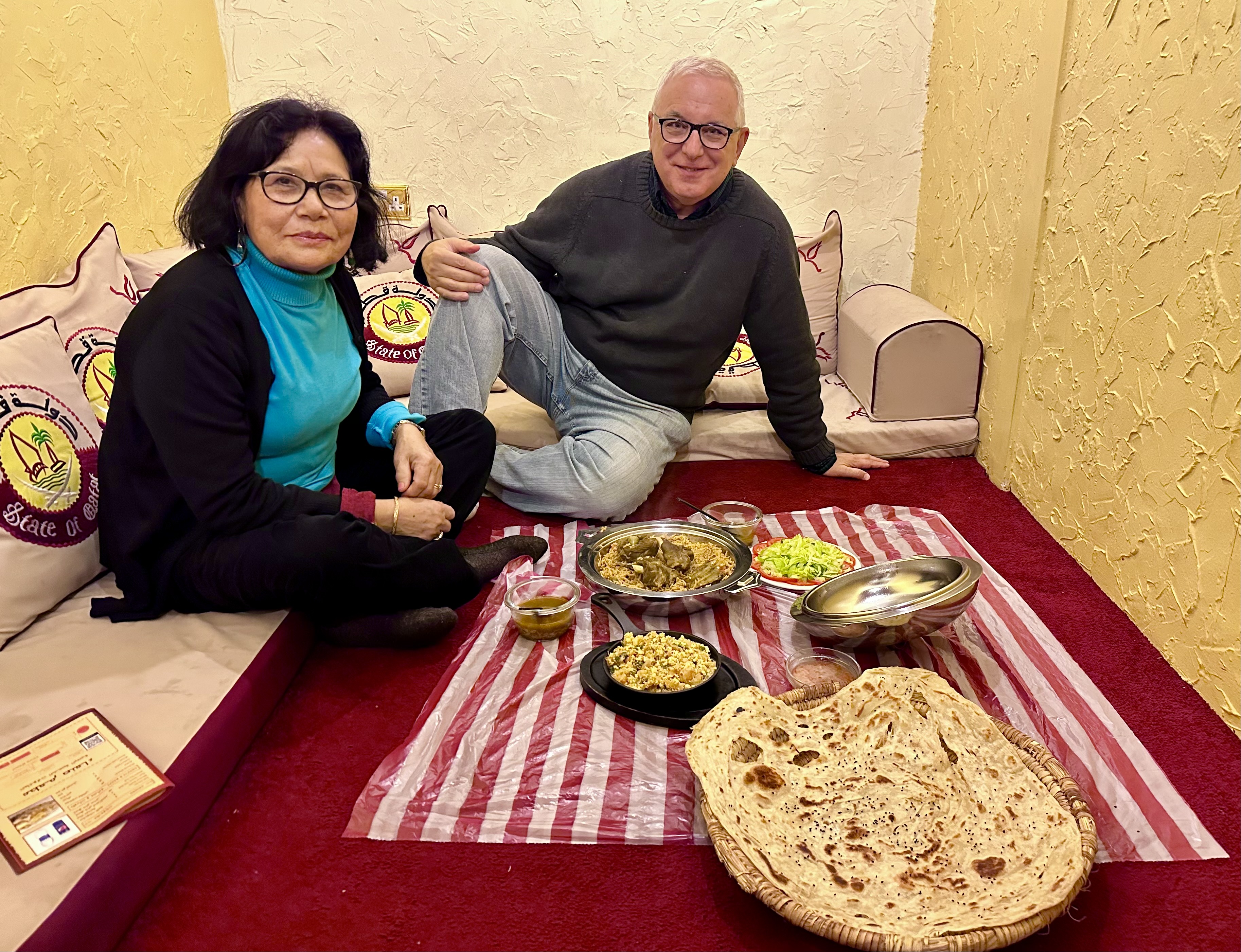
Use taxi apps. Until recently, I was nervous about taxi drivers in foreign countries, wondering whether they would cheat me. Uber and similar services have eased that problem. When we were in Qatar last year, for example, I used Uber to travel from the airport to the hotel, and then around the capital city, Doha. The driver understood where I wanted to go and the price was fixed. Uber doesn’t work everywhere so, if necessary, I download a local app in advance. In Moldova, I used Yandex Go; in Thailand, I used Bolt. You pay with cash with these apps but they work fine and are much less stressful than haggling with a foreign driver.
Think twice before pre-ordering a visa. If you’re traveling to a country that requires a visa, you’ll probably buy it online — a process that’s become much simpler. Countries now send you QR codes or downloadable visas after you submit the paperwork. Sometimes they require you to do this before you travel. If you can wait until you actually arrive, though, that’s often the best option. It’s usually quick and you’ll avoid paying the fees, which can be substantial, until you’re sure your plans haven’t changed. Check online beforehand and see what other travelers suggest.
Buy a luggage scale. Everyone has their favorite travel device: a pillow, a cosmetics kit or something else. Mine is the small hand-held luggage scale I use to weigh suitcases before heading to the airport. It shows the weight in both pounds and kilograms. No longer do I approach airline counters wondering whether my bags are too heavy and subject to hefty fees
I know these tips address only some of the many questions you may have as a traveler, but I hope you found them helpful. If you have tips of your own, please share them here for me and others to use.
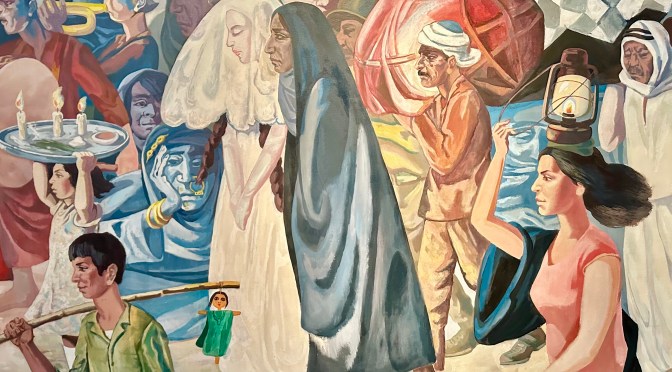
Have you ever thought of Baghdad as a “city of peace” and “a miracle”?
Me neither, but that’s how it was described in an exhibit we visited recently — not in Iraq, but at the National Museum of Qatar.
Several of the exhibits there reminded me that people around the world see things very differently than we do in the United States, regardless of who is “right.” Another one highlighted the collapse of the global pearling industry, which was devastating to Qatar but unknown to me. An exhibit about the “Ramadan Blockade” described how Qatar was blockaded by several neighbors a few years ago. I barely remembered that happening.
The museum, which opened in 2019 with a design evocative of a desert rose, wasn’t the only one in Doha that made me think in new ways. Across town, at the Museum of Islamic Art, an exhibit examined how Lawrence of Arabia and other films have contributed to Western misunderstanding of the Arab world. Another gallery showed how modernity has brought prosperity to Islamic nations while upending local traditions.
Both museums featured stunning architecture and beautiful exhibits. Neither was especially political; on the contrary, both were designed to appeal to broad international audiences. Inevitably, though, they reflected the perspective of a society that, for all of its wealth and rapid modernization, still differs from our own.
This is why I love to travel. It challenges my assumptions and broadens my perspective, no matter where we go.
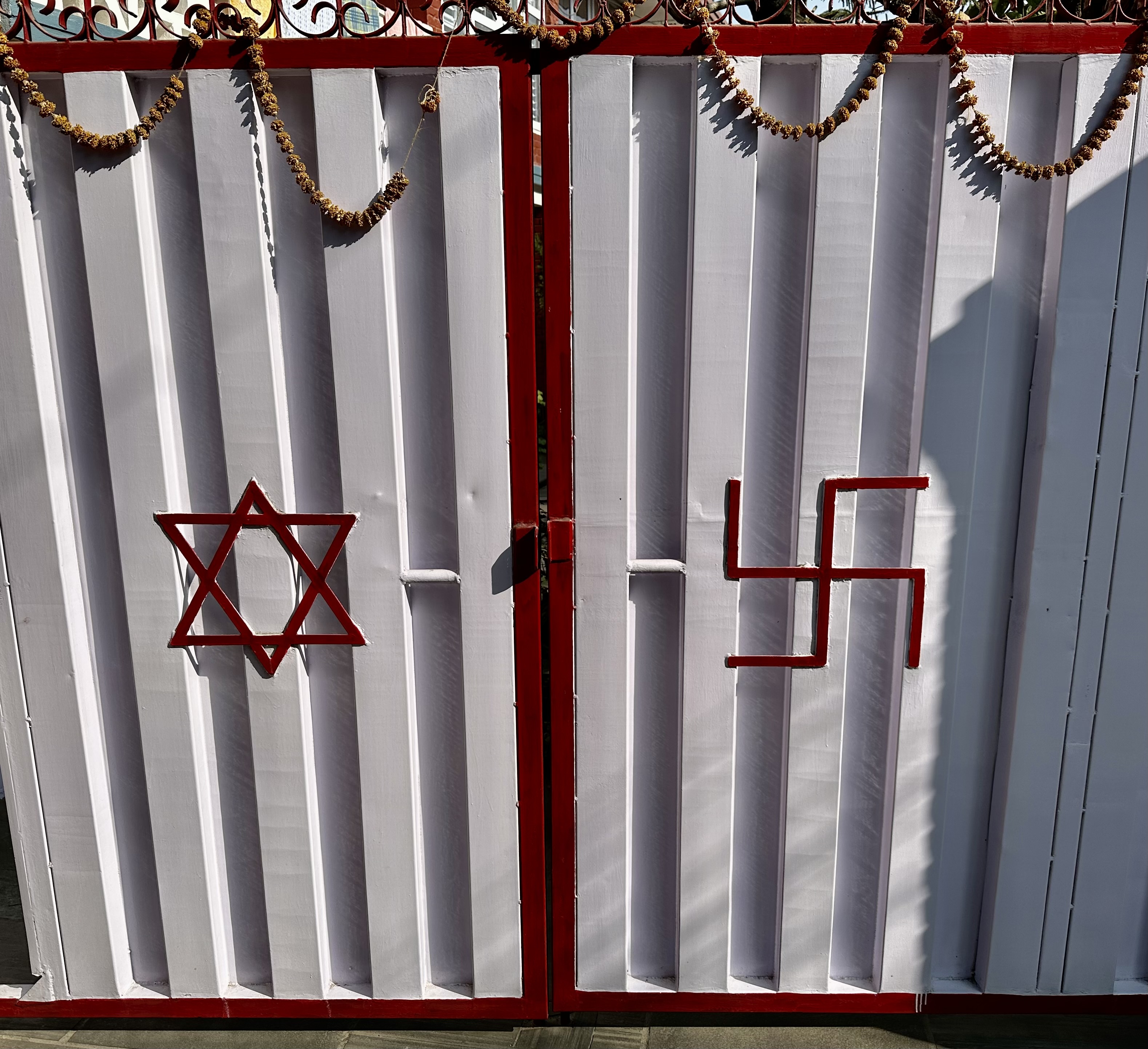
Shortly before we flew to Qatar, for example, we had lunch at the Kathmandu home of two old friends. Here’s what I saw on the gate outside their house:
If you’re startled to see a swastika displayed so proudly, much less beside a Star of David, think about your own vantage point. Swastikas were sacred symbols in Hinduism long before they were linked to Hitler. The six-pointed star, which we associate with Judaism, is also a Hindu symbol. Both symbols are common in Nepal and have nothing to do with Nazism or Judaism, at least in the local context.
Or consider this statue we saw in Ilam, Champa’s home town. It honors Ratna Bantawa, a local Communist leader who opposed Nepal’s former king. Ratna and his brother were denounced as terrorists and killed for their activities. Today Ratna’s memory is celebrated. There’s a road named after him. Communists now play a prominent role in Nepali politics even as “communist” remains an epithet in our own country.
My point here isn’t to debate Iraqi history or communism, just to note how travel changes our perceptions. This latest trip reminded me of something I wrote several years ago after returning to Moldova from a trip to Bulgaria and Romania: “One of the things for which I’m most grateful about serving in the Peace Corps is how it’s made me less fearful about traveling to places that seem exotic or dangerous to some Americans even though they’re actually safe, beautiful, fascinating and cheap.”
As I wrote then, “you hardly need to have served abroad to expand your horizons a bit. … There’s a big world waiting beyond the American comfort zone” for those of us fortunate enough to be able to travel, a privilege the two of us never take for granted.
That big, mysterious, fascinating world is still there and still waiting. Now that the pandemic has eased, I hope more Americans will explore it, as we hope to keep doing ourselves.
We just returned from a trip to Wilmington, N.C. And from the Georgia coast. And from Philadelphia, San Francisco and the Maryland shore.
After more than two years of a pandemic and my six months of cancer treatment, we’ve begun traveling again regularly. I’d been busy working with several nonprofit groups, and Champa with her art and gardening, but we missed the road.
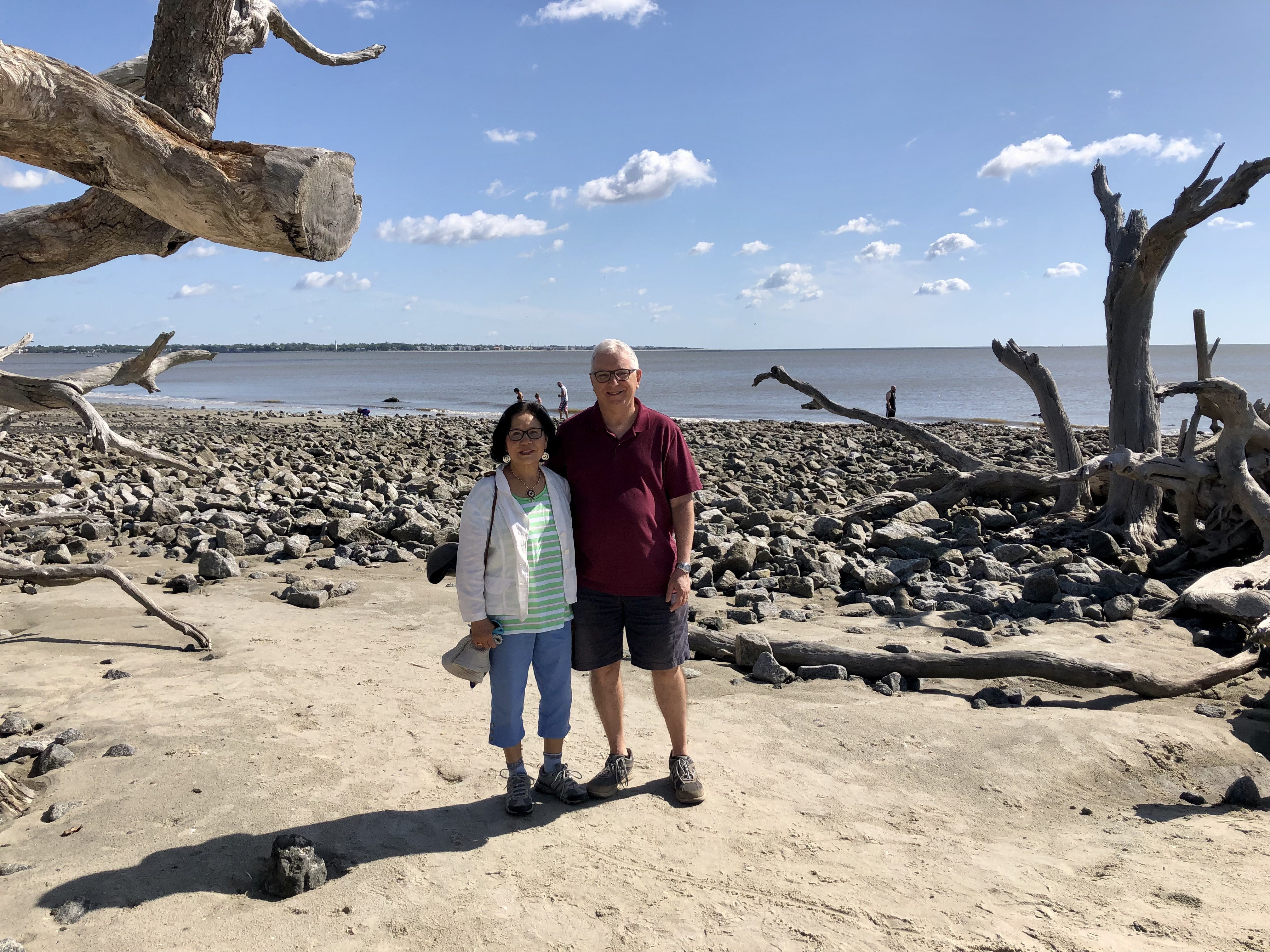
We began with a drive south to the Golden Isles in Georgia, staying near the St. Simons lighthouse and exploring sights such as this driftwood beach on neighboring Jekyll Island. On the way home, we stopped in two of our favorite cities, Savannah and Charleston.
In Philadelphia, we visited with our son and his family and survived several boxing matches on his new virtual reality system.
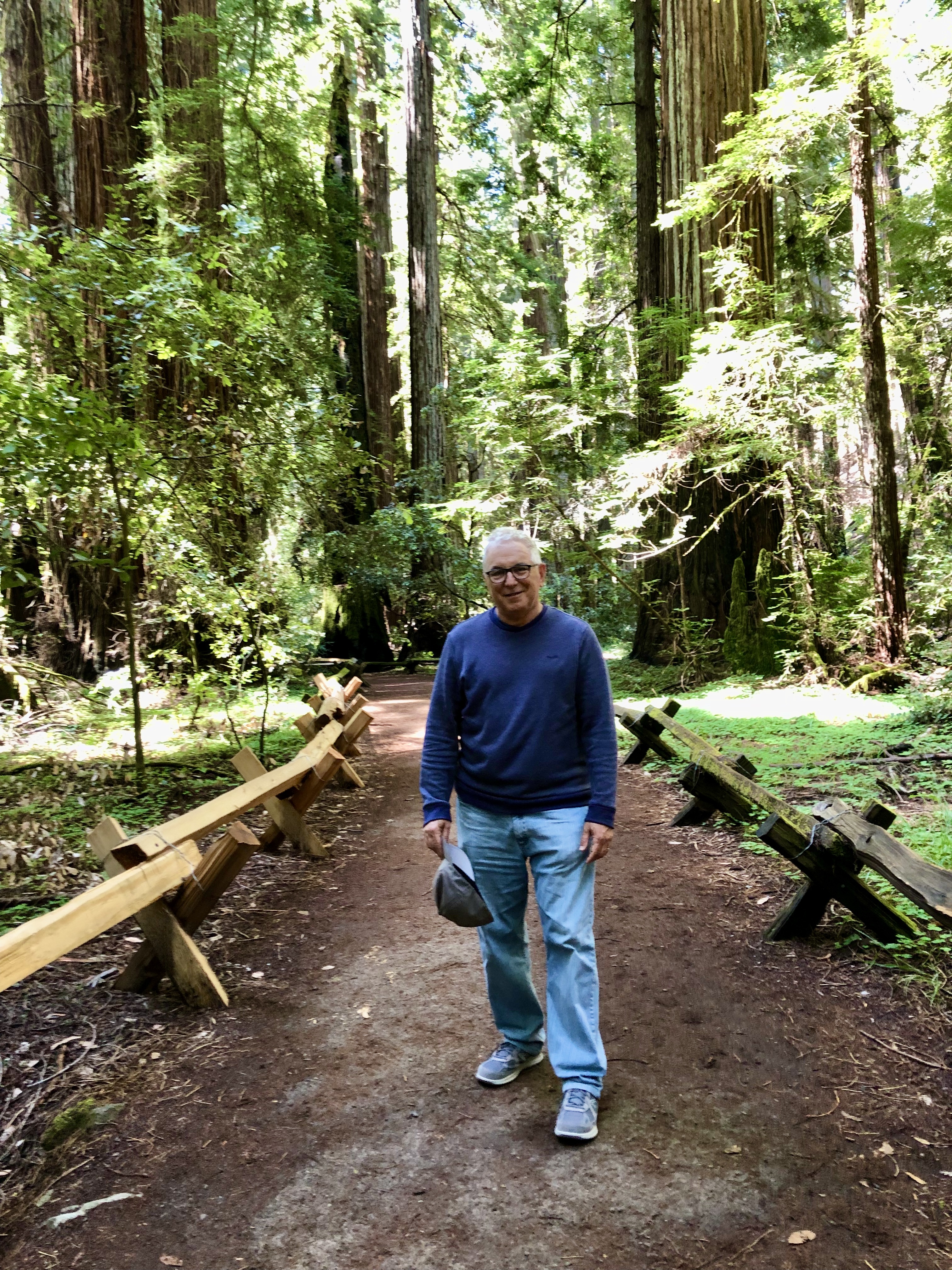
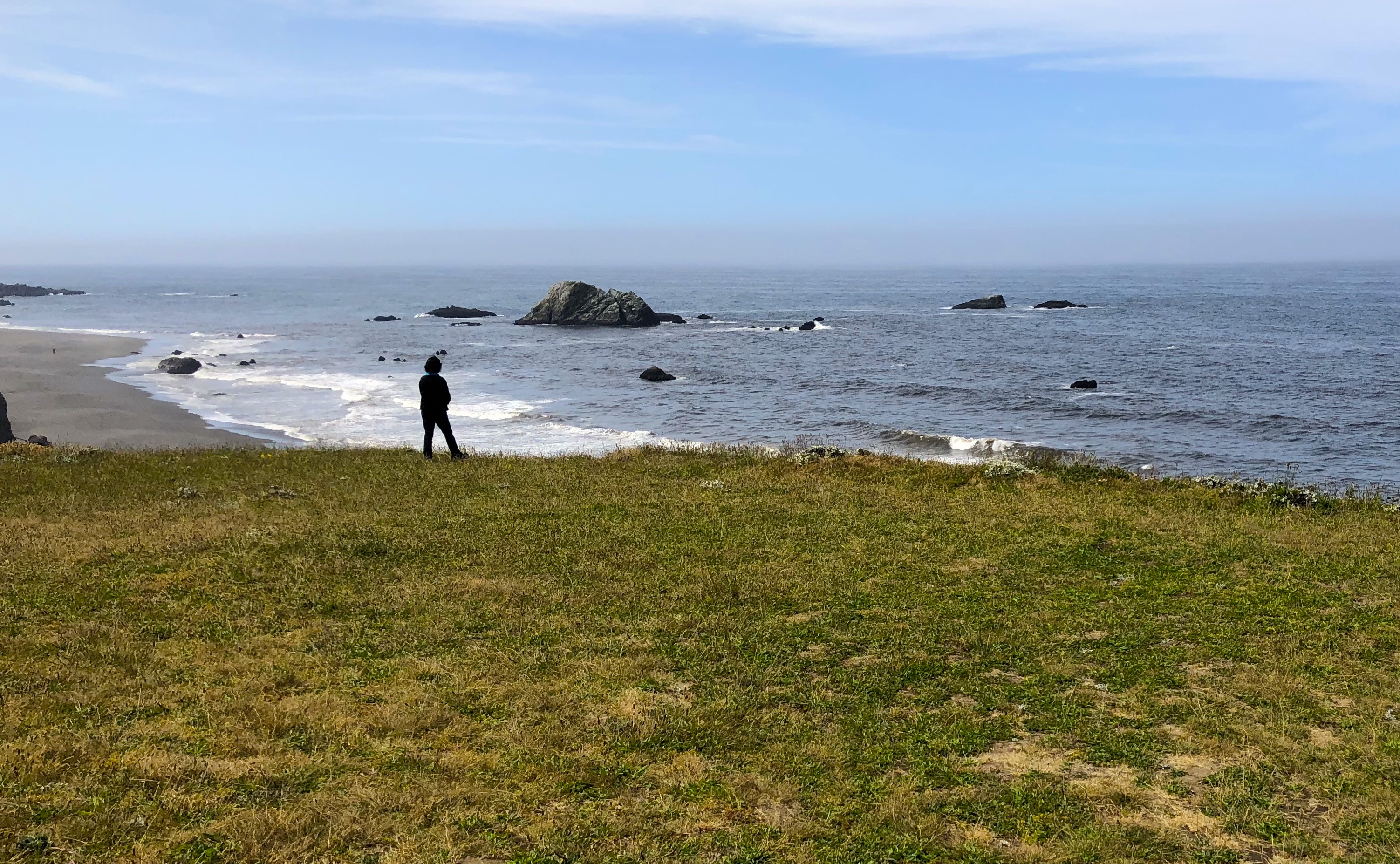
In the San Francisco Bay area, we visited family and friends, then headed north to visit a winery and hike through beautiful places such as this redwood forest and Sonoma Coast State Park.
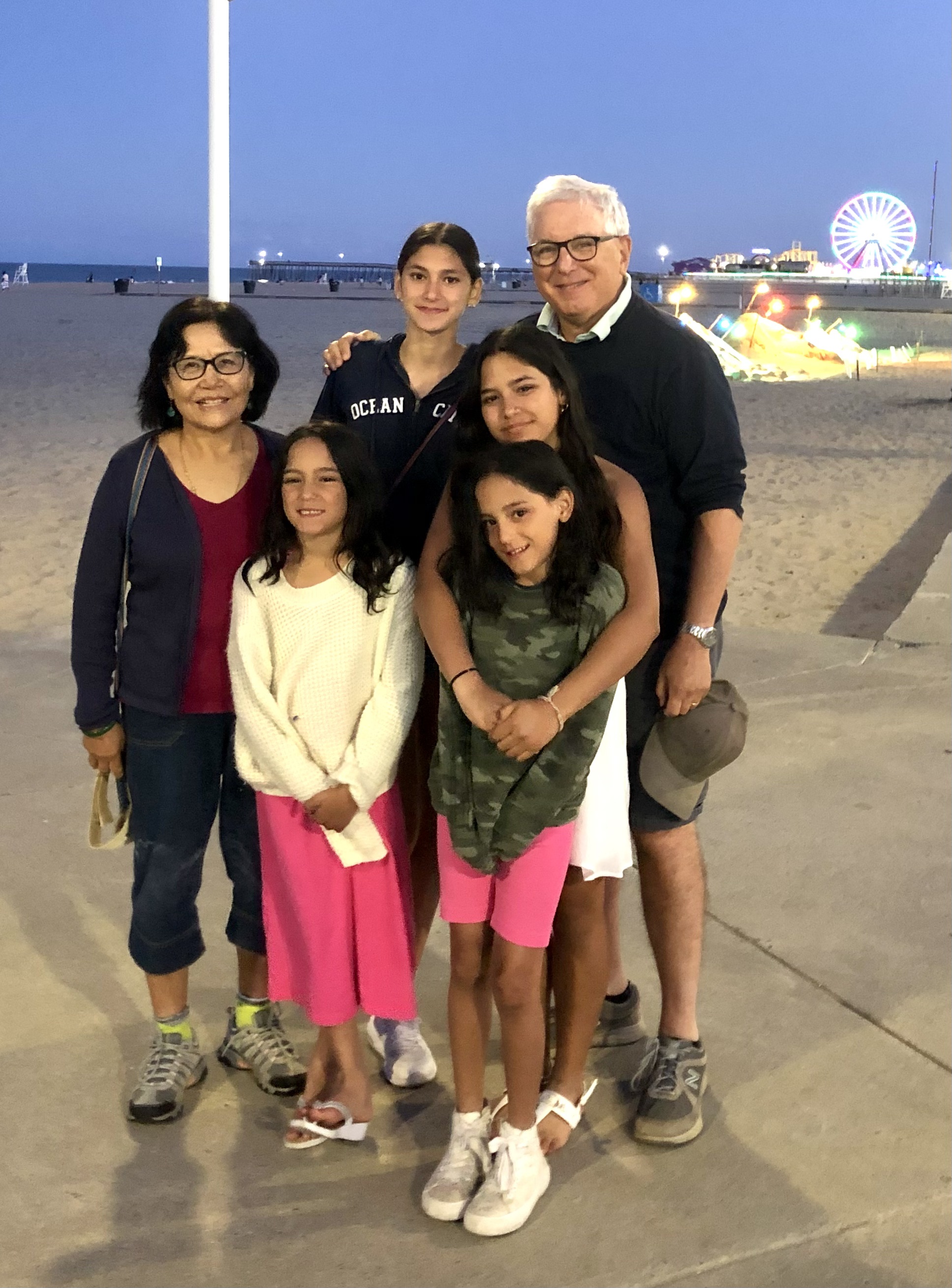
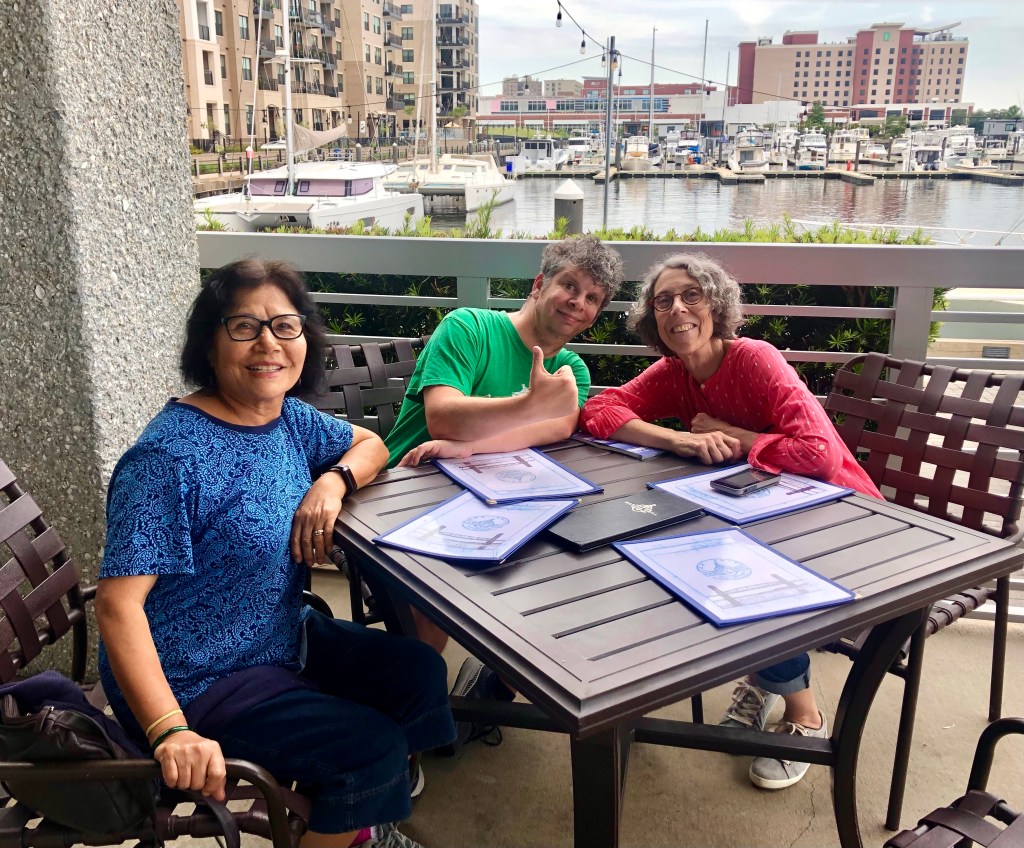
At the Maryland shore, we stayed at a condo in Ocean City, together with our Philadelphia family, and visited in nearby Onancock, Va., with our friend Andrea, who served with us in Peace Corps Moldova.
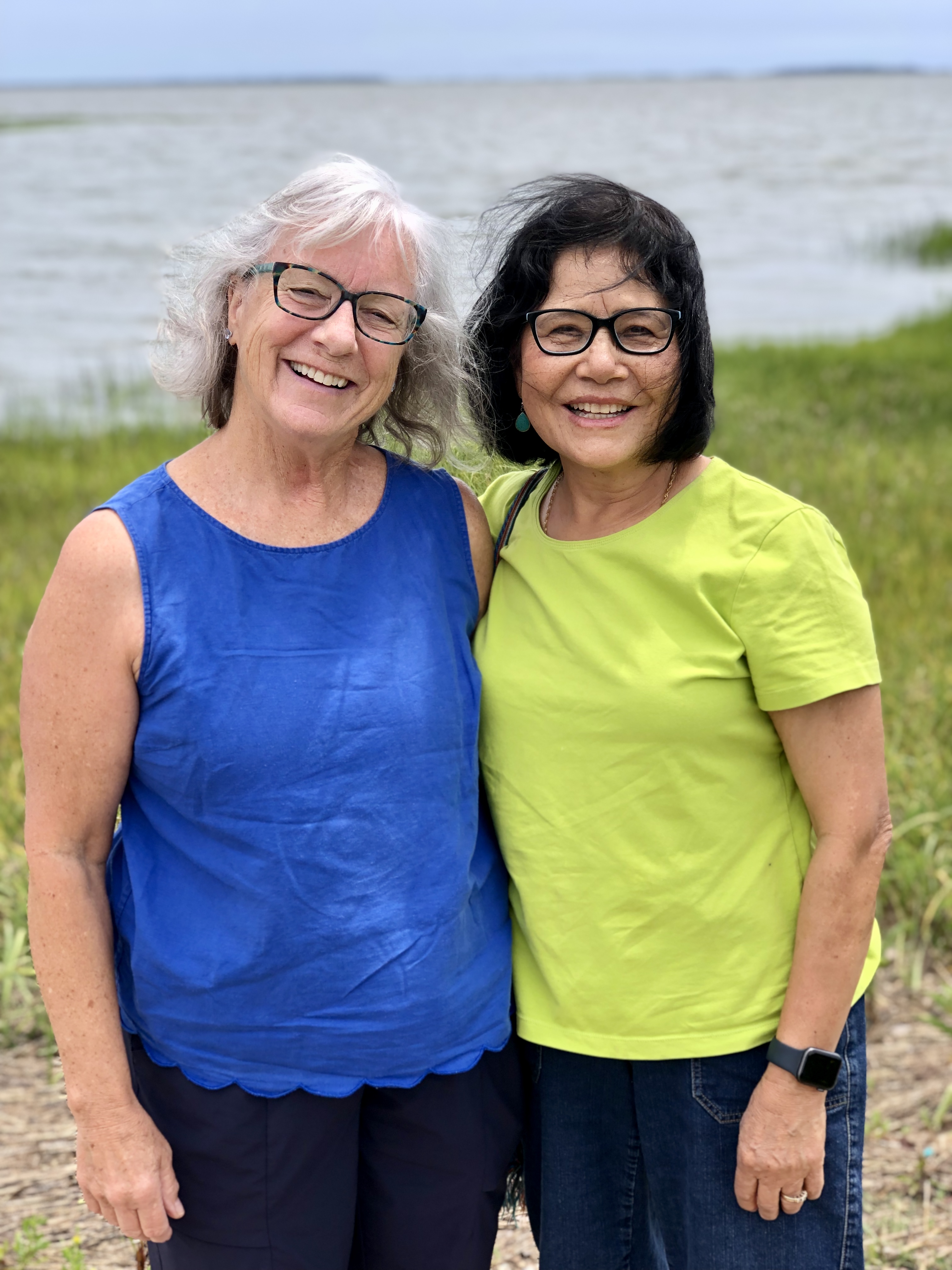
Most recently, we hung out in Wilmington with two long-time friends. They’re less than three hours from Durham but, like so many others, felt much further away during the pandemic.
What’s next? We’re planning a driving trip to Chicago, with several stops along the way, and an Alaskan adventure. After that, we hope to start venturing abroad again.
We know it’s a privilege to pursue our travel passion but we’ve been reminded over the past two years how unpredictable life is. We want to embrace it while we can. As I wrote near the end of our Peace Corps service in 2018, and feel even more strongly now, “I expect to remain ‘not exactly retired’ after 65 but don’t really know what will happen next. I am eager to be surprised anew.”
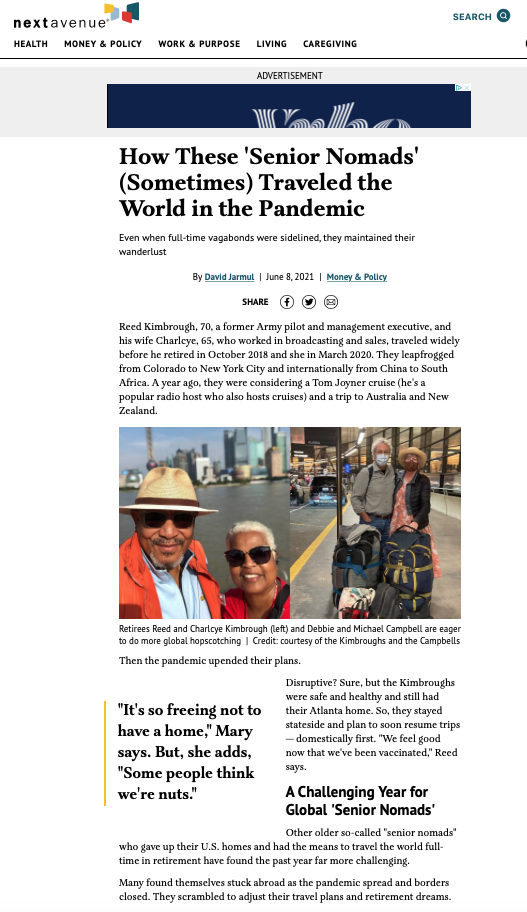
Many of these older vagabonds have been traveling for years. Debbie and Michael Campbell have a blog (and more recent book) that inspired Champa and me when we were considering our own “not exactly retired” journey. We chose a different path but share their sense of adventure.
The first part of the article follows below. The full article is online at Next Avenue, which is part of the PBS system.
Despite being sidelined by the pandemic for more than a year, my travels are still helping me make sense of the world.
When President Biden said a few days ago that the systematic murder of ethnic Armenians during World War One was indeed a genocide, I knew he was telling the truth despite Turkey’s ongoing denials. Champa and I visited Armenia in 2017 and saw its memorials with our own eyes. Our tour guide in Vagharshapat, above, was among several Armenians who told us what happened.
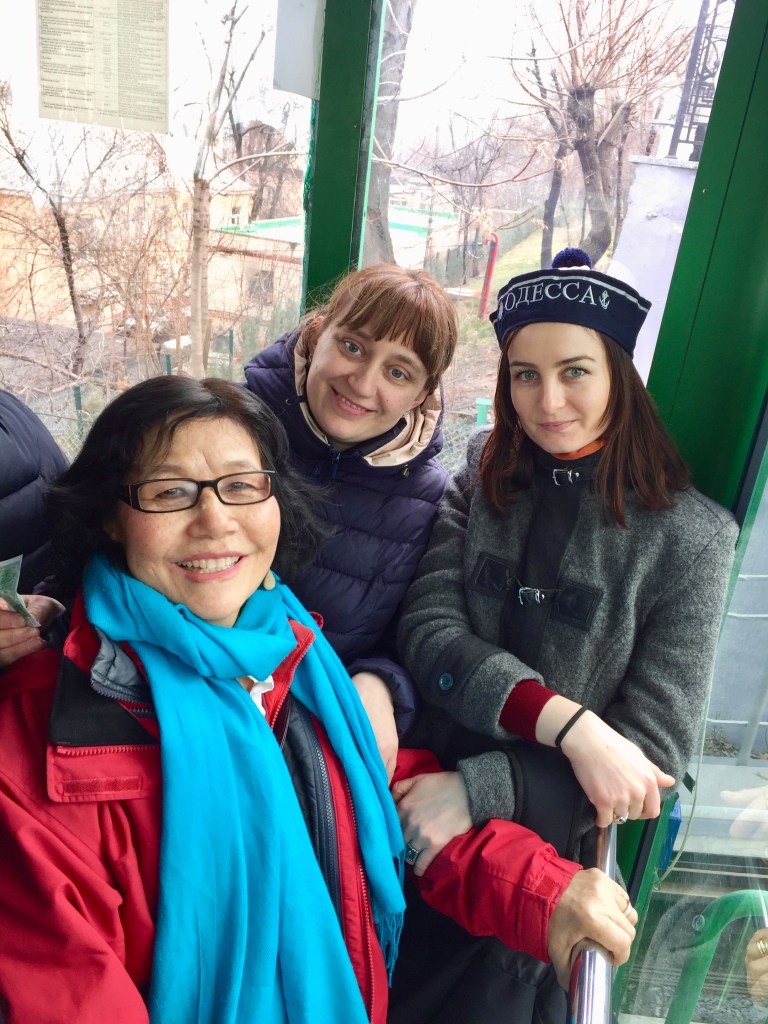
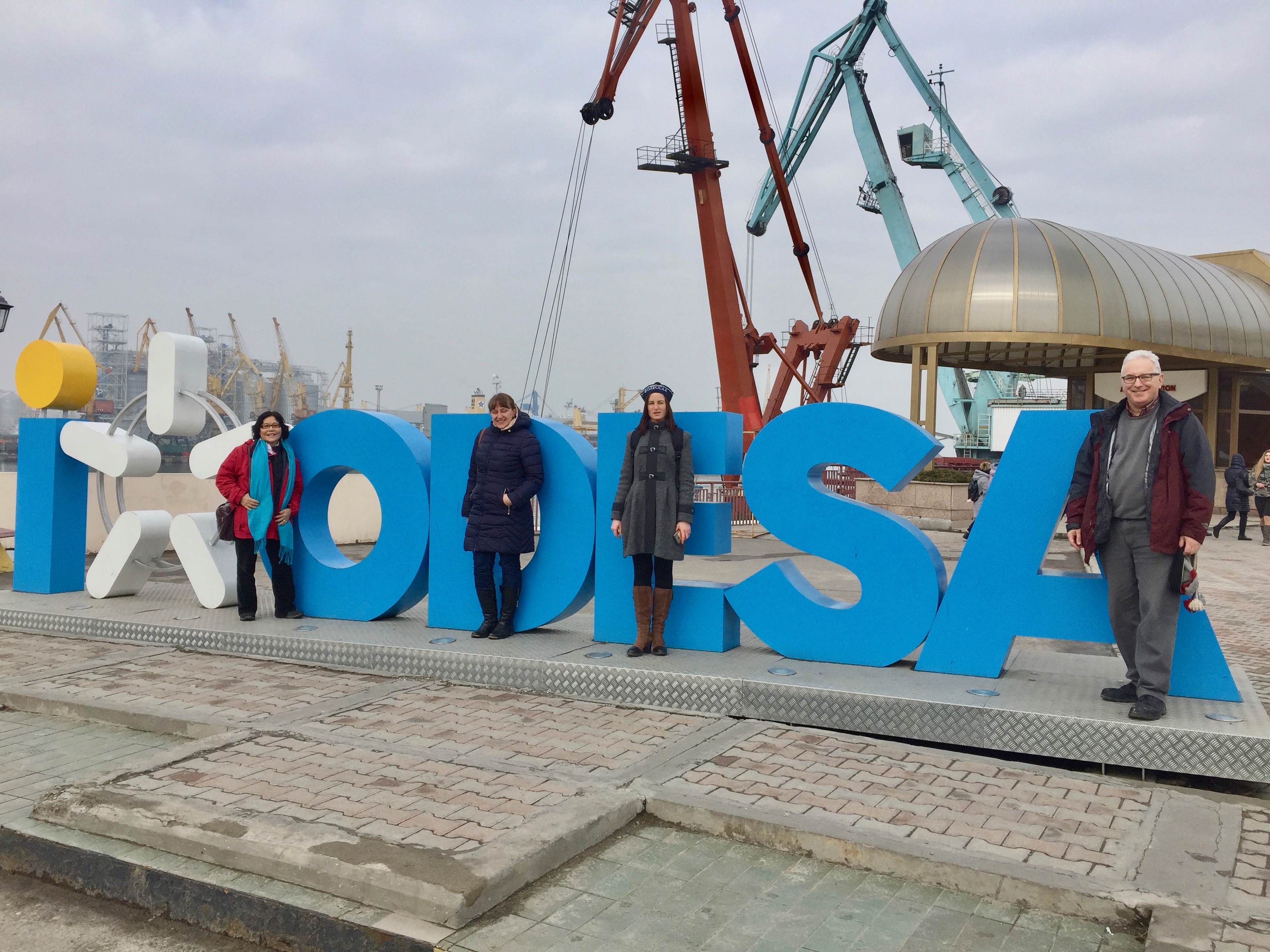
Similarly, as I’ve watched Vladimir Putin move Russian troops to the Ukranian border recently, stirring up conflict again, I’ve thought back to another trip. Champa and I visited Ukraine briefly, touring Odessa with two members of our Peace Corps host family, but we were there long enough to see how it is an independent country with its own flag, currency and history.
We learned from international travel even before joining the Peace Corps. During a 2013 trip to China, we saw more than Tiananmen Square and other tourist sites; we also sensed the rising economic power and national pride that would make China ever-more formidable on the world stage. In Tibet, we witnessed its determination to control ethnic minorities, as it has been doing recently with the Uighurs in Xinjiang. The military music blaring near our hotel in Lhasa was clearly meant to send a message to the local Tibetans, not us.
Traveling has provided insight into our own country as well. We learned about immigration while driving along the southern border, such as at this checkpost near El Paso, and about water shortages in the West, as at this dry lakebed in San Luis Obispo. The storefront we passed in a Montana town in 2015 was a harbinger of the anger that helped propel Donald Trump to the White House a year later.
People travel in many ways and for many reasons, from spa holidays to shopping, and Champa and I have had our share of trips just for fun, but we’ve most loved exploring the unknown. We know how fortunate we have been to have all of these opportunities.
As we look beyond the pandemic to future adventures, we yearn more than anything to learn again about other cultures. When we watch the news, we want to be able to say “I’ve been there” and maybe even “I know something about that place.”
The sidelines have been a welcome safe haven but there’s no substitute for getting onto the field and making contact.
Older folks who love to travel have been having a tough time since the pandemic started.
Some have been scrambling to deal with canceled airline tickets, visa extensions and medical insurance. Others have expired passports and are waiting with 1.7 million other Americans for the State Department to work through a backlog of renewals. Still others are waiting for their stimulus payments or wondering whether the countries they hope to visit will even allow them to enter.
From one of the Facebook groups
All know they are at higher risk for coronavirus because of their age and any complicating conditions.
More than 413,000 retired workers receive Social Security benefits abroad, according to one study. That’s an imperfect marker that includes retirees who move abroad to be with family and for other reasons, but it’s big nonetheless. As I learned during our own “not exactly retired” adventure, there are a lot more seniors on the road than you might guess by counting R.V.s with bumper stickers saying they’re spending their kids’ inheritance.
Two of my favorite bloggers, the Senior Nomads Debbie and Michael Campbell, have spent the past seven years staying in more than 250 Airbnbs in 85 countries. Now their foreign travels have been curtailed.
Debbie and Michael recently started a Facebook group for like-minded seniors. The response amazed me. I couldn’t believe how many older people had similar stories to share. Some sold their homes to travel full-time, or to live abroad for all or part of the year in places like Costa Rica, Portugal or Malaysia. Others have been using long-term Airbnbs or other foreign rentals. Almost all have seen their plans disrupted.
Recent posts on these sites have described retirees “sheltering in place” from Taiwan to Nicaragua. They’ve been locked down in Cyprus, stranded in Chile and cooped up in Croatia. They’ve had cooking classes canceled in Italy and insects swarming in Costa Rica, or are happily riding out the pandemic in Mexico or the Philippines.
Others feel stuck in America, “bored out of my mind” as one person wrote. Another said: “We are close to retirement and this has significantly recalibrated our thinking about the future.” And another: ““My entire future life has been radically altered.”
On the “Senior Nomads” Facebook page, people have amused each other by posting photos of where they were one year ago. They’re also guessing the locations of each other’s travel photos, including one I posted of Champa beside a beautiful church in Armenia, above. (Yes, someone identified it.)
At a moment when the pandemic continues to spread and our country is confronting its ugly history of racism and police violence, I hasten to put all of this in perspective. The problems I’m discussing do not compare with being on a ventilator or having a policeman’s knee on your throat. Even senior travelers with modest means — which describes many of them — are still privileged relative to many other people.
I do hope they will be able to return to the road before long, especially given their medical vulnerability and shorter time horizons. Certainly no industry needs their business more than airlines, hotels and restaurants.
As for Champa and me, we will continue spending the pandemic at home until we consider it safe to travel again. We don’t know when that will be. Maybe soon. Probably not. We have our suitcases ready.
***
Top photo: We visited Ghent, Belgium, during our last trip before the pandemic.
***
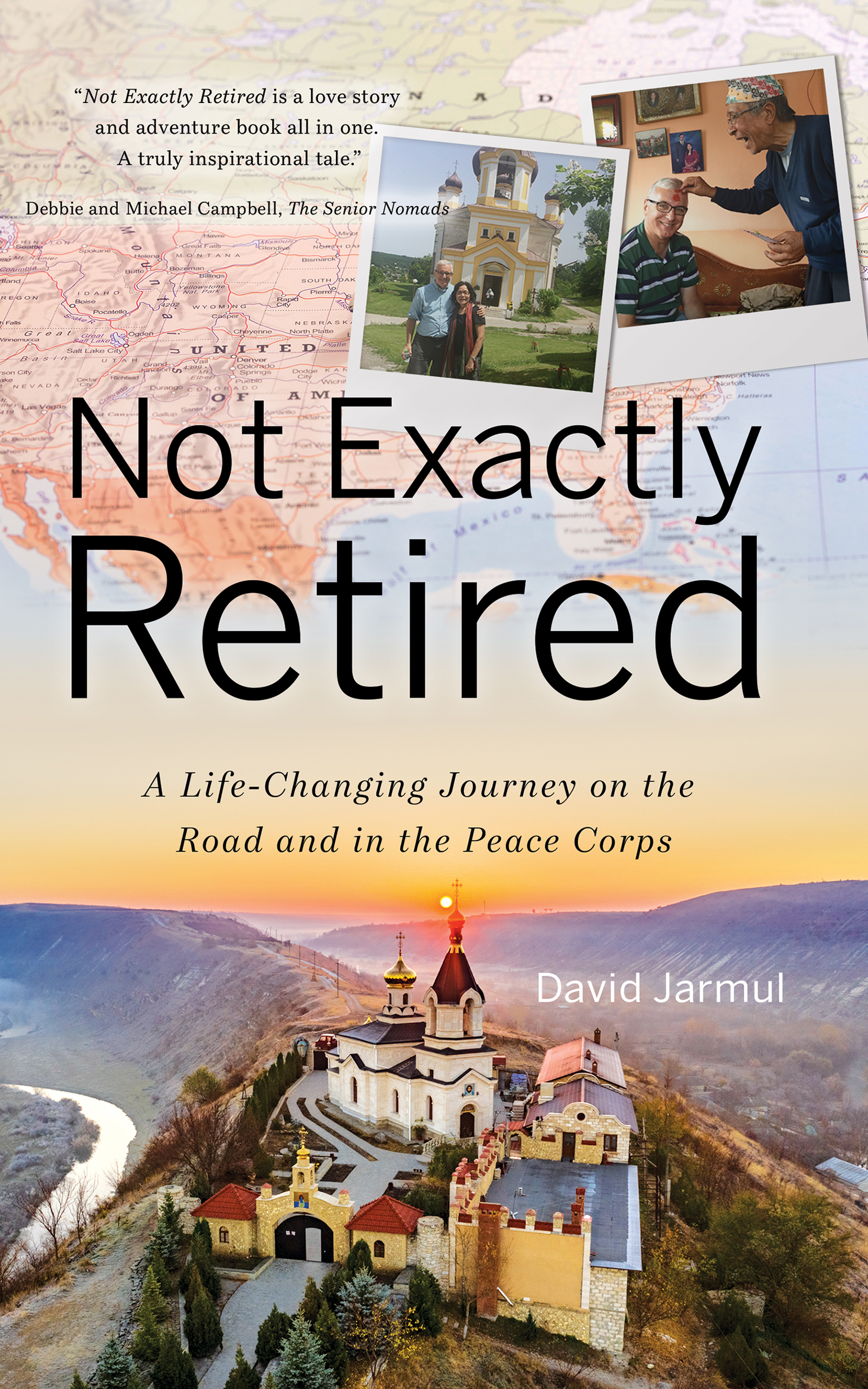
One reviewer calls it “a love story and adventure book all in one. A truly inspirational tale.” Another says “it shows how adventure can give new meaning to our lives and make them richer.” Visit the book website for Not Exactly Retired: A Life-Changing Journey on the Road and in the Peace Corps.
When Champa and I traveled to Scotland and Ireland three weeks ago, they felt a lot more like home than did Armenia, Ukraine and other places we visited while serving as Peace Corps Volunteers in Moldova.
At dinner on our first night in Dublin, the pub menu featured burgers and the accents sounded like Boston. Our waitress asked where we were from and, after hearing we live in North Carolina, she said, “oh, my college roommate came from Raleigh.”
In Edinburgh, the dining options near our Airbnb included a Pizza Hut and a Five Guys burger joint along with haggis or fish and chips.
We couldn’t even escape President Trump during our trip. He came to Ireland shortly after us and we saw security patrols near his golf course.
For the two of us, Scotland and Ireland were the flip side of what we experienced on the opposite side of Europe. When we took a free walking tour through the historic streets of Romania’s capital, Bucharest, we were the only Americans. In the Bulgarian capital, Sofia, only one other American joined us and 23 tourists from Bulgaria, Canada, Italy, Japan, Latvia, Netherlands and Spain. Even in Tbilisi, the Georgian capital that’s been gaining buzz as a tourist hot spot, we felt alone. As I wrote then, a big world awaits beyond the American comfort zone.
Scotland and Ireland didn’t feel exotic to us, in other words, but we loved both of them.
We went first to Scotland, to hang out with some of our Nepalese relatives (top photo) who took the train up from their home in England. Together we toured Edinburgh Castle, the National Museum of Scotland, the Royal Mile and more. We discovered a Nepalese garden at the botanic gardens and a nice coffee shop at the Port of Leith. After our relatives left, Champa and I hiked atop a local peak, Arthur’s Seat, and had dinner with an old friend and his wife. Then we took a two-day tour of the highlands, visiting Loch Ness and other sites. We were entranced by the striking bogs, heather and thistles despite pouring rain.
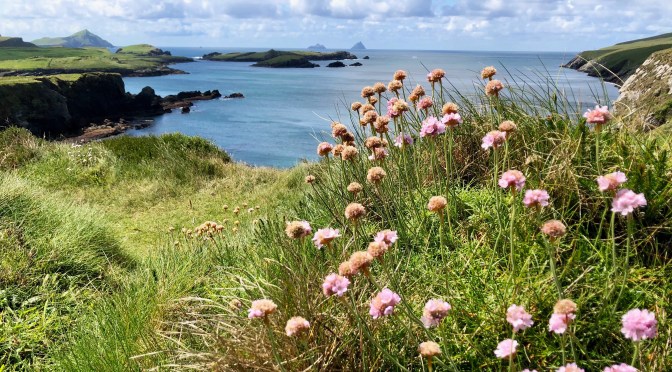
Then it was on to Ireland. Our tour there traveled west from Dublin to Galway and then down the Atlantic coast. Using Killarney as a base, we explored the Cliffs of Moher, the Dingle Peninsula, the Ring of Kerry and other landmarks. Then we turned east, stopping at Blarney Castle to, yes, kiss the Blarney Stone, before continuing on to Kilkenny and Dublin. On our first night back in the capital, we spent hours watching the Irish Celts play traditional music at Darkey Kelly’s pub. Finally, on our last day, we walked throughout the city before returning exhausted to our hotel near Christ Church Cathedral, ready to fly home the next morning.
As always, we were surprised by some of what we saw, such as a sheep-herding demonstration in Kerry that you can glimpse below in a brief video I produced on my phone the same evening (also available on YouTube). We learned a lot about the histories of Scotland and Ireland, especially their struggles with England. We gained new perspective on our many American friends whose families emigrated from there. Their ancestors escaped oppression and found a better life, much like my own or, for that matter, the Lyft driver from Aleppo, Syria, who drove us to the airport.
In both Scotland and Ireland, we traveled in small groups with Rabbie’s Tours, which provided excellent guides and organization.
We were reminded throughout our time there that you can have a wonderful trip outside the United States even if you don’t stretch your comfort zone much. Just like other destinations familiar to Americans, Scotland and Ireland let you experience something different while still feeling at home. They’re comfortably foreign.
Champa and I have taken several interesting trips to neighboring countries while serving as Peace Corps Volunteers in Moldova. Now that we’re nearly finished, which places would we recommend the most?
We enjoyed all of these places. But if you have limited time and resources, here’s our Top Three for your consideration:
The Transylvania region of Romania
Tbilisi, Georgia
Bratislava, Slovakia
We also recommend a visit to Moldova!
Transylvaniawas our favorite spot. Many Americans associate it mainly with Dracula, thefictional vampire inspired by the real-life Vlad Țepeș. But Transylvania is one of Europe’s most beautiful and undiscovered tourist spots. It offers majestic castles (including one named for Dracula), beautiful churches and picturesque cities such as Brașov, Sibiu and Sighișoara. It has nice hotels and restaurants, with architecture reminiscent of Germany and Hungary, whose people settled here. You’re also near Romania’s capital, Bucharest, which is worth a visit, too. Prices are lower than in most other parts of Europe, people are friendly, the weather is mild and the wine is delicious. What’s not to like?
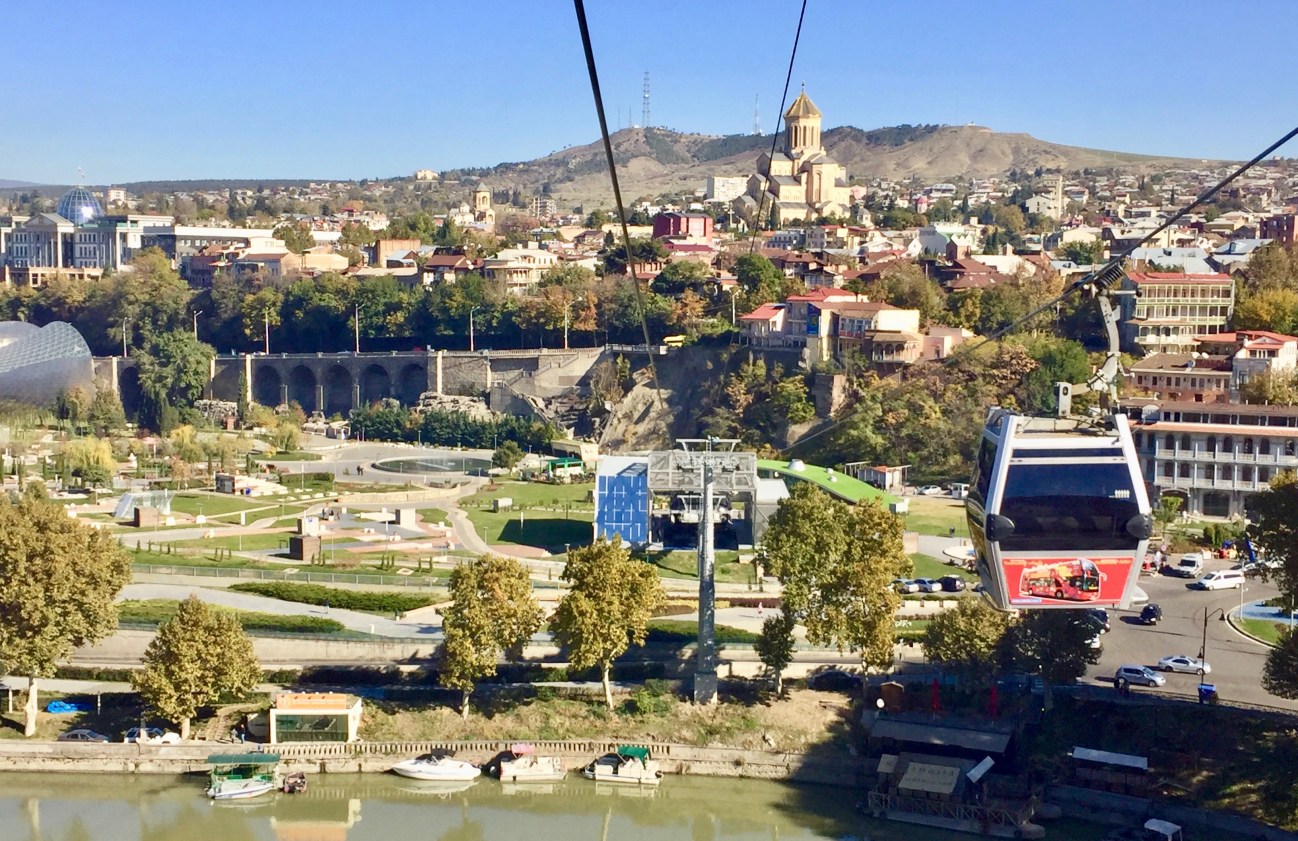
Tbilisiwas called “one of the hottest tourist destinations” last year by The Independent, and for good reason. The Georgian capital, located on the eastern side of the Black Sea, offers distinctive cuisine, interesting sites and rich opportunities for nearby hiking and other outdoor activities. Vogue included it among its “10 Hottest Travel Destinations” and Anthony Bourdain devoted a program to its emerging food scene, including “hangover soup” to recover from a night in the city’s clubs. Don’t miss a visit to the Holy Trinity Cathedral, the gorgeous church overlooking the city, or the nearby monastery in Mtskheta.
Bratislava, the capital of Slovakia, surprised us with its beauty and charm. Like many tourists, we visited it mainly because it was near Vienna and Budapest, which are better known. We loved those cities, too, but Bratislava was where we’d live if we had to choose among them. It has a friendly vibe, lovely places to visit, fun places to eat, a castle atop the city, even a bridge with a restaurant shaped like a UFO. Bratislava is cozier than its better-known neighbor, Prague, but you can happily spend hours or days enjoying its restaurants and shops, or strolling along the Danube. If you prefer a day trip, it’s just one hour by train from Vienna.
We’ve come to love Moldova the most of all. Its travel infrastructure is far behind these other places, but you can spend several enjoyable days or more exploring its wineries, monasteries, countryside and attractions. Moldova offers a variety of adventure sports and outdoor activities, great meals, music and cultural festivals and nightlife that ranges from dance clubs to opera, all for a fraction of what you’d pay in most other European cities. This website provides a nice overview of Moldova’s travel possibilities.
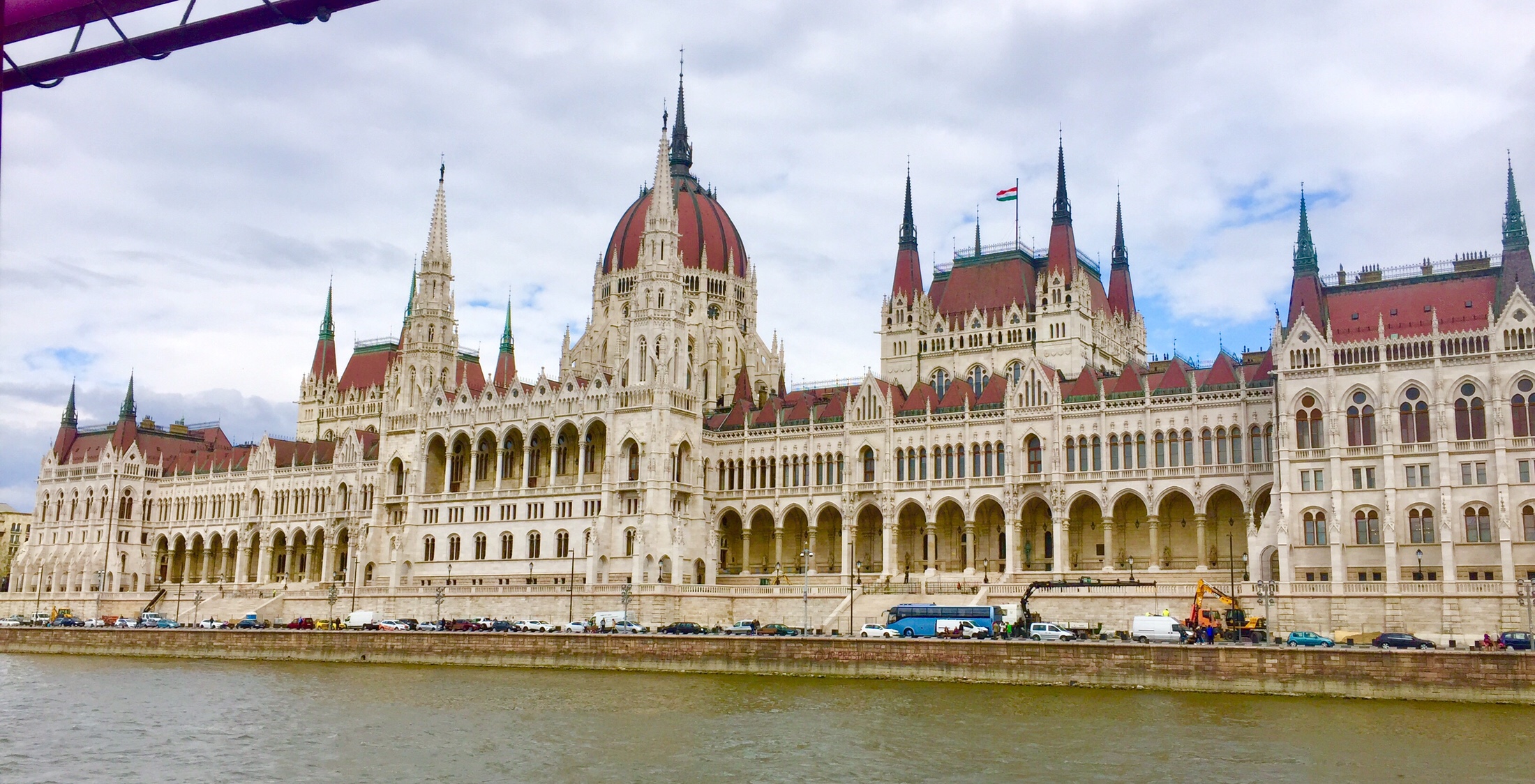
If you prefer to explore the fascinating culture of Armenia, the glorious Rila Monastery of Bulgaria or the famous steps of Odessa instead of our Top Three, well, those are great choices, too, and you can’t go wrong visiting Vienna or Budapest. My main suggestion is simply to give this part of the world a try. As I’ve written previously, too many Americans are missing out on great places here because they never even consider them. We found all of them to be interesting, safe, inexpensive and fun. Maybe you will, too.





















 In Edinburgh, the dining options near our Airbnb included a Pizza Hut and a Five Guys burger joint along with haggis or fish and chips.
 We couldn’t even escape President Trump during our trip. He came to Ireland shortly after us and we saw security patrols near his golf course.
 When we took a free walking tour through the historic streets of Romania’s capital, Bucharest, we were the only Americans. In the Bulgarian capital, Sofia, only one other American joined us and 23 tourists from Bulgaria, Canada, Italy, Japan, Latvia, Netherlands and Spain. Even in Tbilisi, the Georgian capital that’s been gaining buzz as a tourist hot spot, we felt alone. As I
 Then we took a two-day tour of the highlands, visiting Loch Ness and other sites. We were entranced by the striking bogs, heather and thistles despite pouring rain.
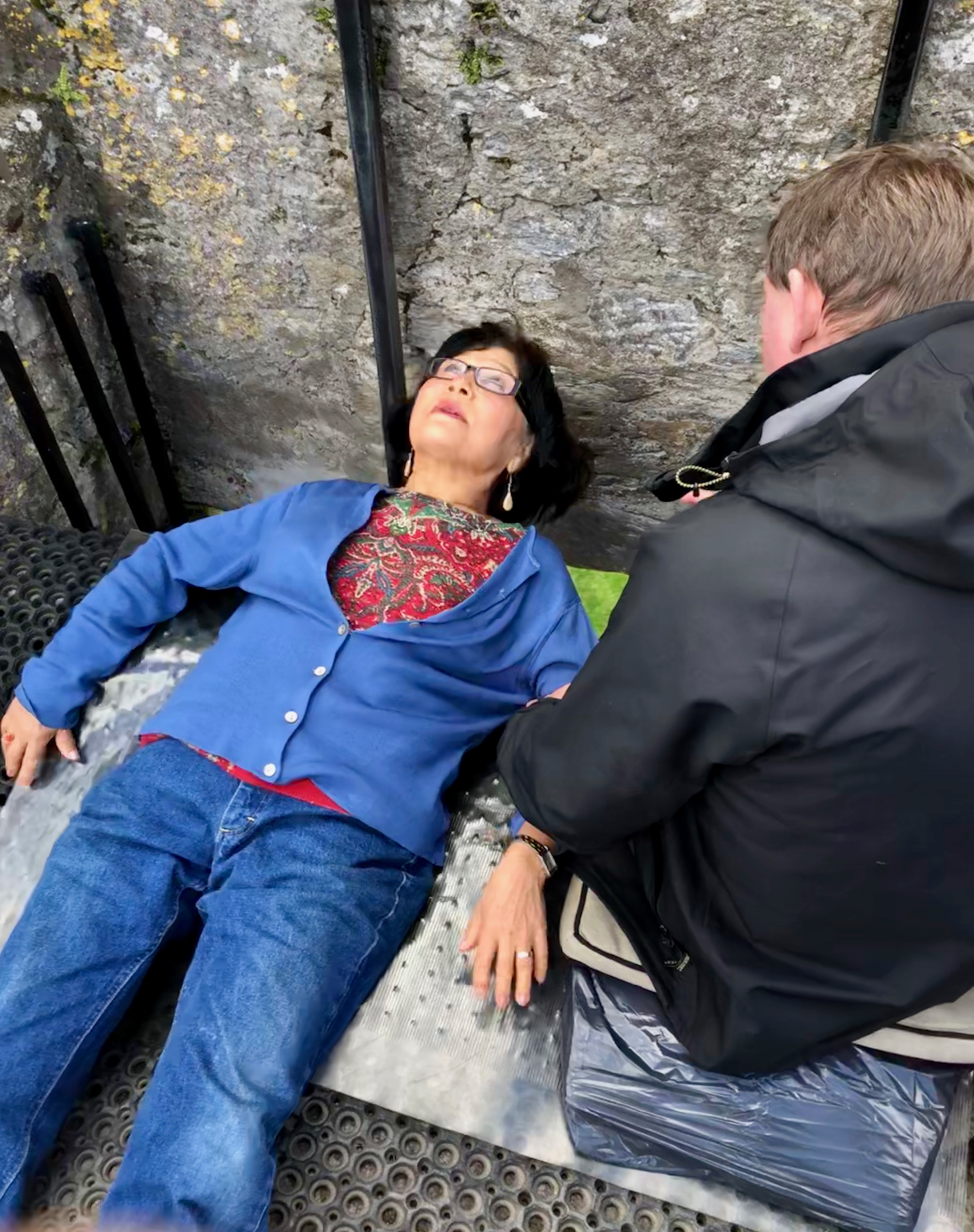 Then we turned east, stopping at Blarney Castle to, yes, kiss the Blarney Stone, before continuing on to Kilkenny and Dublin. On our first night back in the capital, we spent hours watching the Irish Celts play traditional music at Darkey Kelly’s pub. Finally, on our last day, we walked throughout the city before returning exhausted to our hotel near Christ Church Cathedral, ready to fly home the next morning.
 We gained new perspective on our many American friends whose families emigrated from there. Their ancestors escaped oppression and found a better life, much like my own or, for that matter, the Lyft driver from Aleppo, Syria, who drove us to the airport.




 "Not Exactly Retired"