

I’m running at full speed as we approach the finish line for our Peace Corps service in Moldova.
Instead of slowing down and starting to pack, I’ve been tackling projects related to my expertise back home that I’ve wanted to pursue since before we arrived here two years ago.
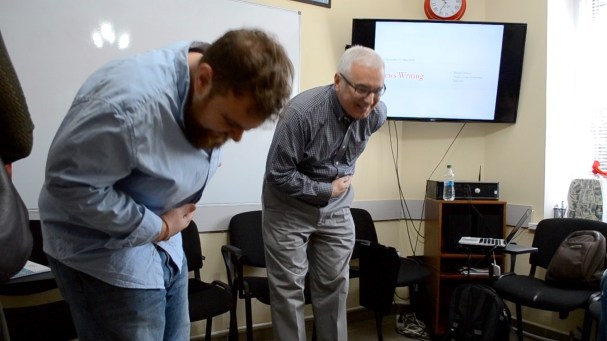
On Saturday, I’ll teach the second of two classes at the American Language Center in Buiucani, Chișinău. I opened the first one, on news writing, this past Saturday with a dramatic staged “fight” and “heart attack,” followed by asking the students to write a short news story about what they just witnessed. (See the video below.) It was a fun way to introduce them to journalistic concepts such as “the 5 W’s” and the “inverted pyramid” approach of opening a news story with the most essential information.
My second class at the center will be about how to write an opinion article that can touch people’s hearts and change their minds.
 In a couple of weeks, I’ll teach a workshop at Moldova State University, discussing with some of their top faculty researchers how they might better explain their work to the public and attract the interest of journalists.
I’ve taught versions of all three sessions many times before and online, training academics and others in the United States how to reach out to citizens and journalists. In recent years, I modified the training to emphasize the importance of using social media to reach audiences directly.
I’m looking forward to discussing all of this here in Moldova, where “research communications” barely exists and “opinion writing” occurs in a very different context.
Simultaneously, I’ve been spending lots of time helping Peace Corps Moldova prepare a big celebration for its 25th anniversary. I’m working with Liuba Chitaev and others on the staff to write scripts, edit videos and pull together a memorable program.
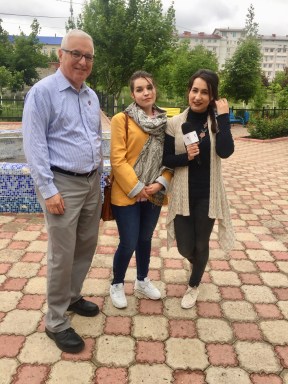 I’ve also worked recently on Orașul Meu, the music video about our host city, Ialoveni, that local singer Laura Bodorin and I produced and released earlier this month. The video has now been viewed more than 7,500 times and shared by more than 200 people on Facebook. Laura and I were recently interviewed by television reporter Cătălina Russu, whose story about the video should air soon. (That’s Laura in the middle of the photo, Cătălina on the right.)
Meanwhile, Champa and I are wading through a long “to do” list for our departure, everything from arranging to reactivate our cell phones and homeowners insurance back home to receiving our final medical and dental checkups here, which we’ll do on Monday. We both need to fill out multiple reports and forms before Peace Corps Moldova will let us ring the bell that symbolizes successful completion of service.

All of this is in addition to my usual activities at the Ialoveni library, such as working with our “Book Worms” robotics group, shown here in their new team shirts. Two of them, Mihai and Victor, recently spoke about the group at a regional conference for Moldovan youth leaders, shown below.

I’m not complaining. I view every remaining day of my Peace Corps service as precious, so I want to do as much as possible before we leave. I’ve probably taken on too much, but there will be time to rest later. No matter how fast or slow I run, the finish line keeps getting closer.




 “No, you actually have to get on a plane,” replied Kennedy. “That’s the ‘volunteer’ part.”
 Fair enough. If I were Jimmy Kimmel, I wouldn’t walk away from a network talk show and millions of dollars, especially with a young family. More to the point, if the thought of leaving America for two years to serve in a distant community sounds unappealing, then it’s not a good fit for Jimmy Kimmel or anyone else. Especially during the past year, he has emerged as an important voice on health care, immigration and other issues. He and others can pursue meaningful lives in so many ways.





 When I tell them we’ve come to love Moldova and will miss it when we return home, they are often surprised.
 Inevitably, they respond with “but what about”: But what about the bad roads? What about the overcrowded buses? What about the low salaries? What about so many people leaving the country to work elsewere? What about the corruption?
 I love the grandmothers talking in the market, the mothers carrying babies, the dads holding their children’s hands. I love everyone’s hospitality and generosity.


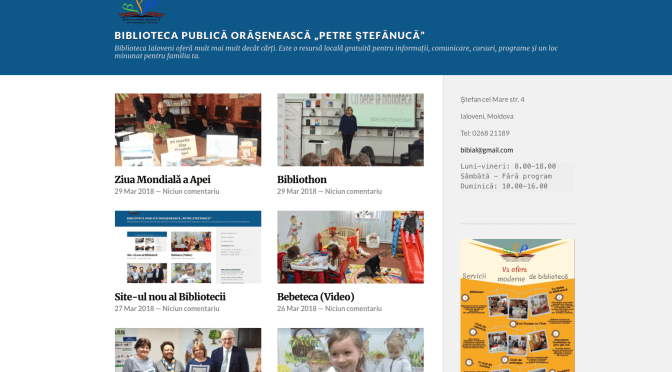
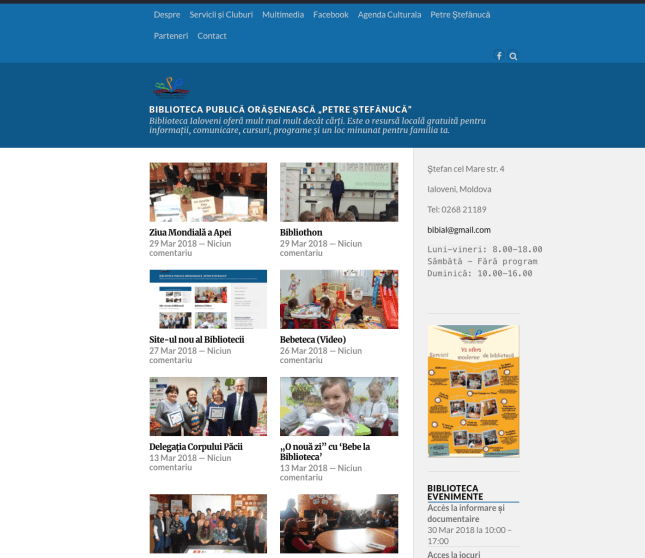
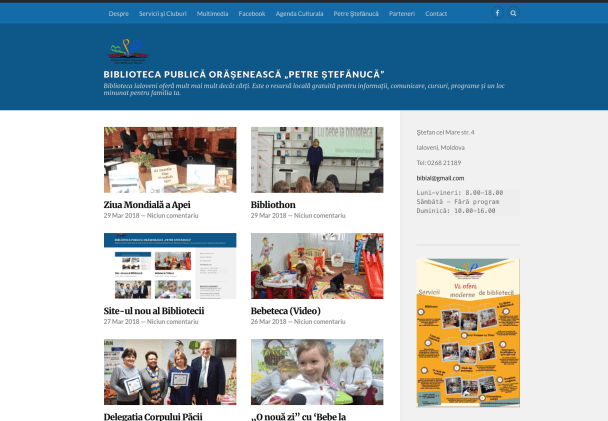
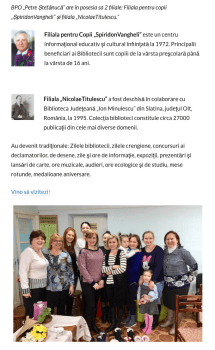 The new site features the library’s many new services, such as its clubs for robotics and film animation, and its “Bebeteca” room for kids and families. It highlights a library blog that previously existed on a separate site and was often overlooked. There’s an automated calendar that lists upcoming events.
 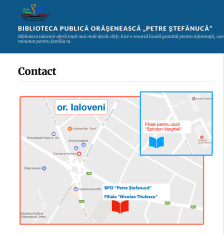 A map provides directions. An online exhibit offers a video, photo exhibits and historical information about the library’s namesake, folklorist Petre Ștefănucă. A multimedia section shows YouTube videos about the library. Another section provides the annual work plans for the main library and its two branches.




 "Not Exactly Retired"