I fell in love with Nepal more than 50 years ago — first as a trekker, then as a Peace Corps Volunteer. It’s the birthplace of my wife, Champa, and it remains close to my heart. I’ve returned to Nepal many times and have written about it often on this blog. Here are some favorite posts:
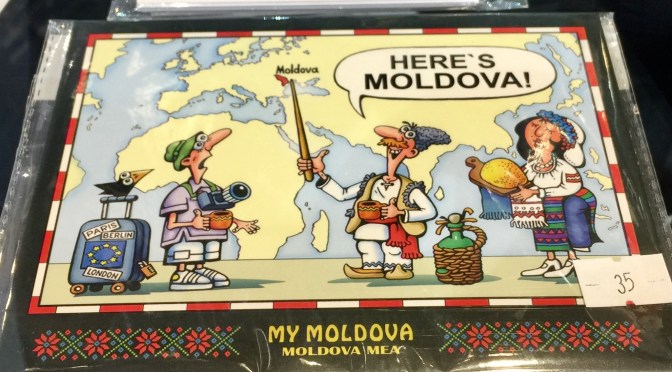
Located between Romania and Ukraine, Moldova is a small country with a fascinating culture and history. I wrote about it often while serving there as a Peace Corps Volunteer in 2016-18 and continue to write about it occasionally. I’ve gathered some of these posts below. Moldova also features prominently in my book, Not Exactly Retired: A Life-Changing Journey on the Road and in the Peace Corps.
I served twice as a Peace Corps Volunteer — in Nepal and Moldova — and have been active in the Peace Corps community. Here are some of my posts about what it means to be a Volunteer and how Peace Corps service has changed
I can’t paper this over any longer: We’ve had reams of fun together, Paper, but now it’s over.
I used to mail about a dozen paper checks every month to pay our bills. Now several months may pass before I write even one.
My mailbox is bare except for occasional junk mail or letters. It’s no longer filled with bills, advertisements, magazines and correspondence.
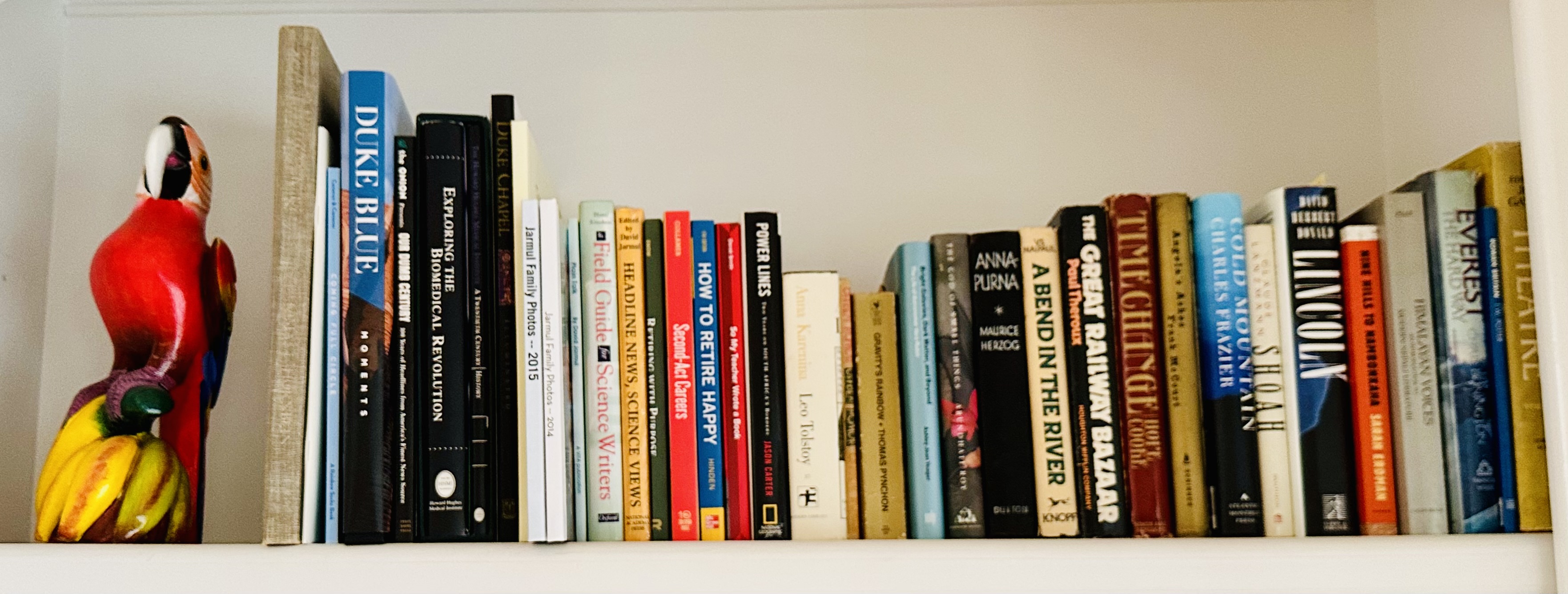
My bookshelves, which once held many hundreds of books, are emptier, too. They now hold fewer than one hundred books, many of which I helped produce, received from author friends or feel an emotional attachment to. I still read extensively, as you can see in my annual “top ten” lists (such as last year’s), but I generally download books or borrow hardcovers from the library, so our shelves remain uncluttered.
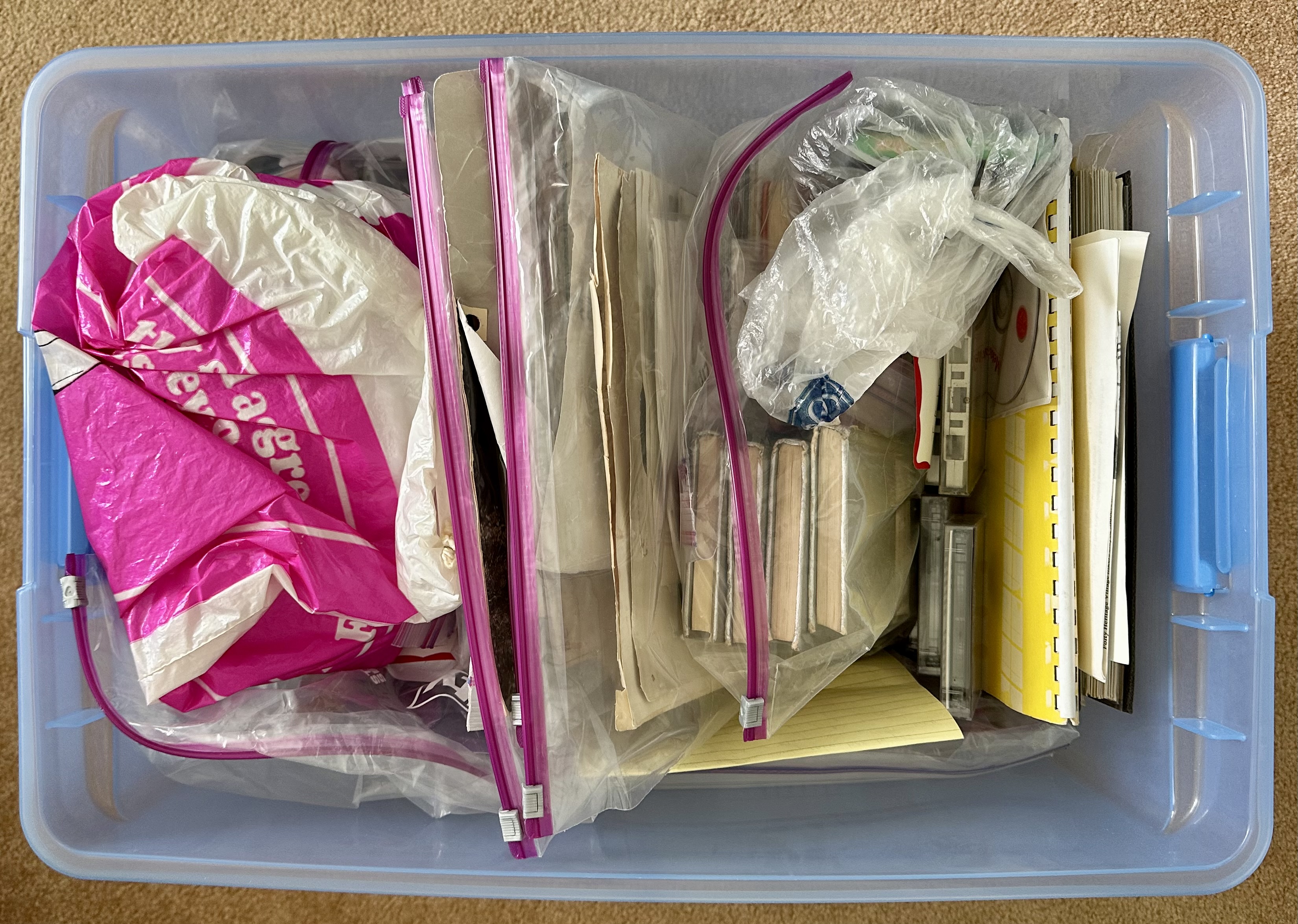
Photos? Yup, those are now digital, too. I had so many photo albums that they almost reached to the ceiling if I stacked them. Then I culled and digitized them — a huge task —and moved them onto storage discs and the cloud. They’re organized in folders that enable me to find and download a desired image quickly, including from my phone. A single plastic bin, below, holds our few remaining paper photos and family mementos.
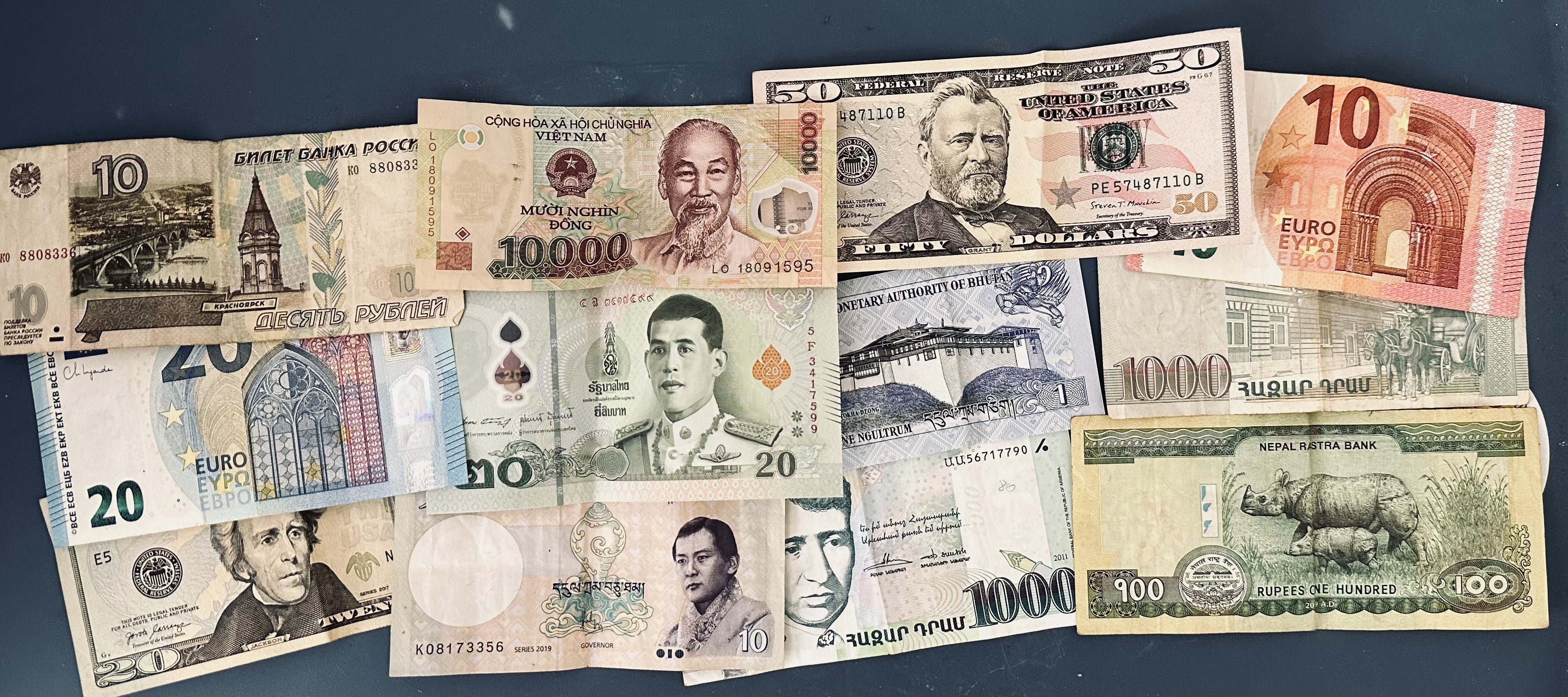
I handle my finances electronically, too, and often pay friends with Venmo and Zelle. I have paper dollars in my wallet but rarely touch them, although I often use cash abroad. My medical records are online, as are almost all of our personal records.
Younger readers might hear all of this and respond: “Big deal, Oldster. This is how people live these days.” But it’s a huge change for people of my generation, who grew up and established habits before personal computers and the internet existed. Many of my peers still prefer paper to pixels.
Not me. I have little use for paper or snail mail. I’ve embraced the digital world — not only because it’s displacing paper options so rapidly, but because I prefer it. When I hear someone say, “I like curling up with a real book and turning the pages,” I respect their preference but still choose my Kindle, which is lighter, brighter and more comfortable. It also tracks my place in each book. I do prefer hardcovers for how they display photos and maps. As an author, I also recognize the threat this shift poses to writers and the publishing industry.
I’ve always welcomed new technology but it was my service in the Peace Corps in 2016-18 that forced me to shift completely online. When Champa and I were in Moldova, we did everything electronically, whether conducting business with our American bank, booking travel or chatting online with our family back home. We got some handouts from the Peace Corps and at our posts, but many of those were electronic, too.
After two years of living without paper, it felt normal. Ever since we returned home, it still does, and greener, too. I’m grateful to the Peace Corps for many reasons but didn’t anticipate this one.
Champa and I downsized substantially before we left for the Peace Corps, getting rid of everything except what we could fit into one upstairs storage room and the attic of our house, which we rented. We know we’ll need to downsize again whenever we finally sell our house and move to someplace smaller. Next time, though, we won’t need to get rid of so much paper. It’s already gone.
One decade ago this month I walked away from a job I loved to shake up my comfortable life and try something new.
I stepped down as the head of news and communications at Duke University, surprising my outstanding team. We’d been working together for years to respond to research discoveries, sports championships, weather emergencies, campus protests and more, as well as to the rise of social media and other dramatic changes to the media landscape.
With Keith Lawrence at the Durham Bulls Athletic Park. The photo I’m holding, signed by my colleagues, shows a sign tracking the number of days since Duke’s last scandal.
Duke sent me off with a big reception at a local theater and, as shown in the photo, an informal farewell at the Durham Bulls baseball stadium.
Less than a week later, Champa and I embarked on an 11,000-mile drive around the United States, followed by an extended trip to Nepal. That’s where the two of us met in 1977 when I was a Peace Corps Volunteer, posted to the same school where she was teaching.
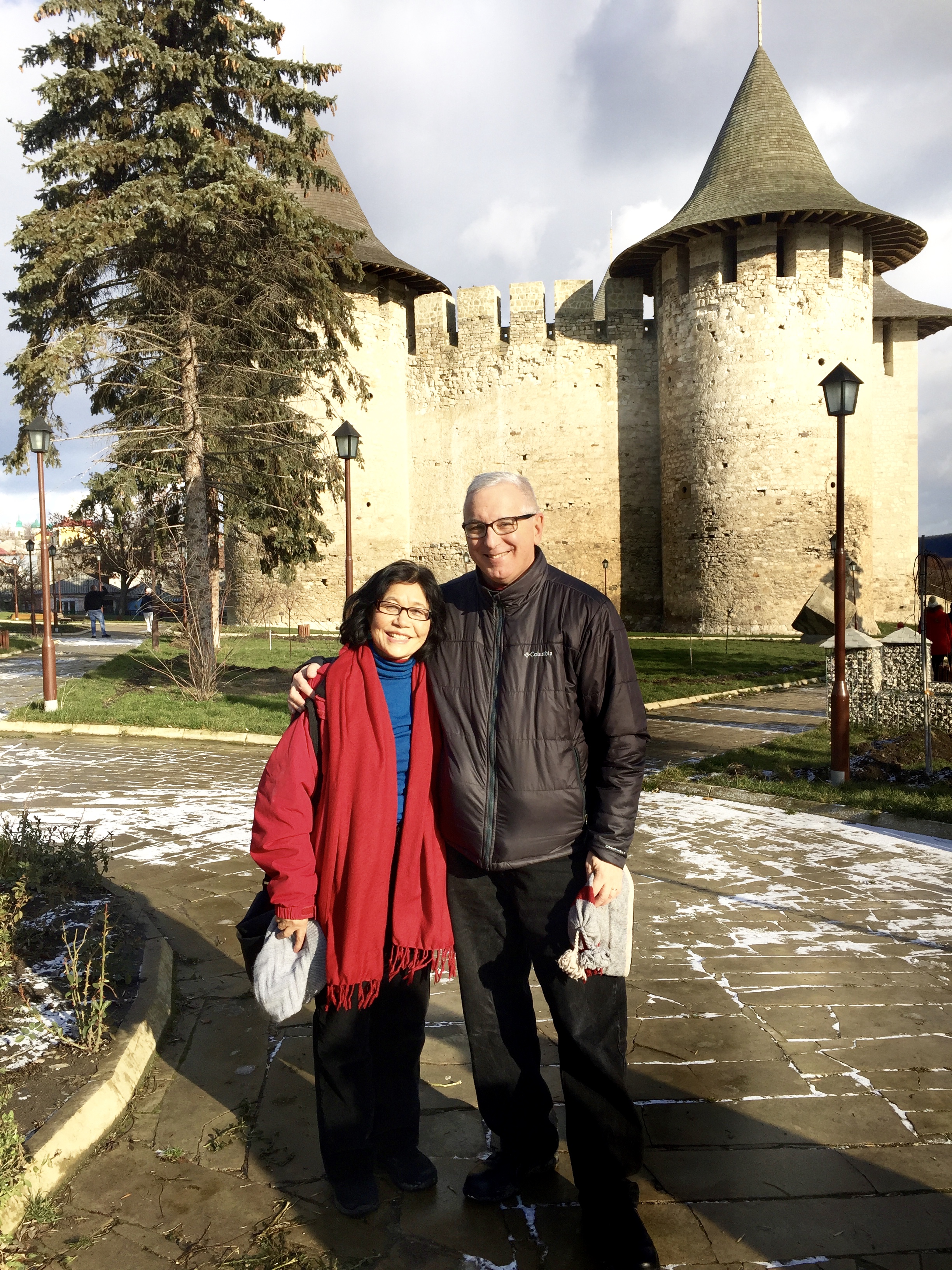
Visiting the Soroca Fortress in Moldova.
Finally, after a short break, we got rid of much of our stuff, rented our house and moved to Moldova, in Eastern Europe, to begin serving together as Peace Corps Volunteers.
I chronicled our three-year adventure on this blog and in my book. Since returning to Durham in 2018, we’ve continued pursuing our “not exactly retired” lifestyle, joining a growing number of older Americans who have been redefining retirement as more than leisure — and redefining themselves in the process.
Several news outlets profiled us as examples of this trend, which in our case has meant extensive travel, volunteering and spending time with family and a network of friends that reaches around the world.
I’ve never looked back.
I enjoyed my career and still miss my Duke colleagues, some of whom recently lost their jobs because of federal funding cuts, but I knew it was time for a change. Just like when I graduated college and chose to backpack across Europe, Asia and Africa with a friend instead of following my classmates to graduate school, I wanted to grab life and see what else it offered.
Visiting Tallinn Town Square in Estonia.
As I’ve approached this ten-year milestone, I know how lucky I’ve been. I left my job before the Covid pandemic and current funding crisis. Champa and I finished our service in Moldova before the pandemic and war in neighboring Ukraine forced the Peace Corps to halt its operations. We’ve been fortunate with our finances, health and family responsibilities. We could have encountered some disaster while traveling abroad, or at home, but we’ve been fine.
I launched this blog to share with friends our initial drive around the United States, never expecting it to continue so long or to reach people in more than 100 countries. I’ve loved hearing from readers with questions about the Peace Corps or early retirement, or just seeking encouragement to make a leap themselves.
Some of the other older volunteers who served with us in Peace Corps Moldova.
As I’ve told them repeatedly, my message is not “join the Peace Corps!” That’s a good choice for some people but not for others, assuming they get past the rigorous application process. Rather, I’ve urged readers to be intentional about their lives, to choose instead of drift, regardless of their interests. We all have dreams, whether it’s to launch a business, start a nonprofit or master a new skill. It’s often possible to pursue that dream, even on a limited scale, while respecting the real-world complexities that come with it.
Champa and I plan to keep going as long as we can. We’re traveling more than usual now so as to remain outside the United States during its current turmoil. You’ll see soon where we’re heading next. As we approach the next election, however, and as we get older, we will reevaluate. One of the main benefits of the past ten years is how comfortable we’ve become with uncertainty and change.
Delivering food for the Food Bank of Central & Eastern North Carolina during the pandemic.
Veering from our traditional American lives has enriched us immeasurably. These riches have come not in additional paychecks but in the people we’ve met, the places we’ve seen and the memories we’ve made, all while remaining centered with our family and friends. As we’ve learned on the road, we are far from unique in doing this. Many other older people with widely varying budgets and circumstances are also traveling off the beaten path and blazing their own trails.
I know how privileged we are to be among them. Not everyone can do this; family obligations, finances, medical limitations and other constraints are real. But it is possible to resist letting fear or habit prevent us from living with purpose. We can choose to make room for what truly matters to us.
Visiting the new school we recently helped build in Samalbung, Nepal.
An old Peace Corps slogan says: Life is calling. How far will you go? As we wrap up our first decade of being “not exactly retired,” Champa and I are grateful for how far we’ve gone and still looking forward to whatever comes next.
The new school we’ve been helping to build in a Nepalese village has finally opened!
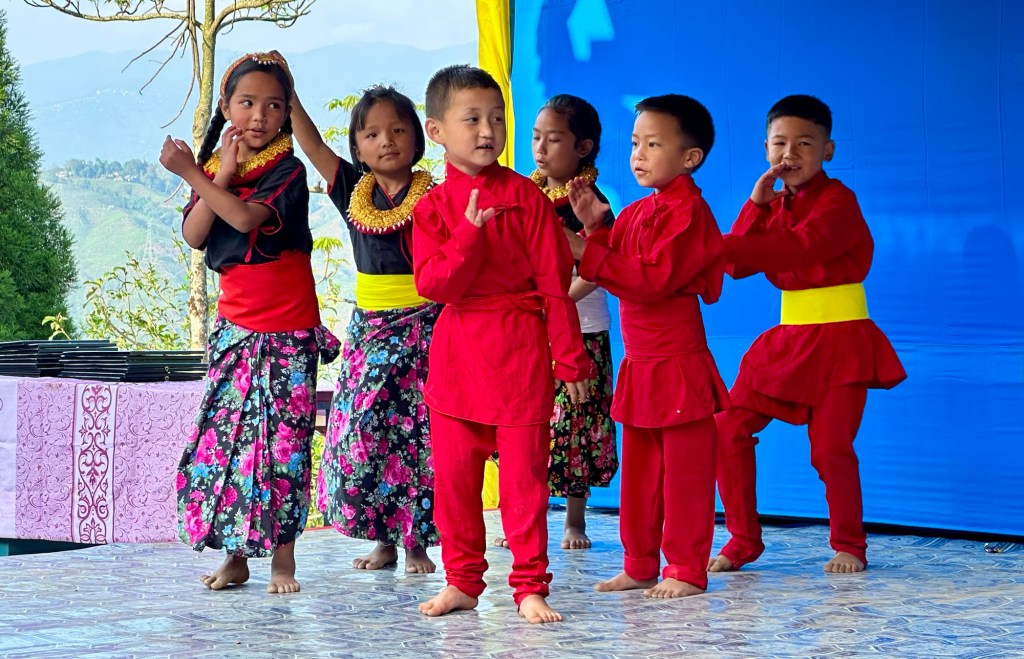
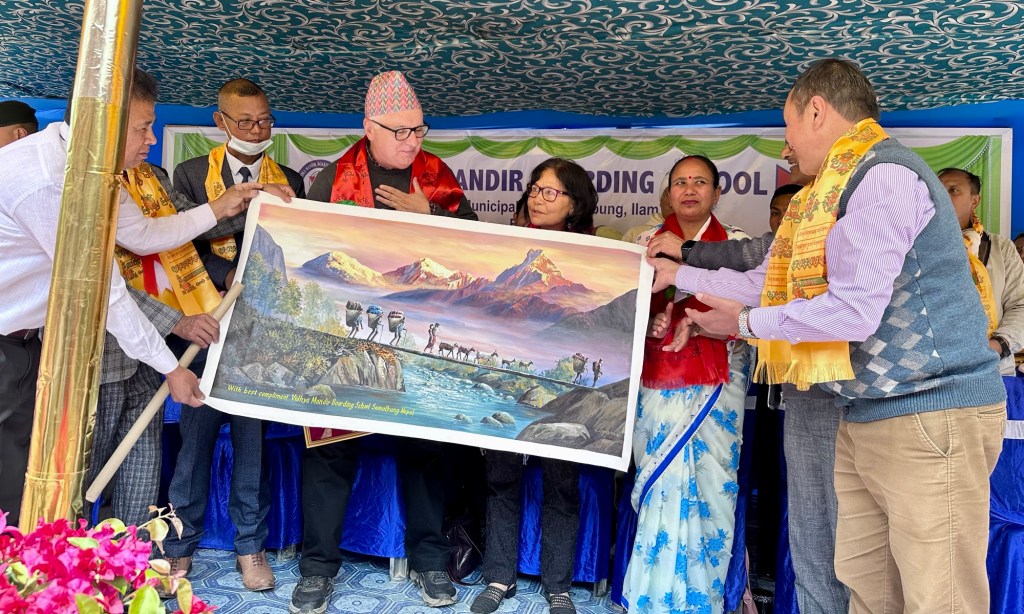
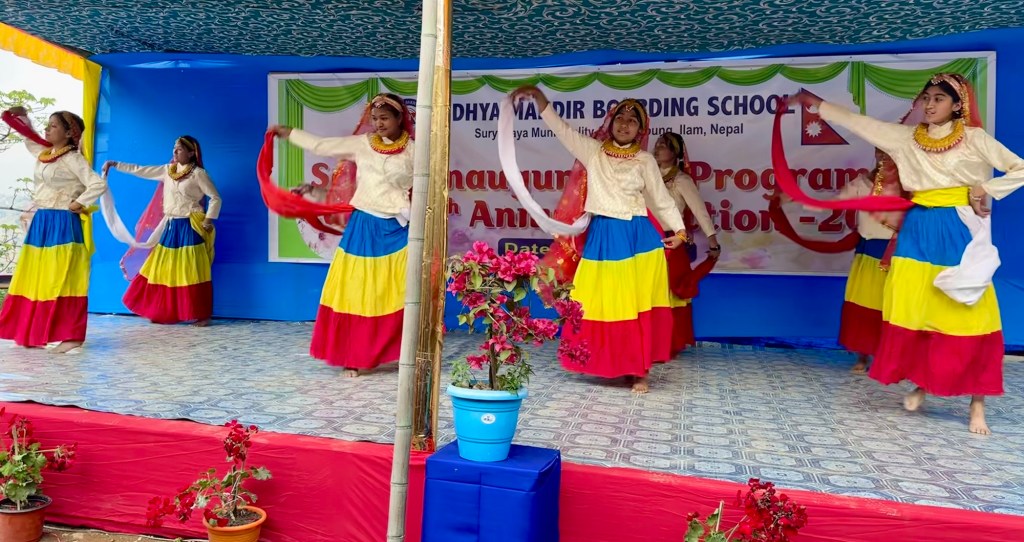
The local community dedicated it on April 30 in a colorful ceremony filled with dances, songs, speeches and food. We traveled there to join the celebration.
The school is more beautiful than we’d dared to dream and the community couldn’t be happier.
The Vidhya Mandir Boarding School in the eastern village of Samalbung has 126 students, many from indigenous and marginalized groups. School fees are low and some students receive full or partial scholarships.
The attractive two-story structure, with a lovely view of the Himalayas, is a huge improvement over the previous school, which was in terrible condition. The students now have a much brighter future.
The two of us have spent the past year working with a team at the school to design and construct the new building. We also raised funds for the project through a GoFundMe site and direct contributions.
We were overwhelmed by the response from family, friends, Not Exactly Retired readers, Returned Peace Corps Volunteers, Friends of Nepal and others.
Their generous contributions totaled more than $24,000, which covered a significant share of the costs. The two of us funded most of the budget. The school community prepared the site, donated money, contributed labor and supported the school in other ways, from providing wood from their trees to feeding the workers.
I’ve posted some photos here and produced a short video so you can see the new school and celebration for yourself. You can watch the video above or on YouTube.
We are grateful to everyone who opened their hearts (and wallets) to assist these young people. We extend special thanks to Santosh Khapung, Bindu Suwal, Shankar Limbu, and Pooja and Sabin Shrestha for all of their help to us during this project.
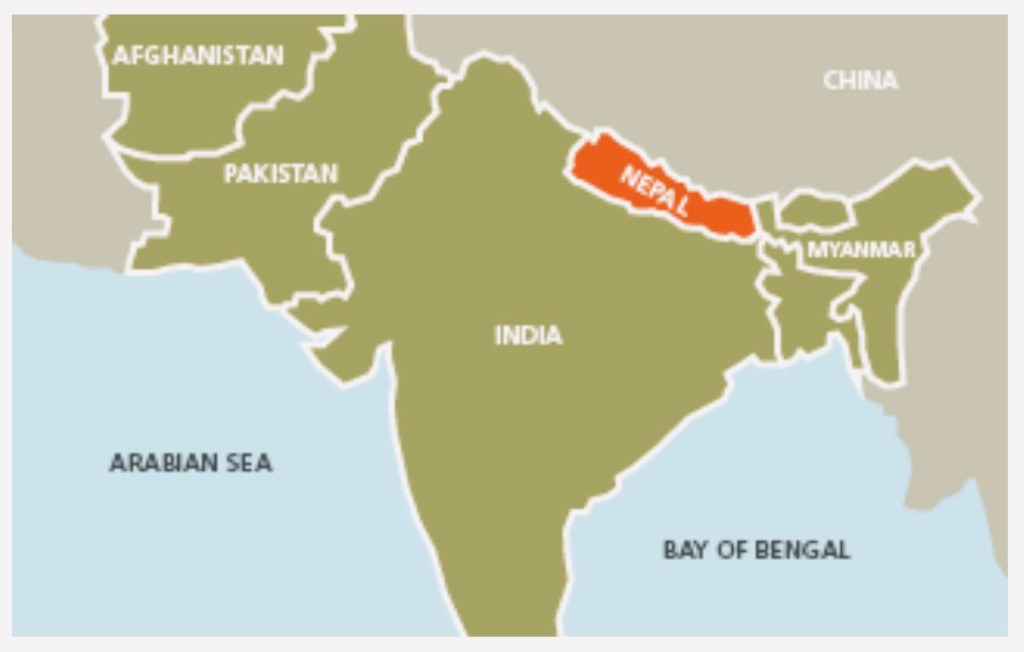
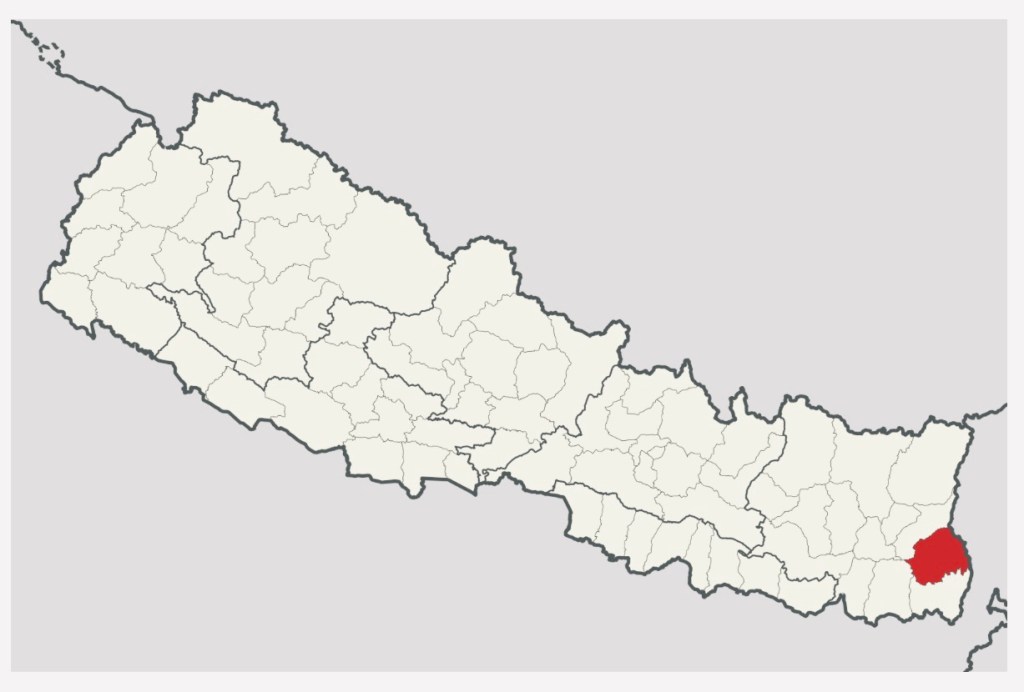
Champa’s hometown of Ilam, Nepal, is bustling these days with new shops, banks, bakeries, schools, hotels and people.
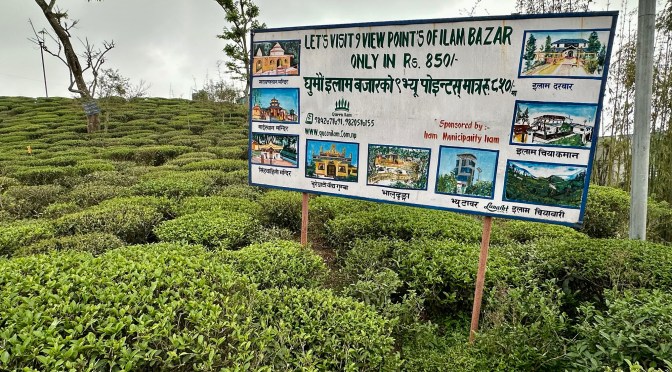
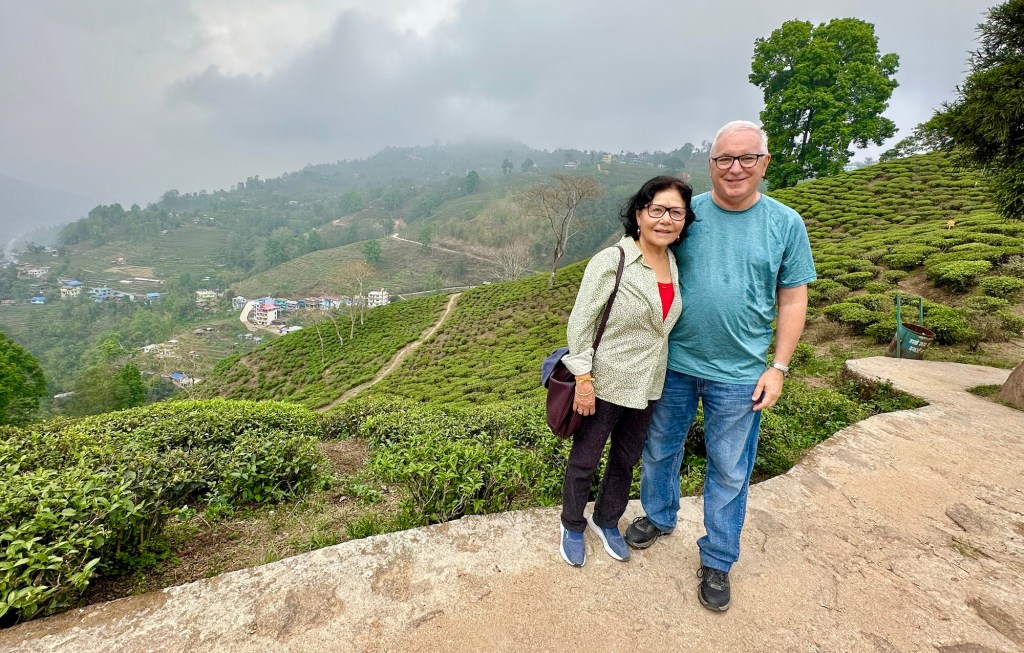
But it’s still best known for tea. Lush plantations surround this town whose population now exceeds 50,000. Ilam is the heart of Nepal’s tea industry, with rolling hills, terraced plantations, and a favorable climate and soil that yield a product similar to the better-known tea of neighboring Darjeeling, India.
We traveled here several days ago, mainly to visit with family and friends. But we’ve also taken time to explore the bazaar and stroll beside the tea gardens, as you see here with our niece Mangila and some of our grandnieces and grandnephew.
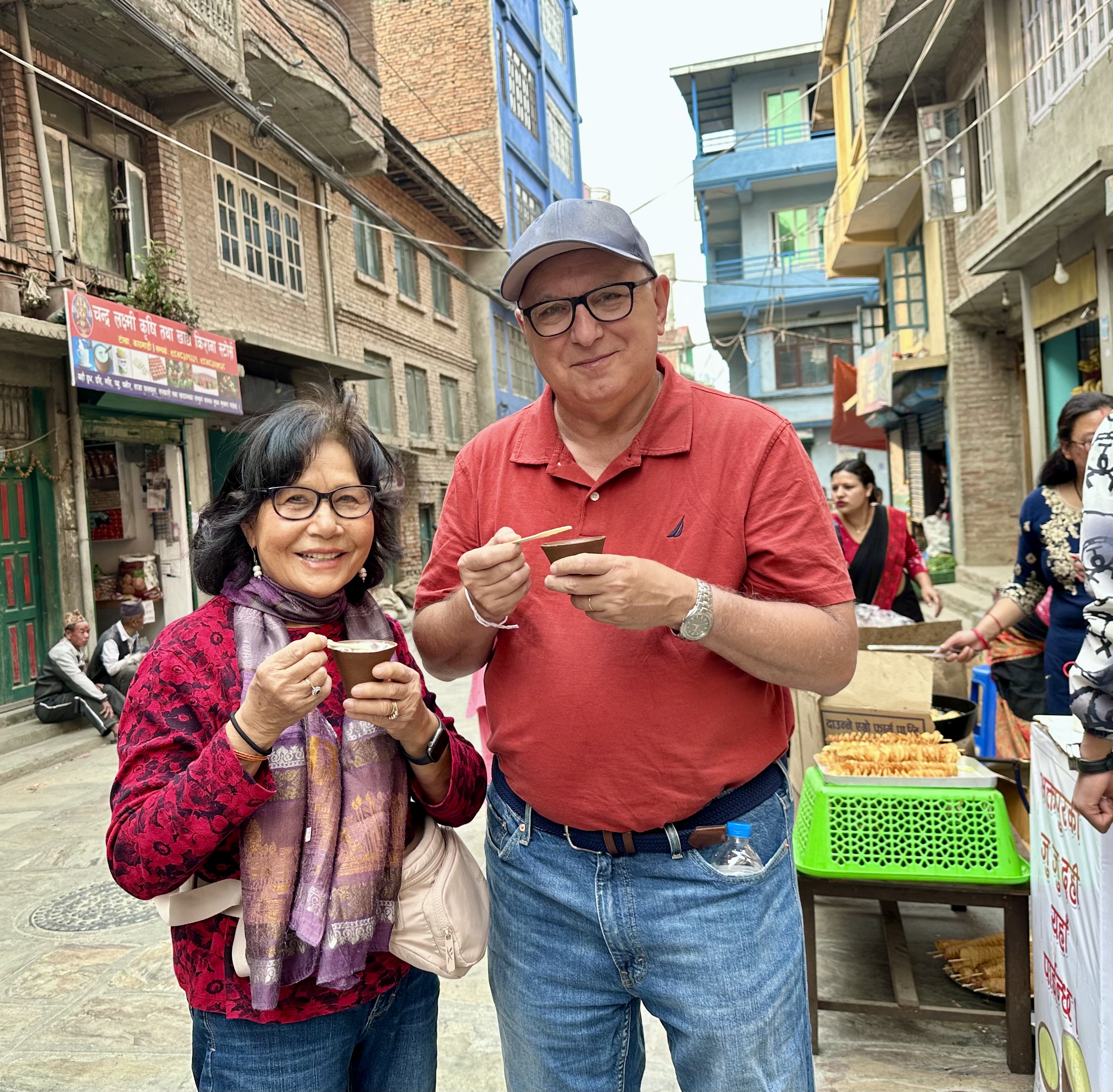
After one walk, we stopped at a shop where I treated all of the kids to ice cream, something that was unavailable when I served in the Peace Corps here in the late 1970s.
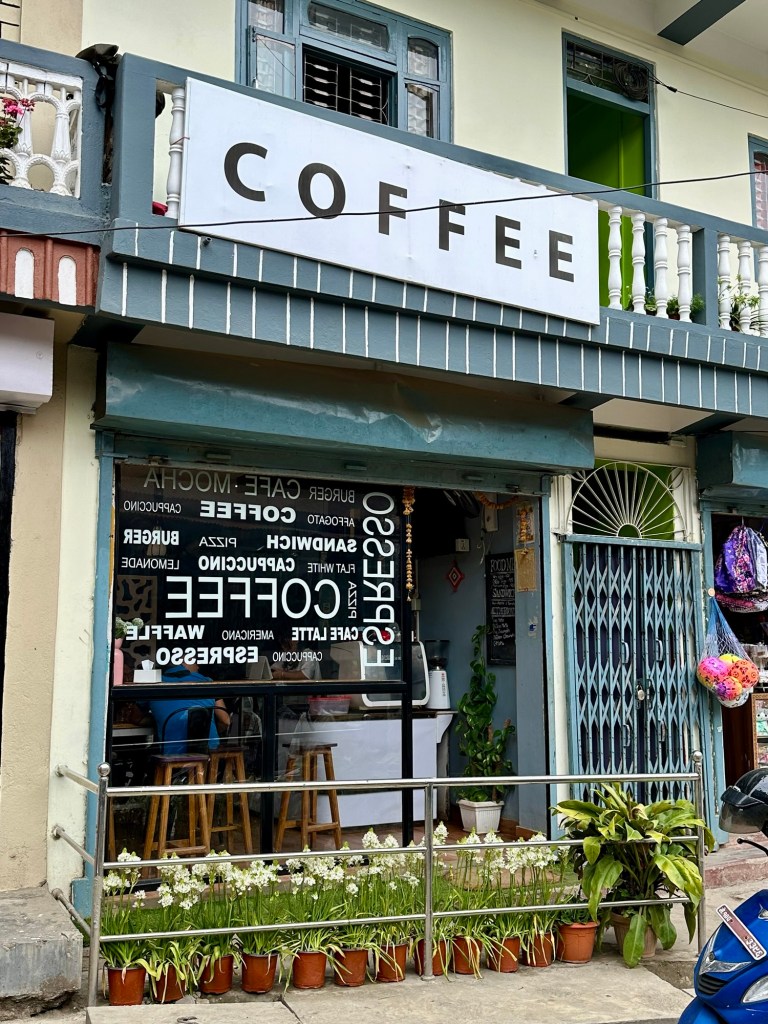
There was a single bakery back then, selling only white bread. Now there are several, with display cases featuring fancy birthday cakes. This tea-growing center even has a coffee shop where you can order a cappuccino.
Something else that was unimaginable when I lived here was cheese. Now there’s a nearby cheese factory run by a Sherpa entrepreneur who learned cheese-making from Swiss experts. He makes a delicious hard cheese that we sampled and brought home to eat.
Ilam’s food scene is not the only thing that’s changed. Notably, there are now vehicles everywhere — mainly motorcycles and scooters, but also buses, jeeps, cars and auto rickshaws. I also discovered some new sights, for me at least, such as a tea garden statue honoring the Limbu ethnic group and the Bhaludhunga ecological park
At almost every turn, I’ve been reminded what a beautiful and interesting place this is. I wish more people knew about it, especially foreign visitors looking to escape Kathmandu’s craziness and discover the “real Nepal.”
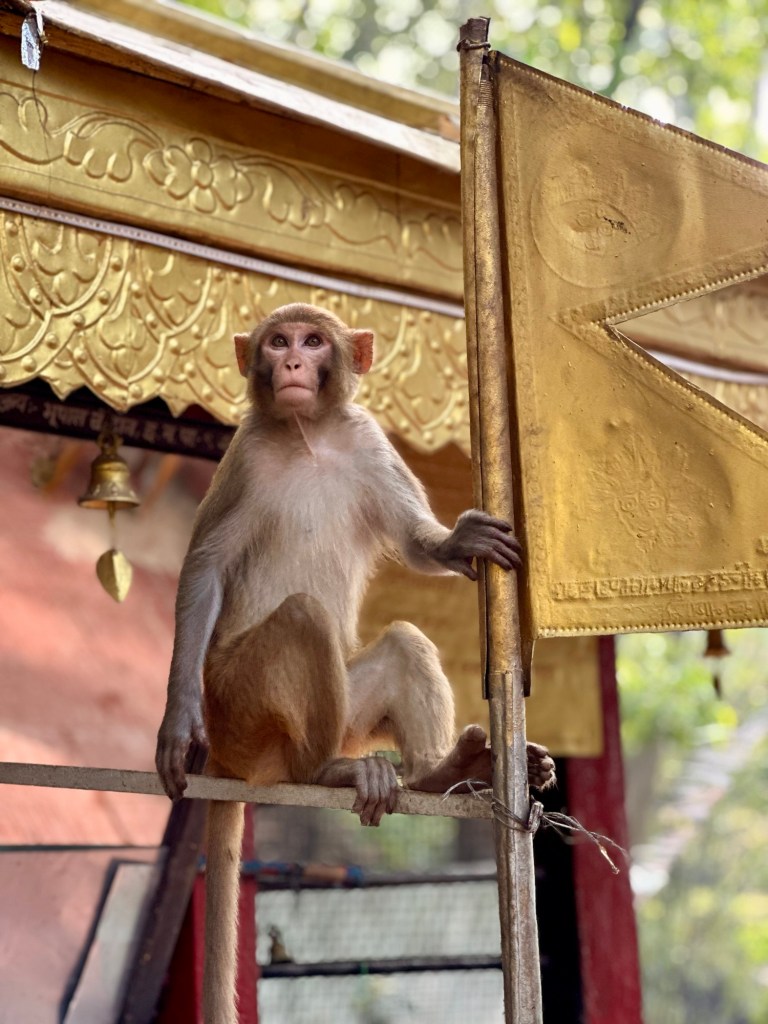
Ilam is relatively easy to reach. It’s a quick flight from Kathmandu to Bhadrapur followed by a 3-4 hour jeep ride on a winding road that is in generally good condition. Good, inexpensive hotels are available. The air is clear. The view is gorgeous when there’s no fog. Monkeys await you at the temples and Ilam’s friendly people are eager to meet you, too.
You should come see for yourself, even if you’re not a tea enthusiast.
Kathmandu is vastly more crowded, polluted and traffic-jammed than when I lived here during my second year as a Peace Corps Volunteer in the late 1970s.
And yet, it remains magical, at least to me.
Champa and I have had a busy week here following our recent road trip to some of Nepal’s less-visited places. We’re leaving again on Sunday for her hometown, Ilam, in Nepal’s eastern tea-growing region.
While we’ve been in Kathmandu, we’ve been revisiting some of the city’s iconic sights, like the Bodhanath Stupa, above two photos.
We’ve explored new places for us, like the Changu Narayan temple in Bhaktapur, above.
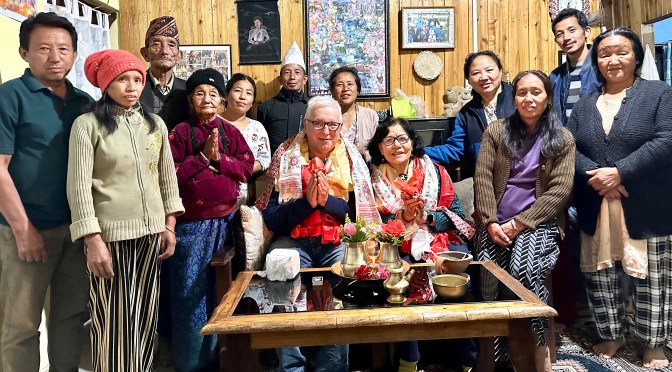
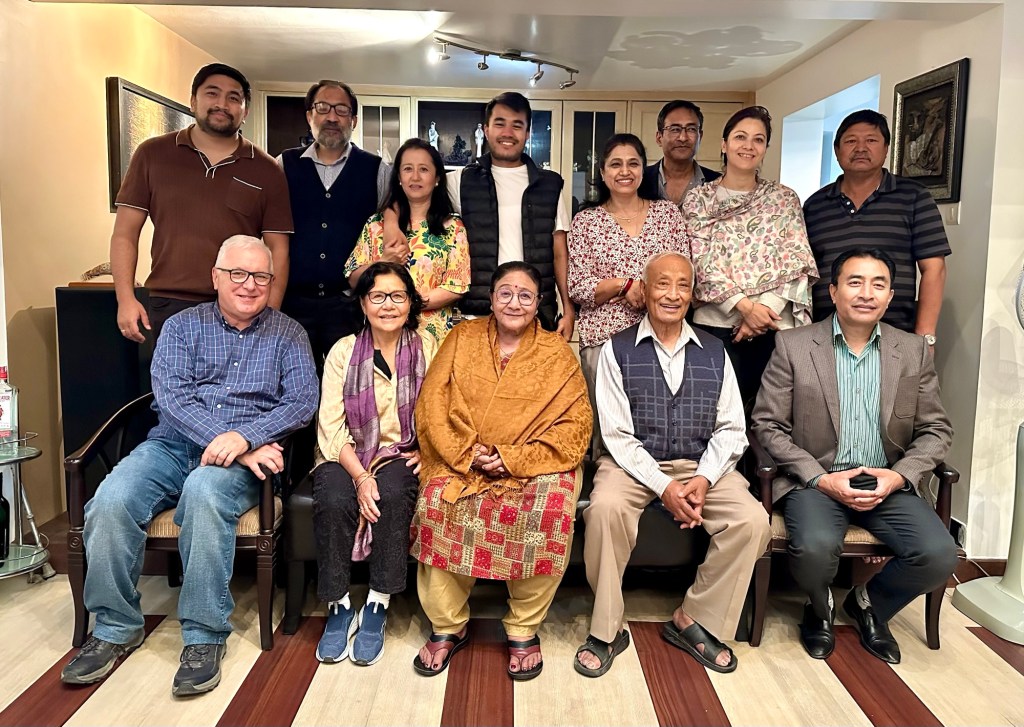
We’ve been visiting with family and friends, such as the Shresthas, who gave us an incredibly warm welcome and dinner.
We’ve met up with friends and family from back home who are also in Nepal now, such as Sarla and Sudhir from Virginia, top photo, and Steve and Muna from Vermont, bottom.
We had tea with our friends Anne and Raju, who once lived in Boston but now make their home in Nepal, something we’ve been thinking about on a shorter-term basis while our own country is so unsettled.
We visited an acupressure doctor, who treated both of us.
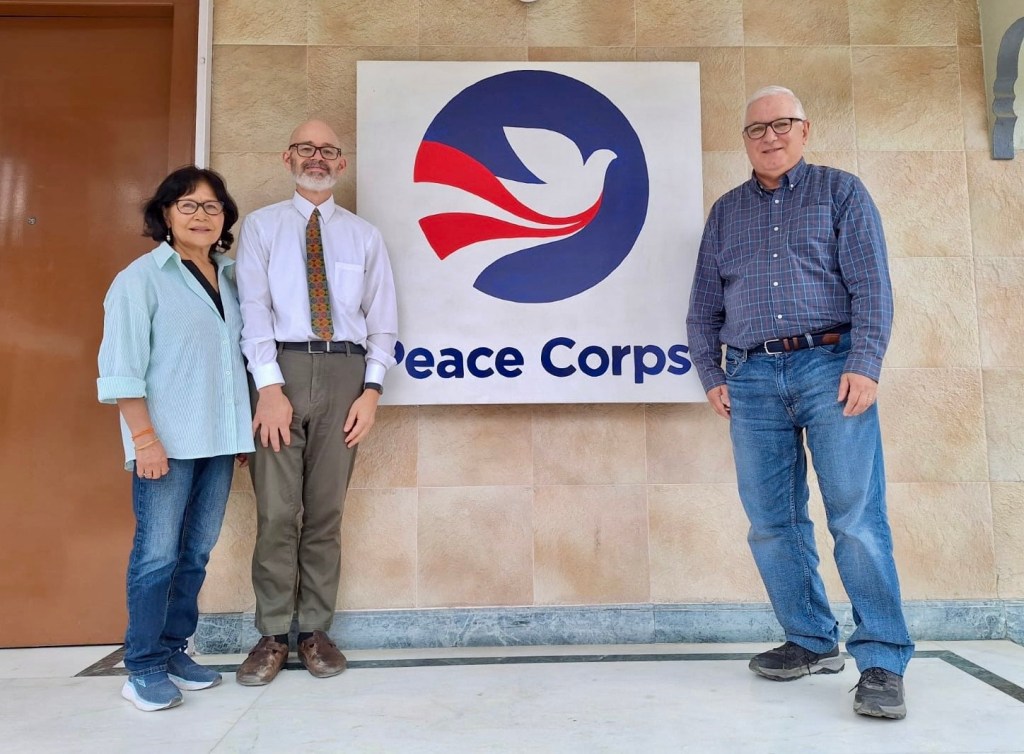
We had a great conversation with the director of Peace Corps Nepal, who brought us up to date on their programs and challenges.
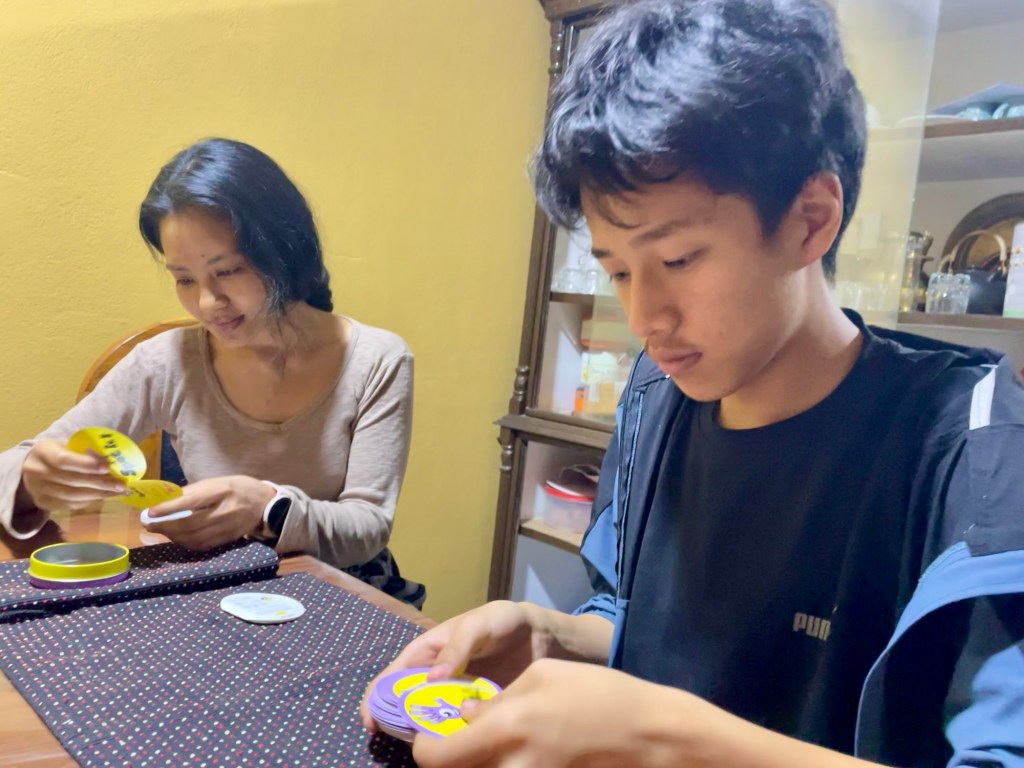
Best of all, we’ve enjoyed hanging out at the home of our nephew Shankar and his wife Bindu, who’ve taken very good care of us. That’s their children Senchhen and Lajesha, bottom photo, playing a card game we brought from home.
My week ended with a surprise birthday dinner at a beautiful restaurant outside Bhaktapur. It was a fitting end to our week in a city that still holds magic for me. I’m always happy to return.
First-time travelers to Nepal typically visit the magnificent temples and other treasures of the Kathmandu Valley. If they’re adventurous and have the time, they may also go trekking near Mount Everest or someplace else.
That’s what I did back in 1975 when I first discovered this magical country. I fell in love with Nepal, even before I met Champa, and I remain smitten with it a half-century later.
We’ve returned here many times but have usually been so busy visiting our family that we didn’t explore much beyond the tourist trail.
Until now.
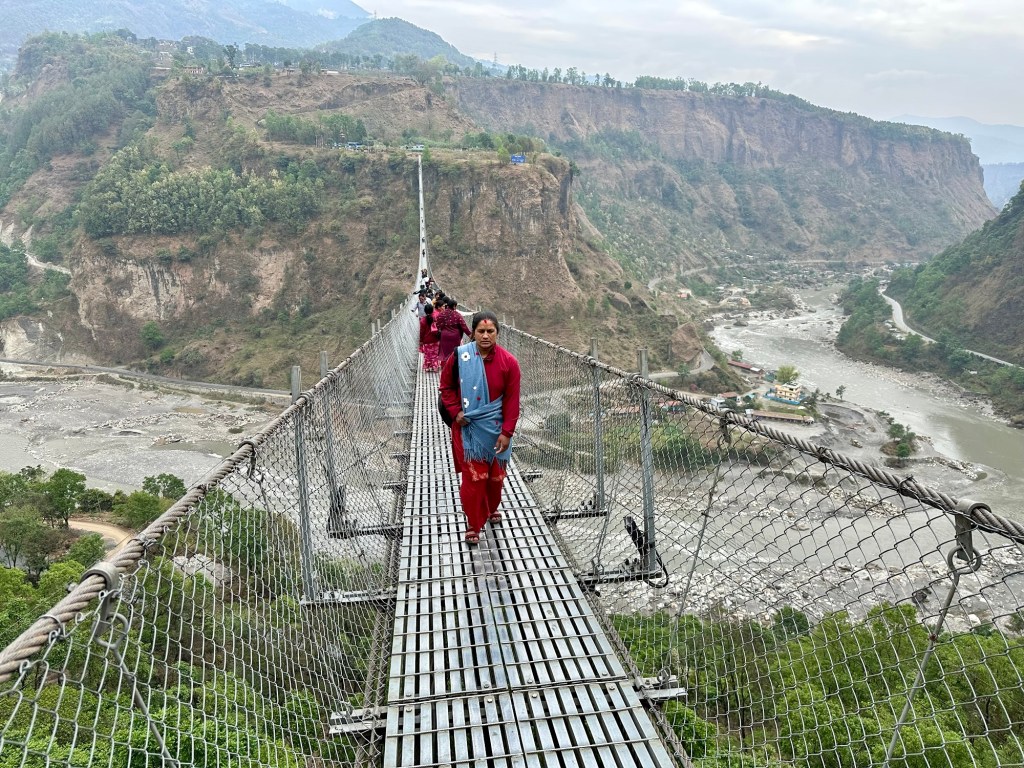
We just returned from a memorable road trip to several places we’d long been hoping to see: a remote valley unlike the rest of Nepal, a picturesque town atop a mountain and the homeland of the king who unified Nepal.
We enjoyed all three places — Mustang, Bandipur and Gorkha — as well as our stop in Pokhara, a more familiar destination famous for its beautiful lake and snow-covered peaks.
If you’re considering a trip to Nepal and want something different from the usual itinerary, you might consider a similar trip. We did ours in five busy days with a private jeep, traveling with our nephew, Shankar, and his wife, Bindu. They hired our driver but you could arrange something similar with a local travel agency.
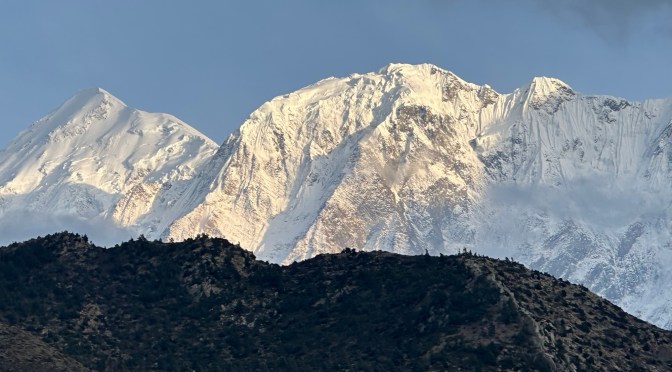
Mustang is a distinctive region of stark landscapes and traditional culture. Parts of it were closed to foreigners until recently and permits are still required to visit (although easy to obtain). We stayed in the main town of Jomsom, home of the Thakali people. Apples grow in many of its fields and its stone houses are adorned with prayer flags. We gazed out of our hotel window to see snowy peaks and small planes landing across the street at a tiny airport.
Mustang is best known for Muktinath, a temple and pilgrimage site for both Buddhists and Hindus. Champa and Bindu visited it while I remained in Jomsom with Shankar since I wasn’t feeling well that day. I was sorry to miss it but still happy to finally see Mustang, which was so mysterious when I first came to Nepal.
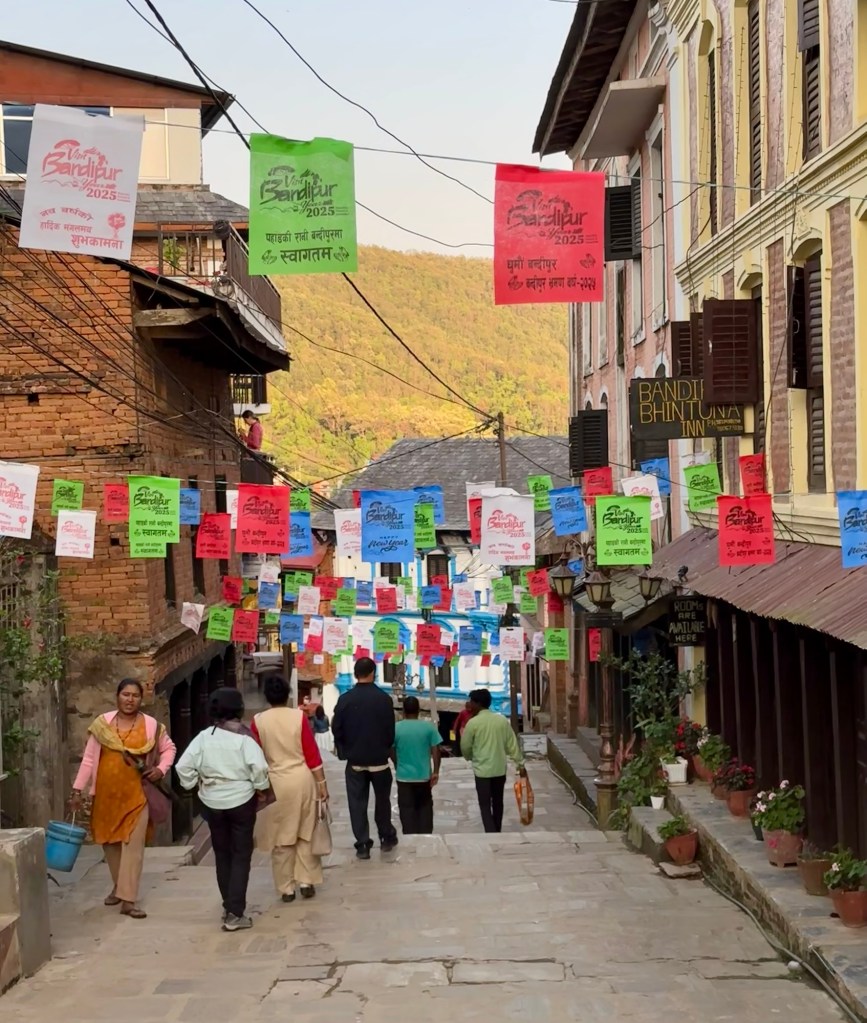
Bandipur, our next stop, was familiar to me since I did my practice teaching there during my Peace Corps training in 1977. I remembered it as being spectacularly beautiful — and it remains so, although much more developed.
Bandipur is a traditional Newari village built atop a small mountain. Back when I lived there, the usual way to reach it was by climbing a long series of stone steps. Now you can drive up or take a cable car, which we rode for fun. Cars are banned in the town center, which has a growing number of souvenir shops and small hotels catering to tourists who have begun discovering this charming escape from Kathmandu’s traffic and pollution.
We stayed in a lovely hotel — two private rooms with five dinners and breakfasts for $68 — and the owner was amazed that I’d taught there so many years earlier. He told some friends and the next morning we were joined at breakfast by one of my former fellow teachers and his wife, who’d worked with the Peace Corps. That’s Bidya Prasad Shrestha and Laxmi Shrestha in the photo with us. Amazing.
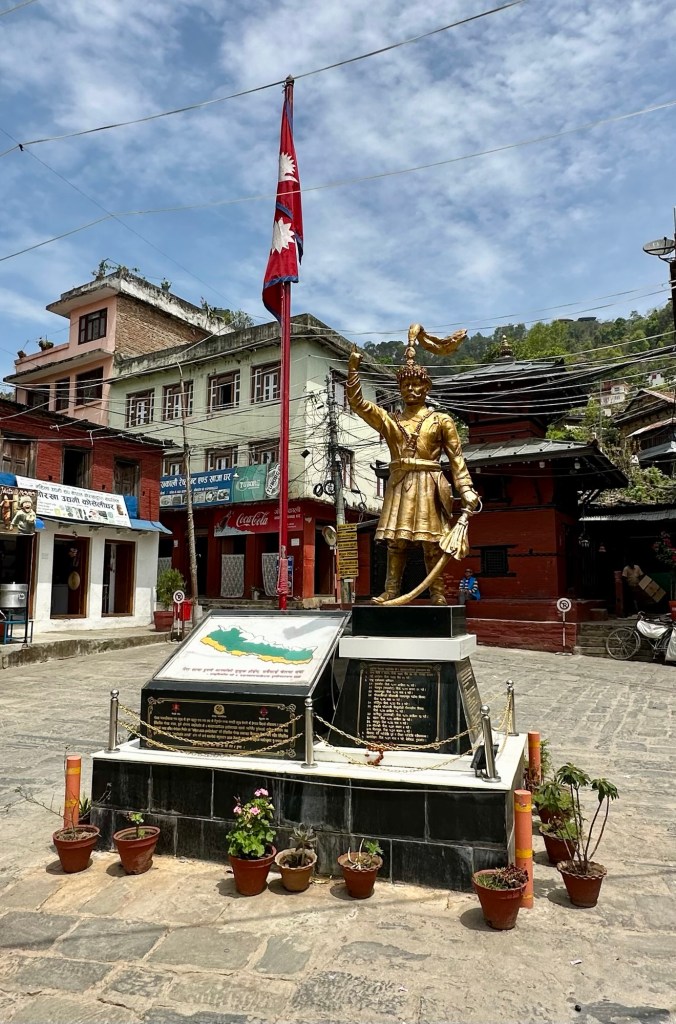
Gorkha is a regional center best known as the birthplace of Nepal’s unifier, King Prithvi Narayan Shah. He’s a bit like George Washington in our country and lived at roughly the same time. Gorkha also lends its name to the Gurkha soldiers, who serve in other countries and are known worldwide for their bravery.
We only spent a brief time there, mainly to climb up to the Gorkha Durbar, a 16th-century palace featuring both monkeys and traditional architecture. Nearby is the Manakamana Temple, which we’d visited previously and is a great place to stop and visit via cable car while driving between Kathmandu and Pokhara.
Pokhara’s tourist crowds are bigger than ever, with hotels, restaurants, shops and travel agencies filling the streets near the famous “fish tail” mountain and lake. Nonetheless, we were happy to return. We strolled beside the lake and enjoyed dinner at one of the many outdoor restaurants along the shore.
When the rhododendrons are blooming, the lake is shimmering and the famous mountains appear — Annapurna, Dhaulagiri and others — few places on Earth are more stunning than Pokhara.
We returned to Kathmandu just in time to celebrate Nepali New Year. We’ll be visiting with several friends and family this week and will then head east to Champa’s hometown, Ilam. From there we’ll drive through the tea gardens and mountains to Samalbung, the small village where we’ve been helping to build a new school with generous support from many Not Exactly Retired readers.
For now, we’re savoring our road trip to some of Nepal’s less-visited places. We’re very glad we finally made it to Mustang, Bandipur and Gorkha — three destinations that I hope others will discover, too.
I’ve wondered lately whether I’m like the emcee in the musical Cabaret, amusing myself as darkness spreads across the land.
You probably remember the emcee. He kept singing and leering in a Berlin nightclub as Hitler rose to power, refusing to recognize, much less confront, the nightmare unfolding around him. He distracted his patrons from paying attention to the chaos outside the door. But in the end, there was no escape. The deluge came and they were all swept away,
Following this past November’s election, Champa and I anticipated the nightmare we’d soon be seeing in America. Our strategy for coping, as I wrote previously, was to spend as much time as possible outside the country.
Soon after the election, we departed for nearly two months in Australia and New Zealand. A few weeks ago we returned home to see our family and take care of some business — doctor’s visits, jury duty and the like. But now we’re planning to leave again, to Nepal and other countries.
Eddie Redmayne in the recent Broadway revival
After that we’ll return home again, but not for long. Just over a month has passed since the inauguration, although it feels much longer. We still have nearly four years to fill.
I don’t regret our decision and don’t plan to change it, at least not yet. I simply don’t have the energy to feel constant outrage. Living abroad gives me distance and perspective. Moreover, from a strategic standpoint, the best thing now may be to wait and let the American people see the consequences of their choice, as devastating as these are proving to be. Of course, that’s easier for me to say than it is for a fired federal employee or a Ukrainian soldier.
Alan Cumming portrays the Cabaret emcee
As I’ve discovered, there’s actually no escaping what’s happening, even far from home. When we were in New Zealand, some Canadians asked me why our president was so hostile to a long-time friend. Australians said they were nervous about U.S. tariff policy and anticipated closer trade with China. A family from Mexico wondered whether they’d be able to visit the United States again. More recently, our friends in Moldova have been shocked by the abrupt shift in U.S. policy towards their neighbor, Ukraine.
Since we returned home, just a week after the inauguration, I’ve witnessed a relentless attack on things I hold dear — justice, democracy, diversity and more. I devoted much of my career to science, higher education and foreign assistance. Now all of these things are on the ropes. Fellow former Peace Corps Volunteers who pursued careers with USAID have had their lives upended. Scientists I know are deeply concerned about their funding. The list goes on and on.
And me? I’ve been researching travel itineraries in Sri Lanka.
Taylor Mac in the 2013 PlayMakers production
The juxtaposition makes me uneasy. I don’t want to be the cabaret emcee saying: “The world keeps going round and round, but it doesn’t affect me.” It does affect me and many others, most of whom lack the flexibility and resources to leave. Going abroad for months at a time is hardly the same as performing at a sleazy Berlin nightclub, but it’s also a far cry from manning the barricades.
I keep hoping more of my fellow Americans will finally wake up and political options will become more promising. In the meantime, I’m doing my best to focus on things I can actually change. I’m volunteering locally with several groups. I’m finding joy with family, friends, my community and projects like the school in Nepal we’ve been helping to build, which we’ll be dedicating during our upcoming trip. I’m traveling as much as I can before I get too old, especially while things are so grim at home.
I wish I had a better plan right now, but I don’t. I wish things were different, but they’re not. I wish I could turn off the song in my head, but I can’t. It keeps playing: “What good is sitting alone in your room? Come hear the music play. Life is a cabaret, old chum. Come to the cabaret.”
Top photo: Joel Grey as the emcee in the original production of Cabaret.





























 "Not Exactly Retired"