One decade ago this month I walked away from a job I loved to shake up my comfortable life and try something new.
I stepped down as the head of news and communications at Duke University, surprising my outstanding team. We’d been working together for years to respond to research discoveries, sports championships, weather emergencies, campus protests and more, as well as to the rise of social media and other dramatic changes to the media landscape.
With Keith Lawrence at the Durham Bulls Athletic Park. The photo I’m holding, signed by my colleagues, shows a sign tracking the number of days since Duke’s last scandal.
Duke sent me off with a big reception at a local theater and, as shown in the photo, an informal farewell at the Durham Bulls baseball stadium.
Less than a week later, Champa and I embarked on an 11,000-mile drive around the United States, followed by an extended trip to Nepal. That’s where the two of us met in 1977 when I was a Peace Corps Volunteer, posted to the same school where she was teaching.
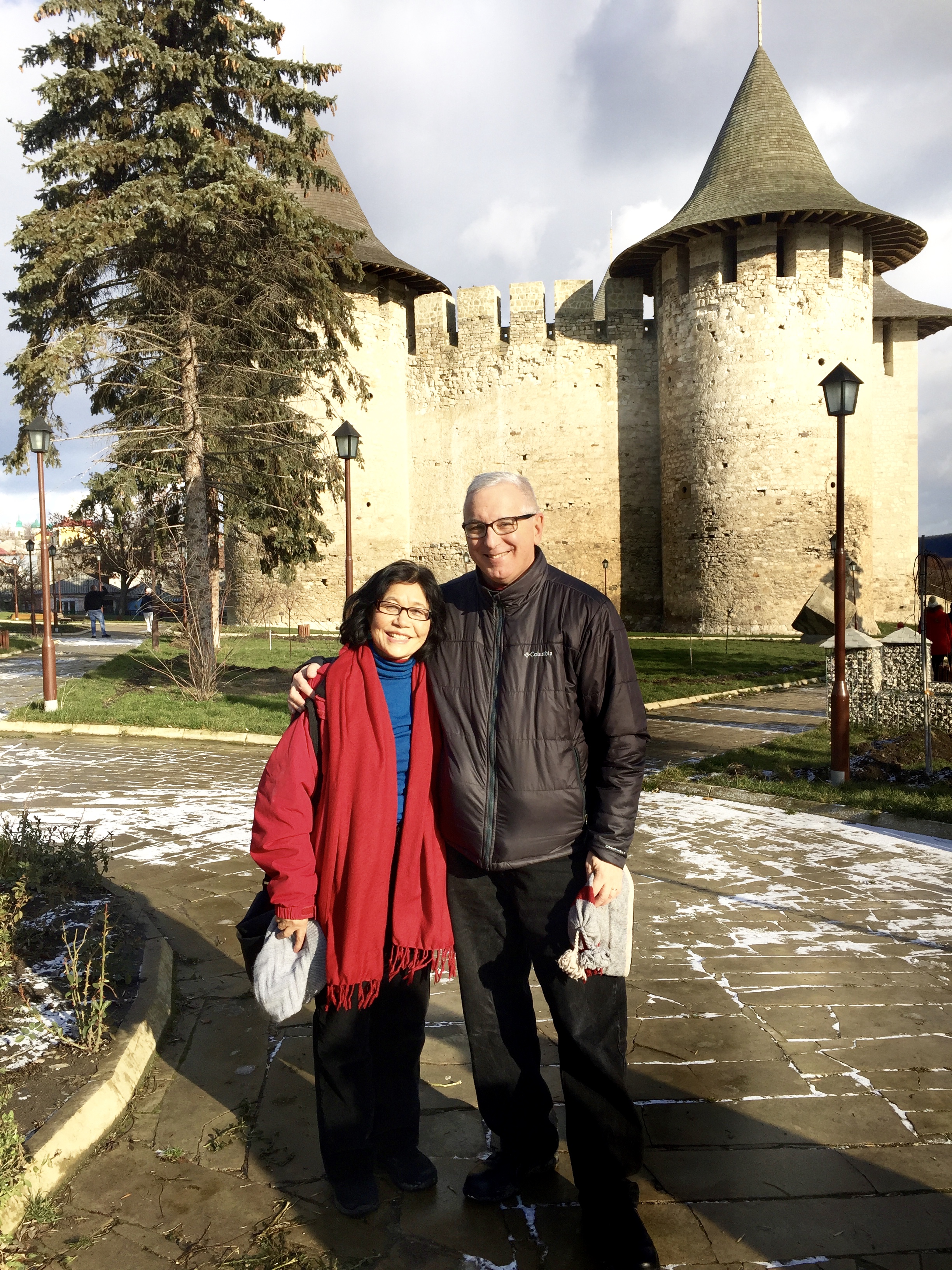
Visiting the Soroca Fortress in Moldova.
Finally, after a short break, we got rid of much of our stuff, rented our house and moved to Moldova, in Eastern Europe, to begin serving together as Peace Corps Volunteers.
I chronicled our three-year adventure on this blog and in my book. Since returning to Durham in 2018, we’ve continued pursuing our “not exactly retired” lifestyle, joining a growing number of older Americans who have been redefining retirement as more than leisure — and redefining themselves in the process.
Several news outlets profiled us as examples of this trend, which in our case has meant extensive travel, volunteering and spending time with family and a network of friends that reaches around the world.
I’ve never looked back.
I enjoyed my career and still miss my Duke colleagues, some of whom recently lost their jobs because of federal funding cuts, but I knew it was time for a change. Just like when I graduated college and chose to backpack across Europe, Asia and Africa with a friend instead of following my classmates to graduate school, I wanted to grab life and see what else it offered.
Visiting Tallinn Town Square in Estonia.
As I’ve approached this ten-year milestone, I know how lucky I’ve been. I left my job before the Covid pandemic and current funding crisis. Champa and I finished our service in Moldova before the pandemic and war in neighboring Ukraine forced the Peace Corps to halt its operations. We’ve been fortunate with our finances, health and family responsibilities. We could have encountered some disaster while traveling abroad, or at home, but we’ve been fine.
I launched this blog to share with friends our initial drive around the United States, never expecting it to continue so long or to reach people in more than 100 countries. I’ve loved hearing from readers with questions about the Peace Corps or early retirement, or just seeking encouragement to make a leap themselves.
Some of the other older volunteers who served with us in Peace Corps Moldova.
As I’ve told them repeatedly, my message is not “join the Peace Corps!” That’s a good choice for some people but not for others, assuming they get past the rigorous application process. Rather, I’ve urged readers to be intentional about their lives, to choose instead of drift, regardless of their interests. We all have dreams, whether it’s to launch a business, start a nonprofit or master a new skill. It’s often possible to pursue that dream, even on a limited scale, while respecting the real-world complexities that come with it.
Champa and I plan to keep going as long as we can. We’re traveling more than usual now so as to remain outside the United States during its current turmoil. You’ll see soon where we’re heading next. As we approach the next election, however, and as we get older, we will reevaluate. One of the main benefits of the past ten years is how comfortable we’ve become with uncertainty and change.
Delivering food for the Food Bank of Central & Eastern North Carolina during the pandemic.
Veering from our traditional American lives has enriched us immeasurably. These riches have come not in additional paychecks but in the people we’ve met, the places we’ve seen and the memories we’ve made, all while remaining centered with our family and friends. As we’ve learned on the road, we are far from unique in doing this. Many other older people with widely varying budgets and circumstances are also traveling off the beaten path and blazing their own trails.
I know how privileged we are to be among them. Not everyone can do this; family obligations, finances, medical limitations and other constraints are real. But it is possible to resist letting fear or habit prevent us from living with purpose. We can choose to make room for what truly matters to us.
Visiting the new school we recently helped build in Samalbung, Nepal.
An old Peace Corps slogan says: Life is calling. How far will you go? As we wrap up our first decade of being “not exactly retired,” Champa and I are grateful for how far we’ve gone and still looking forward to whatever comes next.
My hometown of Durham, N.C. is a great place to visit, especially if you’re retired and have more time to explore its bountiful pleasures.
The city’s marketing agency, Discover Durham, asked me to explain to fellow retirees why they should travel here. They just published my article, which you can read below or online on Discover Durham’s excellent website.
We’ll be expecting you.
A Retiree’s Guide to Exploring Durham
Retirees don’t need to move to Durham to enjoy its many pleasures. Durham is also a great destination for retired travelers.
POSTED BY DAVID JARMUL ON JUN 24, 2024
I moved to Durham in 2001 for a job at Duke University. I retired early to travel and serve abroad in the Peace Corps with my wife, but we then returned and have happily remained here since. Durham is regularly listed among the best places to retire in the United States.
You don’t need to move here to enjoy its many attractions. Older visitors can spend several pleasant days or weeks exploring Durham’s historic sites, hiking trails, restaurants and fun opportunities to spoil grandchildren. For visitors of a certain age, Durham is certain to provide a great experience.
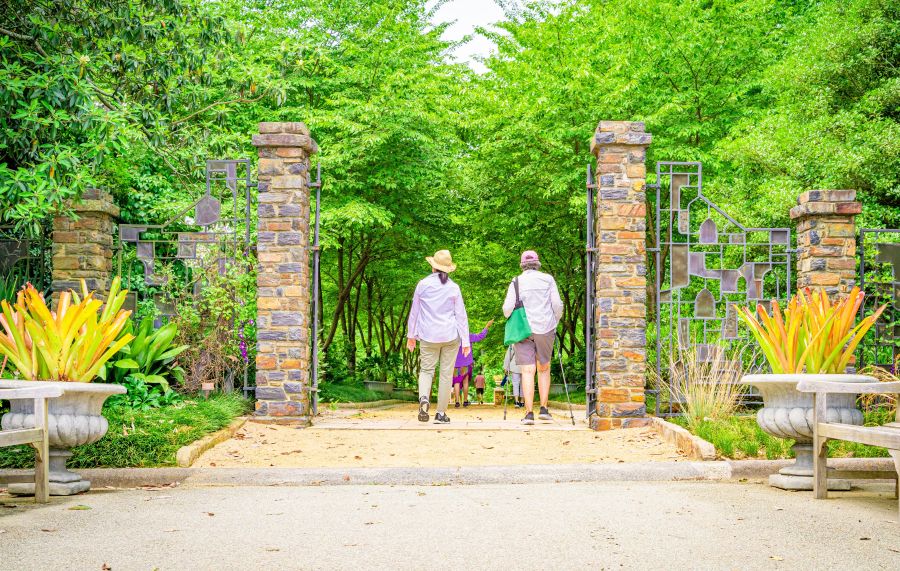
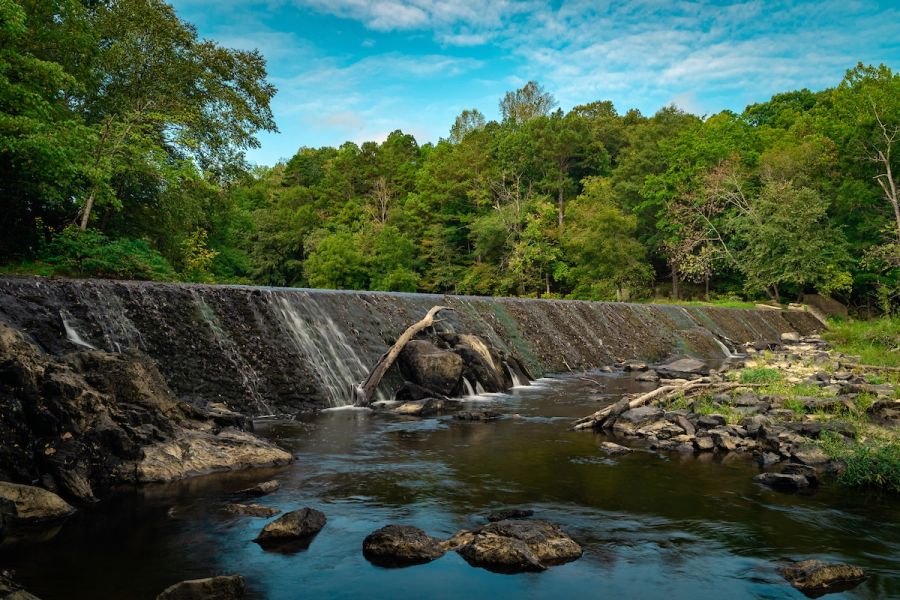
There are plenty of beautiful outdoor places for retirees to explore in Durham. Photo: Discover Durham
EXPLORE HISTORIC SITES
Durham has a fascinating history, spanning the rise and fall of the tobacco industry, civil rights struggles and the emergence of a vibrant modern city with a proud reputation for diversity and tolerance. Durham has produced great musicians, artists, scientists, entrepreneurs and athletes. Especially if you’ve spent most of your life in another part of the country, as I did, a visit here may lead you to reconsider your regional assumptions and broaden your perspective.
You have lots of great history options:
The downtown Museum of Durham History is small but impressive, rotating exhibits that highlight everything from Durham’s changing restaurant scene to the story of the Duffer brothers, the Durham natives who created the hit Netflix series “Stranger Things.”
One block away is the majestic Carolina Theatre, with historical exhibits in an elegant lobby. The exhibits sparked a great conversation with my grandsons while we waited for a movie to begin upstairs.
Across town is Bennett Place, where the Civil War’s largest troop surrender occurred. That’s right; this occurred in Durham, not at Appomattox, which is what I’d thought, too.
Numerous sites around town highlight African American history. Historic Stagville includes remnants of a large plantation, including slave quarters. The Hayti Heritage Center has exhibits, programs and concerts. Black Wall Street was a thriving African American business center during the Jim Crow era.
Duke Homestead tells the story of tobacco, with a museum, a curing shed and opportunities for grandparents and kids to ride tobacco wagons together.
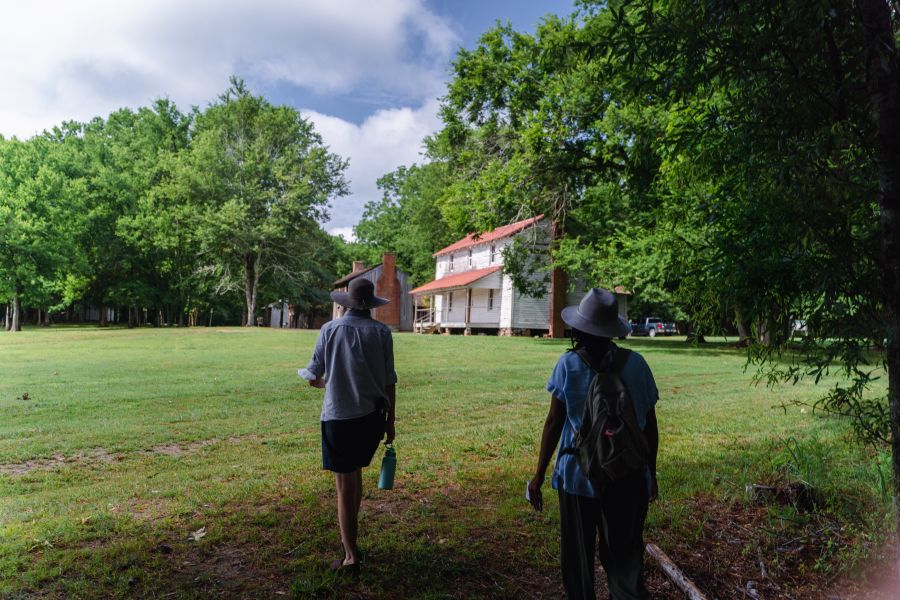
Learn about Durham’s history at Historic Stagville. Photo: Discover Durham
HAVE FUN WITH GRANDCHILDREN
Speaking of grandchildren, if yours live in Durham, they may already know the popular Museum of Life + Science. While you’re in town, let them show you their favorite spots, from the Dinosaur Trail to the glass conservatory filled with butterflies. You’ll feel like a kid yourself.
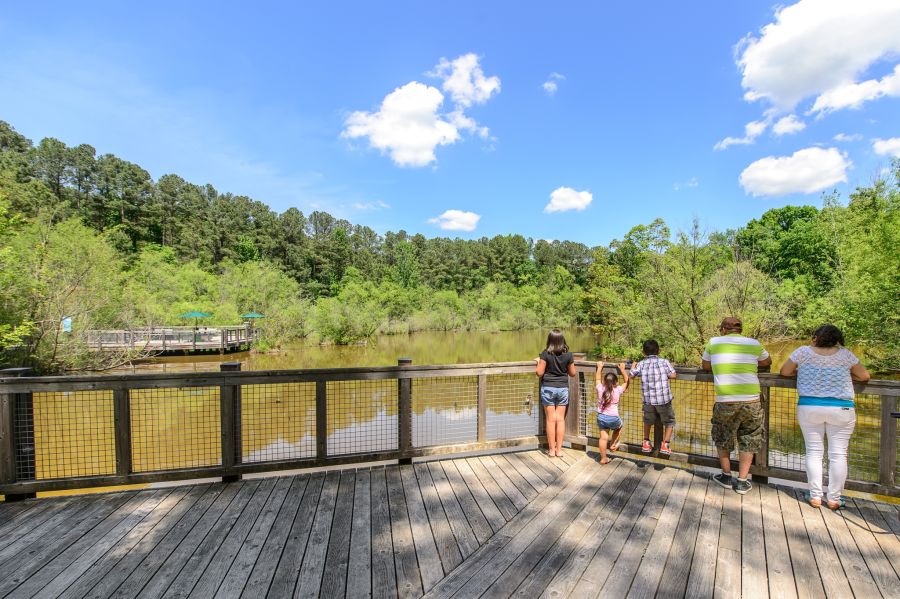
Enjoy a stroll on the boardwalk with the grandkids at The Museum of Life + Science. Photo: Museum of Life + Science / Discover Durham
Another favorite for grandparents is the Duke Lemur Center, a research facility with the largest population of lemurs outside their native Madagascar. You’ll need a reservation to stroll its 100 acres and see more than 200 lemurs. If you have a large family group, you can book a private group tour. Youngsters will be thrilled to watch these distinctive creatures leap through the trees. You will be, too.
The Duke Lemur Center is an exciting attraction for adults and children alike. Photo: Discover Durham
Also on the Duke campus are the Sarah P. Duke Gardens, among the most beautiful in the South. There’s nothing better than strolling with grandkids along its gentle trails, with stops at the koi pond and Japanese bridge. Nearby is Duke’s main campus and must-see Duke Chapel.
Durham offers many ways to enjoy time with youngsters, from a downtown skate park to ice cream shops. Check out the Family Fun page for suggestions.
EXPLORE THE CULTURAL SCENE
Durham’s lively cultural scene is much less expensive and easier to navigate than many others on your retirement bucket list. The Durham Performing Arts Center (DPAC) hosts Broadway shows and other world-class performances. The Carolina Theatre also has live shows, along with movies and events. My wife and I also enjoy local theater groups, such as the Bulldog Ensemble Theater, which stages shows next to the Hi-Wire Brewery. When we go there, we park for free, enjoy a great show and have a beer outside for less than half of what we would have spent on a single Broadway ticket.
The Carolina Theatre always has something interesting to see beyond its doors. Photo: HuthPhoto / Carolina Theatre
Durham’s musical legacy spans every musical genre. There’s an especially active jazz scene, at venues such as Missy Lane’s Assembly Room and the Sharp Nine Gallery. You’ll also find live performances of bluegrass, folk and other genres. During warmer months, there are free concerts in Central Park, Duke Gardens and other outdoor sites. Check out the Events Calendar for upcoming performances, which include diverse events for members of the LGTBQIA community.
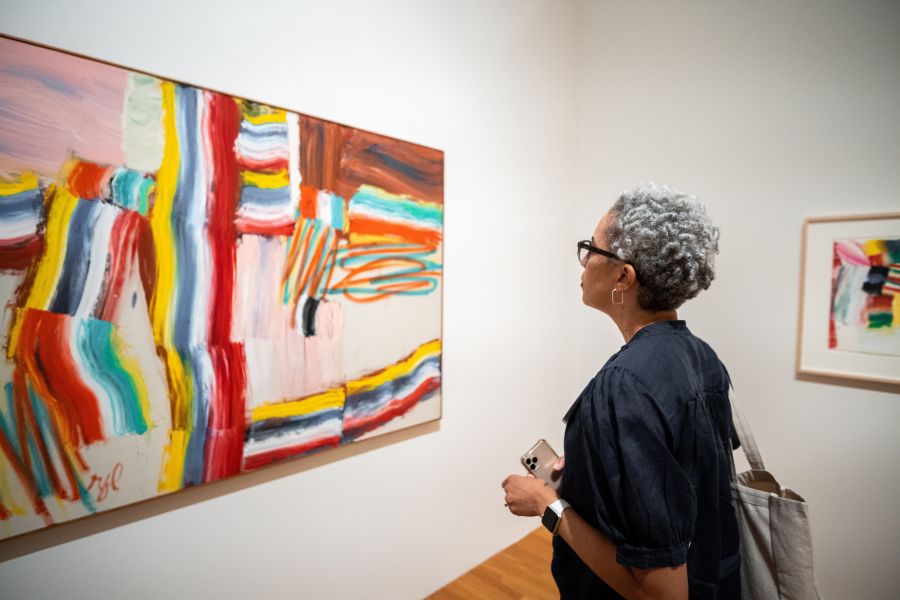
Art lovers might start a Durham visit at the Nasher Museum of Art at Duke University. It has an excellent permanent collection, leading-edge exhibitions and a lovely cafe, all within an architecturally acclaimed building. Elsewhere, visit the artist studios at Golden Belt’s converted textile factory, exhibits at the Durham Arts Council and other venues. This online arts guide has suggestions.
Head to the Nasher Museum of Art to see both permanent installations and temporary exhibitions. Photo: Discover Durham
If possible, time your visit to coincide with one of Durham’s big arts festivals, such as the Full Frame Documentary Film Festival, the American Dance Festival, the OutSouth Queer Film Festival or the Hayti Heritage Film Festival. You’ll meet plenty of fellow older enthusiasts.
GET BACK TO NATURE
If you have a tote bag saying “hiking is my retirement plan,” bring it to Durham. You may need it while exploring Durham’s many hiking and biking trails. Eno River State Park has several great trails and hosts an epic music festival every July. There are great hiking paths in the university’s Duke Forest and along the American Tobacco Trail, whose wide, paved paths are a great choice for anyone with mobility constraints.
With both drive-up and hike-in views, Eno River State Park is enjoyable for everyone looking to experience the outdoors. Photo: Discover Durham
For water sports, take a short drive to Jordan Lake or Lake Michie to rent kayaks and canoes. Local companies offer paddle trips and other outings.
If golf is your retirement passion, check out Durham’s ten courses. Other recreational options abound, even including fencing, curling and axe-throwing.
Enjoy quality accommodation and a relaxing game of golf at The Washington Duke Inn & Golf Club. Photo: Washington Duke Inn & Golf Club
CHEER FOR OUR TEAMS
If you’re looking for something less taxing, Durham Bulls, the minor league baseball team made famous in the movie with Kevin Costner and Susan Sarandon. I like going on nights when they have a fireworks show after the game.
Take the grandkids out to the ball game at the Durham Bulls Athletic Park. Photo: Samantha Everette
College basketball is a local passion, with men’s and women’s teams at both Duke and North Carolina Central Universities. Duke’s Blue Devils often sell out but you may find tickets online and you can visit the Hall of Fame at Cameron Indoor Stadium for free. There is a full array of other college sports as well.
EAT, DRINK AND BE DURHAM
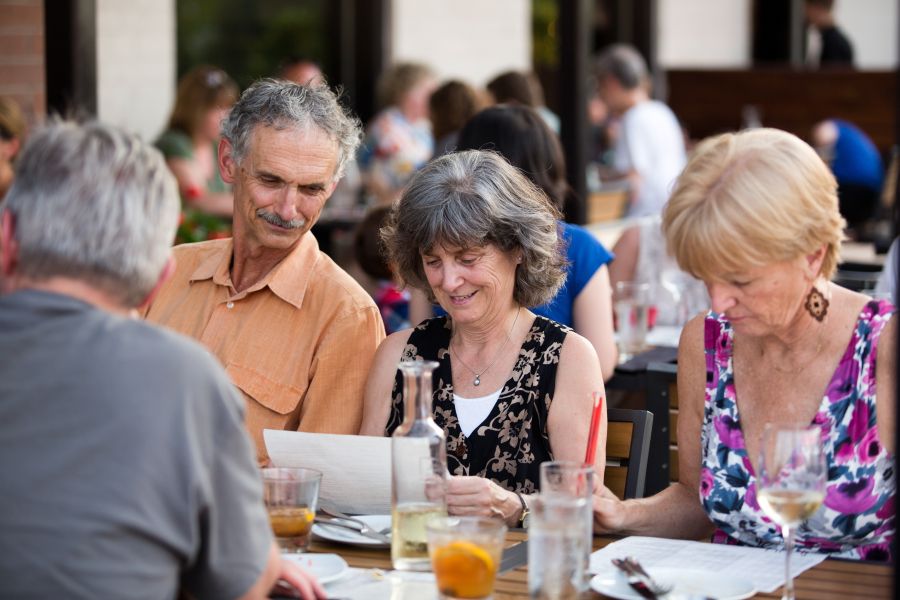
If all of this whets your appetite for a retirement visit to Durham, you can satisfy your hunger with almost any cuisine, from food trucks to fine dining. Whether you crave traditional North Carolina barbecue or farm-to-table gastronomy, you’ll find it in Durham, whose chefs have been honored with national awards. Some local restaurants offer senior specials.
My wife and I are especially partial to international cuisines. Some of our favorites include Korean food at Namu, Salvadorean at El Custcatleco, Japanese at any of Michael Lee’s “M” restaurants (M Sushi, M Tempura, M Pocha and M Kokko) and Ethiopian at Goorsha. But we like many other places, too, and our list is always changing.
Enjoy delicious Japanese inspired small plates at Juju Durham. Photo: Jessie Gladdek
See this Food & Drink Guide to learn more and order a Craft Beverage Guide for ideas about where to find creative cocktails and breweries. Durham also has a lively farmers’ market and international shops where you can buy products ranging from African spices to Indian samosas.
YOU MAY DECIDE TO STAY
I’m warning you. If you come to Durham for a visit, you may like it so much that you decide to retire here. With its mild climate, strong economy, world-class medical institutions and great shopping, Durham attracts lots of retirees. They find a welcoming community with attractions ranging from pickleball to the Osher Lifelong Learning Institute at Duke.
Come take a look.
David Jarmul was the head of news and communications at Duke University for many years before retiring early and starting a popular blog, Not Exactly Retired. He and his wife, Champa, are active in the Durham community.
I was lucky this past week to encounter the best of humanity just as the 2024 presidential campaign is gaining steam. Two events reminded me of the many good people living among us, no matter what we may see and hear over the next year and a half.
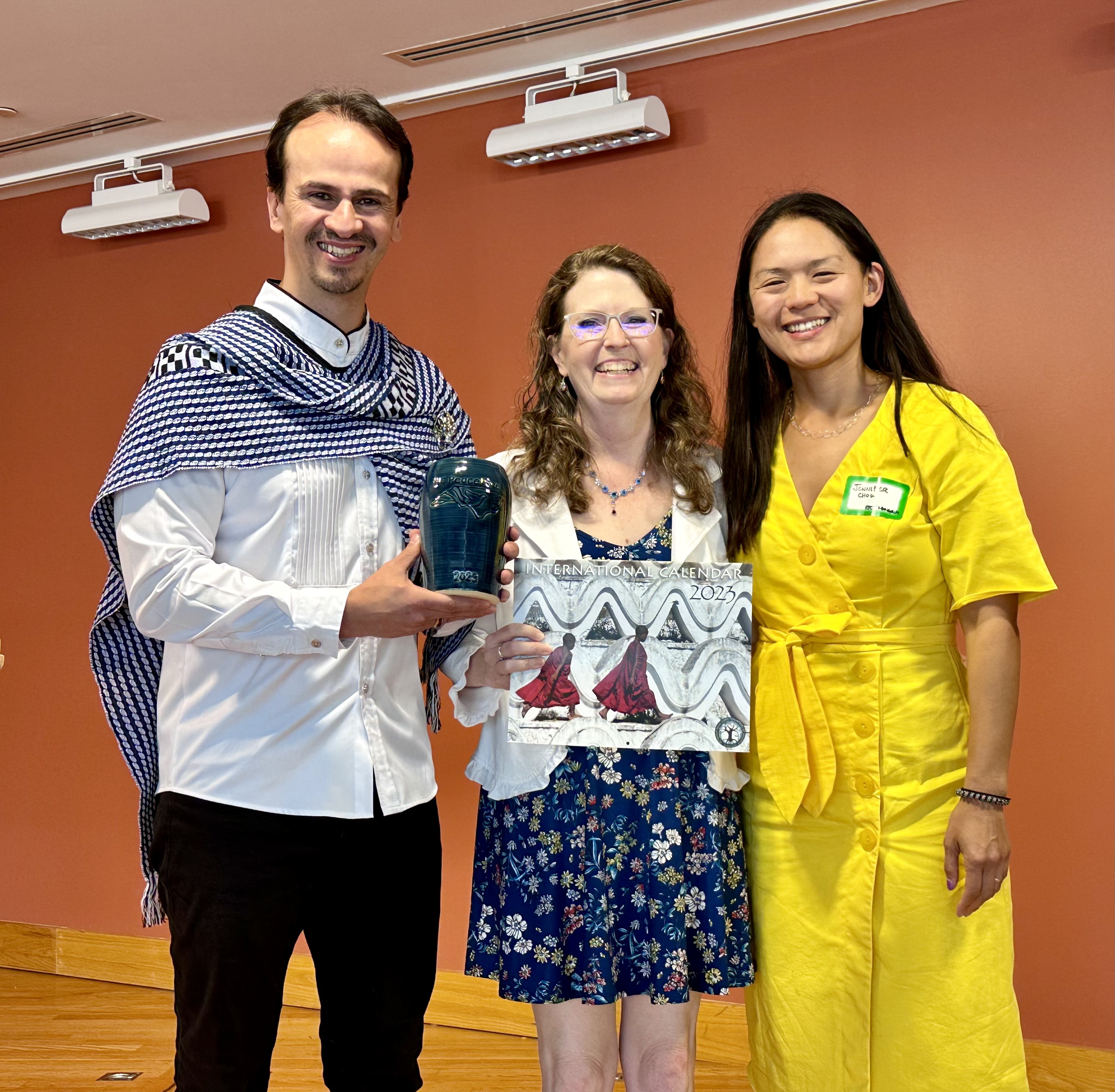
On Sunday, I participated in the North Carolina Peace Corps Association’s annual Peace Prize ceremony, which this year honored a local nonprofit that uses dance to assist disabled veterans and others. The photo shows ComMotion’s Andre Avila and Robin McCall receiving the award from NCPCA Vice President Jennifer Chow.
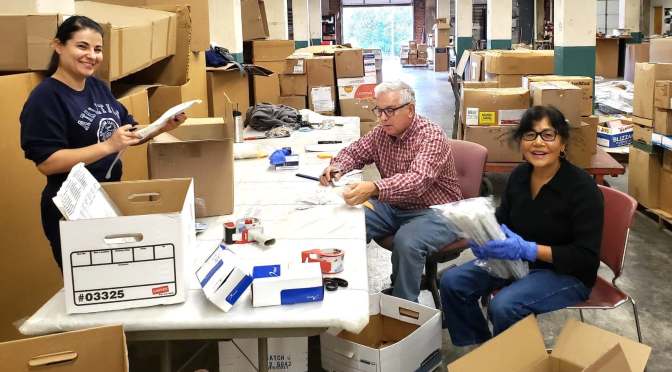
On Monday, I participated in an event organized by the Triangle Nonprofit & Volunteer Leadership Center to honor outstanding local volunteers — people such as Bruce Ballentine, who has been active with Habitat for Humanity and raised more than $7 million to build new homes for families.
Another honoree, Lalit Mahadeshwar, organized volunteer teams with the Hindu Society of North Carolina to provide food packs to needy families during the pandemic. Dr. Shep McKenzie III provides free gynecological exams for Urban Ministries and also tends its vegetable gardens. Myra Blackwell helps lead a baseball league for underserved youth.
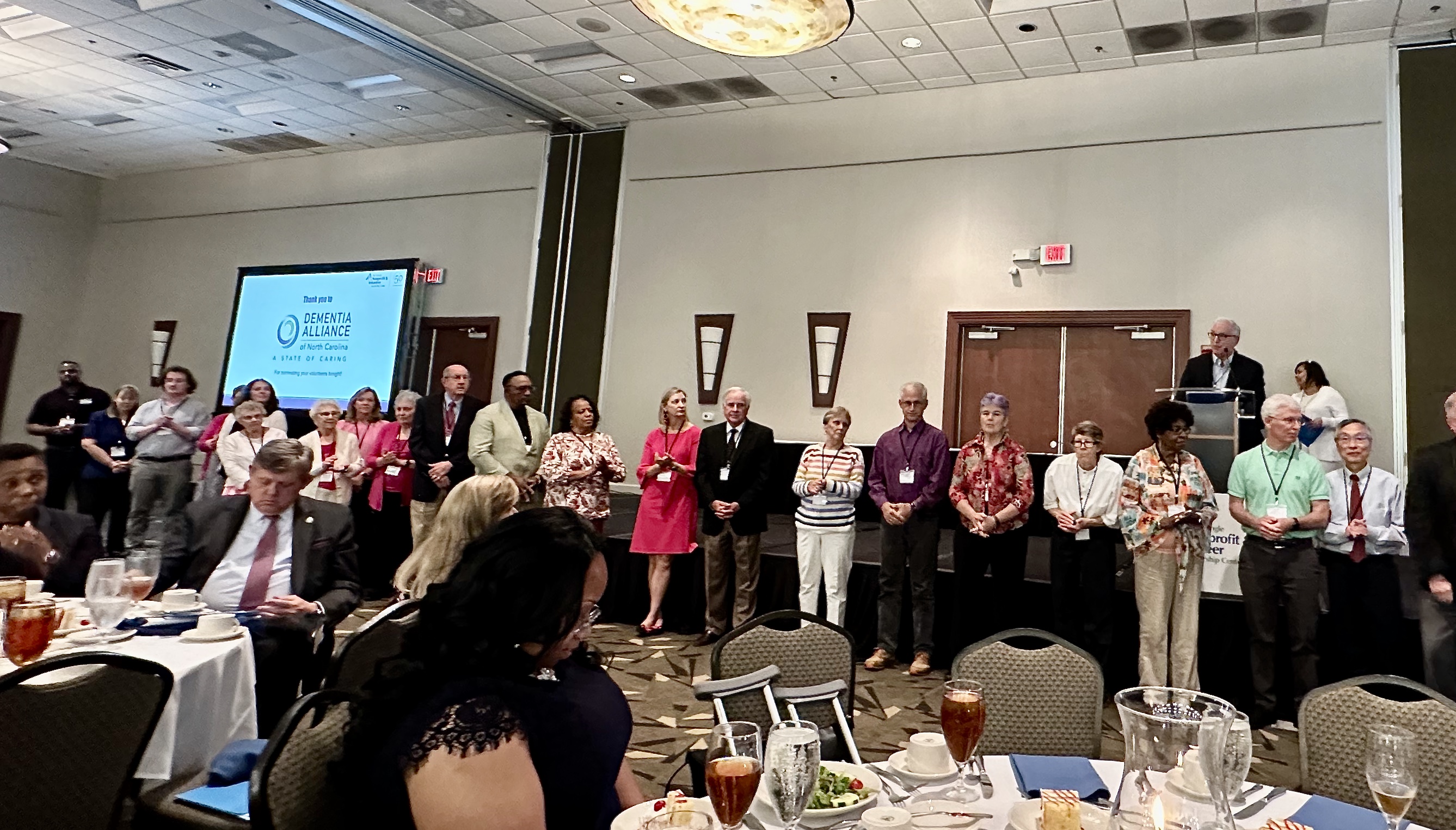
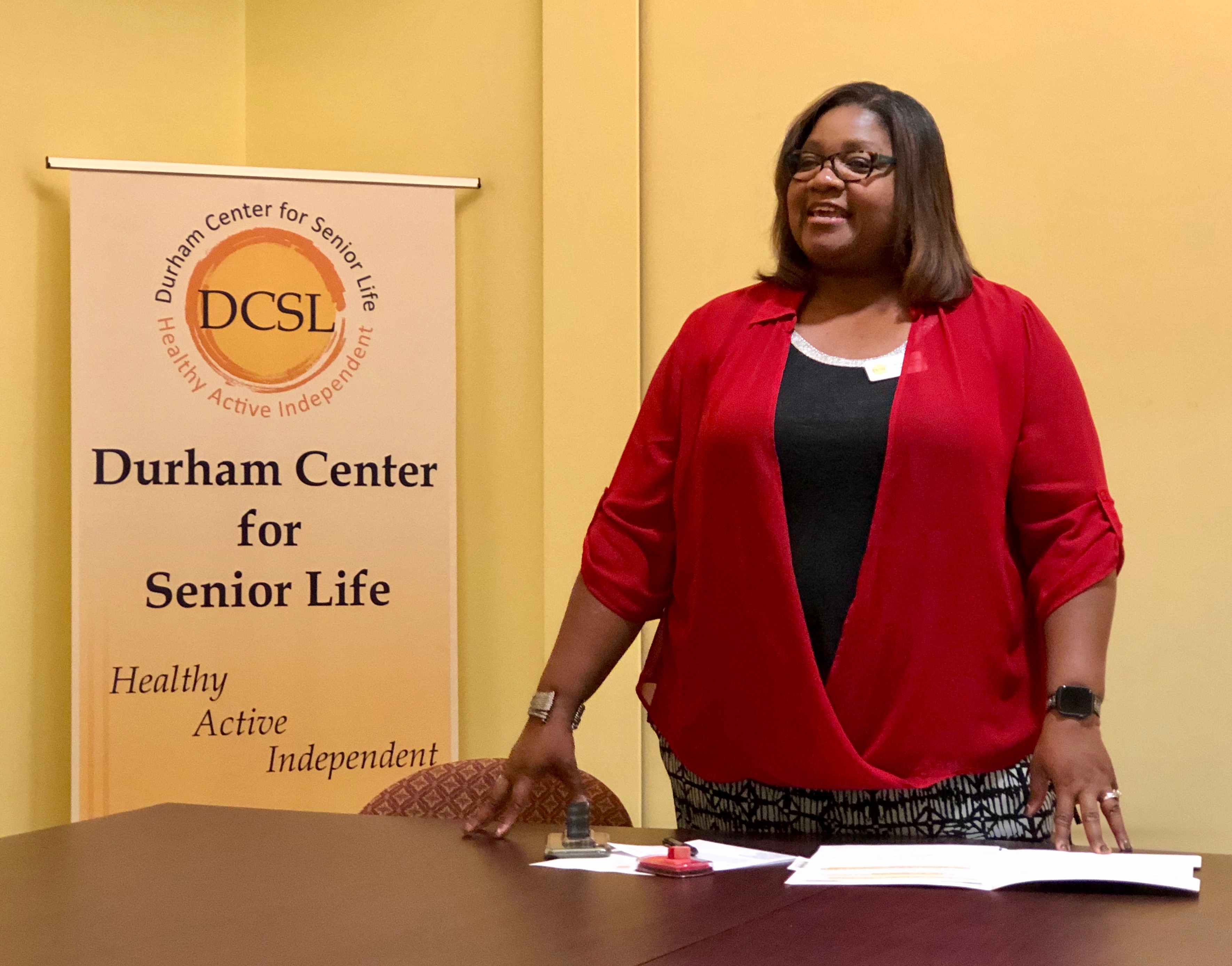
Others honored at the event deliver meals to the elderly, provide music for dementia patients, comfort the parents of hospitalized pediatric patients, care for shelter animals and much more. All of their stories made me feel better about people. The photo shows me introducing some of those in the “senior” category.
Sarah Cline, the program manager for the AmeriCorps Senior Retired and Senior Volunteer Program (RSVP), joined me in honoring OLLI, which recently teamed up with RSVP and the Durham Center for Senior Life to expand programming for older volunteers. I chair the local RSVP advisory council and have been working with Sarah to encourage more local residents to get involved, as we did in a recent radio interview.
I spend much of my own time volunteering — with RSVP, OLLI, the West End Community Foundation and various Peace Corps and Moldova activities. This past week reminded me how important this work is — for my own emotional well-being most of all.
If you’re an older Durham resident who wants to volunteer, I invite you to send Sarah a message. She’s ready to meet with you and find a great match. If you live elsewhere, you can contact your local RSVP office or take advantage of other volunteer resources.
The upcoming campaign seems likely to challenge our emotional equilibrium, regardless of our personal politics. I have my own strong views but also want to resist cynicism and despair. Volunteering isn’t a perfect vaccine but it does help us feel better about our fellow Americans — and ourselves — while addressing the urgent needs of our communities.
We were deeply moved when we saw our former host family, work partners and others on the screen, showing off the projects we pursued together. Most emotional was seeing our beloved Bunica, or Moldovan grandmother, talking to us from her bed.
Even if you don’t speak a word of Romanian, you should have no trouble following along. We think the producers did a great job and hope you enjoy the story, too. “Mulțumim frumos!” to everyone who made it happen.
If you’re an American who donated to a charity on “Giving Tuesday” or is volunteering with a community group, does that make you like people in other parts of the world?
That’s the question I explored recently with volunteer leaders around the globe for an article I wrote, just published by Activate Good, a Raleigh-based organization that promotes volunteerism in North Carolina’s Triangle region.
You may be surprised by some of what I found. India’s largest volunteer group has to deal with 22 official languages. HandsOn Bogotá says it “has a lot to learn” from U.S. volunteering. Volunteer groups from Paris to Singapore are scrambling to maintain their services amid the pandemic.
I hope you enjoy the article — and check out Activate Good’s excellent work while you’re on their website. You’ll also find a link to the Points of Light Global Network to help you get involved with volunteer groups elsewhere in the United States and around the world.
Top image: iVolunteer, India. Bottom image: Volunteer Ireland.
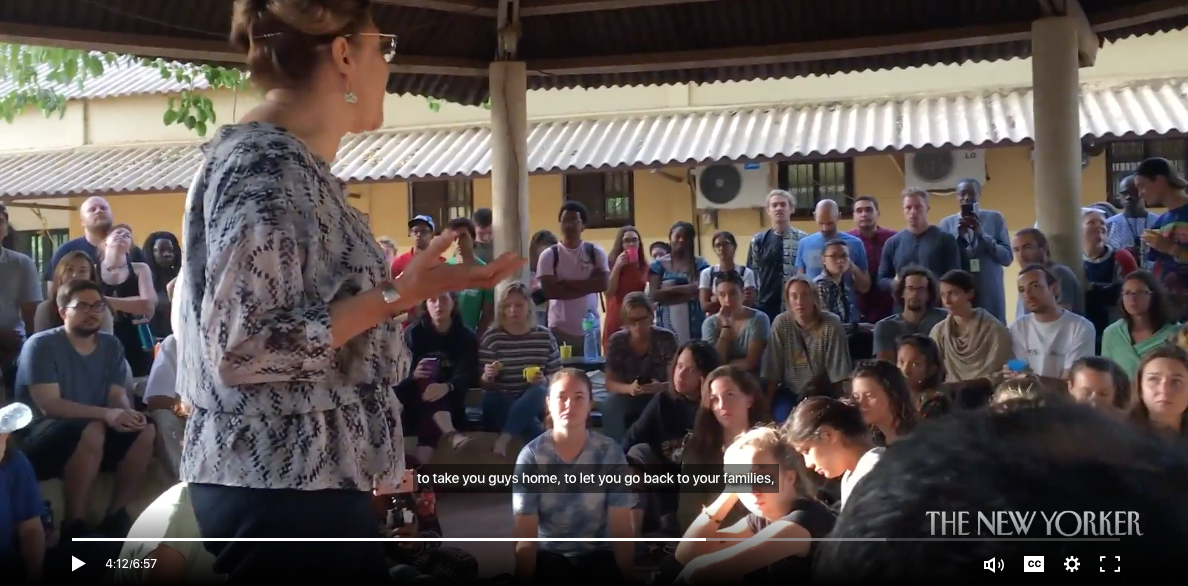
More than 7,000 Peace Corps Volunteers from around the world arrived recently in North Carolina and other states after being evacuated because of the coronavirus.
They need our help — and they have something to teach us.
The volunteers have returned to Greensboro from Ukraine, to Raleigh from Malawi, to Cary from Panama and to Asheville from Ethiopia. They’ve come from South Africa, Guatemala and elsewhere — 61 countries in all. It’s the first time the Peace Corps has evacuated its volunteers worldwide.
The North Carolina Peace Corps Association, like its counterparts across the country, has been organizing to assist the evacuees, few of whom have jobs lined up. They don’t receive unemployment benefits and their health insurance is temporary.
Of course, millions of other Americans are out of work, too, wondering how they’re going to buy food and pay their rent. The Peace Corps evacuees share this economic stress along with having suddenly left distant villages where they were assisting teachers, organizing health projects and working in other ways with some of the world’s poorest communities. Now, after a difficult trip, they’re back home, maybe still under quarantine.
Volunteers evacuate from Senegal. From an article and video by Paula Ospin for “The New Yorker.”
They may not be ready yet to focus on a job hunt or to hear how lucky they are to eat barbecue again. Many of them didn’t want to be here, at least not yet.
I can only imagine how they feel. When Champa and I returned to North Carolina from our Peace Corps service in Eastern Europe two years ago, after months of preparation, we needed time to readjust to things as simple as drinking water from the tap. We were happy to be reunited with our family and friends but missed our Moldovan friends.
Peace Corps Volunteers are renown for their resilience but those who were just evacuated could use some help. Even with everything else going on, other Americans should look for ways to assist them. The Peace Corps itself needs political support and resources to respond appropriately. (An online petition calls on the federal government to provide the evacuees with appropriate benefits.)
Photo taken in Los Angeles International Airport by PCV JaKyah Beatty during a layover on her trip from Fiji to Houston.
In return, these newly returned volunteers have a valuable perspective to share at this moment of worldwide anxiety.
They’ve just been living alongside people in other countries, so can help us see how the world is more connected than “us” and “them,” especially during a global crisis. Our country is not alone in facing extraordinary medical challenges and economic disruption, and it has greater resources than the countries where volunteers were serving.
The Peace Corps also exemplifies the human power of service, as millions of North Carolinians have been demonstrating recently, most notably with our heroic medical teams and first responders. More broadly, people across our region have been stocking grocery shelves, working at pharmacies or just staying home to reduce transmission rates. They are ordering meals to support local restaurants, checking on elderly neighbors and helping in other ways. The crisis has brought out the best in them.
In other words, Peace Corps Volunteers aren’t different from other Americans. They are just one example of how we all can enrich our own lives while serving others.
Champa and I began our Peace Corps service when we were 63 years old. We were among the hundreds of older Americans who join every year. The two of us ended up having a life-changing experience and feeling like we accomplished a lot. Thus, a final lesson, especially for people nearing retirement, which is to be unafraid about redefining your life and following your heart to pursue the Peace Corps or some other dream. As I discuss in my new book,you never know what might happen tomorrow.
Like a quarter-million Americans since President Kennedy started the Peace Corps in 1961, the volunteers and trainees who just came home answered our country’s call for service. I hope people in North Carolina and across the country will reach out, thank them, lend a hand and then listen to their stories.
When Champa and I returned to Durham after serving abroad for two years in the Peace Corps, I didn’t expect it to be so difficult to continue volunteering in my own community.
I assumed there were local nonprofit groups that could use my professional skills, especially for free. When I called around and searched online, though, I couldn’t find a good match. Eventually, I created an informal volunteer role for myself with the North Carolina partnership program that assists Moldova, where we served as Peace Corps volunteers, and I resumed volunteering at Urban Ministries, but who knows what I missed?
I am not alone. Across the Triangle and more widely, many older Americans now view retirement as much more than leisure. They consider it a second act, a new life stage of personal growth and service that may last for decades. These retirees are still sharp, still active, and a tremendous potential resource for nonprofit organizations that could tap their expertise in various fields.
Too often, however, communities regard their older residents in an outdated way — as a group requiring assistance rather than as an asset to recruit and empower.
These are wonderful and impressive people — caring, thoughtful and professional. They are working hard on missions such as helping retirees obtain medical care or promoting volunteerism broadly.
Generally, though, older volunteers are only a small part of their missions, which were established before the big shift began in how Americans think about retirement.
For instance, our local volunteer center does great work but is also busy with high school students and many others. Websites such as VolunteerMatch and organizations ranging from AARP to RSVP serve important roles, too. Sixty+Me has an excellent online guide. Yet many older residents still fail to connect with worthy organizations that could benefit from their experience in writing grants, preparing budgets, building websites or managing staffs.
To be sure, many retired citizens do serve as volunteers — teaching literacy classes, building homes with Habitat for Humanity and much more. Some volunteer throughtheir religious organization or a former employer. Many retirement communities and senior centers have their own volunteer programs, often with a focus on serving the needs of other retired people.
We need to be more strategic about this, as some communities around the country have demonstrated. A leader of the Encore Boston Network told me about their system to train older volunteers, match them with organizations and provide ongoing support. He described similar efforts in Phoenix, Denver and elsewhere. Many of the volunteers take on assignments that draw on their special expertise. Springfield, Missouri has an impressive Give 5 program that brings groups of retired people on a bus to local nonprofits, helping them find one to match their interests.
I don’t mean in any way to downplay the many people, of all ages, who are generously rolling up their sleeves across our region to deliver meals, comfort the sick and more, or the excellent organizations that work with them. But as more and more older Americans look for new meaning in their lives, communities like Durham that attract them should recognize their good fortune and act deliberately to match them in meaningful volunteer roles, which would also help retirees avoid social isolation.
The opportunity is compelling and I am optimistic we can take advantage of it. As I’ve discussed it with local leaders and stakeholders, they’ve generally been responsive and enthusiastic. They see the possibilities. Several key players are interested in trying to make Durham a leader in this arena. Everything I’ve encountered so far reminds me why Champa and I are lucky to live in such a progressive and caring community.
If some older folks prefer to just play golf or tend their gardens, they’ve earned that choice. The two of us enjoy traveling and spending time with our grandchildren, too. But we also want to continue the spirit of volunteerism we found so fulfilling in the Peace Corps.
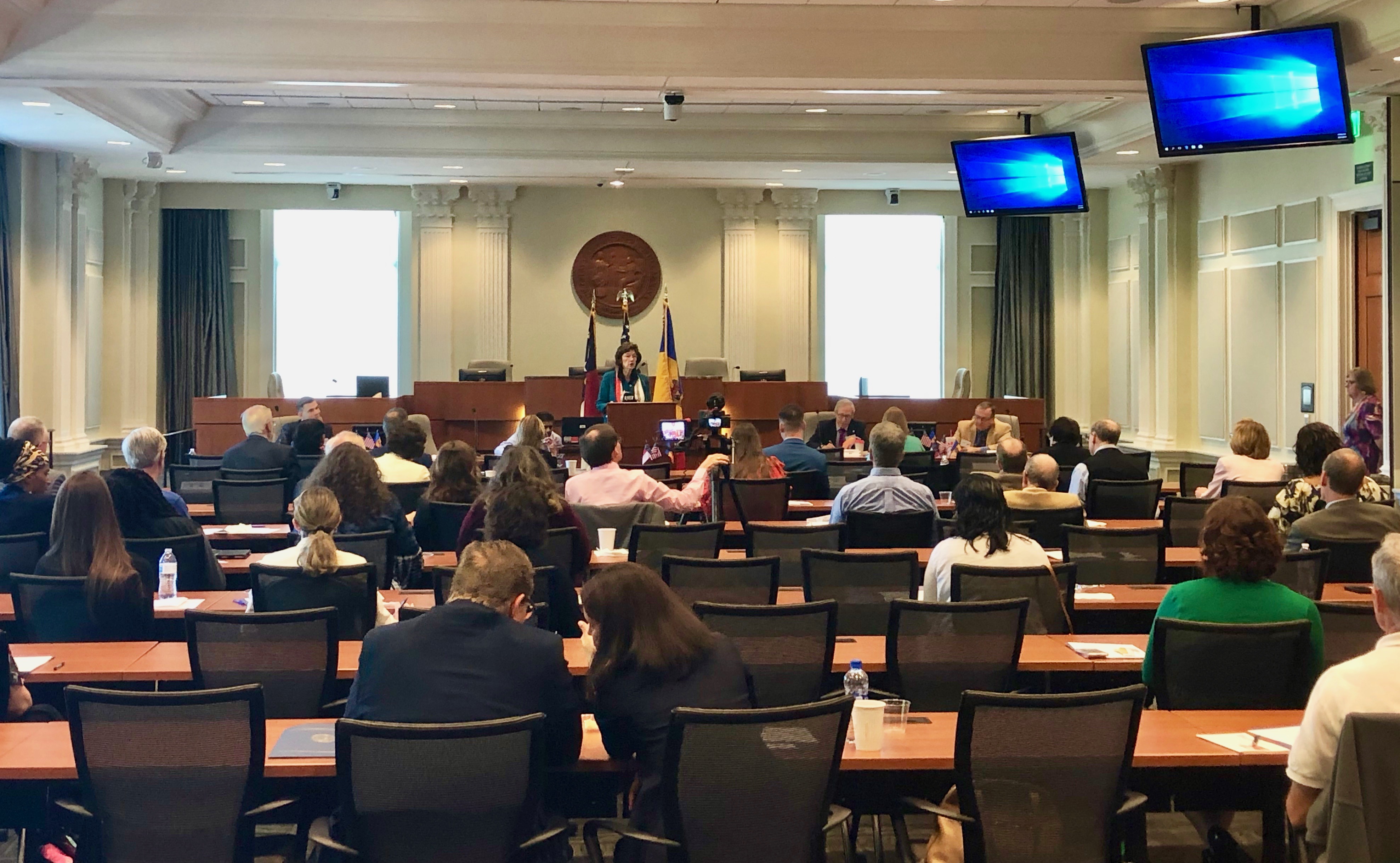
I published an article Thursday, May 16, in the Raleigh News & Observer about North Carolina’s extraordinary partnership with Moldova. I‘m sharing the article here along with photos of an April 27 conference in Raleigh where teachers, nurses, politicians and others discussed the partnership. My Peace Corps volunteer colleague Jim Fletcher (pointing below) and I were among the speakers.
Later this week, North Carolina will renew its partnership with a little-known country that’s been bringing out the best in our state’s people for more than two decades.
North Carolina’s National Guard has been helping the country’s defense forces throughout this time. Librarians from Wilmington and across the state have sent it more than 350,000 books. Nurses, dentists, pharmacists and others have provided medical assistance. A Hendersonville group has renovated some of its orphanages and schools.
Jim Fletcher and the two of us met with N.C. Sec. of State Elaine Marshall prior to the conference.
North Carolina recently celebrated the 20th anniversary of its extraordinary partnership with the country and the amazing thing is that many North Carolinians have never heard of the country, much less about the partnership.
It’s the Republic of Moldova, a former Soviet state one-fourth the size of North Carolina that’s wedged near the Black Sea between Romania and Ukraine. It’s the poorest country in Europe, with a struggling economy, political instability and other problems. It’s also beautiful, with lush vineyards and farmland, a rich culture and wonderful people.
My wife, Champa, and I had barely heard of it, either, when we left our home in Durham three years ago to serve there as Peace Corps volunteers in a group that included volunteers from Asheville, Charlotte, Boone, Winston-Salem and Raleigh. We were posted to a small city where we lived with a host family and I worked at the library while Champa taught at the school. (I described our adventures on my blog, Not Exactly Retired.)
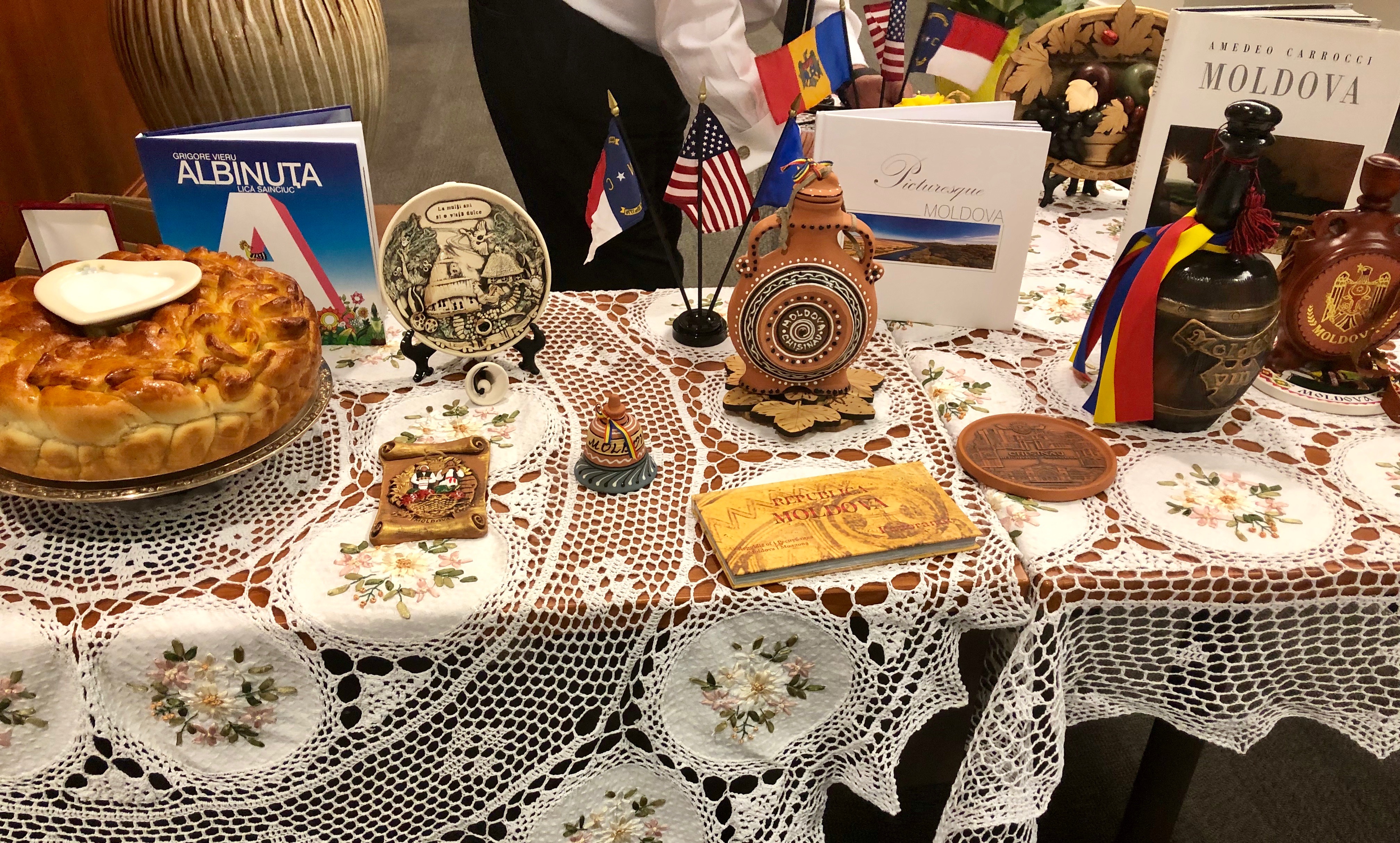
A welcome table featured Moldovan crafts and foods.
While we were there, we kept hearing about Moldova’s partnership with, of all places, North Carolina, which turned out to be a big deal.
The partnership began with North Carolina’s National Guard assisting Moldova’s defense forces when the Soviet Union ended and Moldova became independent. The partnership has grown to include civic, educational and other organizations, including religious groups that range from Christian groups based in Claremont and Dublin to the Greensboro Jewish Federation.
In 1999, North Carolina and Moldova signed a collaborative agreement through the NATO Partnership for Peace. Governors of both parties have renewed it regularly and another renewal is planned when a delegation led by N.C. Secretary of State Elaine Marshall travels to Moldova’s capital later this week.
“North Carolinians should be proud of this partnership,” former U.S. Ambassador to Moldova Michael Kirby said at a recent conference in Raleigh that brought together participants from across the state. “I’ve never seen another relationship like this.”
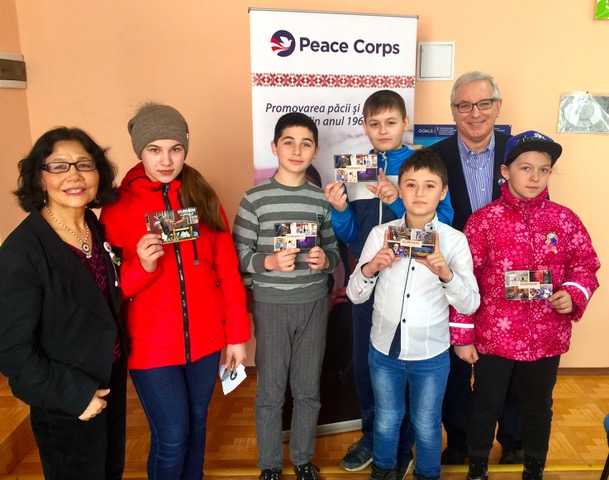
Champa and I gave students postcards from our home town of Durham at this workshop in Criuleni, Moldova.
The partnership has been “an important force for peace, an important force for democracies going forward,” agreed Rep. David Price, who recently visited Moldova as part of a bipartisan Congressional group.
In addition to receiving support within its own borders, Moldova has sent groups of experts to North Carolina to learn about topics ranging from judicial reform to agriculture. In turn, North Carolinians have benefited, too.
“I’m from Eastern North Carolina, where Raleigh is hours away,” said Elaine Justice, principal of an elementary school in Swansboro whose teachers and students interact with a Moldovan school. “Our kids, by being connected through this, are growing. They don’t just see themselves as living on the edge of North Carolina. They’re becoming global citizens.”
This slideshow requires JavaScript.
This past summer, when my wife and I returned to Durham, we found America beset with political rancor. It’s been a relief to get involved in this bipartisan partnership where Republicans and Democrats, military veterans and university students and people of diverse ages, faiths and ethnicities are working together to provide assistance and form friendships with people in a struggling democracy, exemplifying what’s best about North Carolina. As Sec. Marshall told the conference, the program’s success is “due to people with a heart who are willing to share it.”
I hope more people get involved in the partnership and perhaps even visit Moldova. It’s a fascinating place that’s waiting to bring out the best in them, too.
David Jarmul, the former head of news and communications at Duke University, served as a Peace Corps Volunteer in Moldova with his wife, Champa.
“Mr David, what happened to the American Government?”
That’s what Victoria, one of the students in the English conversation class I taught while serving as a Peace Corps volunteer in Moldova, asked me on Facebook last week. “I see news everywhere,” she told me. (That’s Victoria making the V sign at our group’s farewell dinner.)
I know what she means and the news has worried me even more. After spending more than two years in a little-known part of the former Soviet Union where people are deeply cynical about politics and the rule of law, I’m unnerved by what I’ve encountered in my own country since returning home this past summer.
Champa and I were proud to represent the United States when we arrived in Moldova with our group in mid-2016. That was before we had a president who disdains international alliances, demonizes refugees and calls developing countries “shitholes.” It’s possible his description didn’t include Moldova, whose population is white, but it seems even worse to me if it didn’t. As an American, was I supposed to be proud that I was serving in a country where people are poor but at least are white?
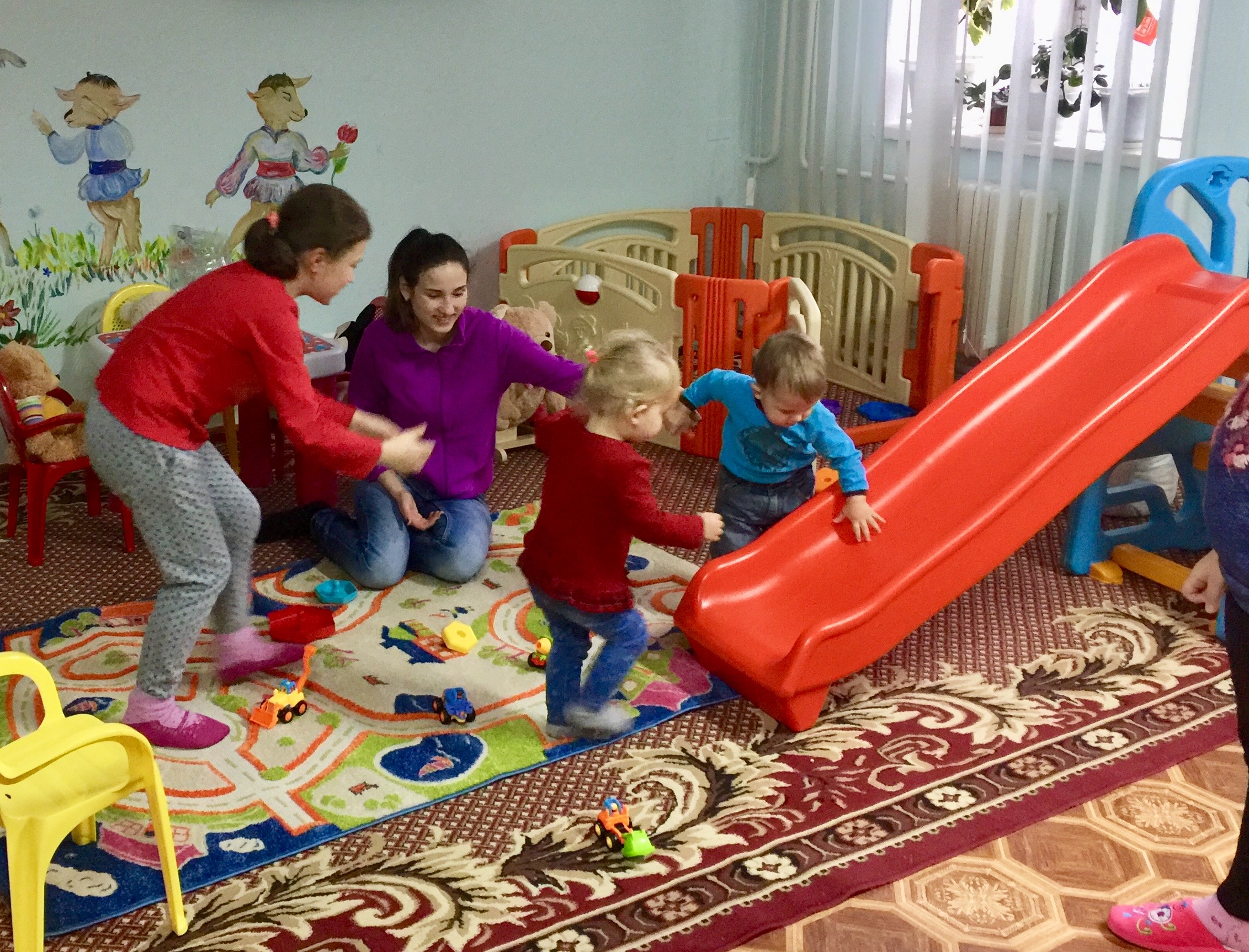
Michelle Obama championed the “Let Girls Learn” initiative that brought new opportunity to women and girls around the globe, encouraging more girls to go to school, start businesses and pursue careers. The initiative funded the Peace Corps grant through which our Ialoveni library was able to create a new family room, above, and programs for mothers and children. Just before we received the grant, though, we were told to no longer refer to the initiative as “let girls learn,” which was linked so closely to Michelle Obama.
I came to love Moldova during my service there and have recently gotten involved with a partnership program between Moldova and my home state of North Carolina. (Rodney Maddox and Lora Sinigur, who help run the program with Secretary of State Elaine Marshall, are shown left.) I continue to admire the perseverance and grace of Moldovans in the face of hardship. Despite its rich agriculture, Moldova’s economy offers few economic opportunities. Many people have left the country to seek work elsewhere. Corruption is widespread. Reform efforts have been thwarted.
The Moldovans I met are wonderful people who nonetheless have a dark view of life. In his book The Geography of Bliss, Eric Weiner called Moldova the unhappiest country on Earth.
The United States remains far wealthier but I fear we are heading in the same direction in terms of how we view our collective future. Since coming home, I’ve seen a level of cynicism that scares me. I don’t recall people ever feeling so anxious and frustrated about the possibility of change, even during the darkest days of the Vietnam War or the Watergate crisis.
This is not the America I knew when I left. Seeing it with new eyes has made the contrast sharper for me.
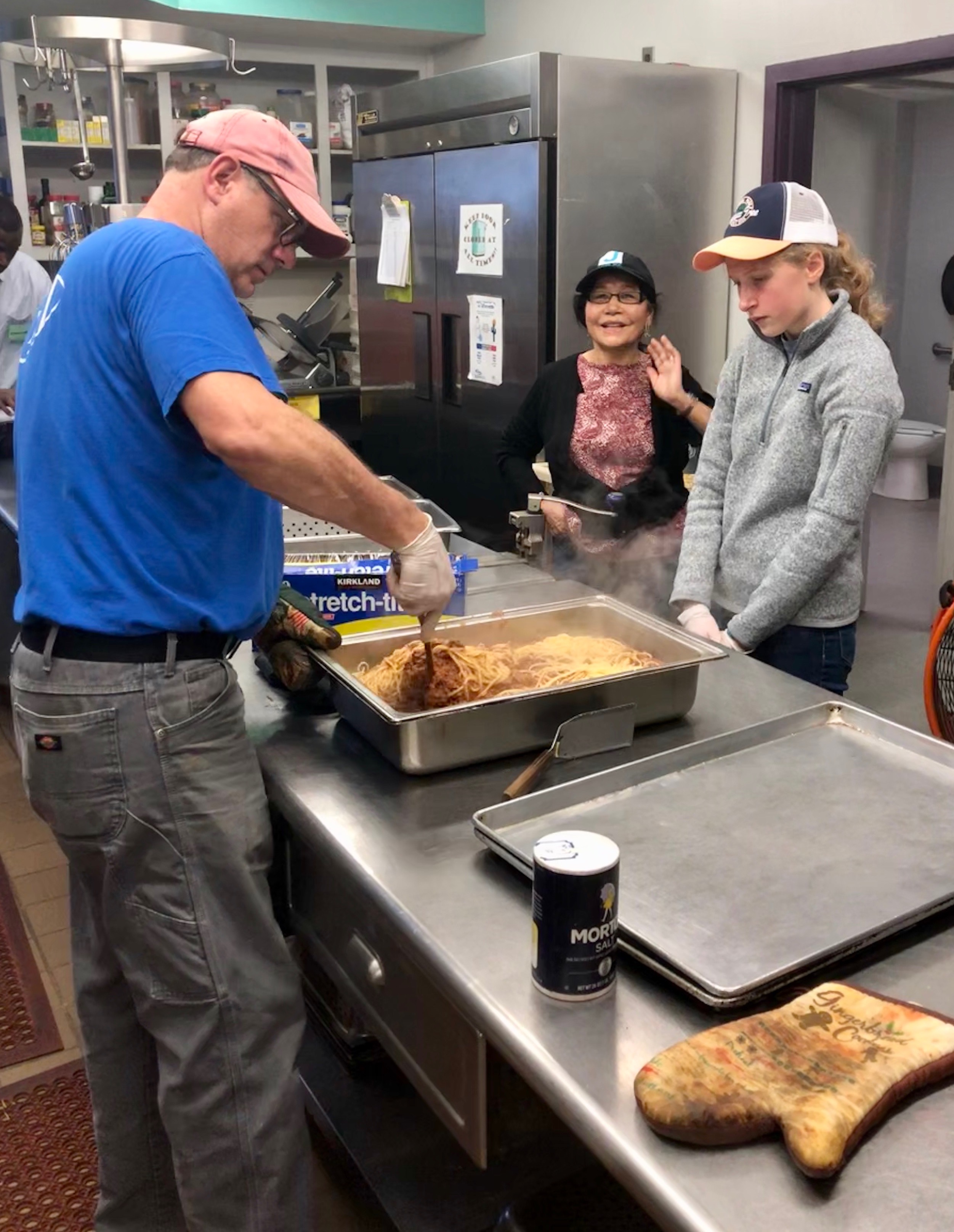
The midterm election gave me hope that Americans will not surrender to despair, that they will fight to once again make our country the kind of place we can all extol when living and traveling abroad. This past Sunday, Champa and I served lunch at a local soup kitchen with our friend Celeste, right, who also served in the Peace Corps, in West Africa during the Vietnam War. She reminded me how challenging it was to be asked questions then about America. Eventually things got better. I’m hopeful they can again.
I’m not speaking here for the Peace Corps, which is non-political and bipartisan. I also continue to hold the Moldovan people closely in my heart. It’s just that more than six months have passed since I completed my service and friends keep asking me what it’s felt like to come home.
My answer is that I don’t want us to become as hopeless and cynical as the people I met back in Moldova or, for that matter, in many other countries around the world where strongmen pursue their own interests, lies abound and darkness obscures light. I want us to trust each other again and embrace the optimism that is our birthright as Americans.
I want Victoria to keep watching because somehow my country is going to make things right.
Kate Hughey usually teaches fourth graders in Charlotte, N.C., but on Monday she taught a crowded room of English teachers in Chișinău, the capital of Moldova. She described her collaborations with fellow teachers on student projects that blend multiple subjects and demonstrated how to make videos easily with homemade “green screens.”
“We don’t do cross-disciplinary projects in Moldova, so this is really interesting for us. It’s a model we can adapt for our situation,” said Daniela Munca-Aftenev, president of theAcademy for Innovation and Change through Education(top photo, left), which hosted the talk at Biblioteca Hasdeu along the city’s main boulevard.
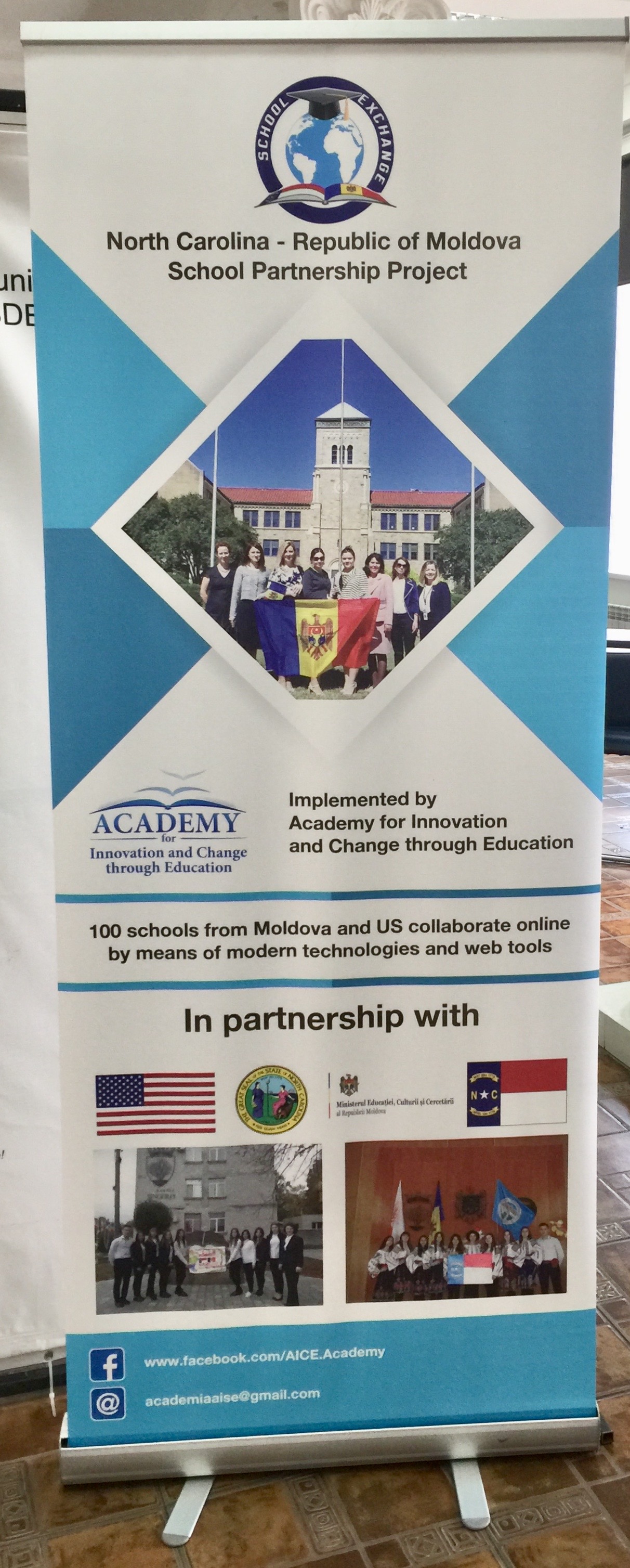
It was Kate’s first day in a week of activities in Moldova and the latest in a partnership that has linked North Carolina and this East European nation since 1999.
I was invited because I recently assisted the partnership as it prepared to ship hundreds of English-language books to Moldova with two NGOs. I worked with Bob Gingrich, Peace Corps Moldova’s director of management and operations and a fellow North Carolinian (left in photo), who will soon distribute the books among PCVs to share with their host communities.
I ate lunch with Kate before her talk so she could tell me more about the partnership and I could answer some of her questions about Moldova, which she is visiting for the first time, thanks to a grant from World Affairs Council of Charlotte. Kate, who teaches at Charlotte Latin School, is among the pioneers of a school-to-school program that connects teachers and students in Moldova and North Carolina. Her students recently collected 50 boxes of reading books for schools here.
Also arriving here this past weekend was Willow Stone, a student from Clayton High School who will live with a Moldovan host family and study Russian.
Elaine Marshall, North Carolina’s secretary of state, has guided the partnership as it has expanded beyond its initial collaboration between the N.C. National Guard and the Defense Forces of Moldova to include private firms, civic organizations, non-profit agencies and individuals, with planning committees in both North Carolina and Moldova.
Its projects have ranged from education to medicine, culture and the economy. The Greensboro Jewish Federation assisted a Moldovan Jewish community. Officers of the U.S. Armed Forces helped build a playground for the children of Moldovan military families. The University of North Carolina School of Dentistry sent teams to assist an orphanage. My former colleagues at Duke University and others have sent medical supplies. When I tried to help someone here find information for the local wine industry, an expert from North Carolina State University responded to help us.
The exchanges have gone in the other direction as well, with Moldovans spending time at schools, universities, companies and other institutions in North Carolina.
Kate will be giving several presentations this week, visiting the Ministry of Education and touring some of Moldova’s touristic sites. The Moldovans who attended on Monday picked up not only new teaching ideas but also armloads of free books to bring back to their schools. Some of them have also interacted over the years with Peace Corps Moldova’s English Education program, in which Champa has served.
The two of us have only a week left in Peace Corps Moldova, where we’ve served alongside volunteers from Asheville, Charlotte, Boone, Winston-Salem, Raleigh, Gastonia, Rocky Mount and other parts of our state. We look forward to working with the partnership ourselves after we return to our home in Durham.



















 Eventually, I created an informal volunteer role for myself with the North Carolina partnership program that assists Moldova, where we served as Peace Corps volunteers, and I resumed volunteering at Urban Ministries, but who knows what I missed?
 Over the past few months, I’ve met with our
  To be sure, many retired citizens do serve as volunteers — teaching literacy classes, building homes with Habitat for Humanity and much more. Some volunteer through



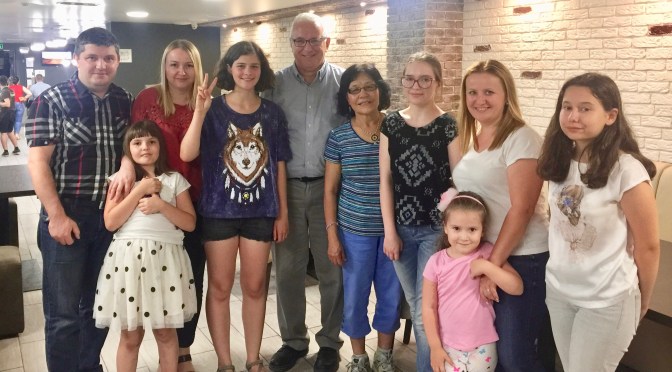

 The midterm election gave me hope that Americans will not surrender to despair, that they will fight to once again make our country the kind of place we can all extol when living and traveling abroad. This past Sunday, Champa and I served lunch at a local soup kitchen with our friend Celeste, right, who also served in the Peace Corps, in West Africa during the Vietnam War. She reminded me how challenging it was to be asked questions then about America. Eventually things got better. I’m hopeful they can again.
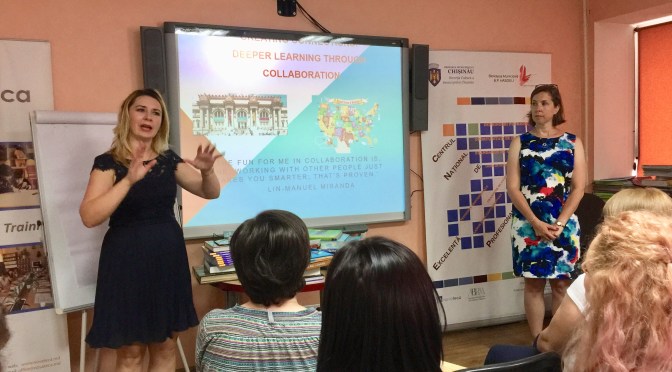


 I was invited because I recently assisted the partnership as it prepared to ship hundreds of English-language books to Moldova with two NGOs. I worked with Bob Gingrich, Peace Corps Moldova’s director of management and operations and a fellow North Carolinian (left in photo), who will soon distribute the books among PCVs to share with their host communities.
 I ate lunch with Kate before her talk so she could tell me more about the partnership and I could answer some of her questions about Moldova, which she is visiting for the first time, thanks to a grant from
 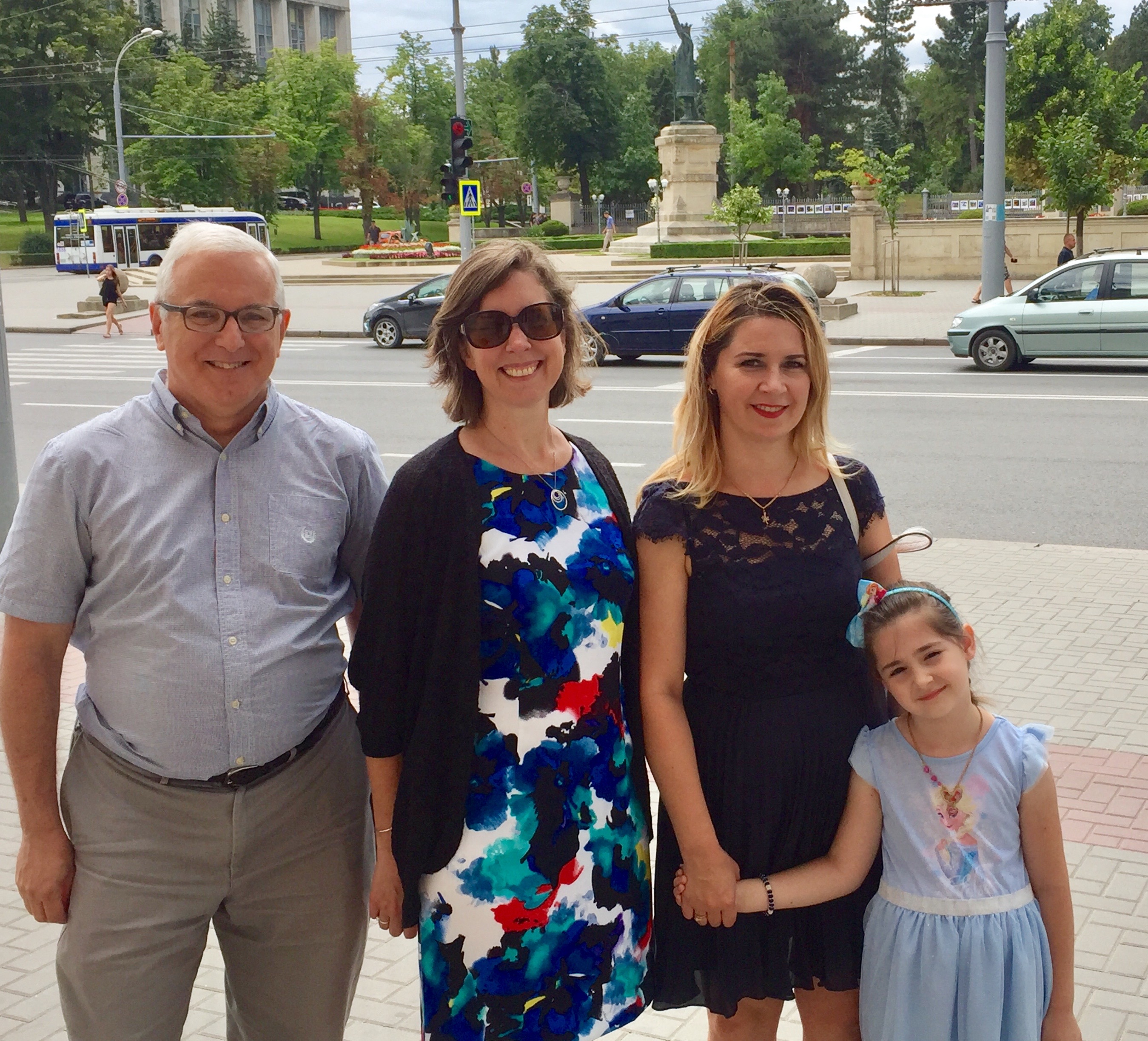 Also arriving here this past weekend was Willow Stone, a student from Clayton High School who will live with a Moldovan host family and study Russian.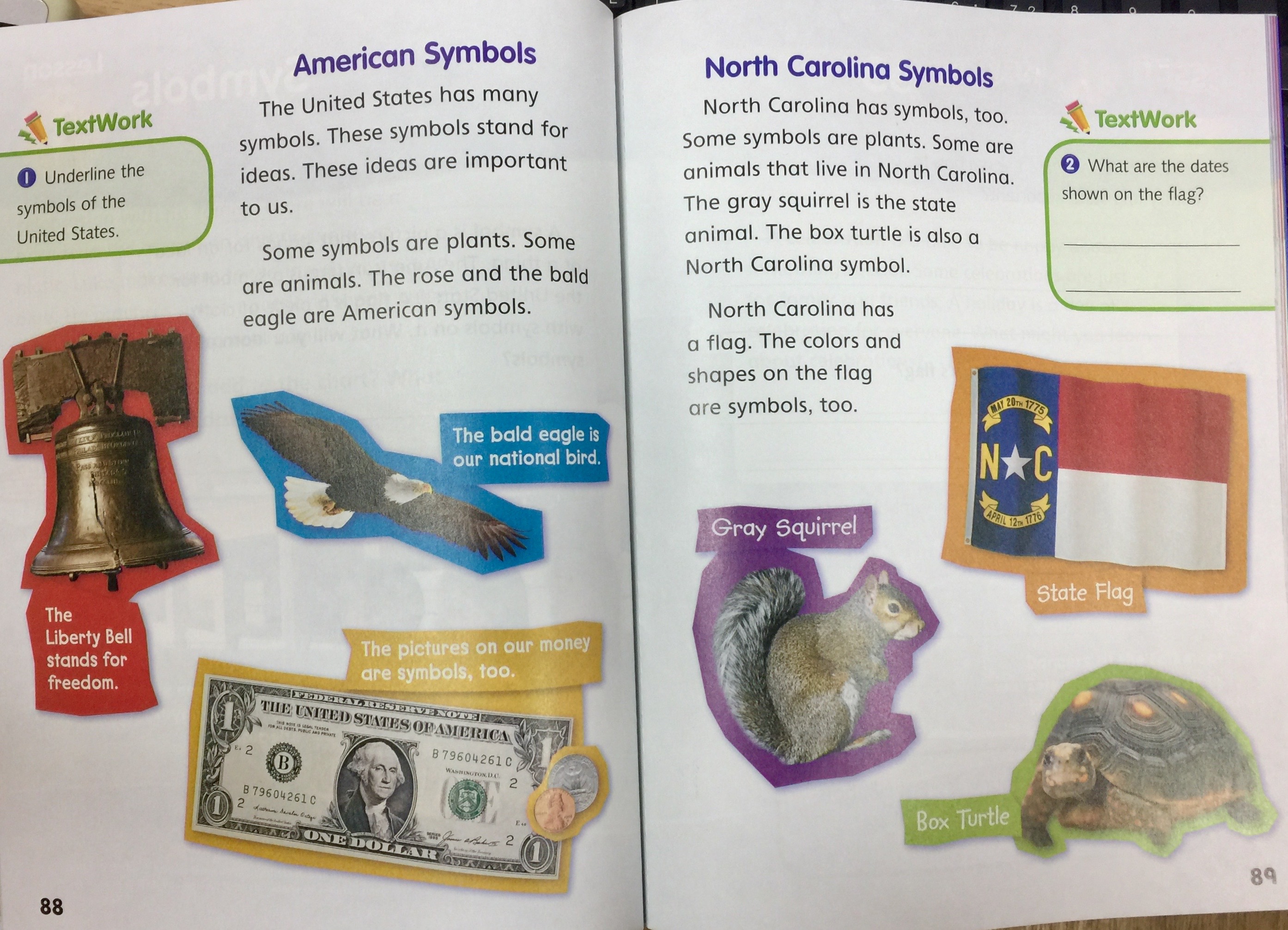


 The Moldovans who attended on Monday picked up not only new teaching ideas but also armloads of free books to bring back to their schools. Some of them have also interacted over the years with Peace Corps Moldova’s English Education program, in which Champa has served.
 "Not Exactly Retired"