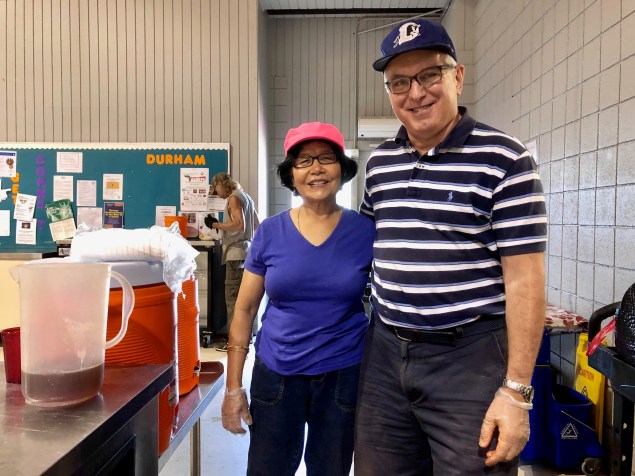
When Champa and I returned to Durham after serving abroad for two years in the Peace Corps, I didn’t expect it to be so difficult to continue volunteering in my own community.
I assumed there were local nonprofit groups that could use my professional skills, especially for free. When I called around and searched online, though, I couldn’t find a good match.  Eventually, I created an informal volunteer role for myself with the North Carolina partnership program that assists Moldova, where we served as Peace Corps volunteers, and I resumed volunteering at Urban Ministries, but who knows what I missed?
I am not alone. Across the Triangle and more widely, many older Americans now view retirement as much more than leisure. They consider it a second act, a new life stage of personal growth and service that may last for decades. These retirees are still sharp, still active, and a tremendous potential resource for nonprofit organizations that could tap their expertise in various fields.
Too often, however, communities regard their older residents in an outdated way — as a group requiring assistance rather than as an asset to recruit and empower.
I became curious about what I encountered and began talking with people in our area who are involved in one way or another with older adults or volunteering. 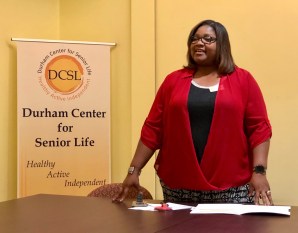 Over the past few months, I’ve met with our local volunteer center, Activate Good, the United Way, the Osher Lifelong Learning Institute at Duke, Duke’s Office of Durham and Regional Affairs, local senior centers, the governor’s office, county officials, a retirement community and many others. (Here’s a list.) I’ve also talked with Encore.org and people around the country.
These are wonderful and impressive people — caring, thoughtful and professional. They are working hard on missions such as helping retirees obtain medical care or promoting volunteerism broadly.
Generally, though, older volunteers are only a small part of their missions, which were established before the big shift began in how Americans think about retirement.
For instance, our local volunteer center does great work but is also busy with high school students and many others. Websites such as VolunteerMatch and organizations ranging from AARP to RSVP serve important roles, too. Sixty+Me has an excellent online guide. Yet many older residents still fail to connect with worthy organizations that could benefit from their experience in writing grants, preparing budgets, building websites or managing staffs.
 To be sure, many retired citizens do serve as volunteers — teaching literacy classes, building homes with Habitat for Humanity and much more. Some volunteer through their religious organization or a former employer. Many retirement communities and senior centers have their own volunteer programs, often with a focus on serving the needs of other retired people.
We need to be more strategic about this, as some communities around the country have demonstrated. A leader of the Encore Boston Network told me about their system to train older volunteers, match them with organizations and provide ongoing support. He described similar efforts in Phoenix, Denver and elsewhere. Many of the volunteers take on assignments that draw on their special expertise. Springfield, Missouri has an impressive Give 5 program that brings groups of retired people on a bus to local nonprofits, helping them find one to match their interests.

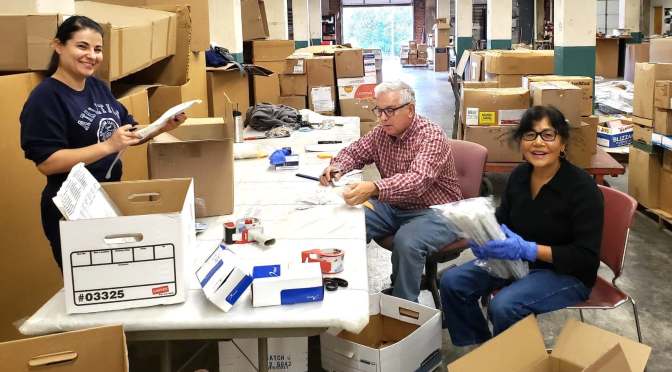
I don’t mean in any way to downplay the many people, of all ages, who are generously rolling up their sleeves across our region to deliver meals, comfort the sick and more, or the excellent organizations that work with them. But as more and more older Americans look for new meaning in their lives, communities like Durham that attract them should recognize their good fortune and act deliberately to match them in meaningful volunteer roles, which would also help retirees avoid social isolation.
The opportunity is compelling and I am optimistic we can take advantage of it. As I’ve discussed it with local leaders and stakeholders, they’ve generally been responsive and enthusiastic. They see the possibilities. Several key players are interested in trying to make Durham a leader in this arena. Everything I’ve encountered so far reminds me why Champa and I are lucky to live in such a progressive and caring community.
If some older folks prefer to just play golf or tend their gardens, they’ve earned that choice. The two of us enjoy traveling and spending time with our grandchildren, too. But we also want to continue the spirit of volunteerism we found so fulfilling in the Peace Corps.
We’re not the only ones. Put us to work.
Did you enjoy this post? Please share it!









 Of course, we’re thankful to be reunited with our family and friends. We’ve reveled in things as simple as driving or drinking water from a tap. Yet we still miss Moldova, every day. We made such good friends there and we now interact with them only on Facebook or with an occasional phone call.
 Champa and I didn’t expect our transition to be so hard. We’d traveled a lot. We’d remained closely connected to America while we were gone. I’d served in the Peace Corps previously and she was born in Nepal. So how hard could it be? We didn’t fully appreciate that America wasn’t the only thing that changed. We’d changed, too.



 In Edinburgh, the dining options near our Airbnb included a Pizza Hut and a Five Guys burger joint along with haggis or fish and chips.
 We couldn’t even escape President Trump during our trip. He came to Ireland shortly after us and we saw security patrols near his golf course.
 When we took a free walking tour through the historic streets of Romania’s capital, Bucharest, we were the only Americans. In the Bulgarian capital, Sofia, only one other American joined us and 23 tourists from Bulgaria, Canada, Italy, Japan, Latvia, Netherlands and Spain. Even in Tbilisi, the Georgian capital that’s been gaining buzz as a tourist hot spot, we felt alone. As I
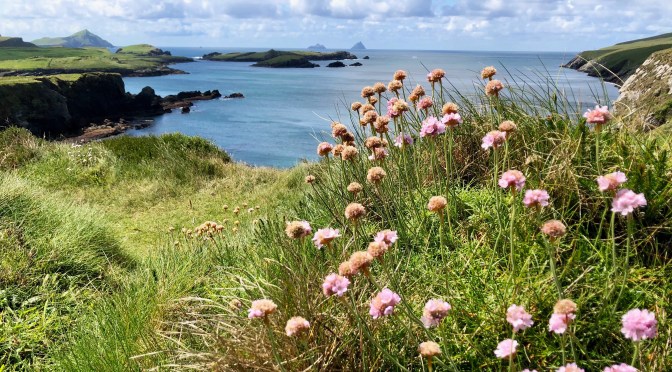
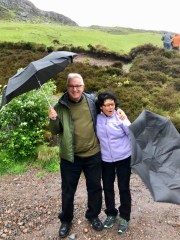
 Then we took a two-day tour of the highlands, visiting Loch Ness and other sites. We were entranced by the striking bogs, heather and thistles despite pouring rain.
 Then we turned east, stopping at Blarney Castle to, yes, kiss the Blarney Stone, before continuing on to Kilkenny and Dublin. On our first night back in the capital, we spent hours watching the Irish Celts play traditional music at Darkey Kelly’s pub. Finally, on our last day, we walked throughout the city before returning exhausted to our hotel near Christ Church Cathedral, ready to fly home the next morning.
 We gained new perspective on our many American friends whose families emigrated from there. Their ancestors escaped oppression and found a better life, much like my own or, for that matter, the Lyft driver from Aleppo, Syria, who drove us to the airport.

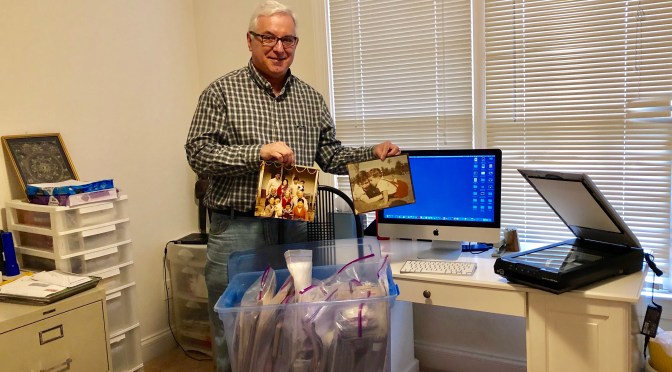
 Three years ago, when Champa and I
  “We have to sort through these after we return home,” we told ourselves.
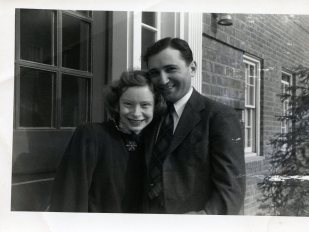 So, too, for the old photos and documents from my side of the family, like the one you see here of my parents.
 Only your kids and their descendants are likely to care about your photos, and they will probably worry more about receiving too much instead of too little. You’ll do them a big favor by reducing the pile drastically, keeping only the most significant and poignant images. As Marie Kondo might say, find the things that bring you joy.


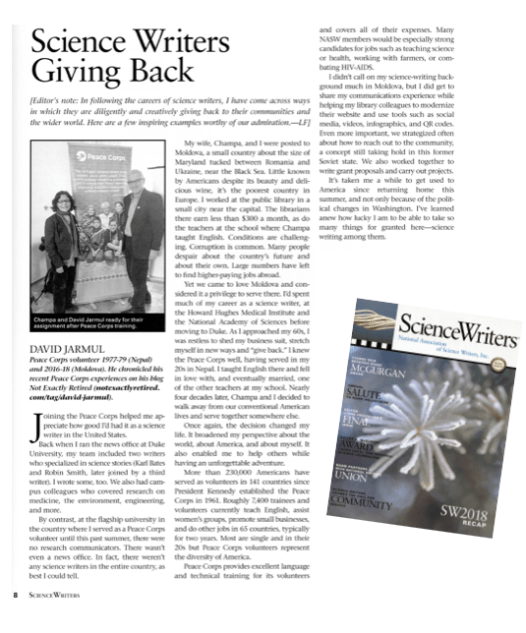 Thanks to NASW’s Lynne Friedmann for inviting me to write this!
 "Not Exactly Retired"