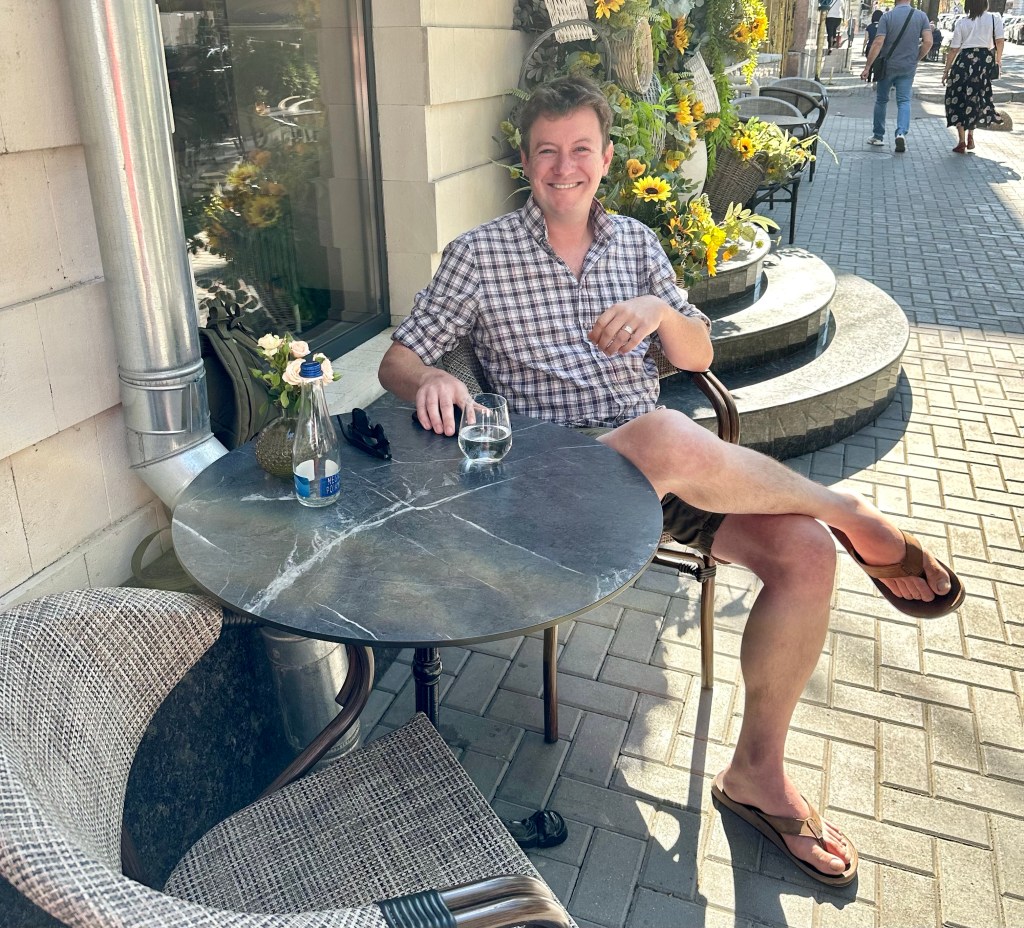
Lasting Impact

Yesterday we returned to our Peace Corps workplaces and learned, after more than five years, that our impact has endured more than we’d realized.

Champa’s big project as a Volunteer was to help her school’s drama program create a magnificent wardrobe of costumes and props, which were unveiled in a colorful public ceremony in 2018 (see video).

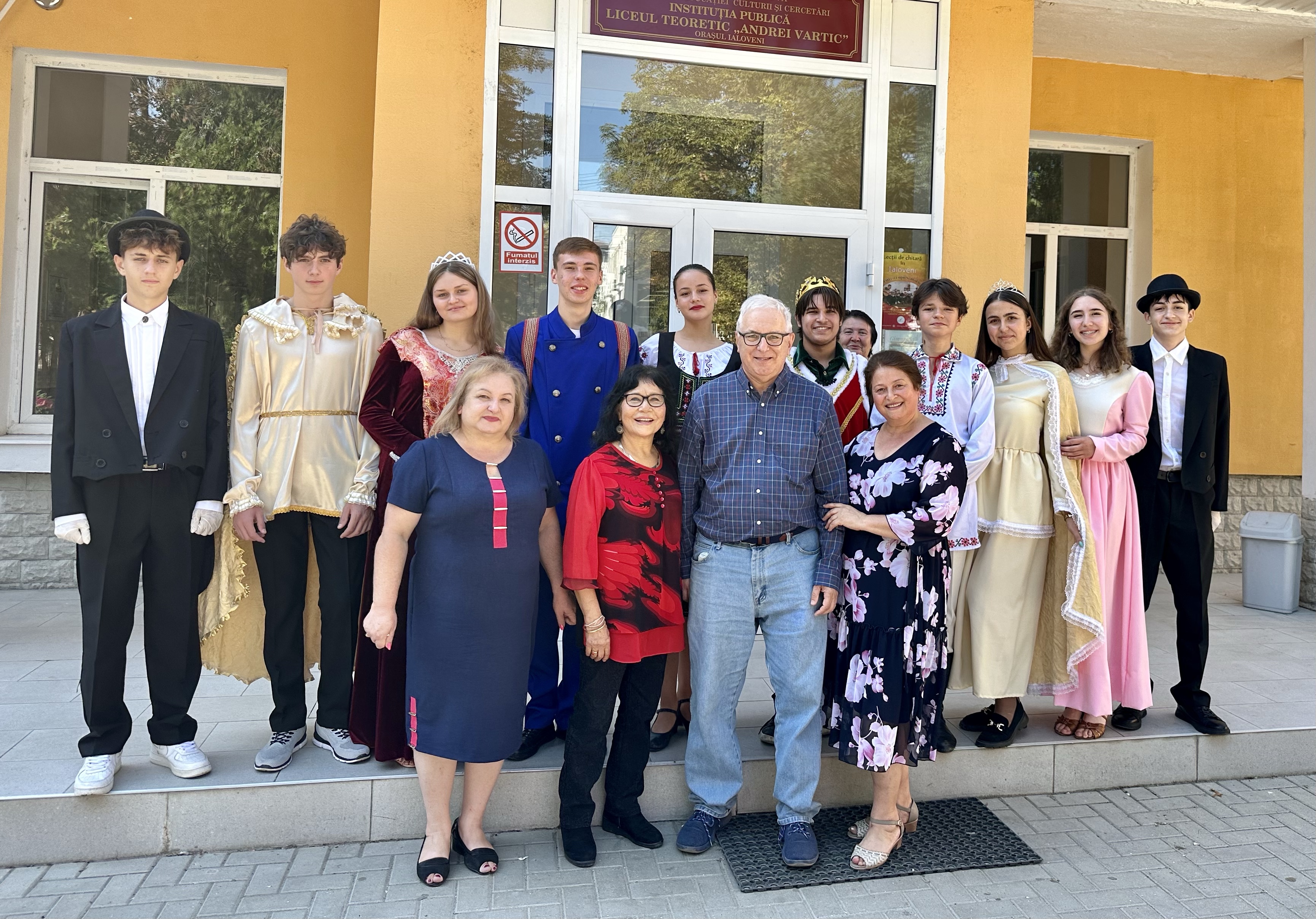
When we returned to the school yesterday, current students greeted us wearing some of the same costumes — Romeo, Juliet, a king and more. The school has been using them regularly and added to the collection.

Champa stopped by an English class and reunited with some of her old students.

Earlier we visited the library where I worked. The librarians proudly showed us a trophy room they’ve created to display all of the awards won by the robotics team I helped to establish with Lidia Rusu (above).

One of my younger robotics students, Alexandru, dropped by to thank us, too. He is now a high school senior, serving as a community youth leader.

Valentina Plamadeala, the library director, in white blouse, hosted a champagne reception for us (at noon; I love Moldova). She posted on Facebook a list of the many projects we did together, several of which are still thriving, notably the Bebeteca room we created for local moms (see video.)

Our reunions in Ialoveni, the small city near Moldova’s capital where we served from 2016-18, were intensely emotional. We were moved to see how we’d touched people’s lives.

At Champa’s school, one of her fellow English teachers, Elena Antociuc, read a certificate saying, “We sincerely appreciate the time you spent guiding us to new perspectives by collaborating with us in search for the best solutions.”

The certificate concluded: “We’re proud to be part of your international family.”

Ialoveni, we’re even prouder to be part of your family, now and forever. As we told Champa’s costume collaborator Ana Doschinescu, at a dinner her beautiful family hosted for us, our lives are so much richer because of all of you. Thank you for keeping us in your hearts.

Return to Moldova

More than five years since we completed our service as Peace Corps Volunteers, we returned to Moldova on Sunday night.

We endured flight cancellations, an all-nighter at JFK Airport, an unexpected stop in Istanbul and lost luggage when we arrived in Chișinău. In a larger sense, our return was delayed by the pandemic, the war in Ukraine and health setbacks.

But now we’re finally here, and so is our luggage. We couldn’t be happier.

Our first jet-lagged stop on Monday was at the Peace Corps office, to hug old friends and discuss the virtual project I began several weeks ago to help create a national Jewish museum.

Then we reunited with our host family in Ialoveni, just outside the capital, for a delicious Moldovan dinner prepared by our host mother, Nina. That’s her in the top photo with her daughter, Alisa, showing off their copies of Not Exactly Retired with personal inscriptions from the author.

Among our other gifts was this carved wooden picture frame from Nepal displaying a photo of our beloved Bunica, Nina’s mom, who passed away before we could see her again.

Nina’s husband, Mihai, and son, Andrei, joined us for this group photo after dinner. We left with our own bag of gifts, including some of Ialoveni’s famous chocolates.

We also enjoyed reuniting with the family dog, Boss, who remembered us.

On Tuesday morning we attended a ceremony where U.S. Ambassador Kent Logsdon announced a major grant to restore one of the central structures in Chișinău’s large Jewish ceremony. Irina Shikhova, below, with whom I’m working on the museum project, was among the other speakers.

It was an inspiring event and great to finally meet Irina after several Zoom meetings. I also met Marjory and Joseph, two Peace Corps Response Volunteers working on the project.

Champa and I are staying at an Airbnb downtown. We’ve been eating placinte and friptura, drinking local wine and exploring how Moldova has changed over the past five years. More on that later.

For now, we’re just soaking it all in. Moldova, we’ve missed you!

Not Exactly Portlandia

At first glance, Oregon matched its stereotype when we visited last week: a coffee-sipping, beer-brewing, wine-tasting paradise filled with hikers and bicyclists wearing Patagonia jackets and REI backpacks.

But then we discovered an Oregon far more diverse than Portlandia, the comedy television series that portrayed a haven for eccentric hipsters.

We went there to attend the beautiful wedding of our niece and her husband, who live in Portland and celebrated in Hood River, about an hour to the east along the Columbia River. Hood River is one of the world’s top windsurfing spots, filled with breweries, coffee shops, art studios and restaurants. While there, we also toured the Bonneville Dam, the Columbia Gorge Discovery Center and other sites,

We enjoyed every minute, the wedding most of all, and thought “so this is Oregon.” We were right, but only partly right.

Less than three hours to the south was Bend, which we reached after stopping en route to see the majestic Timberline Lodge beside Mt. Hood (above) and Cove Palisades State Park. Bend had a similar high-end outdoorsy vibe but its landscape was very different — a high desert with sagebrush, hardy grasses and lava flows. We spent one day exploring Newberry National Volcanic National Monument, then another amid the deep river canyons and sheer cliffs of Smith Rock State Park (below). They felt more like Arizona than the lush landscape we’d just left.

Next we headed west, passing through Sisters, which looks like a cowboy movie set. In the Willamette National Forest our environment changed anew, ominously, as smoke from a wildfire made our eyes tear up and our throats thicken even though we were wearing masks inside a car. We were relieved to reach Eugene, where we drove around the University of Oregon before continuing on to the coast.

The towns there reminded us of Mendocino and other spots in California, with the Pacific Ocean crashing below a winding highway dotted with lighthouses and beaches.

As we continued on to the Willamette Valley, the heart of Oregon’s wine industry, we thought again of California, ths time of Napa and Sonoma, but also of our favorite wine-growing region, Moldova.

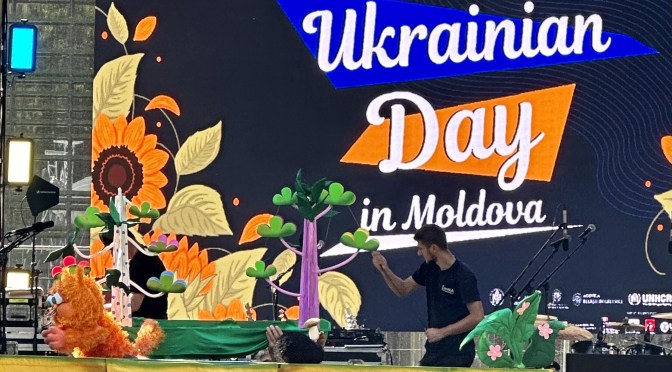
Finally it was back to Portland to visit the Saturday Market, ride the tram, attend a Ukrainian festival and see old friends. We saw Voodoo Donuts and other famous sites, as well as a large homeless population, which we also encountered the next day during a quick stop in Oakland.

So, yes, Oregon has more than its share of kayakers and IPA enthusiasts, which are definitely worth seeing, but it’s got a lot more, too, including regions we didn’t get to. We brought home a bottle of Pinot Noir and look forward to toasting our happy memories of this surprising state.

Jewish Museum of Moldova

If you think of London and Paris as having vibrant Jewish communities — which they do — consider another European capital whose Jewish population was once many times larger in percentage terms.

It’s Chişinǎu, the capital of Moldova, which was nearly half-Jewish at the turn of the last century, before a bloody pogrom in 1903 killed 49 Jews in Chişinǎu, injured hundreds more and led many Jewish families to flee.

Chișinău monument to the Jewish ghetto.

Four decades later, the Holocaust killed most of Moldova’s remaining Jews, only to be followed by Soviet occupation. Today, estimates of Moldova’s current Jewish population range between 7,500 and 20,000, based on different sources, approaches and definitions. Many more Moldovan Jews live in Israel and other countries.

Moldova retains a rich Jewish heritage but, as I discovered while serving there as a Peace Corps Volunteer several years ago, it’s largely hidden amid the broken cemetery stones and synagogue ruins.

Chişinǎu’s Jewish cemetery has more than 23,000 graves.

Now, finally, this is changing. In 2018, Moldova’s government created a national Jewish museum in the capital — focused initially on Chisinau’s large Jewish cemetery but with plans to also establish a building with exhibits and programs.

As the grandson of a Jewish woman who grew up down the road in Odessa, I find this both exciting and overdue. It’s even more inspiring since it’s happening at a moment when Moldova is dealing with the war in neighboring Ukraine and many other challenges.


The Maghid website describes Jewish sites across Moldova.

A few months ago, Peace Corps Moldova asked me whether I might help the museum planners, given my professional background and familiarity with Moldova. I said yes enthusiastically and, earlier in July, began working on a Peace Corps Virtual Project with the museum’s director, Irina Șihova. 

I’m interacting with Irina from my home in North Carolina but plan to visit Chişinǎu with Champa in September (at our own expense). We are also eager to reunite with our host family and other dear Moldovan friends while we’re there.

Irina Șihova in the Jewish cemetery.

Irina is a prominent researcher in Jewish ethnology, culture and history; a museum curator; an educator; and a guide for Jewish families who’ve come to Moldova to explore their family roots. She’s organized dozens of exhibitions and cultural programs and written academic papers and books about Moldova’s Jewish history.

She and I have already done some good work together, brainstorming ideas for museum exhibits and publicizing an upcoming festival in Moldova that will include tours of former Jewish shtetls, a klezmer music concert and the premiere of a musical work commemorating the 1903 Chişinǎu pogrom. We’ll be joined soon by one or two “Peace Corps Response” volunteers who will bring their own expertise to work on-site with Irina and her colleagues.

Torah at Moldova’s national history museum.

I feel privileged to have this opportunity, especially at this early stage of the museum’s development, and plan to post updates on this blog. If you’re interested in the project, or know others with relevant expertise who might want to join this volunteer effort, please write me privately with a direct message or by e-mail. (Please do not post a public message about this here).

Because religion was heavily restricted in Soviet times, some Moldovans have ethnic Jewish heritage but do not practice the religion and may not even know about their family backgrounds. My closest colleague on the Peace Corps staff, for example, told me her Jewish grandparents “never practiced during the Soviet era since any religion was taboo.”

Jewish youth event at the MallDova shopping mall, October 2016

Moldova’s small Jewish community is experiencing a resurgence these days, as you can see in this photo from a youth event we attended. The new museum will make it easier for others in Moldova, Jews and non-Jews alike, and for visitors from around the world, to learn about this heritage and honor those who were lost. 

I hope some of you reading this will visit it one day.

My Guilty Pleasure

I’ve been indulging my guilty pleasure lately as I recover from surgery: watching reality dating shows.

I know the story of every participant on Indian Matchmaker, the Netflix series in which Sima Aunty pursues mates for Indian singles, from a picky Mumbai bachelor to an Indian-American woman here in Durham.

I’ve been following Jewish Matchmaking, too, as Aleeza Ben Shalom helps singles in Israel and the United States to find partners for their wedding chuppahs. There’s Dani in Miami, searching for a guy with perfect eyebrows. There’s Noah, looking for a nice Jewish girl in Wyoming, and CIndy in Jerusalem, who left Canada and now seeks true love.


I know these dating shows are contrived and ridiculous, reinforcing cultural stereotypes and traditional romance norms, but I can’t resist them. Maybe it’s because Champa is from South Asia and I’m from a Jewish family in New York, so both shows resonate with us.

But it’s not just these two. I’ve also watched Love is Blind, the one where single men and women spend hours talking behind barriers, laying eyes on each other only after getting engaged. We find out whether they go on to marry at their wedding ceremonies, which are like car crashes adorned with white lace and sobbing mothers.

God forgive me.

The most famous of these shows is The Bachelor but its manufactured drama and weekly rose ceremonies are too much even for me (although I did learn to say “can I borrow you?” when I need Champa for something).

My sweet tooth for these shows doesn’t align with how I usually present myself. I spent most of my career working with scientists, professors and other smart folks. I read The New York Times every day and lots of high-brow books every year.

So why do I care whether Kwame and Chelsea, above, will stay together in Seattle, or if Fay will ever find an Orthodox Jewish guy in Brooklyn? It’s not very intellectual or macho, I know, but there it is.

It’s gotten worse recently as I’ve been home-bound and unable to do much except daily physical therapy. I’ve passed the time mainly by reading and watching television. Some of the shows have been high-quality, like binge-watching the HBO series Barry and John Adams, but I’ve become way too familiar with the tarot-card readers and “bio-datas” of Indian Matchmaker.

I have little appetite for most other trash TV, from Real Housewives to the Kardashians. I don’t care what paternity tests reveal on Maury or how long it takes for Judge Judy to tell someone to shut up. Shows that focus on baking, cooking, singing, remodeling or surviving? Not for me. I much prefer quality series such as Ted Lasso and The Handmaid’s Tale, or sports and cable news in limited doses.

Still, if you follow this blog for posts about retirement, travel or something else, I seek your forgiveness. I stand before you humbled and contrite. I know I should aspire to nobler fare.

Until then, though, I’ll be rooting for Viral from Durham, above, to find lasting happiness with Aashay whenever Season 4 of Indian Matchmaker finally drops.

Organ Recital

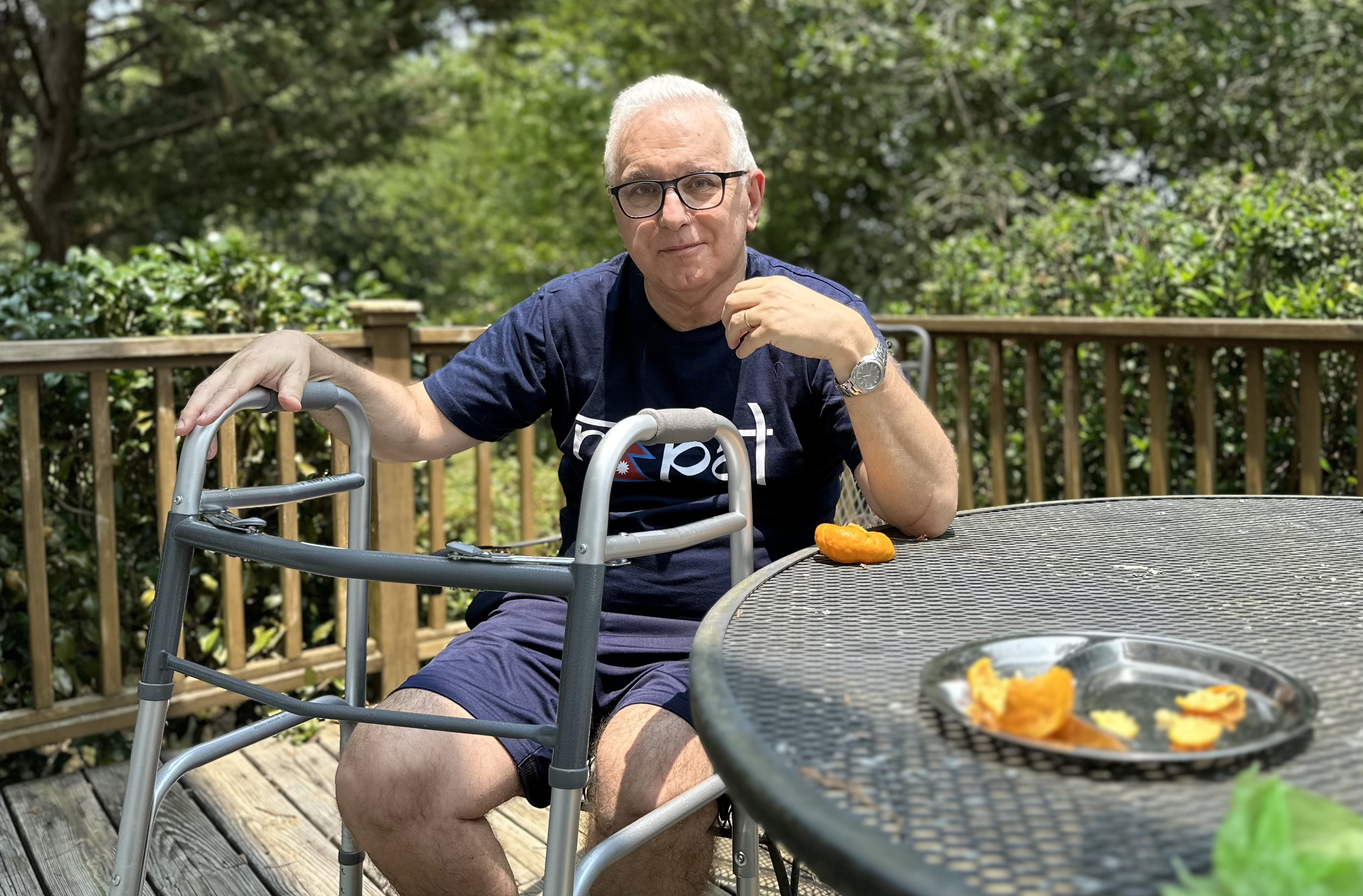
My mother used to say “another organ recital” to describe her dinner conversations at the assisted living facility where she spent her final years. Whenever Champa and I joined her, sure enough, others at the table would discuss their medical problems. Among the most common of these, as evidenced by the walkers parked nearby, were knee and hip replacements.

During the past few years, medical issues have accounted for a growing share of our own conversations with friends, even though we’ve been relatively healthy ourselves. When I had hip replacement surgery this past Friday, I thought back to my mother’s dinner companions and wondered: Had I finally become one of them?

My procedure at Duke Regional Hospital went well. I returned home the following day and have been recuperating since then with a lot of help from Champa, my sons, a physical therapist and others. I hope to be walking easily again within a few months.

I know how lucky I’ve been to have access to an outstanding medical system and to live at a time when hip replacements have become routine. But the experience has reminded me of something I haven’t wanted to think about, which is the inevitability of physical decline. No mater how active, engaged and “not exactly retired” we aspire to be in this stage of life, we cannot avoid life’s frailties forever. We’re all in the lobby for the organ recital.

My hip problem began during one of the international trips that have highlighted our own adventure since leaving our conventional lives in 2015 to travel, serve in the Peace Corps and then redefine our lives back in Durham. Champa and I were visiting Vietnam with two friends in February when I felt severe pain in my upper right leg. Thinking it was tendonitis. I continued on with our trip into Cambodia, Laos and Thailand, skipping the longer walks to rest on a hammock or elsewhere. Several weeks after we returned home, I finally got an MRI and learned my hip was badly deteriorated and needed to be replaced.

I remained active while hobbling around prior to my surgery, even speaking at two local retirement communities about Moldova and the importance of making the most of this stage of life rather than drifting into old age. At the second talk, my leg hurt so much they gave me a motorized scooter to leave the auditorium. It was Irony on Wheels.

My new prosthetic hip should make me better. Champa and I still look forward to many years of travel, service and adventure, with renewed empathy for those with permanent disabilities. Still, coming as it does on the heels of my prostate cancer treatment (which also turned out well) and the deaths of several dear friends, the experience has gotten my attention.

I’m grateful for how things are turning out so far, truly, but feel more sobered than ebullient. It hasn’t been an occasion to shout “Hooray!” As I continue recuperating, I’m just relieved to be able to say “Hip Hip” and know they’re both working.

Artist in Residence

Behold this homage to former President Obama, the newest work from a talented North Carolina artist who was born in Nepal and also lived in Moldova. 

Yes, it’s Champa, whose paintings, collages and other work fill our home with beauty. Here are the three paintings you see when you enter our house:

And here are the two paintings in our living room:

Over the years, Champa has taken classes with the Durham Arts Council, OLLI at Duke and The ArtsCenter in Carrboro. She’s learned oil painting, watercolor, acrylics, drawing, ceramics, fused glass, hot-wax painting, felt art, silk painting, jewelry making, quilting and even art made from postcards or fused plastic bags. Here are some examples of her earlier work:

A few years ago, she settled on her current style, a mixed-media combination of collage and painting. She’s used it to create works like the Obama piece and one-of-a-kind gifts for our family and friends, such as this one for our youngest grandson.

Champa and I enjoy traveling and doing things together, but a secret to our happy marriage is that we spend most of our daytime hours pursuing our own interests — art and gardening for her, writing and volunteering for me. I’m her biggest fan and, ever since I started this blog in 2015, I’ve wanted to feature or at least mention her art. She always said no, preferring to keep it private until she developed her own style.

I’m not objective but I think the wait was worth it. When an artist friend of ours visited recently, I made the mistake of referring to “Champa’s hobby.” She corrected me, saying, “it used to be a hobby for Champa. Now she’s an artist.”

I couldn’t agree more. Our artist in residence is already working on her next piece and I can’t wait to see how it turns out.

The Good Around Us

I was lucky this past week to encounter the best of humanity just as the 2024 presidential campaign is gaining steam. Two events reminded me of the many good people living among us, no matter what we may see and hear over the next year and a half.

On Sunday, I participated in the North Carolina Peace Corps Association’s annual Peace Prize ceremony, which this year honored a local nonprofit that uses dance to assist disabled veterans and others. The photo shows ComMotion’s Andre Avila and Robin McCall receiving the award from NCPCA Vice President Jennifer Chow.

On Monday, I participated in an event organized by the Triangle Nonprofit & Volunteer Leadership Center to honor outstanding local volunteers — people such as Bruce Ballentine, who has been active with Habitat for Humanity and raised more than $7 million to build new homes for families.

Another honoree, Lalit Mahadeshwar, organized volunteer teams with the Hindu Society of North Carolina to provide food packs to needy families during the pandemic. Dr. Shep McKenzie III provides free gynecological exams for Urban Ministries and also tends its vegetable gardens. Myra Blackwell helps lead a baseball league for underserved youth.

Others honored at the event deliver meals to the elderly, provide music for dementia patients, comfort the parents of hospitalized pediatric patients, care for shelter animals and much more. All of their stories made me feel better about people. The photo shows me introducing some of those in the “senior” category.

I served as a judge for the Governor’s Medallion Award for Volunteer Service and also presented the 2023 “Community Partner of the Year” award to the Osher Lifelong Learning Institute (OLLI) at Duke University.

Sarah Cline, the program manager for the AmeriCorps Senior Retired and Senior Volunteer Program (RSVP), joined me in honoring OLLI, which recently teamed up with RSVP and the Durham Center for Senior Life to expand programming for older volunteers. I chair the local RSVP advisory council and have been working with Sarah to encourage more local residents to get involved, as we did in a recent radio interview.

I spend much of my own time volunteering — with RSVP, OLLI, the West End Community Foundation and various Peace Corps and Moldova activities. This past week reminded me how important this work is — for my own emotional well-being most of all.

If you’re an older Durham resident who wants to volunteer, I invite you to send Sarah a message. She’s ready to meet with you and find a great match. If you live elsewhere, you can contact your local RSVP office or take advantage of other volunteer resources.

The upcoming campaign seems likely to challenge our emotional equilibrium, regardless of our personal politics. I have my own strong views but also want to resist cynicism and despair. Volunteering isn’t a perfect vaccine but it does help us feel better about our fellow Americans — and ourselves — while addressing the urgent needs of our communities.

Tick Tock

It’s a reality many older Americans eventually confront: our adult children don’t want our stuff.

I saw that a few days ago when my older son declined taking our family’s beautiful grandfather clock, even though he was the one who found it years ago — a story I’d loved sharing with friends.

Paul spotted the clock when he was learning to drive. I was giving him a lesson in our minivan when he saw it on the curb with the trash outside someone’s house. We stopped to examine it and, except for some broken glass, it was in good shape.

We took it home and, after some repairs, the clock ran beautifully for many years. Only recently did its movement finally wear out. 

A clock expert said it would cost a lot to fix. I told Paul I’d make the repair only if he planned to inherit the clock when we eventually downsize. I assumed he’d want it since we found it together. But he didn’t, nor did our other son. The memory and sentiment were mine, not theirs.

Reluctantly, I offered it on Craiglist to anyone who might repair it and give it a new home — for free, as I had gotten it myself. Within minutes, I received numerous responses. The next day, the young man in the top photo took it away.

This happened a few days after a Bose CD player I’d inherited from my parents finally died. It wasn’t worth fixing so, after Champa removed pieces of it for art projects, we put it in the trash.

I should have felt lighter and liberated after this, as I did when Champa and I gave away bags of stuff prior to serving in the Peace Corps. But this time I felt sad since both objects had sentimental value, at least for me.

I hope the clock brings joy to its new owner, as other things will for my sons and their families. We all fill our lives and hearts in different ways. As I’ve been reminded this week, though, it’s all stuff, and it doesn’t last forever. Time passes even if the clock breaks. Tick tock.

Surprised by 70

I turned 70 this week and was surprised in two ways.

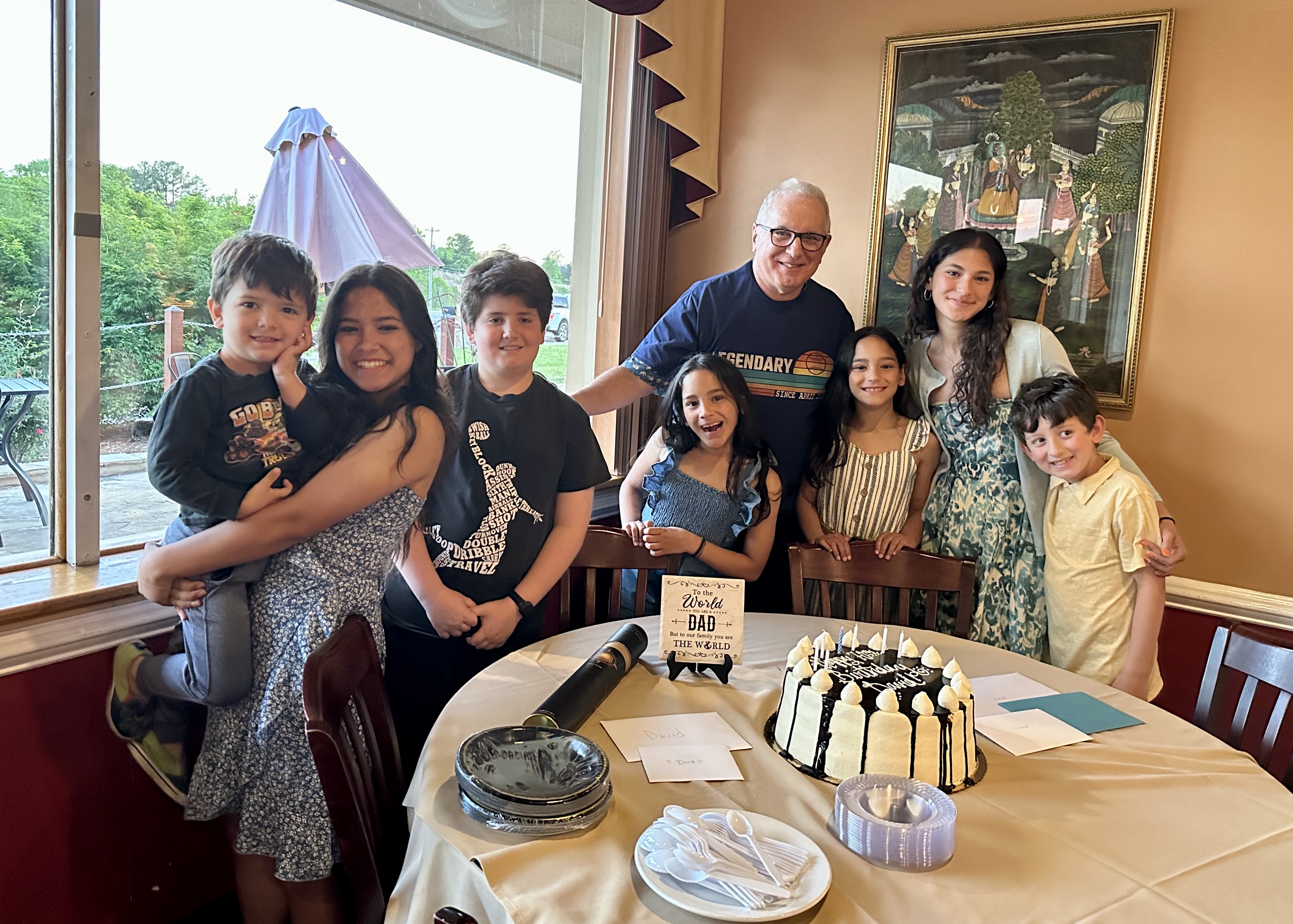
First was the surprise party Champa and my daughters-in-law organized at a local restaurant. I thought she was taking me to have dinner with two friends but was stunned to be greeted by my extended family in a private room.

Some had flown in from New York, Newark or Atlanta. Others drove from Philadelphia or here in Durham. They read me speeches, poems and toasts. They sang “Happy Birthday” and cheered as my seven grandchildren helped me blow out the candles. After the party, most of them stayed on through the weekend.

I hadn’t been looking forward to this birthday. A decade ago, when I turned 60, I was still working. Five years ago, I was wrapping up my service as a Peace Corps Volunteer in Moldova. But now, I was entering a decade that used to be synonymous with old age.

Then my birthday surprised me in a second way, by reminding me of how full my life is, regardless of what lies ahead. As my son Paul said in his toast: “You are constantly graduating into new and exciting chapters of your life. Now in retirement, we see you setting a great example that it’s possible to carve your own path, joining Peace Corps again, traveling the world with your beautiful wife, enjoying time with family and friends, living life to the fullest, impacting more people’s lives. And your hairline is still going strong.”

My older sister called me “young at heart and young in deed.”

I’m hardly alone in embracing this stage of life and in trying to be intentional instead of drifting — in my case, through a blend of travel, volunteering and other engagement. Large numbers of older Americans are also redefining how retirement can be “not exactly” in many ways.

Yet it still meant a lot to me to hear these descriptions and receive birthday greetings from around the world. They told me how much I have to be grateful for even after a year in which I lost several dear friends and experienced a health scare of my own, not to mention the pandemic and assorted world crises.

Five years ago. I marked my 65th birthday with a blog post marveling at how my life had turned in unpredictable directions. I ended that post by saying “I expect to remain ‘not exactly retired’ after 65 but don’t really know what will happen next. I am eager to be surprised anew. Celebrating this birthday has reminded me how rich your life can become when you let it take you places you never predicted.”

Remarkably, it has become even richer since then. I know that my good fortune could change tomorrow, and that it carries a responsibility to serve others. For now, though, I’m celebrating, and I’m giving the last word to my cousin Stephanie, who sent me this short poem:

There once was a man who turned seventy

Whose tale can’t be told with brevity

Happy Birthday to you

May your wishes come true

And your years be filled with levity

Join us on the journey.