

Iceland is beautiful, as we saw on a trip around its famed Golden Circle. This one-minute video has the highlights. Also viewable on YouTube.
All posts by djarmul


Fascinating Istanbul
Istanbul fascinated us when we visited there during the past several days.

It’s a blend of East and West, Asia and Europe, traditional and modern. Shops sell Turkish sweets and baklava alongside Starbucks and McDonalds. Western pop songs play as “Allahu Akbar” sounds from minarets. Some women wear head scarves, others don’t.

Champa and I loved exploring Istanbul following our unforgettable reunion with friends in Moldova. I’d visited here before, in 1975, when I was among thousands of long-haired backpackers who stopped at Istanbul’s Pudding Shop before heading overland to Kathmandu. I thought then the city was one of the most interesting places I’d ever seen.

It still is. Istanbul has grown and changed tremendously during the past half-century, (although the Pudding Shop is still there). Yet it still has a distinctive “East meets West” vibe and, of course, landmarks that remain timeless.

There’s Hagia Sophia, above, a domed architectural marvel built as a church in 537, then converted into a mosque, then a museum, now a mosque again. Nearby is the equally magnificent Blue Mosque, its interior adorned with more than 20,000 turquoise tiles.
We gazed upon both structures from our hotel rooftop while eating breakfast, gulls soaring beside our table. We also visited attractions such as the Topkapi Palace, the underground cistern, Taksim Square and the Galata Bridge. We toured the Jewish Museum, cruised on the Bosphorus and took a day trip by ferry to the island town of Büyükada. We climbed hills, rode the subway and learned the T1 Tram stations.

We enjoyed all of it but noticed few other American tourists. It’s possible we just didn’t see them, as recent statistics suggest, but I found myself thinking back to something I posted while we were serving as Peace Corps Volunteers in Moldova. During our vacation travels in the region, we saw even fewer Americans and were saddened by how our country’s people were missing out on great places they’d probably never even considered visiting.
In a subsequent post, I suggested three spots in particular that many Americans would love if they just gave them a chance: Transylvania, Romania; Tbilisi, Georgia; and Bratislava, Slovakia. I’ll now add Istanbul to the list, even though it’s one of the world’s great cities and hardly a “hidden gem.”

Why should American tourists go somewhere that may surprise or even challenge them a bit? Here’s just one example. Early on our first morning in Istanbul, Champa was awoken from a deep sleep by a muezzin chanting the call to prayer from a nearby mosque. “What did you say?” she asked sleepily, then started laughing when she realized she was talking to a voice from a minaret. We both treasured the moment — one we had only because we’d come to this colorful and historic crossroads.
As Turkey’s largest city, with more than 15 million residents, Istanbul will fascinate you, too, and you don’t have to wait a half-century to visit it.

Did you enjoy this post? Please share it!


Expats in Moldova
They’re leading lives I’ve sometimes imagined for myself: American expats in Moldova who are running businesses, managing programs, assisting refugees and tackling other challenges far from home.
Many of them first came to Moldova as Peace Corps Volunteers, like us. Unlike us, they’ve made a new home here. We’re friends with several of them and it’s been fascinating this week to catch up on our lives.

Chris Flowers, a fellow former Volunteer, is now the country director for the American Councils, managing educational and cultural programs. He recently married a Moldovan attorney, Diana, who’s done heroic work assisting refugees, especially since Russia invaded Ukraine. We met up with them at an Uzbek restaurant.
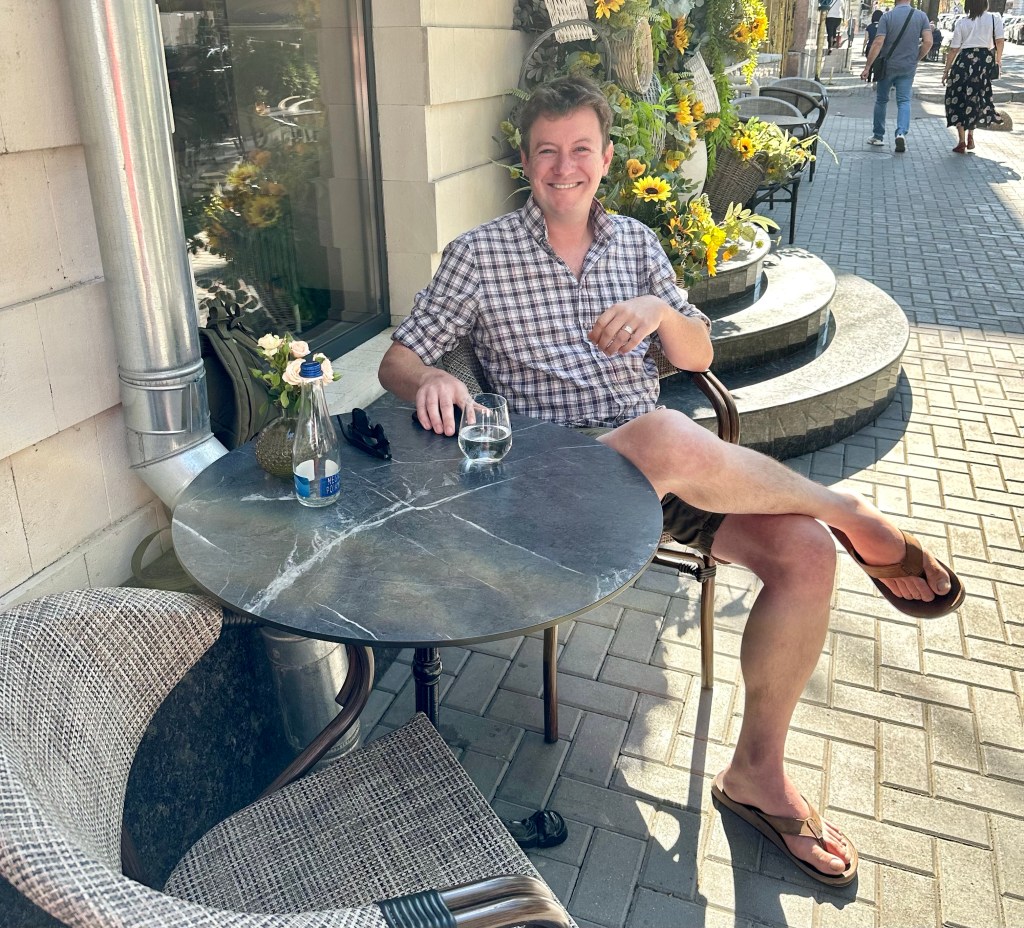
David Smith opened and ran an American-style barbecue restaurant for several years. He’s also been active in the local small business community and writes a newsletter with excellent analyses of what’s happening in Moldova. He, too, married a Moldovan woman.

Andrew Blakely was two years behind me in leaving Duke University to serve in Peace Corps Moldova. Now he’s back with Church World Service, managing programs to assist Ukrainian refugees and others. He’s working with Casey O’Neill, who previously served in the Peace Corps group between ours.

Bartosz Gawarecki is here, too, working with refugees near Bălți, where he served as a Peace Corps Volunteer. Bartosz is the president of Friends of Moldova. When the war broke out, he left his business in Michigan to join David and others in rapidly creating some of the first centers to provide desperate Ukrainian families with food and assistance.
That’s Bartosz in the photo, in the white shirt, along with Joseph Lutz of Indiana, who’s returned as a Peace Corps Response Volunteer. He and I are working together, with Marjory David, on a project to establish a national Jewish museum here.

The American expat community also includes diplomats, teachers, missionaries and others, along with a Facebook group and other community resources. On Sunday, we reunited with a couple from Alabama, Kathryn and Brian, who lived near us in Ialoveni. They’ve devoted their lives to helping vulnerable young women avoid trafficking, a serious problem here. They live now in Chișinău and continue to pursue this mission along with efforts to promote better foster care and education for young people with disabilities.
I admire Kathryn and Brian, as I do everyone I’ve mentioned in this post. While so many Americans tear each other apart back home, they’re quietly making the world a better place. I could also have highlighted other Returned Peace Corps Volunteers (RPCVs) here, including Courtney Jackson, who’s working with refugees, or Kelsey Walters, who’s raising a family with her Moldovan husband and promoting new agricultural approaches. (Apologies to those not mentioned.)

Back in December, when Champa and I were in Nepal, we had lunch with another RPCV, Anne Kaufman, who served in Peace Corps Nepal a year behind me in the late 1970s. She married a Nepali man, Raju, and has lived mostly in Kathmandu, working with development organizations and raising two daughters. For me, she represented the road not taken, the life I might have had if Champa and I had remained in Nepal instead of moving to America.
I don’t regret our decision. I’ve loved our life back home, especially our family, but this trip has been a reminder that it’s also possible to pursue a rich, impactful existence abroad, especially if it’s in a country you already know. The roads before us are far wider than many Americans realize.
Did you enjoy this post? Please share it!


Lasting Impact
Yesterday we returned to our Peace Corps workplaces and learned, after more than five years, that our impact has endured more than we’d realized.
Champa’s big project as a Volunteer was to help her school’s drama program create a magnificent wardrobe of costumes and props, which were unveiled in a colorful public ceremony in 2018 (see video).

When we returned to the school yesterday, current students greeted us wearing some of the same costumes — Romeo, Juliet, a king and more. The school has been using them regularly and added to the collection.

Champa stopped by an English class and reunited with some of her old students.

Earlier we visited the library where I worked. The librarians proudly showed us a trophy room they’ve created to display all of the awards won by the robotics team I helped to establish with Lidia Rusu (above).
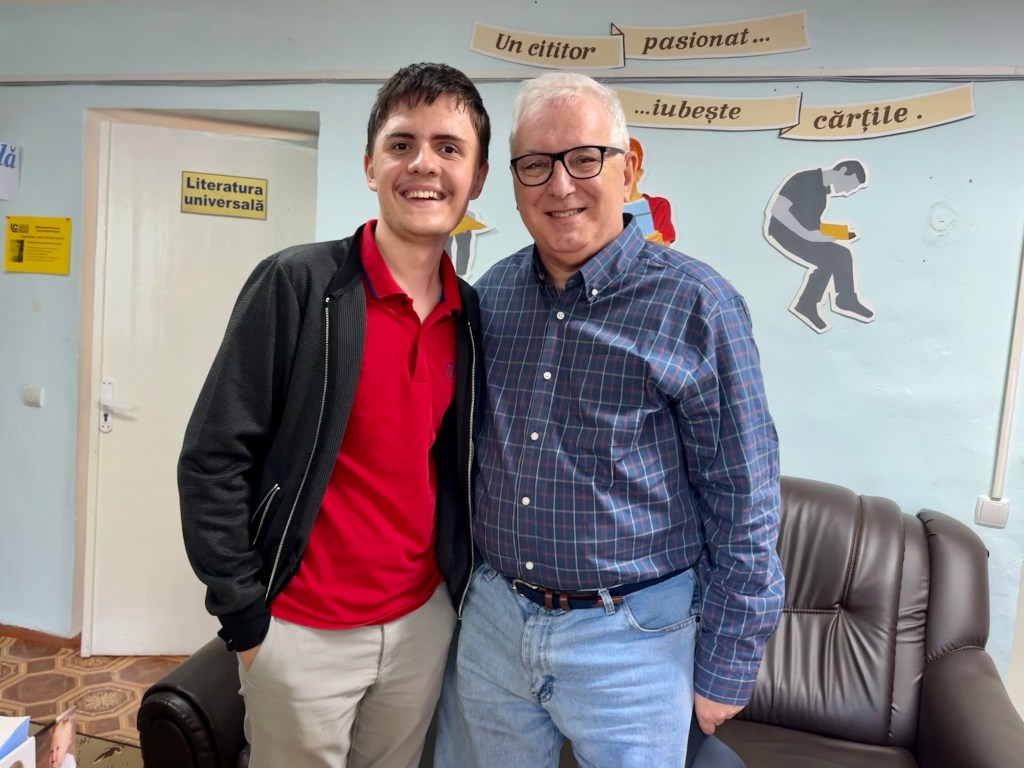
One of my younger robotics students, Alexandru, dropped by to thank us, too. He is now a high school senior, serving as a community youth leader.
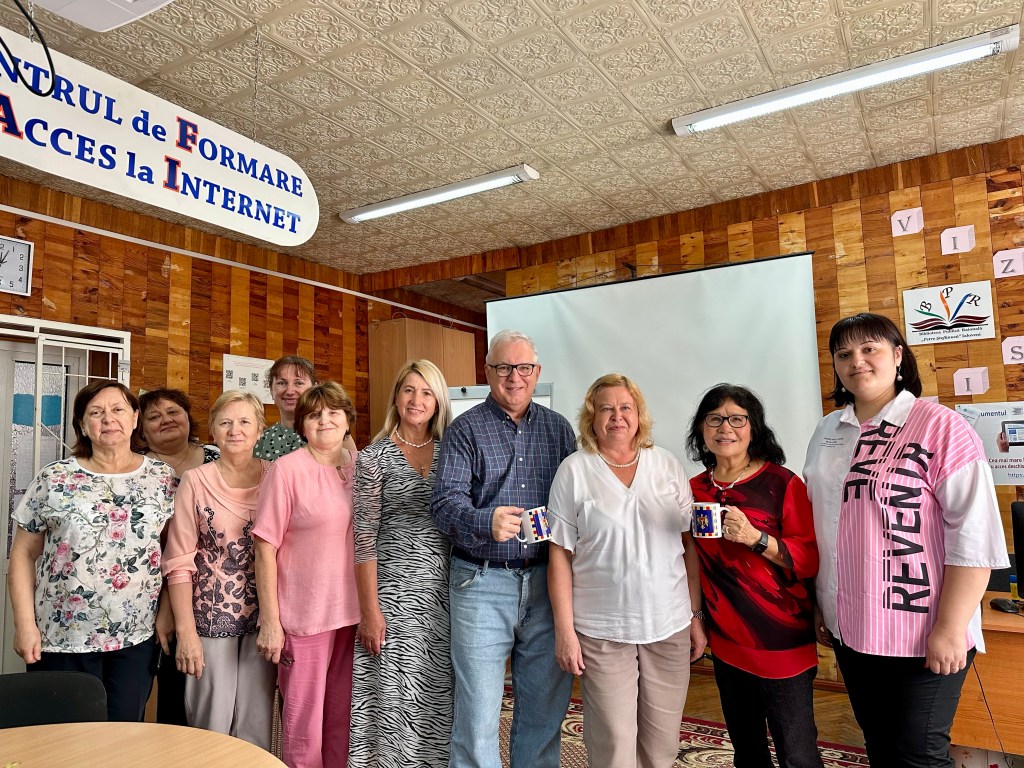
Valentina Plamadeala, the library director, in white blouse, hosted a champagne reception for us (at noon; I love Moldova). She posted on Facebook a list of the many projects we did together, several of which are still thriving, notably the Bebeteca room we created for local moms (see video.)
Our reunions in Ialoveni, the small city near Moldova’s capital where we served from 2016-18, were intensely emotional. We were moved to see how we’d touched people’s lives.

At Champa’s school, one of her fellow English teachers, Elena Antociuc, read a certificate saying, “We sincerely appreciate the time you spent guiding us to new perspectives by collaborating with us in search for the best solutions.”

The certificate concluded: “We’re proud to be part of your international family.”
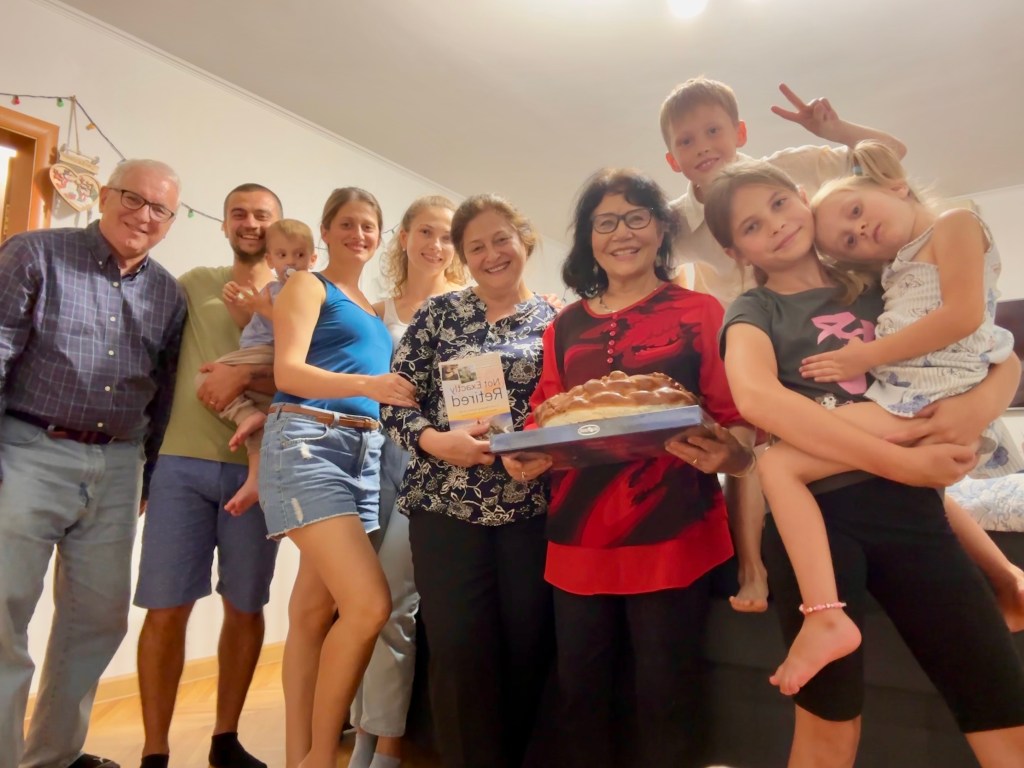
Ialoveni, we’re even prouder to be part of your family, now and forever. As we told Champa’s costume collaborator Ana Doschinescu, at a dinner her beautiful family hosted for us, our lives are so much richer because of all of you. Thank you for keeping us in your hearts.


Did you enjoy this post? Please share it!


Return to Moldova
More than five years since we completed our service as Peace Corps Volunteers, we returned to Moldova on Sunday night.
We endured flight cancellations, an all-nighter at JFK Airport, an unexpected stop in Istanbul and lost luggage when we arrived in Chișinău. In a larger sense, our return was delayed by the pandemic, the war in Ukraine and health setbacks.

But now we’re finally here, and so is our luggage. We couldn’t be happier.
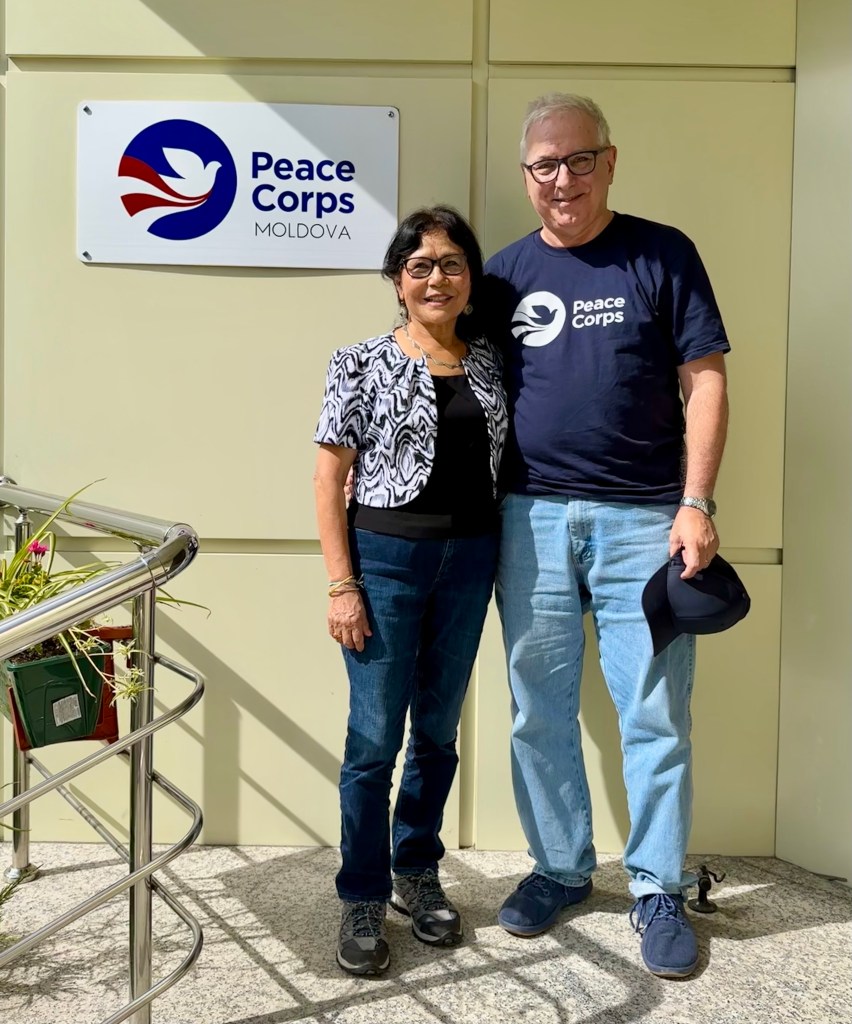
Our first jet-lagged stop on Monday was at the Peace Corps office, to hug old friends and discuss the virtual project I began several weeks ago to help create a national Jewish museum.
Then we reunited with our host family in Ialoveni, just outside the capital, for a delicious Moldovan dinner prepared by our host mother, Nina. That’s her in the top photo with her daughter, Alisa, showing off their copies of Not Exactly Retired with personal inscriptions from the author.
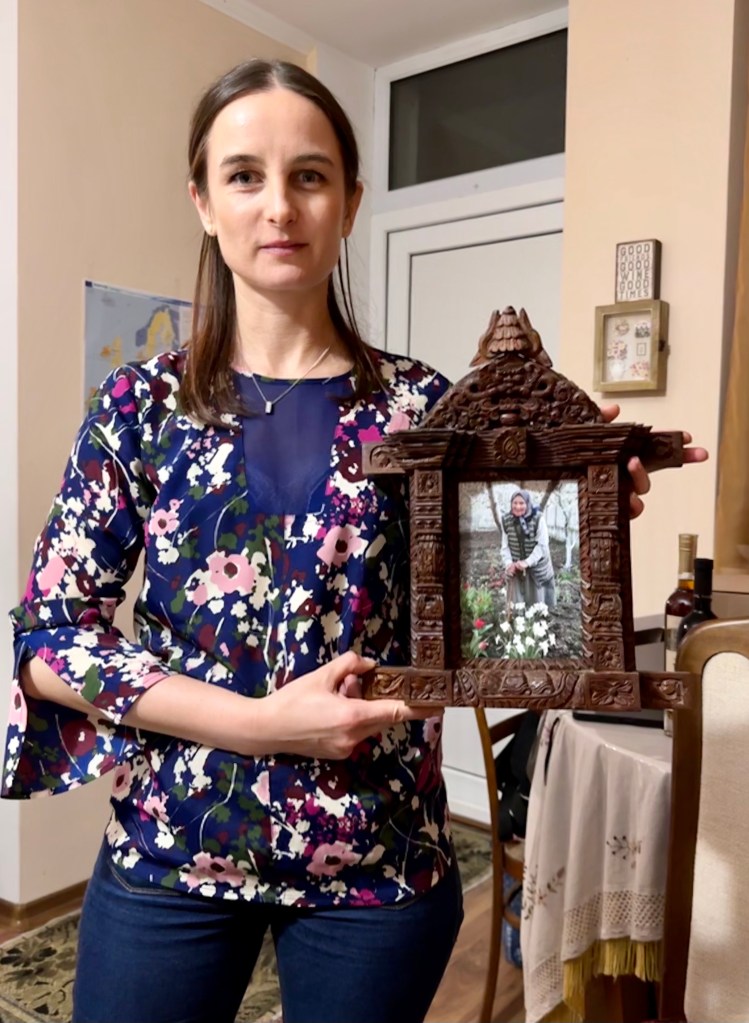
Among our other gifts was this carved wooden picture frame from Nepal displaying a photo of our beloved Bunica, Nina’s mom, who passed away before we could see her again.

Nina’s husband, Mihai, and son, Andrei, joined us for this group photo after dinner. We left with our own bag of gifts, including some of Ialoveni’s famous chocolates.

We also enjoyed reuniting with the family dog, Boss, who remembered us.

On Tuesday morning we attended a ceremony where U.S. Ambassador Kent Logsdon announced a major grant to restore one of the central structures in Chișinău’s large Jewish ceremony. Irina Shikhova, below, with whom I’m working on the museum project, was among the other speakers.

It was an inspiring event and great to finally meet Irina after several Zoom meetings. I also met Marjory and Joseph, two Peace Corps Response Volunteers working on the project.
Champa and I are staying at an Airbnb downtown. We’ve been eating placinte and friptura, drinking local wine and exploring how Moldova has changed over the past five years. More on that later.
For now, we’re just soaking it all in. Moldova, we’ve missed you!
Did you enjoy this post? Please share it!


Not Exactly Portlandia
At first glance, Oregon matched its stereotype when we visited last week: a coffee-sipping, beer-brewing, wine-tasting paradise filled with hikers and bicyclists wearing Patagonia jackets and REI backpacks.
But then we discovered an Oregon far more diverse than Portlandia, the comedy television series that portrayed a haven for eccentric hipsters.

We went there to attend the beautiful wedding of our niece and her husband, who live in Portland and celebrated in Hood River, about an hour to the east along the Columbia River. Hood River is one of the world’s top windsurfing spots, filled with breweries, coffee shops, art studios and restaurants. While there, we also toured the Bonneville Dam, the Columbia Gorge Discovery Center and other sites,
We enjoyed every minute, the wedding most of all, and thought “so this is Oregon.” We were right, but only partly right.

Less than three hours to the south was Bend, which we reached after stopping en route to see the majestic Timberline Lodge beside Mt. Hood (above) and Cove Palisades State Park. Bend had a similar high-end outdoorsy vibe but its landscape was very different — a high desert with sagebrush, hardy grasses and lava flows. We spent one day exploring Newberry National Volcanic National Monument, then another amid the deep river canyons and sheer cliffs of Smith Rock State Park (below). They felt more like Arizona than the lush landscape we’d just left.

Next we headed west, passing through Sisters, which looks like a cowboy movie set. In the Willamette National Forest our environment changed anew, ominously, as smoke from a wildfire made our eyes tear up and our throats thicken even though we were wearing masks inside a car. We were relieved to reach Eugene, where we drove around the University of Oregon before continuing on to the coast.

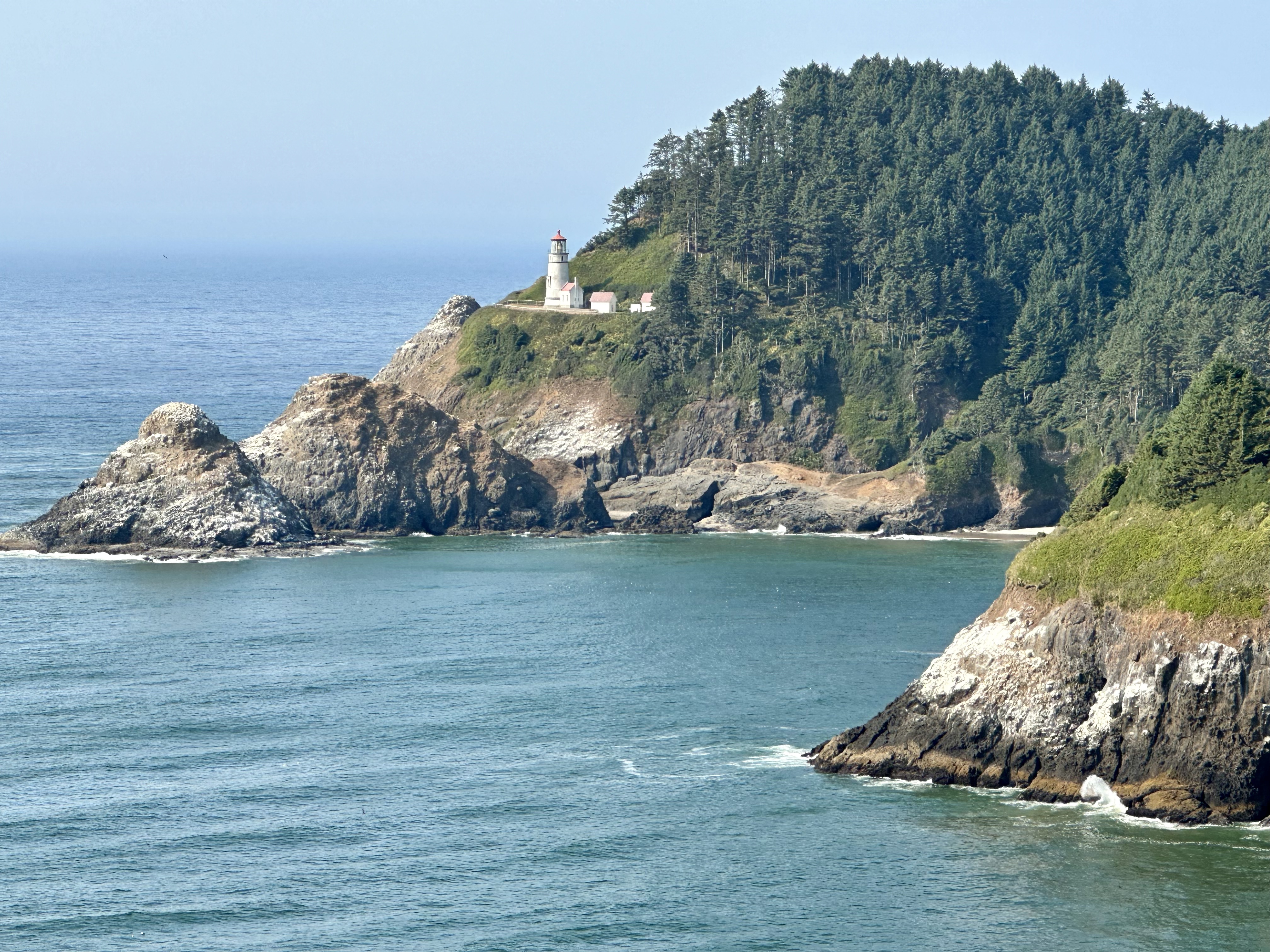
The towns there reminded us of Mendocino and other spots in California, with the Pacific Ocean crashing below a winding highway dotted with lighthouses and beaches.
As we continued on to the Willamette Valley, the heart of Oregon’s wine industry, we thought again of California, ths time of Napa and Sonoma, but also of our favorite wine-growing region, Moldova.

Finally it was back to Portland to visit the Saturday Market, ride the tram, attend a Ukrainian festival and see old friends. We saw Voodoo Donuts and other famous sites, as well as a large homeless population, which we also encountered the next day during a quick stop in Oakland.

So, yes, Oregon has more than its share of kayakers and IPA enthusiasts, which are definitely worth seeing, but it’s got a lot more, too, including regions we didn’t get to. We brought home a bottle of Pinot Noir and look forward to toasting our happy memories of this surprising state.
Did you enjoy this post? Please share it!


Jewish Museum of Moldova
If you think of London and Paris as having vibrant Jewish communities — which they do — consider another European capital whose Jewish population was once many times larger in percentage terms.
It’s Chişinǎu, the capital of Moldova, which was nearly half-Jewish at the turn of the last century, before a bloody pogrom in 1903 killed 49 Jews in Chişinǎu, injured hundreds more and led many Jewish families to flee.

Four decades later, the Holocaust killed most of Moldova’s remaining Jews, only to be followed by Soviet occupation. Today, estimates of Moldova’s current Jewish population range between 7,500 and 20,000, based on different sources, approaches and definitions. Many more Moldovan Jews live in Israel and other countries.
Moldova retains a rich Jewish heritage but, as I discovered while serving there as a Peace Corps Volunteer several years ago, it’s largely hidden amid the broken cemetery stones and synagogue ruins.
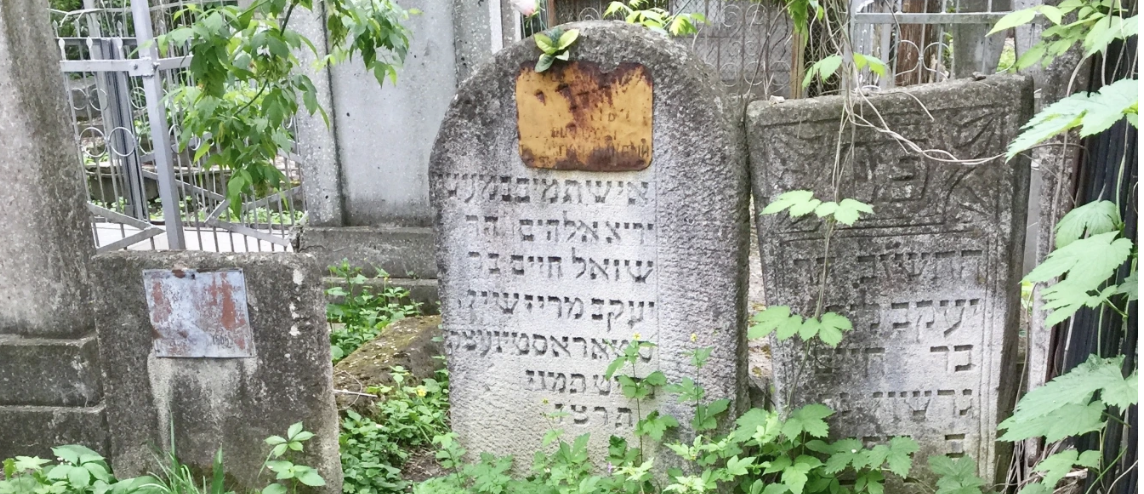
Now, finally, this is changing. In 2018, Moldova’s government created a national Jewish museum in the capital — focused initially on Chisinau’s large Jewish cemetery but with plans to also establish a building with exhibits and programs.
As the grandson of a Jewish woman who grew up down the road in Odessa, I find this both exciting and overdue. It’s even more inspiring since it’s happening at a moment when Moldova is dealing with the war in neighboring Ukraine and many other challenges.

A few months ago, Peace Corps Moldova asked me whether I might help the museum planners, given my professional background and familiarity with Moldova. I said yes enthusiastically and, earlier in July, began working on a Peace Corps Virtual Project with the museum’s director, Irina Șihova.
I’m interacting with Irina from my home in North Carolina but plan to visit Chişinǎu with Champa in September (at our own expense). We are also eager to reunite with our host family and other dear Moldovan friends while we’re there.

Irina is a prominent researcher in Jewish ethnology, culture and history; a museum curator; an educator; and a guide for Jewish families who’ve come to Moldova to explore their family roots. She’s organized dozens of exhibitions and cultural programs and written academic papers and books about Moldova’s Jewish history.
She and I have already done some good work together, brainstorming ideas for museum exhibits and publicizing an upcoming festival in Moldova that will include tours of former Jewish shtetls, a klezmer music concert and the premiere of a musical work commemorating the 1903 Chişinǎu pogrom. We’ll be joined soon by one or two “Peace Corps Response” volunteers who will bring their own expertise to work on-site with Irina and her colleagues.

I feel privileged to have this opportunity, especially at this early stage of the museum’s development, and plan to post updates on this blog. If you’re interested in the project, or know others with relevant expertise who might want to join this volunteer effort, please write me privately with a direct message or by e-mail. (Please do not post a public message about this here).
Because religion was heavily restricted in Soviet times, some Moldovans have ethnic Jewish heritage but do not practice the religion and may not even know about their family backgrounds. My closest colleague on the Peace Corps staff, for example, told me her Jewish grandparents “never practiced during the Soviet era since any religion was taboo.”
Moldova’s small Jewish community is experiencing a resurgence these days, as you can see in this photo from a youth event we attended. The new museum will make it easier for others in Moldova, Jews and non-Jews alike, and for visitors from around the world, to learn about this heritage and honor those who were lost.
I hope some of you reading this will visit it one day.
Did you enjoy this post? Please share it!


My Guilty Pleasure
I’ve been indulging my guilty pleasure lately as I recover from surgery: watching reality dating shows.
I know the story of every participant on Indian Matchmaker, the Netflix series in which Sima Aunty pursues mates for Indian singles, from a picky Mumbai bachelor to an Indian-American woman here in Durham.
I’ve been following Jewish Matchmaking, too, as Aleeza Ben Shalom helps singles in Israel and the United States to find partners for their wedding chuppahs. There’s Dani in Miami, searching for a guy with perfect eyebrows. There’s Noah, looking for a nice Jewish girl in Wyoming, and CIndy in Jerusalem, who left Canada and now seeks true love.

I know these dating shows are contrived and ridiculous, reinforcing cultural stereotypes and traditional romance norms, but I can’t resist them. Maybe it’s because Champa is from South Asia and I’m from a Jewish family in New York, so both shows resonate with us.
But it’s not just these two. I’ve also watched Love is Blind, the one where single men and women spend hours talking behind barriers, laying eyes on each other only after getting engaged. We find out whether they go on to marry at their wedding ceremonies, which are like car crashes adorned with white lace and sobbing mothers.
God forgive me.

The most famous of these shows is The Bachelor but its manufactured drama and weekly rose ceremonies are too much even for me (although I did learn to say “can I borrow you?” when I need Champa for something).
My sweet tooth for these shows doesn’t align with how I usually present myself. I spent most of my career working with scientists, professors and other smart folks. I read The New York Times every day and lots of high-brow books every year.

So why do I care whether Kwame and Chelsea, above, will stay together in Seattle, or if Fay will ever find an Orthodox Jewish guy in Brooklyn? It’s not very intellectual or macho, I know, but there it is.
It’s gotten worse recently as I’ve been home-bound and unable to do much except daily physical therapy. I’ve passed the time mainly by reading and watching television. Some of the shows have been high-quality, like binge-watching the HBO series Barry and John Adams, but I’ve become way too familiar with the tarot-card readers and “bio-datas” of Indian Matchmaker.
I have little appetite for most other trash TV, from Real Housewives to the Kardashians. I don’t care what paternity tests reveal on Maury or how long it takes for Judge Judy to tell someone to shut up. Shows that focus on baking, cooking, singing, remodeling or surviving? Not for me. I much prefer quality series such as Ted Lasso and The Handmaid’s Tale, or sports and cable news in limited doses.

Still, if you follow this blog for posts about retirement, travel or something else, I seek your forgiveness. I stand before you humbled and contrite. I know I should aspire to nobler fare.
Until then, though, I’ll be rooting for Viral from Durham, above, to find lasting happiness with Aashay whenever Season 4 of Indian Matchmaker finally drops.
Did you enjoy this post? Please share it!


Organ Recital
My mother used to say “another organ recital” to describe her dinner conversations at the assisted living facility where she spent her final years. Whenever Champa and I joined her, sure enough, others at the table would discuss their medical problems. Among the most common of these, as evidenced by the walkers parked nearby, were knee and hip replacements.
During the past few years, medical issues have accounted for a growing share of our own conversations with friends, even though we’ve been relatively healthy ourselves. When I had hip replacement surgery this past Friday, I thought back to my mother’s dinner companions and wondered: Had I finally become one of them?

My procedure at Duke Regional Hospital went well. I returned home the following day and have been recuperating since then with a lot of help from Champa, my sons, a physical therapist and others. I hope to be walking easily again within a few months.

I know how lucky I’ve been to have access to an outstanding medical system and to live at a time when hip replacements have become routine. But the experience has reminded me of something I haven’t wanted to think about, which is the inevitability of physical decline. No mater how active, engaged and “not exactly retired” we aspire to be in this stage of life, we cannot avoid life’s frailties forever. We’re all in the lobby for the organ recital.

My hip problem began during one of the international trips that have highlighted our own adventure since leaving our conventional lives in 2015 to travel, serve in the Peace Corps and then redefine our lives back in Durham. Champa and I were visiting Vietnam with two friends in February when I felt severe pain in my upper right leg. Thinking it was tendonitis. I continued on with our trip into Cambodia, Laos and Thailand, skipping the longer walks to rest on a hammock or elsewhere. Several weeks after we returned home, I finally got an MRI and learned my hip was badly deteriorated and needed to be replaced.
I remained active while hobbling around prior to my surgery, even speaking at two local retirement communities about Moldova and the importance of making the most of this stage of life rather than drifting into old age. At the second talk, my leg hurt so much they gave me a motorized scooter to leave the auditorium. It was Irony on Wheels.

My new prosthetic hip should make me better. Champa and I still look forward to many years of travel, service and adventure, with renewed empathy for those with permanent disabilities. Still, coming as it does on the heels of my prostate cancer treatment (which also turned out well) and the deaths of several dear friends, the experience has gotten my attention.
I’m grateful for how things are turning out so far, truly, but feel more sobered than ebullient. It hasn’t been an occasion to shout “Hooray!” As I continue recuperating, I’m just relieved to be able to say “Hip Hip” and know they’re both working.
Did you enjoy this post? Please share it!


Artist in Residence
Behold this homage to former President Obama, the newest work from a talented North Carolina artist who was born in Nepal and also lived in Moldova.
Yes, it’s Champa, whose paintings, collages and other work fill our home with beauty. Here are the three paintings you see when you enter our house:

And here are the two paintings in our living room:

Over the years, Champa has taken classes with the Durham Arts Council, OLLI at Duke and The ArtsCenter in Carrboro. She’s learned oil painting, watercolor, acrylics, drawing, ceramics, fused glass, hot-wax painting, felt art, silk painting, jewelry making, quilting and even art made from postcards or fused plastic bags. Here are some examples of her earlier work:

A few years ago, she settled on her current style, a mixed-media combination of collage and painting. She’s used it to create works like the Obama piece and one-of-a-kind gifts for our family and friends, such as this one for our youngest grandson.

Champa and I enjoy traveling and doing things together, but a secret to our happy marriage is that we spend most of our daytime hours pursuing our own interests — art and gardening for her, writing and volunteering for me. I’m her biggest fan and, ever since I started this blog in 2015, I’ve wanted to feature or at least mention her art. She always said no, preferring to keep it private until she developed her own style.

I’m not objective but I think the wait was worth it. When an artist friend of ours visited recently, I made the mistake of referring to “Champa’s hobby.” She corrected me, saying, “it used to be a hobby for Champa. Now she’s an artist.”
I couldn’t agree more. Our artist in residence is already working on her next piece and I can’t wait to see how it turns out.

 "Not Exactly Retired"