

Take your time.
That’s what Peace Corps staff told us during training: Learn about your community, form relationships, win trust. If you do that, your projects and work agenda will emerge naturally.
They were right, of course. But I’ve had trouble letting go of old habits. I keep checking my cell phone for messages. I don’t go home until I’ve completed every item on my mental “to do” list.

Back when I was at the university, I used to advise new communications employees to meet people and get the lay of the land before they rushed off to produce their articles and websites. You’ll be busy soon enough, I told them. Soon enough, they were.
During our training here, we were told essentially the same thing. You’d think I would have internalized the message. Yet, although I’ve been actively meeting people, attending events and learning about my new surroundings, I can’t get the checklist out of my head.
Champa finds this amusing. “I thought you were ‘not exactly retired,’ ” she told me.
She’s right, too, of course. My new life is not as hectic as my old one, but it’s rich and productive, like those of so many of the other volunteers here. On Wednesday, I had a great chat with the president of the raion council, or county government, where I work. He’s an impressive and thoughtful man, working long hours for little pay to serve his community. After I got back to my office, a colleague dropped by to tell me about a local archaeological project that needs support, leading me to spend time online exploring possible funding sources.
In my inbox was a message from a North Carolina State University expert on grapes and wine production. I’d written her to ask if she might have any training materials to share with a colleague here. It turns out she visited Moldova not long ago and has an entire website.

I got another message from the communications director of Dreamups, the local entrepreneurial hub I wrote about in my last post, setting up a follow-up discussion for us to share ideas about how they might reach out to the international news media.
A Peace Corps colleague contacted me, too, to answer some questions I had about an upcoming “Let Girls Learn” conference.
On my way home, I went to the local telephone store to upgrade my wifi account and to the grocery story to buy food for dinner. Champa and I splurged by buying several flaky placintas — cherry-filled for breakfast, cheese-filled for lunch. The store has a plate for each kind, including one whose name we didn’t recognize. I asked the clerk whether she knew the word in English. “Halloween,” she said, which we eventually understood to mean “pumpkin.”
When you add it up, it was a rewarding day, even before I studied Romanian after dinner.
Starting on Monday, I’ll reunite with my training group for two more weeks. I’m expecting the staff to remind us anew to be patient and have faith in the process.
Once again, they’ll be right. This time, I plan to pay closer attention. Really. I may even put a reminder in my electronic calendar.


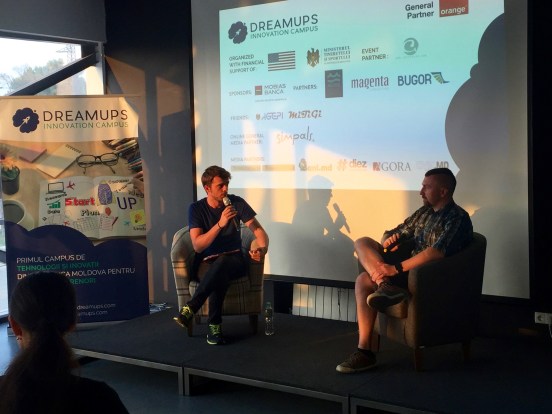

 Matei joined Degeler on the stage, both in armchairs, one wearing shorts, the other a black T shirt. A projected slide behind them showed the event’s sponsors — local companies, media partners, the U.S. government and others.
 Back when I was in Durham, I interacted with the thriving local startup scene, which I helped publicize through articles such as

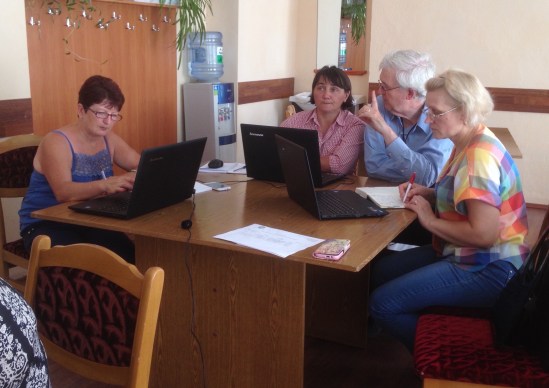
 “It’s a nightmare to juggle everything,” says Dee, who discovered the problem during her first few days as an English teacher in the small Moldovan city of Calarasi. Her own schedule kept changing along with everyone else’s. School officials could use existing software to develop new schedules, but they had to pay high fees to print each version — this in Europe’s poorest country.






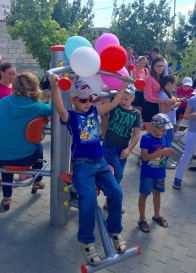 On Sunday, we attended a Moldovan version that offered all of that and more: a priest sprinkling holy water on the equipment, a wrestling tournament and a couple of giant mice.
 As the children raced inside and a television crew spoke with some of the parents, an Orthodox priest lit candles, chanted prayers and walked through the crowd to sprinkle blessings on people and equipment alike. The mayor, who is wearing a blue shirt in the video, carried the water beside him.
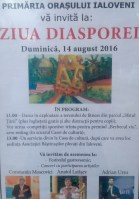 The festivities then moved down the street to the Casa de Cultura, or cultural center, where people watched as wrestlers competed to win a ram tied to a nearby staircase.
 The crowd included Igor Balaur, a local wrestling hero who competed in the Olympics years ago and was now visiting with his family, which lives in France.


 "Not Exactly Retired"