Tag Archives: Top Ten

Top Ten Books 2024

I knew my favorite book of 2024 months before it recently won this year’s National Book Award. Percival Everett’s James tops my annual Top Ten list and it’s a masterpiece. 

Everett retells Mark Twain’s Adventures of Huckleberry Finn through the eyes of its enslaved runaway Jim — now James –,who travels with Huck on a perilous journey down the Mississippi River. The story is familiar but its new perspective is chilling, with a voice as powerful as Twain’s. I loved Everett’s earlier Trees, was less enthusiastic about Erasure — which was adapted for the film American Fiction, but James is in a different class. It’s my book of the year.

My other favorite was The Covenant of Water by Abraham Verghese. It was published in 2023 but, as I noted in last year’s Top Ten, I’m bending the rules to accommodate books I didn’t read until after year’s end. There’s no way I can exclude this sweeping epic abut three generations of a family in southern India. As in his previous work, Verghese draws on his medical background and deep knowledge of Indian history to create a saga that encompasses leprosy, genetic disorders and, above all, the human heart. It’s more than 700 pages but I could barely put it down.

Colm Tóibín’s Long Island is another historical novel whose setting is closer to home. It picks up the story of Eilis Lacey, who Saoirse Ronan portrayed in the film version of Tóibín’s earlier Brooklyn. Eilis has now settled into married life with her husband and his Italian family on Long Island. When she is confronted with a shocking discovery about him, she returns to her native Ireland for a visit and sees the man she almost married there. We feel her anguish as she ponders whether to reunite with him or return to an American husband and children who still love her.

Rachel Kushner’s Creation Lake was as smart and gripping as I’ve come to expect of her. It’s the story of a 34-year-old dropout from a Ph.D. program who’s become a spy for hire. Sadie’s shadowy employer asks her to infiltrate a French commune that may threaten their agricultural business. It’s a thriller that, as with Kushner’s previous novels, weaves in fascinating diversions on everything from Neandertal consciousness to Italian food. Kushner is also very funny. After reading The Flamethrowers, The Mars Room and now this, I can’t wait for whatever she creates next.

As I look at my list, I realize that most of my books are by authors I’ve enjoyed previously. Another is City in Ruins, the last of a terrific crime trilogy by Don Winslow. It completes the story of Danny Ryan, a former Providence waterfront worker from a tough Irish American family connected to the mob. Danny has become a successful casino operator in Las Vegas but can’t escape his past. I lived in Providence for several years, so these characters were familiar to me, but they will be compelling to readers anywhere. This is a gripping tale of honor and revenge whose heroes keep surprising us.

Liz Moore’s The God of the Woods is also a thriller, this one involving a summer camp in the Adirondacks that is less bucolic than it seems. A camper disappears and, as people search for her, secrets emerge about the rich family that runs the camp and the earlier disappearance of their own son. The novel explores the tenuous relationship between parents and children, and between wealthy people and those who serve them. I enjoyed Moore’s earlier Long Bright River, set in the far grittier streets of Philadelphia, and hope she develops the following she deserves.

The last of my “repeat authors” is Tana French, whose engrossing 2020 novel, The Searcher, introduced me to Cal Hooper, a retired Chicago police detective who moves to an Irish village for a quieter life but cannot escape the criminality around him. In her new book, The Hunter, it’s three years later and Cal is drawn again into mayhem, this time with the grifter father of a troubled teenage girl he’s taken under his wing. As the story reaches a bloody conclusion, Cal struggles to maintain his moral compass amid cultural differences and deep family secrets.

Kaveh Akbar’s Martyr! is about a young man who moves with his father from Iran to the United States after losing his mother on an airliner shot down by American forces. He struggles with depression and addiction, drifting through life until traveling on a whim to New York to see a dying artist, an encounter that reveals truths he never imagined. Told from different perspectives and filled with imaginary conversations with the likes of Lisa Simpson and Kareem Abdul-Jabbar, it’s a haunting tale of someone overcoming racism, alienation and grief to redefine himself.

My last novel has ties to the first. Danzy Senna is married to Percival Everett and is a gifted writer herself, as she demonstrates in Colored Television, a funny, poignant story about a biracial author with a struggling academic career. Seduced by a luxurious house-sitting gig, she begins writing for a celebrated but devious television producer, setting her on a journey that threatens her marriage, her family and her own sense of identity. It’s a novel makes you laugh, cringe and keep turning the pages. 

I enjoyed several nonfiction books this year but am singling out just one for my list. Anthony Fauci’s On Call is a deeply personal, well-written memoir by the famed physician whose career stretches back much further than the COVID pandemic to include AIDS and other health crises. I was a science writer in Washington, D.C. for many years, so have been following Dr. Fauci for decades. I have enormous respect for everything he has done as a scientist and public servant and was disgusted by the abuse he endured during COVID. His book is riveting and empathetic, reminding us of the collective debt we owe him.
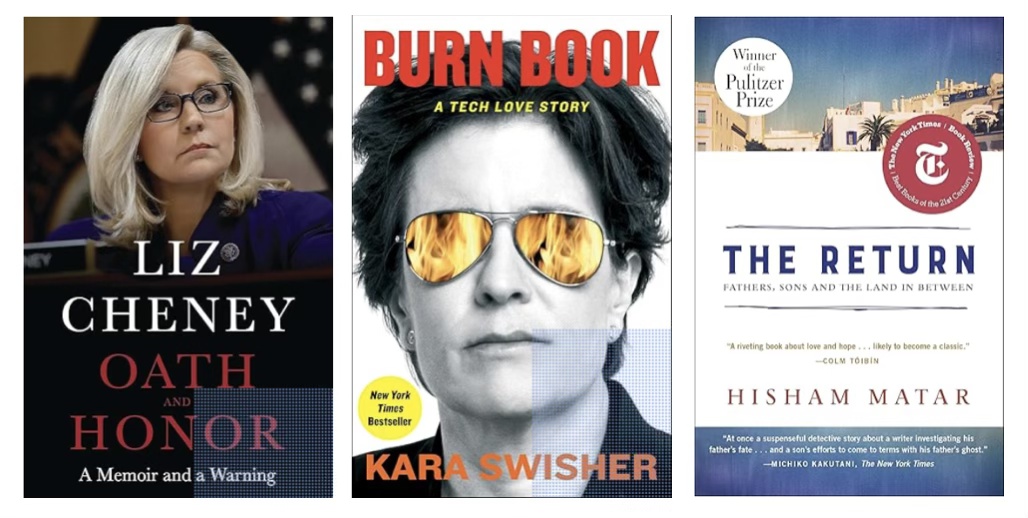
Another memoir, not quite on my Top Ten list, evoked a similar sense of gratitude. Liz Cheney’s Oath and Honor is filled with fascinating details about her courageous journey to uncover the truth about the January 6 insurrection and the first Trump administration. 

I enjoyed other memoirs, too. In her long-awaited Burn Book, tech writer Kara Swisher brings us back to the birth of Silicon Valley and the early days of Steve Jobs, Elon Musk and others. As in her popular podcasts, Swisher can be self-indulgent but she’s often insightful and never boring. Another memoir, Hisham Matar’s The Return, describes how his Libyan family endured the murderous regime of Muammar Gaddafi

Two older memoirs also held personal interest, for different reasons. In Ten Years a Nomad, Matthew Kepnes — known as “Nomadic Matt” — describes how he spent years wandering around the globe, a journey I am about to emulate on a much smaller scale. In Waiting for the Monsoon, journalist Rob Nordland tells how his life filled with writing and travel was imperiled by a health crisis — one worse than anything I have experienced, but resonant nonetheless.

I also enjoyed McKay Coppins’ excellent biography of Mitt Romney; John Vaillant’s harrowing account of Fire Weather; and Jessica Roy’s American Girls, about a young woman from a religious family in Arkansas ending up with the Islamic State in Syria. Bianca Bosker’s Get the Picture provided a devastating tour of New York’s art scene.

On the political front, I also enjoyed The Age of Grievance, by Frank Bruni; The Age of Revolutions by Fareed Zakaria; The Truths We Hold by Kamala Harris (remember her?) and — older but still interesting — The Paradox of Tar Heel Politics by Rob Christensen.

My final non-fiction nod goes to The Catalyst, which describes how RNA science has become central to our understanding of cancer, aging and more. Author Thomas Cech, a Nobel laureate, introduces us to the people behind the discoveries and explains in non-technical language how RNA is changing our world. I worked with Tom for several years and admire both his brilliance and his ability to explain complex science.
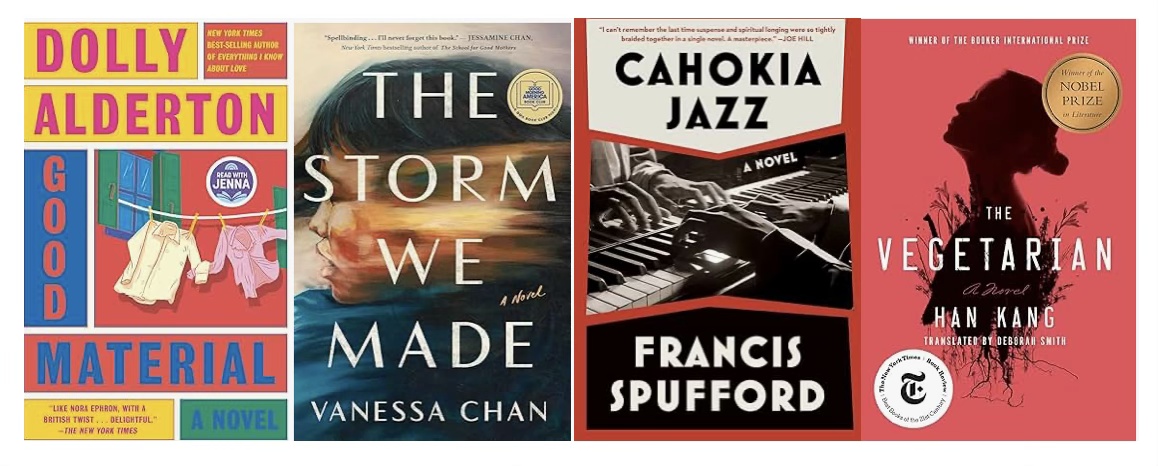
Other new fiction favorites included Dolly Alderton’s Good Material, a British rom-com about a struggling stand-up comedian; Vanessa Chan’s The Storm We Made, about the complex choices Malaysians made during the Japanese occupation; Francis Spufford’s Cahokia Jazz, a noir thriller set in a reimagined Midwestern state; and The Vegetarian, a dark novel from Korea by Han Kong, who won this year’s Nobel Prize in Literature. I also inherited a friend’s copy of Larry McMurtry’s classic Cadillac Jack, which was worth the long wait, as was Alistair MacLeod’s lovely No Great Mischief, which I read before traveling to his native Nova Scotia.

As usual, some titles disappointed, notably four you may see on “best books” lists elsewhere: Long Island Compromise by Taffy Brodesser-Akner; This Strange Eventful History by Claire Messud; There’s Always This Year: On Basketball by Hanif Abdurraqib; and Wandering Stars by Tommy Orange. I gave up on all of them before finishing. Maybe I stopped too soon.

Looking ahead, I’m preparing to tackle a 1,336-page classic that I’ve downloaded to read during our upcoming trip to Australia and New Zealand: Robert Caro’s The Power Broker, about Robert Moses’s transformation of New York. I hope to finish it in time for my 2025 list. Until then, I invite you to share your own suggestions in the comments section and wish everyone another year of great books. Happy reading!

Top 2023 Books

Bless your heart, Demon Copperhead. You’ve beaten my annual Top Ten book list like a borrowed mule and now I’m madder than a rattlesnake in a forest fire.

Barbara Kingsolver’s brilliant novel about young Demon’s perilous life in Appalachia was published last year but I read it too late for my 2022 Top Ten list. It turned out to be my favorite book of the year. I also admired its co-winner of the Pulitzer Prize for fiction, Trust, Hernan Diaz’s novel about wealth and deceit in New York. Likewise for another prize-winner, Nobel Prize recipient Abdulrazak Gurnah, whose spellbinding Afterlives transported me to colonial East Africa.

I’m not a professional critic who receives free advance copies, so I read these three books too late for my list. So, too, for some other excellent novels: Tomorrow, and Tomorrow, and Tomorrow; Olga Lies Dreaming; The Trees and The Measure.

My new list again highlights ten books published during the year but, as in 2022, 2021 and 2020, it’s limited to those I read by mid-December. Here’s my 2023 Top Ten: 

James McBride’s The Heaven & Earth Grocery Store was my favorite (so far). Set in Pottstown, Pa., it unravels the mystery of a skeleton found in the bottom of a well. McBride draws on his own Jewish and Black heritage to paint a rich portrait of Chicken Hill, a neighborhood whose diverse residents grapple with poverty, discrimination and a rapidly changing world. It’s a whodunit with a huge heart

My other favorite was Birnam Wood by Eleanor Catton, an eco-thriller set in New Zealand. A guerrilla collective of environmental activists forms an uneasy alliance with an elusive American billionaire who wants to build a survivalist bunker. His real goals prove more sinister, leading to an apocalyptic confrontation. The title comes from Macbeth and the final act is just as bloody.

Action and violence also abound in Small Mercies, but here the conflict revolves around the Boston school desegregation battles of the 1970s. As in Mystic River, author Dennis Lehane captures that city’s voices. His central character is Mary Pat, a tough “project chick” from Southie with two failed marriages and a son lost to heroin. When she learns her daughter may be involved in the murder of a young black man, she is caught in a whirlwind, just like the city around her.

In Hello Beautiful, Ann Napolitano tells the story of a boy growing up in a loveless house who finds refuge among his basketball teammates. William goes to college on a scholarship and seems to finally find happiness with an ambitious classmate whose Chicago family embraces him. When their marriage falls apart, he discovers even deeper love — and then tragedy — with an unexpected partner. He nearly dies before reconciling at the end with a figure from his past.

Tom Lake, by Ann Patchett,is set mainly in a cherry orchard in northern Michigan. The farm’s mother, Lara, slowly shares with her daughers — and us — the story of her brief acting career and love affair with an actor who became one of the world’s most famous movie stars. One daughter thinks the actor is her father. Her mother reveals the truth while gently prodding her daughters to contemplate deeper truths about family and what matters in life.

For more action, consider All the Sinners Bleed, the latest thriller from S.A. Cosby, whose Blacktop Wasteland and Razorblade Tears appear on my previous lists. This time Cosby opens with a shooting at a rural Virginia school that leads to chilling revelations about the murders of local Black children. The sheriff slowly makes sense of the case while confronting racism, religious zealots, snake charmers and a former girlfriend who became a podcaster.

The remaining four books on my list are nonfiction, led by Jonathan Eig’s masterful biography of MartinLuther King Jr., which draws on a trove of previously unreleased White House telephone transcripts, F.B.I. documents, letters, oral histories and other documents. I thought I knew a lot about King, but I learned many new things about him as both a man and historical figure, as well as about Malcolm X, the Kennedys and others. Most of all, Eig shows us King’s incredible determination and heroism. I came away with even greater gratitude for his life.

Considerably less admirable are many of the characters in David Grann’s The Wager. Set mainly in South America in the 1740s, it’s a page-turner about a British vessel that wrecks off the coast of Patagonia while pursuing a Spanish galleon. Its survivors are marooned and then embark on a harrowing journey. Those who reach Brazil are hailed as heroes until several other castaways appear and accuse them of mutiny. Who is telling the truth? Author Grann, who wrote Killers of the Flower Moon, presents the evidence he uncovered during years of research.

Timothy Egan’s A Fever in the Heartland takes place closer to home, in Indiana during the 1920s. A charismatic charlatan named D.C. Stephenson leads the Ku Klux Klan to national power, culminating with a march through Washington, D.C. He recruits politicians and others to his movement, which appears unstoppable until his abuse of a local woman leads to his downfall. Especially in today’s world, it’s a sobering reminder of how easily hate groups can attract followers.

My final book, also nonfiction, is a memoir by the historian Drew Gilpin Faust. Necessary Trouble describes her childhood in rural Virginia, a life filled with horses, privilege and racism. Young Drew is a precocious child, as you’d expect of someone who would become Harvard’s president, and she struggles to make sense of her life. Her perspective keeps changing as she travels to Eastern Europe, gets involved in the Civil Rights Movement and protests the Vietnam War. I was moved by her empathy and beautiful writing.

I’ll also salute two excellent nonfiction books that didn’t make my Top Ten: The Undertow, Jeff Sharlet’s journey into far-right extremism, and Traffic, Ben Smith’s origin story about online disinformation, featuring his time at Buzzfeed.

Equally disturbing, although fiction, was Emma Cline’s The Guest, about a young woman who uses sex and manipulation to con her way through the luxurious world of the Hamptons. I was engrossed by her odyssey of desperation and, after finishing it, went on to read Cline’s earlier (and even more chilling) The Girls, based on the women who followed Charlie Manson.

Other novels I enjoyed were much lighter, such as Pineapple Street, about Brooklyn’s wealthy elite; Romantic Comedy, featuring a writer who finds love at a show resembling Saturday Night Live; and The Chinese Groove, about an overly optimistic immigrant who confronts the realities of America.

I love crime fiction and this year discovered Don Winslow, specifically City of Dreams and City on Fire. They’re both set in Providence, where I once lived. I also enjoyed a pair from Ruth Ware: Zero Days and The It Girl. I liked two other thrillers, Crook Manifesto by Colson Whitehead and Every Man a King by Walter Mosley, but found both less compelling than previous work from these two distinguished writers.

A book even older than those I cited at the beginning is Richard Ford’s 2014 novel Let Me Be Frank With You. It’s the fourth in Ford’s series of novels about Frank Bascombe of New Jersey, who is now confronting the indignities of older age. It made me laugh (and cringe) more than any other book this year.

I was less enthusiastic about two of the year’s most honored books, The Bee Sting by Paul Murray (too long; couldn’t finish) and The Rediscovery of America by Ned Blackhawk (an overdue history of Native America but too scholarly for me). I also gave up on Under the Wave at Waimea by Paul Theroux, usually one of my favorites.

Finally, a salute to Cormac McCarthy, who died in June. I’d read several of his books but never All the Pretty Horses, whose brilliance reminded me of his singular talent. I will miss his voice even as I look forward to 2024 and a new year of great books — regardless of their publication dates.

As always, if you have suggestions of your own, please share them here.

Books for a Crazy Year

Only two of my ten favorite books in 2020 were nonfiction, but all of them helped me make sense of issues we confronted during this crazy year.

For all of you who are fellow book lovers, here are my Top Ten:

James McBride’s Deacon King Kong, set in a Brooklyn housing project in 1969, illuminated our country’s history of racial injustice even as it kept me laughing and turning the pages.

Brit Bennett’s The Vanishing Half, about an African American woman who passes as white while her twin sister remains in the black community, moved me deeply.

Lawrence Wright’s The End of October anticipated how a worldwide pandemic might upend our lives. I was amazed by Wright’s prescience and riveted by his story. 

My Dark Vanessa, by Kate Elizabeth Russell, made me think anew about the #MeToo movement with its unsettling portrayal of a teenage girl who has sex with her teacher yet resists being seen as a victim. 

Far lighter was Carl Hiaasen’s Squeeze Me, a rollicking tale of a giant snake eating a Republican socialite at a resort resembling Mar-a-Lago while a narcissistic president blathers and his foreign-born wife has an affair with a Secret Service agent. I’ll let you draw your own parallels about that one. 

Isabel Allende’s A Long Petal of the Sea is set decades ago in the Spanish Civil War and in Chile under the Pinochet dictatorship, but its messages about war, loss, family and migration were universal and timely this year.

Liz Moore’s Long Bright River made my list partly because it is set in Kensington, Philadelphia, where my son and his family lived until a few years ago. Simultaneously, it’s a gripping detective story that brings us face to face with drug addiction, police misconduct and other challenges.

Then there was Ayad Akhtar’s Homeland Elegies, which combined autobiography and fiction in a compelling story that ranged improbably from the discrimination faced by Muslim immigrants to the intricacies of financial debt. I couldn’t put it down.

One of the two nonfiction books on my Top Ten list also illuminated the year indirectly but powerfully. In The Splendid and the Vile, Erik Larson describes how Winston Churchill led England courageously through the darkest days of World War II, in sharp contrast with the incompetence we’ve seen during our own crisis.

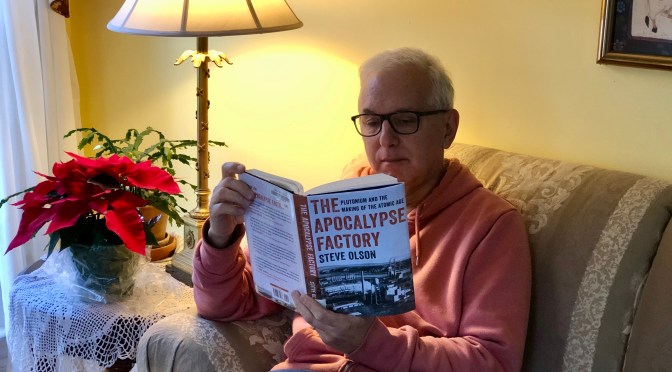
Finally, I just finished reading The Apolcalypse Factory by Steve Olson, a wonderfully talented science writer. He describes how scientists raced to produce atomic bombs at a remote site in Washington State, helping to end World War II while creating a toxic legacy that haunts us today.

Other recent nonfiction books also helped me see the world more clearly this year. Ezra’s Klein’s Why We’re Polarized illuminated our election. On the science front, Matt Richtel’s An Elegant Defense was the most readable overview I’ve seen about the immune system, and Matthew Walker’s Why We Sleep kept me wide awake and fascinated.

A scientist was also a central character in Esi Edugyan’s novel Washington Black, in which a British researcher helps a young black slave escape by balloon from a sugarcane plantation in Barbados. 

Margaret Atwood’s The Testaments revisited and updated the dystopian religious theocracy of The Handmaid’s Tale. Jeanine Cummins’ controversial American Dirt dealt with Mexican gangs and migration across the U.S. border. 

I also loved several novels that were simply great stories. Margarita Montimore’s Oona Out of Order took me time traveling with a young woman trying to figure out her life. Mary Beth Keane’s Ask Again, Yes explored love and redemption through two police families sharing a tragedy. Ann Patchett’s The Dutch House offered a moving story of a brother, a sister, a mansion and life’s unpredictability.

Some of these books were published before 2020, as were Normal People, My Name is Lucy Barton and others that gave me happy reading this year. Other novels I enjoyed included Redhead by the Side of the Road by Anne Tyler, The Glass Hotel by Emily St. John Mandel, Mostly Dead Things by Kristen Arnett, The Old Drift by Namwali Serpell, Such a Fun Age by Kiley Reid, Nothing to See Here by Kevin Wilson and The Silent Patient by Alex Michaelides

I finally read Samantha Power’s superb autobiography, The Education of an Idealist, and Rachel Maddow’s rich account of the international oil industry (Blowout). Julie Andrews shared delightful memories of Broadway and Hollywood in Home Work

When the news got especially grim in 2020, I sometimes turned to thrillers to distract myself. They included good ones by Harlan Coben, James Patterson, David Baldacci, Daniel Silva and Chris Bohjalian. 

A special treat was Joyce Hooley’s charming Cu Placere, which reminded me why I fell in love with Moldova while serving there in the Peace Corps.

I wasn’t enthusiastic about everything I read in 2020. Some prominent recent books, such as White Fragility and Trick Mirror, underwhelmed me, and I was disappointed by others I’d been meaning to read for years, such as T.C. Boyle’s East is East and Tom Robbins’ Jitterbug Perfume.

Overall, though, I loved reading my way through this challenging year. Thanks to the Durham County Library, through which I downloaded many of these books onto my Kindle.

If you want to share your own suggestions, I invite you to leave a comment.

Finally, I can’t write about this year’s books without mentioning this one, which one reviewer called “a fascinating story about the rewards of doing good while seeing the world” and another described as “the perfect combination of adventure, compassion and love.” Check it out if you haven’t already, and happy reading in 2021.

200 Posts: Top Ten

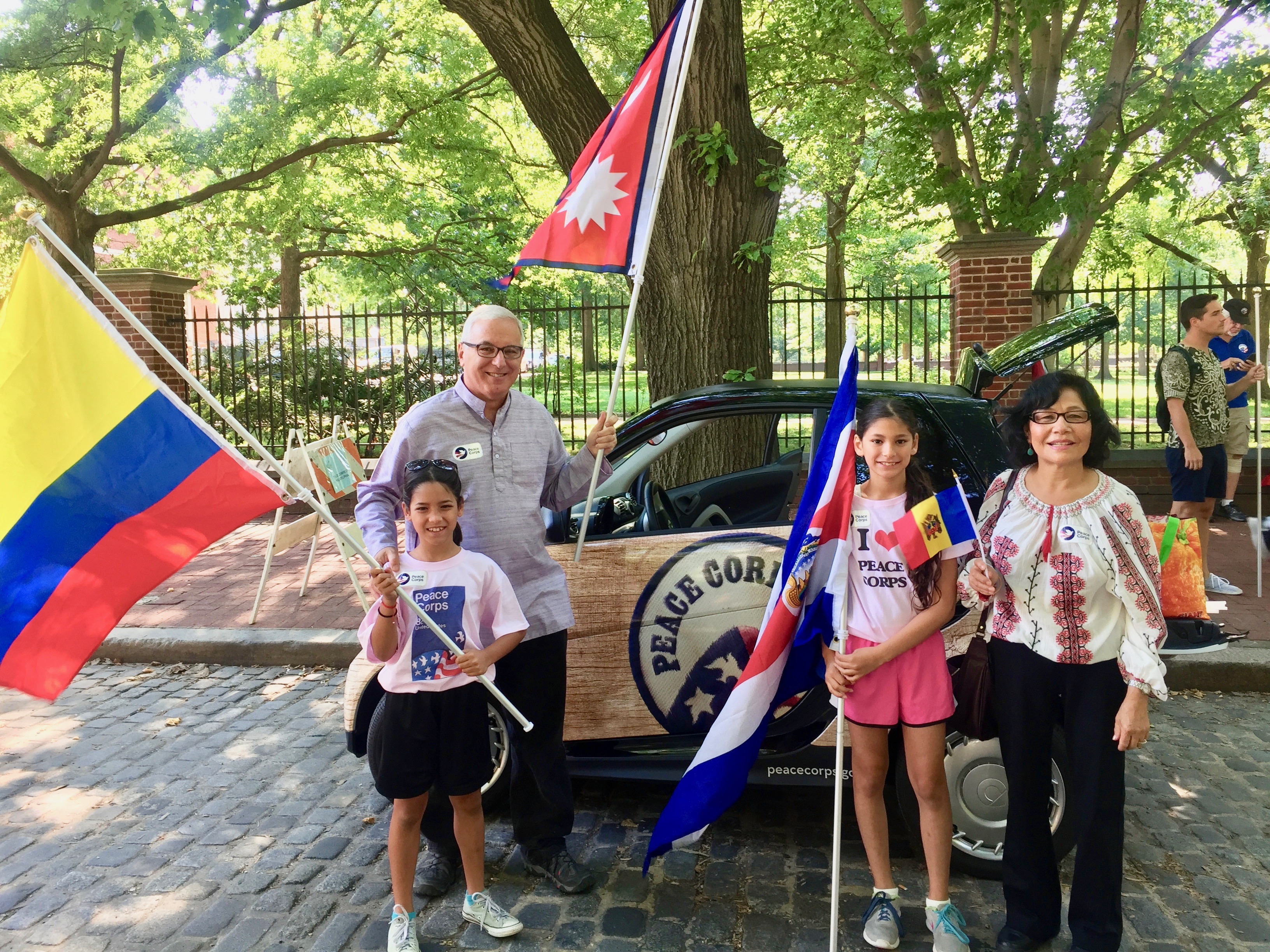
This is my 200th post on Not Exactly Retired, which I started in mid-2015.IMG_0992 As we’ve traveled around the United States, spent time in Nepal and served as Peace Corps Volunteers in Moldova, the blog’s audience has kept growing, with more than 26,000 visits so far. Thanks to all of you who have joined us on our journey!
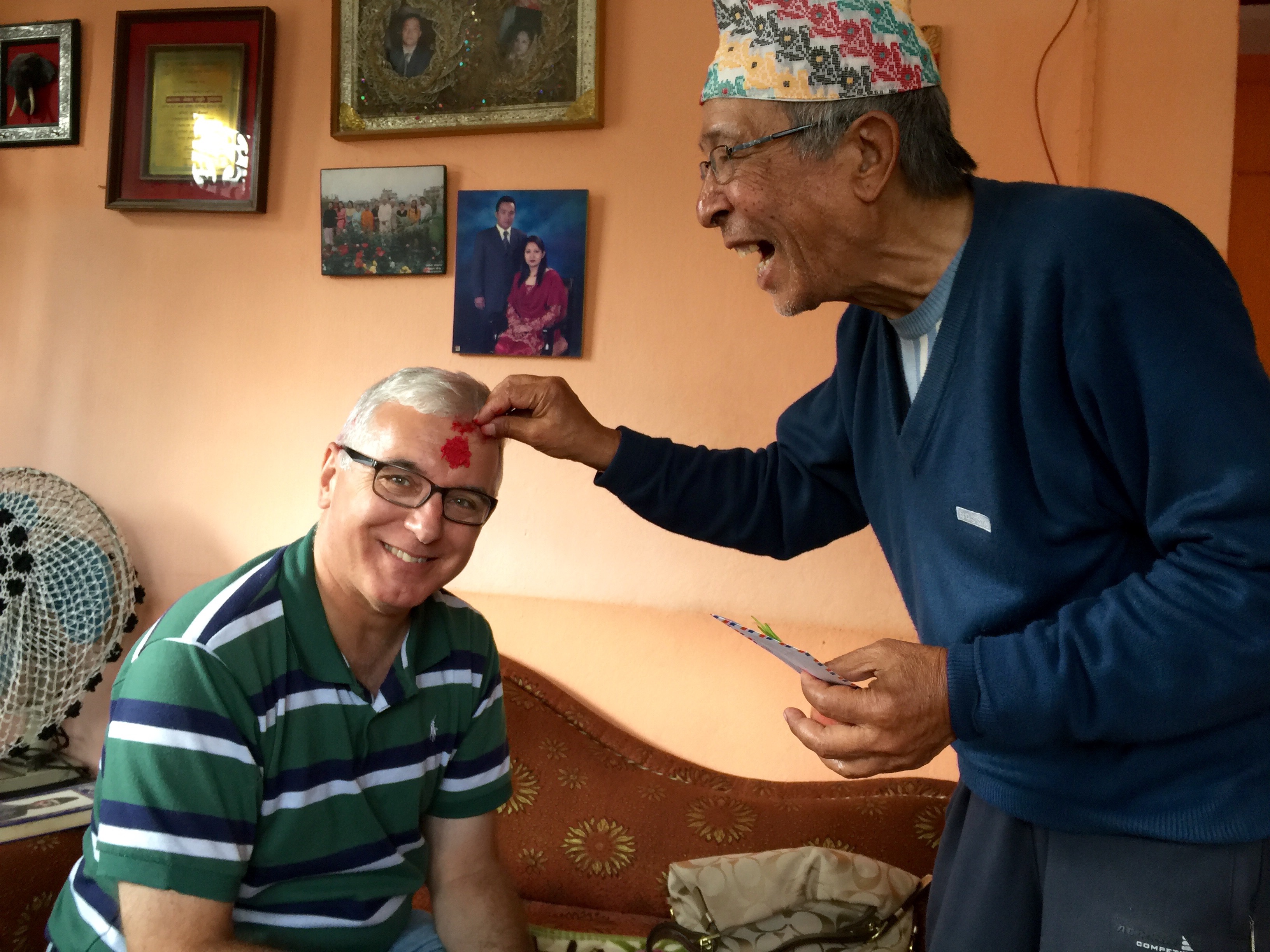
FullSizeRender 808“Not Exactly Retired” advances two of the three official goals of Peace Corps: to promote a better understanding of other peoples on the part of Americans, and vice versa. (The other goal is to “help the people of interested countries in meeting their need for trained men and women.”)
Here’s a Top Ten list of the blog’s most popular stories so far, as measured by views. There’s more to come, so stick around — and if you know anyone who might enjoy Not Exactly Retired, please tell them about it and invite them to subscribe.

IMG_6043

The Most-Viewed Stories on Not Exactly Retired

  1. Peace Corps After 50 (featured on PBS/NextAvenue)
  2. Peace Corps: Now vs. Then (comparing service in Nepal and Moldova)
  3. Funny Peace Corps Videos (the joys of pooping in a hole)
  4. Moldova’s Marathon (a recent story about runners here)
  5. Are Volunteers Over-Connected? (from WorldView Magazine)
  6. Older Peace Corps Volunteers (a 5-part series about Moldova)
  7. Message in a Bottle (discovering your impact on someone, decades later)
  8. Life is Calling (making a big change doesn’t need to be scary)
  9. Reading in OverDrive (how to read books on your e-reader for free)
  10. The Smokehouse Experiment (former PCVs open a restaurant here)

Other popular stories have focused on the perils of downsizing after decades of American life, Thanksgiving in Moldova, an amazing Romanian salt mine and the adventures a friend and I experienced years ago while backpacking across Afghanistan, Nepal, Sudan and other places.

Not surprisingly, most of the blog’s views have come from readers in the United States, followed by Moldova. Rounding out the Top Ten are Romania, the United Kingdom, Nepal, Canada, Germany, Ecuador, India and the Philippines, all with at least 100 views.

Are you enjoying “Not Exactly”? Do you have any reactions to these lists? Requests for future stories? As always, I welcome your feedback and comments.