Tag Archives: tips

Travel Planning

I love traveling; 81 countries so far. Another thing I love almost as much is the planning I do beforehand. For a research nerd like me, putting a trip together is half the fun.

People have asked me questions about this so, in this post, I want to discuss our planning process.

These students were among those who performed at the school dedication we attended in Nepal. Learn more and watch the video at https://notexactlyretired.com/2025/05/02/samalbungs-new-school/

How do you choose where to go?

After the 2024 election, Champa and I decided to spend more time outside the United States. We accelerated our travel plans and looked for ways to combine countries into longer trips. Earlier this year, for example, we needed to return to Nepal to dedicate the school we helped build there. We added Sri Lanka and Bhutan and also stopped in Dubai. When we visited the Balkans, we added Italy since it’s near Albania.

We pay attention to global seasons and weather patterns. So: Australia and Argentina during our winters; Alaska and Nova Scotia during our summers.

We combined a trip to Hungary with stops in Austria and Slovakia, traveling by train.

How do you research a destination?

The itineraries of established tour companies — such as Rick Steves, Friendly Planet and TourRadar — are good sources. So are local travel companies and guidebooks, which I borrow from our local library. We watch travel videos on YouTube and use Chat GPT.

Do you travel independently or in groups?

We prefer traveling on our own so we can go where we want, be flexible and save money. However, if want to visit lots of places quickly or have concerns about logistics or safety, we may join a group, as we did in the Balkans (Choose Balkans), South Africa (Friendly Planet), New Zealand (Grand Pacific Tours) and the Baltics (Baltics Tours). 

The Travel Guru company organized everything for our trip to Bhutan, including a driver and guide, which are required for foreign visitors

When we think we need help but don’t want to join a group, we may turn to local travel planners, which I find and review online. That’s what we did in Morocco (Best Travel), China (U Travel) and Southeast Asia (Authentic Asia). It’s cheaper to work directly with a local company instead of one based in the United States, which usually outsources the job anyway. Why pay extra for an intermediary?  I can often pay local companies through an international payment app such as Wise.

Do you stay in hotels? Airbnbs? Someplace else?

It depends. Airbnb is great, and we’ve used it often, especially for longer stays or when traveling with others. I use hotels.com, too. Booking.com has broadened beyond Europe and hotels to include more options. Often I’ll dig into Google searches, scroll past the sponsored links and find local listings that don’t have an international markup. I no longer stay in hostels, but they can be a good way to cut costs and meet fellow travelers.

At the Colosseum in Rome.

Ideally, a property is located within walking distance of the main attractions, which are often in historic neighborhoods. This may be pricier, so I often broaden my search to include places further away that are near metro stops. I also check whether Uber or other ride-sharing services are available. I prefer these to taxis, which sometimes cheat foreigners if there’s not a fixed price.

How do you handle reservations for tours and other activities?

I research these in advance. As I wrote in my last post, we often use free waking tours, as well as sites such as Viator and GetYourGuide for day trips. These sites also help me identify promising destinations that I may book more cheaply with a reputable local company. I avoid nonrefundable ticket purchases but make them when necessary, such as when we visited the Colosseum in Rome.

Bus station in Split, Croatia.

How do you move around within a country?

We traveled on Flix buses in Slovenia, Croatia and Italy, using their excellent app. In Italy, we rode high-speed trains, using the Trenitalia app. In big cities like Rome and Frankfurt, we used subways and buses. With their “Tap and Go” systems, we swiped our Visa cards instead of having to buy tickets. During recent trips we’ve also used ferries, funiculars, cable cars, ships, airplanes and a tuk-tuk in Sri Lanka.

In Sri Lanka

What kind of luggage do you use? How much do you pack?

We’ve evolved to just using carry-on bags, even for longer trips — Travelpro for me, Eagle Creek for Champa. Along with small daypacks, that’s all we need. We try to stay at an Airbnb with a washing machine at least every ten days. We’ve found it much easier to travel with smaller bags, which also avoid airplane luggage charges and delays.

Our packing varies according to our destination, as during this trip to Iceland.

How do you handle medications?

We always keep these with us. To reduce space, I buy smaller sizes and use baggies to hold pills.

How about phones?

We both have iPhones and a T-Mobile plan that includes international coverage. We bring two chargers with all of the adapter plugs and cables we need. We use one charger and keep the other in a separate bag as a backup.

Which credit cards do you use?

I’m currently using two Visa cards with cash-back benefits and free international transactions, and a Charles Schwab card that reimburses me for ATM withdrawals. I’ve previously used airline cards that offered generous sign-up miles. I know some people like loyalty programs for an airline or hotel chain, but I prefer more flexibility.

Ngoan Le of Authentic Asia, center, arranged our trip to Southeast Asia with our friends Mitch and Chiyoko. We met with Ngoan in Hanoi.

How do you and Champa divide this work?

Fortunately, I enjoy this process. She doesn’t. However, we discuss everything and she often has helpful suggestions, and we always travel easily together. Before we depart, I compile everything into a detailed document, which I print and put on our phones. 

Needless to say, we also value our time at home, to hang out with family and friends, handle any business, volunteer in the community and catch our breath.

We didn’t want the election to turn out this way but, for now, we’re determined to make the most of it. In fact, I’m planning on it.

Boarding the ferry in Durrës, Albania, with my carry-on bag and daypack for our overnight trip to Bari, Italy.

Thanks to my sister, Nancy Collamer, for suggesting this post. Nancy is a retirement coach who produces an excellent blog and newsletter.


Subscribe to Not Exactly Retired. It’s free!

Travel Tips

Travel is my passion and I’ve learned a few things while visiting more than 60 countries and all 50 U.S. states. Looking ahead to 2024, I thought I’d share some “lessons learned” you might find helpful, too,

First, some caveats. Your preferences may differ from ours. Champa and I enjoy planning our own trips, exploring cities, hiking in beautiful places and exploring local cultures and food. We’re less interested in theme parks, spas, shopping and luxury. We prefer a new destination over returning to the same beach every year. We join groups only in certain situations. And, especially as older returned Peace Corps Volunteers, we know how fortunate we are to do any of this.

If any of that resonates with you, here are my dozen tips:

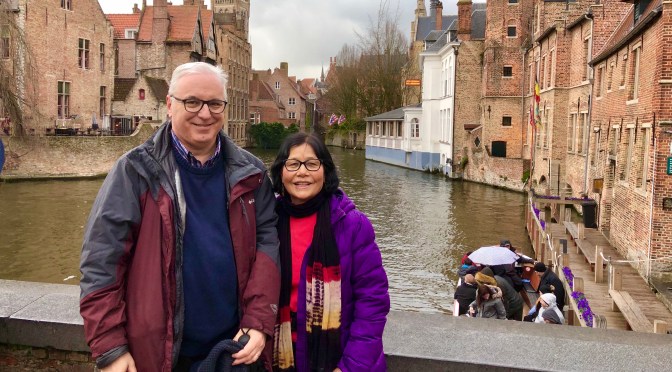
Use local experts. If you’re heading someplace where travel is relatively simple, you can probably plan and book everything yourself. Dozens of sites offer information about where to visit, stay and eat in, say, London or Toronto. It’s easy even in a place like Bruges, above, where English is widely understood. For more challenging spots, you might want to use a local planner, as I did for China, Vietnam and Romania. Local experts are easy enough to find online, do a great job and generally cost much less than a U.S. company (which may be using these same people as subcontractors). Why pay for the intermediary?

Take advantage of online itineraries. I check the online itineraries of trips from Rick Steves, Odysseys Unlimited and other companies. Then I work with a local company, or on my own, to plan the trip. I don’t feel guilty about using their information because I am willing to book their trip if their itinerary and price are good. We did this with an excellent South Africa trip from Friendly Planet.

Be wary of visits to arts centers. Your planner may suggest visits to local studios specializing in a region’s artistic specialties, such as porcelain or textiles. It can be fascinating to watch these artisans and you’re under no obligation to buy anything from them. But if this is going to make you uncomfortable, spend your time elsewhere. Tell the planner in advance about your preferences and review the itinerary carefully

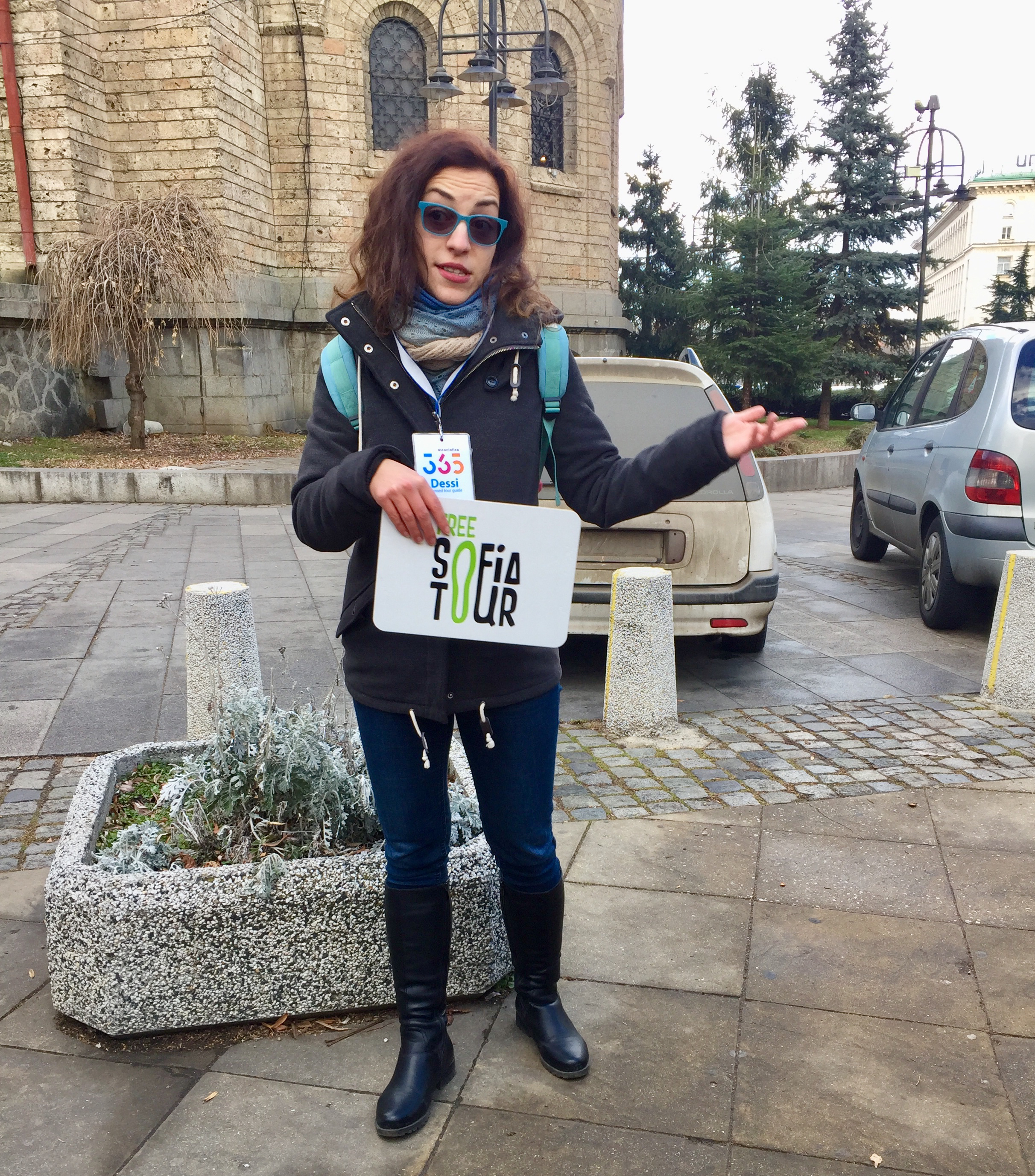
Use free walking tours. As I’ve written previously, I’m a big fan of the free walking tours offered in many popular destinations. The guides work for tips, so are motivated to provide excellent service. (We always tip them generously if they’ve done a good job.) We usually take the tour soon after we arrive. It’s a great way to get the lay of the land and identify local highlights for possible return visits.

Note where walking tours start. If you’re wondering where to stay in a new city, use a trick we learned from our travel heroes, the Senior Nomads: Look for a hotel, Airbnb or hostel near the walking tour’s starting point. This puts you within walking distance of many sights. If these places are too expensive for your budget, you’ll still have a valuable reference point as you consider other locations.

Use Google Maps. You probably use Google Maps already to plan driving trips or find a friend’s house. But it’s more powerful than that. I use it to explore cities on foot and find things I need, like a restaurant in Riga, a winery in Williamette or a tour in Tbilisi. You can also check the weather, find the best times to visit places, create a custom map or download maps for cities where you may have limited Internet access. I stay connected with an international plan from T-Mobile.

Use Google Translate. Online translations have improved dramatically. I now feel much more comfortable traveling in places where I don’t know the local alphabet or language. If I need to communicate, I just speak or type into Google Translate and show the translation. If I can’t understand a local menu or sign, I point my phone camera at the text and read the translation. It’s usually imperfect but good enough.

Charge in local currency. In many countries, cash remains the best way to buy things, whether because of custom (as in Nepal), rapid inflation (Argentina) or limited technology and connectivity. Generally, though, you can pay with a credit card. Be sure to get one that doesn’t add fees every time you use it abroad. If the merchant asks whether you want to process the transaction in dollars or local currency, choose the latter, even though this may seem counterintuitive. The credit card company will convert the charge into dollars at the international exchange rate whereas a transaction made in dollars uses a rate set by local banks or merchants, which is usually worse.

Take advantage of travel credit cards. If you’re a loyal customer of an airline, hotel chain or other travel company, you may already be using their credit card and enjoying the benefits. If you’re less loyal, like me, you can take advantage of introductory offers. United Airlines gave me enough miles to book two long flights after I made some purchases with their Visa card. Before my free year expired, I canceled that card and took advantage of a similar offer from Delta. After Champa and I visit South America next month, we’ll fly home for free.

Use taxi apps. Until recently, I was nervous about taxi drivers in foreign countries, wondering whether they would cheat me. Uber and similar services have eased that problem. When we were in Qatar last year, for example, I used Uber to travel from the airport to the hotel, and then around the capital city, Doha. The driver understood where I wanted to go and the price was fixed. Uber doesn’t work everywhere so, if necessary, I download a local app in advance. In Moldova, I used Yandex Go; in Thailand, I used Bolt. You pay with cash with these apps but they work fine and are much less stressful than haggling with a foreign driver.

Think twice before pre-ordering a visa. If you’re traveling to a country that requires a visa, you’ll probably buy it online — a process that’s become much simpler. Countries now send you QR codes or downloadable visas after you submit the paperwork. Sometimes they require you to do this before you travel. If you can wait until you actually arrive, though, that’s often the best option. It’s usually quick and you’ll avoid paying the fees, which can be substantial, until you’re sure your plans haven’t changed. Check online beforehand and see what other travelers suggest.

Buy a luggage scale. Everyone has their favorite travel device: a pillow, a cosmetics kit or something else. Mine is the small hand-held luggage scale I use to weigh suitcases before heading to the airport. It shows the weight in both pounds and kilograms. No longer do I approach airline counters wondering whether my bags are too heavy and subject to hefty fees

I know these tips address only some of the many questions you may have as a traveler, but I hope you found them helpful. If you have tips of your own, please share them here for me and others to use.

Happy travels in 2024!

Raise Your Voice

I’ve been deeply moved by the stories I’ve been hearing from Americans of color about police abuse and racism they’ve encountered. As a white person, I’ve tried to listen and learn from them.

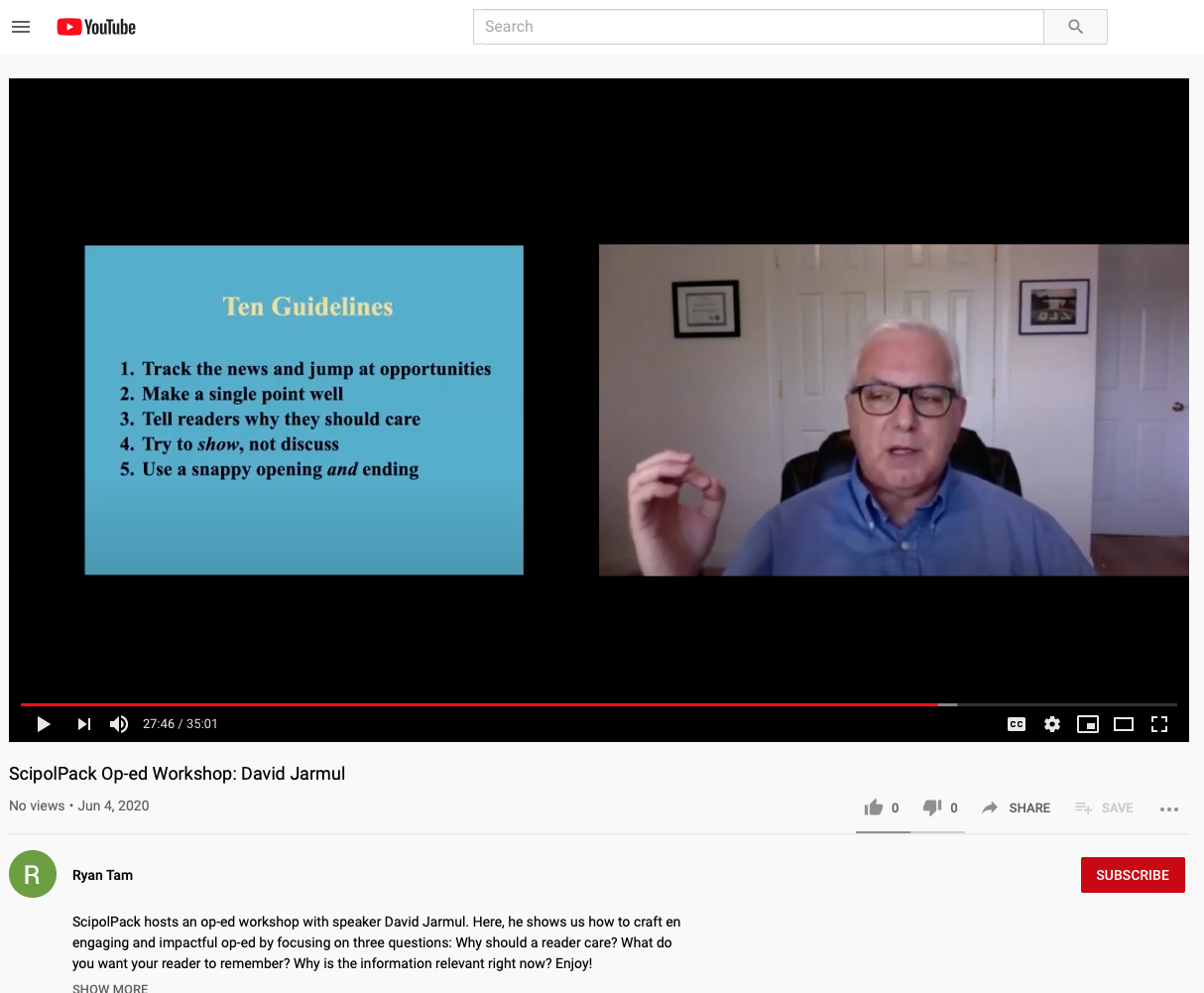
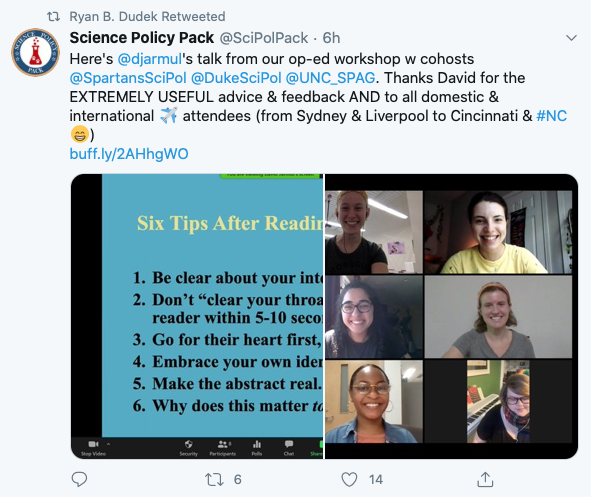
Their stories were on my mind this past week when I led an online workshop for science graduate students on how to write op-ed articles. The participants came from several North Carolina universities and other states and countries. You can see some of them in the Zoom screen, above, and watch a video of my opening talk here.

Screen Shot 2020-05-29 at 10.18.05 AM
I was actually the associate vice president of news and communications at Duke. I had darker hair then, too.

Our conversation yielded some tips you may find helpful if you choose to raise your own voice now or in the future.

Several of the participants wrote about science-related topics. One described the pressures women scientists face when raising children. Another who works with the Australian parliament warned about the Covid-19 pandemic diverting resources from tuberculosis prevention there and in Asia.

Others addressed the meaning of George Floyd’s horrific murder, such as an African American graduate who feels torn between her Ph.D. studies in neuroscience and wanting to participate in protest marches. A participant in England said she’s been reminded of racism she witnessed as a girl in Liverpool. An Indian-American graduate student who grew up in Minneapolis wrote about seeing her home town with new eyes.

Screen Shot 2020-06-07 at 7.02.45 PM

The group had some amazing stories and we worked together to identify ways they could tell them more powerfully. For instance: 

  • Get to the point immediately. With an op-ed article, as with social media, you only have a few seconds to grab a reader.
  • Tie your article to something happening in the news, if possible.
  • Embrace your own identity and voice. Readers respond best to a person they can identify with. If you could just persuade them with facts, well, we wouldn’t still be arguing about global warming.
  • Make the abstract real. Use examples and details to bring your argument to life. Describe the crazy thing that happened to you last Thursday.
  • Tell readers why they should care. How will your issue affect their kids, their job or their community? 

Screen Shot 2020-06-07 at 2.59.25 PM

Most of all, speak as a fellow human being, not as a faceless expert.  Statistics and policy arguments have their place, but, as the expression goes, people don’t care what you think unless they think that you care. As I wrote in Inside Higher Ed, “Many academics approach op-eds as an exercise in solemnity. Frankly, they’d improve their chances if they’d lighten up.”

When I spoke about some of this with a group of young entrepreneurs in Moldova, while I was a Peace Corps Volunteer there, I used an Oprah Winfrey speech to illustrate how we humans make sense of the world through stories. Whether you’re writing a traditional op-ed article or using another platform, the best way to persuade someone is by starting with your own truth — something you’ve lived and experienced, or have seen with your own eyes. Only then should you pull the camera back to explore the bigger picture.

I discuss these and several other ideas in my op-ed guidelines, my free online class on Coursera and a how-to chapter from an op-ed anthology I produced for the National Academy of Sciences. Maybe you’ll find these resources useful in raising your voice, too.

For myself, now that I’ve completed this post, I’m going back to listening.