People are looking for new meaning in retirement, a trend that Not Exactly Retired has explored often. Here are some of the blog’s past posts on downsizing, lifelong education, medical challenges and other topics, along with several media profiles of us that also focused on retirement.
Question 1: Are you more extroverted or introverted?
Question 2: Are you spontaneous or do you prefer plans and schedules?
Question 3: Do you like familiar experiences or, instead, crave novelty?
If you like to travel, as we’ve been actively doing this year, your answers will strongly indicate what kind of travel you prefer.
For instance, you’ll find more extroverts in a Las Vegas club and more introverts on a nature hike. Spontaneous types are happy to see where the road leads while planners prefer itineraries. Some travelers like to return every year to the same beach or cabin while others look for someplace new.
Coimbra, Portugal
The travel industry tailors its offerings to specific personality groups. A luxury hotel seeks people who are not only wealthy but who also want to stay in a Ritz-Carlton, just as a group tour featuring bungee jumping and sky diving won’t focus its advertising on museum lovers.
Travel decisions begin with our personalities, which are determined in turn by genetics, upbringing and other factors. Our personalities go a long way to explaining whether we seek cultural immersion, adventure, social interaction, self-discovery or just some rest and relaxation. They also help determine whether someone wants to travel at all.
Sarajevo, Bosnia and Herzegovina
I’ve been thinking about all of this as Champa and I wrap up a busy year of travel that extended from New Zealand to Bhutan to Albania. I’ve found myself wondering why the two of us enjoy this so much while others do not.
I’ve explained previously that we decided last year to avoid our country’s political chaos while maximizing our remaining years of good health. That remains true but I think there’s a deeper reason for our travel passion, which is that travel scratches our curiosity itch.
I’ve always been a curious person. It’s why I was attracted to journalism, where I could ask people questions about what they did. It’s why I spent my career at institutions devoted to research and education. At Duke University, where I oversaw news and communications for many years, I learned something new every day about politics, business, law, science, sports, the arts and other topics. Curiosity is also why I’m such an active reader. (I’ll be sharing my 2025 Top Ten list soon.)
Champa is curious, too. When we joined the Peace Corps in Moldova after I left Duke, our primary motivation was to provide service. But we also wanted to explore a different culture.
Cooking class in Chiang Mai, Thailand
We’ve kept exploring the world since we returned home in 2018, always seeking out new places. We love to talk with people, learn local history, try exotic foods and broaden our horizons. Sitting on a beach for more than a day or two bores us.
I first focused on personality types more than three decades ago when our office at the National Academy of Sciences had a staff retreat and we all took the Myers-Briggs Type Indicator. Everyone on our team had their own personality traits. Some tended to focus on the “big picture,” others on details. Some were guided by logic, others by their hearts. The one thing we had in common was that we all came out ahead when we blended these perspectives and worked together.
Patagonia, Argentina
In retrospect, this should have been obvious to me. I was a slow learner, but I know now that people have diverse psychological needs and act accordingly, even when it comes to something like travel.
In other words, there’s no “right” way to travel. We are all nourished differently, whether we’re lounging at a spa, playing golf, visiting Disney World or hiking the Himalayas.
Helsinki, Finland
As we look ahead to the new year, Champa and I will continue pursuing the kind of travel that has brought us so much satisfaction. We recognize how privileged we are to do this, something we try to balance with volunteering and service. I hope some of you reading this will have opportunities to travel in ways that work for you or to pursue other activities that bring you joy, whether it’s playing music, working in your garden, hiking with your family or something else.
Of course, I’m curious to learn how it all works out.
Top photo: Watching the fireworks in Sydney, Australia, on New Year’s Eve, 2024/25.
One decade ago this month I walked away from a job I loved to shake up my comfortable life and try something new.
I stepped down as the head of news and communications at Duke University, surprising my outstanding team. We’d been working together for years to respond to research discoveries, sports championships, weather emergencies, campus protests and more, as well as to the rise of social media and other dramatic changes to the media landscape.
With Keith Lawrence at the Durham Bulls Athletic Park. The photo I’m holding, signed by my colleagues, shows a sign tracking the number of days since Duke’s last scandal.
Duke sent me off with a big reception at a local theater and, as shown in the photo, an informal farewell at the Durham Bulls baseball stadium.
Less than a week later, Champa and I embarked on an 11,000-mile drive around the United States, followed by an extended trip to Nepal. That’s where the two of us met in 1977 when I was a Peace Corps Volunteer, posted to the same school where she was teaching.
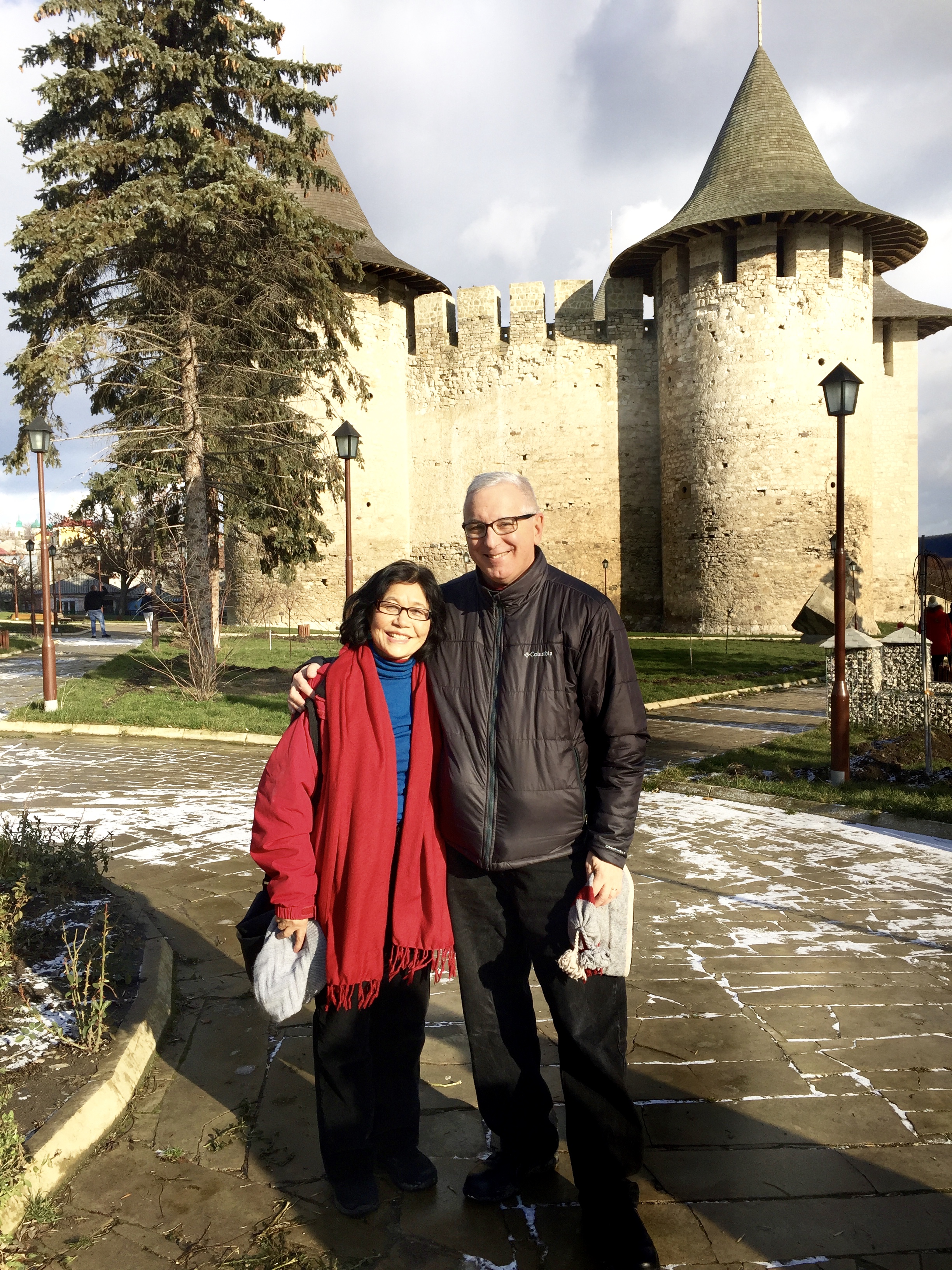
Visiting the Soroca Fortress in Moldova.
Finally, after a short break, we got rid of much of our stuff, rented our house and moved to Moldova, in Eastern Europe, to begin serving together as Peace Corps Volunteers.
I chronicled our three-year adventure on this blog and in my book. Since returning to Durham in 2018, we’ve continued pursuing our “not exactly retired” lifestyle, joining a growing number of older Americans who have been redefining retirement as more than leisure — and redefining themselves in the process.
Several news outlets profiled us as examples of this trend, which in our case has meant extensive travel, volunteering and spending time with family and a network of friends that reaches around the world.
I’ve never looked back.
I enjoyed my career and still miss my Duke colleagues, some of whom recently lost their jobs because of federal funding cuts, but I knew it was time for a change. Just like when I graduated college and chose to backpack across Europe, Asia and Africa with a friend instead of following my classmates to graduate school, I wanted to grab life and see what else it offered.
Visiting Tallinn Town Square in Estonia.
As I’ve approached this ten-year milestone, I know how lucky I’ve been. I left my job before the Covid pandemic and current funding crisis. Champa and I finished our service in Moldova before the pandemic and war in neighboring Ukraine forced the Peace Corps to halt its operations. We’ve been fortunate with our finances, health and family responsibilities. We could have encountered some disaster while traveling abroad, or at home, but we’ve been fine.
I launched this blog to share with friends our initial drive around the United States, never expecting it to continue so long or to reach people in more than 100 countries. I’ve loved hearing from readers with questions about the Peace Corps or early retirement, or just seeking encouragement to make a leap themselves.
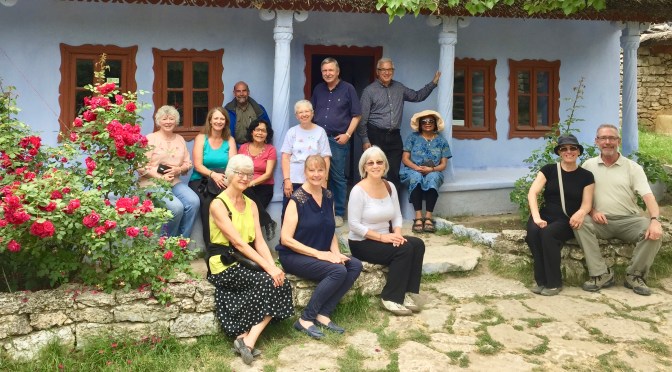
Some of the other older volunteers who served with us in Peace Corps Moldova.
As I’ve told them repeatedly, my message is not “join the Peace Corps!” That’s a good choice for some people but not for others, assuming they get past the rigorous application process. Rather, I’ve urged readers to be intentional about their lives, to choose instead of drift, regardless of their interests. We all have dreams, whether it’s to launch a business, start a nonprofit or master a new skill. It’s often possible to pursue that dream, even on a limited scale, while respecting the real-world complexities that come with it.
Champa and I plan to keep going as long as we can. We’re traveling more than usual now so as to remain outside the United States during its current turmoil. You’ll see soon where we’re heading next. As we approach the next election, however, and as we get older, we will reevaluate. One of the main benefits of the past ten years is how comfortable we’ve become with uncertainty and change.
Delivering food for the Food Bank of Central & Eastern North Carolina during the pandemic.
Veering from our traditional American lives has enriched us immeasurably. These riches have come not in additional paychecks but in the people we’ve met, the places we’ve seen and the memories we’ve made, all while remaining centered with our family and friends. As we’ve learned on the road, we are far from unique in doing this. Many other older people with widely varying budgets and circumstances are also traveling off the beaten path and blazing their own trails.
I know how privileged we are to be among them. Not everyone can do this; family obligations, finances, medical limitations and other constraints are real. But it is possible to resist letting fear or habit prevent us from living with purpose. We can choose to make room for what truly matters to us.
Visiting the new school we recently helped build in Samalbung, Nepal.
An old Peace Corps slogan says: Life is calling. How far will you go? As we wrap up our first decade of being “not exactly retired,” Champa and I are grateful for how far we’ve gone and still looking forward to whatever comes next.
We’d barely arrived in Sri Lanka a few days ago when I came across a fascinating example of something I discuss often on this blog: older Americans who are looking beyond traditional ideals of retirement to redefine their lives in compelling ways.
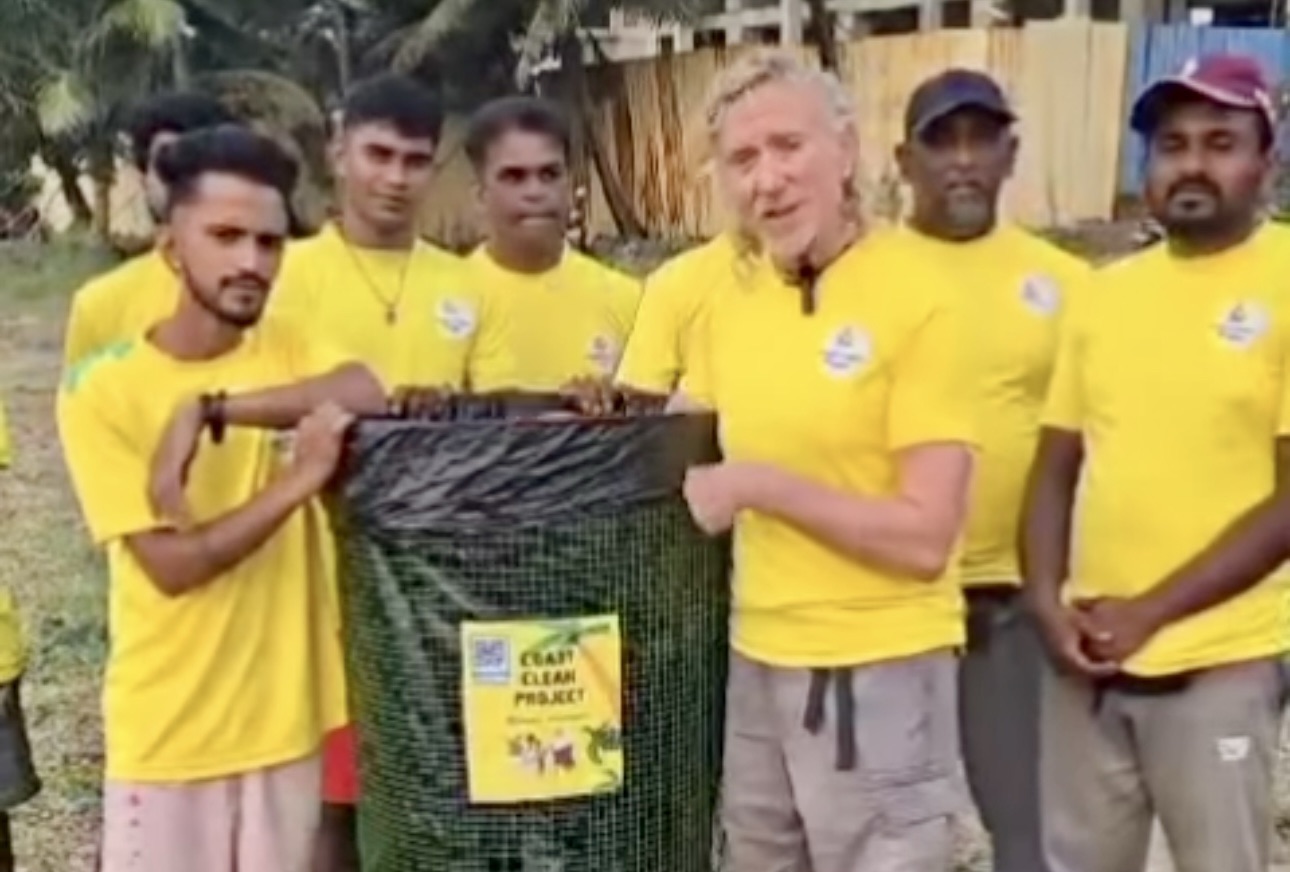
I met Al Sunday at the guest house where Champa and I have been staying near Sri Lanka’s capital, Colombo. He’s a retired military helicopter pilot who served in Iraq and elsewhere. He visited Sri Lanka a year and a half ago and fell in love with the country and its people.
While strolling the local beach in Negombo, he began picking up trash. He returned the next day and picked up more, then more. People began helping him. They installed trash cans. They teamed up with the local tourist board and reached out to national officials. The beach got cleaner.
“I’ve been coming here for 15 years and the beach is the cleanest I’ve ever seen,” I heard another guest, Dennis, above left, tell Al.
Recently approved for Sri Lankan residency, Al explains that “we wear these ridiculous, bodacious yellow T-shirts and people see what we’re doing.” His whimsical retirement effort has become a small local movement.
Al still makes time to work as a dive instructor, travel, be a father to four adult children and return regularly to a cabin in western Maryland. But his Coast Clean project is now central to his identity, the highlight of a simple foreign life he can afford with a military pension and other resources.
“How much money do you really need?” he asks. “A lot of my friends say they wish they could do what I’m doing but they have too much stuff. Well, the old saying is true. You can own things or they can own you.
“It’s really not that hard to make a change like this if you just jump in. You can start with baby steps.”
I was impressed by Al’s project, which you can follow on Instagram, and even more by his example of grabbing life during this “not exactly retired” phase that millions of us are trying to figure out. At a moment when I’ve been feeling unmoored by what’s happening back home, Al Sunday reminded me that we can still redirect our own lives, pursue adventure and try to help others.
It was something I needed to hear, a welcome lesson at Sunday’s school. I came to Sri Lanka and heard the best kind of trash talking.
I wouldn’t exist today and you wouldn’t be reading this article if my maternal grandparents hadn’t had the foresight to flee Nazi Germany for New York in 1937, narrowly escaping the Holocaust.
Until recently, this was just part of my family history. But as the election approaches and darkness looms on the horizon, I’ve begun wondering whether it’s a cautionary tale.
My mother’s German passport, with Nazi swastikas on the stamp.
I’m not alone. I recently received the e-mail message shown above, with the title “How to Move Out of the US (and Where to Escape to).” It began: “If you’re anything like me, you’re looking at the election year ahead with some trepidation. And who can blame you? Things could go sideways—politically, economically, socially. It’s not a crazy idea to have a Plan B. In fact, it’s prudent.”
The message came from International Living, which helps older Americans relocate to “safe, warm, friendly spots abroad.” Costa Rica, Portugal and Mexico top its current list of “the best countries to retire,” based on living costs, healthcare and other criteria.
My fears about things “going sideways” don’t reach the horrific level of the Holocaust but they’re bad enough that I don’t want to live through them. Am I being melodramatic? Maybe. I hope so. I know I’m privileged to even consider leaving the country and I recognize the need to fight for my beliefs. I have children and grandchildren, along with countless fellow Americans, who can’t leave as easily.
But my anxiety is real and, unrelated to politics, Champa and I were already discussing how we might spend more time abroad. We love to travel and have been fortunate to visit some amazing places, as I’ve chronicled on this blog. However, except when we served as older Peace Corps Volunteers in Moldova, or while visiting our family in Nepal, we’ve generally passed through countries as tourists rather than slowing down to truly experience them.
That’s what we’d like to do now, traveling more slowly and deliberately, while we’re still relatively young and healthy. As I wrote back in November, “I’m determined to make the most of this precious ‘not exactly retired’ stage of my life when I no longer have the responsibilities of a formal job but am still able to contribute and thrive.”
A retirement focused on travel may sound crazy, dangerous, self-indulgent or extravagant to some. But it’s become common, as I’ve seen from numerous websites, videos, online groups, books and other sources, including conversations with people we’ve met on the road.
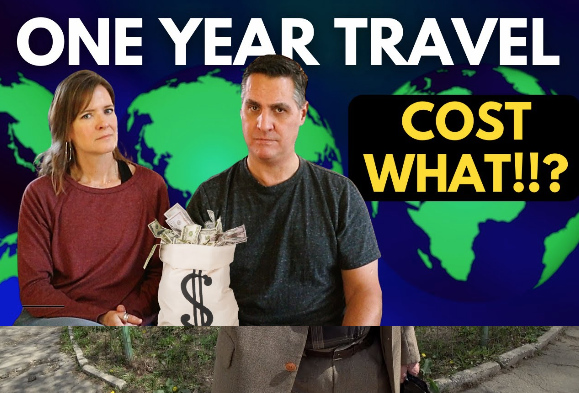
It can also be far cheaper than you might imagine. Brian and Carrie, one of our favorite Internet couples, shown above, spent $29,728 for all of their travel and living costs in 2023. That’s $1,238 monthly each, living in Airbnbs and elsewhere in Spain, Portugal, Croatia and other parts of Europe. They later moved on to Southeast Asia.
We’re also fans of Debbie and Michael Campbell, the Senior Nomads, who have stayed in Airbnbs in 90 countries since leaving their Seattle home in 2013. “We weren’t sure how long we’d be gone,” they write on their website. “Now, over ten years later, we still aren’t sure! But as long as we are learning every day, having fun, are close to our budget, have our health, and are still in love, we’ll keep going.”
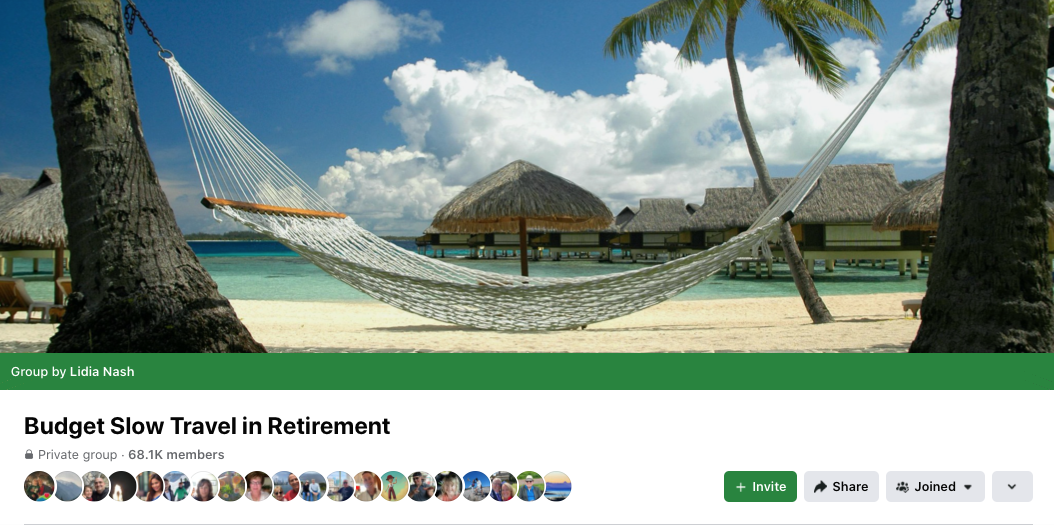
Debbie and Michael’s Facebook group has nearly 14,000 members who share travel tips, swap stories and encourage each other. An even bigger Facebook group is Budget Slow Travel in Retirement, whose 68,000+ members discuss everything from medical insurance to the best ways to keep in touch with grandchildren.
Brian and Carrie’s YouTube series addresses many of these questions while highlighting destinations from Greece to Vietnam. Other good YouTube sites include Kara and Nate and Earth Vagabonds, which targets “slow travel for retired budget travelers.”
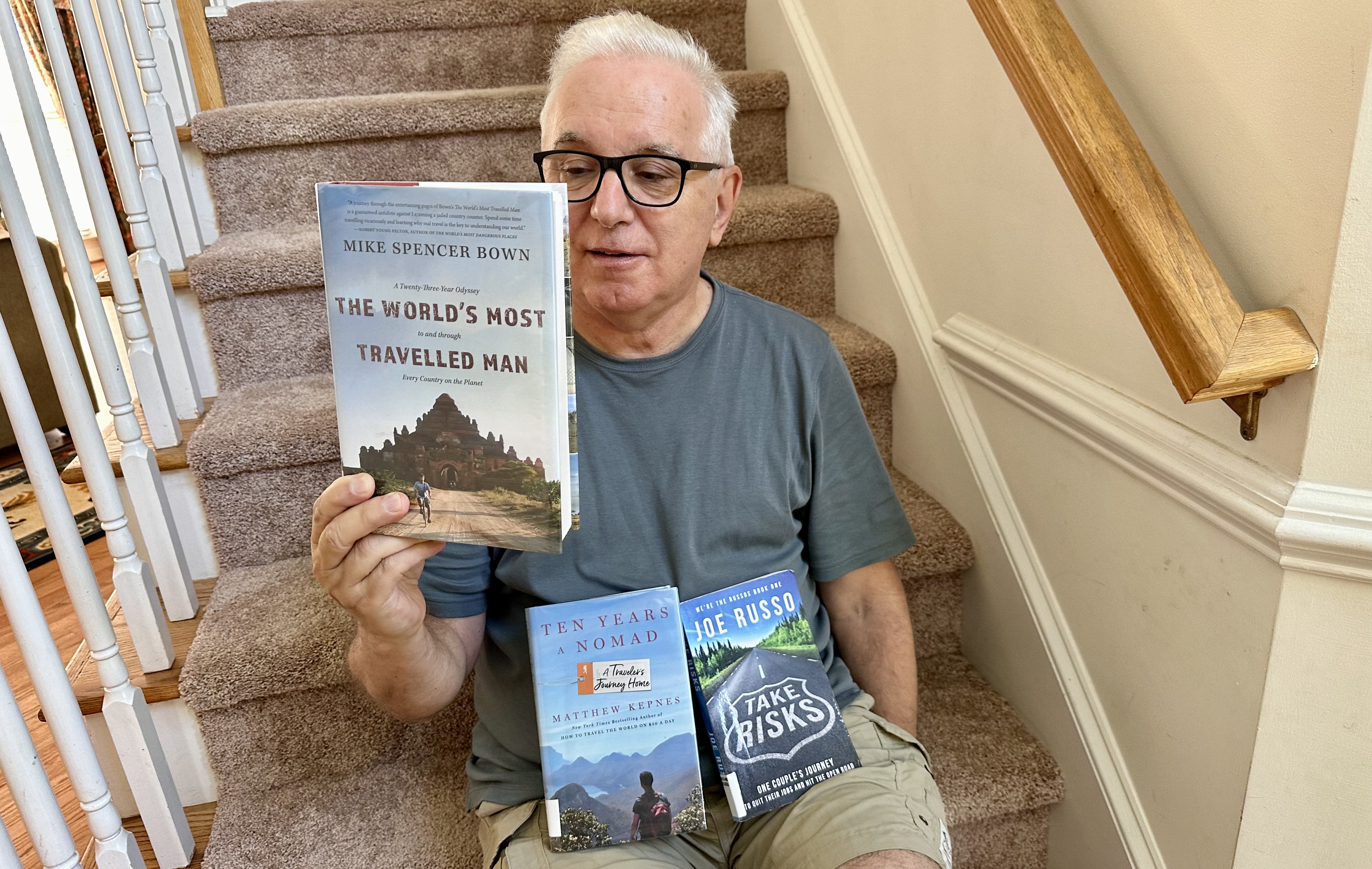
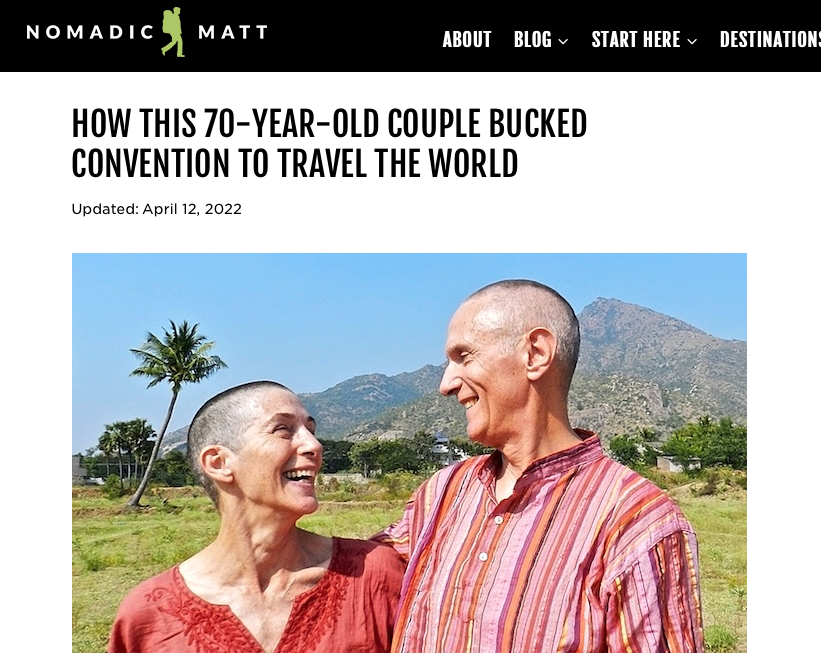
Another travel inspiration is Nomadic Matt, whose blog I’ve followed for years and whose book Ten Years a Nomad I just finished reading. Champa’s reading it now. Matt is younger than us but spent ten years traveling to more than 100 countries and territories. He now offers a variety of guides and products on his website.
I don’t foresee us ever leaving our family, friends and community for good. We’d return regularly, remain connected electronically and keep America in our hearts. But spending a significant part of our time in Nepal and elsewhere over the next four years might be our best way of coping with a post-election nightmare.
Mark Twain famously wrote that travel is fatal to prejudice, bigotry, and narrow-mindedness — the very forces I now see threatening my homeland. I’ll never stop loving America but I also want to live my life and embrace the world.
I recognize my planning may come across as selfish or apocalyptic to some readers. My grandparents probably heard the same thing.
Heartfelt thanks to everyone who responded to my previous post about our project to help build a new school in Nepal. Sixty donors have contributed $12,811. That’s more than halfway to our goal but we still need more help. If you haven’t already, please donate on our GoFundMe site or, to avoid their fees, contact me directly. All donors will have their names honored in the new school. Thank you!
It’s a phrase that may be familiar to older Americans wondering how long they’ll be able to maintain a busy lifestyle:
“While I’m still able.”
I realized recently that I’ve been saying it myself when running into old friends. They’ll say something like: “I follow you online and you sure do keep busy traveling and everything else.”
“Well,” I’ll respond, “I want to do it while I’m still able.”
When I said this again the other day, it made me think of Supermarket Sweep, the television show in which contestants race to fill their carts with as much as possible within a brief time. Grab the steaks! Get some lobsters! Don’t let time run out on you!
I thought: Is this what I’ve become — someone frantically filling their cart before the buzzer sounds?
One of my volunteer projects is with this group in Moldova.
I know it can look that way. During the past year, I’ve taken several big trips, which I’ve written about here. I volunteer with local nonprofits, serve on boards, write this blog and a newsletter, go to local events and spend time with family and friends.
This may all just add up to an “active retirement” but I wonder sometimes whether I’m trying to prove something, to myself above all. Maybe I’m compensating for the fact that I no longer have the title and recognition of a formal job. Indeed, when I return these days to the campus where I used to work, few people recognize me. They just see a random retired guy.
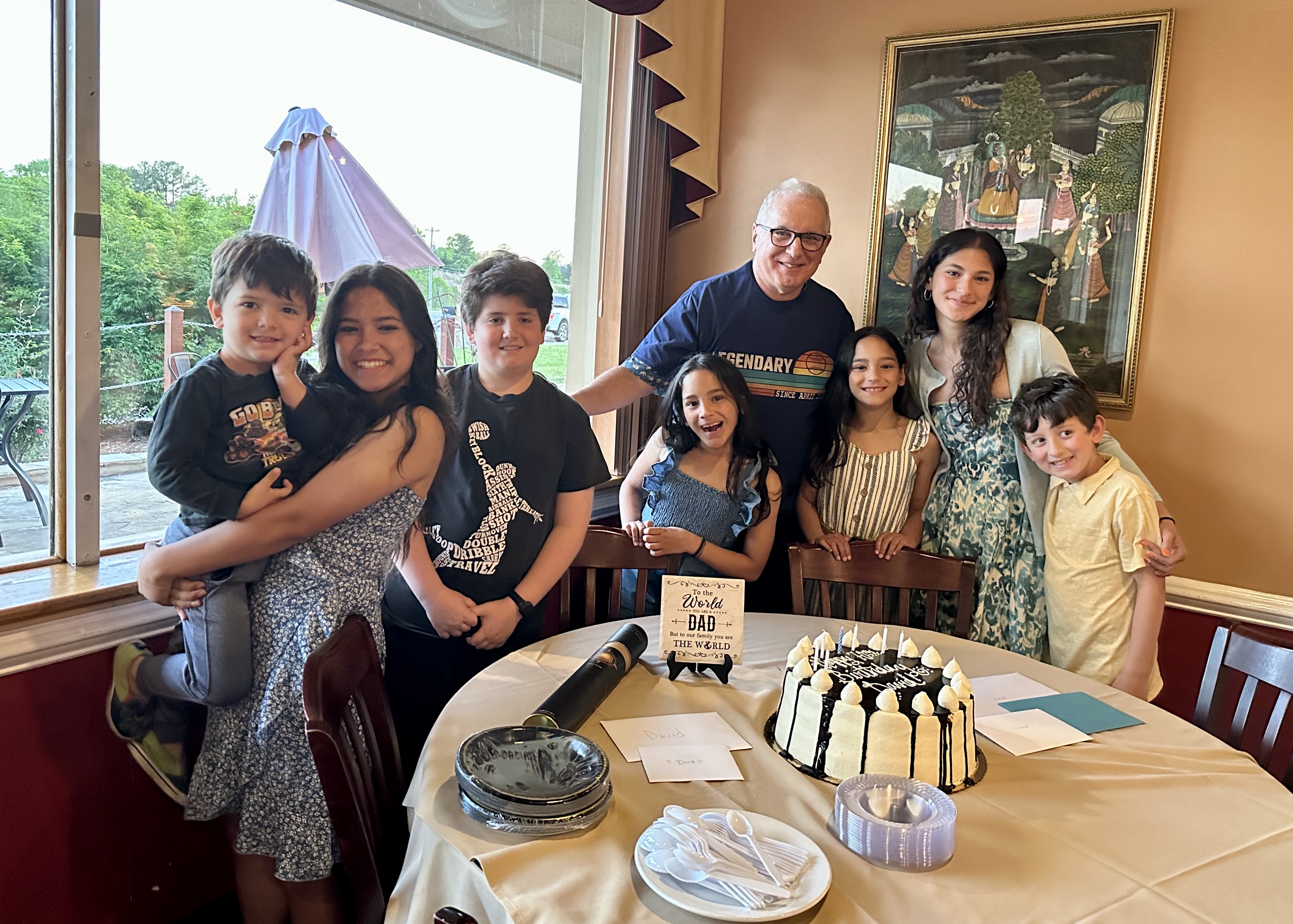
Celebrating my 70th birthday with my seven grandchildren
So maybe I’ve been filling up my schedule as a way to say: Hey, I’m still here. Or perhaps I’m overreacting to medical challenges I’ve had over the past couple of years, or to turning 70. My clock is ticking and I hear it even without hearing aids.
Whatever my motivations, I’ve been busy, perhaps too busy.
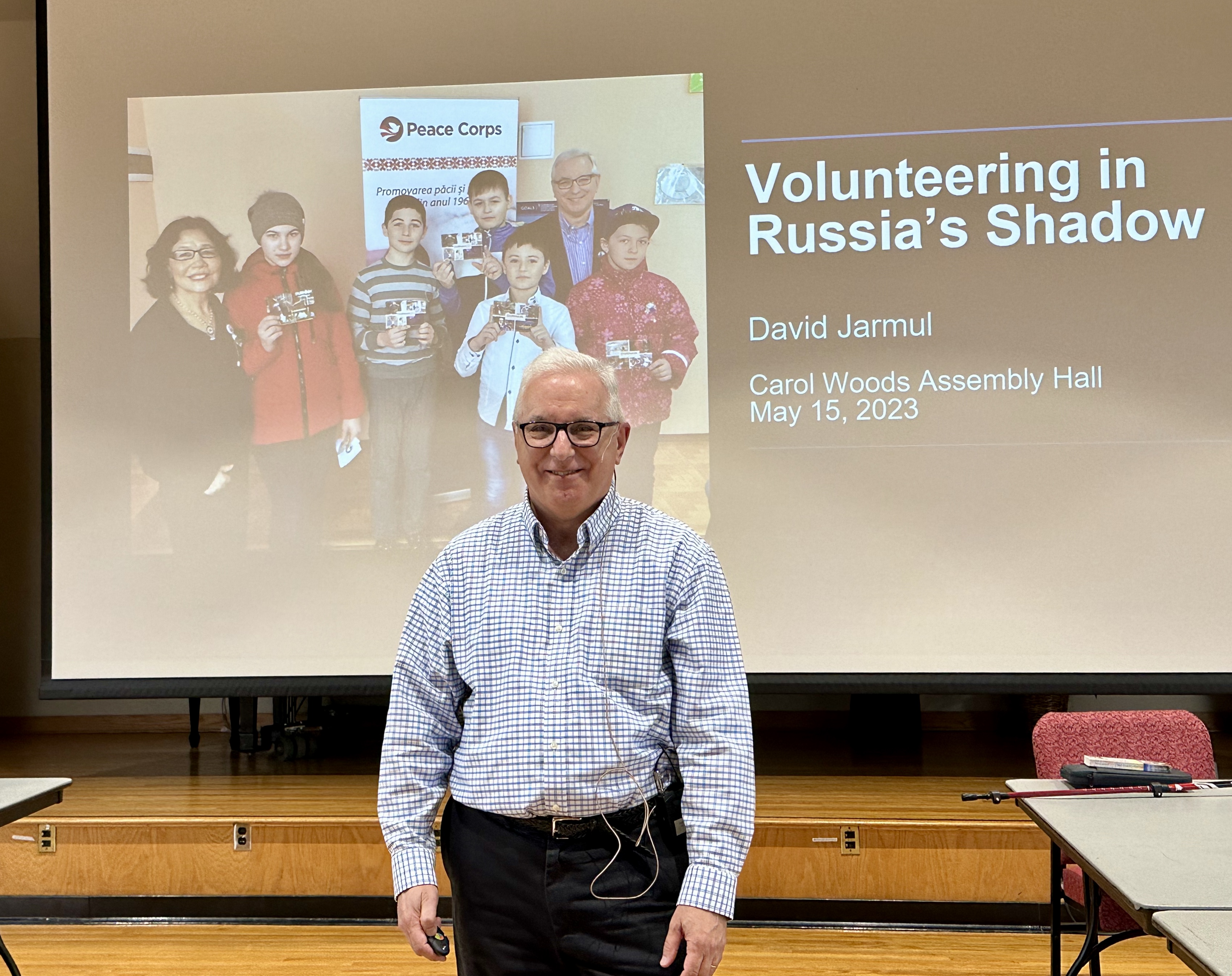
Speaking at a local retirement community
An older friend told me recently she’s been wrestling with the same issue. She said she’s finding it hard to juggle numerous volunteer roles with the informal help she provides to friends, family responsibilities, travel and everything else. She laughed that it’s hardly what she expected in “retirement.”
I have no regrets about my own “not exactly retired” life, which I’ve pursued since walking away from a busy job at the age of 62. I recognize how fortunate I’ve been to do this. But it’s never been a retirement in the sense of kicking back. Shortly after I began serving as a Peace Corps Volunteer in 2016, I wrote about my inability to ease up and move beyond the packed schedule of my previous life. I noted then how “I keep checking my cell phone for messages. I don’t go home until I’ve completed every item on my mental ‘to do’ list.”
I concluded that post by humorously vowing to pay closer attention when the Peace Corps staff told me again to be patient. “Really,” I promised, “I may even put a reminder in my electronic calendar.”
Visiting the Suomenlinna fortress in Helsinki
Now, seven years later, I remain just as persistent about making my days productive, whether it’s assisting a local community group or traveling to some foreign destination with Champa. I’m doing this mainly for myself but, at some level, I suppose I am also asserting my own relevance in a world that can make older people feel invisible.
In any case, I’m determined to make the most of this precious “not exactly retired” stage of my life when I no longer have the responsibilities of a formal job but am still able to contribute and thrive. All of these activities give my life meaning and I plan to keep doing them while I’m still … well, you know.
I was pleasantly surprised a few days ago when an article I wrote appeared in a magazine with Alex Trebek on its cover.
Little did I know that the famous Jeopardy! host would die on Sunday at age 80 after a long struggle with pancreatic cancer.
Healthy Aging‘s cover story about him concludes with him saying ” I believe in the power of positivity. I believe in optimism. I believe in hope.”
I admired Alex Trebek and loved his show, so now feel honored to appear in the same magazine with words that echo his inspiring message. My own article encourages readers to “dream differently” as they age and to consider the Peace Corps and other volunteer experiences that may challenge them — challenges less intense than cancer, to be sure, but meaningful in their own ways.
These experiences aren’t easy, I write in my article. “You struggle. You get lonely. You reexamine your beliefs and life goals.” Yet they also can transform how older Americans view themselves and their place in the world.
“Now that we’re back home in North Carolina, the two of us treasure our Peace Corps memories,” the article concludes. “We have renewed appreciation for our many blessings as Americans and greater empathy for the billions of people around the world whose lives differ from ours. We know we touched the hearts of our Moldovan friends, just as they touched ours. We still don’t have a boat or a golf cart, but our lives are richer than ever.”
I wrote the article several months ago, just as the pandemic began spreading across the globe. When the Peace Corps withdrew its volunteers worldwide, for the first time ever, the editor decided to hold off on publishing it. (The Peace Corps plans to resume its operations when conditions allow.)
The article highlights one of the main themes of my book, Not Exactly Retired: A Life-Changing Journey on the Road and in the Peace Corps, which was published by the Peace Corps Writers imprint on April 2. Although the pandemic derailed some planned publicity for the book, numerous articles, podcasts and other media have still featured it, as you can see on this Facebook page. The book website has links to buy the book from independent bookstores, Amazon and elsewhere.
If you want to learn more about Healthy Aging, the magazine is offering a discount to Not Exactly Retired readers — $15 off its regular subscription rate of $24.95. Use the promo code author10 at its online subscription page.
“Just as the pandemic has upended the lives of students and workers, it is derailing the plans of many retirees,” Susan Garland writes in today’s New York Times. “More than six months into the pandemic, many retirees, after what some described as a period of fear and hopelessness, are finding ways to adapt.”
Susan’s excellent article about how active retirees are responding to the pandemic features Champa and me, along with OLLI at Duke’s Chris McLeod and others. Thanks to Susan and to Jeremy Lange for the great photo. Here’s the opening section, about the two of us:
David Jarmul and his wife, Champa, long envisioned what their retirement would look like. After returning from a two-year Peace Corps stint in Moldova in 2018, the couple, both 67, planned extensive travel, including trips to the Baltics, West Africa and Sri Lanka.
“Travel is our passion — it’s what we love to do,” said Mr. Jarmul, who retired in 2015 as head of news and communications for Duke University.
For now, the two are living a Covid-19 retirement — packed with volunteer and social pursuits but reconfigured for a social distancing world. Mr. Jarmul is delivering groceries to a local food pantry and engaging in a get-out-the-vote letter-writing campaign. And the two are caring for their 15-month-old grandson — playing hide-and-seek and reading books — while their son and daughter-in-law work from home and supervise the online classes of two older sons.
“We are happy to spend the time with him. It’s helpful for our son and daughter-in-law,” said Mr. Jarmul, author of Not Exactly Retired, a book about the couple’s Moldova experience.
As for his retirement dreams, Mr. Jarmul considers himself fortunate compared to those with true hardship. “Despairing is not a great solution,” he said. “We are trying deliberately to fill our lives with activities that give us meaning — remaining connected to our friends and being good members of the community.”
Our society celebrates “coming of age” novels, from Huckleberry Finn to The Catcher in the Rye. Newer books fit into this genre, too, from The Fault in Our Stars to blockbuster series like Harry Potter or The Hunger Games.
But how many novels can you name whose central characters are retired or aging?
You might be able to think of some after awhile if you’re a dedicated reader ike me. But they are not so obvious and, as best I can tell, not recognized as a genre even though more than 46 million Americans are now over the age of 65, a total projected to more than double by 2060. I looked online and found lists here, here, here and here, all filled with examples of great books with older characters, but they still don’t feel like a “thing” to me.
The recent death of Philip Roth got me thinking about this. (Another great writer, Tom Wolfe, also died. It was a bad week.) Roth famously explored the challenges of older age. When I learned of his passing, I had just finished The Hate U Give by Angie Thomas, a powerful story about an African American teenager who sees her friend killed by police. I loved her book but it’s worth noting its central character was a young person, just as in The Goldfinch and some of the other books I’ve read while serving in the Peace Corps.
My list just topped 100 and, out of curiousity, I went back to see how many of the novels had older protagonists. There were a few, such as Everybody’s Fool by Richard Russo and A Spool of Blue Thread by Anne Tyler. But most of the books dealing with older age were nonfiction, such as two good ones I read recently: Michael Kinsley’s Old Age: A Beginnner’s Guide, about his experience with Parkinson’s Disease, and Marc Freedman’s Prime Time, about people creating new careers and identities after leaving the conventional work force. Many nonfiction books for older readers focus on financial planning and other practical questions. Those books are often suggested even when you search online for fiction about older people, as shown below.
The percentage of American adults who read books has remained relatively unchanged in the past few years, according to a 2016 report from the Pew Research Center’s Internet & American Life Project. The median American reads four books a year. Print books continue to be more popular than audiobooks or e-books, which are more popular among younger readers, who read slightly more books than older Americans.
Younger adults are more likely to read for work or school while adults of all ages are equally likely to read for pleasure or to keep up with current events. In other words, the readers are still there, even as independent bookstores struggle to survive. So why aren’t more novelists focusing on “the coming of older age” — and why aren’t these books treasured as a genre in the same way we celebrate stories about people at the other end of the age span?
Sure, there are classics such as Shakespeare’s King Lear or Hemingway’s Old Man and the Sea, and more recent characters such as Roth’s Nathan Zuckerman or John Updike’s Harry “Rabbit” Angstrom. But their ubiquity or cultural impact are small compared to, say, Harry Potter. (I don’t think Disney World is considering a thrill ride yet about Medicare, with parts A, B, C and D.)
I wish more great novels featured characters my age. I don’t understand why they don’t. Obviously, the books assigned in our high schools are more likely to feature characters and stories of interest to younger readers. But how about for the majority of readers who are older than that — people like me? Why don’t our bookstores have shelves devoted to these audiences on topics other than how to apply for Social Security or deal with dementia?
Maybe it has to do with the economics of the book industry, but books don’t sell advertising like television shows, which want younger viewers to buy their beer and cars. Maybe older characters are harder to fit into genre fiction, like mysteries or romance novels. Maybe they’re not taken seriously by younger Americans, a thought that occurred to me this past week while reading Dan Lyon’s Disrupted, his hilarious but unsettling account of working at a startup company in his mid-50s.
Maybe it’s something else. I guess I’m too old to figure it out myself.
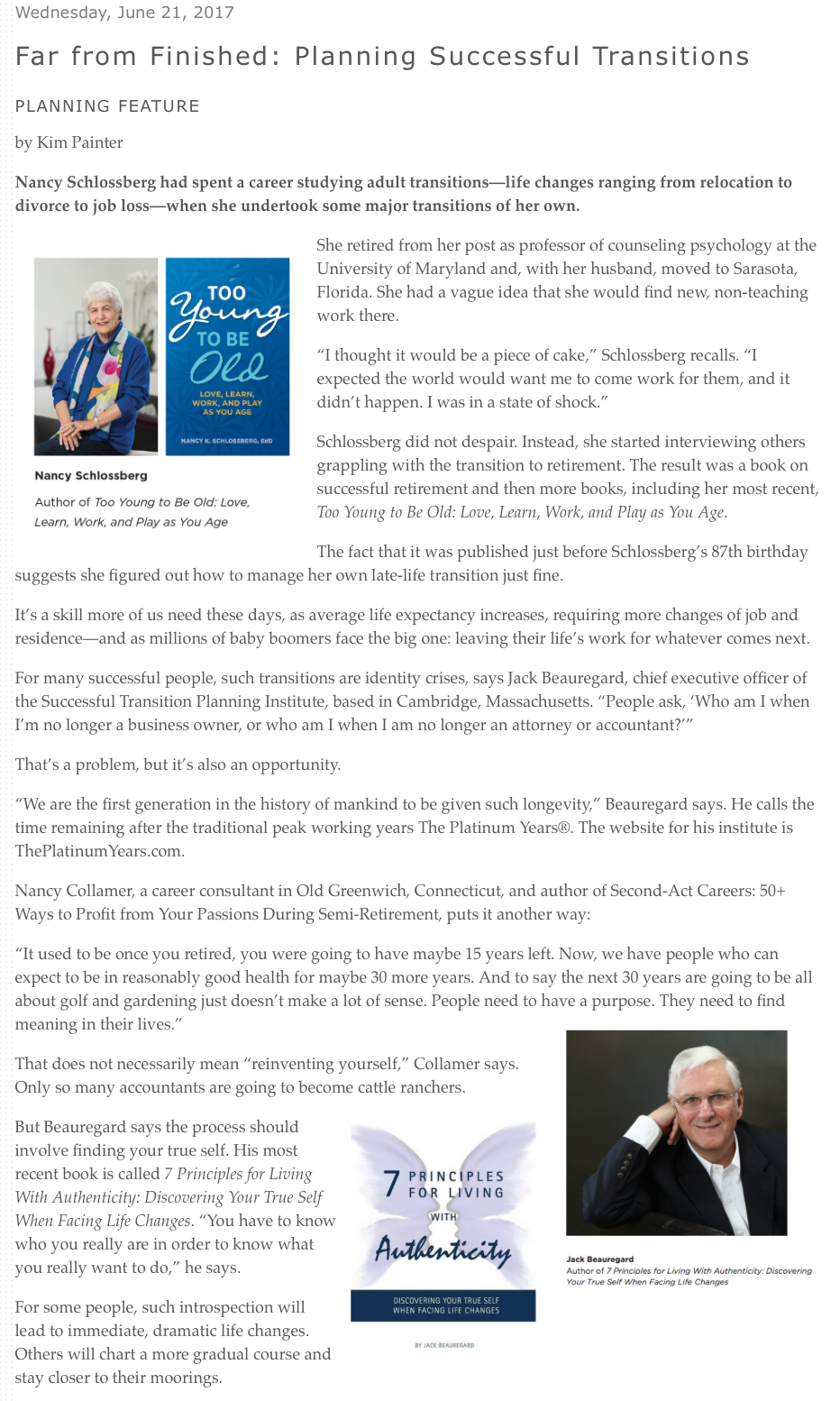
Champa and I are among the people featured in a new article from journalist Kim Painter about how Americans are navigating the second half of their lives. There are many possible transitions, she writes, but the “big one” is usually leaving one’s life’s work for whatever comes next. Painter also interviewed my sister Nancy Collamer. Her article for Vested appears below and is online here.










 "Not Exactly Retired"