

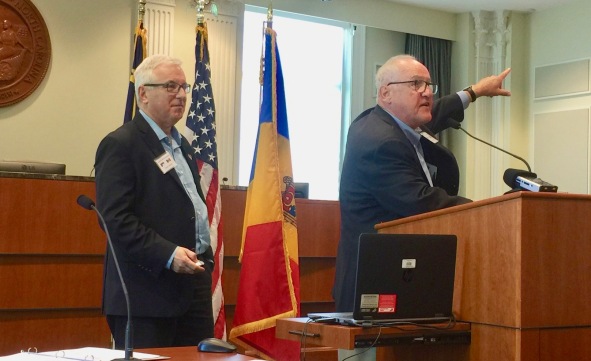
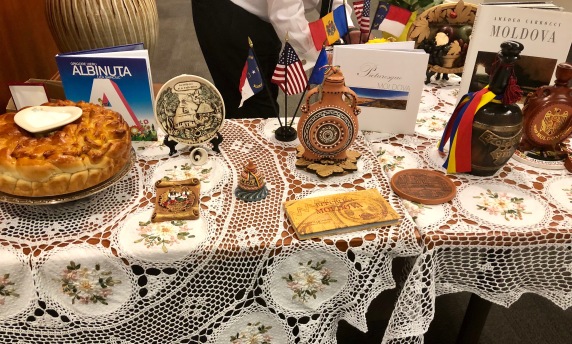
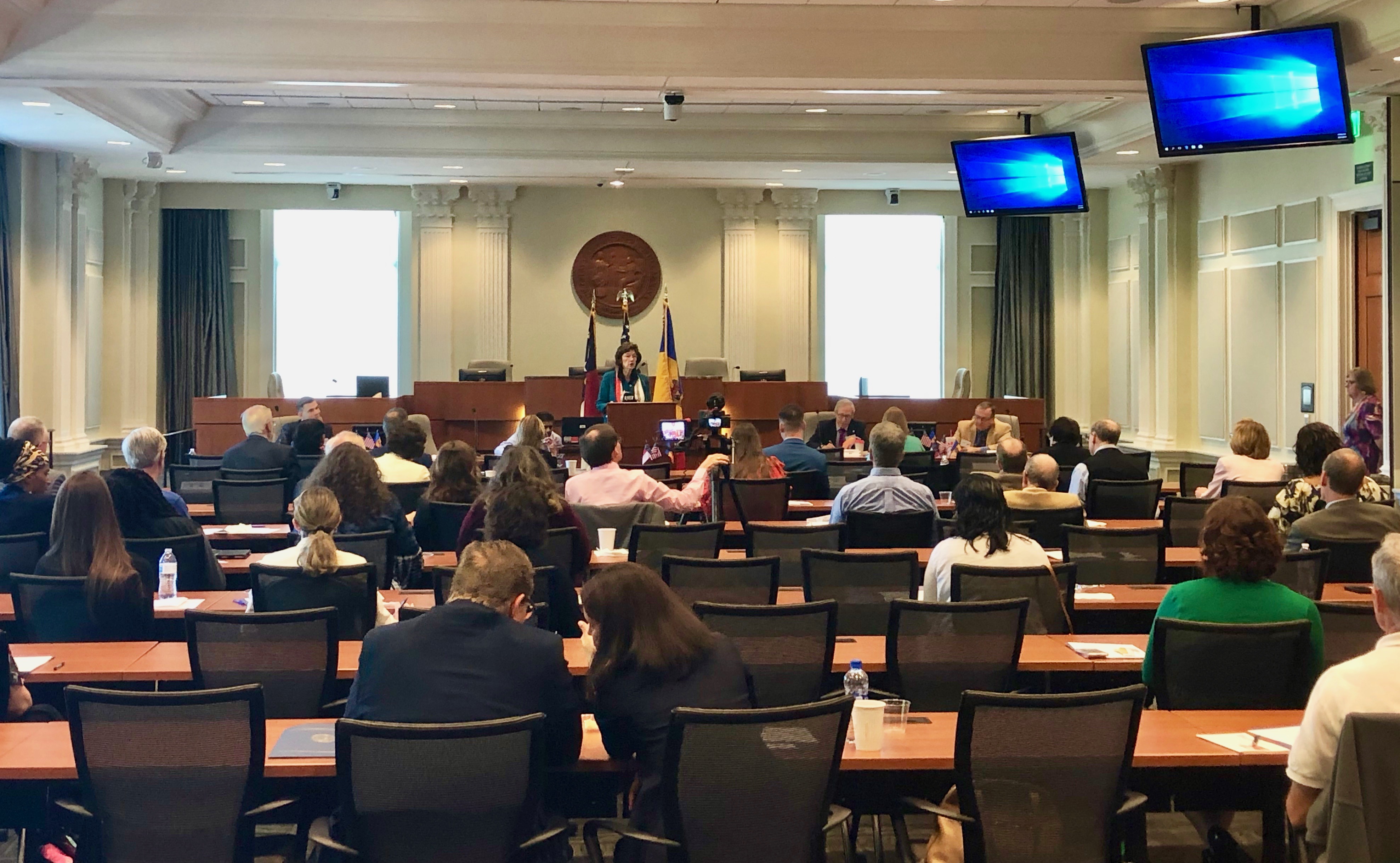
I published an article Thursday, May 16, in the Raleigh News & Observer about North Carolina’s extraordinary partnership with Moldova. I‘m sharing the article here along with photos of an April 27 conference in Raleigh where teachers, nurses, politicians and others discussed the partnership. My Peace Corps volunteer colleague Jim Fletcher (pointing below) and I were among the speakers.
Later this week, North Carolina will renew its partnership with a little-known country that’s been bringing out the best in our state’s people for more than two decades.
North Carolina’s National Guard has been helping the country’s defense forces throughout this time. Librarians from Wilmington and across the state have sent it more than 350,000 books. Nurses, dentists, pharmacists and others have provided medical assistance. A Hendersonville group has renovated some of its orphanages and schools.

North Carolina recently celebrated the 20th anniversary of its extraordinary partnership with the country and the amazing thing is that many North Carolinians have never heard of the country, much less about the partnership.
It’s the Republic of Moldova, a former Soviet state one-fourth the size of North Carolina that’s wedged near the Black Sea between Romania and Ukraine. It’s the poorest country in Europe, with a struggling economy, political instability and other problems. It’s also beautiful, with lush vineyards and farmland, a rich culture and wonderful people.
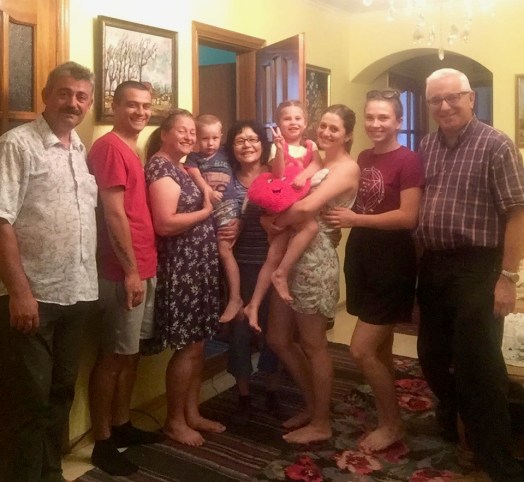
My wife, Champa, and I had barely heard of it, either, when we left our home in Durham three years ago to serve there as Peace Corps volunteers in a group that included volunteers from Asheville, Charlotte, Boone, Winston-Salem and Raleigh. We were posted to a small city where we lived with a host family and I worked at the library while Champa taught at the school. (I described our adventures on my blog, Not Exactly Retired.)
While we were there, we kept hearing about Moldova’s partnership with, of all places, North Carolina, which turned out to be a big deal.
The partnership began with North Carolina’s National Guard assisting Moldova’s defense forces when the Soviet Union ended and Moldova became independent. The partnership has grown to include civic, educational and other organizations, including religious groups that range from Christian groups based in Claremont and Dublin to the Greensboro Jewish Federation.
In 1999, North Carolina and Moldova signed a collaborative agreement through the NATO Partnership for Peace. Governors of both parties have renewed it regularly and another renewal is planned when a delegation led by N.C. Secretary of State Elaine Marshall travels to Moldova’s capital later this week.
“North Carolinians should be proud of this partnership,” former U.S. Ambassador to Moldova Michael Kirby said at a recent conference in Raleigh that brought together participants from across the state. “I’ve never seen another relationship like this.”
The partnership has been “an important force for peace, an important force for democracies going forward,” agreed Rep. David Price, who recently visited Moldova as part of a bipartisan Congressional group.
In addition to receiving support within its own borders, Moldova has sent groups of experts to North Carolina to learn about topics ranging from judicial reform to agriculture. In turn, North Carolinians have benefited, too.
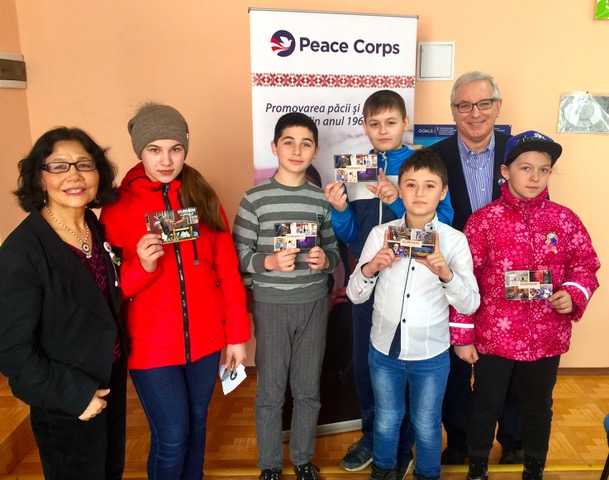
“I’m from Eastern North Carolina, where Raleigh is hours away,” said Elaine Justice, principal of an elementary school in Swansboro whose teachers and students interact with a Moldovan school. “Our kids, by being connected through this, are growing. They don’t just see themselves as living on the edge of North Carolina. They’re becoming global citizens.”
This past summer, when my wife and I returned to Durham, we found America beset with political rancor. It’s been a relief to get involved in this bipartisan partnership where Republicans and Democrats, military veterans and university students and people of diverse ages, faiths and ethnicities are working together to provide assistance and form friendships with people in a struggling democracy, exemplifying what’s best about North Carolina. As Sec. Marshall told the conference, the program’s success is “due to people with a heart who are willing to share it.”
I hope more people get involved in the partnership and perhaps even visit Moldova. It’s a fascinating place that’s waiting to bring out the best in them, too.
David Jarmul, the former head of news and communications at Duke University, served as a Peace Corps Volunteer in Moldova with his wife, Champa.

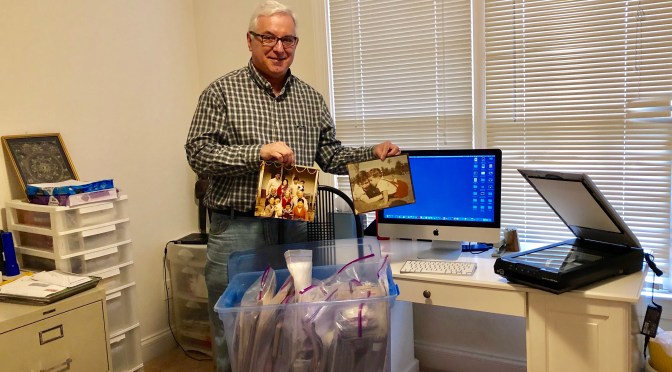
 Three years ago, when Champa and I
  “We have to sort through these after we return home,” we told ourselves.
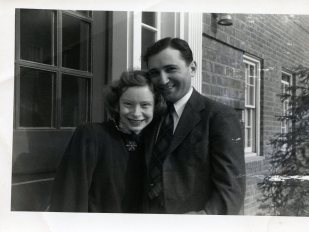 So, too, for the old photos and documents from my side of the family, like the one you see here of my parents.
 Only your kids and their descendants are likely to care about your photos, and they will probably worry more about receiving too much instead of too little. You’ll do them a big favor by reducing the pile drastically, keeping only the most significant and poignant images. As Marie Kondo might say, find the things that bring you joy.


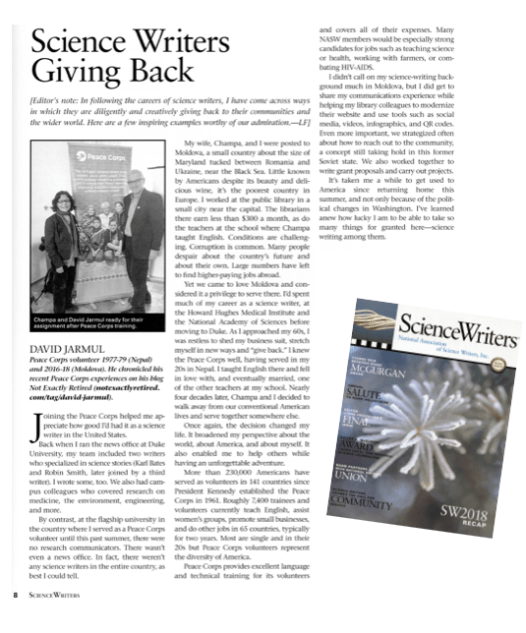 Thanks to NASW’s Lynne Friedmann for inviting me to write this!
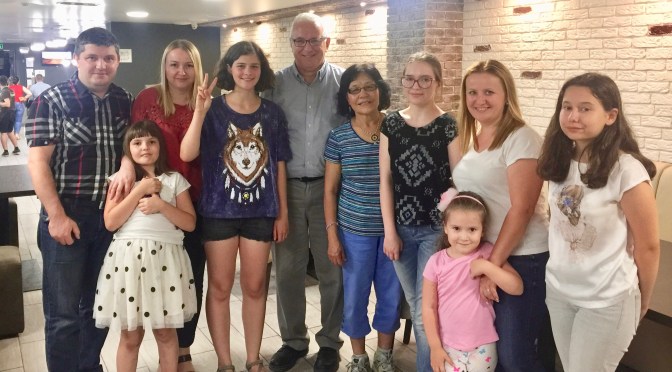
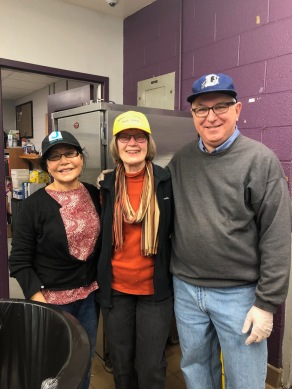 The midterm election gave me hope that Americans will not surrender to despair, that they will fight to once again make our country the kind of place we can all extol when living and traveling abroad. This past Sunday, Champa and I served lunch at a local soup kitchen with our friend Celeste, right, who also served in the Peace Corps, in West Africa during the Vietnam War. She reminded me how challenging it was to be asked questions then about America. Eventually things got better. I’m hopeful they can again.
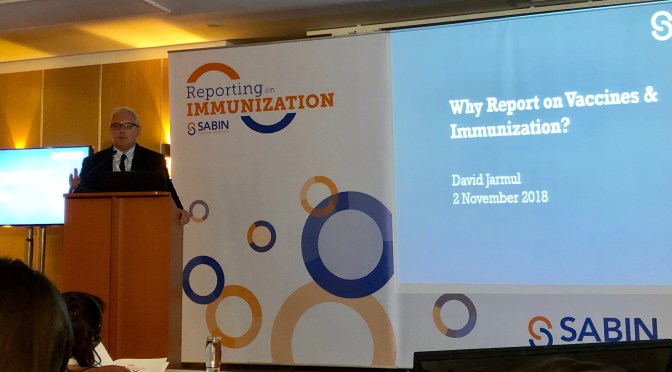


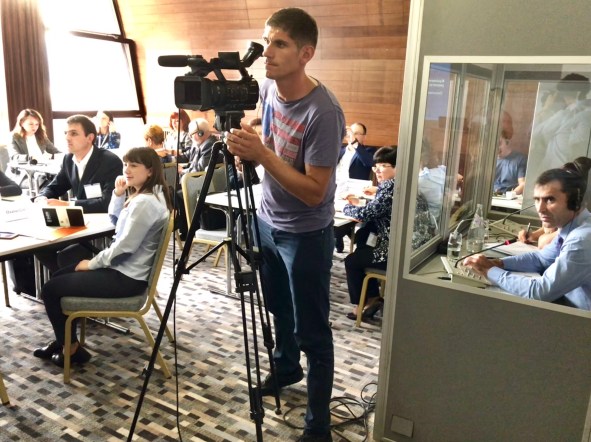
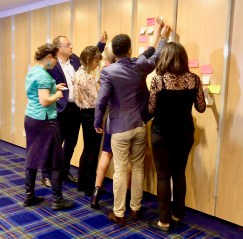 Ovidiu Covaciu, who manages a large Facebook group and produces materials that promote vaccination, was among several speakers who called on reporters to resist what he termed a “false balance” between actual facts and the false claims promoted by vaccination opponents. Mihai Craiu, a pediatrician who uses social media to communicate with the public, said he discusses vaccination regularly but not exclusively, preferring to mix it with other topics.
 Other speakers discussed topics ranging from the factors affecting “vaccine hesitancy” among parents to Moldova’s efforts to increase HPV vaccination.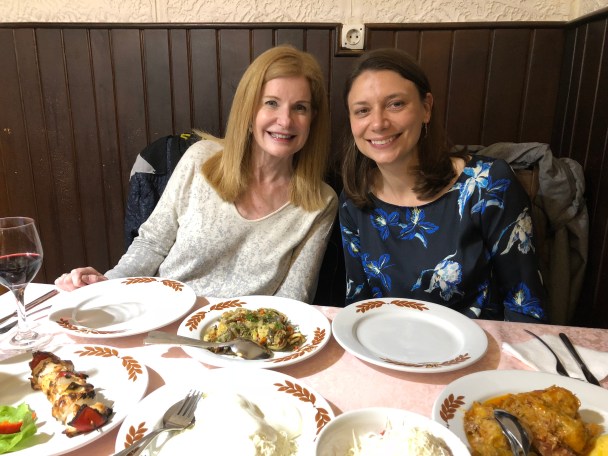


 Readers, I want to thank you so much for following along with Champa and me, regardless of how recently you discovered “Not Exactly Retired” or how regularly you’ve tuned in.
  I’ve posted 265 stories since we started our adventure three years ago, attracting


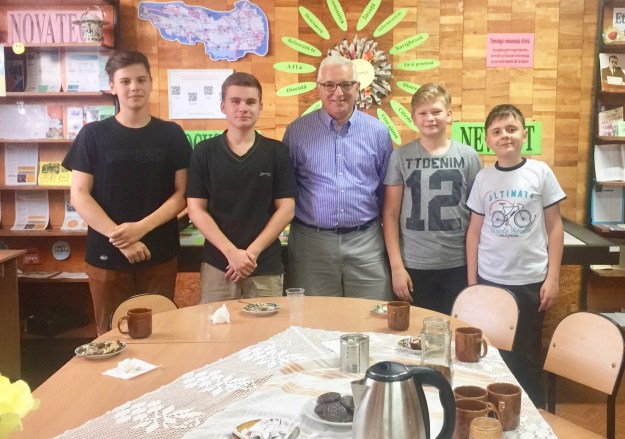






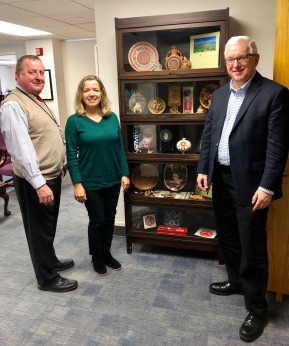
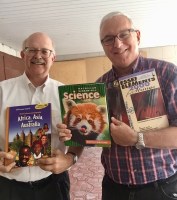 I was invited because I recently assisted the partnership as it prepared to ship hundreds of English-language books to Moldova with two NGOs. I worked with Bob Gingrich, Peace Corps Moldova’s director of management and operations and a fellow North Carolinian (left in photo), who will soon distribute the books among PCVs to share with their host communities.
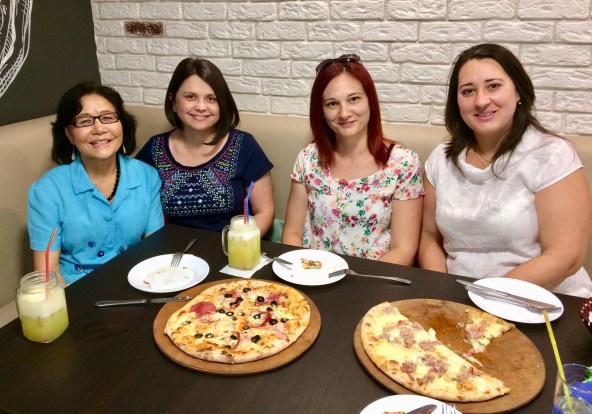
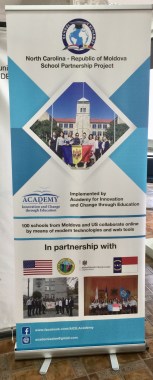 I ate lunch with Kate before her talk so she could tell me more about the partnership and I could answer some of her questions about Moldova, which she is visiting for the first time, thanks to a grant from
  Also arriving here this past weekend was Willow Stone, a student from Clayton High School who will live with a Moldovan host family and study Russian.


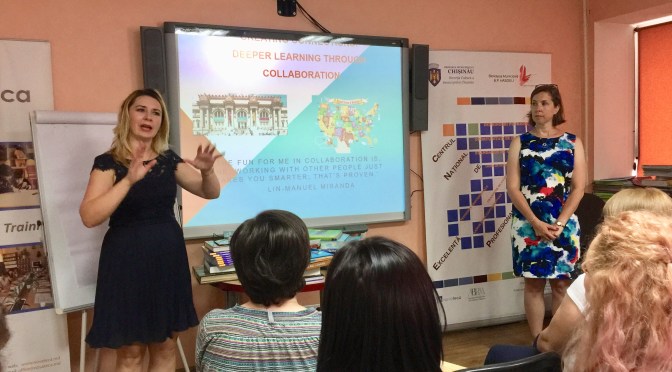
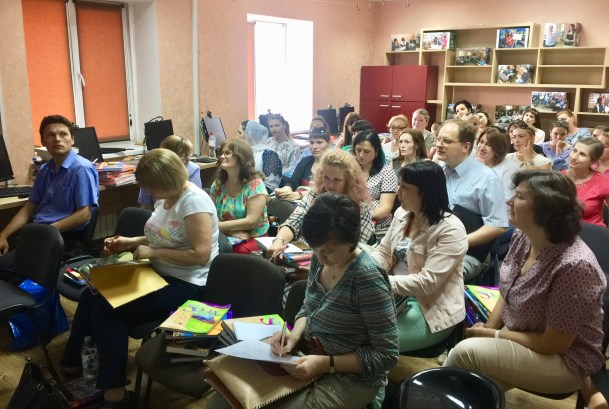
 The Moldovans who attended on Monday picked up not only new teaching ideas but also armloads of free books to bring back to their schools. Some of them have also interacted over the years with Peace Corps Moldova’s English Education program, in which Champa has served.
 "Not Exactly Retired"