Tag Archives: Nepal

Come to the Cabaret

I’ve wondered lately whether I’m like the emcee in the musical Cabaret, amusing myself as darkness spreads across the land.

You probably remember the emcee. He kept singing and leering in a Berlin nightclub as Hitler rose to power, refusing to recognize, much less confront, the nightmare unfolding around him. He distracted his patrons from paying attention to the chaos outside the door. But in the end, there was no escape. The deluge came and they were all swept away,

Following this past November’s election, Champa and I anticipated the nightmare we’d soon be seeing in America. Our strategy for coping, as I wrote previously, was to spend as much time as possible outside the country. 

Soon after the election, we departed for nearly two months in Australia and New Zealand. A few weeks ago we returned home to see our family and take care of some business — doctor’s visits, jury duty and the like. But now we’re planning to leave again, to Nepal and other countries.

Eddie Redmayne in the recent Broadway revival

After that we’ll return home again, but not for long. Just over a month has passed since the inauguration, although it feels much longer. We still have nearly four years to fill.

I don’t regret our decision and don’t plan to change it, at least not yet. I simply don’t have the energy to feel constant outrage. Living abroad gives me distance and perspective. Moreover, from a strategic standpoint, the best thing now may be to wait and let the American people see the consequences of their choice, as devastating as these are proving to be. Of course, that’s easier for me to say than it is for a fired federal employee or a Ukrainian soldier.

Alan Cumming portrays the Cabaret emcee

As I’ve discovered, there’s actually no escaping what’s happening, even far from home. When we were in New Zealand, some Canadians asked me why our president was so hostile to a long-time friend. Australians said they were nervous about U.S. tariff policy and anticipated closer trade with China. A family from Mexico wondered whether they’d be able to visit the United States again. More recently, our friends in Moldova have been shocked by the abrupt shift in U.S. policy towards their neighbor, Ukraine.

Since we returned home, just a week after the inauguration, I’ve witnessed a relentless attack on things I hold dear — justice, democracy, diversity and more. I devoted much of my career to science, higher education and foreign assistance. Now all of these things are on the ropes. Fellow former Peace Corps Volunteers who pursued careers with USAID have had their lives upended. Scientists I know are deeply concerned about their funding. The list goes on and on.

And me? I’ve been researching travel itineraries in Sri Lanka. 

Taylor Mac in the 2013 PlayMakers production

The juxtaposition makes me uneasy. I don’t want to be the cabaret emcee saying: “The world keeps going round and round, but it doesn’t affect me.” It does affect me and many others, most of whom lack the flexibility and resources to leave. Going abroad for months at a time is hardly the same as performing at a sleazy Berlin nightclub, but it’s also a far cry from manning the barricades.

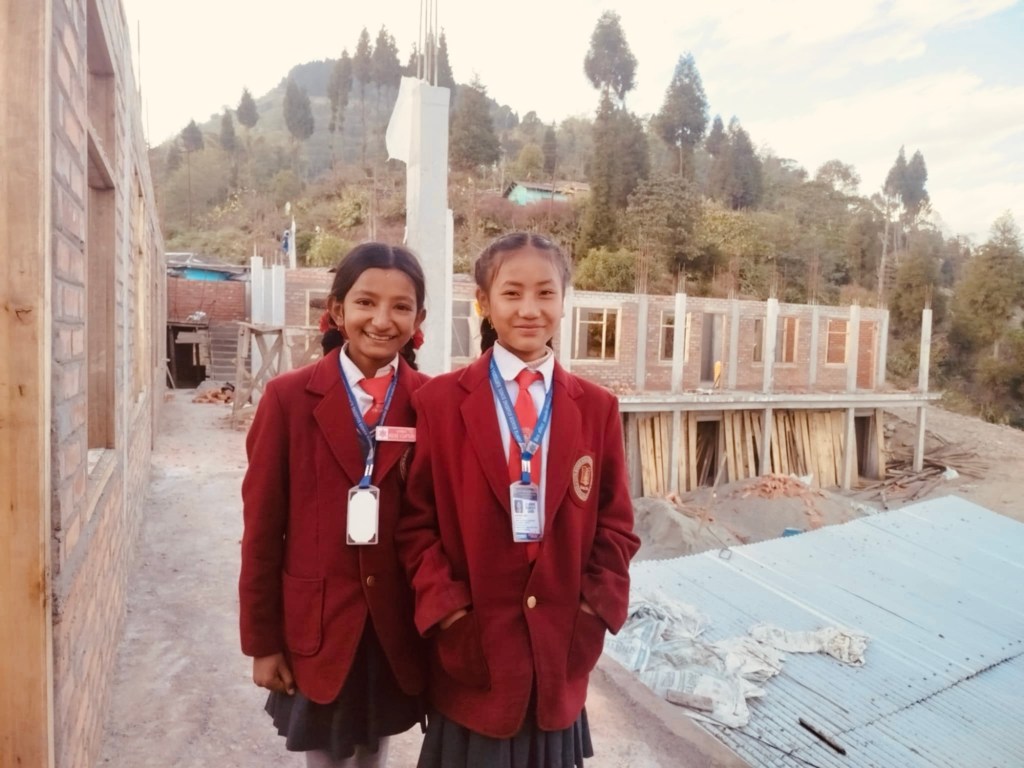
I keep hoping more of my fellow Americans will finally wake up and political options will become more promising. In the meantime, I’m doing my best to focus on things I can actually change. I’m volunteering locally with several groups. I’m finding joy with family, friends, my community and projects like the school in Nepal we’ve been helping to build, which we’ll be dedicating during our upcoming trip. I’m traveling as much as I can before I get too old, especially while things are so grim at home.

I wish I had a better plan right now, but I don’t. I wish things were different, but they’re not. I wish I could turn off the song in my head, but I can’t. It keeps playing: What good is sitting alone in your room? Come hear the music play. Life is a cabaret, old chum. Come to the cabaret.”

Top photo: Joel Grey as the emcee in the original production of Cabaret.

Subscribe to Not Exactly Retired. It’s free!

Thank You Donors

The children of Samalbung, Nepal, will soon have a beautiful new school, thanks in part to the generosity of Not Exactly Retired‘s readers.

Nearly 100 people have contributed to the project we announced in May to help build the school in a remote village of eastern Nepal. It will serve about 125 students — mostly girls, mostly from indigenous groups. Our previous announcement has more details.

Readers have donated nearly $23,000 through our GoFundMe account and directly to me. Together with funds raised by the local community, which is also helping with the construction, this has covered nearly half of the total budget. Champa and I are paying the rest.

The school should be ready in late April, in time for Nepal’s new school year. We plan to attend the dedication ceremony and will share video and photos of the event.

We will bring with us a sign thanking all of the donors by name, as shown below. If I have overlooked or listed anyone incorrectly, please let me know by Friday, February 21, so I have enough time to make corrections before ordering the sign. If you want to add your name to the sign, we still welcome donations, which will be used to enhance the school and buy much-needed classroom supplies. You can donate directly to me or through the GoFundMe site — again, by February 21, please. We’ll make the final list public.

We also welcome additional donations from previous donors. No matter when you donate, or how much, the school’s teachers, students and families are deeply grateful for your support. At a moment when the U.S. government is turning its back on foreign assistance, you have made the opposite choice — to open your hearts.

Champa and I join the Samalbung community in saying dhanyabad — thank you! — to all of you.


Thanks to:

Anita Adhikary
Cheryl Arroyo
Jay and Celine Barker
Elia Ben-Ari
Amy Blackwell
Evan Burness and Katie Lindquist
Linda Carlson and Larry Himelfarb
Jennifer Chow
Nancy and Joel Collamer
Thomas Corr
Phyllis and Jerry Crabb
Jill DeGroff
Deepa Dewan
Lokendra Dewan
Raj Bahadur Dewan
Joel Diringer
Kim Dixon
Doschinescu and Nanu Family
Debbie Durham
Scott and Diane Eblin
Benjamin Edwards
Bruce Fong and Virginia Lim
Jill Foster
David Fryer 
Robert B. Gerzoff
Christa Gibson
Ryan Gorczycki
Deborah and Simon Gregory
Bob Green
Kate Green
Mitch and Chiyoko Haas
Valerie Harden
Ruth Heuer
Katherine Hicks and Henry Rosenberg
Sally Hicks
Dwight Holmes
Rachel Holtzman
Wendy Hower
Juliana Collamer and Nick Hughes
Camille Jackson
Jonathan and Jamie Jarmul
Paul and Stephanie Jarmul
Ruth Jarmul and Irvin Rosenthal
Pukar and Rekha Joshi
Mariam El-Khouri
Christina Kohrt
Danielle and Steve Kohut
Peter Lange
Keith and Cheryl Lawrence
Priya Limbu
Sudhir and Sarla Mahara
Mariana Mari
Bernadette and Bob Marriott
Herbert V. McKnight
Chris McLeod
Geoffrey Mock
Larry and Judy Moneta
James Moore
Shashi Nembang and Peter Giaquinta
Dennis O’Shea
Steve and Lynn Olson
Lisa Orange
Joyce Pardon
John E. Paul
Deepak Prajapati
Stephanie Prausnitz
Kevin Quigley
Deepa Rai
Timothy and Crissy Ready
Rosalind Reid
Margaret Riley
Rachel Rosenthal and Yair Rosenberg
Rebecca Rosenthal and Adam Arenson
Sarah Rosenthal and Mark Broomfield
Patricia Ross
Jeannine Sato
Peggy Schaeffer
Manish Shrestha
Bob and Karen Simon
Bruce Simon and Betsy Hely
Beth and Cabell Smith
Susan Turner-Lowe
Melinda Vaughn
Jennifer Vega
Sue Kaminsky Vest
Ken and Nancy Warren
Rob Waters
Cindy Weinbaum and Mark Prausnitz
Anne Williams
Robert Wright
Vivekananthan Yatheepan
Merina Dewan Yolmu


Momos Down Under

We’ve been eating our favorite snack food while traveling in Australia and New Zealand the past several weeks. 

It’s not chips, burgers or pizza, although these are plentiful. No, we’ve been eating momos — the Nepalese dumplings you see in the photo here.

In Sydney, we ate at The Momo Hub, then at Falcha Hall. As soon as we arrived in New Zealand, we ate at Kathmandu Mo:Mo in Christchurch, then at Mela in Dunedin and The Himalaya in Queenstown. 

If you’ve never tried momos, you don’t know what you’re missing. They’re delectable dumplings stuffed with flavorful ground meat or vegetables You buy them either steamed or fried, dip them in sauce and eat them with a fork or your fingers — one or two bites per momo. Our go-to order is a plate of 10 or 12 steamed chicken momos, which we share. 

Momos are ubiquitous in Nepal and have been gaining popularity elsewhere. You can find them in most U.S. cities. In India, some fast food chains now specialize in momos. I think it’s only a matter of time until momos become as common to the American food scene as tacos or ramen, which were considered exotic not so long ago. 

Here in Australia and New Zealand, which both have significant numbers of Nepalis, momo shops have also been a great place for us to meet people and learn about their lives. The above photo shows Champa with a Gurung family we met in Queenstown. The owner, Satya Thapa, is on the right. That’s him cooking in the next photo. 

The following photo shows a young woman who moved recently to Dunedin, on New Zealand’s South Island, to help her brother launch a Nepalese restaurant featuring momos. They were yummy. Like everyone else we met, she was surprised when I placed the order and chatted in Nepali, which I learned years ago while serving as a Peace Corps Volunteer in Nepal.

We’ve also been eating local foods, of course, as well as this region’s famous beer and wine. However, we did skip the kangaroo meat. 

I know it’s odd to write about Nepal’s national snack food while we’re touring Down Under but there’s never a bad time to eat or talk about momos. I’m dreaming of the day when someone opens a momo shop in our hometown of Durham, N.C.

For now, I’ve begun researching where to find the best momos when we arrive in Auckland in a few days. 

Subscribe to Not Exactly Retired. It’s free.

A School for Samalbung

[See our GoFundMe site for updates and a Q&A about this project. Thanks to your generous support, the school is taking shape. We are grateful to everyone who has donated!]

Readers and friends: Champa and I are building a school in a remote area of eastern Nepal and we ask for your help.

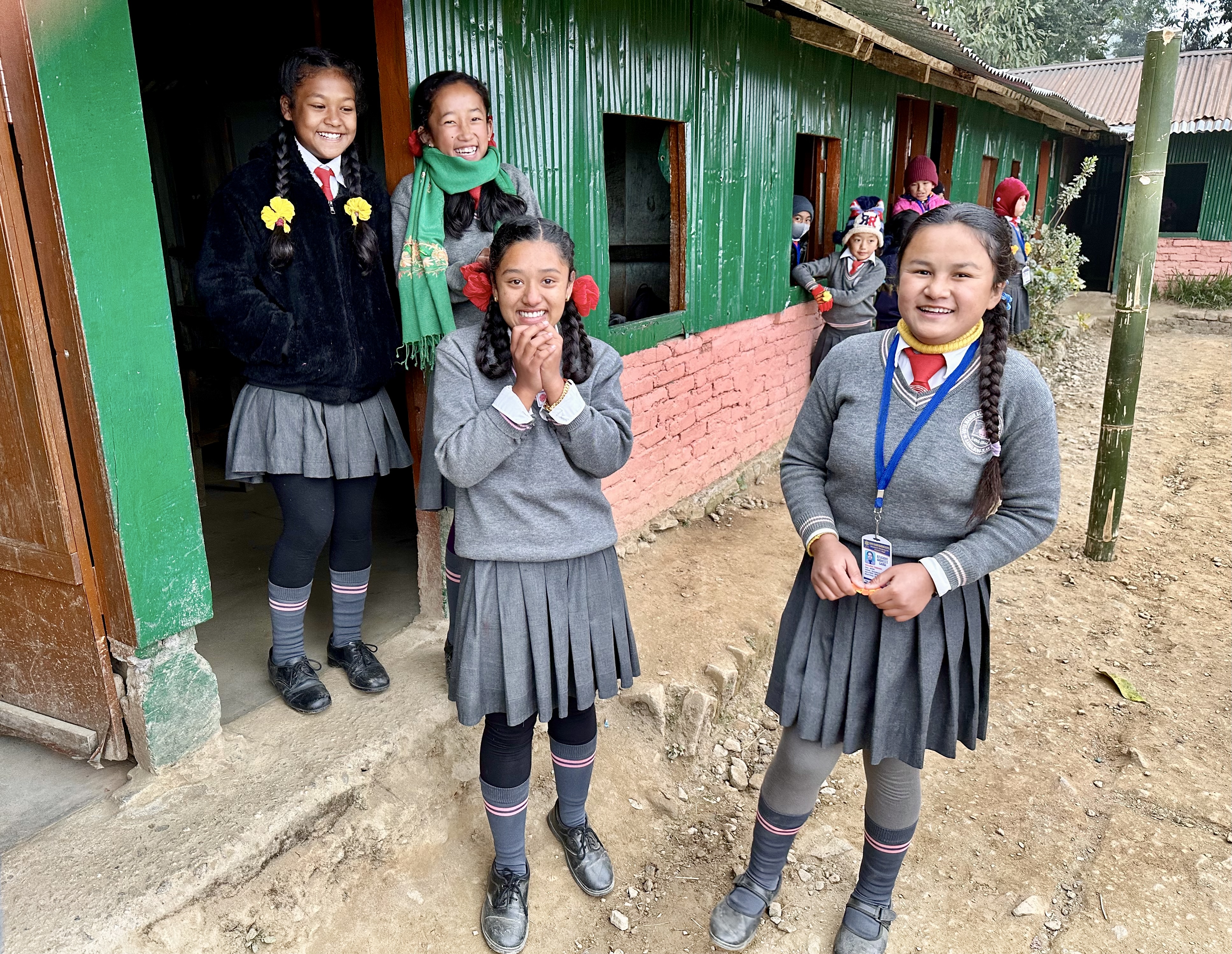
The school is in Samalbung, the small village we visited with our family in late 2022. (Watch the video after 8:33.) Our nephew Santosh, whose late mother was Champa’s sister, lives there with his family. Several years ago, he and his partners created a barebones school to serve local children, who are mainly from indigenous groups and farming families with very limited means. As you can see, the kids are inspiring but their school is in bad shape.

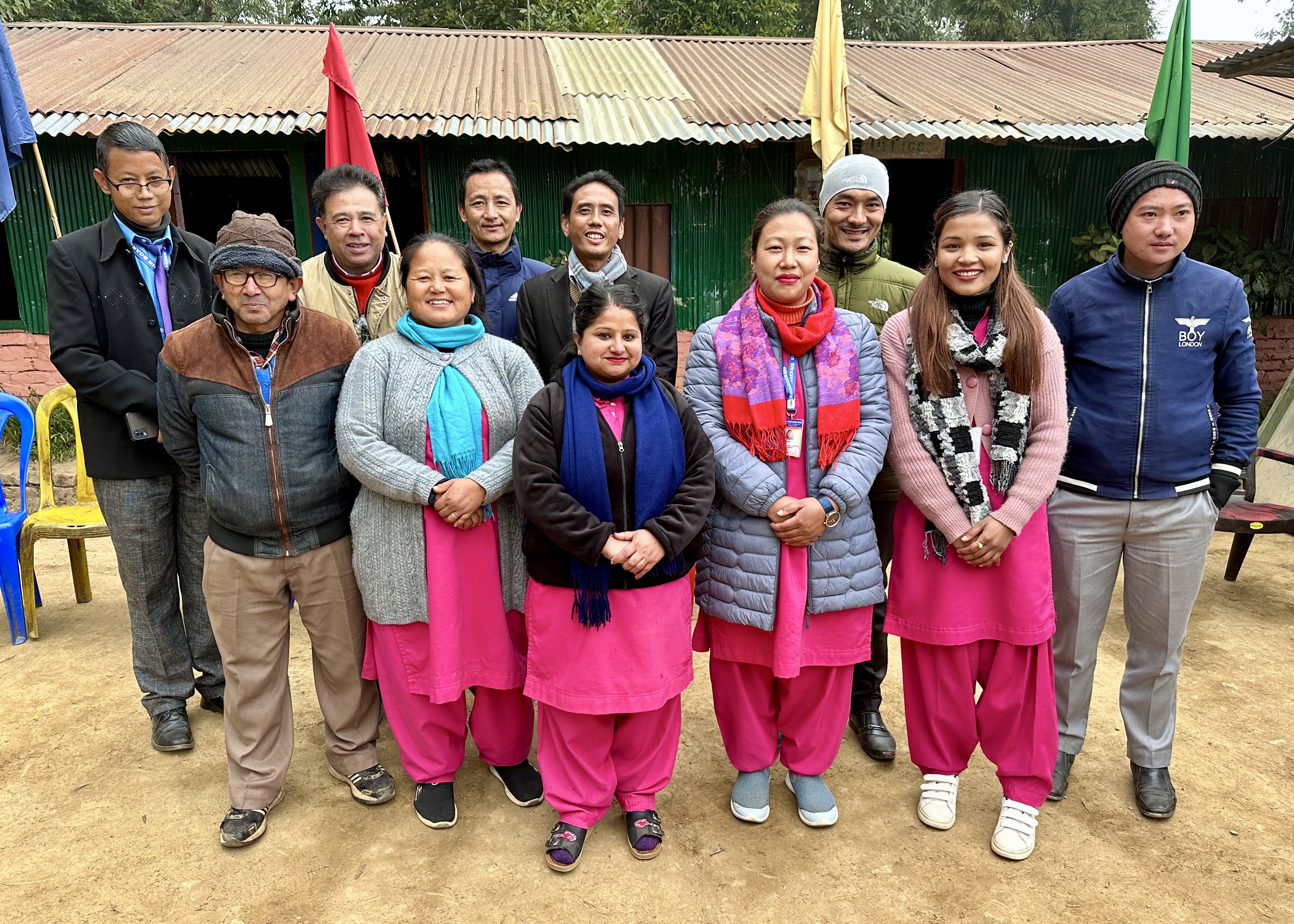
They and their teachers (above) need a new school, desperately. Champa and I have committed to paying for most of the cost of a new one but we need tens of thousands of dollars more to finish the project, which has just gotten under way (see below). With additional funds, we can also provide new desks, school supplies and maybe even computers, a cafeteria or sports equipment.

Champa and I are doing this informally, with a GoFundMe campaign, rather than through a formal charity. We trust Santosh and his partners and are monitoring the project with the assistance of one of Nepal’s leading human rights attorneys.

Your support will change the lives of the children shown here and their brothers and sisters. When the school is finished, hopefully within a year, I’ll be sure it highlights the names of everyone who helped. 

You can contribute through GoFundMe or contact me directly (as some donors have preferred, to avoid GoFundMe’s fees). Thank you for anything you can afford to contribute!

You Call These Mountains?

When I visited the Andes and Patagonia’s rugged landscape recently, I said the same thing as when I first saw the Grand Tetons: 

“You call these mountains?”

They were spectacular but I couldn’t resist pointing out they were much lower than the Himalayas of Nepal, where I served as a Peace Corps Volunteer 47 years ago and have returned regularly since marrying Champa. I still speak Nepali, am close to our family there and think of Nepal as my second home.

Like many converts, I’ve become a zealot, in my case about Nepal’s status as the home of the world’s highest mountain, Everest, and eight of the top ten overall. I promote them even when I should be praising others.

As you can see from these photos from our trip last month, the mountains of Argentina and Chile are actually stunning. I was spellbound by the snow-covered peaks of Patagonia. When we drove across the Andes from Argentina to Chile, the views were magnificent, such as at Bariloche, below.

The same was true of the Alps when Champa and I hiked there on previous trips (below).

I loved the Cascades, too, when we visited Oregon recently. Despite being less than half the size of the Himalayas — Mount Rainier’s peak is 14,411 feet compared to 29,029 for Everest — they were glorious to hike or just admire from a chair (below).

It’s not like I’m a mountain climber myself, especially at this stage of my life. The highest I ever got in Nepal was 18,519 feet at Kala Patthar, overlooking the Everest base camp. That’s where summit expeditions start, not finish. I could barely walk in the thin air.

Moreover, altitude doesn’t define beauty. Nor does location. The highest peaks, like those in Nepal, can be more deadly than delightful.

Sunrise at Kanchenjunga, the world’s third-highest mountain, near Champa’s home.

My comments are just Himalayan chauvinism and, as Champa reminds me, they’re ridiculous. She glows whenever she visits mountains, whether in Nepal or elsewhere.

In comparison, I sound like a Parisian who sneers at someone else’s cuisine or a New Yorker mocking life beyond the Hudson River. It’s not a good look, so I’m confessing to it here and vowing to finally overcome it. 

In that spirit, let me now state clearly what I thought of the Andes: They were gorgeous, marvelous and impressive. 

That is, if you like hills.

(Top two photos by Nancy Collamer)

Peace Corps Macho

I received a message recently from someone thanking me for an article I wrote in 1979 before returning home from my first stint as a Peace Corps Volunteer, in Nepal.

The message came from a woman in Tennessee who served in Swaziland (now Eswatini) around the same time. “I pulled out a scrapbook and found a copy of your Peace Corps Macho article,” she wrote me. “That saying has reminded me many times not to get too caught up in myself over the years. I thought to look you up and I’m glad to see that you are still writing thought-provoking words on a very interesting life.”

I’d nearly forgotten the article, which appeared in the July/August 1979 issue of Peace Corps Times (which no longer exists). I found it online and, despite some gendered language and outdated phrases (e.g., “Third World,” “villagers,” “far out”), much of it remains timely.

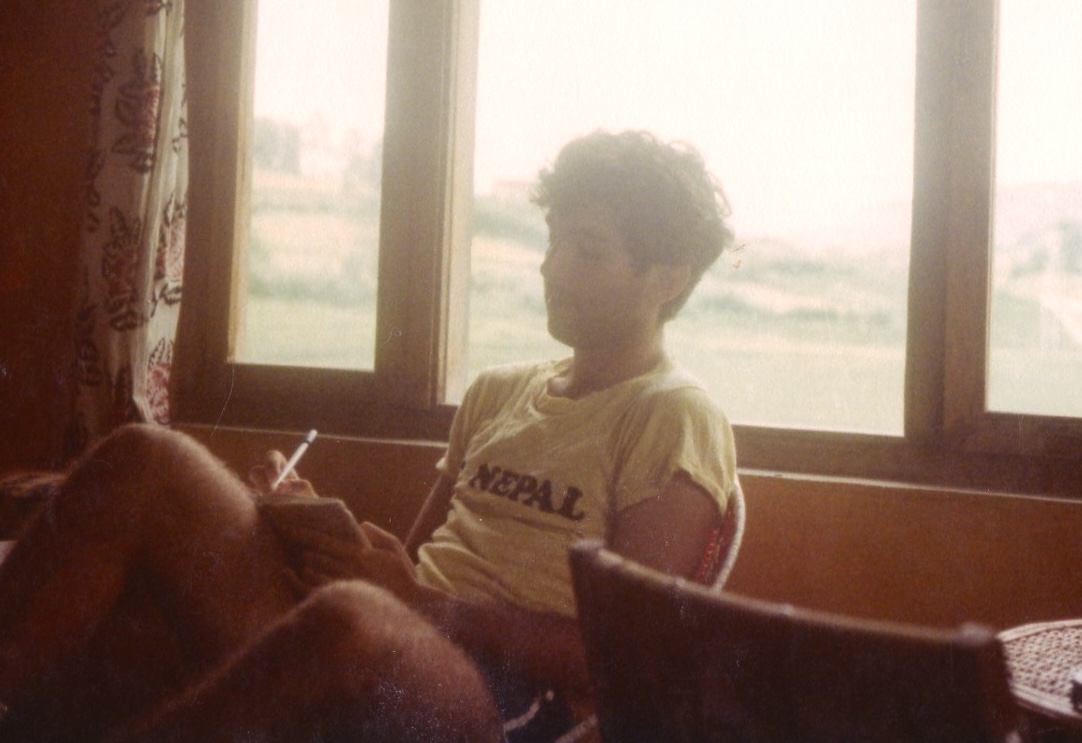
Just in case you missed the article 44 years ago, I’m sharing it here along with some photos of my time in Nepal.


Item: A fellow Volunteer chose one of the most isolated posts here in Nepal. A few months later, he was visited by a Peace Corps staff member. The Volunteer’s quarters were, the staff member later told me, “a hovel worse than anything in the whole village. His kitchen was dirty and he wasn’t boiling his water. It was unbelievable. When I asked him why he didn’t improve his living standard, he said, ‘Well, I didn’t join the Peace Corps to be comfortable, you know.’”

Item: My lifetime friend, Mitch, joined Peace Corps/Nepal a year after me. At the end of his training. he had to choose between Kathmandu and another town, Pokhara, for his post. If he lived in Kathmandu, we could have shared my house and had a great time together. But Mitch chose the other post. One of the main reasons was that we both felt funny about doing something that we would so obviously enjoy. It would lessen the hardship we associated with Peace Corps service.

Item: My first post in Nepal was a village called llam. For medical reasons, I was transferred to Kathmandu. My salary was raised by $16 per month. Now I go to an occasional film or cheap restaurant. When Volunteers come in from their isolated posts, I am sometimes asked whether I have forgotten in my “luxury” what the real Peace Corps experience is about.

The implication is clear: You have to suffer to be a PCV.

It’s an attitude that I call “Peace Corps Macho.” It occurs when the willingness to endure hardship in the course of helping the poor turns into the belief that hardships have an intrinsic worth of their own.

Peace Corps Macho. You have to suffer to sing the blues.

Turning the inevitable hardships of Peace Corps life into a psychic combat medal is, of course, one way to cope with problems beyond our control. We can laugh at our troubles. It gives a sense of camaraderie.

But the problem is that many Volunteers I know — myself included — sometimes feel they have to seek out these hardships to prove how much they can “take,” thus showing how much they are willing to sacrifice to help humanity.

For example, a typical conversation in the Peace Corps/Nepal medical office:

“Hey, guess what? My lab test just came back and I’ve got the amoeba!”

*Oh. that’s nothing. I just got over pneumonia. I almost got a trip to Bangkok out of it, but I got better too soon.”

“Really? Say, did you hear about Bob? He came down with typhoid and had to be helicoptered out. Pretty amazing. First he had hepatitis and malaria, now he’s got typhoid.”

“Well, you know, Bob’s a far-out guy.”

This is the ethic of the missionary. Suffering brings prestige. Like the priest in Graham Greene’s The Power and the Glory, the taking on of suffering elevates the soul.

The trouble with this is that Peace Corps Volunteers are not missionaries. Nor are we in Outward Bound. Nor the army. By the Peace Corps charter, we are here for three reasons. The primary one is to help the poor. Second is to give foreigners a chance to see Americans. And third is to create a body of American citizens sensitive to the needs of Third World development.

There’s not a word about suffering.

The line is not always clear, of course, about when hardship is a necessary part of getting our job done and when it becomes a spiritual ego ride. For example, to live in a simple house is to show solidarity with local farmers. But it’s ludicrous not to do what you can to catch the rats, keep your room clean and be happy.

Likewise, if you eat local foods instead of tinned goodies from home, it is a sign of fellowship with the poor. But some Volunteers carry this to the extreme by eating a protein-deficient diet, well knowing that they are endangering their health. Why? To be like their neighbors.

I feel the pressure myself. My lob and life here have been going extremely well. My teaching is successful, I have launched a series of special projects and have made many friends. And yet I sometimes feel guilty because things aren’t more difficult.

Peace Corps itself is ambiguous in its attitude towards hardship. On the one hand, it frets over Volunteer safety, programs and the like. But on the other, it prints recruiting brochures that ring something like: “Sure it’ll be tough. You’ll be vomiting up spiders and wishing those poisonous snakes would finally put you out of your misery. But you’ll be a Peace Corps Volunteer!”

The tension doesn’t only concern physical health, but mental health, too. Consider the Volunteer who has been at his post for six months, but who is not supposed to come to the capital for another two months. He is lonely and really wants to see his friends and have a decent meal. Too often a Volunteer in that situation will feel that he has to visibly freak out before he is morally justified in seeking relief. So he stays — after all, hardship is what Peace Corps is all about. Maybe he will tough it out after all. But maybe he won’t.

Another example: During my training, we had several conversations about whether there were times when we ought to drink unboiled water. In certain social situations, shouldn’t we just be gracious and take a few sips?

Well, as one who has now been through giardiasis, amoebic dysentery, hookworm and roundworm, I have no doubts anymore what the answer to that question is. What are you going to gain by drinking the water and vomiting for days: impress the villagers?

There seems to be a need here for balance between our own needs and the commitment we feel to help the poor. Too often there is a tendency among those involved in social service to make the worst of things so as to assure themselves that they are genuinely committed.

The issue is even more pronounced these days since many of us (I include myself) feel a certain repulsion toward the narcissism of many in the so-called human potential movement, what Tom Wolfe and others have called the “Me Generation.” For myself, I feel that many such people, well meaning though they may be, have become so wrapped up in themselves that they have forgotten the poverty of half the world’s people.

But they have their point, too. It’s a fool who doesn’t watch out for himself. So somewhere between suffering to show “compassion” for the poor and getting Rolfed and ESTed all day, there’s got to be a balance.

In any case, Peace Corps should face this issue a lot more squarely than it does now. Is hardship to be maximized as a requirement for successful service? If not, why does Peace Corps so often glorify unhappiness? And more important, why do so many PCVs let themselves get sucked in by such self-destructive logic?

Peace Corps Macho, to be sure, is not one of life’s basic human needs.

While I’m Still Able

It’s a phrase that may be familiar to older Americans wondering how long they’ll be able to maintain a busy lifestyle:

“While I’m still able.”

I realized recently that I’ve been saying it myself when running into old friends. They’ll say something like: “I follow you online and you sure do keep busy traveling and everything else.”

“Well,” I’ll respond, “I want to do it while I’m still able.”

When I said this again the other day, it made me think of Supermarket Sweep, the television show in which contestants race to fill their carts with as much as possible within a brief time. Grab the steaks! Get some lobsters! Don’t let time run out on you!

I thought: Is this what I’ve become — someone frantically filling their cart before the buzzer sounds?

One of my volunteer projects is with this group in Moldova.

I know it can look that way. During the past year, I’ve taken several big trips, which I’ve written about here. I volunteer with local nonprofits, serve on boards, write this blog and a newsletter, go to local events and spend time with family and friends.

This may all just add up to an “active retirement” but I wonder sometimes whether I’m trying to prove something, to myself above all. Maybe I’m compensating for the fact that I no longer have the title and recognition of a formal job. Indeed, when I return these days to the campus where I used to work, few people recognize me. They just see a random retired guy.

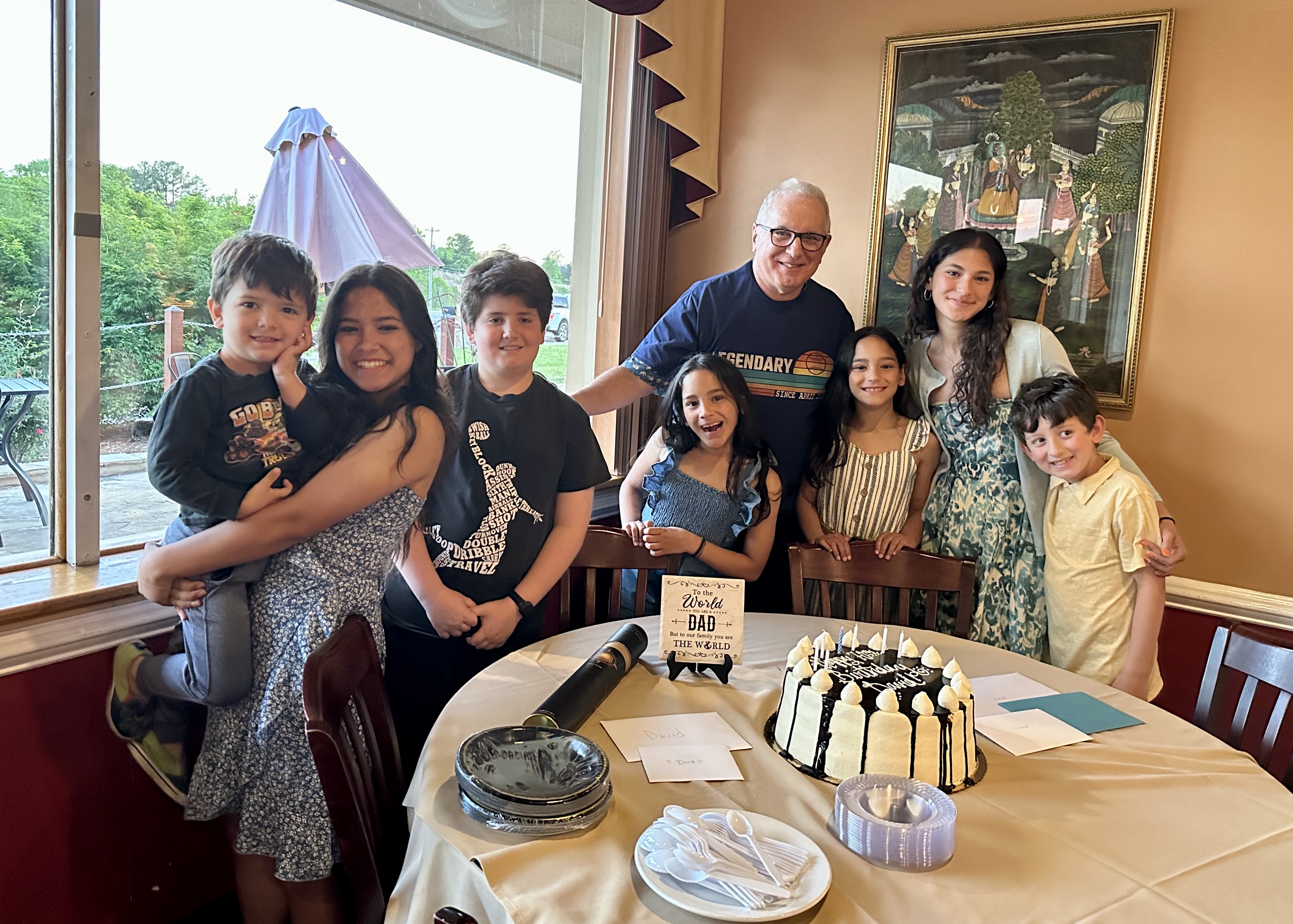
Celebrating my 70th birthday with my seven grandchildren

So maybe I’ve been filling up my schedule as a way to say: Hey, I’m still here. Or perhaps I’m overreacting to medical challenges I’ve had over the past couple of years, or to turning 70. My clock is ticking and I hear it even without hearing aids.

Whatever my motivations, I’ve been busy, perhaps too busy.

Speaking at a local retirement community

An older friend told me recently she’s been wrestling with the same issue. She said she’s finding it hard to juggle numerous volunteer roles with the informal help she provides to friends, family responsibilities, travel and everything else. She laughed that it’s hardly what she expected in “retirement.”

I have no regrets about my own “not exactly retired” life, which I’ve pursued since walking away from a busy job at the age of 62. I recognize how fortunate I’ve been to do this. But it’s never been a retirement in the sense of kicking back. Shortly after I began serving as a Peace Corps Volunteer in 2016, I wrote about my inability to ease up and move beyond the packed schedule of my previous life. I noted then how “I keep checking my cell phone for messages. I don’t go home until I’ve completed every item on my mental ‘to do’ list.”

I concluded that post by humorously vowing to pay closer attention when the Peace Corps staff told me again to be patient. “Really,” I promised, “I may even put a reminder in my electronic calendar.”

Visiting the Suomenlinna fortress in Helsinki

Now, seven years later, I remain just as persistent about making my days productive, whether it’s assisting a local community group or traveling to some foreign destination with Champa. I’m doing this mainly for myself but, at some level, I suppose I am also asserting my own relevance in a world that can make older people feel invisible.

In any case, I’m determined to make the most of this precious “not exactly retired” stage of my life when I no longer have the responsibilities of a formal job but am still able to contribute and thrive. All of these activities give my life meaning and I plan to keep doing them while I’m still … well, you know.

Expats in Moldova

They’re leading lives I’ve sometimes imagined for myself: American expats in Moldova who are running businesses, managing programs, assisting refugees and tackling other challenges far from home.

Many of them first came to Moldova as Peace Corps Volunteers, like us. Unlike us, they’ve made a new home here. We’re friends with several of them and it’s been fascinating this week to catch up on our lives.

Chris Flowers, a fellow former Volunteer, is now the country director for the American Councils, managing educational and cultural programs. He recently married a Moldovan attorney, Diana, who’s done heroic work assisting refugees, especially since Russia invaded Ukraine. We met up with them at an Uzbek restaurant.

David Smith opened and ran an American-style barbecue restaurant for several years. He’s also been active in the local small business community and writes a newsletter with excellent analyses of what’s happening in Moldova. He, too, married a Moldovan woman.

Andrew Blakely was two years behind me in leaving Duke University to serve in Peace Corps Moldova. Now he’s back with Church World Service, managing programs to assist Ukrainian refugees and others. He’s working with Casey O’Neill, who previously served in the Peace Corps group between ours.

Bartosz Gawarecki is here, too, working with refugees near Bălți, where he served as a Peace Corps Volunteer. Bartosz is the president of Friends of Moldova. When the war broke out, he left his business in Michigan to join David and others in rapidly creating some of the first centers to provide desperate Ukrainian families with food and assistance.

That’s Bartosz in the photo, in the white shirt, along with Joseph Lutz of Indiana, who’s returned as a Peace Corps Response Volunteer. He and I are working together, with Marjory David, on a project to establish a national Jewish museum here.

The American expat community also includes diplomats, teachers, missionaries and others, along with a Facebook group and other community resources. On Sunday, we reunited with a couple from Alabama, Kathryn and Brian, who lived near us in Ialoveni. They’ve devoted their lives to helping vulnerable young women avoid trafficking, a serious problem here. They live now in Chișinău and continue to pursue this mission along with efforts to promote better foster care and education for young people with disabilities.

I admire Kathryn and Brian, as I do everyone I’ve mentioned in this post. While so many Americans tear each other apart back home, they’re quietly making the world a better place. I could also have highlighted other Returned Peace Corps Volunteers (RPCVs) here, including Courtney Jackson, who’s working with refugees, or Kelsey Walters, who’s raising a family with her Moldovan husband and promoting new agricultural approaches. (Apologies to those not mentioned.)

Back in December, when Champa and I were in Nepal, we had lunch with another RPCV, Anne Kaufman, who served in Peace Corps Nepal a year behind me in the late 1970s. She married a Nepali man, Raju, and has lived mostly in Kathmandu, working with development organizations and raising two daughters. For me, she represented the road not taken, the life I might have had if Champa and I had remained in Nepal instead of moving to America.

I don’t regret our decision. I’ve loved our life back home, especially our family, but this trip has been a reminder that it’s also possible to pursue a rich, impactful existence abroad, especially if it’s in a country you already know. The roads before us are far wider than many Americans realize.

Seeing in New Ways

Have you ever thought of Baghdad as a “city of peace” and “a miracle”?

Me neither, but that’s how it was described in an exhibit we visited recently — not in Iraq, but at the National Museum of Qatar.

Several of the exhibits there reminded me that people around the world see things very differently than we do in the United States, regardless of who is “right.” Another one highlighted the collapse of the global pearling industry, which was devastating to Qatar but unknown to me. An exhibit about the “Ramadan Blockade” described how Qatar was blockaded by several neighbors a few years ago. I barely remembered that happening.

The museum, which opened in 2019 with a design evocative of a desert rose, wasn’t the only one in Doha that made me think in new ways. Across town, at the Museum of Islamic Art, an exhibit examined how Lawrence of Arabia and other films have contributed to Western misunderstanding of the Arab world. Another gallery showed how modernity has brought prosperity to Islamic nations while upending local traditions.

Both museums featured stunning architecture and beautiful exhibits. Neither was especially political; on the contrary, both were designed to appeal to broad international audiences. Inevitably, though, they reflected the perspective of a society that, for all of its wealth and rapid modernization, still differs from our own.

This is why I love to travel. It challenges my assumptions and broadens my perspective, no matter where we go.

Shortly before we flew to Qatar, for example, we had lunch at the Kathmandu home of two old friends. Here’s what I saw on the gate outside their house:

If you’re startled to see a swastika displayed so proudly, much less beside a Star of David, think about your own vantage point. Swastikas were sacred symbols in Hinduism long before they were linked to Hitler. The six-pointed star, which we associate with Judaism, is also a Hindu symbol. Both symbols are common in Nepal and have nothing to do with Nazism or Judaism, at least in the local context.

Or consider this statue we saw in Ilam, Champa’s home town. It honors Ratna Bantawa, a local Communist leader who opposed Nepal’s former king. Ratna and his brother were denounced as terrorists and killed for their activities. Today Ratna’s memory is celebrated. There’s a road named after him. Communists now play a prominent role in Nepali politics even as “communist” remains an epithet in our own country.

My point here isn’t to debate Iraqi history or communism, just to note how travel changes our perceptions. This latest trip reminded me of something I wrote several years ago after returning to Moldova from a trip to Bulgaria and Romania: “One of the things for which I’m most grateful about serving in the Peace Corps is how it’s made me less fearful about traveling to places that seem exotic or dangerous to some Americans even though they’re actually safe, beautiful, fascinating and cheap.”

As I wrote then, “you hardly need to have served abroad to expand your horizons a bit. … There’s a big world waiting beyond the American comfort zone” for those of us fortunate enough to be able to travel, a privilege the two of us never take for granted.

That big, mysterious, fascinating world is still there and still waiting. Now that the pandemic has eased, I hope more Americans will explore it, as we hope to keep doing ourselves.

Video of Nepal Trip

45 years after we fell in love in Nepal, we returned with our son, his wife and our granddaughters to bring our global family together. Also on YouTube.