

I was deeply saddened by the funicular tram accident in Lisbon on Wednesday, which claimed 15 lives, including foreign tourists.
I could have been one of them, since we rode this tram when we visited Portugal last year. I remember spotting it from the Bairro Alto neighborhood where we were staying, right after we passed the street demonstration shown below. We rode the tram later and I snapped the photo atop this post.

The crash illustrates why some people fear traveling, especially to foreign countries: Something terrible might happen to them. They feel safer staying close to home.
I know from personal experience that bad things do indeed happen around the world.

In Sri Lanka, where we traveled earlier this year, the 2004 tsunami rose to the height of this Buddha’s head, killing tens of thousands of people. As in Portugal, we were lucky to not be there when this happened.

In 2015, we visited Nepal shortly after an earthquake killed nearly 9,000 people and caused extensive damage, as with this rubble pile near where we stayed. The earthquake could have struck while we were there.

We’ve also visited countries where we saw frequent reminders of recent wars and bloody violence. This exhibit is at the War Remnants Museum in Ho Chi Minh City in Vietnam, which we visited two years ago.

In neighboring Cambodia, we visited the Tuol Sleng Genocide Museum in Phnom Penh, with its chilling displays of the Khmer Rouge’s brutal reign.

Last year we saw this small memorial in the Plaza de Mayo of Buenos Aires. It honors the mothers who bravely protested the “disappearance” of their children during Argentina’s military dictatorship.
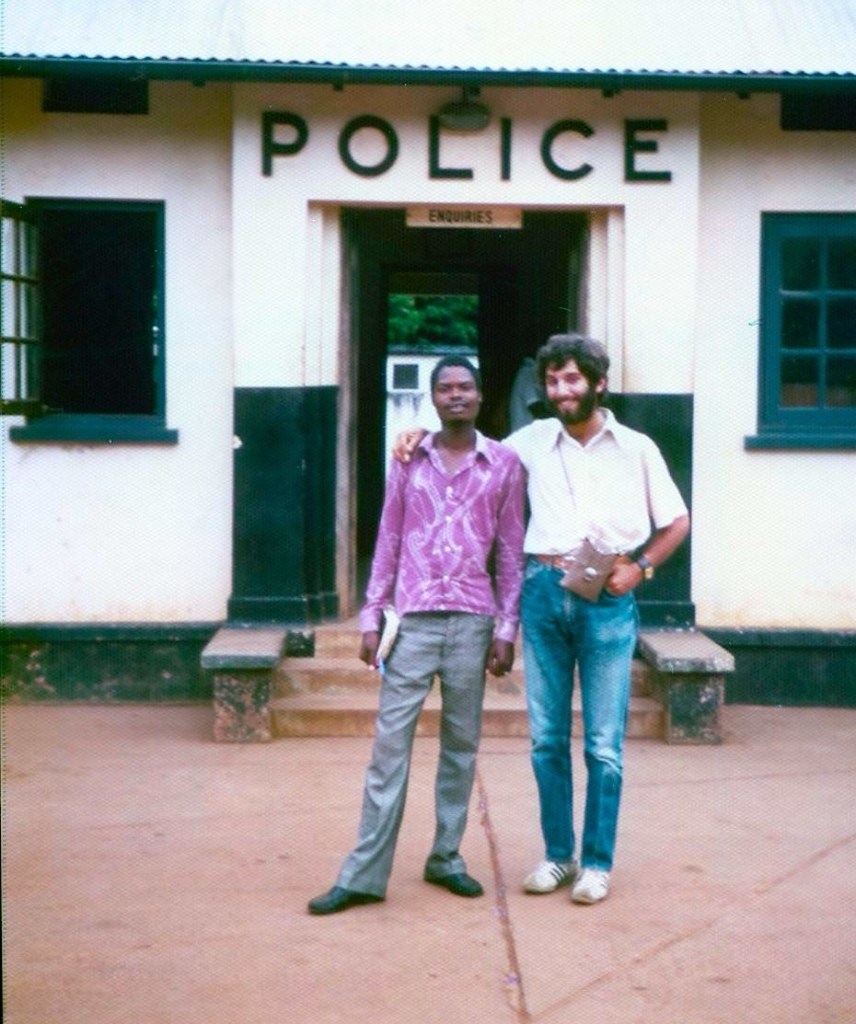
So I’ve seen plenty of examples of things going badly around the world, and I haven’t always been able to avoid them. Back in 1976, I made the mistake of visiting Uganda when it was ruled by the dictator Idi Amin. This photo shows me with a guy we met on the train while traveling there from Kenya. My friend, Mitch, and I were detained at this police station in Gulu and suspected of being spies. We were lucky to leave Uganda unharmed.

But bad things happen in our country, too. This photo shows Champa checking out the menu at a restaurant in Maui where we celebrated a special wedding anniversary in 2019. A few years later, much of Lahaina was destroyed by a wildfire, including this restaurant and the Airbnb where we stayed. They’re all gone, and it could have happened while we were there.
Some people we meet during our travels are scared to come to the United States because of all of our shootings and other violence, not to mention feeling unwelcome as foreigners. When I look at some recent notable shootings — Minneapolis, Las Vegas, Orlando and many more — I say to myself: Been there. Been there. Been there. In other words, just as with the tram in Lisbon, I was in the wrong place but at the right time. So here I still am.

Now here’s another shot from our Portugal trip, taken in the Douro Valley, the renowned wine region. As you can see, we thoroughly enjoyed our visit there. It was a wonderful day, one we would never have experienced if we’d stayed home, where we could have died in some random accident anyway. And it was just one day in one trip in one country of the many we’ve been fortunate to visit.

I’m writing this in Dubrovnik, Croatia, a place I’d long hoped to see for myself. It’s even more stunning than I expected. Tomorrow we’re heading to Bosnia and Herzegovina, where we’ll confront the horrors of the 1990s conflict, including in Sarajevo, but also meet interesting people, try new foods and learn about a country that cannot be defined only by its worst moments.
My heart goes out to all of the victims of the Lisbon tragedy, and their families, both Portuguese and foreign. Having traveled where their loved ones died, I feel a connection to their loss. But I will not let breathless news reports, recency bias or anecdotal evidence distort my assessment of actual danger, which I still consider very low if I’m careful.
That’s true back home and it’s true on the road. My conclusion is to keep traveling, enthusiastically, mindful of potential dangers but realistic about how dangerous they really are.







 "Not Exactly Retired"