
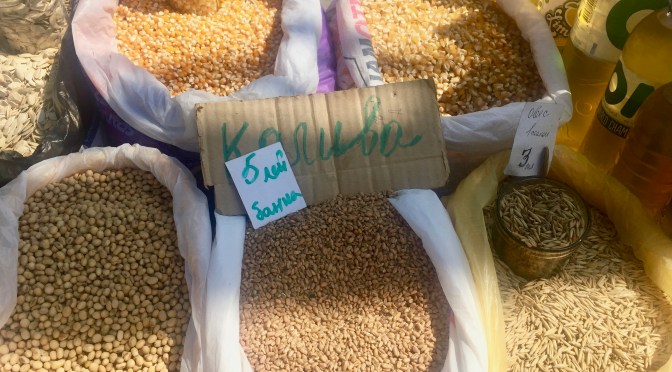
Tomatoes are abundant in Moldova right now. So are cucumbers, peppers, grapes, potatoes and many other delicious fruits and vegetables.


On Sunday, Champa and I visited the farmers market in Hîncești, a regional center southwest of Ialoveni. We filled several bags with produce from farmers who gather in the outdoor market three days a week. Our host family invited us to join them on a shopping trip there followed by a visit to the Manuc Bey museum and mansion.
As I wrote recently about my peach pie, one can buy produce from farmers in Ialoveni along the sidewalks, but the Hîncești market offers a wider selection.
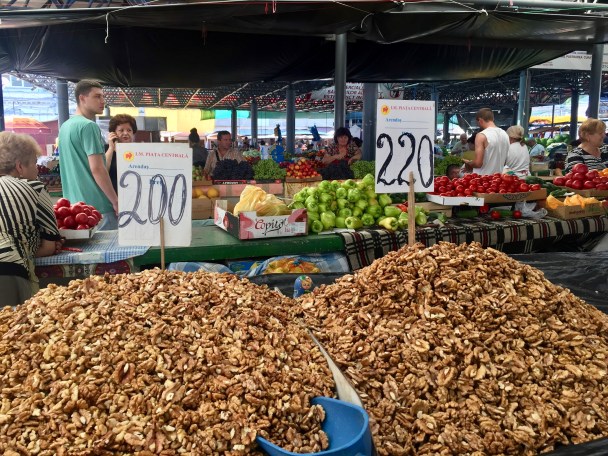
It’s still much smaller, of course, than the central market in the capital, Chișinău, shown above, where vendors gather daily to sell everything from walnuts to watermelons.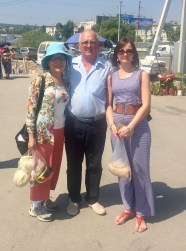
In Hîncești, there’s also an indoor pavilion where people sell meats and cheeses. Champa and I bought a big piece of brinza there, similar to Greek feta. It’s in one of the bags she’s holding next to Mihail and Alisa.
Most Moldovan vendors have electronic scales with which they weigh items and calculate prices. They may fill a bag with a bit more than requested, hoping to nudge up the purchase, but they’re ready to trim it back to the specified amount if asked.


My Romanian is now good enough that I often stop to chat after I buy something. The vendors are generally curious about us and enjoy our efforts to converse.
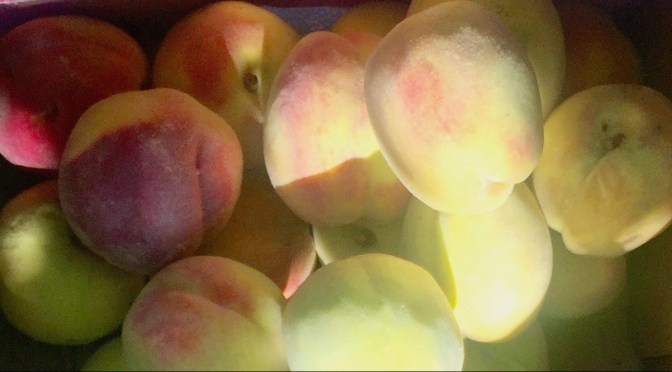
Occasionally, one of them surprises us by speaking English, like the guy you see in the 3-second video clip below. He startled me on Sunday by telling me to “have a nice day!” after I bought some peaches. I couldn’t leave without asking him to do it again for the camera so all of you could enjoy him, too.


 The husband, who spoke some English, encouraged his wife to try saying “peach pie.” They also asked me several questions about what Champa and I are doing with the Peace Corps.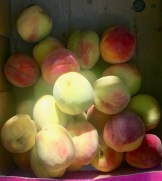


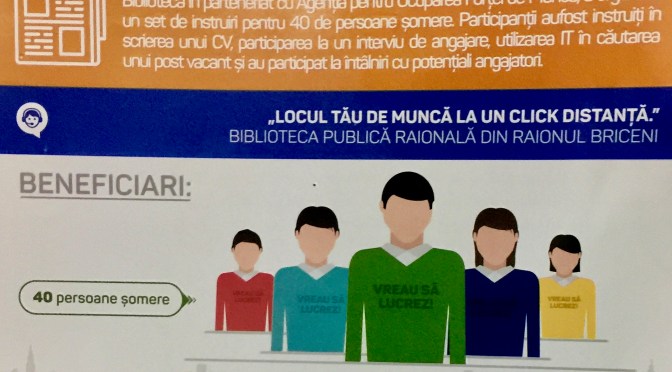

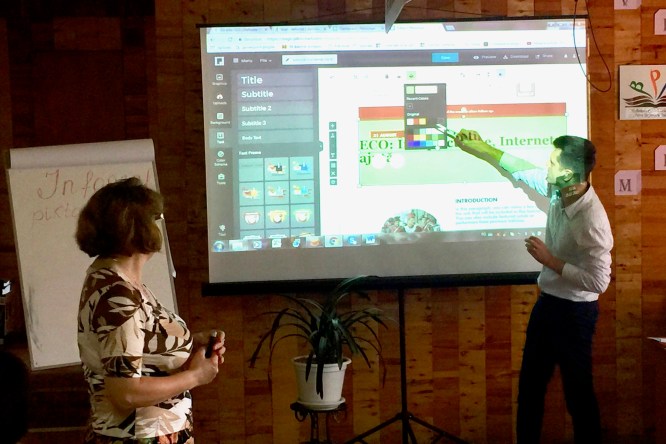
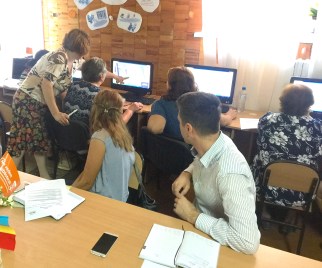 My library colleague, Lidia Rusu (shown left, pointing at the computer), led the training with enthusiasm and patience. By the end of the session almost all of the participants, even those with limited computer skills, were producing infographics more than nice enough to use immediately.


 The library has interesting exhibits and memorabilia about Vangheli. It is marking its own 25th anniversary this year, so Ialoveni has been celebrating both the facility and its namesake, who lives nearby in Chișinău. The Vangheli library is tucked away on a small street near the heart of Ialoveni, not far from the city’s main library, which also has a nice collection and programs for children, including a weekly English class taught by Champa.


 One big difference in Moldova, though, is that everyone is addressed as “Domnul” or “Doamna” — Sir or Madam. And when it comes time to schedule the next meeting, they’re more likely to check their paper daybooks instead of the electronic calendar on their smartphone.


 They dribbled wine on the graves and left behind food and candles. The mood was friendly but subdued and respectful.
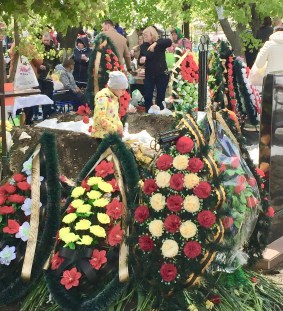 Paştele Blajinilor, which traces it origins back to pre-Christian times, is celebrated widely in Moldova and parts of neighboring Romania. It reminded me of the Mexican holiday Día de los Muertos, although the religious significance is quite different since it coincides with Easter instead of Halloween.
 "Not Exactly Retired"