Tag Archives: Champa Jarmul

Samalbung’s New School

The new school we’ve been helping to build in a Nepalese village has finally opened!

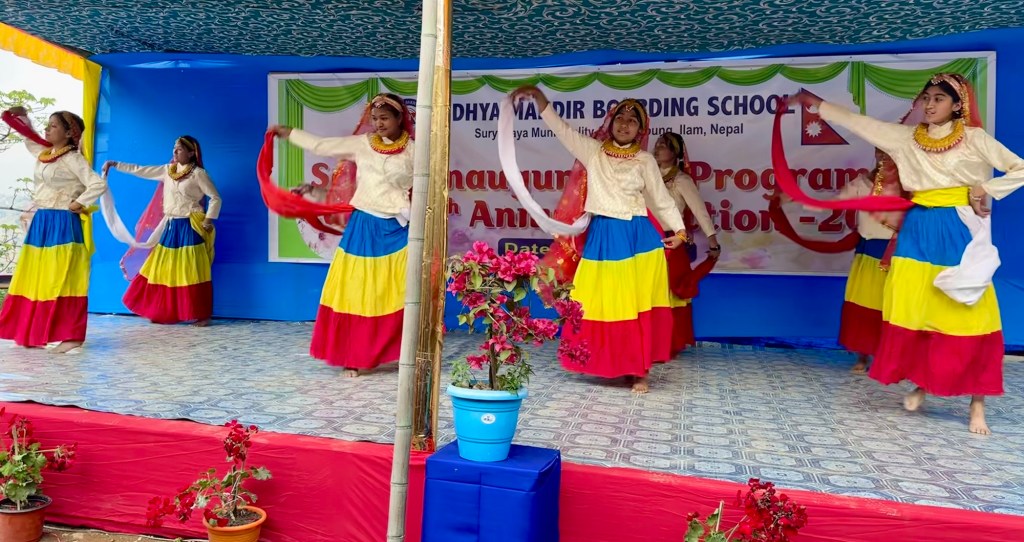
The local community dedicated it on April 30 in a colorful ceremony filled with dances, songs, speeches and food. We traveled there to join the celebration.

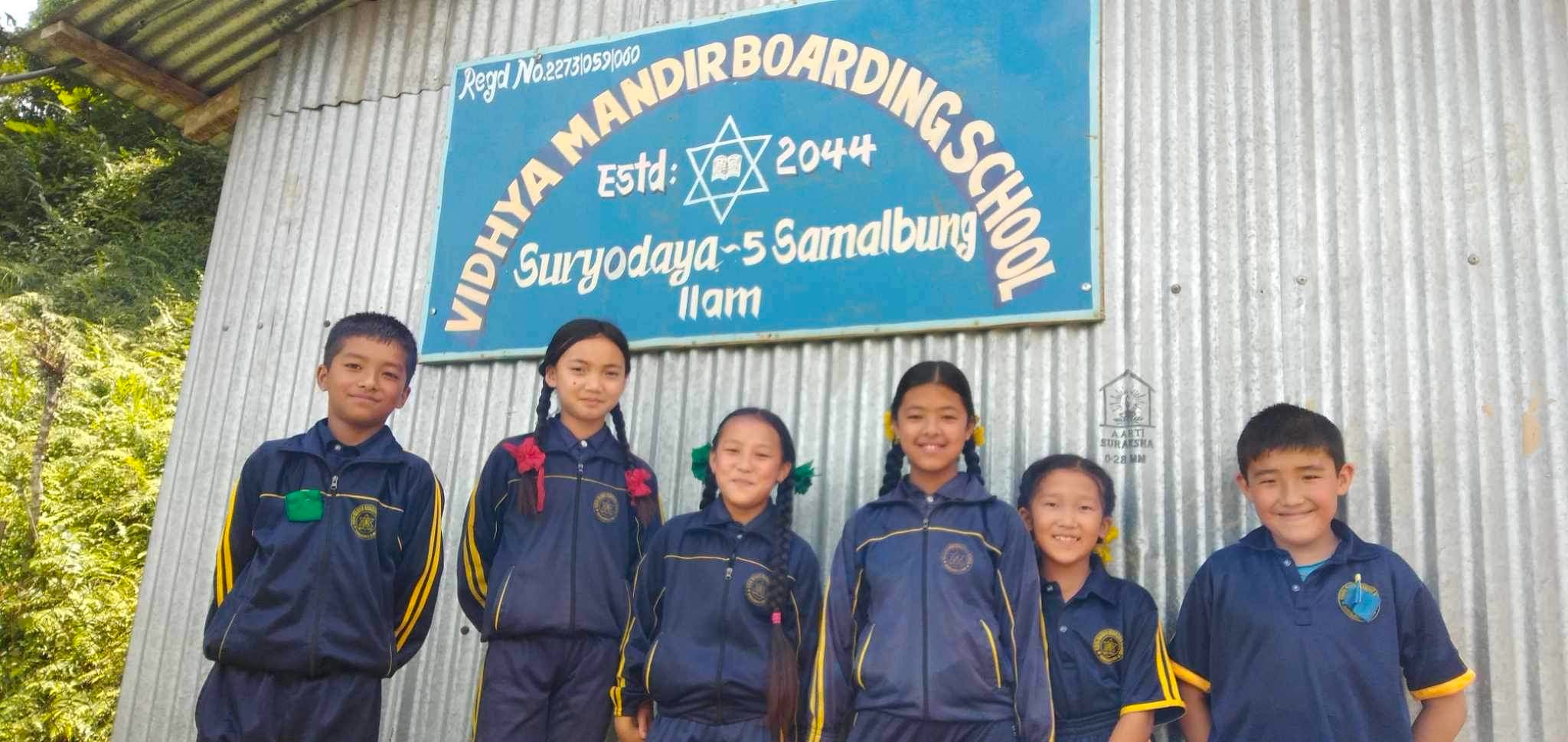
The school is more beautiful than we’d dared to dream and the community couldn’t be happier. 

The Vidhya Mandir Boarding School in the eastern village of Samalbung has 126 students, many from indigenous and marginalized groups. School fees are low and some students receive full or partial scholarships. 

The attractive two-story structure, with a lovely view of the Himalayas, is a huge improvement over the previous school, which was in terrible condition. The students now have a much brighter future. 
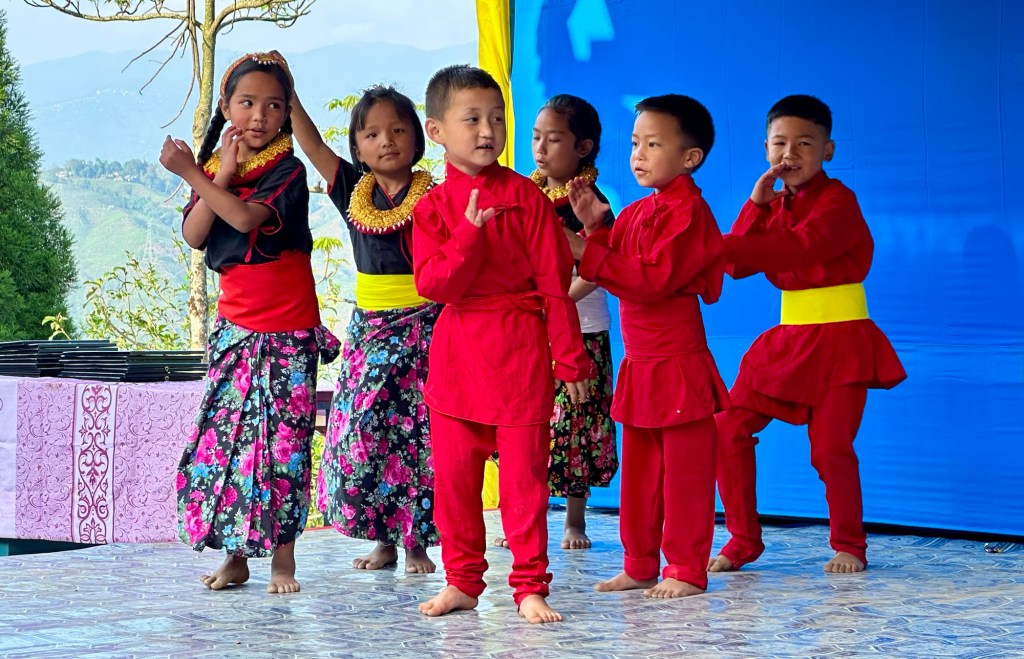
The two of us have spent the past year working with a team at the school to design and construct the new building. We also raised funds for the project through a GoFundMe site and direct contributions. 

We were overwhelmed by the response from family, friends, Not Exactly Retired readers, Returned Peace Corps Volunteers, Friends of Nepal and others. 
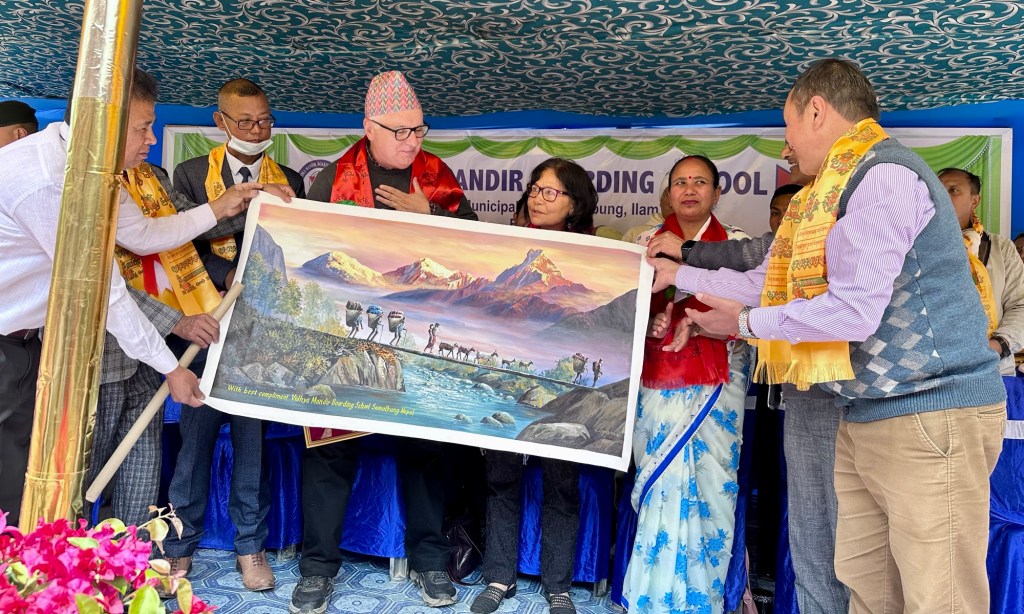
Their generous contributions totaled more than $24,000, which covered a significant share of the costs. The two of us funded most of the budget. The school community prepared the site, donated money, contributed labor and supported the school in other ways, from providing wood from their trees to feeding the workers.

I’ve posted some photos here and produced a short video so you can see the new school and celebration for yourself. You can watch the video above or on YouTube.
We are grateful to everyone who opened their hearts (and wallets) to assist these young people. We extend special thanks to Santosh Khapung, Bindu Suwal, Shankar Limbu, and Pooja and Sabin Shrestha for all of their help to us during this project. 

Thank you — and enjoy the video

The Tea About Ilam

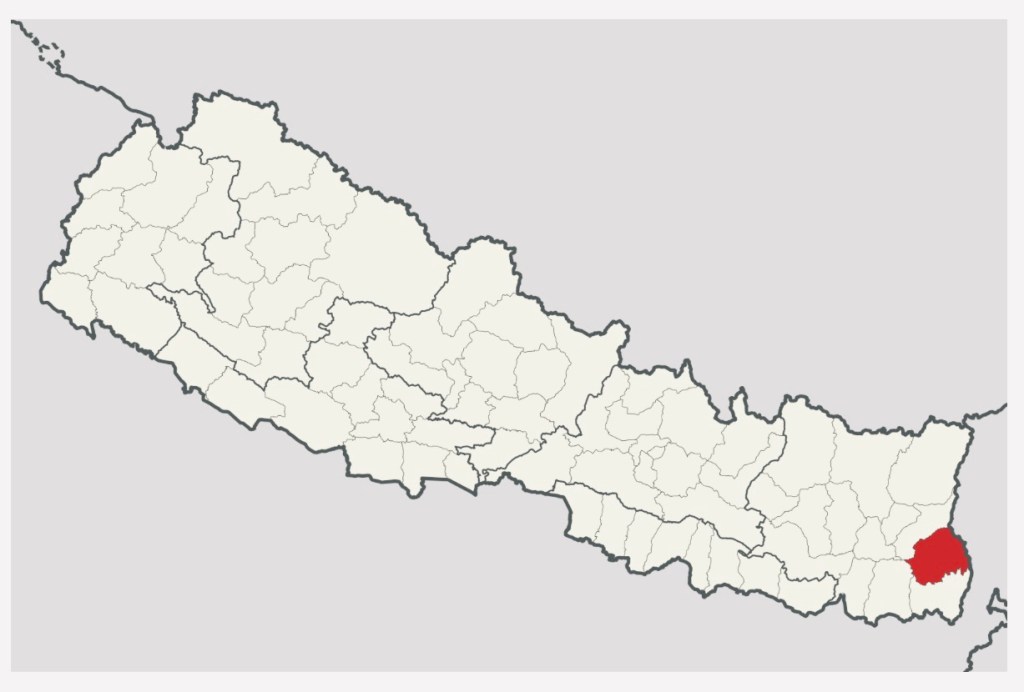
Champa’s hometown of Ilam, Nepal, is bustling these days with new shops, banks, bakeries, schools, hotels and people.

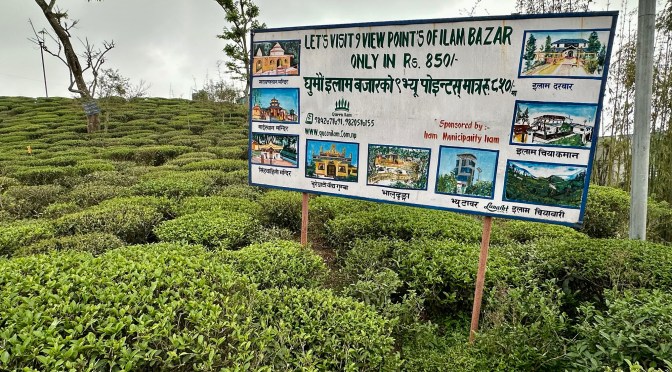
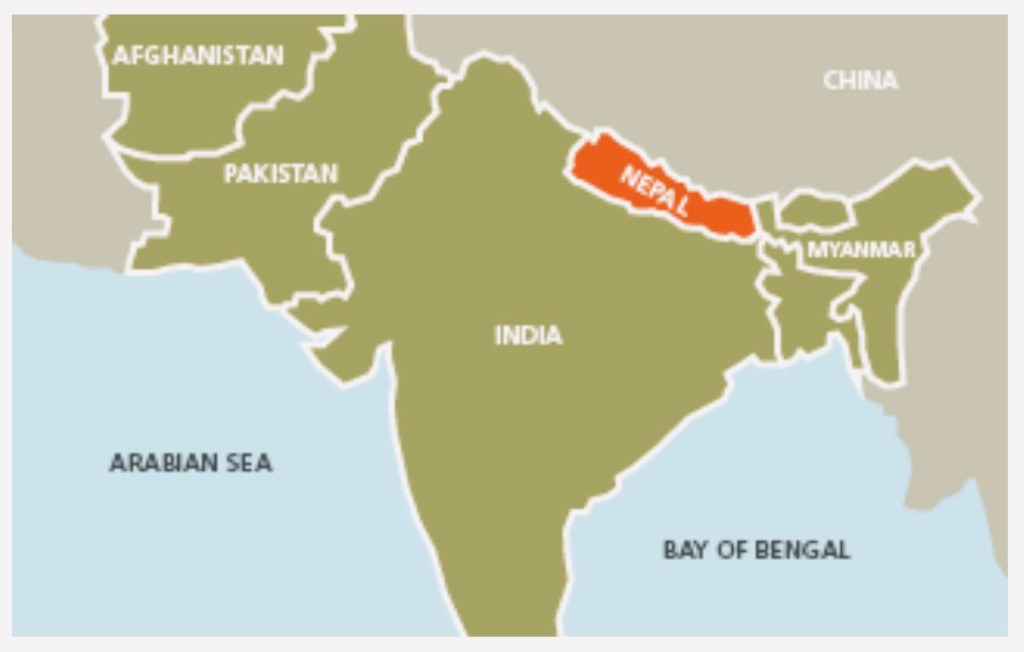
But it’s still best known for tea. Lush plantations surround this town whose population now exceeds 50,000. Ilam is the heart of Nepal’s tea industry, with rolling hills, terraced plantations, and a favorable climate and soil that yield a product similar to the better-known tea of neighboring Darjeeling, India.

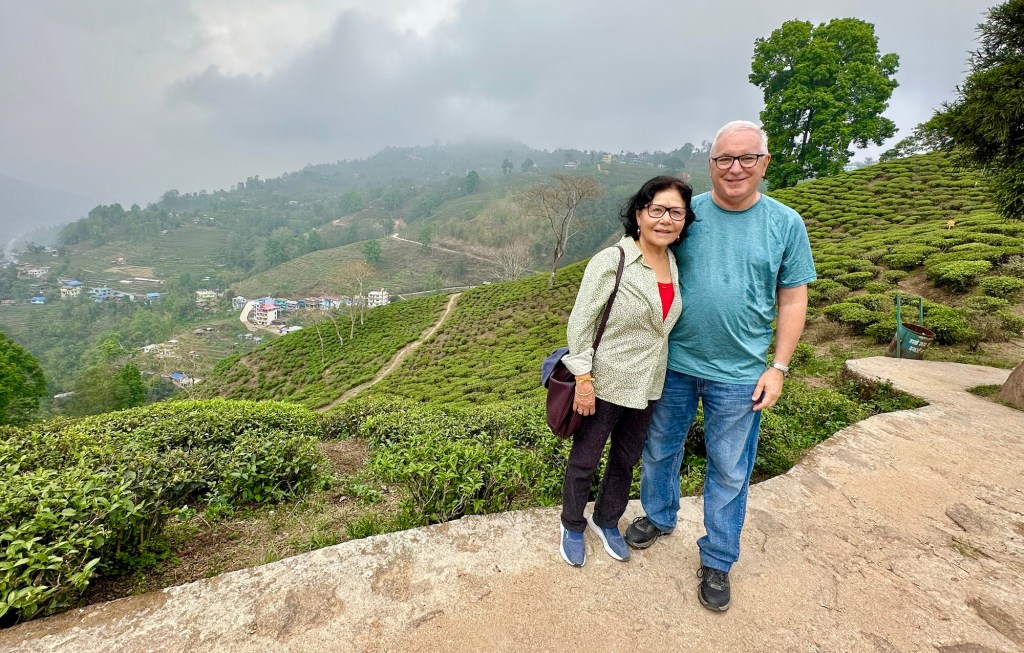
We traveled here several days ago, mainly to visit with family and friends. But we’ve also taken time to explore the bazaar and stroll beside the tea gardens, as you see here with our niece Mangila and some of our grandnieces and grandnephew.

After one walk, we stopped at a shop where I treated all of the kids to ice cream, something that was unavailable when I served in the Peace Corps here in the late 1970s.

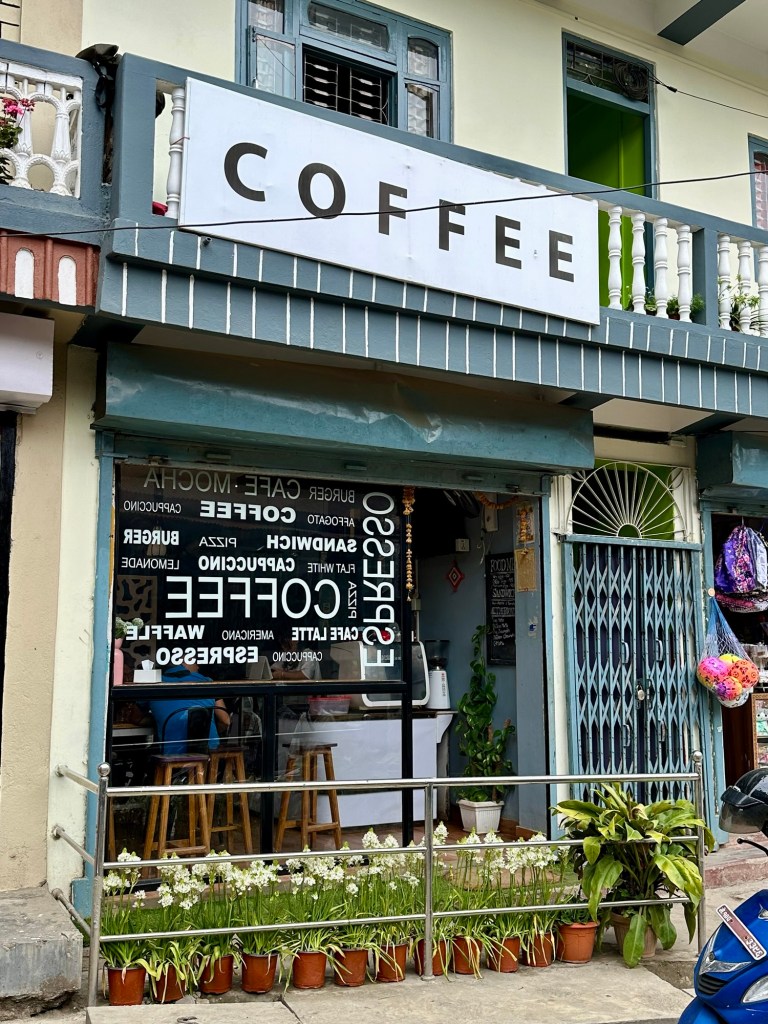
There was a single bakery back then, selling only white bread. Now there are several, with display cases featuring fancy birthday cakes. This tea-growing center even has a coffee shop where you can order a cappuccino.

Something else that was unimaginable when I lived here was cheese. Now there’s a nearby cheese factory run by a Sherpa entrepreneur who learned cheese-making from Swiss experts. He makes a delicious hard cheese that we sampled and brought home to eat.

Ilam’s food scene is not the only thing that’s changed. Notably, there are now vehicles everywhere — mainly motorcycles and scooters, but also buses, jeeps, cars and auto rickshaws. I also discovered some new sights, for me at least, such as a tea garden statue honoring the Limbu ethnic group and the Bhaludhunga ecological park

At almost every turn, I’ve been reminded what a beautiful and interesting place this is. I wish more people knew about it, especially foreign visitors looking to escape Kathmandu’s craziness and discover the “real Nepal.”

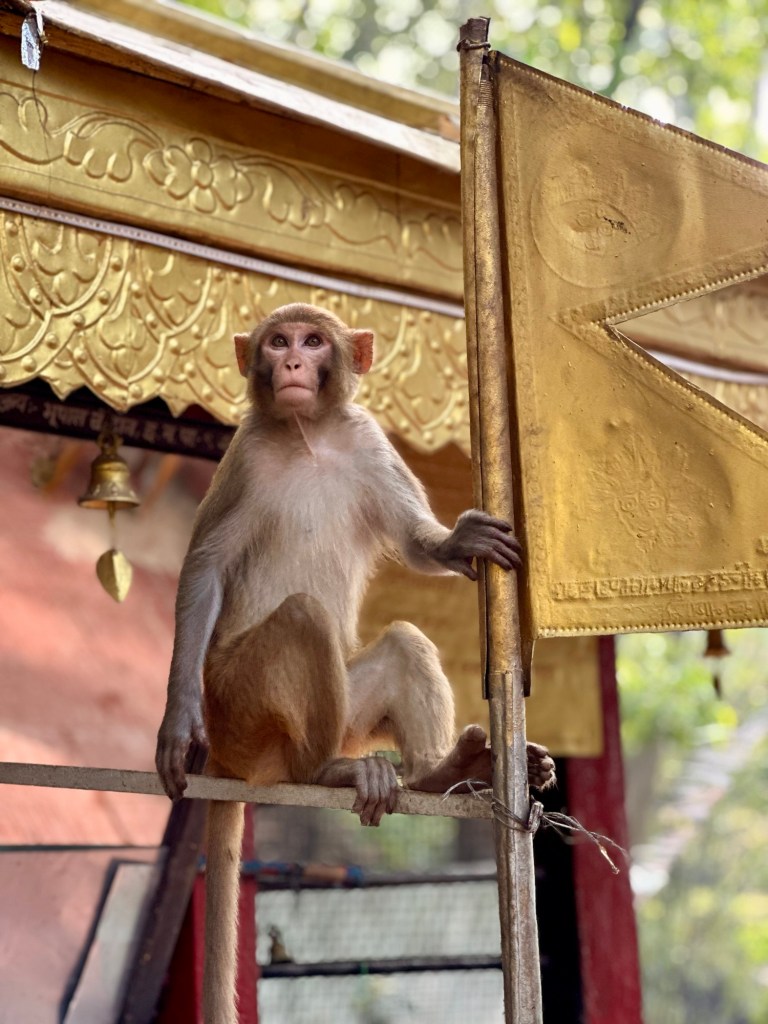
Ilam is relatively easy to reach. It’s a quick flight from Kathmandu to Bhadrapur followed by a 3-4 hour jeep ride on a winding road that is in generally good condition. Good, inexpensive hotels are available. The air is clear. The view is gorgeous when there’s no fog. Monkeys await you at the temples and Ilam’s friendly people are eager to meet you, too.

You should come see for yourself, even if you’re not a tea enthusiast.

Liberty’s Sunset

We visited the Statue of Liberty this past weekend and I found myself wondering whether they will soon be adding “Don’t” to the front of the famous poem by Emma Lazarus.

“Give me your tired, your poor, your huddled masses yearning to breathe free, the wretched refuse of your teeming shore,” the poem says. “Send these, the homeless, tempest-tost to me, I lift my lamp beside the golden door.”

Don’t give me your tired, your poor” sounds about right these days, the way things are going. For good measure, they could add a warning about immigrants eating dogs and cats.

In the wake of the recent election, I found it disheartening to visit Lady Liberty, which greeted my grandparents more than a century ago. Champa and I went there with our son and his family during a family get-together in New York.

Our four granddaughters were especially excited to see the names of their great-great-grandparents on the Wall of Honor at Ellis Island. These were my dad’s parents, Reuben and Sarah Jarmul, who both came to New York after fleeing religious persecution in Eastern Europe. My mother’s family came from Germany a few decades later, narrowly escaping the Holocaust in Germany.

Today’s refugees will not be so lucky — and their situation is just one of many issues that make me despair about what lies ahead during the next four years.

Several months ago, I wrote about how we were considering a post-election Plan B focused on “slow travel,” which has become popular among older Americans and is substantially less expensive than many people assume. Now this has become our Plan A. We’re going to keep our home in Durham, at least for now, but will spend much of our time elsewhere around the world. We think it’s our best way to stay sane during the next four years.

We could change our minds. Maybe the next Trump presidency will be less tumultuous than we expect. Maybe we’ll experience a health setback, a family crisis or something else. Maybe we’ll get tired of the road. Serving in the Peace Corps and traveling frequently have made us comfortable with uncertainty and foreign adventure.

For now, though, we need to get away, although we’ll remain engaged and seek new opportunities to serve as volunteers. In three weeks, we’re leaving on an extended trip to Australia and New Zealand, and we have other trips planned after that.

As we head for other shores, we’ll keep Lady Liberty in our hearts. My last glimpse of her this past weekend was from the ferry returning us from Ellis Island to New York’s Battery Park. It was sunset and the sky was bathed in red. As I gazed behind us, across the harbor where my grandparents came to find safety and freedom, I watched the statue’s outstretched lamp as it slowly faded into the gathering darkness. 

I hope it will shine more brightly when we come back.

Five-Year Photos

Exactly 20 years ago today,  Champa and I were having dinner at a local restaurant. When she went to the restroom, I signaled to our waiter to bring out a flower bouquet and gift I’d dropped off earlier. I gave them to her when she returned and our waiter brought us a special cake and champagne.

Everyone sitting near us broke into applause when Champa gave me a kiss. “Did you just get engaged?” someone asked. “No, but it’s our 25th anniversary today,” I responded, which led to more applause.

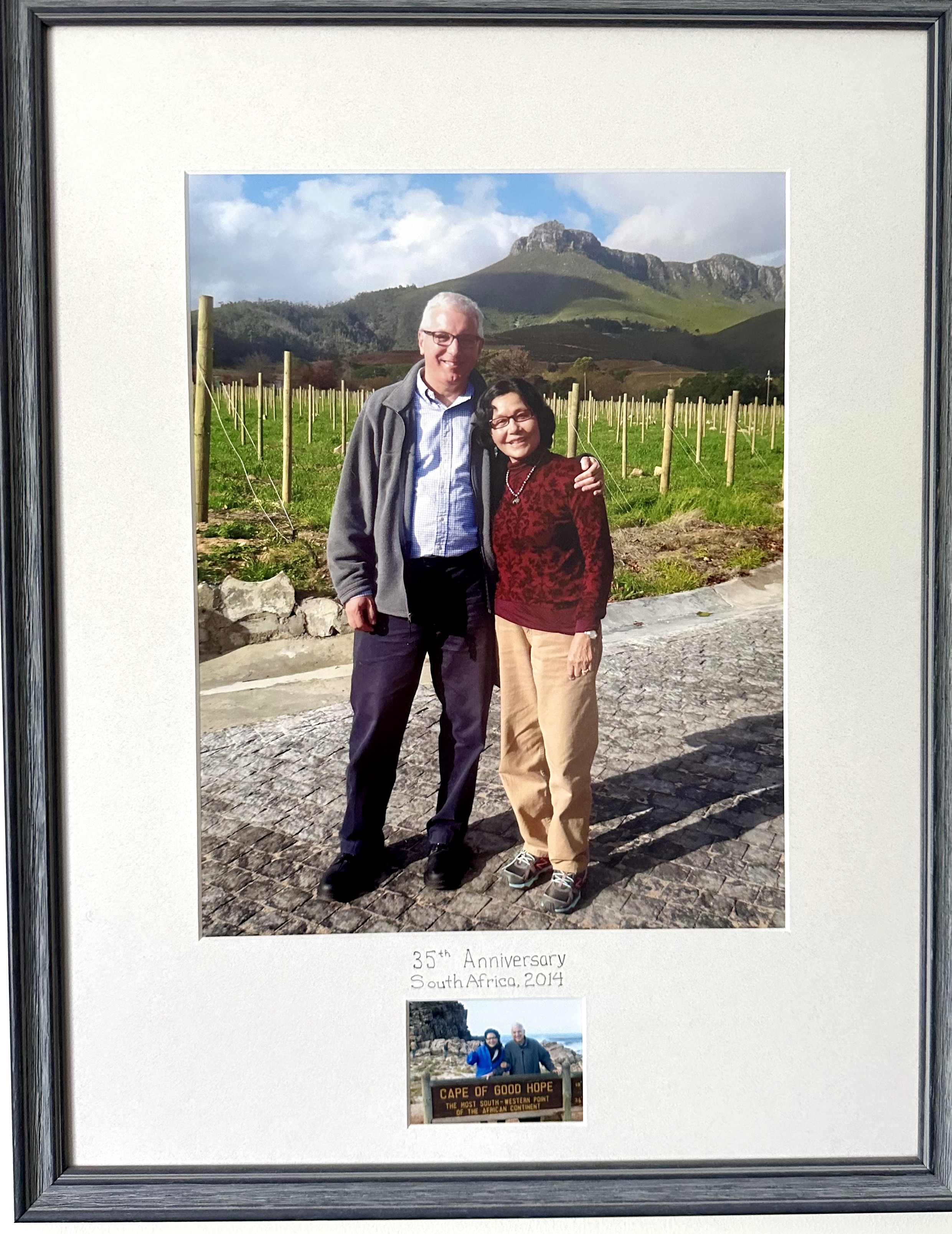
Champa and I have never forgotten that moment. Every five years since then we’ve celebrated our five-year anniversaries with a special trip and an updated version of the gift I gave her in 2004: a framed photo of the trip we’d just taken. The first photo, below, was from Switzerland, with a smaller photo underneath it taken shortly after we got engaged in Nepal.

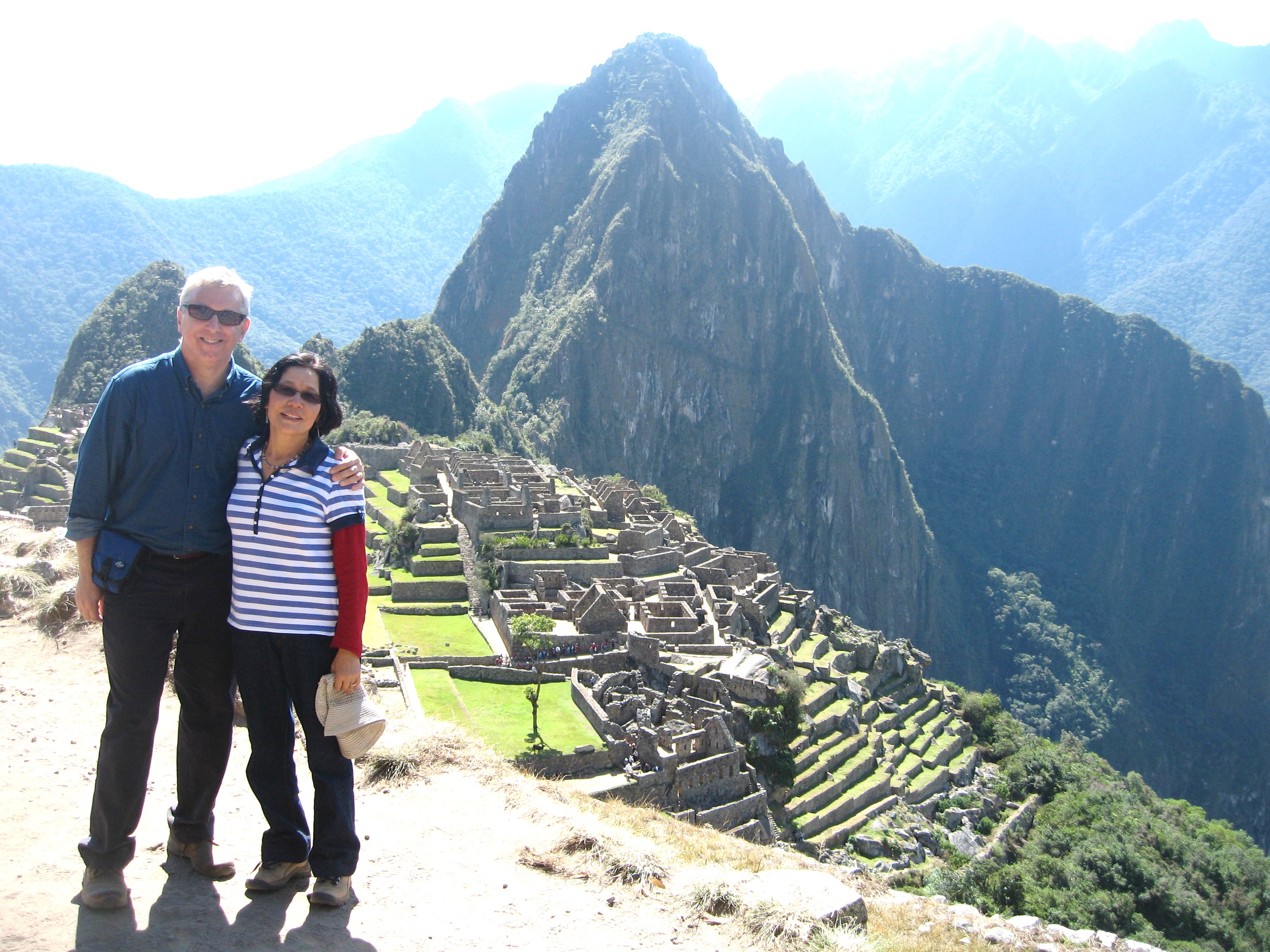
Five years later, for our 30th anniverary, we went to Machu Picchu, in Peru. 

For our 35th, we traveled to South Africa, including the winery shown in the photo.

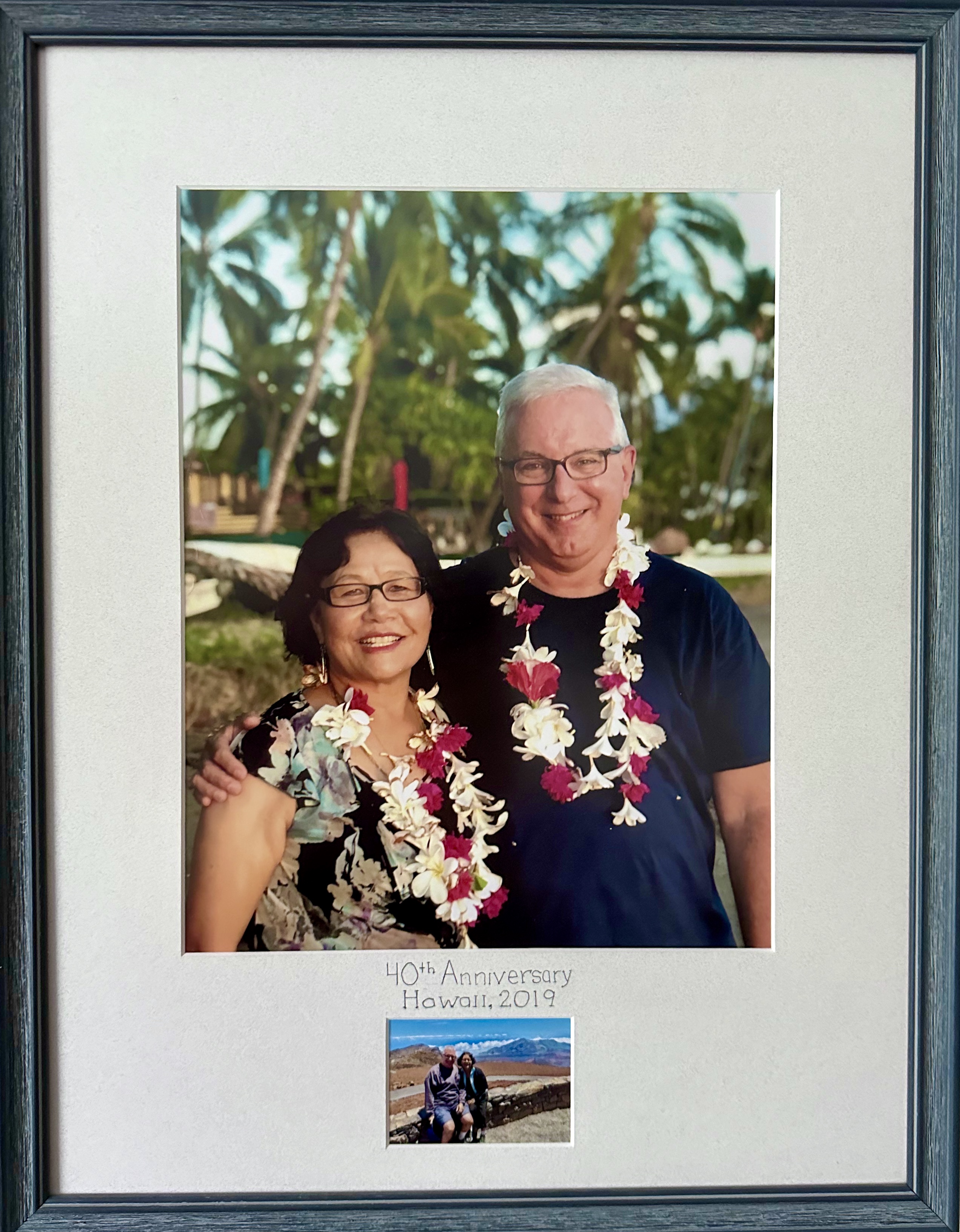
Five years ago, we celebrated our 40th anniversary in Hawaii. The photo we framed from that trip now saddens us since we took it on the beach in Lahaina. We were next to our Airbnb there, which burned to the ground during the horrific Maui fires last year.

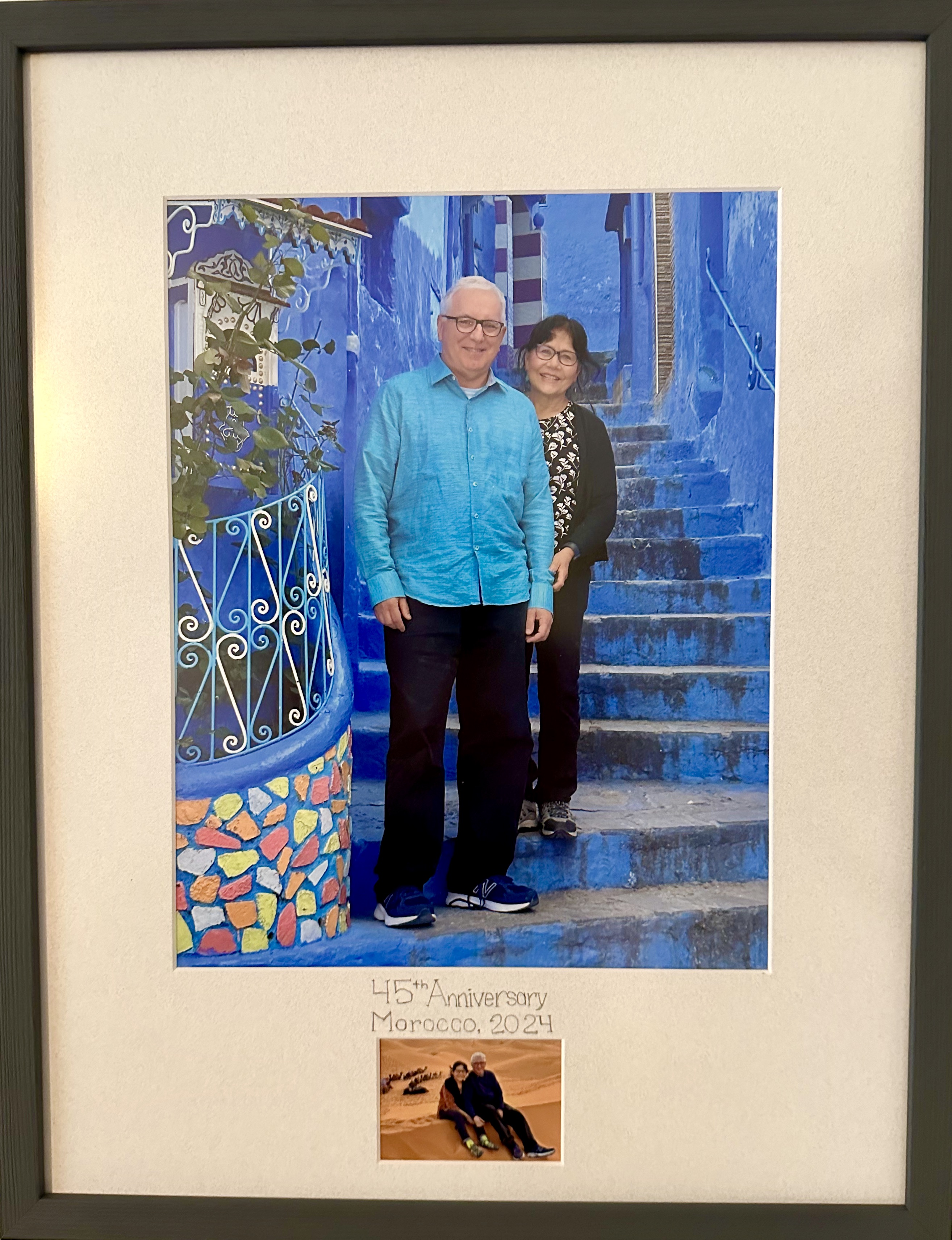
Today is our 45th anniversary and we’re adding the latest photo to our collection, this one from our recent trip to Morocco.

As with all of the others, the frame actually shows two photos — a main shot and a smaller one from elsewhere during the trip. They all hang in our family room. Every time I look at the collection, I’m reminded how fortunate we’ve been to travel so widely, especially since we “not exactly retired” nine years ago. The photos also remind me how lucky Champa and I are to still be together — getting older, to be sure, but still enjoying life and each other.

We haven’t decided yet where to shoot our next photo, assuming we’re still able to travel. We have five years to decide. Today we’ll just celebrate anew that a boy from Long Island and a girl from Nepal found each other and fell in love.


NEPAL SCHOOL UPDATE

The school we’re helping to build in Nepal is progressing nicely. Thanks to the generous support of Not Exactly Retired readers and others, we’ve nearly reached our financial goal. If you haven’t already, please donate on our GoFundMe site or, to avoid their fees, contact me directly. All donors will have their names honored in the new school. On behalf of the students and teachers in Samalbung, thank you!

Artist in Residence

Behold this homage to former President Obama, the newest work from a talented North Carolina artist who was born in Nepal and also lived in Moldova. 

Yes, it’s Champa, whose paintings, collages and other work fill our home with beauty. Here are the three paintings you see when you enter our house:

And here are the two paintings in our living room:

Over the years, Champa has taken classes with the Durham Arts Council, OLLI at Duke and The ArtsCenter in Carrboro. She’s learned oil painting, watercolor, acrylics, drawing, ceramics, fused glass, hot-wax painting, felt art, silk painting, jewelry making, quilting and even art made from postcards or fused plastic bags. Here are some examples of her earlier work:

A few years ago, she settled on her current style, a mixed-media combination of collage and painting. She’s used it to create works like the Obama piece and one-of-a-kind gifts for our family and friends, such as this one for our youngest grandson.

Champa and I enjoy traveling and doing things together, but a secret to our happy marriage is that we spend most of our daytime hours pursuing our own interests — art and gardening for her, writing and volunteering for me. I’m her biggest fan and, ever since I started this blog in 2015, I’ve wanted to feature or at least mention her art. She always said no, preferring to keep it private until she developed her own style.

I’m not objective but I think the wait was worth it. When an artist friend of ours visited recently, I made the mistake of referring to “Champa’s hobby.” She corrected me, saying, “it used to be a hobby for Champa. Now she’s an artist.”

I couldn’t agree more. Our artist in residence is already working on her next piece and I can’t wait to see how it turns out.

A Dozen Wonders

What’s the most amazing place you’ve ever seen?

I’ve been thinking about that since visiting Angkor Wat during our recent trip to Southeast Asia. The ancient Cambodian temple complex was extraordinary — worth the journey all by itself.

But was it more extraordinary than, say, the Pyramids? And are timeless wonders like these more compelling than newer landmarks like Hagia Sophia in Istanbul or Christ the Redeemer in Rio, or natural wonders like Mount Everest and the Grand Canyon? 

I’ve visited all of these places and have always resisted ranking them, even though it feels these days like everything is supposed to be ranked, from restaurants to sports stars. In this case, it’s like comparing a rose’s scent to a crisp apple.

The best I can do, fully acknowledging how fortunate I’ve been to travel so widely, is compile a list. Here in alphabetical order is my personal Ancient Dozen places built outside the United States, no more than one per country:


Angkor Wat, Siem Reap, Cambodia

Its architecture, art and scale are all stunning.


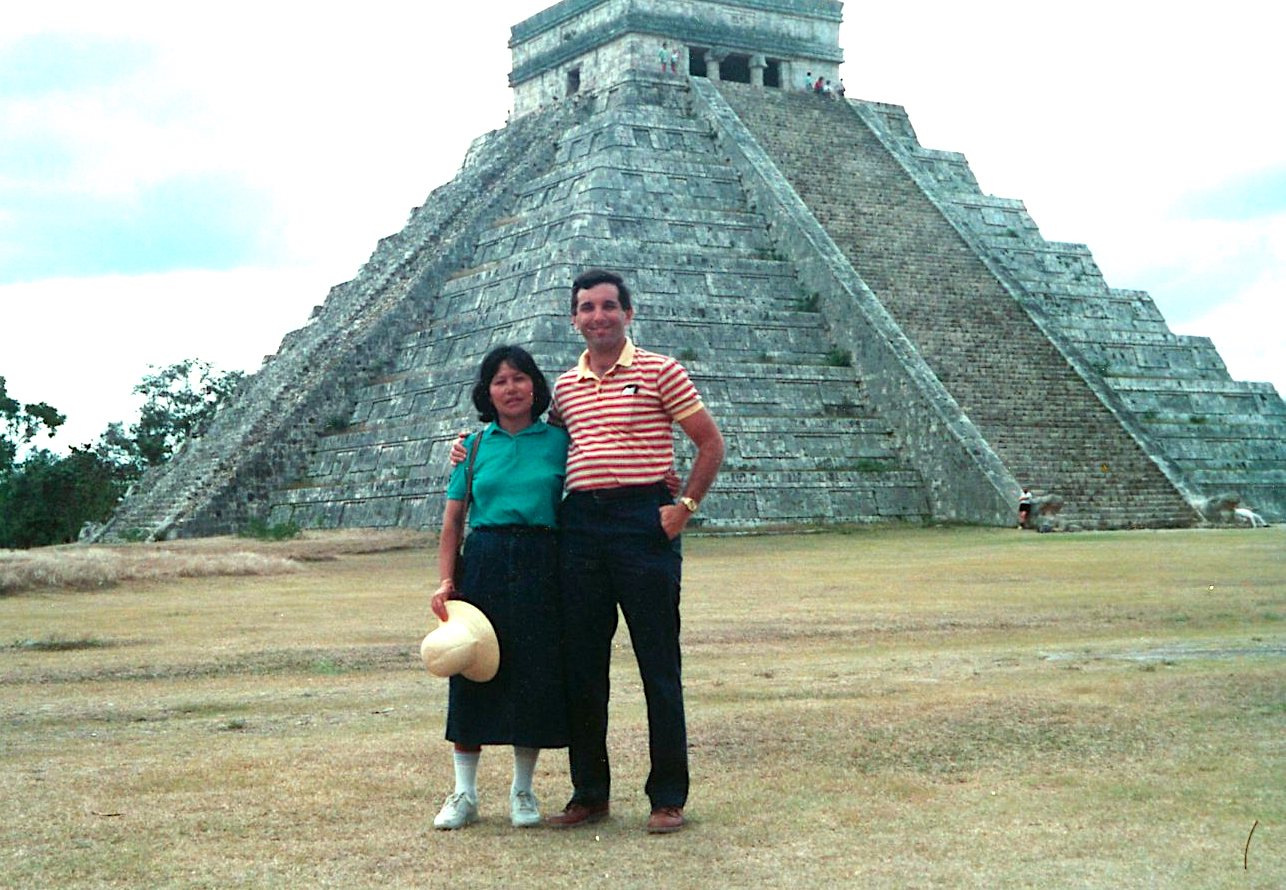
Chichén Itzá, Yucatan, Mexico

The temple has aged less noticeably than us since we traveled there.


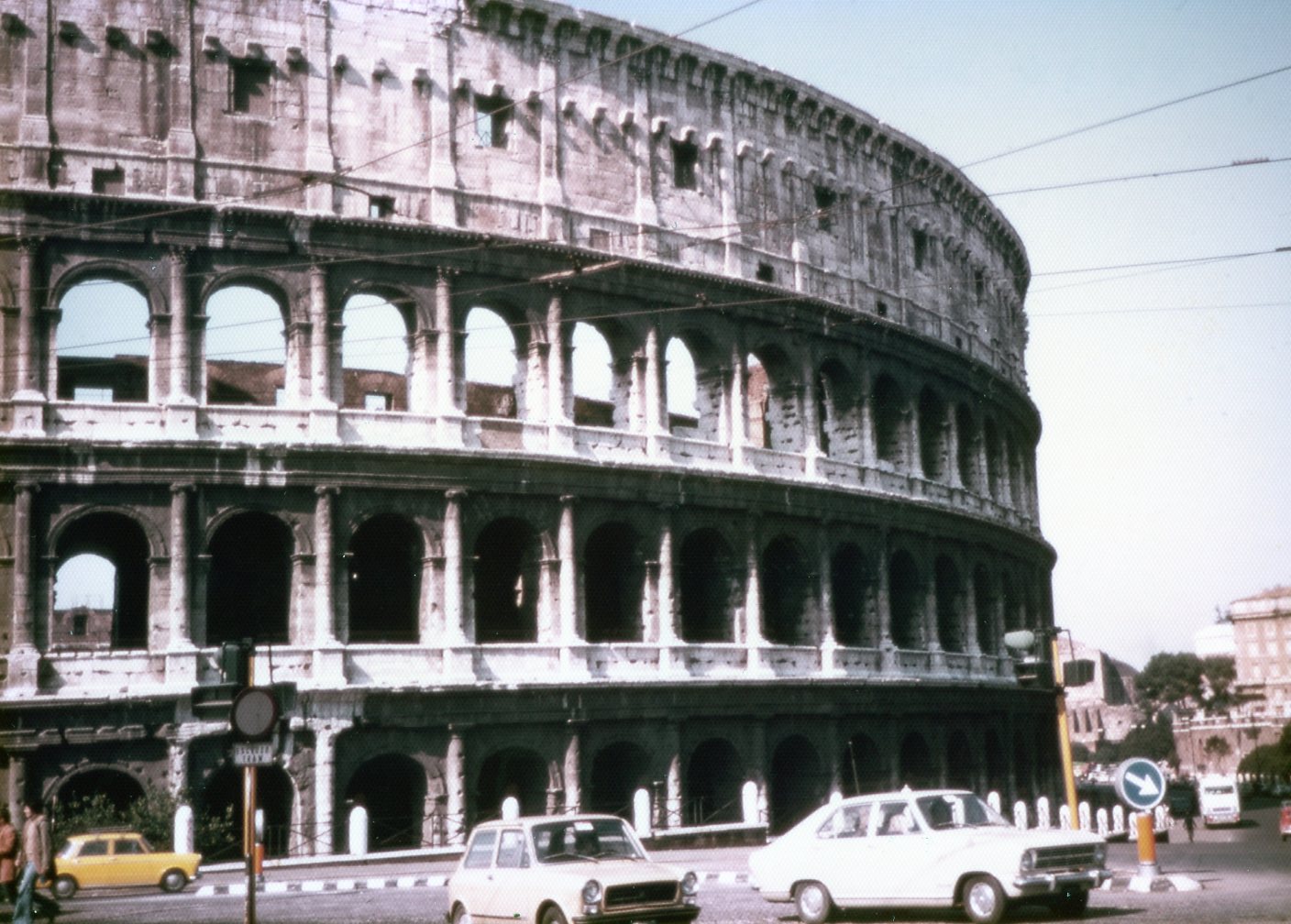
Colosseum, Rome, Italy

I visited years ago, as you can see from the cars and the low-res photo.


Garni and Gaghard, Armenia

Fantastic medieval architecture near Armenia’s capital, Yerevan


Great Wall of China

It’s a tie with Beijing’s Forbidden City, which was also unforgettable.


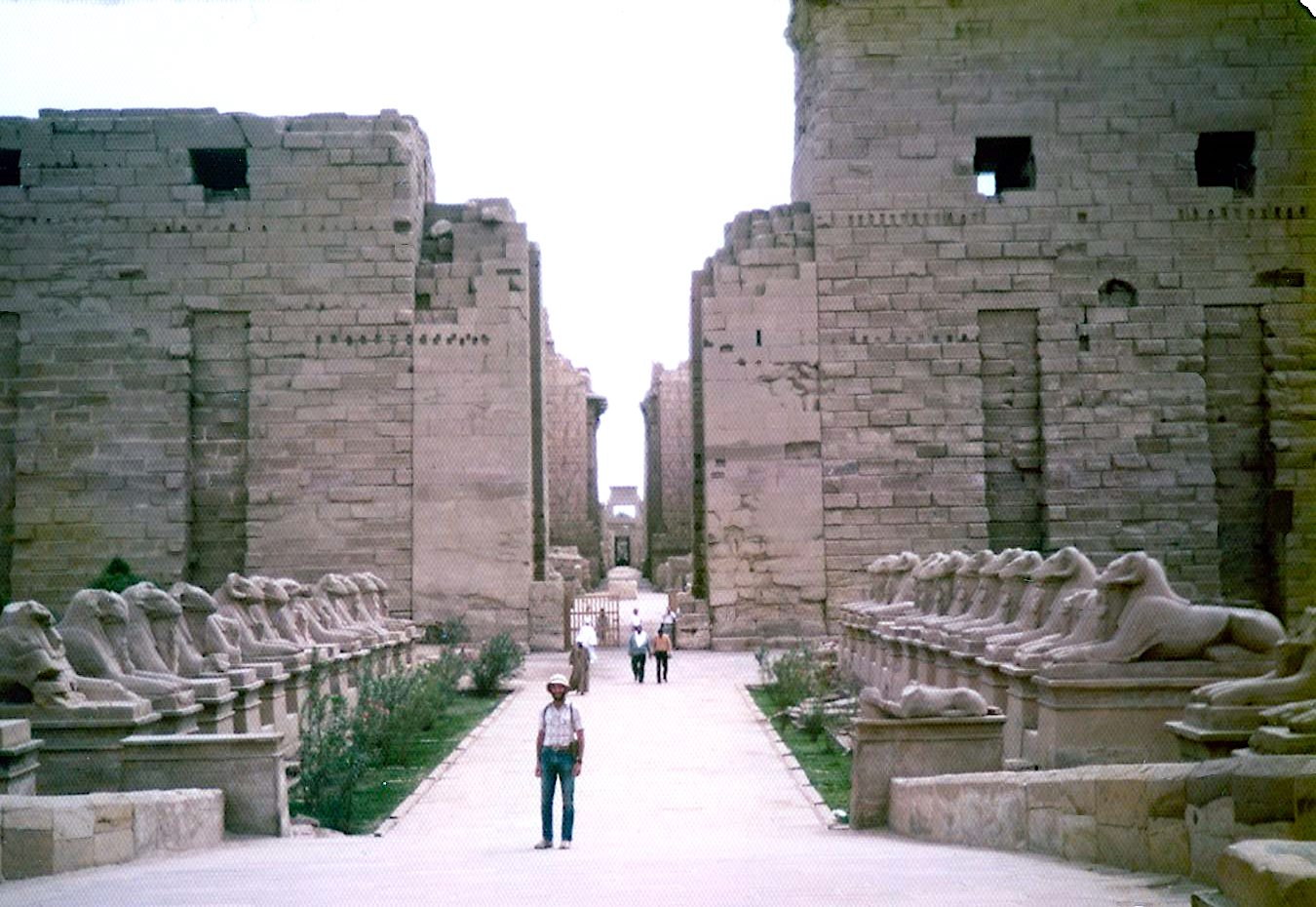
Luxor, Egypt

Back in 1976, it impressed me even more than the Pyramids.


Machu Picchu, Peru

Jaw-dropping, even though you’ve already seen photos of it


Parthenon, Athens, Greece

The setting. The architecture. The history. They all spoke to us.


Stonehenge, England

The inspiration for many theories — and for Kentucky Stonehenge.


Swayambhou Monastery, Kathmandu, Nepal

As a bonus, the fabulous Durbar Square temples are just across town.


Taj Mahal, Agra, India

It’s exquisite, as my parents saw on a trip with us to India and Nepal


Western Wall, Jerusalem, Israel

It’s just one of this city’s historical wonders for three great religions. I don’t have my own photo but you’ve certainly seen it — and maybe visited, too.


Champa and I hope to also visit Petra in Jordan and maybe Lalibela in Ethiopia. Where else should we and others go? Please share your feedback and recommendations with a comment!

The Third Act

Jane Fonda is profiled. So are Robert Redford, Gloria Steinem, Norman Lear and other celebrities. But the people who inspire me the most in a new book about older Americans doing unconventional things are those with less familiar names.

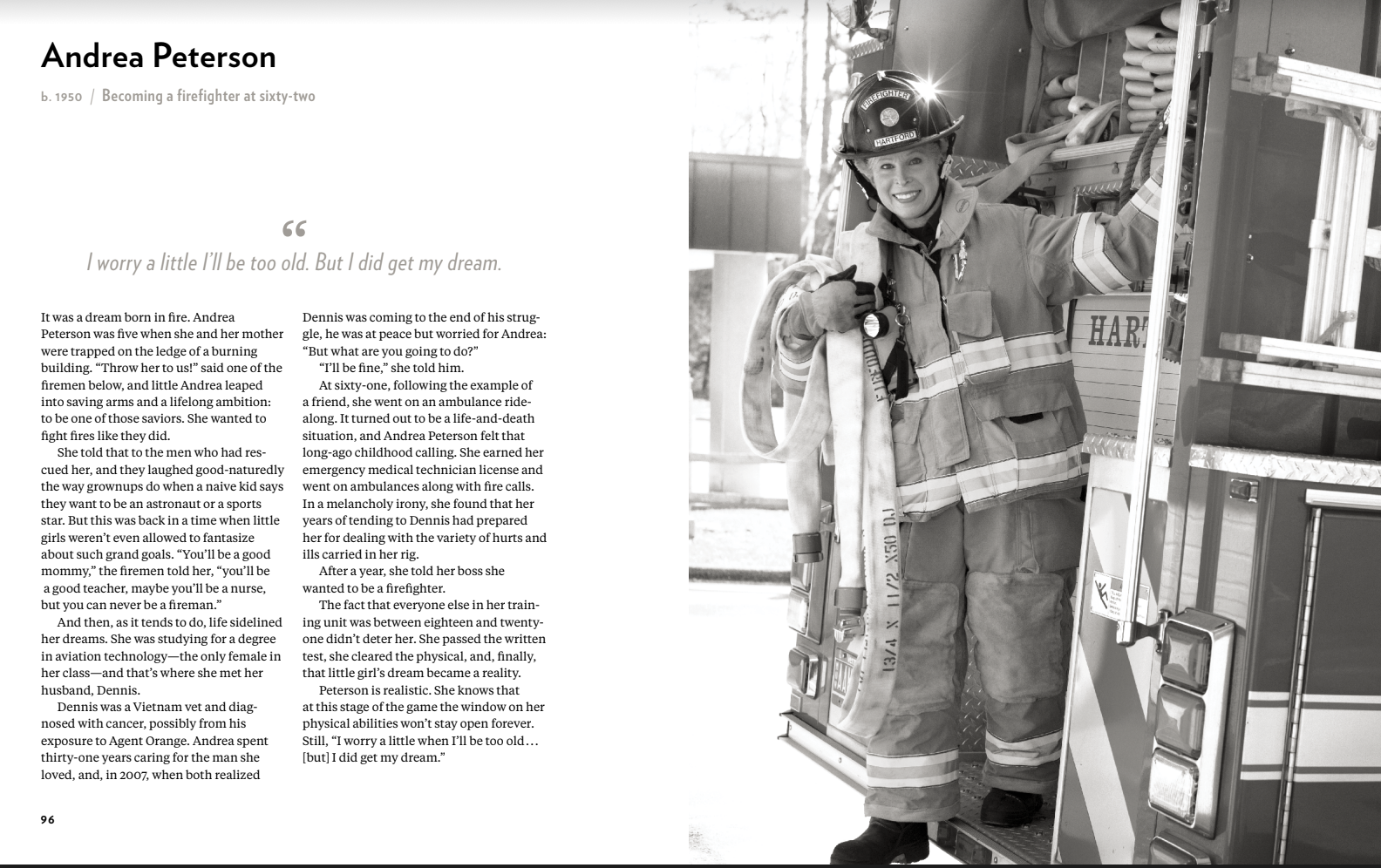
Andrea Peterson became a firefighter at 62.

Paula Lopez Crespin followed in her daughter’s footsteps to join Teach for America.

Donzella Washington graduated college magna cum laude at age 80.

Art Schill was even older when he became a stand-up comedian.

The Third Act: Reinventing Your Next Chapter also profiles a North Carolina couple who joined the Peace Corps in their sixties and returned home to serve as community volunteers. We were surprised to be included in the book but pleased to be among those illustrating how older Americans are redefining this stage of life in diverse ways.

“For some, this third act can be more engaging and satisfying than the work that came before while also having a tangible positive impact,” author Josh Sapan writes in the preface. “Others are realizing dreams that they never thought possible. … Each person in this book — some famous, all uniquely powerful — is a picture of another kind of retirement: one that’s generative, reflective, and rewarding.”

In the book’s foreword, retirement expert Ken Dychtwald says “for the first time in history, large numbers of older individuals are not interested in ‘acting their age’ and retreating to the sidelines. They would rather rebel against stereotypes and be productive and involved — even late blooming — in their maturity. They see longevity as an opportunity for new dreams, interests, relationships, and ways of living.”

Sapan calls this transition a “third act.” I’ve called it “not exactly retired.” However you describe it, so many people are pursuing it that they’re now part of the mainstream, even if the rest of American society doesn’t always recognize it.

I’ll give the last word to another woman profiled in the book, Cynthia Barnett, a long-time teacher who “refired” her life by establishing a successful STEM program for girls. “Each of us comes into this world with a purpose,” she says. “When I leave this earth, I want to be all used up, but I’m not done yet!”

The Third Act: Reinventing Your Next Chapter, by Josh Sapan, will be published on Nov. 15 by Princeton Architectural Press. You can pre-order it from independent bookshops, Amazon and elsewhere.

Reconnected on TV

Moldovan national television just reconnected us to the city where we served in the Peace Corps.

On Thursday, it broadcast a story about North Carolinians who served in the Peace Corps, the latest in a series by TeleFilm Chişinǎu about the state’s partnership with Moldova.

Watch the story below or here on YouTube [at 13:14].

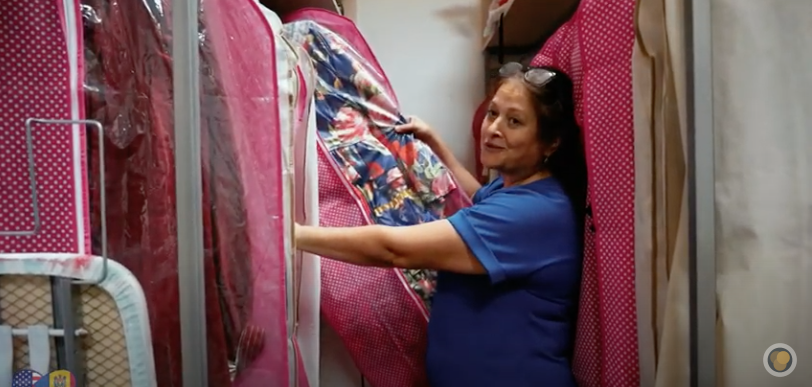
We were deeply moved when we saw our former host family, work partners and others on the screen, showing off the projects we pursued together. Most emotional was seeing our beloved Bunica, or Moldovan grandmother, talking to us from her bed.

Even if you don’t speak a word of Romanian, you should have no trouble following along. We think the producers did a great job and hope you enjoy the story, too. “Mulțumim frumos!” to everyone who made it happen.

Kentucky and Tennessee

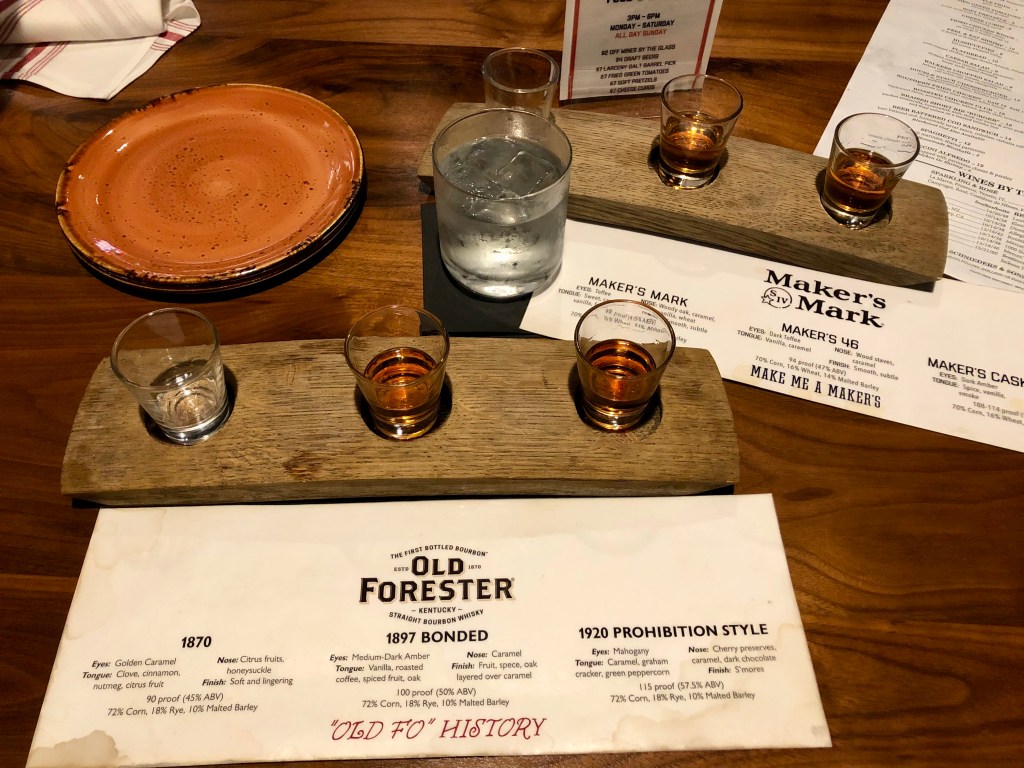
Horse farms. Bourbon. Bluegrass. The Appalachians.

That wasn’t all we saw while driving recently through Kentucky and Tennessee.

There were also the three older white couples eating breakfast near us one morning, discussing local politics. One laughed and said, “They’re spending so much, you’d think they were Democrats!”

They didn’t wear masks inside our hotel. Neither did most people in the other indoor spaces we visited, even in some government facilities with “masks required” signs.

In Nashville, at the Hermitage home of President Andrew Jackson, we visited replica houses of enslaved people who picked his cotton and built his fortune. In Gatlinburg, a restaurant owner wearing a cowboy hat vented to us about Joe Biden. As we drove across Knoxville, Lexington, Louisville, Nashville, and the Great Smoky Mountains before heading home to Durham, our radio dial was filled with country music and Christian preachers.

Kenneland racetrack, Lexington

As always happens when we travel, we experienced a world beyond our Blue Bubble. We were visiting Red America but also encountering a diversity more complex than simple labels. America surprises you when you explore it, as we’d seen in West Virginia a few weeks earlier. A young man there told us in a thick accent about the nearby mountain holler where he grew up, not far from where he met his husband.

At dinner on our first night in Tennessee, we were seated next to a group of young professionals holding a Bible study group, discussing Jesus while drinking beers. In Louisville, a couple from Bowling Green told us about the Corvette auto plant where he works. The next day we visited Abraham Lincoln’s birthplace, Mammoth Cave and a quirky “Kentucky Stonehenge” in a family’s yard. In Nashville, we chatted with young women dressed up for Dia de los Muertos and ate hot chicken while listening to a band playing country hits on Lower Broadway.

Donny Lee and his band perform at the Lucky Bastard Saloon in Nashville.

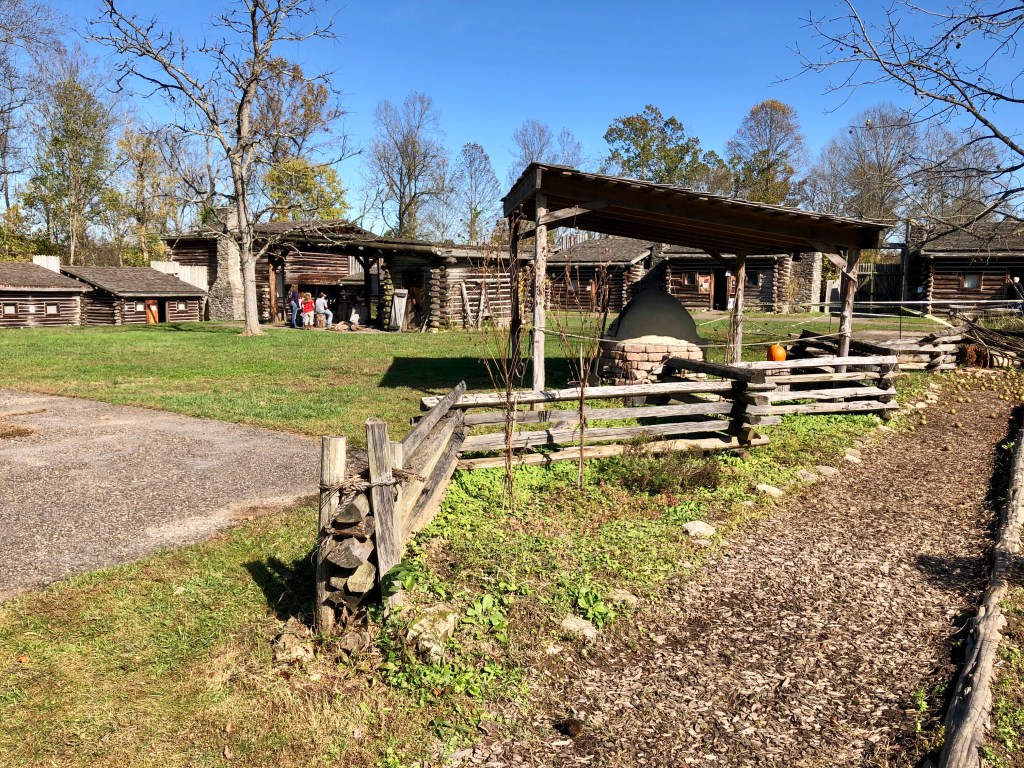
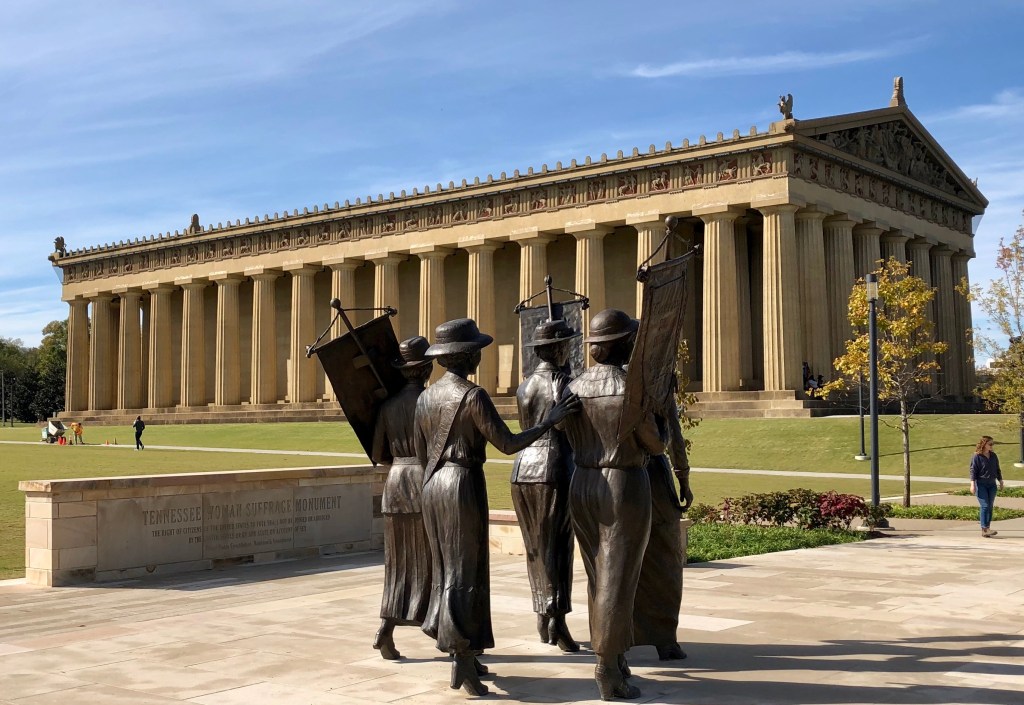
We saw sites ranging from Fort Boonesborough in Kentucky to the Parthenon in Nashville. We visited craft stores, ate barbecue, strolled atop the Ohio River and hiked through forests ablaze with autumn reds, yellows and greens. We won some money at the Kenneland racetrack in Lexington but lost about ten dollars more, then visited the Kentucky Derby Museum at Churchill Downs in Louisville. We met wonderful people.

It was time well spent as we slowly emerge from our long pandemic lockdown, eager to travel again but still cautious about going abroad. Kentucky and Tennessee reminded us how many places we have yet to explore — and learn from — much closer to home.

In Great Smokies National Park, Tennessee

Finding an Audience

My book about traveling the world and serving as an older Peace Corps Volunteer was published just as COVID-19 was closing international borders and the Peace Corps was evacuating its volunteers. How has it fared in the year and a half since then? This post, reprinted from the book’s website, highlights some of the coverage:

Profile in Worldview Magazine

An article in Worldview, the magazine of the National Peace Corps Association, featured Not Exactly Retired and considered how Peace Corps service has changed over the decades. It was accompanied by an article from Champa describing how “Many of us were not what Moldovans expected a Volunteer would look like. Together, we showed them that ‘American’ includes many kinds of people.”

This image has an empty alt attribute; its file name is screen-shot-2020-10-07-at-9.15.10-am-1.png

New York Times

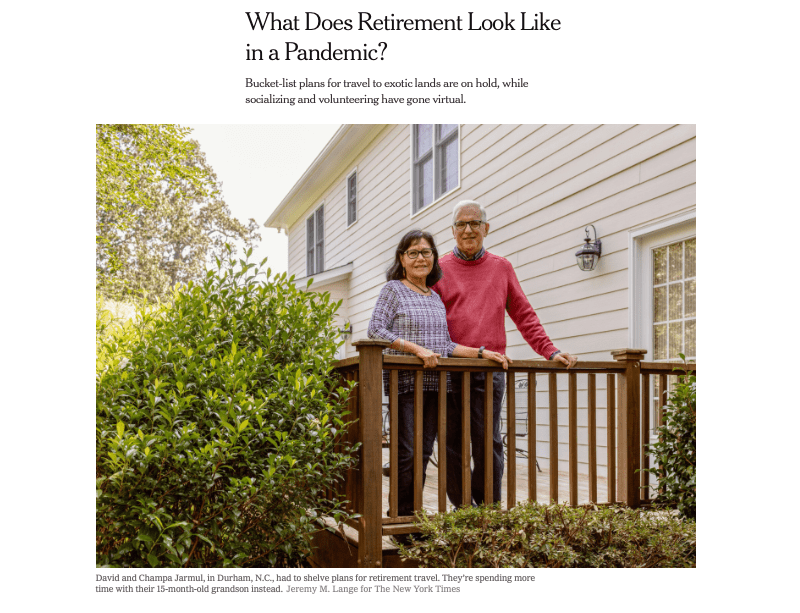
The Times mentioned the book while profiling the two of us for an article about how retirees are coping with the pandemic.

‘A Shining Example’

Joe Casey, host of the Retirement Wisdom podcast, called Not Exactly Retired “a shining example of why volunteering is important – and why it can be a unique way of reinvention in early retirement.” His interview with me is on his website.

A ‘Must-Read’ Book

Not Exactly Retired is among the “inspiring, international reads” included on a list for armchair travelers and others. The reviewer called it one of “10 Must-Read Books About the Peace Corps.”

‘Unexpected Benefits’

Another reviewer called Not Exactly Retired “a gift to those who might be thinking there has got to be more to retirement than playing golf, traveling for pleasure, taking up new hobbies, visiting family, or walking the dog. Read and you just might find yourself setting foot on a not so familiar path with unexpected benefits!”

Born for Adventure

An article about the book on the Born to Be Boomers website sparked dozens of comments, including one saying “it is the job of the older generation to turn around and help the next one along. What a great example of that. I’m nearing that time and am hoping to transition to that with grace.”

Love Story, Saga, Guide

Brown Alumni Magazine described Not Exactly Retired as “part love story, part adventure saga, and a guide to finding a fresh act later in life.”

A Second-Act Story

My interview with Andy Levine on the Second Act Stories podcast ranked high on his “Best of 2020” list. His show features people who have made dramatic career changes.

Peace Corps Worldwide

The website, which features books by Peace Corps writers, posted an extended interview with me, discussing my two stints as a volunteer and my writing process.

Lifelong Learning

OLLI at Duke — the “lifelong learning” organization — featured Not Exactly Retired in an online author interview that included an international call-in from our Moldovan “host sister.”

‘Interesting and Engaging’

That’s how a newsletter for older travelers described Not Exactly Retired, saying it encouraged readers to “gain insight into how to plan our own quests.”

‘Repurposing’ Your Life

The Career Pivot website and podcast featured Not Exactly Retired in an online interview conducted from Mexico. Host Marc Miller said the book showed how older listeners might want to “repurpose” their own lives.

Inspiration for Librarians

Circulating Ideas, a podcast for U.S. librarians, interviewed me about my work at a Moldovan library and described how Peace Corps Volunteers have assisted libraries worldwide.

Rocking a Retirement

Did we miss our grandchildren? Did we worry about getting sick? Kathe Kline asked these and other questions while interviewing me for her Rock Your Retirement podcast. She called Not Exactly Retired “an inspiring story.”

Bloomer Boomer

That’s the name of Andy Asher’s podcast about people thriving in the second half of life. He interviewed me about the book.

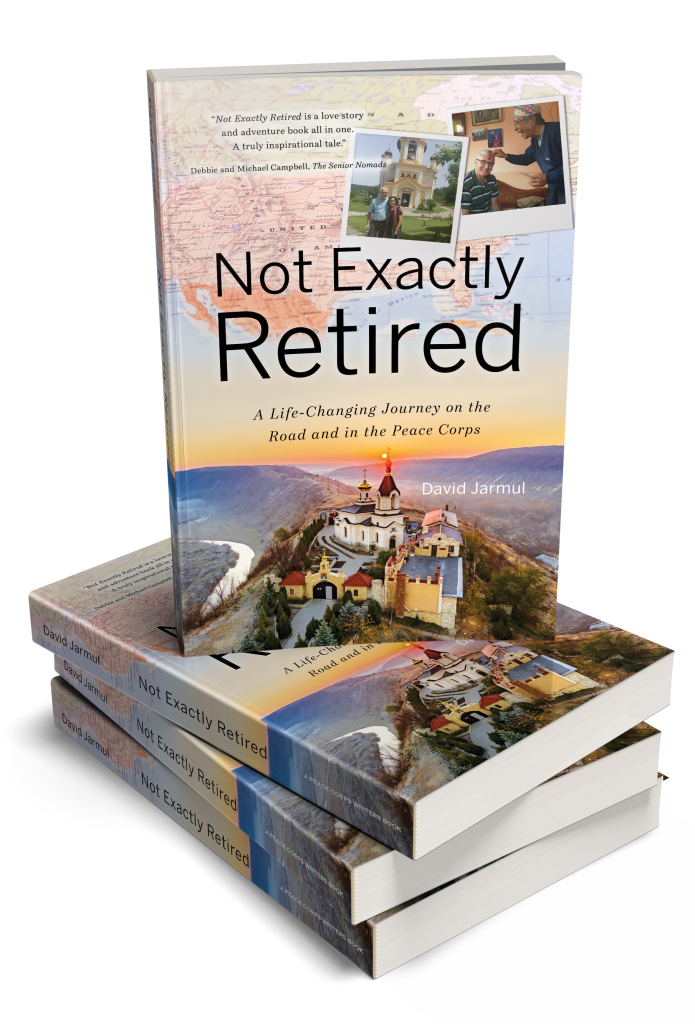
Visit the book’s website to order a copy or learn more.