Maria’s Kitchen: Sour Cherry Pastries

img_8567It’s time for another edition of Maria’s Kitchen!

Today we join my host mother as she shows Champa how to prepare sour cherry pastries for a birthday party. The cherries come from the family garden, which has also been abundant with sweet cherries, peaches, apricots, strawberries, raspberries, apples and pears, as well as a rich variety of vegetables.

img_8582This recipe is simple and delicious, with a taste more sweetly tart than sour. Here are the steps:

Roll out a pastry dough on a surface covered with flour. Your own favorite crust recipe will work fine for this.

Cut the dough into long triangles and place a dab of sour cherry filling on each triangle. The filling is just sour cherries and sugar, to taste, heated in water.

img_8584Roll up each triangle from the long side towards the opposite point. Place them on a metal tray and bake for 30-40 minutes at medium heat.

img_8590Remove the pastries from the oven and let them cool. Then roll them in powdered sugar.

Eat and enjoy, like Maria’s granddaughter shown here. (She is also named Maria, as are many of the women in Moldova.)

img_8604You can search on this blog to find some of Maria’s other specialties. If you’re interested in learning more about Moldovan cuisine, check out this excellent blog produced by two previous Peace Corps volunteers, as I’ve noted previously.

Trust me, these pastries are yummy. If you’re picking cherries or berries this summer, give Maria’s recipe a try and then post a comment about how your pastries turned out!

Peace Corps After 50

[An edited version of this post also appears on the PBS website NextAvenue.]

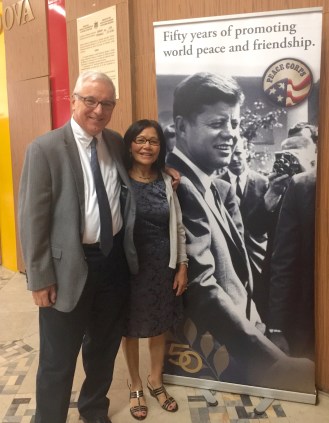
Before Champa and I joined the Peace Corps at the age of 63, people asked us how we’d feel to be surrounded by volunteers younger than our two sons.

Well, many of our fellow volunteers are indeed in their 20s, and most of them are smart, enthusiastic and fun to be around. Yet Champa and I are hardly outliers. Fourteen of the 58 people in our training group — nearly one in four — are 50 or older.

IMG_8252Worldwide, Americans over age 50 comprise about 7 percent of the nearly 7,000 Peace Corps volunteers now serving in 63 countries around the world. With its better medical facilities and programs in fields such as business development that attract people with lots of real-world experience, Moldova attracts higher numbers.
Whatever their reasons for choosing Moldova, the older volunteers here are impressive. They’ve worked as professors, attorneys, IT managers, nonprofit leaders, teachers, city administrators and management consultants. They come from across the country, including two other older volunteers from North Carolina. They are single, widowed, divorced or, as with us and one other older couple, married and serving together. Like the volunteers here generally, they are also diverse, reflecting the country we represent.

IMG_8174We differ from our younger counterparts in some ways. Learning a new language may be tougher for us, although many of us are doing fine in our Romanian classes. We may run slower in a group soccer game, if we participate at all. When several younger friends went to get tattoos recently, they knew better than to invite me along. They also may party harder and make surprising cultural references. When I was in the Peace Corps office the other day, a Carole King song started playing and the young woman next to me said, “Hey, it’s that song from the Gilmore Girls!”

On the other hand, they’re usually polite when we make our own references to people and events from before they were born, so it tends to even out.

In Moldova and other Peace Corps countries, there are advantages to being an older volunteer. Many of these countries show great respect towards older people. Similarly, having children and grandchildren has provided Champa and me with an instant bond with older members of our new communities. Our experience enhances our credibility in our workplaces as well; my future colleagues have already checked me out online. Older volunteers can share their hobbies, too, as Champa hopes to do with art and gardening.

Peace Corps has a special website for older Americans interested in becoming volunteers. The site reviews the application process, which is competitive and includes an extensive medical clearance process.

One of my reasons for writing this blog, and this post in particular, is to encourage older readers to consider the Peace Corps or some other new challenge for themselves. It’s not as strange or exotic as they might think and shouldn’t just be dismissed with “Oh, I could never do that at my age.”

Obviously, many people have family obligations, medical problems and other constraints that make Peace Corps unrealistic. Nonetheless, it’s a proven program through which more than 220,000 Americans of all ages have served their country and the world — and had a great adventure in the process.

Personally, I’m already wondering what it will be like in two years to be back in America and surrounded by friends who are mostly older than the ones I’ve made here.

The Memorial Outside My Gate

img_8533-1

This memorial honoring local heroes who died fighting for the Soviet Union in World War II is the first thing I see when I open my host family’s gate every morning.

The memorial’s base shows the names of the fallen. There are several men named Sava and several others named Tonu. I now live with a family named Sava and previously lived with the Tonus. For their extended families, as for people across Moldova and the rest of the former Soviet Union, the war brought unimaginable suffering.

img_8140When most Americans think of World War II, they think of Normandy, Iwo Jima and other battles where our soldiers died. My own father fought at D-Day, navigating a plane that was shot and almost didn’t return to England. He was part of the “greatest generation” whose enormous sacrifices kept our country free.

The war’s impact on our own history was huge. Yet many Americans don’t know that the Soviet Union suffered more than 50 times as many deaths as we did, according to some estimates. It’s hardly a surprise, therefore, that the war’s legacy here is profound, even after Moldova broke away from the Soviet Union in 1991 to become an independent country.

My current village, Bardar, is hardly alone in having a prominent meimg_8403morial. They are everywhere in Moldova. The second photo shows one in Dereneu, a small village we visited a few weeks ago. In Chisnau, Moldova’s capital, one of the main tourist sites is the Victory Memorial and eternal flame, five giant marble pillars representing the five years of Moldovan involvement in the conflict.

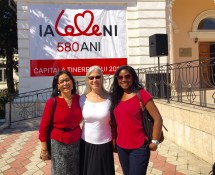
In Ialoveni, where Champa and I will soon be living, there is a memorial outside her school honoring a local soldier who died in Afghanistan. Across the street is the town’s World War II memorial, imposing with its dark stone, shown in the photo below.

Adjacent to that memorial, though, are two smaller memorials in white stone. They are topped with crosses, which tells you they were built after the Soviet era. These newer memorials honor the Moldovan victims of Soviet repression under Joseph Stalin. Large numbers of intellectuals, political opponents and ordinary people were exiled to Siberia and elsewhere.

I knew almost nothing about this history before coming here, but Moldovans have been eager to share their stories with me. I avoid local politics since I am a Peace Corps volunteer. Still, the history of this country, so unknown to Americans, is proving fascinating.

When I open my gate every morning I know I am just beginning to learn what it all means. So far, the impression is monumental.

Our International Agreement

img_8478

International agreements are often excruciating — look at how long they’ve been trying in the Middle East — so I’m pleased how smoothly my Moldovan partner and I came to terms on Wednesday.

We started discussions on Tuesday and reached an understanding before noon the next day, just in time to join our fellow Peace Corps trainees and partners for a pizza party.

img_8481Peace Corps brought all of us all together in Chisinau, Moldova’s capital, to align our plans and expectations over the next two years. After reviewing the history of the Peace Corps and its activities in Moldova, the conference leaders reminded our partners that we are volunteers with a special role: We’ve come to share our skills and perspective, empowering our colleagues and others to blaze their own paths after we leave.

It also reminded the trainees that we need to listen to and learn from our communities. We are here to serve, and our success depends on mutual trust and respect.

img_8447These ideals were fundamental to the Peace Corps when I served four decades ago, and they remain so today. My service in Moldova differs in so many ways from what I experienced in Nepal, from the local food to the speed of communications, but the mission is unchanged, still reflecting the original vision of President Kennedy.

My partner at the meeting was Igor Condrea, shown in the top photo with the Romanian version of our agreement. He will be my primary liaison at the Rayon Council, or county government, in Ialoveni, the town near Chisinau where Champa and I will be living. Even though my Romanian language skills are not yet good enough to communicate easily with him, we’ve already begin to form a close relationship. He’s a talented and thoughtful person.

img_8465The other trainees in my “community and organizational development” group came to the conference with their partners from across Moldova — mayors, village librarians, NGO leaders and others. Each pair worked together to clarify how the volunteer will learn about his or her post, develop a work schedule and deal with inevitable disappointments.

Together, we discussed how we might use tools such as community mapping, surveys and SWOT analyses to focus on which problems most concern our neighbors. We taped some of our findings on the wall, much as in a U.S. management seminar.

It was a good meeting. I felt like Igor and I came to know each other, laying the groundwork for a successful collaboration. I will now return to my final month of training with even greater motivation, which was already substantial.

In other words, I’ll be busier than ever. If anyone wants to recruit us to help out with the Middle East, though, just post a comment here and I’ll be happy to get back to you.

Our Road to Ialoveni

img_8351

Exactly one year ago, I walked away from a great job to explore a new life of adventure and service. On Thursday, Champa and I marked this anniversary with a big ceremony, although it wasn’t just for us. Rather, we and the other Peace Corps trainees were all taken to a parking lot, blindfolded and guided one by one to spots on a giant chalk map of Moldova.

We were then handed envelopes and told to remove our blindfolds and look at the name of the village or city on our envelope, which corresponded to where we stood on the map.

img_8357The name on the envelopes for Champa and me was Ialoveni (pronounced Yah-lo-ven). It’s a big town close to Chisinau, not far from our training sites. After Champa and I finish our training and swear in on July 29, it’s where we’ll be living.

We and the other trainees had been wondering for weeks where we’d be posted. Now we know. Champa and I couldn’t be happier at both our location and job assignments. We’ll be traveling to Ialoveni this weekend to meet our host family and respective work partners before returning to our current villages for a month to finish our training.

Thursday’s announcement was the culmination of an extraordinary year for us. This past July, just a week after I left Duke University, Champa and I took an 11,000-mile road trip around the United States. We saw up close what an amazing country we have, from the badlands of South Dakota to the bayous of Louisiana. After that, we spent nearly two months in Nepal, visiting our family there and welcoming ten members of our American family for an unforgettable group trip in the Himalayas. (See my earlier posts for the details.)

Now, for the past month, we’ve been immersed in our most challenging and rewarding trip of all, our pending service as Peace Corps volunteers in Moldova.

img_8335At my group’s tech class on Tuesday, we discussed how Moldovans and Americans differ. One of the charts we filled out, shown in the photo, compared each culture’s tolerance for risk. The green tags represent Moldovans; the red tags represent Americans. As you can see, our group saw Americans as being more willing to take chances in life.

That’s been true for Champa and me this past year. I wouldn’t exactly use the photo’s words, “risk tolerance,” to describe our adventure. Rather, we’ve learned to let go of our old life with growing faith that the world will reward us if we open our eyes and hearts to new experiences. It’s been a life-changing journey, one that’s exceeded our greatest hopes.

The two years we expect to live in Ialoveni will be twice as long as our initial year of being “not exactly retired.” Based on what’s happened so far, and on how much we already love Moldova, we can’t wait to see what lies ahead.

Big Challenges, Little Money

img_8305Why has the Peace Corps sent me and others to Moldova, a small country in eastern Europe that many Americans have never heard of?

Well, do you see the girl in blue, wearing glasses? She recently won a national award for her writing. The girl near her with the white blouse and black skirt was honored for her exquisite paintings.

Between the two is Ekaterina Borodatii, who runs a small village library my group visited on Wednesday.

img_8130
A bookshelf in the library at Dereneu

Ekaterina has worked for years with these girls and other young people in Bardar, where I’ve been living during my training. Together, they illustrate the tremendous promise of this former Soviet state, now the poorest country in Europe.

Ekaterina’s annual budget, not including her salary and costs such as heating, is … wait for it … $500.

As a result, her library can purchase just a few books a year. Its collection is mainly aging Russian books from the Soviet era. There are no funds for magazines or programs, much less to buy a nice armchair or two. Its only modern possessions are some computers connected to the Internet, donated by a group supported by the Gates Foundation.

Ekaterina works hard with what she has. So do the girls. But they could be doing so much more.

img_8113
Mayor Oaserele welcomes us to Dereneu

The same is true next door, at Bardar’s town hall, or primaria. A day earlier, we met with the mayor, Petru Plugaru, who described his wish list of expanding the village’s sewer system, installing street lights, building a new day care center and improving the severely rutted roads. His resources are microscopic by American or West European standards.

Bardar is not unique in this beautiful country. Last week our group of “community and organizational development” trainees visited the library and town center at Dereneu, a village an hour away. The situation there was essentially the same: impressive people, huge challenges, no money.

Elena Oaserele, Dereneu’s mayor, welcomed us with a traditional Moldovan greeting of bread and salt. Then she and a colleague described their struggle to help the village grow and respond to community needs with nearly no resources. They were grateful to Kaya Koban, a Peace Corps volunteer posted to Dereneu who has been helping them identify and pursue possible grants and other external support.

After I finish my training, I’ll be working in the same program as Kaya, probably doing similar work and also pursuing secondary projects that may draw on my communications background. I’ll be living again with Champa, who will be teaching in a local school. In addition to its community development and elementary education programs, Peace Corps Moldova also has programs for health education and small business development.

img_8123I’m looking forward to the challenge. I was impressed by Ekaterina, Petru and Elena, and by the young people I met at the library. I’m hoping to find similar people wherever we’re sent, and am eager to work with them to tackle local problems.

Although I’ve been here for less than a month, it’s already obvious the challenges will be waiting.

Maria’s Kitchen: Slicing Mamaliga

If you’re a Southerner who just has to eat a piece of cornbread, you’d probably slice it with a knife.

img_8240Not here in Moldova. My host mother, Maria, shown here with her husband Vladimir, is an amazing cook, so I’m going to feature her in occasional posts about Moldovan cuisine. On Sunday, while Champa was visiting, she served us mamaliga, which is a denser version of American cornbread.

img_8232In this brief video, she demonstrates the traditional method of slicing mamaliga with a string. You can hear Champa in the background admiring her technique. (You’ll find a recipe for mamaliga and other Moldovan foods at this excellent blog from a previous Peace Corps couple.)

Pofta buna! Enjoy!

Far From Orlando and Home

I’d be glued to social media and the latest news about the Orlando shootings and aftermath if I were back home right now. But I’m not. I’m halfway around the world, in Moldova, training to become a Peace Corps volunteer.

It’s strange to be so distant when something momentous happens back home. I’m still an American. I still feel outrage. So do my fellow trainees, who opened Thursday’s group meeting with a moment of silence in memory of the Orlando victims. “What happened was hateful; it was evil,” our Peace Corps director Tracey told us.

Nonetheless, even though I’m following the news and receiving my Facebook feeds, the events feel far away. They are far away, at least geographically.

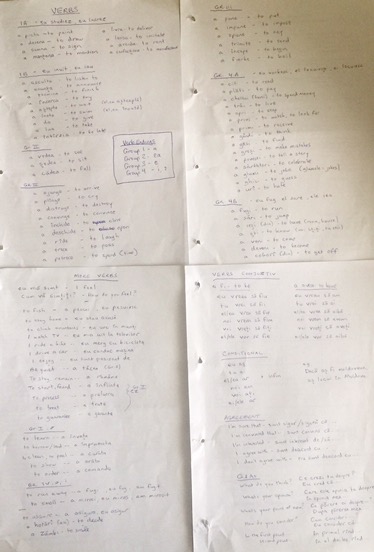
img_7998My current day-to-day reality is this: I go to language class all morning. I have tech training in the afternoon. I talk with Champa on the phone. I eat and try to communicate with my host family. I cram vocabulary lists and verb conjugations whenever I can. Then I go to sleep. The photos show what we did on Wednesday.

I’ve found myself thinking back to when I was a Peace Corps volunteer in Nepal years ago. My news sources then were a shortwave radio and a weekly international edition of Newsweek. My village postmaster looked forward to the magazine as much as I did, since we’d flip through it together before I went home. One week the Newsweek cover showed bloated bodies strewn in the jungles of Guyana. It was the Jonestown massacre, where hundreds of American cult members drank poison and died. The postmaster looked at the photos and asked me to explain how this could happen. I didn’t know what to say.

Years later, I was in Bangladesh writing a magazine story about a local scientist working to combat diarrheal diseases. He and I spent our final day together — a beautiful September day — visiting with families in the slums of Dhaka, then I took him and a colleague out for a farewell dinner. When I returned to my hotel and turned on the television, the World Trade Center was in ruins. The next morning, I was one of the few Westerners in the Dhaka airport. Everyone was staring at television monitors, watching the footage from New York and Washington again and again. Once again, I felt very American and very far from home.

img_8013So I should have known what to expect emotionally when I heard the terrible news about Orlando, followed by the controversy over Donald Trump’s response and everything else that has happened in the past few days. But familiarity is not a vaccination. It’s still been strange to watch all of this from a distance, discussing it with the other trainees when we get a moment between language classes. Soon enough, we’re back to memorizing the Romanian words for fruits and vegetables, or how to conjugate the feminine plural form of an adjective.

That’s what I’ve been obsessing about during this momentous week, for better or worse. Tracey reminded all of us that “you are here to do good,” to promote “peace, friendship and understanding” — the very values challenged by what happened in Orlando. Even though we are far away, she said: “Know you are in the right place at the right time.”

So, yes, even here in Moldova, I’m still an American. But I’m also an American here in Moldova. Sometimes it’s hard to figure out the conjugation.

Champa’s Younger ‘Mom’

img_7968

Try to solve this biological riddle: When is a mother half the age of her daughter?

The top photo offers a clue.

Answer: When an older Peace Corps trainee lives with a young “host mother”and her two sons.

That’s what Champa’s been doing in the Moldovan town of Costeşti. Here she is with her host mom, Maria, in the white shirt, along with Maria’s two sons and mother.

Maria’s husband is in Tel Aviv, working construction to make money to send home, like so many Moldovans. Maria’s friend, who teaches English in the local school, stopped by last night and told us her husband is working outside the country as well, in Germany, as are all four of his brothers.

img_7924

Maria lives in this lovely home along the road where you see Champa standing. It’s a short walk from the center of the village, which is not far from Chisinau, Moldova’s capital. If we were back in the Washington, D.C., area, it would be considered an outer suburb like, say, Leesburg or Germantown, although with more goats and fewer McDonald’s.

img_7929Like me, Champa has a nice living situation. Her house has a modern kitchen and bathroom, wifi and a dining room, as well as her own bedroom. Maria is very friendly and even speaks some English. Champa does have a long uphill walk to the school where she has her language classes and technical training, but she says it reminds her of walking in Nepal.

I saw all of this for myself this weekend when I left my own host family and village to spend a day with Champa. There are three married couples in our training group and we are the only ones allowed to leave our host villages unaccompanied during the first several weeks. Even so, we’re required to check in with Peace Corps at each step of our travels so they know we’re OK.

I had to travel all the way into Chisinau and then back out again to reach her, since there are no direct buses between our two sites. To use a North Carolina analogy this time, it was like traveling from Durham to Chapel Hill via Raleigh each time.

img_7912

It was worth it — mainly to see Champa, of course, but also to meet Maria and her family. Now I have two adopted families here in Moldova! For dinner, Maria made plăcintăs — traditional pastries stuffed with cheese or other goodies. We enjoyed them with some wine her father produced, which is common here. The meal was delicious and we cleaned our plates.

We always want to keep mom happy, no matter how old she is.


Straight Outta Moldova

img_7875

Yes, my shirt says “Straight Outta Moldova.”

No, you can’t have it.

At a Peace Corps picnic today at a beautiful park in Chisinau, I was asked repeatedly where I got the shirt and, a bit less seriously, whether I’d consider giving it away or selling it.

img_7887

Here’s Donna, one of the other trainees, trying to tear it off me. (OK, we were joking.)

My cousin Mark and his wife Cindy ordered the shirt for me shortly before Champa and I left to join the Peace Corps in Moldova. I’m sure they had no idea how much fun I’d have wearing it. Neither did I.

There were plenty of other thematic shirts on display at the picnic, which Peace Corps organized to bring together our training group with current volunteers and staff.

img_7890img_7895Here are Chelsea, left, and Rose, right, making their own fashion statements in support of peace and the Peace Corps.

Rose is eating some of the delicious Moldovan snacks Peace Corps provided along with fresh fruit and soft drinks. People played volleyball and soccer, strolled the grounds and enjoyed taking a break on a beautiful June day from our demanding schedule of language classes, technical training, cultural lessons and homework.

img_7898Champa and I have been training in different villages, so we enjoyed being together. We both have made lots of new friends, though, so we also spent time catching up with them. Here’s Champa with Reggie, a member of my language group and a fellow North Carolinian.

That’s a nice Durham Bulls cap she’s wearing, don’t you think? You can’t have that either.


Join us on the journey.