

Can a guy in his sixties who has never studied modern computer programming introduce a group of computer-savvy young people to software coding — and do it in a foreign language?
That’s what I did on Friday at our library in Ialoveni, Moldova. (A few hours later, they posted this story about it on Facebook; the live version offers an English translation):
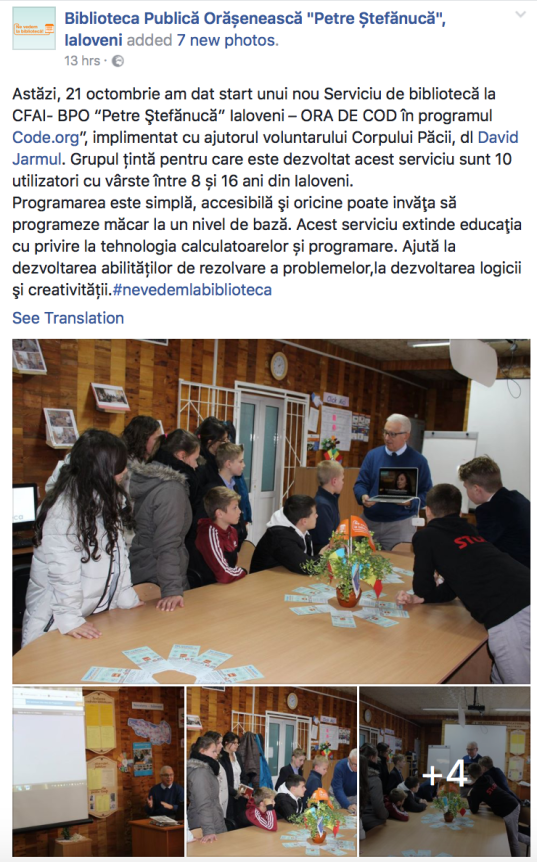
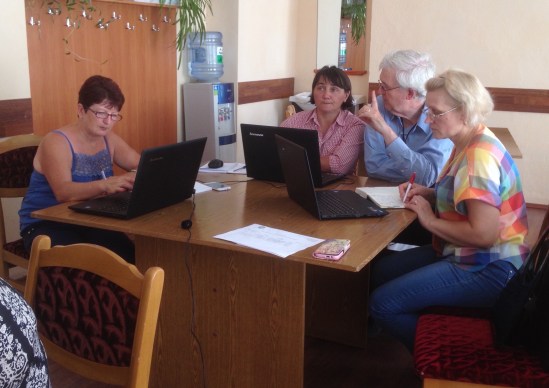
I got the students started with Hour of Code, an international initiative through which millions of young people have begun learning about programming. My group watched a couple of inspirational videos and then began writing mock code for the popular computer game Minecraft. Within a few minutes, they were clicking away, instructing their characters to move in different directions, shear sheep and search for treasure.

Several of them finished the 14 tasks in less than an hour. All were engrossed, smiling when they completed a puzzle and giving me high fives as I walked around the room to help them out. Before we even finished, the librarian told me we should start a weekly Hour of Code club, which we’ve scheduled for 2:30 p.m. on Wednesdays.
Next week we’ll write code for a Star Wars game. Then we’ll do the “Frozen” module. After that, perhaps we’ll learn some JavaScript together.

Launched in 2013, Code.org is a nonprofit organization focused on making computer programming more accessible. Its videos feature Bill Gates, Mark Zuckerberg and other famous programmers, as well as President Obama, actors, sports stars and others, all emphasizing that coding isn’t as hard as you may think.
 That’s a message more young people, especially girls, need to hear in our own country, Moldova and around the world. Coding is an increasingly essential skill. Especially in poorer countries, it can open the door to participating in the global economy. Here in Moldova, older girls can also take part in GirlsGoIT, a two-week program through which they learn about web applications, entrepreneurship and potential career paths. Around the world, Peace Corps is deeply involved in the Let Girls Learn program championed by First Lady Michelle Obama.
Back when I was running Duke’s news office, one of my colleagues wrote an article called Computer Science Looks Beyond Nerds, describing how the university redesigned its introductory course to attract more women, students of color, liberal arts majors and others who don’t fit the stereotype of programmers. Hour of Code is pursuing the same mission internationally. Its resources make it easy for people to serve as mentors regardless of their own level of coding experience.
Even if you’re “not exactly retired” or majored in American history like me, do yourself a favor and try some of the modules yourself. They’re fun. And if you know any students in Ialoveni — especially girls — looking for something interesting to do on Wednesday afternoons, send them my way. We still have a few spots open.


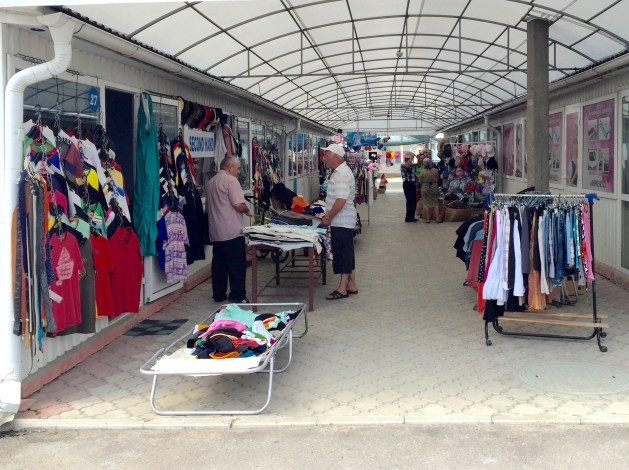
 I’ve never been to the Met in New York but I’m guessing it costs slightly more.


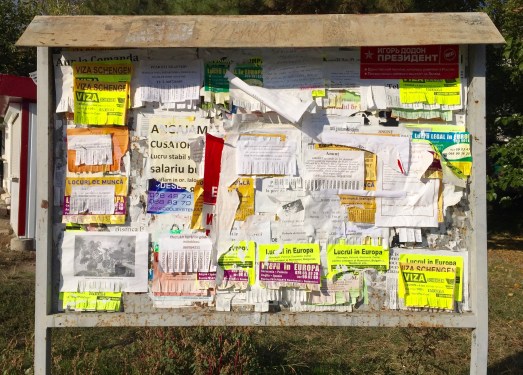
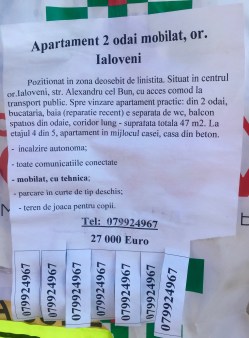 Here in Moldova, though, people are still using bulletin boards, often located near bus stops. Those looking to sell or rent their property post advertisements in Romanian or Russian, Moldova’s two main languages. Most of the signs are printed simply in black and white, with no photos or graphics. Some are scrawled by hand. Within a few days or after a storm, they start drooping.
 Champa and I have learned about all of this over the past few days as we’ve begun searching for an apartment ourselves. We’ve loved staying with our host family in Ialoveni, where we’ve been renting the second floor of their house. This past Saturday, we hosted our first dinner party, with several other Peace Corps volunteers who came from neighboring towns. Unfortunately, the family needs to reclaim the second floor, so we’re now actively looking for a new home.







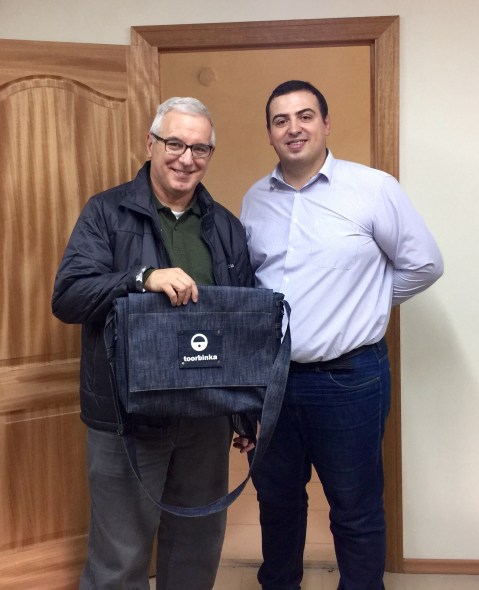
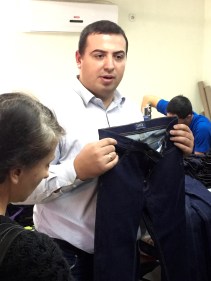 Dumitru Guzun and his partner opened the factory last year above a market in the town of Criuleni. My Peace Corps group stopped by for a look on Monday afternoon.
 As Dumitru showed us around, his eight employees barely looked up from their sewing machines and other duties. They were racing to fill an order. The company is doing well but, as Moldova’s first jeans brand, it faces intense global competition. It recently turned to a new Moldovan


 One woman we know is raising two energetic kids while her husband works abroad. In another family, the daughter and her husband are working abroad part-time, with two school-age girls at home. When Champa and I were sitting outside at a cafe, a guy sat beside us, said he was on a break from his job in England and asked whether we could help him get a green card to America. Lots of people want green cards. A work colleague told me he applied but didn’t get one. Someone I know through Peace Corps told me he wants one, too. One reason many adults are keen to learn English is to help them find employment abroad.
 I’ve illustrated this blog post with some of the signs you see across Moldova. They’re from employment companies promoting legal jobs abroad. Every piece of paper torn from the bottom of a poster represents another person who may be leaving Moldova.


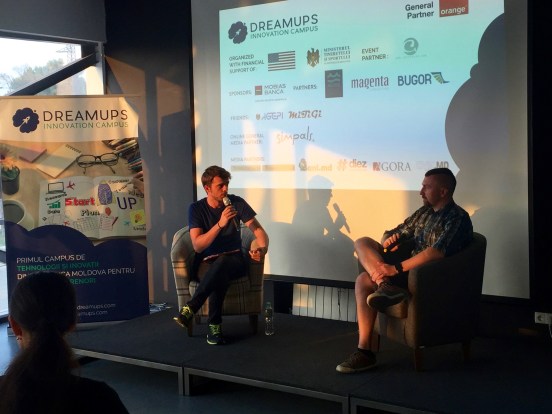

 Matei joined Degeler on the stage, both in armchairs, one wearing shorts, the other a black T shirt. A projected slide behind them showed the event’s sponsors — local companies, media partners, the U.S. government and others.
 Back when I was in Durham, I interacted with the thriving local startup scene, which I helped publicize through articles such as

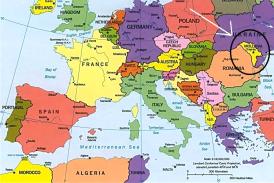 “It’s a nightmare to juggle everything,” says Dee, who discovered the problem during her first few days as an English teacher in the small Moldovan city of Calarasi. Her own schedule kept changing along with everyone else’s. School officials could use existing software to develop new schedules, but they had to pay high fees to print each version — this in Europe’s poorest country.

 "Not Exactly Retired"