

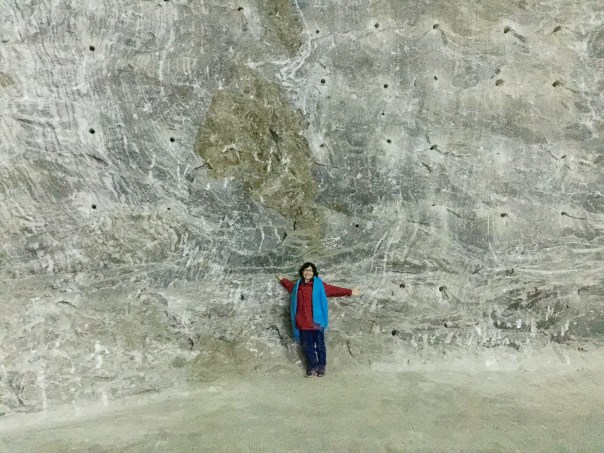
I used to think “back to the salt mine!” implied drudgery or even slavery. Indeed, when Champa and I visited the Trotus salt mine in Romania recently, we expected to learn about the challenges of working deep underground, as we did at a Pennsylvania coal mine years ago.
Instead, as we descended by bus into the mine shaft, we saw children with scooters and famiies with picnic baskets.
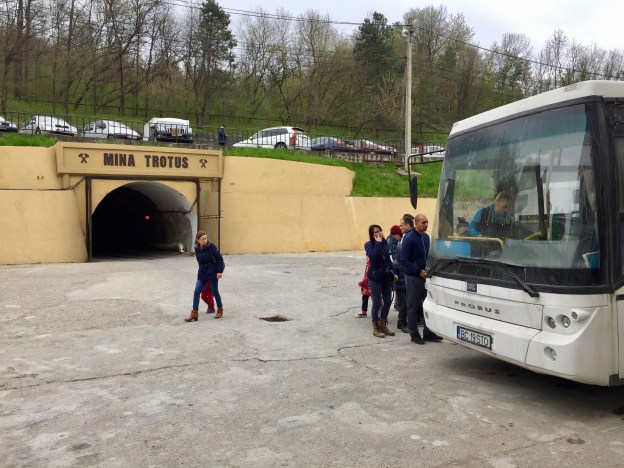
Things got stranger when we arrived and heard what sounded like a priest chanting. Sure enough, an Orthodox service was under way in what turned out to be a church honoring St. Varvara, the protector of miners. In the video below, you can see the priest giving communion beneath a dome carved into rock salt, with icons set into the white walls.


Just past the church, we came upon kids racing small carts around salt formations. Next we saw playgrounds, a basketball court, a badminton court, a mini-soccer field, a restaurant, a library, even a lake and waterfall. All of this was 240 meters below ground, covering 13,000 square meters.
Located near the small city of Onești, where Olympic gymnast Nadia Comăneci grew up, Târgu Ocna Salina dates its origins back to 1380. Its tourist complex is at the ninth layer of an operation that continues to produce salt for dinner tables and other purposes. Romania has an active salt industry, albeit smaller than in China, the United States and some other countries.

Many Romanians visit Târgu Ocna Salina for health reasons, especially to breath the salty air to relieve respiratory problems. As we waited for the bus to drive back to the surface, we chatted with a guy who pointed out another potential benefit. “If there’s a nuclear war, we can all survive down here,” he said
Well, maybe. But there’s no denying they’ve carved out a great thing for now, an amazing sight if you’re ever in this part of Eastern Europe.
The next time you hear somebody say “Back to the salt mine!”, tell them you know just the place.


 They dribbled wine on the graves and left behind food and candles. The mood was friendly but subdued and respectful.
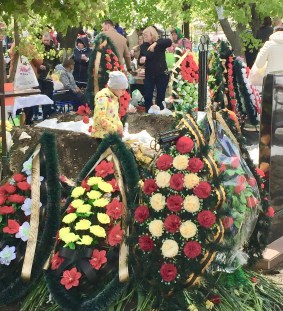 Paştele Blajinilor, which traces it origins back to pre-Christian times, is celebrated widely in Moldova and parts of neighboring Romania. It reminded me of the Mexican holiday Día de los Muertos, although the religious significance is quite different since it coincides with Easter instead of Halloween.

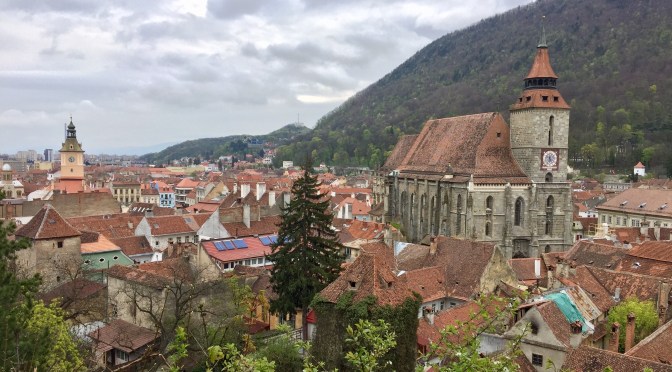
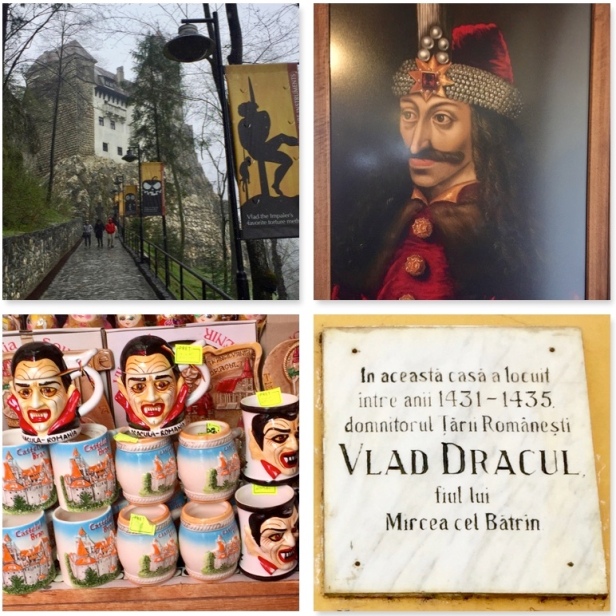
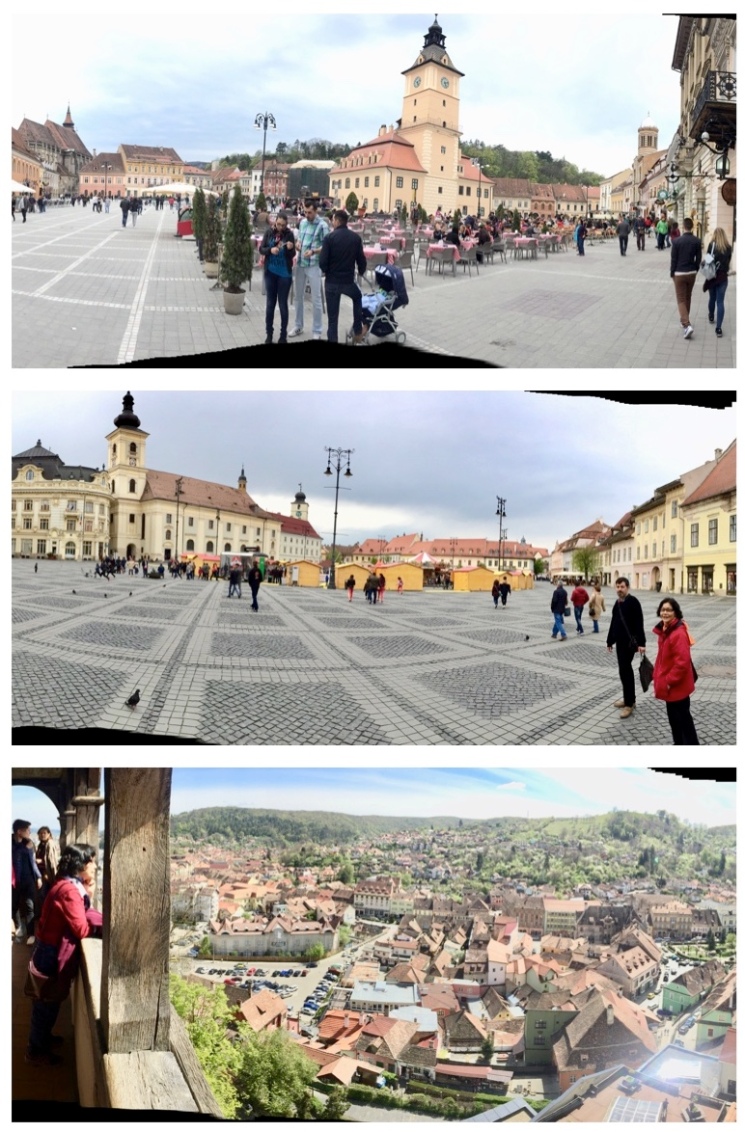
 However, as we discovered during our 5-day trip to Transylvania, there’s so much more to see than tacky Dracula T shirts and coffee mugs.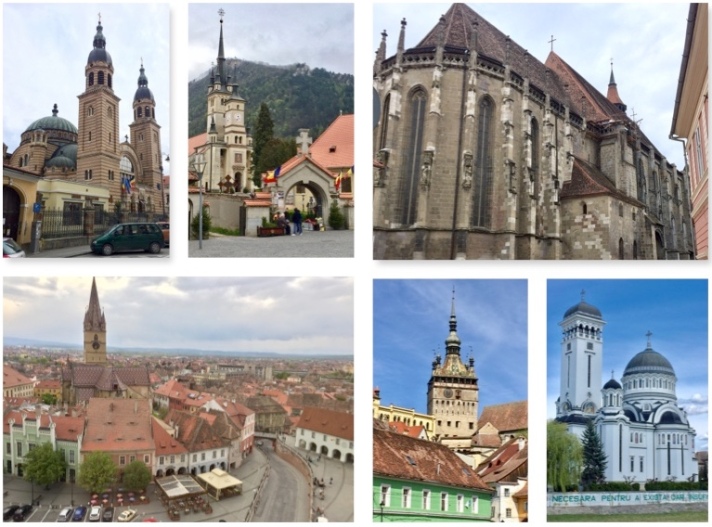
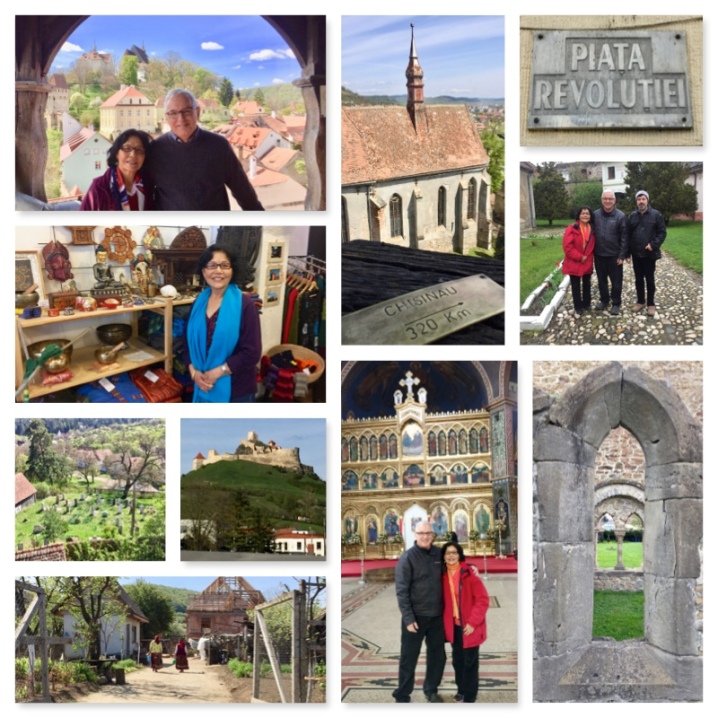
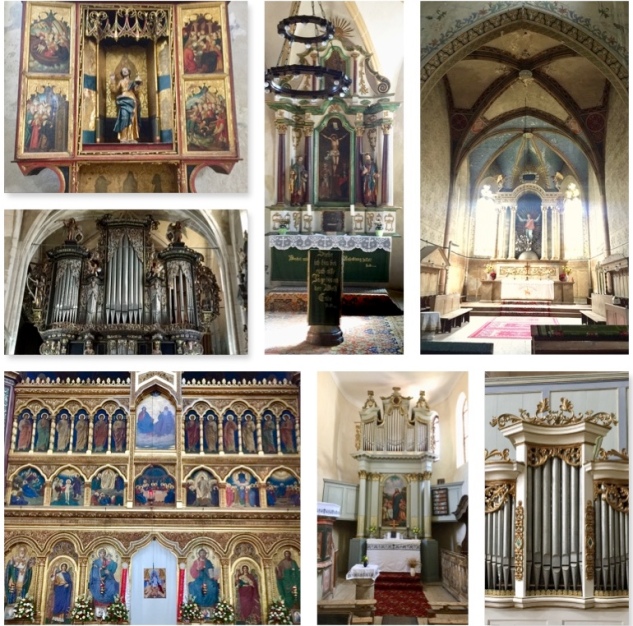
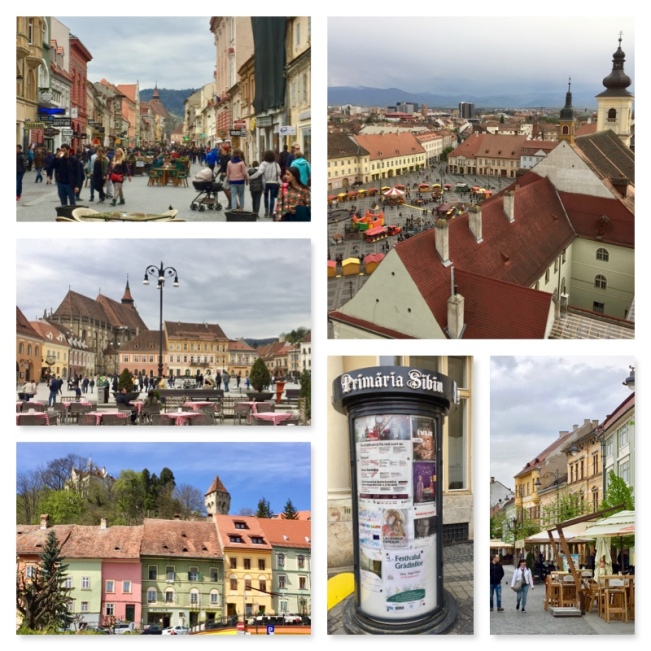
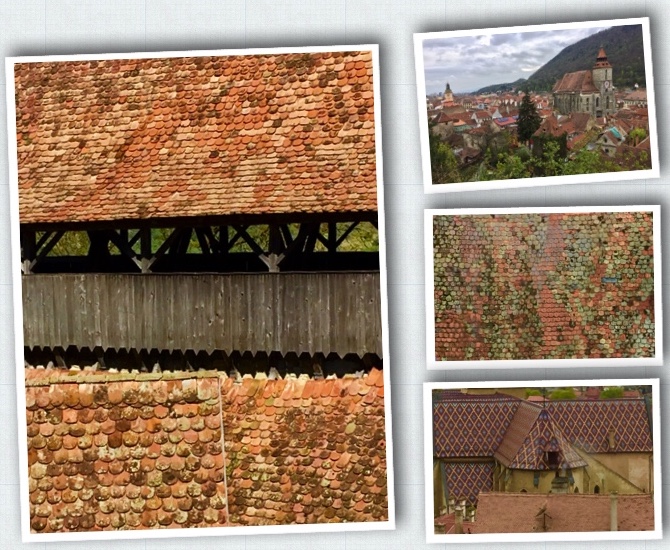
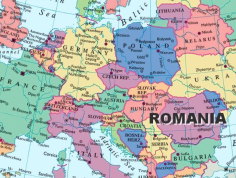 Transylvania has lovely rolling hills, picturesque villages and snowy mountain peaks. Its monasteries are stunning, and more than 150 fortified churches with moats and dense stone walls dot the countryside. Brașov, Sibiu, Sighișoara and other cities combine charm with great dining at low prices.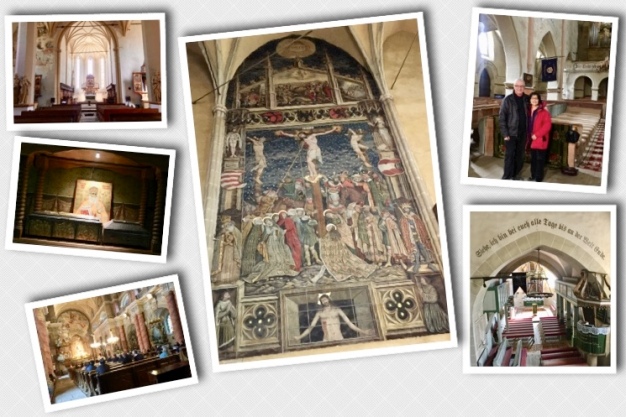





 Not for you? Well, then maybe someplace here in Moldova: to see crafts in Nisporeni, a beautiful mansion in Hîncești or the
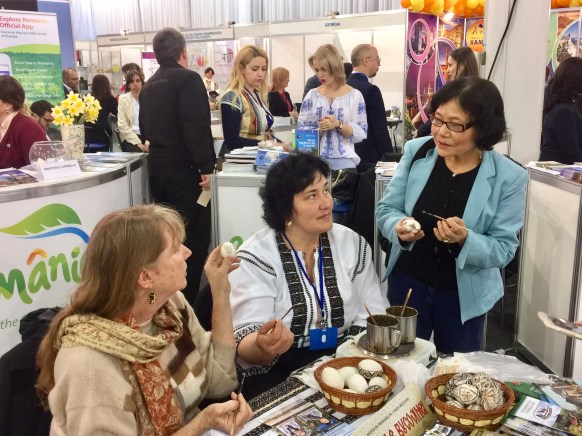
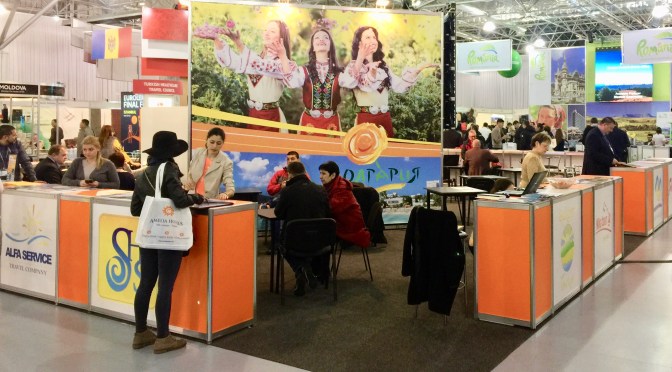
 In other words, it was our kind of travel fair. We went there to gather information for a trip we hope to take at the end of 2017 to Bulgaria, Macedonia and Albania. But we were also curious to see what the travel industry looks like in this part of the world. I’ve also been working with several other Peace Corps volunteers on a project to highlight the importance of friendly customer service and online marketing for Moldovan travel destinations.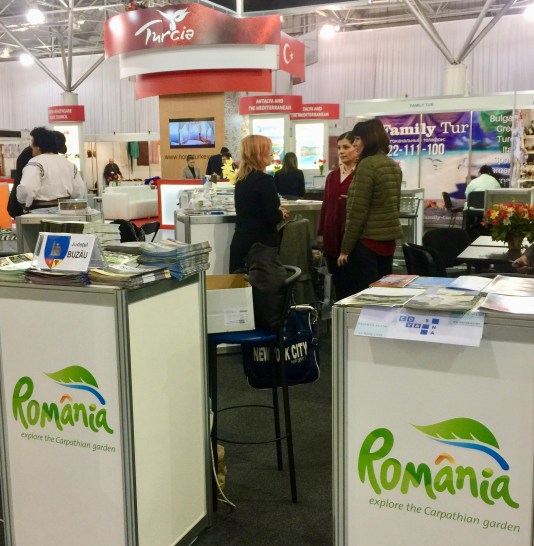




 "Not Exactly Retired"