All posts by djarmul

I am a Peace Corps volunteer in Moldova, in Eastern Europe, serving in the small city of Ialoveni with my wife, Champa. We are from Durham, N.C., where I was the head of news and communications for Duke University. You can follow our adventures on my blog, notexactlyretired.com.

What Could Go Wrong

So many things could go wrong!

Along with “That’s cool!” and “I’ve dreamed of that!”, Champa and I heard this before we joined the Peace Corps in Moldova a year ago.

What if you can’t learn the language, some people asked us. What if something happens to one of your children or grandchildren back home? What if you have a medical emergency yourself? What if you’re robbed? What if there’s a terrorist attack? What if things just don’t work out?

IMG_5067

I generally responded by pointing out that bad things can happen in our traditional lives, too. But since we were lucky enough to have our health, finances and family circumstances in order, we were going to listen to our hearts and pursue the adventure we’d dreamed about.

Recently we were reminded how fortunate we’ve been so far. One of our best friends here had to end his service because of a medical problem. He was an older volunteer, like us, so his departure hit close to home, just like those of two other older friends who left during training. Several other older colleagues returned to the States for medical treatment but were able to resume their service.

Some younger volunteers have had medical problems, too. Colleagues have returned home because they were homesick, couldn’t adjust to life in Moldova or ran into problems. Even worse scenarios are also possible, such as volunteers around the world who have been sexually assaulted. More than 300 people have died while pursuing the Peace Corps mission since 1961, including some who were murdered (although many more died from motor vehicle injuries).

IMG_0889

That may sound like a lot but it’s not. Even though Peace Corps Volunteers face some unique risks, their fatality rate is the same or lower than for Americans generally when controlled for age, marital status and educational attainment, according to one research study.

Peace Corps used to call itself “the toughest job you’ll ever love.” Even in a place like Moldova where living conditions can be easier than in some other countries, Peace Corps is tough. It’s not a vacation. It challenges you every day, forcing you to examine your life and beliefs. It changes how you think. It helps you serve others.

We have never regretted our decision. We view every day, even the bad ones, as a gift. Our lives are full. Our friend’s departure reminded us how lucky we’ve been. Something could go wrong for us, too, perhaps even tomorrow. But for now, we’re staying focused on what could go right.

Sign of Confusion

IMG_4247

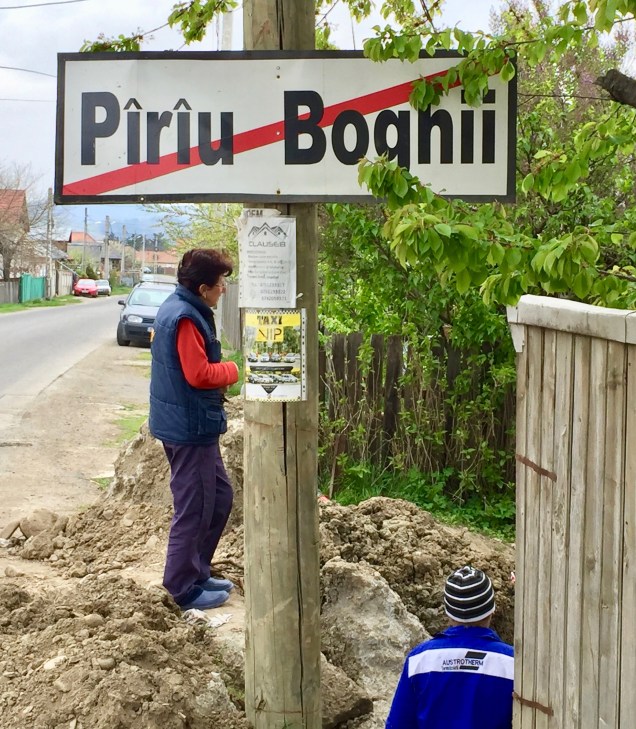
“Why is there a red line through the village’s name?” Champa asked our guide as we drove past a road sign while we were touring Romania recently.

Our guide, Florin, who was usually calm and mellow, almost jumped out of his driver’s seat. “I can’t believe you asked me that!” he said, trying not to laugh. “Every foreign tourist asks me this question!”

IMG_4246

The diagonal red line, he explained, indicates you are leaving a village. When you enter the same village, its name appears on a sign without a red line, as in the second photo here.

I confessed to Florin I’d been wondering about this, too, apparently like many other foreign visitors. I felt foolish when the answer turned out to be so blindingly obvious. I wish I’d known how to say “D’Oh!” in Romanian.

That’s the fun of living and traveling abroad. There’s not much “same old, same old.” Even after nearly a year of working in Eastern Europe with the Peace Corps, I am surprised regularly by things I see or hear. Something as humble as a village road sign can unexpectedly spark laughter and cultural exchange.

After we crossed the border from Romania into Moldova, I checked whether they use diagonal red lines on road signs here, too. As Champa had already noticed, the answer is yes. I’m happy to now know this, too. It’s one more fact on my mental checklist about Moldova. Call it a sign of progress.

Weekend in Bălți

Geography quiz! What do these cities have in common: Los Angeles, Melbourne, Geneva and Montreal? Also: Barcelona and (perhaps) Bălți.

If you don’t know the answer, then guess what these cities have in common: Chicago, Munich, Manchester and Johannesburg. This second list also includes Bangalore and (perhaps) Bălți.

IMG_4875

The cities in the first paragraph are all the second-largest in their country, exceeded only by New York, Sydney, Zurich, Toronto and Madrid, respectively. The cities in the next paragraph are the third-largest in their country (using population statistics I found on Wikipedia).Screen Shot 2017-05-15 at 4.59.54 PM

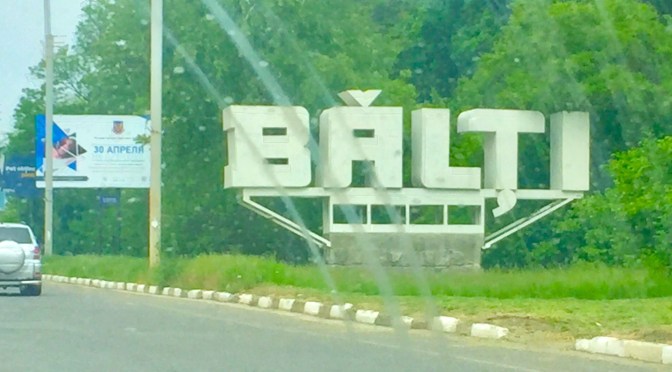
Bălți, a city of just over 100,000 people in northern Moldova, is either second behind the capital, Chișinău, or third, if you include Tiraspol in the disputed region of Transnistria. To complicate things further, population totals may include Moldovans who actually live abroad, and the city’s name is not pronounced “Balt-ee,” as Americans might expect, but “Belts.”

Got all that?

With theaters, restaurants, markets, parks and more, Bălți is an interesting place to explore, as Champa and I discovered this past weekend when we visited a couple of Peace Corps friends there. Steve and Lisa came to Moldova a year ahead of us and are now wrapping up their service.

Here are some photos from the trip. You can decide which you like the most. Or second. Or third.

This slideshow requires JavaScript.

Graduation Season

This Sunday is Mother’s Day, which I used to spend every year at Duke University’s graduation ceremony. As the head of the news office, I wrote the story Duke posted on its website shortly after the ceremony ended.

image

Now I am halfway around the world as a Peace Corps volunteer, yet lately I’ve been thinking about graduations again, particularly about my own Peace Corps “class,” pictured above.

Most volunteers serve for two years, with a few extending for a third year and some leaving early for medical or personal reasons. The volunteers who came to Moldova one year before us are now getting ready to transition to the next phase of their lives. A new group will arrive shortly before they leave.

18238497_1460812773970869_1893989121897490690_o

The departing volunteers recently had their “close of service” conference. That’s them in the group photo above, along with some staff. They are wonderful colleagues who remain committed to their communities, but they are beginning to disengage. Some have been accepted at graduate schools. Others are looking for jobs. Many are planning trips before they return home. Some just want to return to their families.

IMG_7623

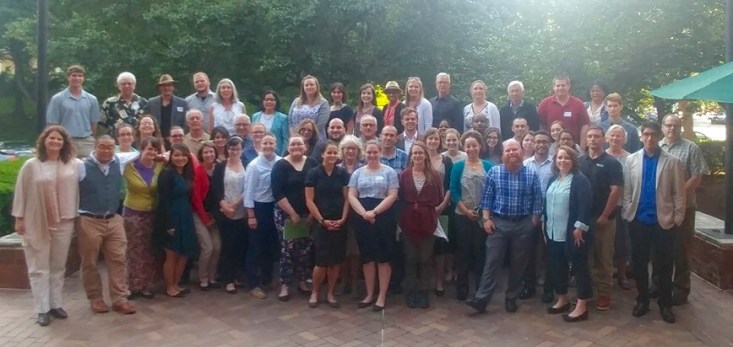
Meanwhile, my own group is no longer the bright-eyed incoming class that gathered nearly a year ago in Philadelphia, above, and then flew on to Chișinău. We have now lived through a cycle of seasons here. We can speak the language at least somewhat, ride a crowded microbus and teach a class.

When the new group arrives in a few weeks, they may regard us as wise and experienced, just as I viewed our predecessors. Peace Corps plans to whisk them off to an orientation session for several days. Some of my colleagues will mentor them.

So much of this reminds me of what I saw at the university.

I enjoyed Duke’s graduations. I was always happy to snap photos for families as I left the stadium, even though I needed to race back to my office and write a long story in an hour or so. My biggest challenge was at my last graduation, when the main speaker gave a rambling talk with few usable quotes. I had to sidestep it and focus on other things.IMG_7689

I missed only one of Duke’s graduations during my 14 years there. In 2008, I went instead to the ceremonies down the road at the University of North Carolina at Chapel Hill, where my son was graduating. I experienced his event as a proud parent, reminding me that although graduations had become routine to me, they felt different when they touched me personally.

Similarly, the transition now under way at Peace Corps Moldova may feel routine to the staff here; I don’t really know. But for me, it is new, albeit familiar. For almost all of those who came with me, there is only this year and next. We are the ones now at the center of the transition. When Mother’s Day rolls around next time, we’ll be the ones preparing to graduate.

A Month for Older Vols

May is Older Americans Month, which Peace Corps is highlighting with stories about older volunteers. Some readers of Not Exactly Retired have a special interest in this, so I am sharing a few of these stories here, which also lets you hear some voices besides my own.

Screen Shot 2017-05-02 at 9.22.11 AM

The article Older Americans are key players abroad provides a nice overview. “Because of their extensive skills and experience, older Volunteers often make significant contributions in their communities abroad,” it says. Among those featured is Dorothy Woolridge, pictured here, a returned volunteer who arrived in Ghana at age 79 and is also profiled in this article.

Fifth time’s the charm: Volunteer reflects on a decade of experience overseas tells the story of Paul Menard, below, who has served in the Peace Corps five times since 2000, in El Salvador, Senegal, Romania, Namibia and Burkina Faso.

Screen Shot 2017-05-02 at 9.28.04 AM

My colleague Anne Reid, a former dancer and choreographer from Harlem, just published an article about Bringing African Dance to Moldova. That’s Anne in purple, in the background.

DSCN2843 copy

Peace Corps is also featuring an article I wrote about Serving as an older American: Insights and tips from the field. Also online is my 5-part series about older Peace Corps Volunteers in Moldova, in which they discuss how the experience has surprised them, affected their lives and changed their plans for the future.

Screen Shot 2017-05-04 at 7.58.45 AM

Finally, Peace Corps has produced several videos about older volunteers, such as this one about Janet VanBenThuysen, above, who served in Kyrgystan. The video below features an older volunteer in Zambia.

If you want to learn more, check out this special Peace Corps website, which addresses the special concerns of older applicants.

A final thought: I am usually dubious of honorary “months.” I used to mutter to my news office colleagues about some concocted “week” or “month” we were asked to promote. When it comes to Peace Corps, though, I am willing to make an exception, with enthusiasm. Perhaps I’m just getting older.

(Images from the Peace Corps website.)

#oam17 #ageoutloud

Jewish Cemetery

On the outskirts of Chișinău, Moldova, is one of Europe’s largest Jewish cemeteries, largely overgrown, largely deserted. This video is also viewable on YouTube.

Himalayan Kitchen

A fun post that I’m sharing here for readers not connected with me on Facebook:

Screen Shot 2017-05-07 at 12.27.50 PM


Top photo by Beni Thelmia.

Back to the Salt Mine

IMG_4327

I used to think “back to the salt mine!” implied drudgery or even slavery. Indeed, when Champa and I visited the Trotus salt mine in Romania recently, we expected to learn about the challenges of working deep underground, as we did at a Pennsylvania coal mine years ago.

Instead, as we descended by bus into the mine shaft, we saw children with scooters and famiies with picnic baskets.

IMG_4339

Things got stranger when we arrived and heard what sounded like a priest chanting. Sure enough, an Orthodox service was under way in what turned out to be a church honoring St. Varvara, the protector of miners. In the video below, you can see the priest giving communion beneath a dome carved into rock salt, with icons set into the white walls.

Just past the church, we came upon kids racing small carts around salt formations. Next we saw playgrounds, a basketball court, a badminton court, a mini-soccer field, a restaurant, a library, even a lake and waterfall. All of this was 240 meters below ground, covering 13,000 square meters.

Located near the small city of Onești, where Olympic gymnast Nadia Comăneci grew up, Târgu Ocna Salina dates its origins back to 1380. Its tourist complex is at the ninth layer of an operation that continues to produce salt for dinner tables and other purposes. Romania has an active salt industry, albeit smaller than in China, the United States and some other countries.

IMG_4333

Many Romanians visit Târgu Ocna Salina for health reasons, especially to breath the salty air to relieve respiratory problems. As we waited for the bus to drive back to the surface, we chatted with a guy who pointed out another potential benefit. “If there’s a nuclear war, we can all survive down here,” he said

Well, maybe. But there’s no denying they’ve carved out a great thing for now, an amazing sight if you’re ever in this part of Eastern Europe.

The next time you hear somebody say “Back to the salt mine!”, tell them you know just the place.

Ialoveni Parade

Ialoveni celebrated its 40th anniversary with performances, music, food and this colorful parade. The 30-second video below is also on YouTube at https://youtu.be/N-uOWzRl_s0.

Easter in the Cemetery

Our neighbors ate, drank and shared memories a few days ago in a place that may surprise you: the local cemetery.

They were there for Paştele Blajinilor, or Memorial Easter, a week after Orthodox Easter. Like families across Moldova, they gathered at the graves of their loved ones, placing flowers and food besides the tombstones, lighting candles and enjoying a meal together.

The photo on the left shows what the cemetery at the Biserica Acoperământul Maicii Domnului in Ialoveni usually looks like. On the right is the same cemetery on Monday, when Champa and I visited.

We saw dozens of families spreading containers of food and bottles of soda, wine and cognac on tables or cloths near the graves. They had traditional local foods along with colored eggs and special bread. A priest circulated to say prayers. Families visited with their friends and neighbors, sharing food and wine as they remembered grandparents, parents, spouses and others. IMG_4384They dribbled wine on the graves and left behind food and candles. The mood was friendly but subdued and respectful.

Our host family was out of town visiting the village home of our host mother. Yet we felt welcome among everyone we saw. The woman in the middle of the photo with Champa knows us. She and her daughters stopped us as we were wandering around and insisted we share some food and wine with them. They also gave us a small gift bag with treats inside. Many families also use this occasion to donate food and small gifts to the poor.

IMG_4385Paştele Blajinilor, which traces it origins back to pre-Christian times, is celebrated widely in Moldova and parts of neighboring Romania. It reminded me of the Mexican holiday Día de los Muertos, although the religious significance is quite different since it coincides with Easter instead of Halloween.

The church you see here is on a hill on the other side of Ialoveni from where we live. As usual in Moldova, we traveled there on foot, walking about 9 km. roundtrip on roads still slick and muddy from a recent spring snowstorm. The trip was worth every step. We were moved by what we saw and felt privileged to take part in such a memorable event, a picnic in a cemetery to feed your soul.