Most Popular Posts

Predicting the outcome of a game or an election is child’s play compared to the uncertainty I face as a blog author. I’ve been writing this blog for a decade and still can’t predict which posts will attract the most readers. 

According to my site statistics, for example, my most successful post of the past 12 months was Stones of Remembrance, about a COVID memorial in Buenos Aires. Back in May 2024, I described the memorial, shown below, and asked why our own country has done so little to honor the million-plus Americans who died during the pandemic.

I never expected that post to build an audience over time and end up first in Google’s rankings for searches on “Argentina Covid Memorial.”

As part of this blog’s 10-year anniversary, I’m pausing my regular content to pop open the blog’s hood and share some insights about it. I’m guessing this may be especially interesting to those of you who are fellow writers, social media users or data geeks. As you’ll see, though, my guess may well be wrong.

So back to the statistics.

My second-most popular piece of the year, Amazing But False, was about tour guides in Portugal, including the one above, who kept telling me a startling story about their country’s divorce rate. I knew the story was nonsense and was amused by their obstinancy in clinging to it. On a whim, I dashed off a quick post, which now ranks higher on Google than similar stories from the BBC and elsewhere.

Third was Momos Down Under, about the delicious Nepalese dumplings we ate in Australia and New Zealand, including at the shop in Christchurch shown above. The post is Google’s top hit for “momos in Australia.” For “momos in New Zealand,” it ranks second, behind a Tripadvisor guide on the topic.

I enjoyed writing all three posts but, honestly, they meant less to me than some others, like my recent story and video about the school we helped build in Nepal. All three were just interesting things I observed while traveling.

I don’t check my traffic statistics often and haven’t discussed them here since 2017, when I reached 200 posts. I write for fun, not as a business, and have resisted inquiries about monetizing this site.

My most popular story back in 2017 remains atop my all-time list. This one isn’t a surprise. Peace Corps After 50, which I wrote while serving in Moldova, was promoted on a PBS website, above, and elsewhere. It’s been attracting views ever since, presumably from older Americans thinking about applying. Over time, it’s slipped in the Google rankings, but that’s unsurprising since Google’s algorithm favors fresher content.

Ah, the Google search engine algorithm. It’s their mysterious, ever-changing formula for ranking pages. Advertisers, political consultants and others obsess about it. I wish I still had my crack Duke University social media team available to advise me why my stories about a foreign memorial and divorce rate have done so well. Maybe it’s because they were both on niche topics where my article could stand out more than one about Middle East autocracies or even Magical Kathmandu.

Or maybe there’s another reason. If you have any insights, please share them with a comment. Don’t wait, though. Before we all know it, artificial intelligence is likely to transform the entire search engine business, which extends beyond Google.

Another measure of user interest is file downloads from a site. At the top of my site’s download list are the lyrics to Orașul Meu, the song and music video I produced with Moldovan singer Laura Bodorin. That song is still being performed in Ialoveni, the city where we created it.

Speaking of users, most of mine live in the United States, followed by Moldova, Germany, the United Kingdom and Canada. Rounding out the top ten are Nepal, Romania, Australia, India and China. Readers in more than 150 countries have visited the site at least once.

I produce the site using the TwentyFourteen theme on WordPress.

I might now close by expressing my deep appreciation to the web designers, editors and others who work with me on the site. However, the entire operation is just me, with 384 posts so far and more to come.

Looking ahead, I hope to keep entertaining you with whatever travels, topics and musings come next, even as I acknowledge my inability to predict which posts you’ll find interesting. 

That unpredictability extends to this post. I have no idea how many people will read it. Maybe nobody. Maybe a lot. Who knows? Now that you’ve reached the end, though, I know that at least one person finished it, so maybe my odds just got a little better.

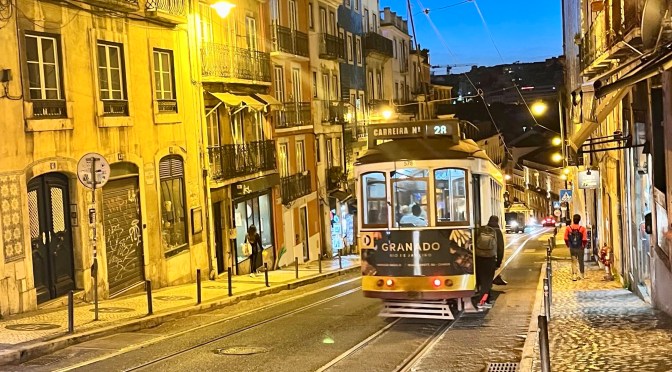
Top photo: Tram near our Airbnb in Lisbon. Photo by Karen Simon.


Subscribe to Not Exactly Retired. It’s free!

Ten Years

It’s been ten years.

One decade ago this month I walked away from a job I loved to shake up my comfortable life and try something new. 

I stepped down as the head of news and communications at Duke University, surprising my outstanding team. We’d been working together for years to respond to research discoveries, sports championships, weather emergencies, campus protests and more, as well as to the rise of social media and other dramatic changes to the media landscape. 

With Keith Lawrence at the Durham Bulls Athletic Park. The photo I’m holding, signed by my colleagues, shows a sign tracking the number of days since Duke’s last scandal.

Duke sent me off with a big reception at a local theater and, as shown in the photo, an informal farewell at the Durham Bulls baseball stadium.

Less than a week later, Champa and I embarked on an 11,000-mile drive around the United States, followed by an extended trip to Nepal. That’s where the two of us met in 1977 when I was a Peace Corps Volunteer, posted to the same school where she was teaching. 

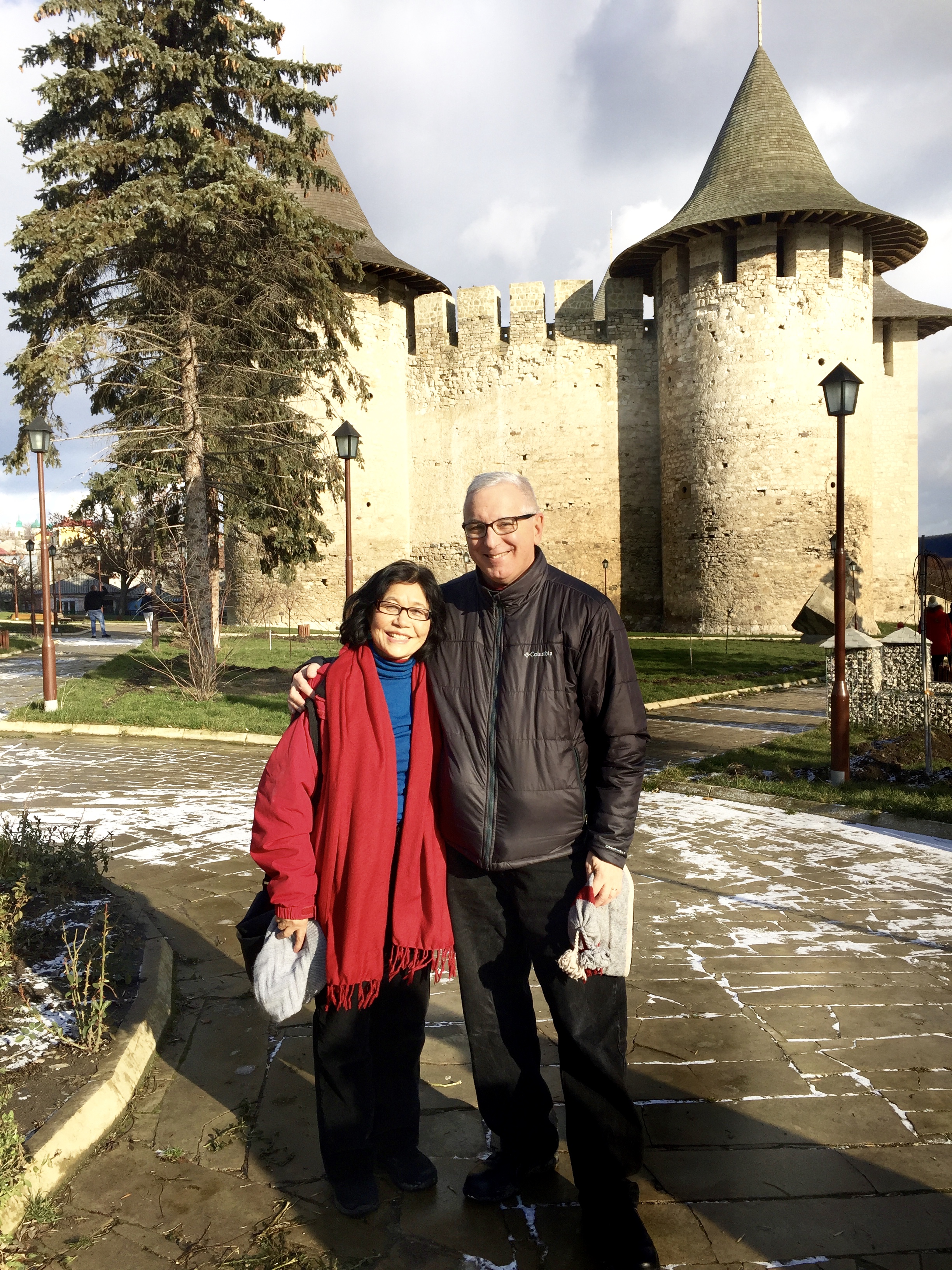
Visiting the Soroca Fortress in Moldova.

Finally, after a short break, we got rid of much of our stuff, rented our house and moved to Moldova, in Eastern Europe, to begin serving together as Peace Corps Volunteers.

I chronicled our three-year adventure on this blog and in my book. Since returning to Durham in 2018, we’ve continued pursuing our “not exactly retired” lifestyle, joining a growing number of older Americans who have been redefining retirement as more than leisure — and redefining themselves in the process. 

Several news outlets profiled us as examples of this trend, which in our case has meant extensive travel, volunteering and spending time with family and a network of friends that reaches around the world.

I’ve never looked back. 

I enjoyed my career and still miss my Duke colleagues, some of whom recently lost their jobs because of federal funding cuts, but I knew it was time for a change. Just like when I graduated college and chose to backpack across Europe, Asia and Africa with a friend instead of following my classmates to graduate school, I wanted to grab life and see what else it offered.

Visiting Tallinn Town Square in Estonia.

As I’ve approached this ten-year milestone, I know how lucky I’ve been. I left my job before the Covid pandemic and current funding crisis. Champa and I finished our service in Moldova before the pandemic and war in neighboring Ukraine forced the Peace Corps to halt its operations. We’ve been fortunate with our finances, health and family responsibilities. We could have encountered some disaster while traveling abroad, or at home, but we’ve been fine.

I launched this blog to share with friends our initial drive around the United States, never expecting it to continue so long or to reach people in more than 100 countries. I’ve loved hearing from readers with questions about the Peace Corps or early retirement, or just seeking encouragement to make a leap themselves.

Some of the other older volunteers who served with us in Peace Corps Moldova.

As I’ve told them repeatedly, my message is not “join the Peace Corps!” That’s a good choice for some people but not for others, assuming they get past the rigorous application process. Rather, I’ve urged readers to be intentional about their lives, to choose instead of drift, regardless of their interests. We all have dreams, whether it’s to launch a business, start a nonprofit or master a new skill. It’s often possible to pursue that dream, even on a limited scale, while respecting the real-world complexities that come with it.

Champa and I plan to keep going as long as we can. We’re traveling more than usual now so as to remain outside the United States during its current turmoil. You’ll see soon where we’re heading next. As we approach the next election, however, and as we get older, we will reevaluate. One of the main benefits of the past ten years is how comfortable we’ve become with uncertainty and change. 

Delivering food for the Food Bank of Central & Eastern North Carolina during the pandemic.

Veering from our traditional American lives has enriched us immeasurably. These riches have come not in additional paychecks but in the people we’ve met, the places we’ve seen and the memories we’ve made, all while remaining centered with our family and friends. As we’ve learned on the road, we are far from unique in doing this. Many other older people with widely varying budgets and circumstances are also traveling off the beaten path and blazing their own trails. 

I know how privileged we are to be among them. Not everyone can do this; family obligations, finances, medical limitations and other constraints are real. But it is possible to resist letting fear or habit prevent us from living with purpose. We can choose to make room for what truly matters to us.

Visiting the new school we recently helped build in Samalbung, Nepal.

An old Peace Corps slogan says: Life is calling. How far will you go? As we wrap up our first decade of being “not exactly retired,” Champa and I are grateful for how far we’ve gone and still looking forward to whatever comes next.

Thanks for joining us on the journey.

Top photo: Resting after a camel ride in Morocco.


Subscribe to Not Exactly Retired. It’s free!