

I never expected to become someone who likes cruising.
Whenever I saw a television ad featuring adrenaline-filled action and frantic gaiety on a giant cruise ship, I thought to myself: “that’s not for me.” The idea of being trapped in a confined space with thousands of strangers, visiting ports on a crowded tour bus rather than on my own, was unappealing. I didn’t even need to see the drunken conga line.
I’ve been surprised, therefore, to discover how much I enjoy an occasional cruise, especially as a way to visit multiple places that are challenging to reach otherwise, such as in Alaska (shown below), the Caribbean or the Greek islands.

Could I organize such a trip myself? Sure, but it’s easier on a cruise ship, where Champa and I can unpack once and wake up every morning with a new location to explore. We generally have only one day in each port, but that’s enough to get a taste of a place. When we cruised around southeastern Australia a year ago, for instance, we spent several busy hours daily in Melbourne, Adelaide and other stops. We didn’t see everything but we saw a lot.
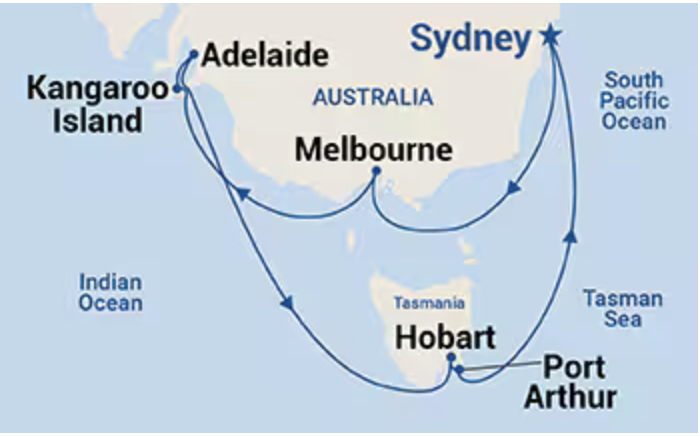
I planned these excursions myself, studying beforehand what to see and how to get there. We ended up seeing more than we would have on one of the excursions organized by the ship, without a crowd, for a fraction of the price. We made good use of local tourist offices, free walking tours, city apps, Uber, Google Maps and other resources.
Overpriced port excursions aren’t the only thing we avoid on cruise ships, which make much of their money from selling extras. We exercise cruise control with everything. We don’t buy the photo packages, gamble in the casinos, get expensive spa treatments, attend art auctions or shop at the onboard boutiques. Instead of spending hundreds or thousands of dollars during the cruise, like many passengers, we spend little or nothing. We also don’t stay in the fanciest cabins, although we do prefer cabins with a window.
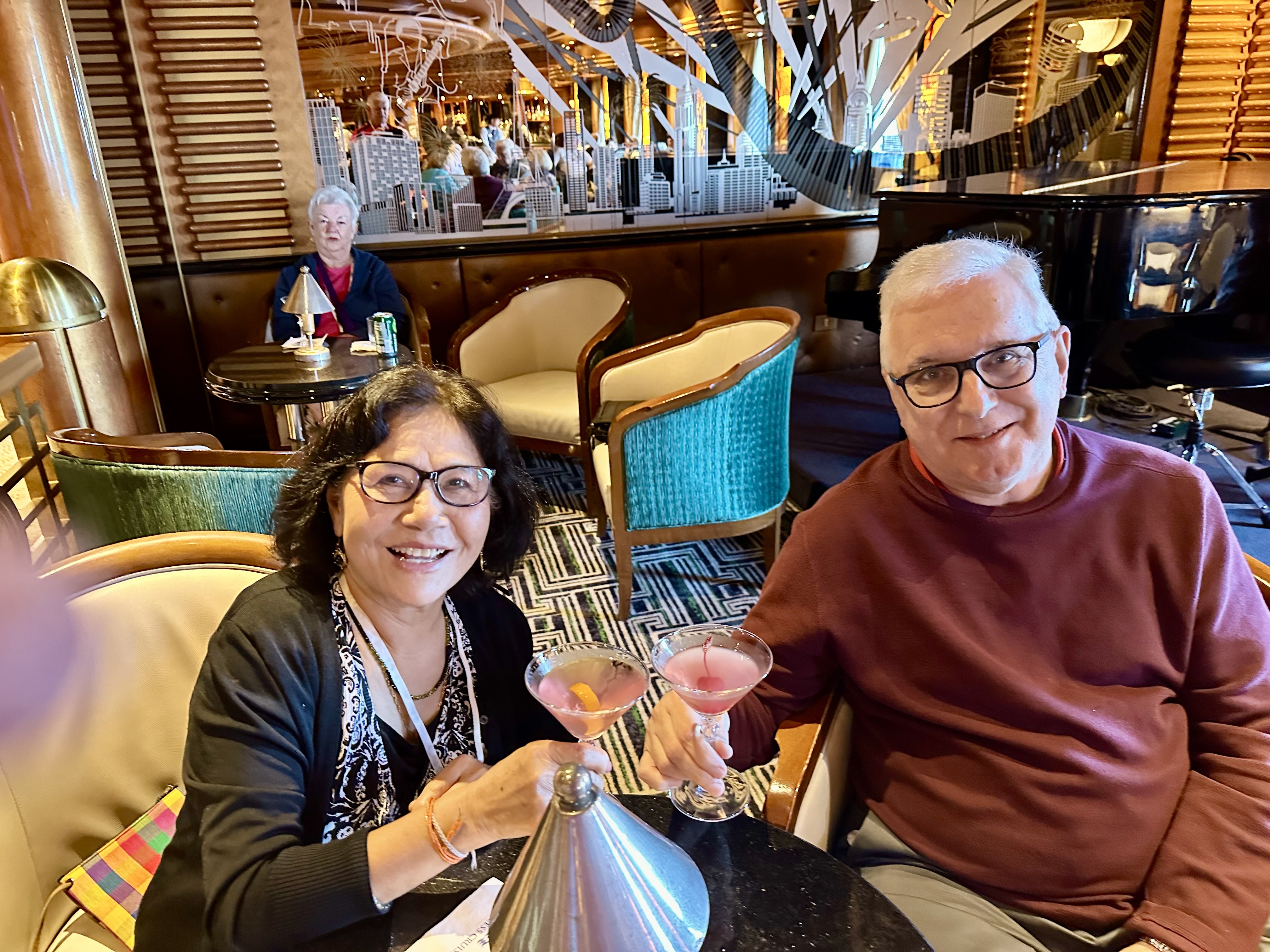
Cruise lines vary widely in what they offer. Some provide all-inclusive experiences with caviar and butlers. We can’t afford those and probably would feel out of place even if we could.
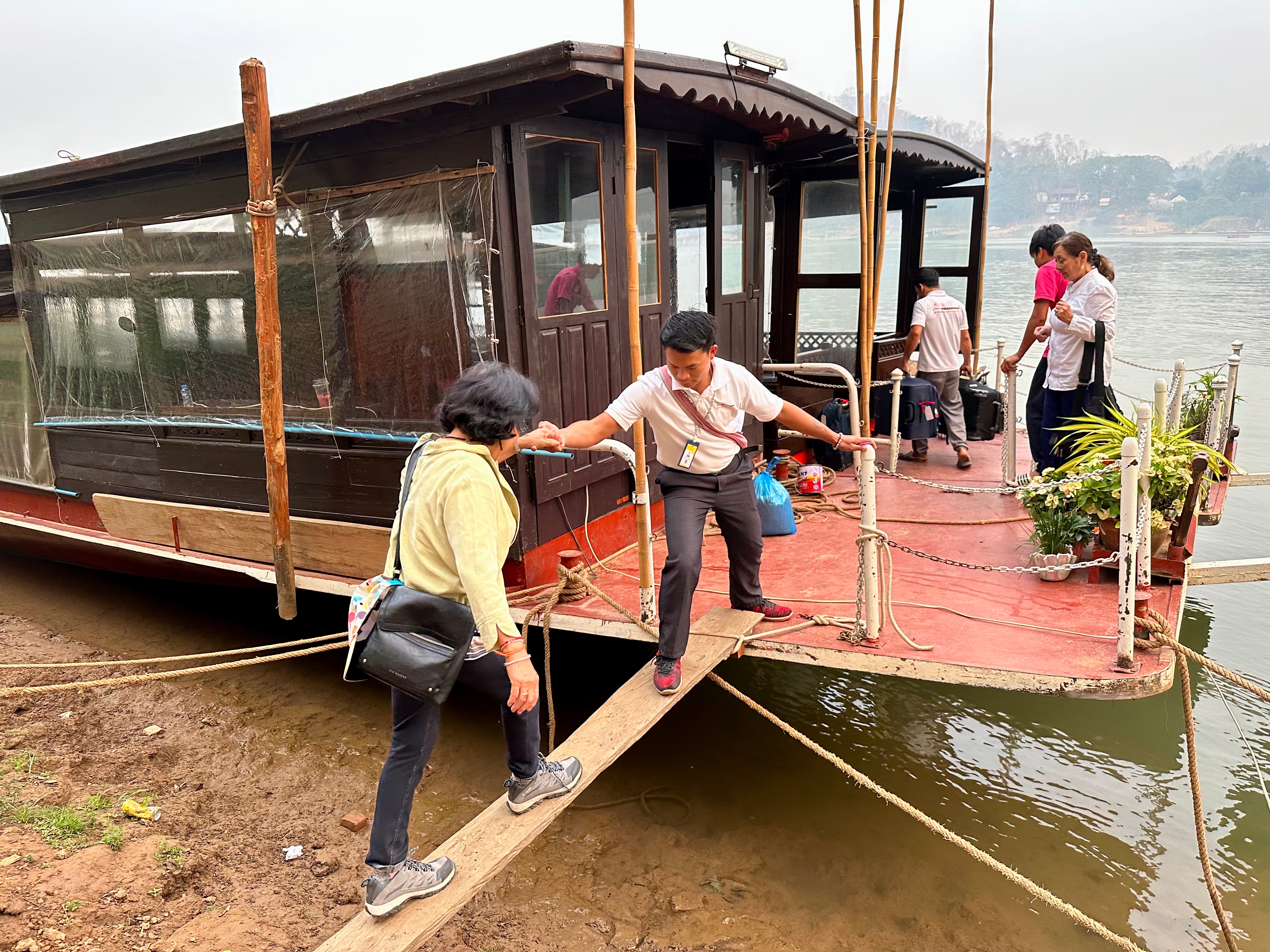
At the other end of the spectrum, we also felt out of place on a Carnival Cruise we took from Charleston to the Bahamas. That ship’s party vibe, as shown in the top photo, was intense and the upselling was relentless. But Charleston was near our home and we got an incredible deal, so we enjoyed it nonetheless. We’ve also sailed on some less conventional ships, such as the one shown here that took us along the Mekong River from Laos to Thailand, or an overnight trip on Vietnam’s Halong Bay. Both of those were memorable and fun.
Are we being cheap or denying ourselves the full cruise experience with our approach? Honestly, it doesn’t feel that way, at least to us. We’re not missing out on anything we care about. We’re eating good meals, watching free shows, listening to free music, working out in the gym, chatting with nice people and relaxing onboard. We have a good time, subsidized by the many passengers who choose to indulge in the various services.
When you view a cruise primarily as transportation, it can be a surprisingly good way to travel in certain situations.
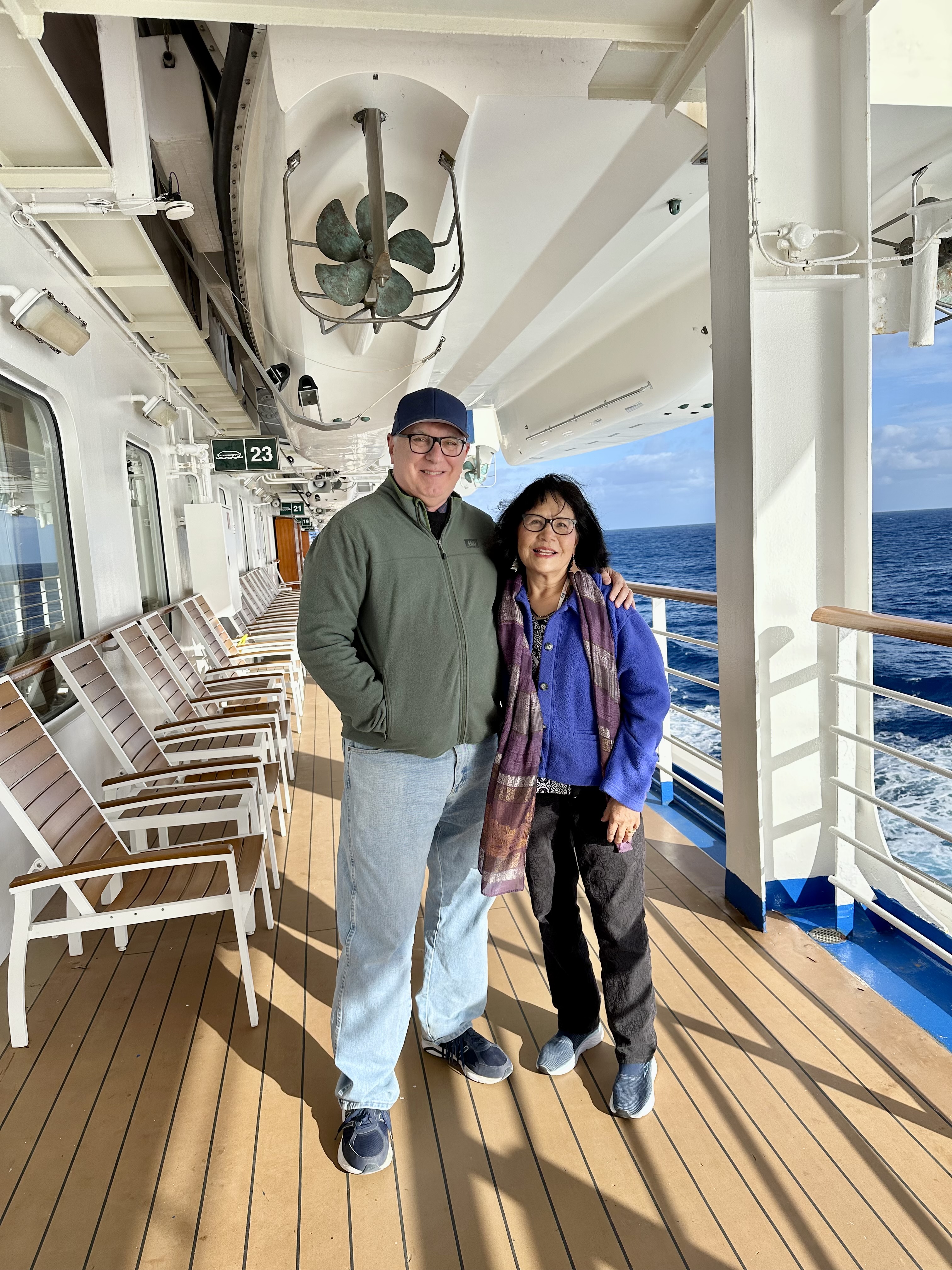
We’re about to leave on our latest cruise, to the southern Caribbean. We chose it because we wanted to visit friends in both Grenada and Trinidad, as well as some neighboring islands. We considered flying or taking long ferry rides from island to island, but it was vastly easier to do this, and probably cheaper, too.
Unfortunately, several ports on our itinerary are near Venezuela. One has already been switched out for security reasons following the U.S. attack there. We’re crossing our fingers that everything goes smoothly.
In the meantime, I’m reviewing the ship’s dinner menu online and considering what to order our first night on board. The lobster bisque looks good.





 However, they generally pay more attention to the Euro than the dollar; indeed, prices for some goods and services here are quoted in Euros rather than lei, as we learned when we considered
 (That included me until I started writing this post.)
 "Not Exactly Retired"