

I yearned for Duke’s famous basketball coach when I took the #9 bus to the Moldova Peace Corps office on Friday.

The bus drove along a street named for the Moldovan writer and artist Gheorghe Asachi, turned at a street named for the poet Vasile Alecsandri and continued past a street named for a lawyer, Avram Iancu. I got off at a street named for another writer, Alexandru Hâjdeu.
Finally, at a street named for a Moldavian historian, Grigore Ureche, I reached the Peace Corps, which is named for … well, nobody. Here in Moldova they might have called it “Peace Corps John F. Kennedy” or “Peace Corps Sargent Shriver.”


Moldovans are passionate about naming streets and institutions after prominent people, especially writers and political figures. The central street in Chișinau, the capital, is named for the beloved king Ștefan cel Mare și Sfânt, or “Steven the Great and Holy.”
Other large streets in the city honor everyone from Orthodox church leaders to Yuri Gagarin, the first man in space. There are also streets named for famous dates, like “31 August 1989,” when Moldova adopted Romanian as its official language.


In Ialoveni, where we currently live, we have adjacent streets named after famous dates in May, as well as many streets and buildings named for people. The library, where I work, and one of the two main schools are named for Petre Ștefănucă, a Bessarabian sociologist who died in a Russian gulag. The other main school, where Champa works, is named after Andrei Vartic, a writer and physicist.

Seeing all of these names has been a learning experience for me. I grew up near New York City, which has a systematic grid of streets and avenues with numbers. Many other U.S. cities have numbered streets as well. For many years, Champa and I lived near Washington, D.C., where many streets are named after U.S. states. In Durham, our home now back in the States, our subdivision has streets named after trees; ours is Pine Bark Trail.


To be sure, New York also has the George Washington Bridge, Lincoln Tunnel and FDR Drive, and many cities in America have streets named for Martin Luther King or other people. My personal favorite is Champa Street in Denver. But we also have plentiful streets with simple names like “Main Street” or “Market Street.”


Well, simple if you’re an American, I suppose. For a Moldovan visitor, “Lexington Avenue” or “Rock Creek Parkway” may sound as foreign as “Strada Mihail Kogălniceanu” does to me.
I’m sure Mihail was a great guy. I can’t help but think, though, it would have been easier if they’d handled him like our own famous Mike in Durham and just called him Coach K.


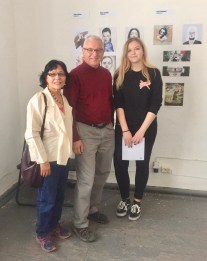 There are few galleries in Moldova where young artists can show their work. This weekend, though, more than 20 of them are taking part in an exhibit inside an old museum, featuring more than 100 portraits ranging from painting to caricature.
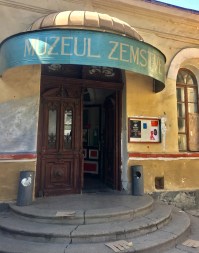 Lucia Codreanu and Maks Graur, both young artists themselves, organized and curated the free show in downtown Chișinău, running through Sunday afternoon. You can see some of the work here.


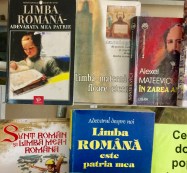 The words mean “our language” in Romanian, which is the official national language here.


 In other words … well, yes: in other words. It made for an interesting dinner. I tried to speak French with the boyfriend (shown here, with the beard) since I studied it in high school and once spoke it fairly well. But it was frustrating. I understood much of what he said but sputtered in Romanian when I tried to reply.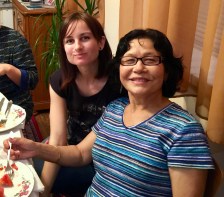


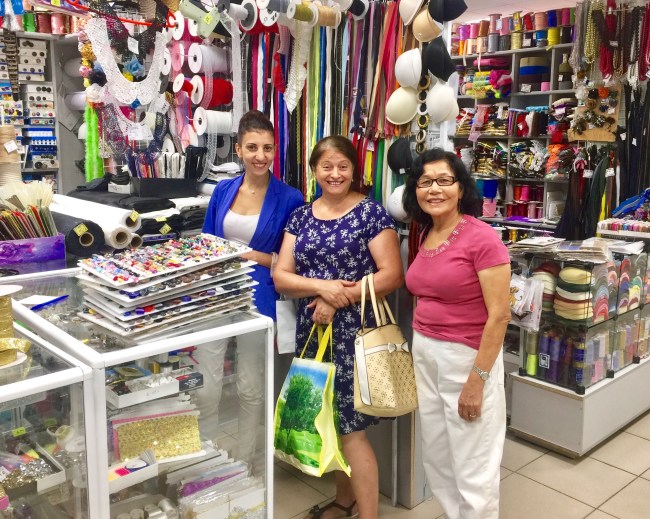
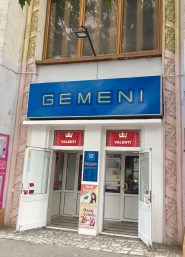
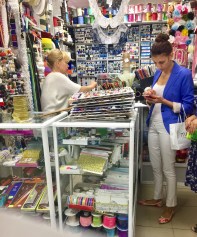 Bolts of velvet, cotton and other material surrounded many of the shops we visited. Champa and her partners visited one place after another to select the best cloth for the costumes they’re planning. They also bought buttons, gold braid, ribbons and other haberdashery supplies. Within a few hours, we were loaded down with bags, which we carried on a bus across town to Ina’s studio. She is now cutting and assembling the cloth for each costume — Romeo, Juliet, kings, queens and more.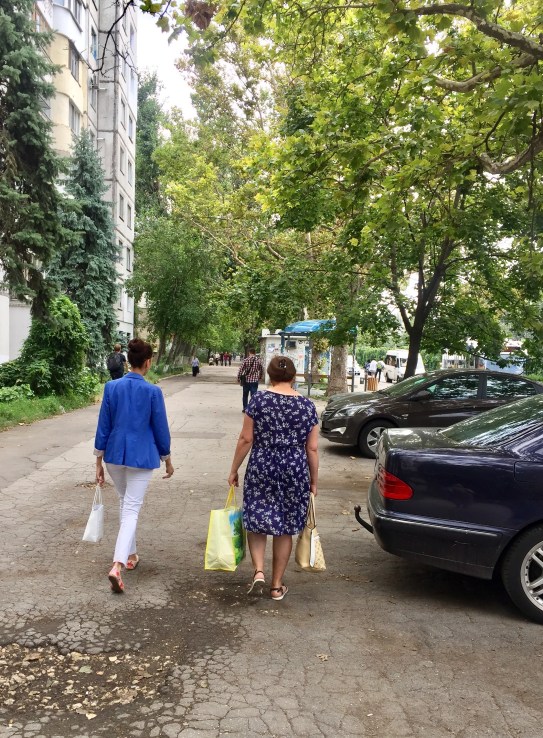


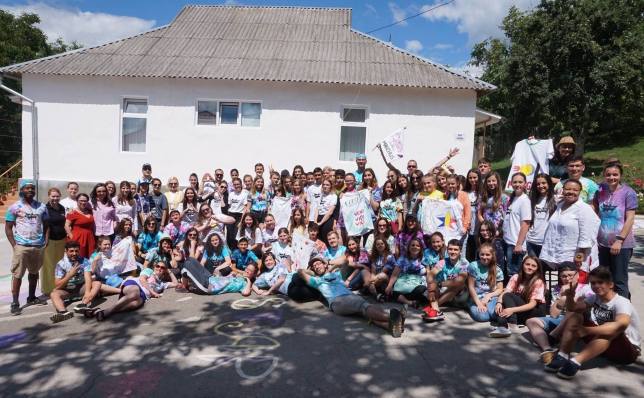
 The program, whose full name is Girls Leading Our World – Teaching Our Boys Excellence, began in Romania in 1995 and has spread around the world with Peace Corps support. Here in Moldova, volunteers work with local counterparts to provide activities ranging from leadership workshops to singing, dancing, making S’Mores and tie-dying T shirts. The program continues throughout the year with activities across Moldova.

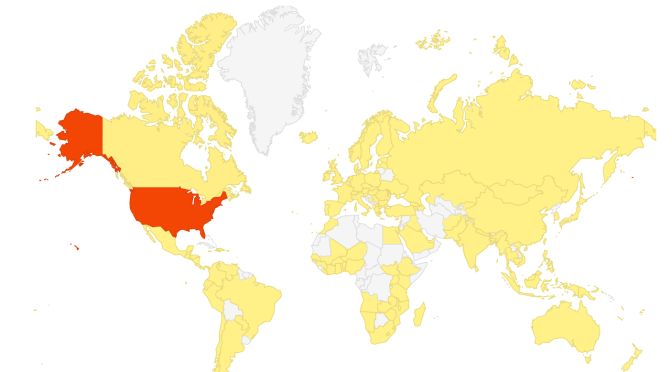
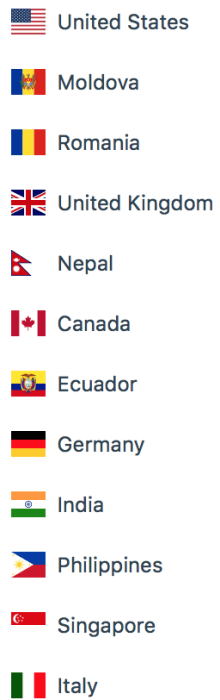 More than 12,000 readers have visited “Not Exactly Retired” since its launch two years ago. I was curious where all of you are located, so recently ran a search on WordPress, which hosts the site.
 Some of the other “Top Dozen,” though, surprised me. Who are all of you reading “Not Exactly” in Ecuador or the Philippines? Are you fellow Peace Corps Volunteers in those countries? How about in India, Germany and Italy? I know at least one loyal reader in Singapore (hi Corinna!), but who are the rest of you? The data provided by WordPress provide only a glimpse.


 "Not Exactly Retired"