All posts by djarmul

I am a Peace Corps volunteer in Moldova, in Eastern Europe, serving in the small city of Ialoveni with my wife, Champa. We are from Durham, N.C., where I was the head of news and communications for Duke University. You can follow our adventures on my blog, notexactlyretired.com.

A Month for Older Vols

May is Older Americans Month, which Peace Corps is highlighting with stories about older volunteers. Some readers of Not Exactly Retired have a special interest in this, so I am sharing a few of these stories here, which also lets you hear some voices besides my own.

Screen Shot 2017-05-02 at 9.22.11 AM

The article Older Americans are key players abroad provides a nice overview. “Because of their extensive skills and experience, older Volunteers often make significant contributions in their communities abroad,” it says. Among those featured is Dorothy Woolridge, pictured here, a returned volunteer who arrived in Ghana at age 79 and is also profiled in this article.

Fifth time’s the charm: Volunteer reflects on a decade of experience overseas tells the story of Paul Menard, below, who has served in the Peace Corps five times since 2000, in El Salvador, Senegal, Romania, Namibia and Burkina Faso.

Screen Shot 2017-05-02 at 9.28.04 AM

My colleague Anne Reid, a former dancer and choreographer from Harlem, just published an article about Bringing African Dance to Moldova. That’s Anne in purple, in the background.

DSCN2843 copy

Peace Corps is also featuring an article I wrote about Serving as an older American: Insights and tips from the field. Also online is my 5-part series about older Peace Corps Volunteers in Moldova, in which they discuss how the experience has surprised them, affected their lives and changed their plans for the future.
Screen Shot 2017-05-04 at 7.58.45 AM

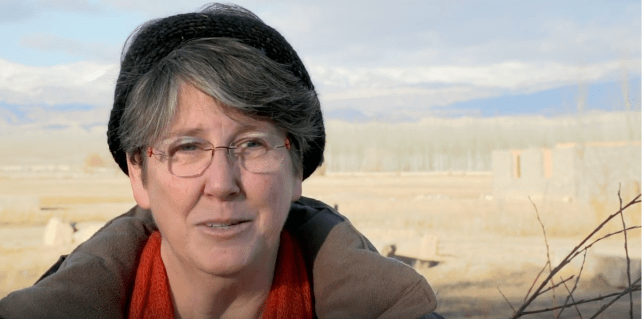
Finally, Peace Corps has produced several videos about older volunteers, such as this one about Janet VanBenThuysen, above, who served in Kyrgystan. The video below features an older volunteer in Zambia.

If you want to learn more, check out this special Peace Corps website, which addresses the special concerns of older applicants.

A final thought: I am usually dubious of honorary “months.” I used to mutter to my news office colleagues about some concocted “week” or “month” we were asked to promote. When it comes to Peace Corps, though, I am willing to make an exception, with enthusiasm. Perhaps I’m just getting older.

(Images from the Peace Corps website.)

#oam17 #ageoutloud

Jewish Cemetery

On the outskirts of Chișinău, Moldova, is one of Europe’s largest Jewish cemeteries, largely overgrown, largely deserted. This video is also viewable on YouTube.

Himalayan Kitchen

A fun post that I’m sharing here for readers not connected with me on Facebook:

Screen Shot 2017-05-07 at 12.27.50 PM


Top photo by Beni Thelmia.

Back to the Salt Mine

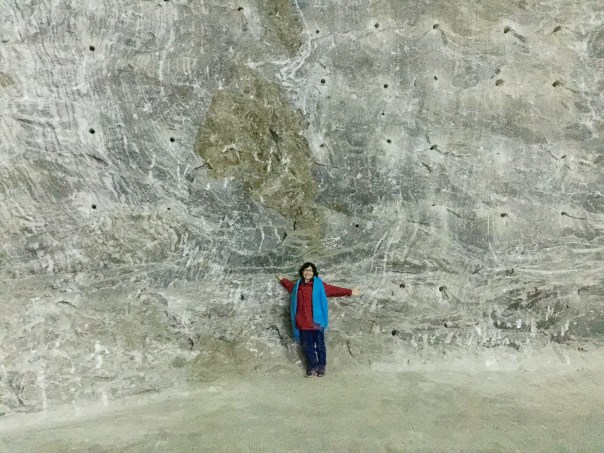
IMG_4327

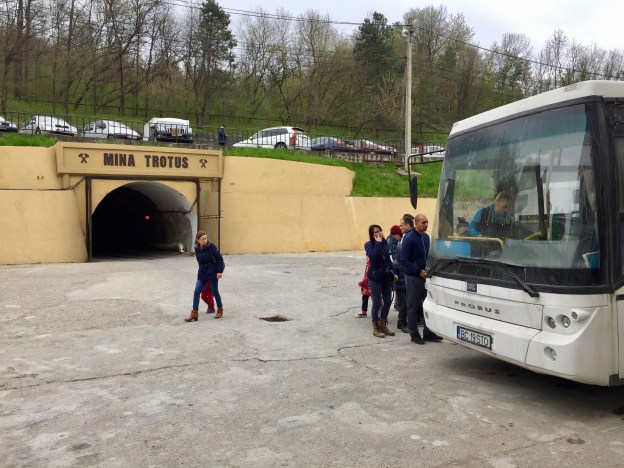
I used to think “back to the salt mine!” implied drudgery or even slavery. Indeed, when Champa and I visited the Trotus salt mine in Romania recently, we expected to learn about the challenges of working deep underground, as we did at a Pennsylvania coal mine years ago.

Instead, as we descended by bus into the mine shaft, we saw children with scooters and famiies with picnic baskets.

IMG_4339

Things got stranger when we arrived and heard what sounded like a priest chanting. Sure enough, an Orthodox service was under way in what turned out to be a church honoring St. Varvara, the protector of miners. In the video below, you can see the priest giving communion beneath a dome carved into rock salt, with icons set into the white walls.

Just past the church, we came upon kids racing small carts around salt formations. Next we saw playgrounds, a basketball court, a badminton court, a mini-soccer field, a restaurant, a library, even a lake and waterfall. All of this was 240 meters below ground, covering 13,000 square meters.

Located near the small city of Onești, where Olympic gymnast Nadia Comăneci grew up, Târgu Ocna Salina dates its origins back to 1380. Its tourist complex is at the ninth layer of an operation that continues to produce salt for dinner tables and other purposes. Romania has an active salt industry, albeit smaller than in China, the United States and some other countries.

IMG_4333

Many Romanians visit Târgu Ocna Salina for health reasons, especially to breath the salty air to relieve respiratory problems. As we waited for the bus to drive back to the surface, we chatted with a guy who pointed out another potential benefit. “If there’s a nuclear war, we can all survive down here,” he said

Well, maybe. But there’s no denying they’ve carved out a great thing for now, an amazing sight if you’re ever in this part of Eastern Europe.

The next time you hear somebody say “Back to the salt mine!”, tell them you know just the place.

Ialoveni Parade

Ialoveni celebrated its 40th anniversary with performances, music, food and this colorful parade. The 30-second video below is also on YouTube at https://youtu.be/N-uOWzRl_s0.

Easter in the Cemetery

Our neighbors ate, drank and shared memories a few days ago in a place that may surprise you: the local cemetery.

They were there for Paştele Blajinilor, or Memorial Easter, a week after Orthodox Easter. Like families across Moldova, they gathered at the graves of their loved ones, placing flowers and food besides the tombstones, lighting candles and enjoying a meal together.

The photo on the left shows what the cemetery at the Biserica Acoperământul Maicii Domnului in Ialoveni usually looks like. On the right is the same cemetery on Monday, when Champa and I visited.

We saw dozens of families spreading containers of food and bottles of soda, wine and cognac on tables or cloths near the graves. They had traditional local foods along with colored eggs and special bread. A priest circulated to say prayers. Families visited with their friends and neighbors, sharing food and wine as they remembered grandparents, parents, spouses and others. IMG_4384They dribbled wine on the graves and left behind food and candles. The mood was friendly but subdued and respectful.
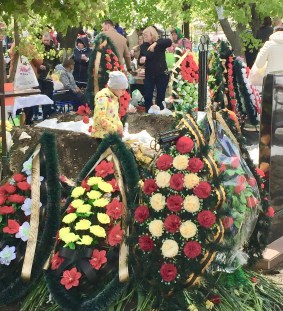
Our host family was out of town visiting the village home of our host mother. Yet we felt welcome among everyone we saw. The woman in the middle of the photo with Champa knows us. She and her daughters stopped us as we were wandering around and insisted we share some food and wine with them. They also gave us a small gift bag with treats inside. Many families also use this occasion to donate food and small gifts to the poor.

IMG_4385Paştele Blajinilor, which traces it origins back to pre-Christian times, is celebrated widely in Moldova and parts of neighboring Romania. It reminded me of the Mexican holiday Día de los Muertos, although the religious significance is quite different since it coincides with Easter instead of Halloween.

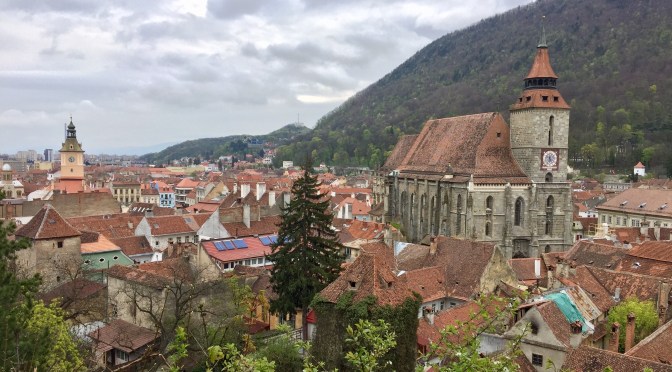
The church you see here is on a hill on the other side of Ialoveni from where we live. As usual in Moldova, we traveled there on foot, walking about 9 km. roundtrip on roads still slick and muddy from a recent spring snowstorm. The trip was worth every step. We were moved by what we saw and felt privileged to take part in such a memorable event, a picnic in a cemetery to feed your soul.

Making Kürtös

Here’s an amazing street food: Kürtös Kalács, a traditional Hungarian sweet cake produced by street vendors in Transylvania. The only thing more fun than watching them make it is eating the kürtös fresh off the fire. This video is also posted on YouTube at https://youtu.be/2ZLCkIPvtHg.

Exploring Transylvania

If I said “Transylvania,” would you think “Dracula”?

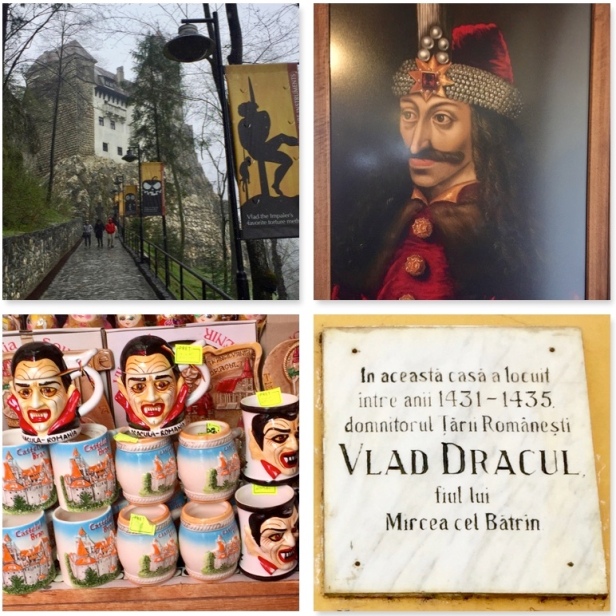
Dracula

Transylvania was indeed the home of Vlad Țepeș, or “Vlad the Impaler,” whose bloody reign and hilltop castle inspired the famous vampire novel by Bram Stoker. That’s Vlad in the top-right picture, which we saw when we visited Bran Castle this past week.

Other TransylHowever, as we discovered during our 5-day trip to Transylvania, there’s so much more to see than tacky Dracula T shirts and coffee mugs.
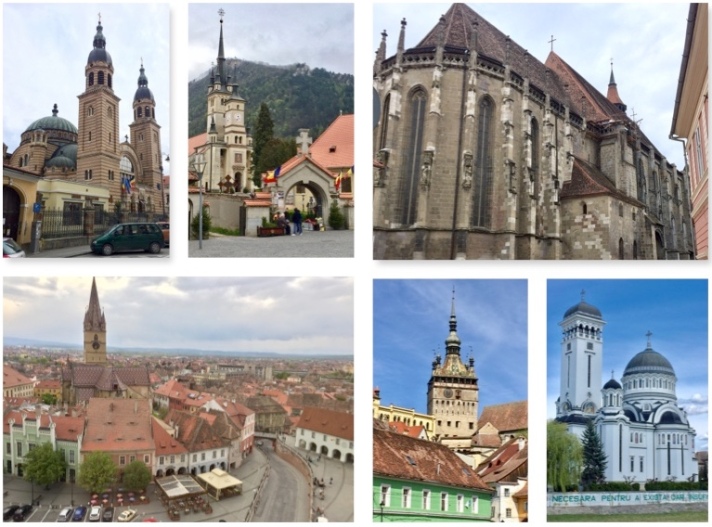
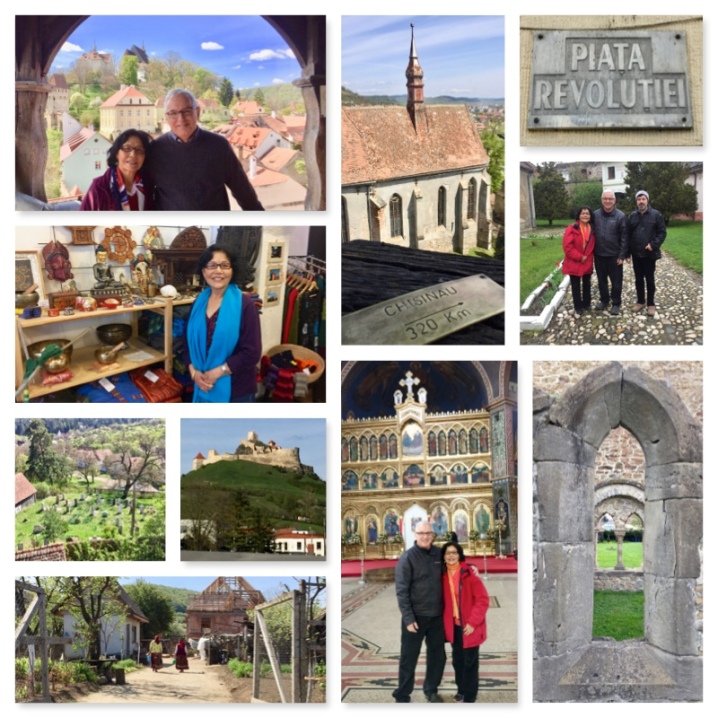
Churches

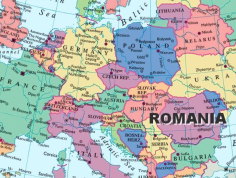
Transylvania is located in central Romania, west of the Republic of Moldova, which was once part of Romania and retains close cultural ties to it. Romania mapTransylvania has lovely rolling hills, picturesque villages and snowy mountain peaks. Its monasteries are stunning, and more than 150 fortified churches with moats and dense stone walls dot the countryside. Brașov, Sibiu, Sighișoara and other cities combine charm with great dining at low prices.
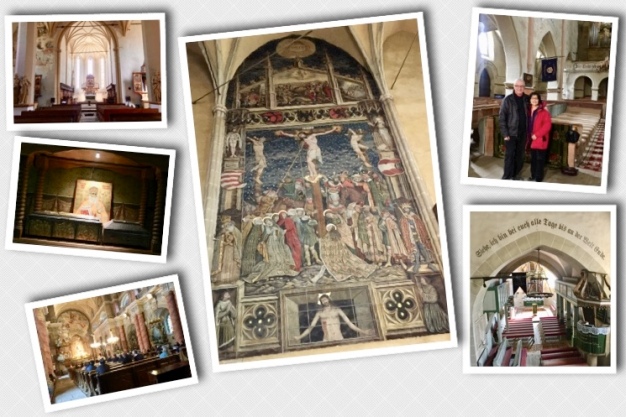
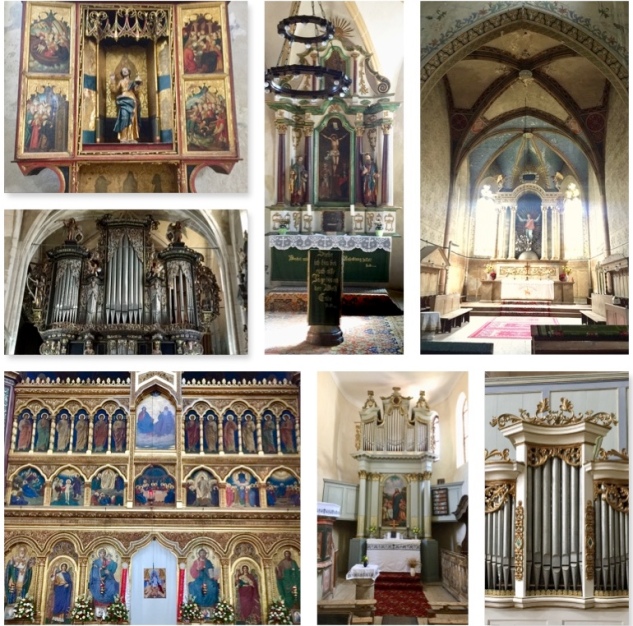
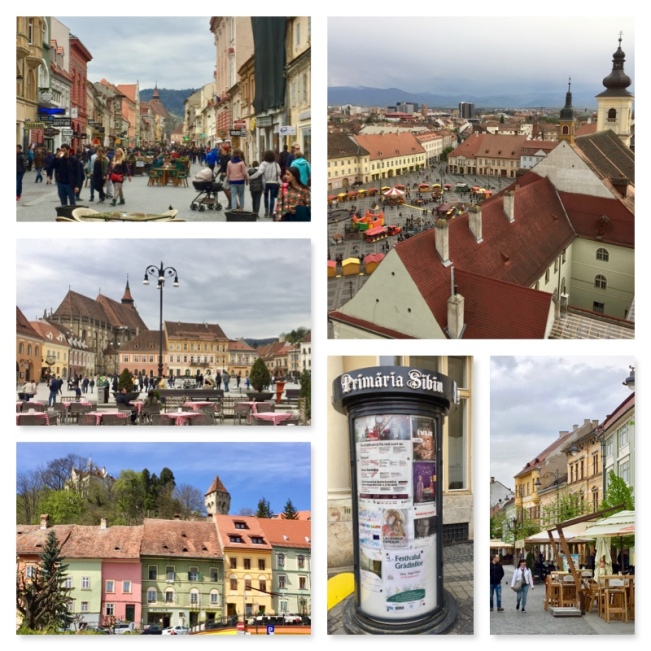
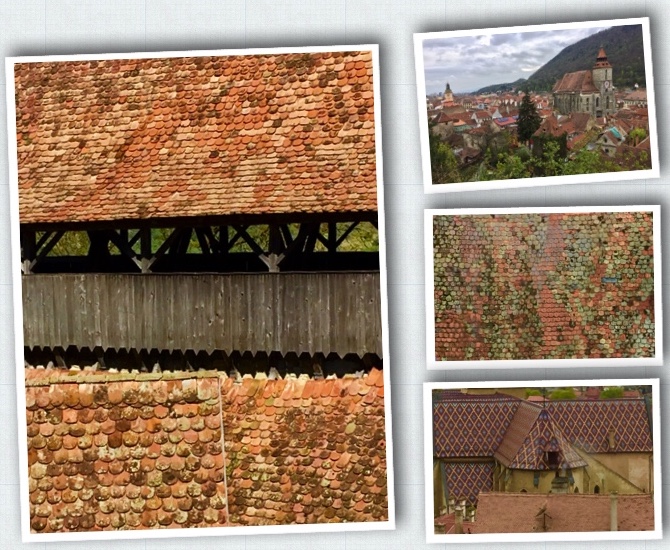
They are also brimming with history, as you can see from these trip photos. If much of the architecture appears German or Hungarian, that’s because many of Transylvania’s people came from those countries.

Church interiors

Romania’s Western ties have grown steadily since Nicolae Ceaușescu was overthrown and 42 years of Communist rule ended in 1989. Especially since it joined the European Union in 2007, Romania has been prospering, with one of Europe’s fastest growth rates.

Organs & altars collage

Champa and I drove there  with a Moldovan physician we met through an online ride-sharing service called BlaBlaCar. Once in Transylvania, we toured with Florin Ilea, a wonderful local guide who I recommend highly. We stayed in hotels in Brașov and at a great Airbnb apartment in Sibiu located just a block from the historic Bridge of Lies.

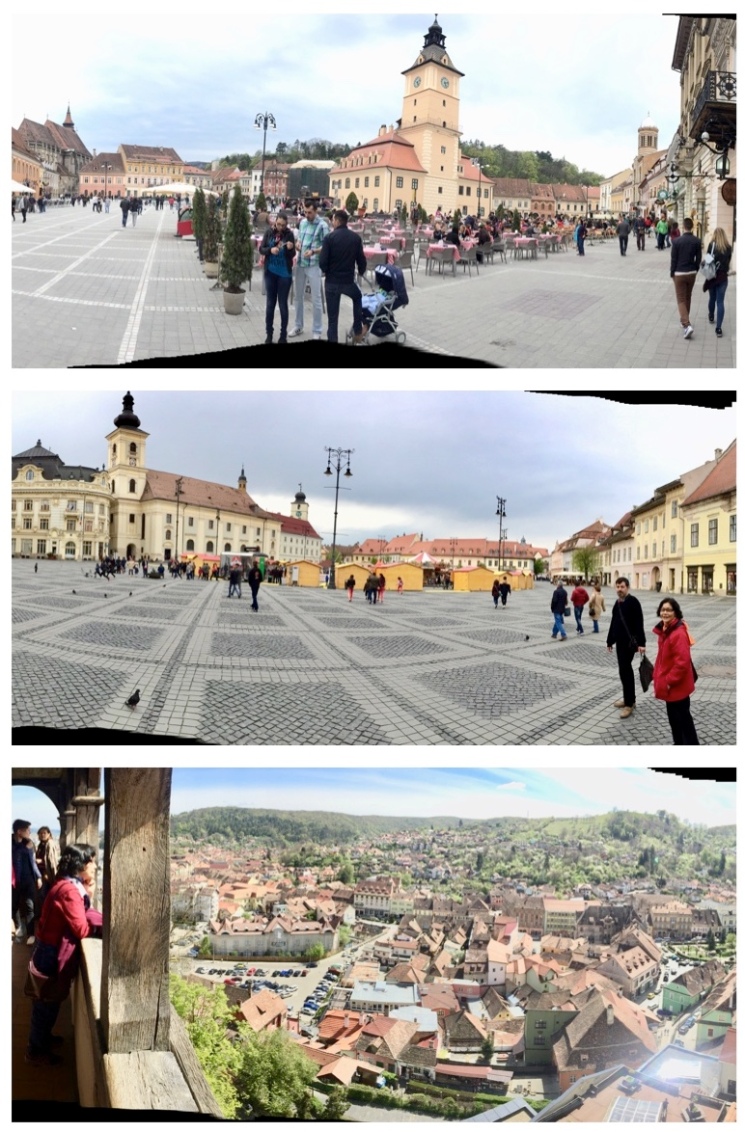
Squares

If Transylvania seems exotic to you, let me gently suggest you’re living in the past. I am old enough myself to remember when Prague was considered exotic, too. Now it has become a popular tourist destination for many Americans, as have Budapest, Warsaw and Dubrovnik. Based on what we saw during our visit, I expect Transylvania to join that list soon.

Roof collage

My advice is to visit it now, before everyone else discovers it. As Elizabeth Berkley famously said in Showgirls, a movie even tackier than the coffee mugs: It doesn’t suck (regardless of the vampire legends).

3 Plazas
From top: Brașov, Sibiu and Sighișoara

Wrong and Wrong Again

I thought I knew what to expect from all of you who filled out my recent reader survey. Well, as the blog says, not exactly.

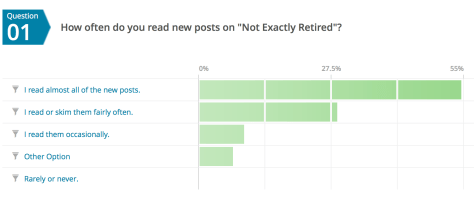
I thought most of you reading this blog are of retirement age yourselves. According to the survey, most of you are younger. The comments suggest some younger readers are turning to “Not Exactly” for ideas about their own future lives.

Screen Shot 2017-04-20 at 7.27.36 AM

Knowing how busy everyone is, I also expected most readers to say they read my posts occasionally. Wrong again: Most respondents said they read almost every post. As for the frequency of posts, a substantial majority of you said the current rate is fine.

Screen Shot 2017-04-20 at 7.28.21 AM

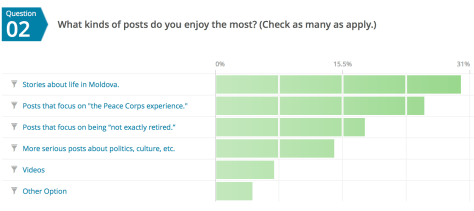
What are the most popular kinds of posts on this blogs?  I’d expected “videos” to top the list, mainly because they’ve done well when I’ve uploaded them to Facebook and YouTube. In fact, they were the least favorite. Respondents clearly preferred stories about life in Moldova and the Peace Corps experience, or on being “not exactly retired.”

Screen Shot 2017-04-20 at 7.28.01 AM

I also assumed most readers find out about new posts on Facebook. Wrong yet again. At least among the survey respondents, e-mail messages from the blog are more important. (As a reminder, you can sign up easily to receive these notifications.)

About the only thing I guessed correctly is that most of the survey respondents would be people who knew me before they started reading “Not Exactly.” That proved true, but only by a margin of 57 percent.

Now some caveats: There were not enough responses for the survey to be statistically robust (although there were more than I expected). The respondents, who included some family and friends, may not be representative of the readership as a whole.

Screen Shot 2017-04-11 at 10.57.53 AM

Still, the feedback was invaluable, and I am also grateful for your comments, which were uniformly helpful and, in some cases, very generous.

If you haven’t responded yet, the survey is still live, and I hope this post shows how much attention I will pay to your feedback. It takes just a moment to complete.

I’m glad so many of you are enjoying Not Exactly Retired, which recently passed 10,000 visitors and was included on this list of “best blogs to follow about Peace Corps.” I love sharing our journey with you and am glad you find it entertaining or even useful. Living here on the other side of the world from most of you, making time to update the blog while pursuing everything else I’m doing with the Peace Corps, I’ve sometimes posted stories and wondered if anyone was reading them.

If you know anyone else who might like to subscribe, please tell them about “Not Exactly” — and many thanks again for your help with the survey.

Painting Eggs

Are you getting ready to paint Easter eggs?

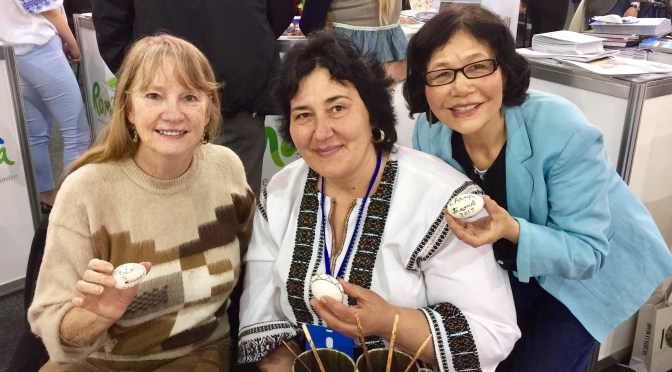
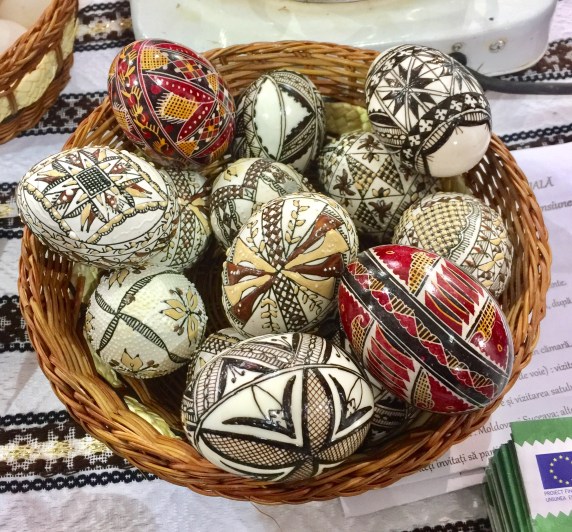
If you need some inspiration, the most beautiful Easter eggs in the world are surely here in Moldova and its neighboring countries. See for yourself in this photo I snapped last weekend at the travel fair in Chișinău.

IMG_3644

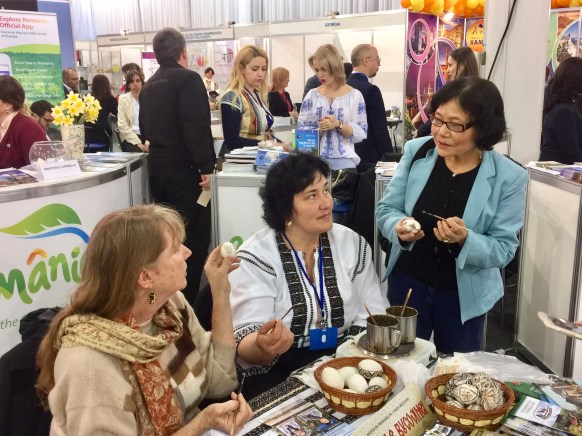
Viorica Flocea painted these eggs. That’s her with Champa and our friend Denise. You can watch her technique in the video below.

Painting eggs for Easter is a centuries-old tradition in this part of the world. The practice nearly disappeared in Moldova during the decades of Soviet rule when religion was suppressed. Now it has been revived and many Moldovan families paint eggs with their children during the Easter season.

IMG_3661
You begin by draining the egg’s contents through a small hole. Then you mark the egg with hot wax lines to form ornamental areas. After the wax turns cold, you place the egg in colored water and then dry it. Next comes the fun part,: painting the egg with different colors, progressing from lighter to darker colors. Finally you dry the egg and strip off the wax lines.
IMG_3663

Traditional designs may symbolize the sun, a leaf, wheat or the cross. Certain lines represent life or death, while others portray water or purification. Several websites like this one have more information.
IMG_3698

People here traditionally paint Easter eggs on the Thursday and Saturday before the holiday. However, artists such as Viorica paint eggs throughout the year and at exhibitions like the one we attended.

After we bought several of her eggs to bring home as gifts, she encouraged Champa and Denise to give it a try by each drawing their name and the date on an egg.

You can learn from Viorica, too, at her family’s lodge in Fundu Moldovei, Romania. If you’re here in Moldova, the National Museum of Ethnography and Natural History organizes several exhibitions and workshops each year where craftswomen demonstrate the craft.

You also can learn egg painting at the Orhei Vechi archeological complex or Lalova village in Rezina district. Tatrabis offers an all-day excursion in Moldova that combines a class on egg painting with homemade wine tastings where you can wash away your disappointment at not being as skilled as Viorica.

Perhaps I should say you’re not as skilled yet. You still have some time before Sunday to become a master egg artisan yourself.