

If “robotics” sounds daunting to you, well, it did to me, too.
Then I agreed to help launch a robotics program at the library where I work as a Peace Corps Volunteer in Ialoveni. Now I can program a small robot to roam around the room, pick up objects, avoid collisions and roar like a dinosaur.
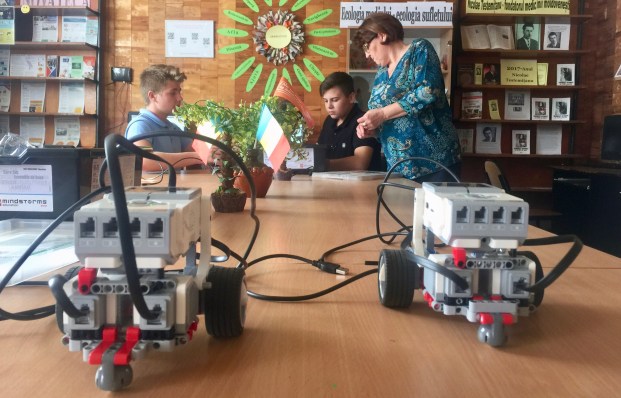
More important, so can the students that my library colleagues and I have been teaching to do this and more with the Lego Mindstorms EV3 kits we received from Novateca, a nonprofit organization that promotes innovation among Moldova’s libraries.
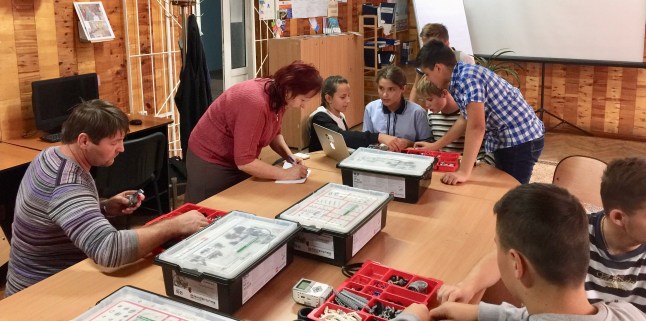
We started with two weekly robotics classes. Word spread, more kids came, and we added a third class, and then a fourth, including one especially for girls. The kids keep coming, with their parents often lingering to watch.

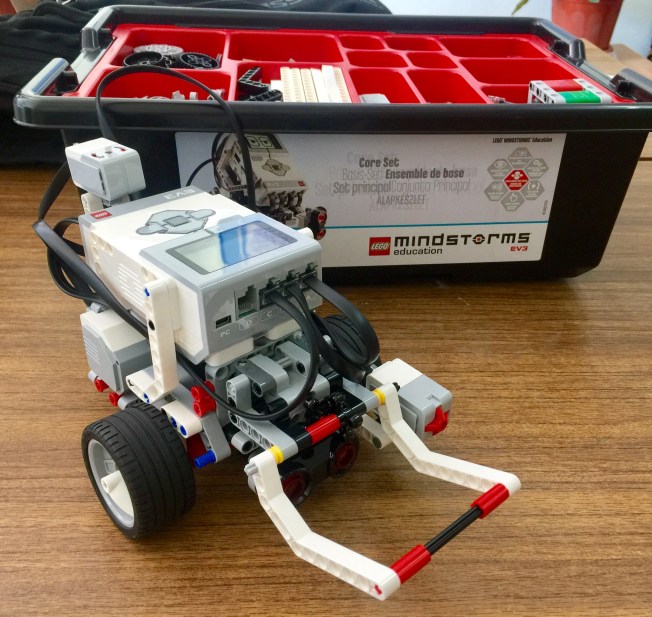
Students in the United States and around the world use the same kits, which combine familiar Lego components with a brick-shaped computer. You program the brick and then snap it together with the other pieces to create a vehicle that moves, a dog that barks or something else.

The software is colorful and easy to learn. Here in Ialoveni, we now give new students a brief introduction and then set them loose on the first program, which tells a robot to drive forward, back and forward again. Within a few minutes, they’re clicking away. On Thursday, several new students needed less than 15 minutes to finish the first program. Then they started modifying it to make their robots rotate, pause, speed up or make funny sounds.
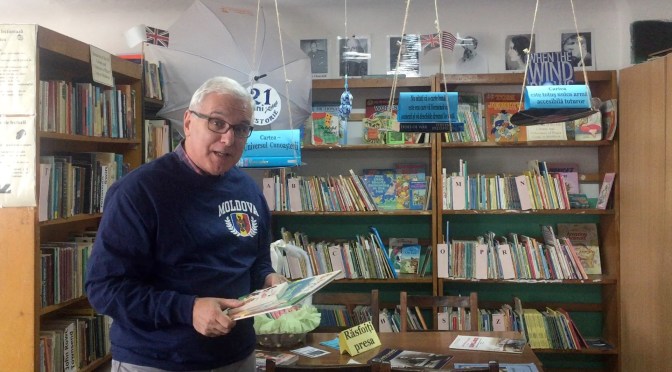
We’re hoping to form a Ialoveni library team to compete in Moldova’s upcoming Lego League competition, where the winner will move on to compete internationally. (Here’s a YouTube video of last year’s event in Chișinău. My own video about Ialoveni’s program is posted above and also is on YouTube.)

Lidia Rusu and Sergiu Blajinschi are my fantastic partners. They form groups for each lesson, work with every student, explain everything patiently and cheer as the robots perform. It’s no wonder the students are so enthusiastic.
The Lego EV3 core set costs $500 on Amazon back home. An expansion kit to build an elephant and other projects costs $154 more. That’s expensive, so it’s worth looking for a school program or club to join. If you have the money, though, and want to get a young person excited about engineering, you won’t be disappointed, so long as you both have some basic computer skills and comfort with technology. No one needs to know when you spend hours playing with it, too.


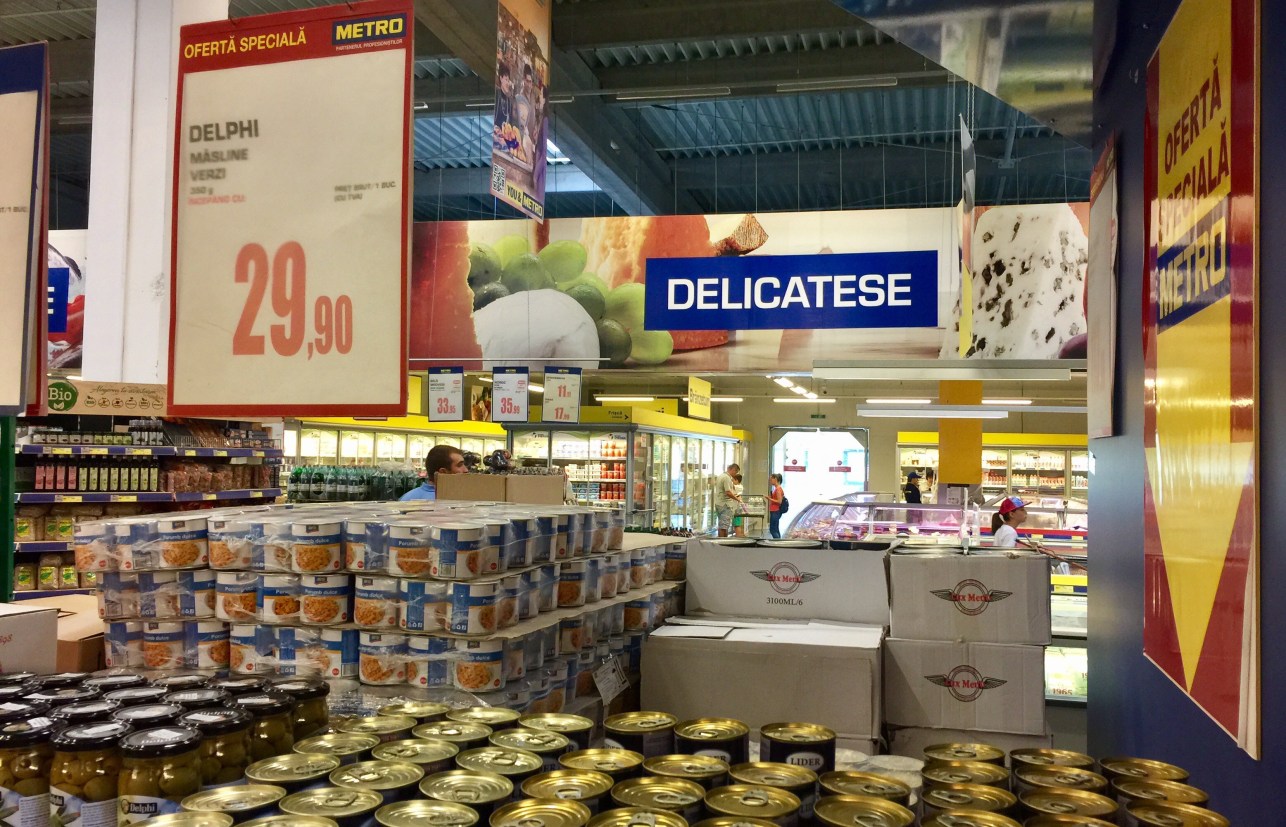


 The stores here resemble Costco, from their giant shelves and forklifts to their membership cards and crowded parking lots where customers unload giant boxes of laundry detergent or dog food. Here, too, customers seem to buy more than they need because they can’t resist an apparent bargain. Many pay with cash, although credit and debit cards are becoming more popular with the kinds of Moldovans who shop here.


 Champa requested the books, which ranged from easy readers to story anthologies. They’ve found a happy audience at her school ever since then.





 I left Washington to run the news and communications office at Duke. A decade later, the university claimed its first Nobelist, ironically someone also affiliated with HHMI. In fact, I’d commissioned and edited a major profile of Bob Lefkowitz for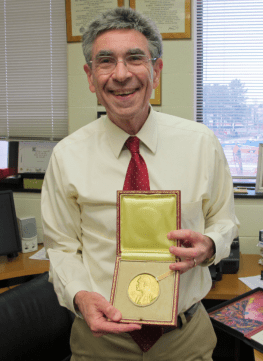



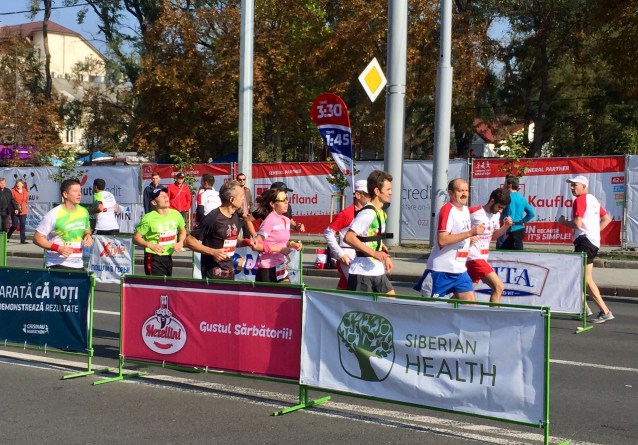


 As in other cities, Moldova’s marathon disrupts local traffic and bus schedules. I discovered this on Sunday when the bus I usually take downtown wasn’t running. I had to scramble to find another bus to take me to a meeting I’d scheduled at a downtown library. (The people I was supposed to meet didn’t show up at all.)
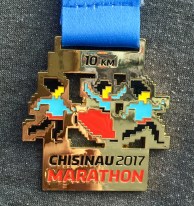 If you’re a runner, put the Chișinău International Marathon on your list. You’ll enjoy participating and you can spend a few days exploring Moldova’s other attractions, such as its churches, wineries and countryside. You’ll also get a cool medal, like the one you see here. Boston and New York are great, to be sure, but how many of your friends have a medal like this?


 I may pay more attention than most people to signs and videos like these because I work in communications, although even for me they often blended into the background when I was back home. In Moldova, though, I noticed them immediately on Saturday because they were so different from the drab walls and signage I’ve seen in some medical settings here.


 And do you know what? Its strategy works, at least for me. I felt reassured as soon as I entered through the revolving glass door into a bright lobby. The medical care I received turned out to be good, too, but I was already primed to expect this because of everything I’d seen, even if I wasn’t immediately conscious of why I felt optimistic.

 I’m helping a local Romani leader trying to establish radio stations to serve her community in Moldova.


 "Not Exactly Retired"