Tag Archives: war

Bosnia Remembers

Decades before Russia invaded Ukraine, and before the latest conflicts in Gaza and Sudan, Bosnia commanded the world’s attention for the suffering it was enduring.

In the early 1990s, Serbian forces shot civilians, including women and children, in the streets of Sarajevo. They massacred thousands of Bosnian men and boys in Srebrenica. They killed and terrorized Bosnia until NATO finally bombed Serbia and brought the fighting to an end. Serbian leader Slobodan Milošević was later indicted for war crimes. 

Bosnia, which is now part of the nation Bosnia Herzegovina, has largely recovered in the years since then. Its economy is growing. Foreign tourists are visiting, as we just did in Sarajevo and Mostar, home to the famous novi Stari Most bridge, above

But Bosnia Herzegovina has not forgotten. 

Many buildings in both Mostar and Sarajevo remain pockmarked with bullet holes.

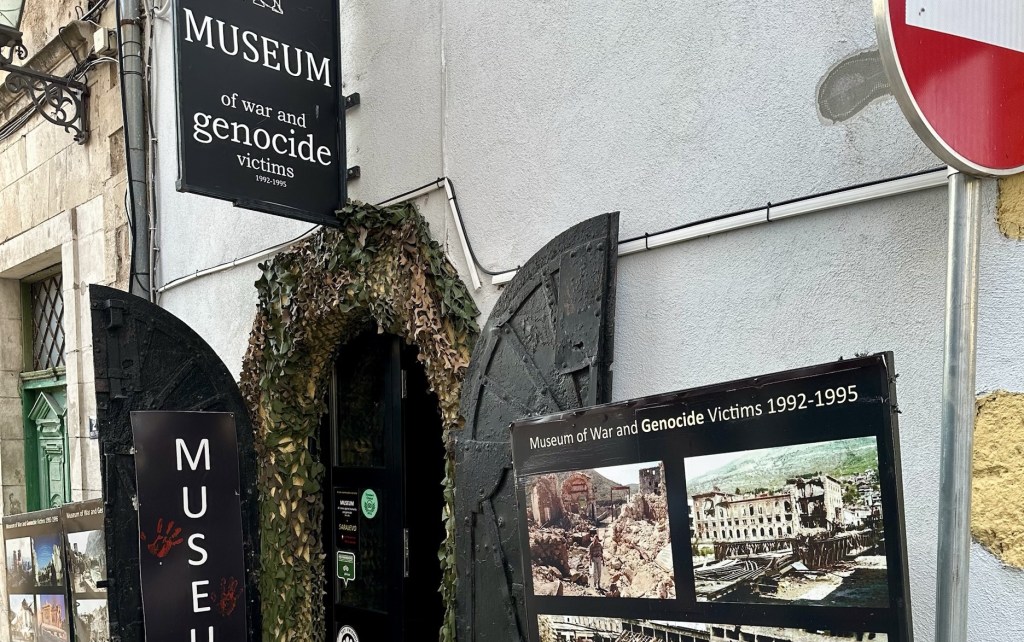
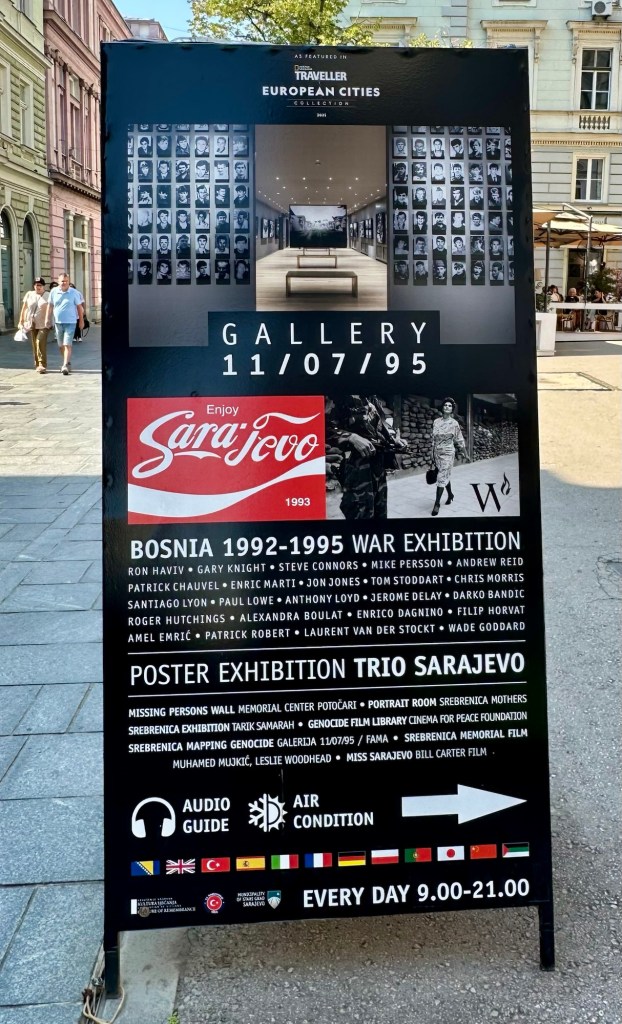
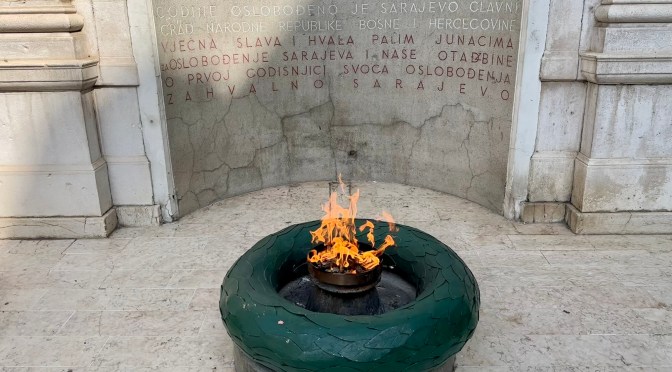
Both cities have museums displaying the atrocities that occurred. Their street memorials honor the victims. Special exhibits document what happened. When you talk with people, almost everyone has a story to share. 
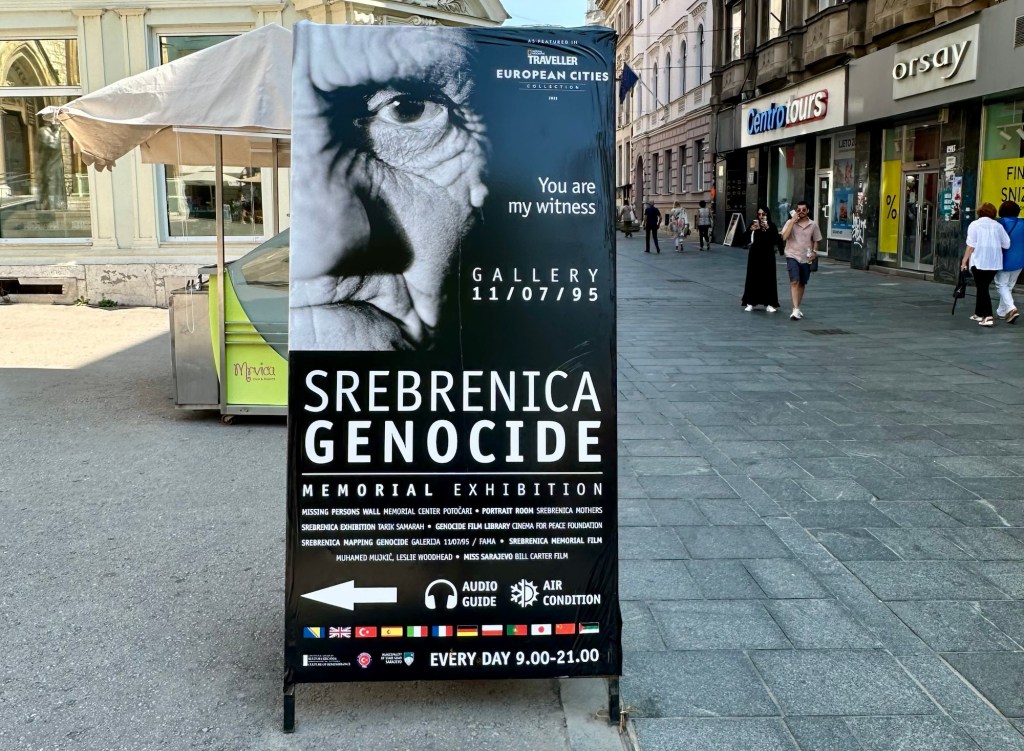
Yet they have tried to move on, like people we met in Cambodia or those I remember from my youth who escaped the Holocaust. Just like a child growing up amid war crimes today, they will never forget what they saw and endured yet they still have the rest of their lives ahead of them. 

I was moved by these powerful reminders of Bosnia’s ordeal but was also struck by something else we saw in the city. 

Sarajevo is also where a Bosnian Serb shot Archduke Franz Ferdinand and his wife in 1914, beside the Latin Bridge shown below. That’s the car the royal couple was riding. The assassination led to World War One and millions of senseless deaths, which in turn led to World War Two — all sparked on this street corner in Sarajevo. 

Today the site is a tourist attraction, a curiosity rather than a raw wound. Visitors take selfies there. Nobody weeps. A century from now, maybe the same will be true at the memorials commemorating Bosnia’s conflict with Serbia, and perhaps for future generations in today’s war zones. 

Or maybe not. Visiting Bosnia reminded me how war and genocide take a toll long after bodies are buried. Their pain endures for generations. Their grip is relentless.

Other nations and other conflicts have replaced Bosnia in our headlines today. But having just visited Bosnia, I know these new memories will persist long after the headlines fade. 

Vietnam for Real

“Vietnam” meant “the Vietnam War” when I was growing up. The Vietnamese had a different name for the conflict: “the American War.”

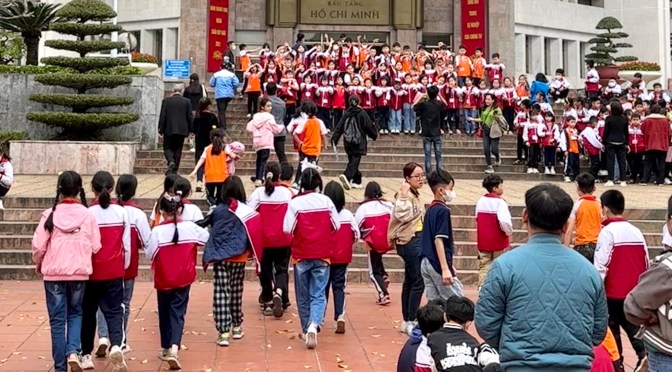
What surprised me when Champa and I visited Vietnam, Cambodia, Laos and Thailand this past month wasn’t the nomenclature but how infrequently people spoke about the war. They were too busy making money and living their lives. They all greeted us warmly, including some former soldiers we met, like the man in the photo below. Most people, like the students you see visiting the Ho Chi Minh Mausoleum complex in Hanoi, were born after the war ended.

The war is hardly forgotten. In Ho Chi Minh City — formerly Saigon — we visited a museum that highlighted acts of American brutality, such as the My Lai massacre, and the ongoing devastation caused by unexploded bombs and Agent Orange.

In Phnom Penh, we saw piles of human skulls at a memorial to victims of the Khmer Rouge genocide. Walking in the killing fields, where so many people were murdered, reminded me of visiting Auschwitz in Poland. The evil was palpable and overwhelming.

Our guides told us personal stories about relatives and friends who suffered and died. One guide began weeping. Another stared away for several moments.

Yet they and others seemed genuinely happy we were there and not only because we were bringing them business after the pandemic. They were proud of their history, their culture and their progress. They wanted us to know they are more than the place where America fought a misguided war. Much more.

Champa and I traveled across Southeast Asia with two old friends, Mitch and Chiyoko. We planned everything with a Hanoi company that prepared a custom itinerary and arranged for guides, drivers and accommodations at every stop. They did a great job for much less than we would have paid a Western company for a group tour.

We started in Hanoi, took a cruise along the breathtaking Halong Bay (above), then flew to Hoi An — a very pleasant place — and Ho Chi Minh City. From Vietnam we went to Cambodia, where we visited Angkor Wat, a floating village and several temples in Siem Reap. Next was Phnom Penh to see the killing fields, the Royal Palace, the Silver Pagoda and more. 

Our third country was Laos, where we spent a day in the capital, Vientiane, then took a newly opened train to Luang Prabang, a UNESCO World Heritage site with beautiful temples and a waterfall park that resembles the set of Avatar.

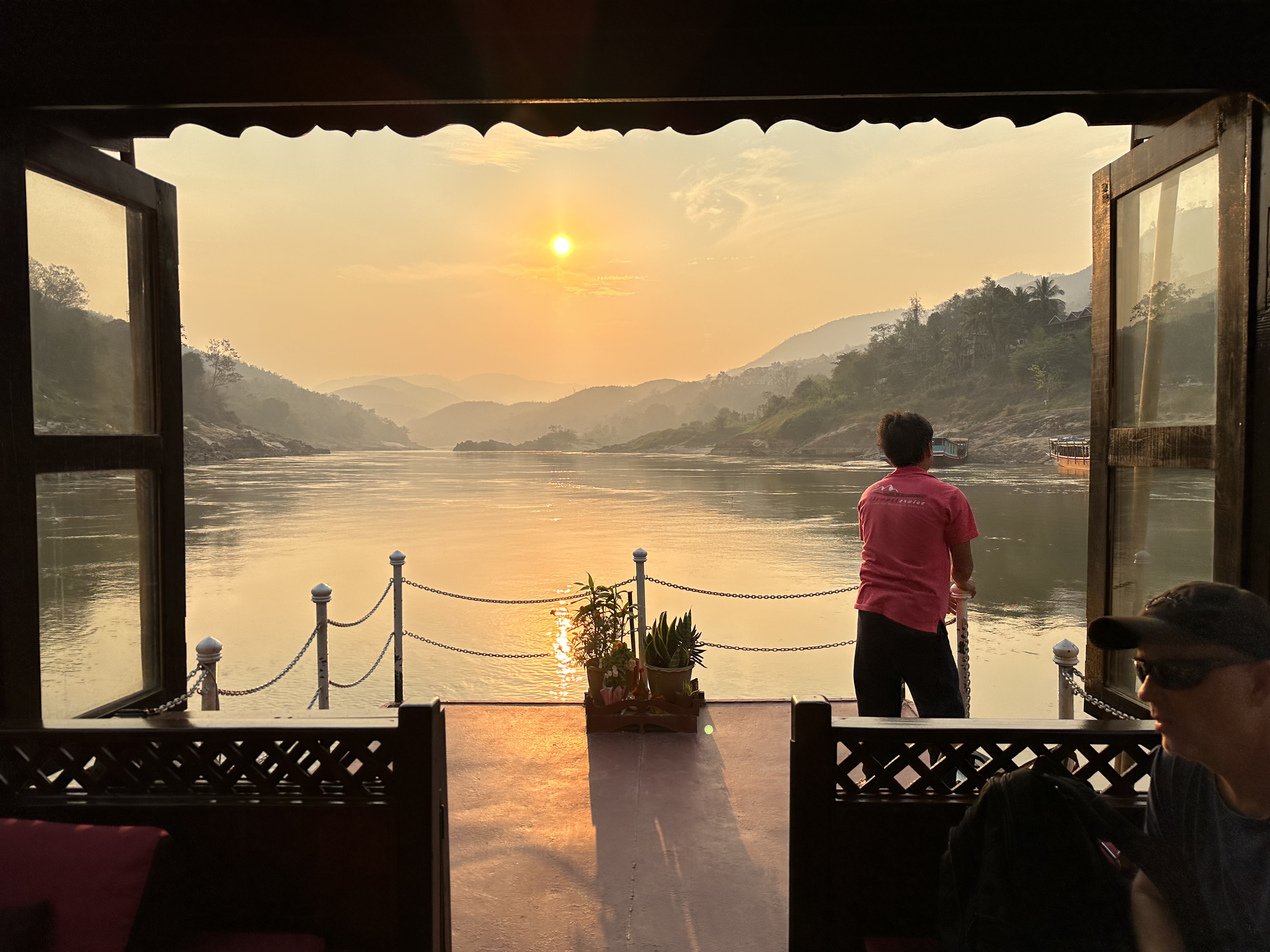
From there we took a boat up the Mekong River for two days to the border with Thailand, visiting a cave and villages along the way and stopping overnight for a hillside sunset and dinner. Our first stop in Thailand was Chiang Rai, where we visited the Golden Triangle and the White Temple, then drove to Chiang Mai to savor its spectacular temples and take a Thai cooking class. Finally we flew to Bangkok, where we explored everything from a floating market to an organic farm, along with still more temples.

It was a busy itinerary — too busy, perhaps — but we came home with a new appreciation for a part of the world I’d misunderstood and done my best to avoid when I was younger. 

I plan to post additional stories that highlight the most memorable things we saw. If you want to update your own understanding of this extraordinary region, I invite you to stick around.