More than five years since we completed our service as Peace Corps Volunteers, we returned to Moldova on Sunday night.
We endured flight cancellations, an all-nighter at JFK Airport, an unexpected stop in Istanbul and lost luggage when we arrived in Chișinău. In a larger sense, our return was delayed by the pandemic, the war in Ukraine and health setbacks.
But now we’re finally here, and so is our luggage. We couldn’t be happier.
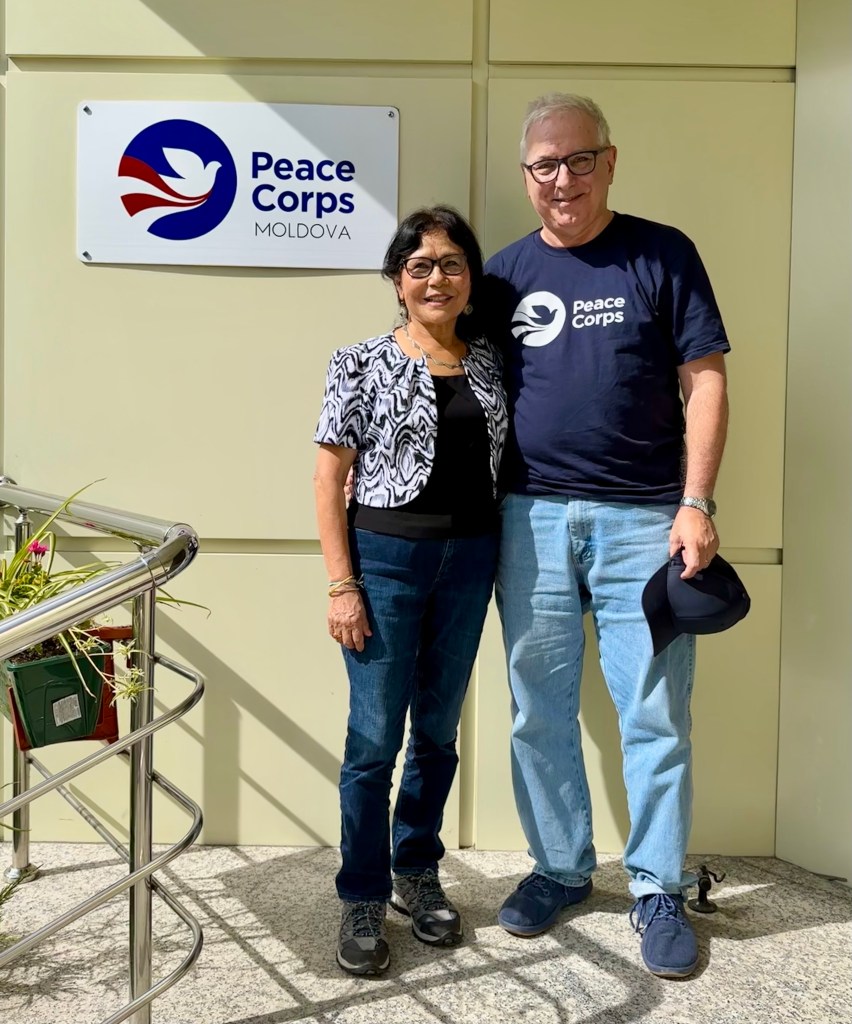
Our first jet-lagged stop on Monday was at the Peace Corps office, to hug old friends and discuss the virtual project I began several weeks ago to help create a national Jewish museum.
Then we reunited with our host family in Ialoveni, just outside the capital, for a delicious Moldovan dinner prepared by our host mother, Nina. That’s her in the top photo with her daughter, Alisa, showing off their copies of Not Exactly Retired with personal inscriptions from the author.
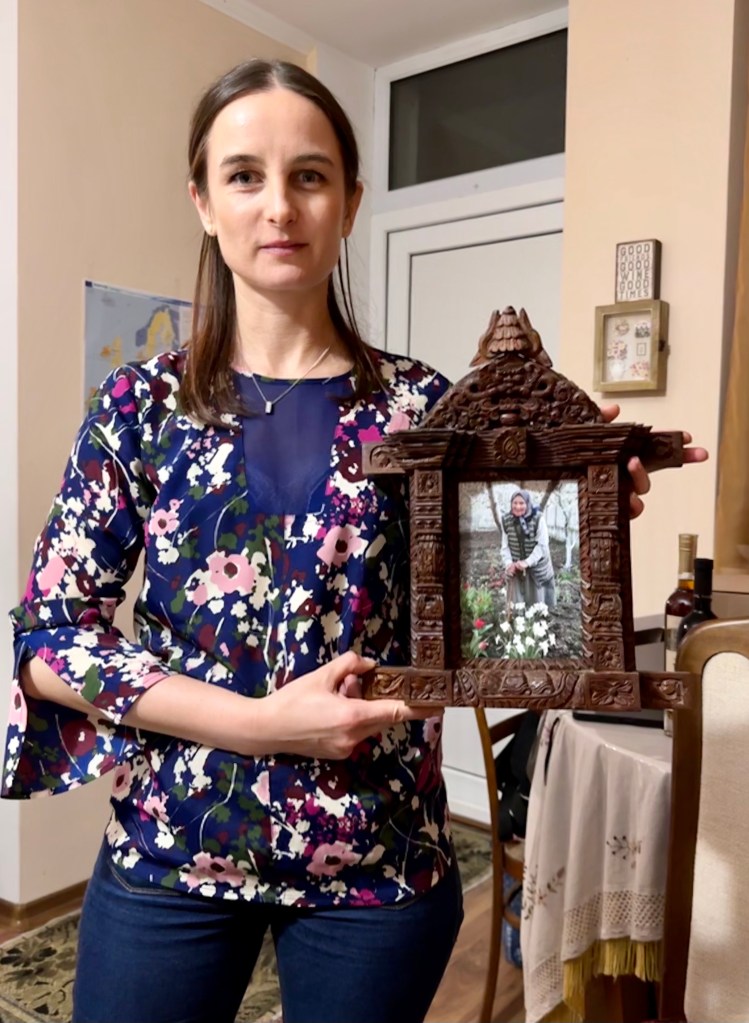
Among our other gifts was this carved wooden picture frame from Nepal displaying a photo of our beloved Bunica, Nina’s mom, who passed away before we could see her again.
Nina’s husband, Mihai, and son, Andrei, joined us for this group photo after dinner. We left with our own bag of gifts, including some of Ialoveni’s famous chocolates.
We also enjoyed reuniting with the family dog, Boss, who remembered us.
On Tuesday morning we attended a ceremony where U.S. Ambassador Kent Logsdon announced a major grant to restore one of the central structures in Chișinău’s large Jewish ceremony. Irina Shikhova, below, with whom I’m working on the museum project, was among the other speakers.
It was an inspiring event and great to finally meet Irina after several Zoom meetings. I also met Marjory and Joseph, two Peace Corps Response Volunteers working on the project.
Champa and I are staying at an Airbnb downtown. We’ve been eating placinte and friptura, drinking local wine and exploring how Moldova has changed over the past five years. More on that later.
For now, we’re just soaking it all in. Moldova, we’ve missed you!
If you think of London and Paris as having vibrant Jewish communities — which they do — consider another European capital whose Jewish population was once many times larger in percentage terms.
It’s Chişinǎu, the capital of Moldova, which was nearly half-Jewish at the turn of the last century, before a bloody pogrom in 1903 killed 49 Jews in Chişinǎu, injured hundreds more and led many Jewish families to flee.
Chișinău monument to the Jewish ghetto.
Four decades later, the Holocaust killed most of Moldova’s remaining Jews, only to be followed by Soviet occupation. Today, estimates of Moldova’s current Jewish population range between 7,500 and 20,000, based on different sources, approaches and definitions. Many more Moldovan Jews live in Israel and other countries.
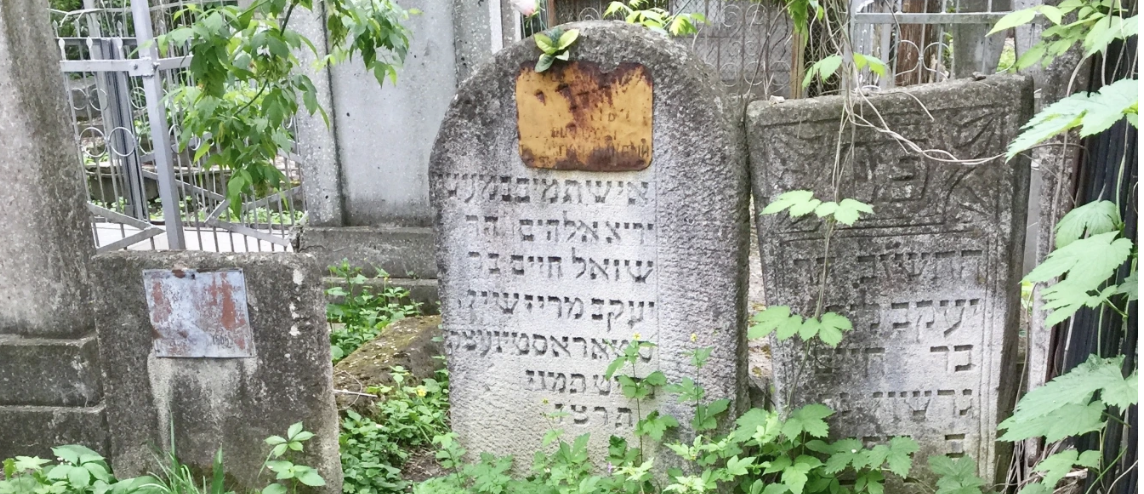
Chişinǎu’s Jewish cemetery has more than 23,000 graves.
Now, finally, this is changing. In 2018, Moldova’s government created a national Jewish museum in the capital — focused initially on Chisinau’s large Jewish cemetery but with plans to also establish a building with exhibits and programs.
As the grandson of a Jewish woman who grew up down the road in Odessa, I find this both exciting and overdue. It’s even more inspiring since it’s happening at a moment when Moldova is dealing with the war in neighboring Ukraine and many other challenges.
The Maghid website describes Jewish sites across Moldova.
A few months ago, Peace Corps Moldova asked me whether I might help the museum planners, given my professional background and familiarity with Moldova. I said yes enthusiastically and, earlier in July, began working on a Peace Corps Virtual Project with the museum’s director, Irina Șihova.
I’m interacting with Irina from my home in North Carolina but plan to visit Chişinǎu with Champa in September (at our own expense). We are also eager to reunite with our host family and other dear Moldovan friends while we’re there.
Irina Șihova in the Jewish cemetery.
Irina is a prominent researcher in Jewish ethnology, culture and history; a museum curator; an educator; and a guide for Jewish families who’ve come to Moldova to explore their family roots. She’s organized dozens of exhibitions and cultural programs and written academic papers and books about Moldova’s Jewish history.
She and I have already done some good work together, brainstorming ideas for museum exhibits and publicizing an upcoming festival in Moldova that will include tours of former Jewish shtetls, a klezmer music concert and the premiere of a musical work commemorating the 1903 Chişinǎu pogrom. We’ll be joined soon by one or two “Peace Corps Response” volunteers who will bring their own expertise to work on-site with Irina and her colleagues.
Torah at Moldova’s national history museum.
I feel privileged to have this opportunity, especially at this early stage of the museum’s development, and plan to post updates on this blog. If you’re interested in the project, or know others with relevant expertise who might want to join this volunteer effort, please write me privately with a direct message or by e-mail. (Please do not post a public message about this here).
Because religion was heavily restricted in Soviet times, some Moldovans have ethnic Jewish heritage but do not practice the religion and may not even know about their family backgrounds. My closest colleague on the Peace Corps staff, for example, told me her Jewish grandparents “never practiced during the Soviet era since any religion was taboo.”
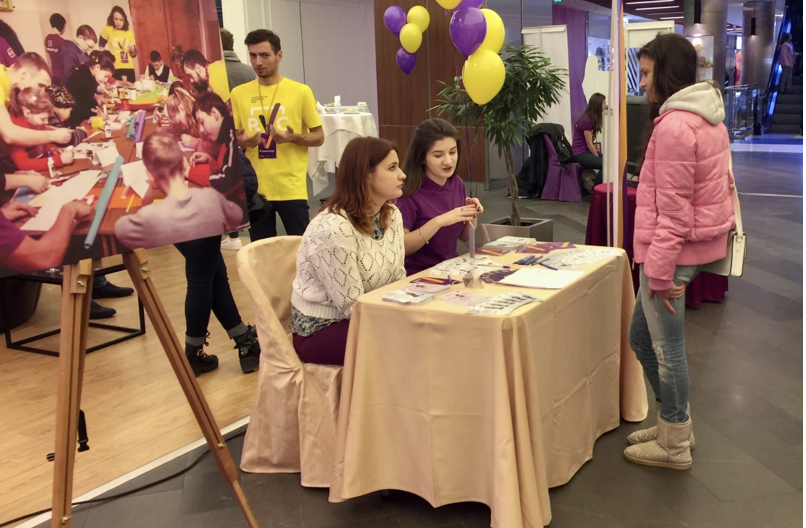
Jewish youth event at the MallDova shopping mall, October 2016
Moldova’s small Jewish community is experiencing a resurgence these days, as you can see in this photo from a youth event we attended. The new museum will make it easier for others in Moldova, Jews and non-Jews alike, and for visitors from around the world, to learn about this heritage and honor those who were lost.
I hope some of you reading this will visit it one day.
I’ve been indulging my guilty pleasure lately as I recover from surgery: watching reality dating shows.
I know the story of every participant on Indian Matchmaker, the Netflix series in which Sima Aunty pursues mates for Indian singles, from a picky Mumbai bachelor to an Indian-American woman here in Durham.
I’ve been following Jewish Matchmaking, too, as Aleeza Ben Shalom helps singles in Israel and the United States to find partners for their wedding chuppahs. There’s Dani in Miami, searching for a guy with perfect eyebrows. There’s Noah, looking for a nice Jewish girl in Wyoming, and CIndy in Jerusalem, who left Canada and now seeks true love.
I know these dating shows are contrived and ridiculous, reinforcing cultural stereotypes and traditional romance norms, but I can’t resist them. Maybe it’s because Champa is from South Asia and I’m from a Jewish family in New York, so both shows resonate with us.
But it’s not just these two. I’ve also watched Love is Blind, the one where single men and women spend hours talking behind barriers, laying eyes on each other only after getting engaged. We find out whether they go on to marry at their wedding ceremonies, which are like car crashes adorned with white lace and sobbing mothers.
God forgive me.
The most famous of these shows is The Bachelor but its manufactured drama and weekly rose ceremonies are too much even for me (although I did learn to say “can I borrow you?” when I need Champa for something).
My sweet tooth for these shows doesn’t align with how I usually present myself. I spent most of my career working with scientists, professors and other smart folks. I read TheNew York Times every day and lots of high-brow books every year.
So why do I care whether Kwame and Chelsea, above, will stay together in Seattle, or if Fay will ever find an Orthodox Jewish guy in Brooklyn? It’s not very intellectual or macho, I know, but there it is.
It’s gotten worse recently as I’ve been home-bound and unable to do much except daily physical therapy. I’ve passed the time mainly by reading and watching television. Some of the shows have been high-quality, like binge-watching the HBO series Barry and John Adams, but I’ve become way too familiar with the tarot-card readers and “bio-datas” of Indian Matchmaker.
I have little appetite for most other trash TV, from Real Housewives to the Kardashians. I don’t care what paternity tests reveal on Maury or how long it takes for Judge Judy to tell someone to shut up. Shows that focus on baking, cooking, singing, remodeling or surviving? Not for me. I much prefer quality series such as Ted Lasso and The Handmaid’s Tale, or sports and cable news in limited doses.
Still, if you follow this blog for posts about retirement, travel or something else, I seek your forgiveness. I stand before you humbled and contrite. I know I should aspire to nobler fare.
Until then, though, I’ll be rooting for Viral from Durham, above, to find lasting happiness with Aashay whenever Season 4 of Indian Matchmaker finally drops.
On the outskirts of Chișinău, Moldova, is one of Europe’s largest Jewish cemeteries, largely overgrown, largely deserted. This video is also viewable on YouTube.
My paternal grandmother Sarah grew up in Odessa, Ukraine, not far from where I now serve as a Peace Corps volunteer in Moldova. Her family — my ancestors — fled to America to survive the violent anti-semitism depicted in “Fiddler on the Roof.”
At that time, more than 50,000 Jews lived in Moldova’s capital, Chișinău, comprising 46 percent of the city’s population according to an 1897 census. In 1903, 49 of them were killed in anti-semitic riots. A survivor said: “Dead bodies were everywhere, many of them horribly mutilated, and in most cases with the clothes torn off. There were ears, fingers, noses lying on the pavements. Babies were tossed in the air to be caught on the points of spears and swords. Young girls were horribly mistreated before death came to end their torture. I saw these things with my own eyes.”
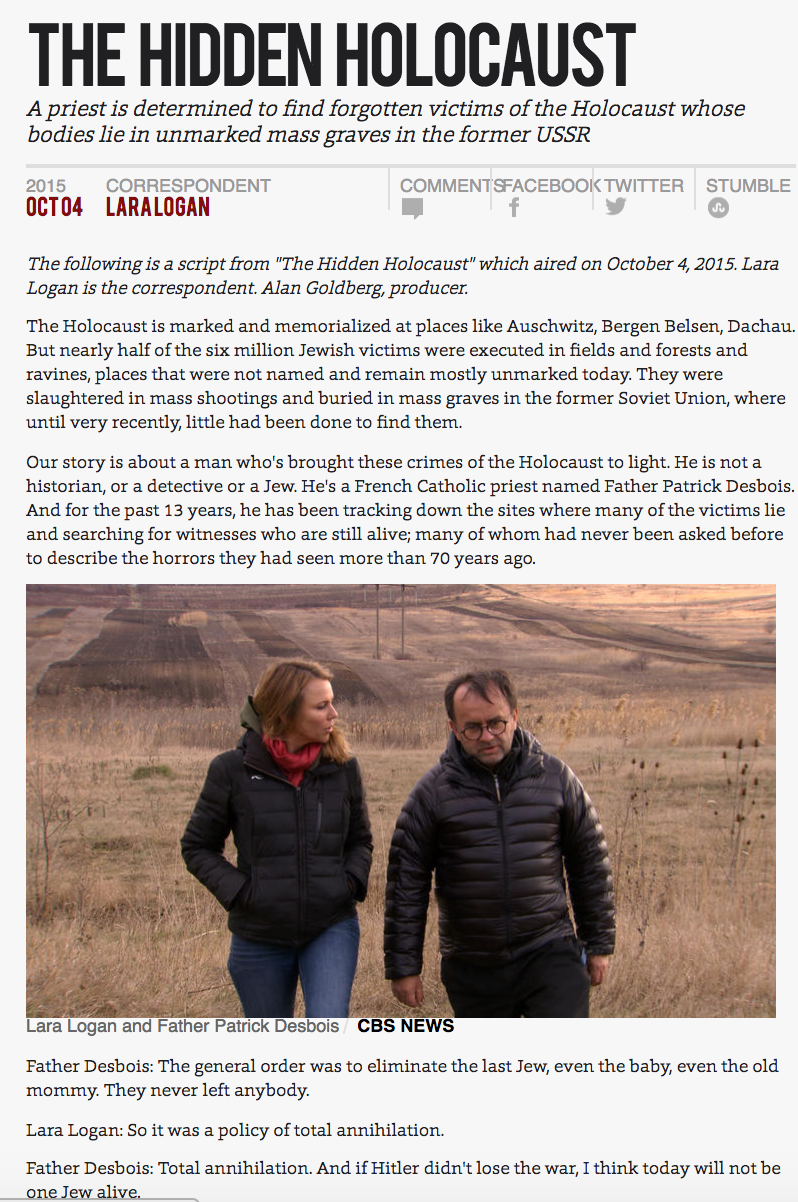
It’s hard to imagine anything more chilling than that, but things got worse for Moldova’s Jews. A few decades later they were nearly wiped out by Nazi death squads who rounded them up and executed them in every corner of the country, sometimes with local help. Shortly before Champa and I joined the Peace Corps, “60 Minutes” broadcast a chilling story about a French Catholic priest investigating The Hidden Holocaust in the former Soviet States. (A clip is at the end of this story and on YouTube .)
“We traveled with Father Desbois to the former Soviet Republic of Moldova, where in one day he took us to four unmarked mass graves,” reporter Lara Logan said in the story. “In this field, he told us, 60 Jews beneath this farm, 100 above this city, under this hill, a thousand.”
In a small village near Telenești, an 85-year-old man tells them what he witnessed as a boy: “The Jews were facing the ditch, so they were shooting them in the back of their heads or their backs to fall into the ditch. They were shooting them as if they were dogs.”
Moldova’s Jews were murdered in their homes, in ravines, on death marches, in camps — everywhere. By the time the Soviet Army returned in August 1944, the Nazis had killed as many as 300,000 Jews across Moldova and neighboring areas of Bucovina, Bessarabia and Transnistria. Few survived.
After we were accepted as Peace Corps volunteers, one of our sons saw the “60 Minutes” story and told us he was worried about our own safety in Moldova, even though I am not an observant Jew and Champa grew up with local religions in Nepal.
In fact, we have both been welcomed warmly with few exceptions. We’ve now been here more than nine months and enjoy living here. I have yet to knowingly encounter anti-semitism, even though it still exists in Moldova and extremist groups can be found in much of Europe. What I have seen are some promising, if modest, signs of a Jewish revival.
Jewish young people participated at a volunteer fair at Malldova in October.
Roughly 25,000 Jews live in Moldova these days, mainly in Chișinău but also in places such as Bălţi, Bender, Soroky, Rybnitsa, Orhei and Tiraspol. Their numbers grew under Soviet rule until the 1970s and 1980s, when anti-semitism led many of them to emigrate, mainly to Israel and North America.
Many of Moldova’s Jews now are elderly and living on small fixed incomes. In October, Champa and I spent an afternoon with Alex Weisler and others from the American Jewish Joint Distribution Committee, which is doing wonderful work here to support the Jewish community with basic services and religious, educational, legal and cultural programs.
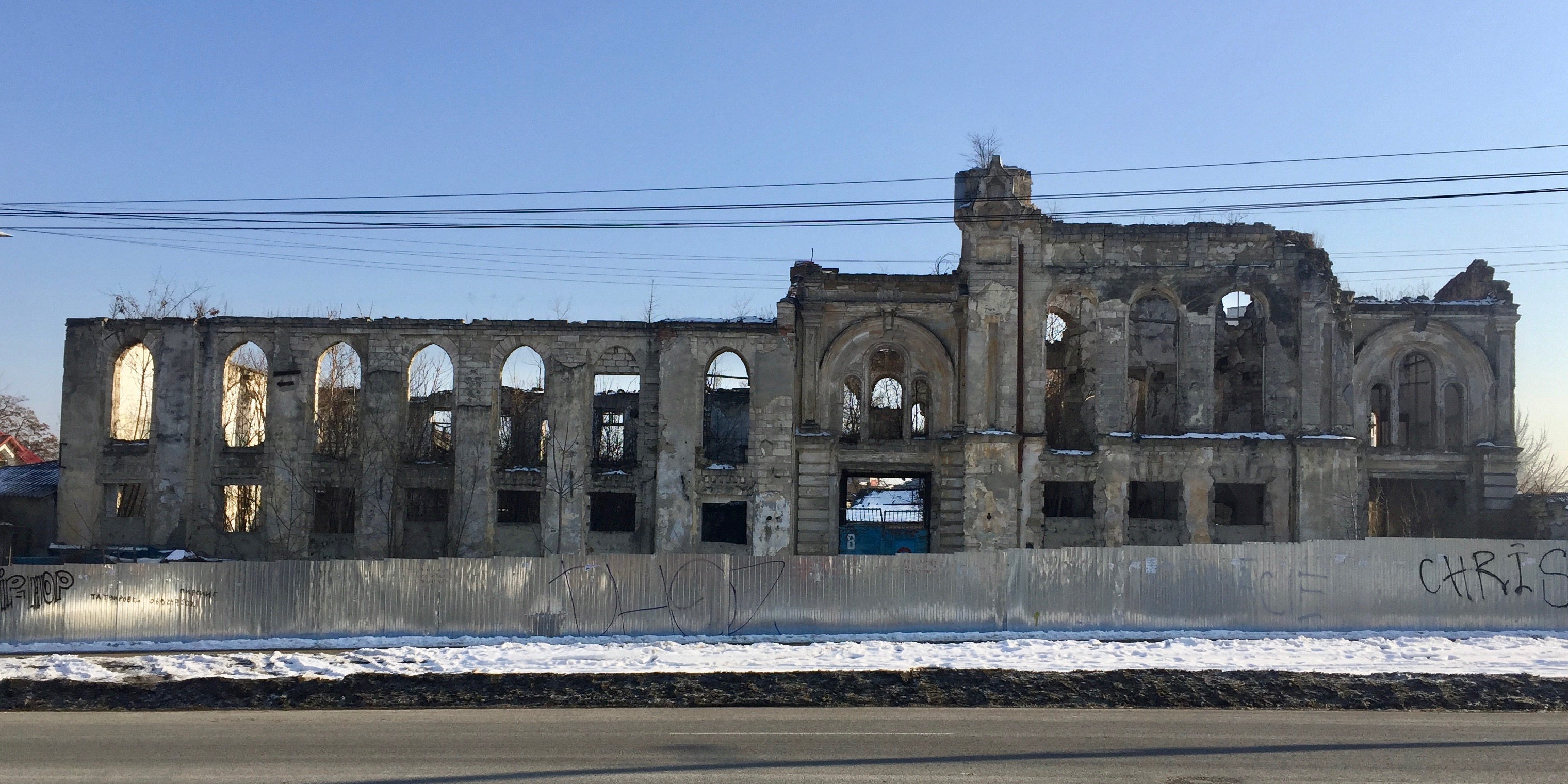
Earlier, shortly after arriving in Chișinău, my friend Tom and I visited the local Chabad, where they were happy to welcome us after I joined them in the prayer they were reciting, although I declined their attempt to wrap me in tefillin. Tom and I also passed the nearby synagogue shown at the beginning of this post, with the sky showing through its smashed windows. A few blocks away, on Jerusalem St., was the red granite monument you see here, honoring victims of the Chișinău ghetto.
On Sunday, Champa and I saw this display of a Torah, menorah and other Jewish symbols in the religion exhibit at Chișinău’s history museum. Just outside of town is Europe’s largest Jewish cemetery, now overgrown beside an abandoned synagogue. A new website, JewishMemory: History of the Jews in Moldova, provides an excellent introduction for anyone who wants to learn more, as does this site.
In other words, Moldova’s Jewish legacy is here if you look for it. The Israeli Embassy maintains a good list of current organizations and activities. If any of my Moldovan friends or Peace Corps colleagues are curious, this article tells where to find graveyards, memorials and other Holocaust sites in Bălți, Cahul, Comrat, Briceni, Florești, Hincești, Calarași, Leova, Soroca, Ungheni and other locations.
I hope to visit Odessa before we leave, to honor my grandmother and the rest of my family who endured so much before finding a better life in America. I think their spirit is still here, like those of so many others, whispering to us from the sky-filled synagogues, bullet-pocked walls and broken cemetery stones.









 “We traveled with Father Desbois to the former Soviet Republic of Moldova, where in one day he took us to four unmarked mass graves,” reporter Lara Logan said in the story. “In this field, he told us, 60 Jews beneath this farm, 100 above this city, under this hill, a thousand.”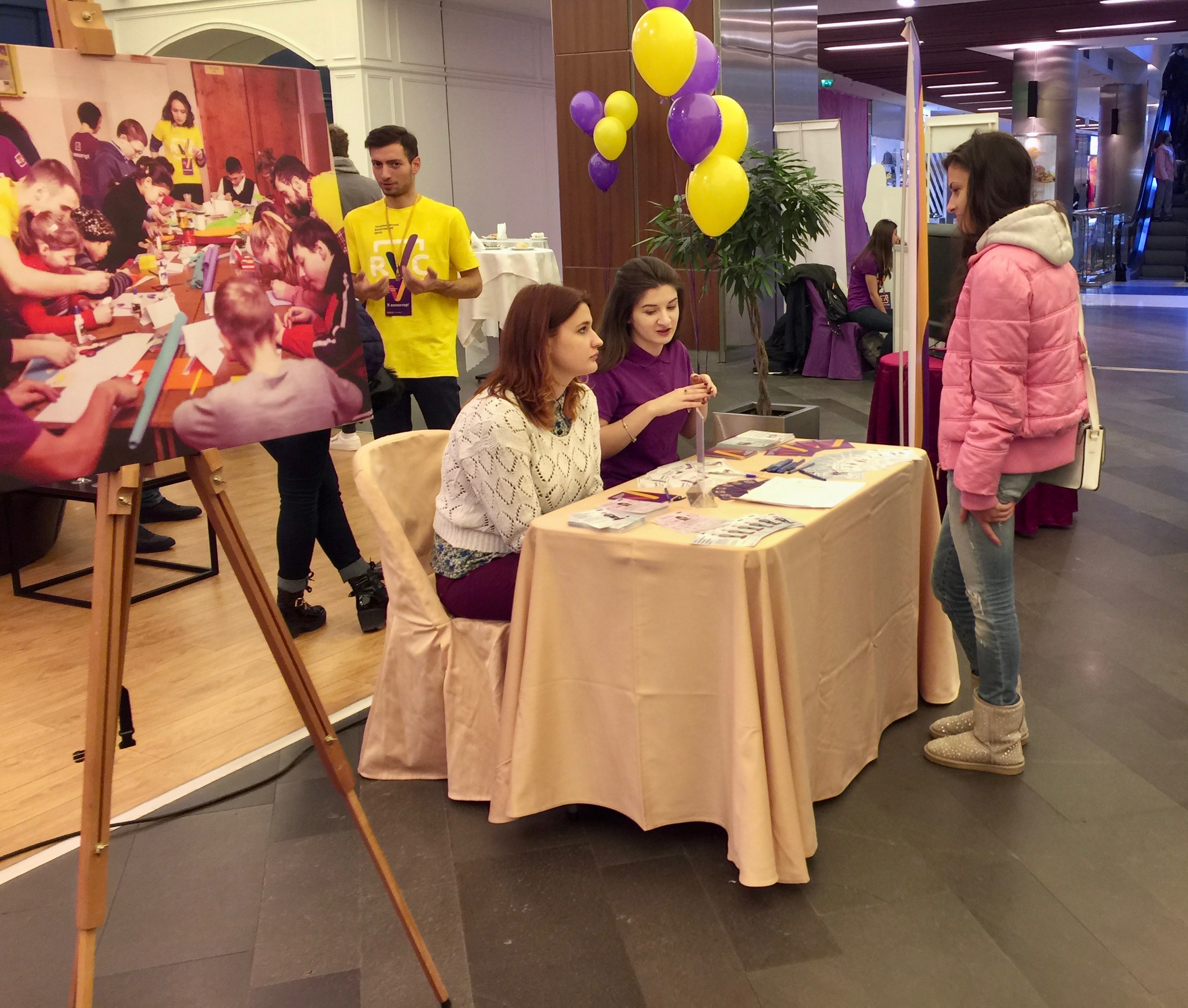

 Just outside of town is Europe’s
 "Not Exactly Retired"