Tag Archives: Italy

Our ‘Free’ Local Guides

We traveled on our own but were guided by others during our 6-week trip in the Balkans and elsewhere, from which we just returned home.

In Slovenia, a local professor showed us around the capital, Ljubljana. That’s her, Nina, in the red shirt. 

In Zagreb, Croatia, we received an excellent tour from a lifelong resident, Mirjana, wearing the white hat.

We learned about Split, Croatia, from Roko, top photo, a guide whose family has lived there for generations. In Dubrovnik, our guide was Marko, who you see holding a notebook filled with maps and historical photos he showed us. Like Roko, he said Croatian guides work hard during the busy summer season, then relax during the winter.

As I’ve written previously, we’re fans of free walking tours, which have become available worldwide. We usually book them for our first full day in a city, to get oriented and learn about local history and culture. The guides work for tips, so are motivated to be enthusiastic and helpful. With few exceptions, the ones we’ve used have been excellent.

A group’s size is unpredictable. We were Nina’s only customers in Ljubljana, and also with our guide in Durrës, Albania, the port town where we spent a day before sailing overnight by ferry to Italy. After we landed in Bari and dropped off our bags, we got some fresh pasticciotto at a bakery, then took a walking tour that included more than twenty people.

We’ve also traveled with more traditional guides, such as Ana, an Albanian woman who led the two of us and five Brazilian guys during our driving tour of the Balkans. That’s her in the black outfit at a historic castle in Krujë, Albania.

Our final guide, in Frankfurt, was Haotong, who shared his perspective on growing up there in a Chinese immigrant family. In turn, Haotong was interested to learn about our Asian-American marriage and about my mother’s flight from Nazi Germany as a girl. Conversations like these are as memorable as any of the sights we see.

We’ve used several of the big companies that offer these tours, such as Guru Walk and Sandemans, as well as local companies. We research them online, find a tour that matches our schedule, then book a reservation. They respond with instructions about where to go and what to expect. They send reminders before the tour and, if necessary, let us cancel without a problem. That’s what we did in Naples, where we opted instead for a free Rick Steves audio tour I’d downloaded. We also used Rick’s excellent audio tours in Rome and Florence.

Free walking tours are helpful in another way, too. When we’re figuring out where to stay in a city, we check where the tours start, then seek lodging nearby. That puts us close to major attractions even if we don’t take the tour.

We always tip the guides and post good reviews. After all, they work hard and provide a great service. Are they really “free”? Well, not exactly, but when it comes to learning about the places we travel, “not exactly” is working just fine for us.

Sorrento and Naples

Billionaires. Yachts. Fashion. La dolce vita

Anyone who follows this blog knows this isn’t our usual traveling style, assuming we could afford it, which we can’t. 

However, we’ve spent the past few days living among the beautiful people in Italy’s Amalfi Coast. We window-shopped lemon-themed gifts and colorful ceramics as we toured the scenic towns of Positano, Amalfi and Ravello along the rocky shoreline. We watched boats sail off to Capri. We sampled gelato and sipped limoncello. Outside our window in Sorrento as I write this, a musician is playing “That’s Amore” on his accordion. Really. 

Positano

Amalfi

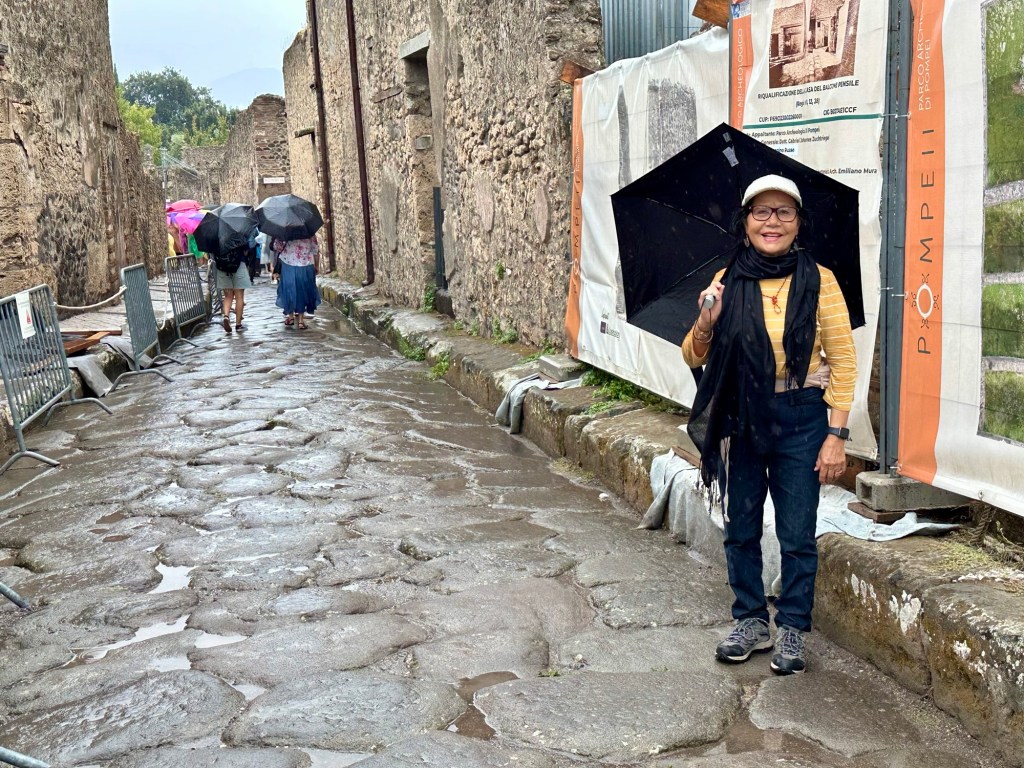
The Amalfi Coast is unavoidably expensive but we’ve kept to our usual style, such as foregoing an expensive guided excursion to Pompeii by traveling there on our own by train, ordering admissions tickets online and listening to an excellent free Rick Steves audio tour. (It rained but we enjoyed it anyway.)

Pompeii

Last night in Sorrento, we assembled a delicious dinner with bread, cheese, peppers and other goodies from a local market. 

The Amalfi Coast is every bit as gorgeous as its reputation, and we’ve enjoyed our version of la dolce vita. However, we felt more at home in Naples, an hour away. 

Naples

Street art in Naples

Naples is Italy’s third largest city, after Rome and Milan, and we loved it. It’s loud and chaotic, with graffiti on the walls and laundry in the windows. Aging buildings, glorious churches, historic monuments and tempting pizzerias provide a backdrop for racing scooters and flirting teenagers. 

Duomo di Napoli

Shrines worship local football legend Diego Maradona along with the Virgin Mary, above.

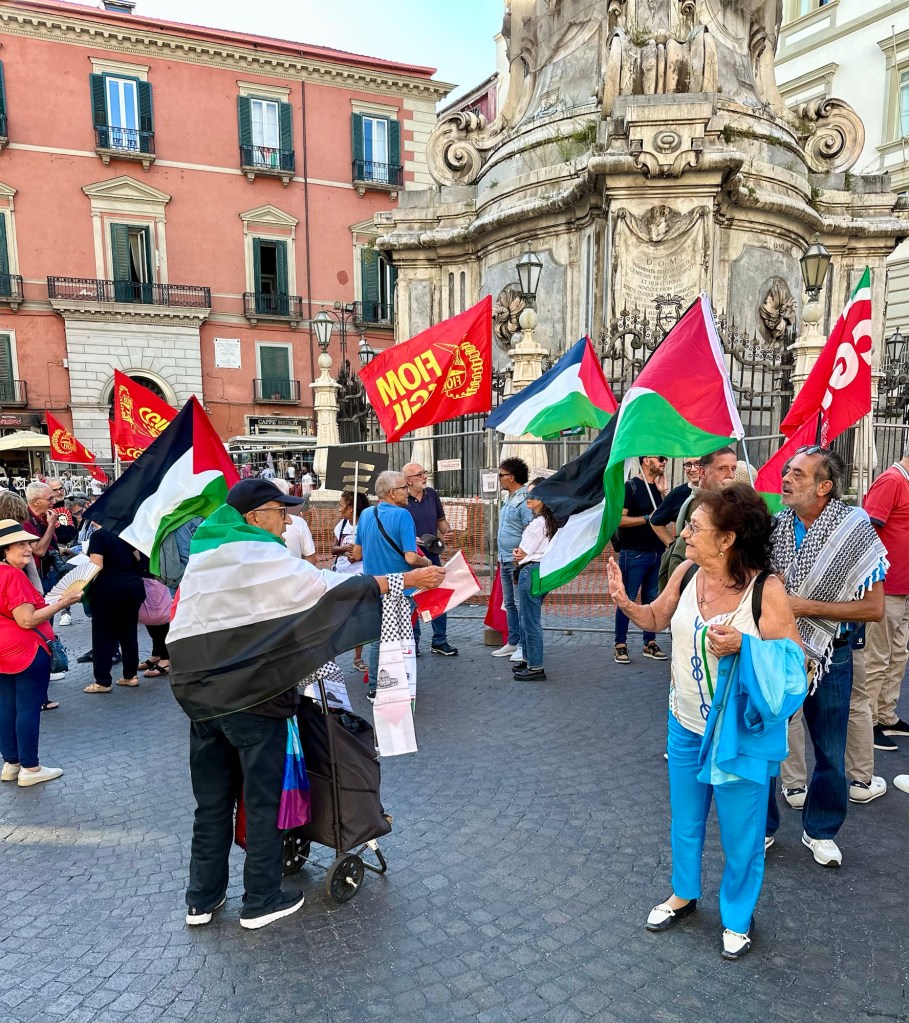
There are plentiful street demonstrations, such as one we saw for Palestine, above, and strikes, like the one that nearly made us miss our train. 

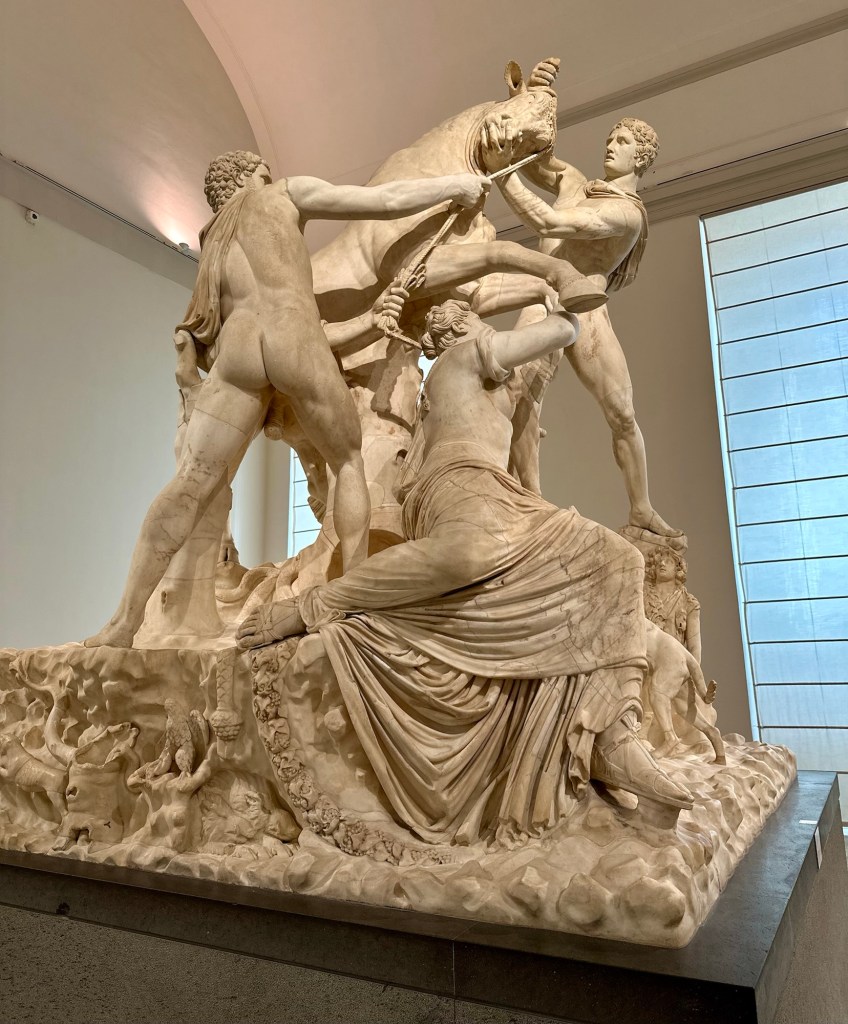
The Farnese Bull at the museum

Our favorite stop was the National Archaeological Museum, with its imposing sculptures and galleries filled with mosaics and other artifacts from the doomed city of Pompeii, whose ruins we visited later. We also rode a funicular up to Castel Sant’Elmo, admired its views of the city and Mount Vesuvius, then took a different funicular down to large plazas near the waterfront. We sampled the gelato there, too. 

Sumptuous Amalfi and vibrant Naples are both part of the Italian region of Campania, which is only one of many regions in this large and beautiful country. We’re heading next to Rome and Florence and look forward to continuing our new love affair with Italy. 

When the world seems to shine like you’ve had too much wine, or gelato, that’s amore. 

Signs of Death

Here’s something you don’t expect to see if you’re an American taking a walk near your home: a poster telling you that one of your neighbors just died.

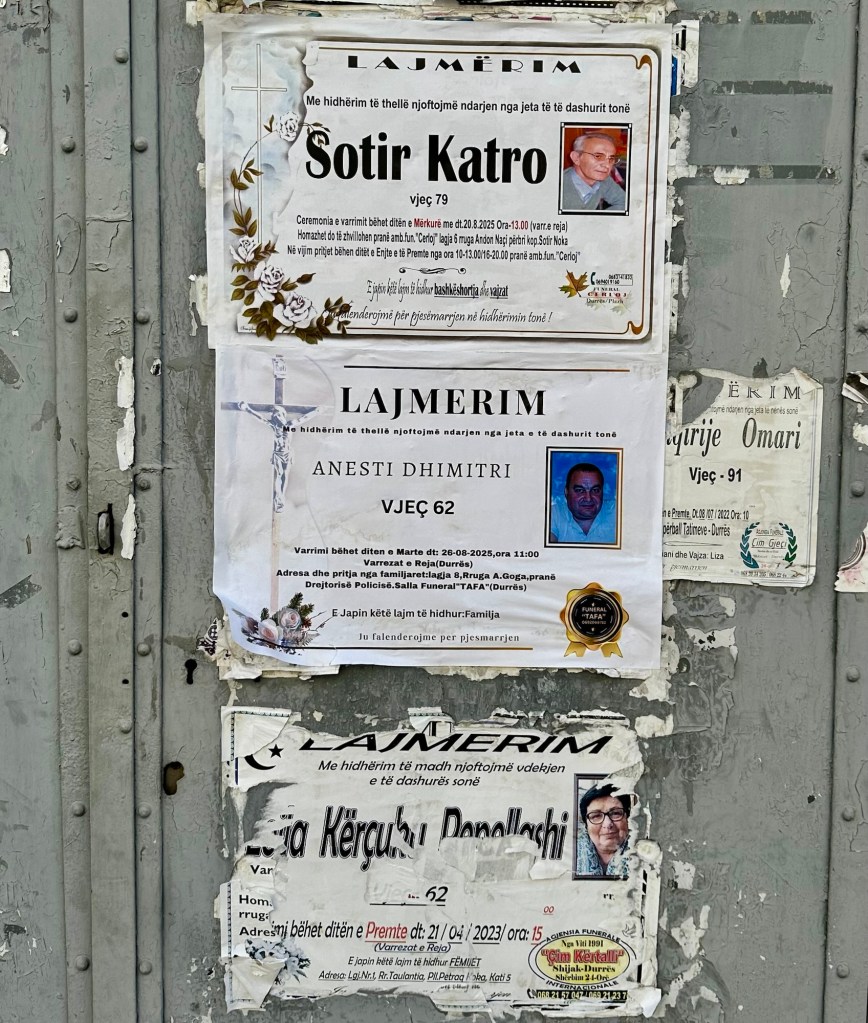
We’ve seen these death notices throughout our travels in the Balkans and now in Italy.

Gjakovë, Kosovo

Across the region, families place notices about their departed loved ones on public walls and elsewhere. The posters typically include a photo of the deceased and facts such as their age and next of kin, along with funeral plans. In other words, much like a death notice or brief obituary in the United States.

Mostar, Bosnia and Herzegovina

However, the posters are much more public than a typical American notification. They’re a quick way to alert neighbors who may not be connected online or read a newspaper.

As the comedian George Burns famously said, “I get up every morning, read the obituary page. If my name’s not there, I have breakfast.”

Durrës, Albania

I’ve found something comforting in how this tradition is being maintained, in both Christian and Muslim communities here, while our own methods of announcing deaths evolve rapidly. Published obituaries in local U.S. papers have given way to Legacy.com, Facebook memorials, e-mail chains and other online systems. Social media is now the first place we learn of many deaths. The notifications themselves may be less formal, more personal, even funny.

Bari, Italy

I didn’t expect to spend time thinking about death customs during this trip but the posters are omnipresent. As someone who publishes almost exclusively online these days, I like how these posters brave the elements and slowly decay, like death itself.

When I’m back home in North Carolina and taking my daily walks, I’ll miss seeing them.

Naples, Italy

Top photo: Naples