Magical Kathmandu

Kathmandu is vastly more crowded, polluted and traffic-jammed than when I lived here during my second year as a Peace Corps Volunteer in the late 1970s.

And yet, it remains magical, at least to me.

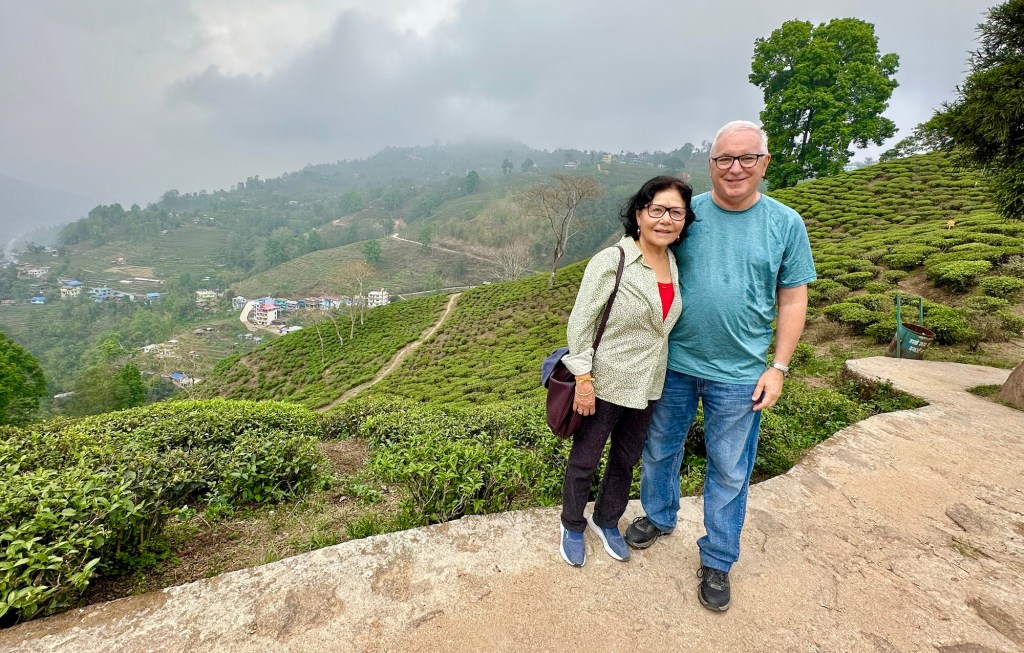
Champa and I have had a busy week here following our recent road trip to some of Nepal’s less-visited places. We’re leaving again on Sunday for her hometown, Ilam, in Nepal’s eastern tea-growing region.

While we’ve been in Kathmandu, we’ve been revisiting some of the city’s iconic sights, like the Bodhanath Stupa, above two photos.

We’ve explored new places for us, like the Changu Narayan temple in Bhaktapur, above.

We’ve been visiting with family and friends, such as the Shresthas, who gave us an incredibly warm welcome and dinner.

We’ve met up with friends and family from back home who are also in Nepal now, such as Sarla and Sudhir from Virginia, top photo, and Steve and Muna from Vermont, bottom.

We had tea with our friends Anne and Raju, who once lived in Boston but now make their home in Nepal, something we’ve been thinking about on a shorter-term basis while our own country is so unsettled.

We visited an acupressure doctor, who treated both of us.

We had a great conversation with the director of Peace Corps Nepal, who brought us up to date on their programs and challenges.

Best of all, we’ve enjoyed hanging out at the home of our nephew Shankar and his wife Bindu, who’ve taken very good care of us. That’s their children Senchhen and Lajesha, bottom photo, playing a card game we brought from home.

My week ended with a surprise birthday dinner at a beautiful restaurant outside Bhaktapur. It was a fitting end to our week in a city that still holds magic for me. I’m always happy to return.

Elsewhere in Nepal

First-time travelers to Nepal typically visit the magnificent temples and other treasures of the Kathmandu Valley. If they’re adventurous and have the time, they may also go trekking near Mount Everest or someplace else. 

That’s what I did back in 1975 when I first discovered this magical country. I fell in love with Nepal, even before I met Champa, and I remain smitten with it a half-century later. 

We’ve returned here many times but have usually been so busy visiting our family that we didn’t explore much beyond the tourist trail. 

Until now. 

We just returned from a memorable road trip to several places we’d long been hoping to see: a remote valley unlike the rest of Nepal, a picturesque town atop a mountain and the homeland of the king who unified Nepal. 

We enjoyed all three places — Mustang, Bandipur and Gorkha — as well as our stop in Pokhara, a more familiar destination famous for its beautiful lake and snow-covered peaks. 

If you’re considering a trip to Nepal and want something different from the usual itinerary, you might consider a similar trip. We did ours in five busy days with a private jeep, traveling with our nephew, Shankar, and his wife, Bindu. They hired our driver but you could arrange something similar with a local travel agency. 

Mustang is a distinctive region of stark landscapes and traditional culture. Parts of it were closed to foreigners until recently and permits are still required to visit (although easy to obtain). We stayed in the main town of Jomsom, home of the Thakali people. Apples grow in many of its fields and its stone houses are adorned with prayer flags. We gazed out of our hotel window to see snowy peaks and small planes landing across the street at a tiny airport. 

Mustang is best known for Muktinath, a temple and pilgrimage site for both Buddhists and Hindus. Champa and Bindu visited it while I remained in Jomsom with Shankar since I wasn’t feeling well that day. I was sorry to miss it but still happy to finally see Mustang, which was so mysterious when I first came to Nepal. 

Bandipur, our next stop, was familiar to me since I did my practice teaching there during my Peace Corps training in 1977. I remembered it as being spectacularly beautiful — and it remains so, although much more developed. 

Bandipur is a traditional Newari village built atop a small mountain. Back when I lived there, the usual way to reach it was by climbing a long series of stone steps. Now you can drive up or take a cable car, which we rode for fun. Cars are banned in the town center, which has a growing number of souvenir shops and small hotels catering to tourists who have begun discovering this charming escape from Kathmandu’s traffic and pollution. 

We stayed in a lovely hotel — two private rooms with five dinners and breakfasts for $68 — and the owner was amazed that I’d taught there so many years earlier. He told some friends and the next morning we were joined at breakfast by one of my former fellow teachers and his wife, who’d worked with the Peace Corps. That’s Bidya Prasad Shrestha and Laxmi Shrestha in the photo with us. Amazing. 

Gorkha is a regional center best known as the birthplace of Nepal’s unifier, King Prithvi Narayan Shah. He’s a bit like George Washington in our country and lived at roughly the same time. Gorkha also lends its name to the Gurkha soldiers, who serve in other countries and are known worldwide for their bravery.

We only spent a brief time there, mainly to climb up to the Gorkha Durbar, a 16th-century palace featuring both monkeys and traditional architecture. Nearby is the Manakamana Temple, which we’d visited previously and is a great place to stop and visit via cable car while driving between Kathmandu and Pokhara. 

Pokhara’s tourist crowds are bigger than ever, with hotels, restaurants, shops and travel agencies filling the streets near the famous “fish tail” mountain and lake. Nonetheless, we were happy to return. We strolled beside the lake and enjoyed dinner at one of the many outdoor restaurants along the shore. 

When the rhododendrons are blooming, the lake is shimmering and the famous mountains appear — Annapurna, Dhaulagiri and others — few places on Earth are more stunning than Pokhara. 

We returned to Kathmandu just in time to celebrate Nepali New Year. We’ll be visiting with several friends and family this week and will then head east to Champa’s hometown, Ilam. From there we’ll drive through the tea gardens and mountains to Samalbung, the small village where we’ve been helping to build a new school with generous support from many Not Exactly Retired readers. 

For now, we’re savoring our road trip to some of Nepal’s less-visited places. We’re very glad we finally made it to Mustang, Bandipur and Gorkha — three destinations that I hope others will discover, too. 

Sri Lanka Video

Video highlights of a two-week trip to some of Sri Lanka’s most iconic spots. Also available on YouTube at: https://youtu.be/aabX80myrCY

Talking Trash

We’d barely arrived in Sri Lanka a few days ago when I came across a fascinating example of something I discuss often on this blog: older Americans who are looking beyond traditional ideals of retirement to redefine their lives in compelling ways.

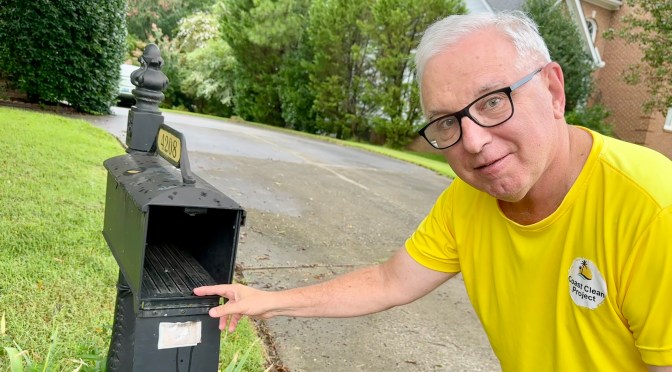
I met Al Sunday at the guest house where Champa and I have been staying near Sri Lanka’s capital, Colombo. He’s a retired military helicopter pilot who served in Iraq and elsewhere. He visited Sri Lanka a year and a half ago and fell in love with the country and its people. 

While strolling the local beach in Negombo, he began picking up trash. He returned the next day and picked up more, then more. People began helping him. They installed trash cans. They teamed up with the local tourist board and reached out to national officials. The beach got cleaner. 

“I’ve been coming here for 15 years and the beach is the cleanest I’ve ever seen,” I heard another guest, Dennis, above left, tell Al. 

Recently approved for Sri Lankan residency, Al explains that “we wear these ridiculous, bodacious yellow T-shirts and people see what we’re doing.” His whimsical retirement effort has become a small local movement.

Al still makes time to work as a dive instructor, travel, be a father to four adult children and return regularly to a cabin in western Maryland. But his Coast Clean project is now central to his identity, the highlight of a simple foreign life he can afford with a military pension and other resources.

“How much money do you really need?” he asks. “A lot of my friends say they wish they could do what I’m doing but they have too much stuff. Well, the old saying is true. You can own things or they can own you.

“It’s really not that hard to make a change like this if you just jump in. You can start with baby steps.”

I was impressed by Al’s project, which you can follow on Instagram, and even more by his example of grabbing life during this “not exactly retired” phase that millions of us are trying to figure out. At a moment when I’ve been feeling unmoored by what’s happening back home, Al Sunday reminded me that we can still redirect our own lives, pursue adventure and try to help others. 

It was something I needed to hear, a welcome lesson at Sunday’s school. I came to Sri Lanka and heard the best kind of trash talking.


Subscribe to Not Exactly Retired. It’s free.

Come to the Cabaret

I’ve wondered lately whether I’m like the emcee in the musical Cabaret, amusing myself as darkness spreads across the land.

You probably remember the emcee. He kept singing and leering in a Berlin nightclub as Hitler rose to power, refusing to recognize, much less confront, the nightmare unfolding around him. He distracted his patrons from paying attention to the chaos outside the door. But in the end, there was no escape. The deluge came and they were all swept away,

Following this past November’s election, Champa and I anticipated the nightmare we’d soon be seeing in America. Our strategy for coping, as I wrote previously, was to spend as much time as possible outside the country. 

Soon after the election, we departed for nearly two months in Australia and New Zealand. A few weeks ago we returned home to see our family and take care of some business — doctor’s visits, jury duty and the like. But now we’re planning to leave again, to Nepal and other countries.

Eddie Redmayne in the recent Broadway revival

After that we’ll return home again, but not for long. Just over a month has passed since the inauguration, although it feels much longer. We still have nearly four years to fill.

I don’t regret our decision and don’t plan to change it, at least not yet. I simply don’t have the energy to feel constant outrage. Living abroad gives me distance and perspective. Moreover, from a strategic standpoint, the best thing now may be to wait and let the American people see the consequences of their choice, as devastating as these are proving to be. Of course, that’s easier for me to say than it is for a fired federal employee or a Ukrainian soldier.

Alan Cumming portrays the Cabaret emcee

As I’ve discovered, there’s actually no escaping what’s happening, even far from home. When we were in New Zealand, some Canadians asked me why our president was so hostile to a long-time friend. Australians said they were nervous about U.S. tariff policy and anticipated closer trade with China. A family from Mexico wondered whether they’d be able to visit the United States again. More recently, our friends in Moldova have been shocked by the abrupt shift in U.S. policy towards their neighbor, Ukraine.

Since we returned home, just a week after the inauguration, I’ve witnessed a relentless attack on things I hold dear — justice, democracy, diversity and more. I devoted much of my career to science, higher education and foreign assistance. Now all of these things are on the ropes. Fellow former Peace Corps Volunteers who pursued careers with USAID have had their lives upended. Scientists I know are deeply concerned about their funding. The list goes on and on.

And me? I’ve been researching travel itineraries in Sri Lanka. 

Taylor Mac in the 2013 PlayMakers production

The juxtaposition makes me uneasy. I don’t want to be the cabaret emcee saying: “The world keeps going round and round, but it doesn’t affect me.” It does affect me and many others, most of whom lack the flexibility and resources to leave. Going abroad for months at a time is hardly the same as performing at a sleazy Berlin nightclub, but it’s also a far cry from manning the barricades.

I keep hoping more of my fellow Americans will finally wake up and political options will become more promising. In the meantime, I’m doing my best to focus on things I can actually change. I’m volunteering locally with several groups. I’m finding joy with family, friends, my community and projects like the school in Nepal we’ve been helping to build, which we’ll be dedicating during our upcoming trip. I’m traveling as much as I can before I get too old, especially while things are so grim at home.

I wish I had a better plan right now, but I don’t. I wish things were different, but they’re not. I wish I could turn off the song in my head, but I can’t. It keeps playing: What good is sitting alone in your room? Come hear the music play. Life is a cabaret, old chum. Come to the cabaret.”

Top photo: Joel Grey as the emcee in the original production of Cabaret.

Subscribe to Not Exactly Retired. It’s free!

Thank You Donors

The children of Samalbung, Nepal, will soon have a beautiful new school, thanks in part to the generosity of Not Exactly Retired‘s readers.

Nearly 100 people have contributed to the project we announced in May to help build the school in a remote village of eastern Nepal. It will serve about 125 students — mostly girls, mostly from indigenous groups. Our previous announcement has more details.

Readers have donated nearly $23,000 through our GoFundMe account and directly to me. Together with funds raised by the local community, which is also helping with the construction, this has covered nearly half of the total budget. Champa and I are paying the rest.

The school should be ready in late April, in time for Nepal’s new school year. We plan to attend the dedication ceremony and will share video and photos of the event.

We will bring with us a sign thanking all of the donors by name, as shown below. If I have overlooked or listed anyone incorrectly, please let me know by Friday, February 21, so I have enough time to make corrections before ordering the sign. If you want to add your name to the sign, we still welcome donations, which will be used to enhance the school and buy much-needed classroom supplies. You can donate directly to me or through the GoFundMe site — again, by February 21, please. We’ll make the final list public.

We also welcome additional donations from previous donors. No matter when you donate, or how much, the school’s teachers, students and families are deeply grateful for your support. At a moment when the U.S. government is turning its back on foreign assistance, you have made the opposite choice — to open your hearts.

Champa and I join the Samalbung community in saying dhanyabad — thank you! — to all of you.


Thanks to:

Anita Adhikary
Cheryl Arroyo
Jay and Celine Barker
Elia Ben-Ari
Amy Blackwell
Evan Burness and Katie Lindquist
Linda Carlson and Larry Himelfarb
Jennifer Chow
Nancy and Joel Collamer
Thomas Corr
Phyllis and Jerry Crabb
Jill DeGroff
Deepa Dewan
Lokendra Dewan
Raj Bahadur Dewan
Joel Diringer
Kim Dixon
Doschinescu and Nanu Family
Debbie Durham
Scott and Diane Eblin
Benjamin Edwards
Bruce Fong and Virginia Lim
Jill Foster
David Fryer 
Robert B. Gerzoff
Christa Gibson
Ryan Gorczycki
Deborah and Simon Gregory
Bob Green
Kate Green
Mitch and Chiyoko Haas
Valerie Harden
Ruth Heuer
Katherine Hicks and Henry Rosenberg
Sally Hicks
Dwight Holmes
Rachel Holtzman
Wendy Hower
Juliana Collamer and Nick Hughes
Camille Jackson
Jonathan and Jamie Jarmul
Paul and Stephanie Jarmul
Ruth Jarmul and Irvin Rosenthal
Pukar and Rekha Joshi
Mariam El-Khouri
Christina Kohrt
Danielle and Steve Kohut
Peter Lange
Keith and Cheryl Lawrence
Priya Limbu
Sudhir and Sarla Mahara
Mariana Mari
Bernadette and Bob Marriott
Herbert V. McKnight
Chris McLeod
Geoffrey Mock
Larry and Judy Moneta
James Moore
Shashi Nembang and Peter Giaquinta
Dennis O’Shea
Steve and Lynn Olson
Lisa Orange
Joyce Pardon
John E. Paul
Deepak Prajapati
Stephanie Prausnitz
Kevin Quigley
Deepa Rai
Timothy and Crissy Ready
Rosalind Reid
Margaret Riley
Rachel Rosenthal and Yair Rosenberg
Rebecca Rosenthal and Adam Arenson
Sarah Rosenthal and Mark Broomfield
Patricia Ross
Jeannine Sato
Peggy Schaeffer
Manish Shrestha
Bob and Karen Simon
Bruce Simon and Betsy Hely
Beth and Cabell Smith
Susan Turner-Lowe
Melinda Vaughn
Jennifer Vega
Sue Kaminsky Vest
Ken and Nancy Warren
Rob Waters
Cindy Weinbaum and Mark Prausnitz
Anne Williams
Robert Wright
Vivekananthan Yatheepan
Merina Dewan Yolmu


New Zealand’s North

You may have seen New Zealand’s sports teams perform the haka before matches, facing their opponents with shouts, glares and bulging eyes.

We saw traditional Māori dances in person at the Te Puia cultural center in Rotorua, on New Zealand’s North Island. This 90-second video (also viewable at http://youtu.be/m5oKvlgeEjM) has some highlights:

The performance was touristy but fascinating, like the rest of the center, which features geysers, kiwis and diverse crafts produced by Māori artisans trained at an on-site school.

We learned about Māori culture throughout our visit to the North Island, just as we had on the South Island. For instance, the Museum of New Zealand Te Papa Tongarewa, in the capital city, Wellington, helped us appreciate the dazzling seamanship of the Polynesian settlers who arrived in the 1300s — centuries before Columbus or Magellan. It showed how they established a thriving society “discovered” by European settlers in the early 1800s.

At the Auckland Art Gallery, in New Zealand’s largest city, we admired portraits of Māori and other indigenous leaders, like the one you see of Tūhoto Arikiat. In Waitangi, we visited the site where Māori leaders and British officials signed a historic treaty in 1840, still recognized as a founding document of New Zealand.

We learned so much about the country during our bus trip, such as about the terrible Gallipoli campaign of World War One, where thousands of troops from New Zealand and other nations suffered and died. A stunning exhibit at the national museum captures the carnage.

At Riverdale Farm in Rotorua, we watched a show about New Zealand’s diverse varieties of sheep. At the Kauri Museum, we learned about the towering kauri forests that once covered much of New Zealand. In several locations, we learned how New Zealand was the first nation to allow women to vote — 27 years before the United States.

We also took a tour about the Wētā Workshop, which created the special effects for the Lord of the Rings trilogy and other movies, as well as for the Gallipoli exhibit. The photo shows me trying out a new look for myself at one of the tour’s interactive stations.

As with any trip. many of the most interesting sights were unplanned, like this sign at a McDonald’s, known locally as Macca’s, as it is in Australia.

We also happened to be in Auckland during its annual International Buskers Festival, which attracts performers from around the world. The photo shows Andy Spigola of Italy.

We visited countless places of natural beauty — lakes, mountains, geysers and more — challenged ourselves with jet boats and luge rides, and sampled the country’s famous Sauvignon Blancs and other wines.

We loved all of it — even more since we were far from the winter weather back home.

New Zealand isn’t a big country. It has just over 5 million people — less than a quarter of its sheep population. But it is filled with beauty, history and fun things to do. The next time I see a New Zealand team competing on television, I’ll be cheering for them, even if I tune in too late to see the haka dance.

Finding Our Tribe

You don’t have to be a Lord of the Rings fanatic to find your tribe in New Zealand.

We met some of the movie trilogy’s devoted tribe yesterday during a tour showing how Wētā Workshop created the special effects for director Peter Jackson.

But we’d already found our own tribe during the preceding 16 days, on a bus trip across New Zealand that connected us with others who share our passion for global travel. 

People like Ron, a retired banker from Toronto who has visited 81 countries and hopes to top 100 with upcoming trips to Bhutan, West Africa and Central Europe. 

Or Vickie, a teacher from Canberra, Australia, who fills her school breaks with trips around the world, from Cambodia to Europe. She’s even spent time in Moldova, where Champa and I served in the Peace Corps together. 

Or Eric and Jyleece , from western Canada, who will remain on the road for the next two months, adding to their extensive travels. 

We loved spending time and swapping stories with this group while exploring New Zealand on a Grand Pacific bus tour that began in Christchurch. We didn’t have to explain or justify to any of them why we feel so alive when we’re exploring new places.

Back home, by contrast, we sometimes feel like outliers. We’re not surrounded by people who share our passion. If you have a passion of your own, from romance novels to politics to sports, you probably enjoy being with your tribe, too.

Our tribe of world travelers gets energy from meeting different kinds of people and learning about new cultures. We feel that travel opens our eyes wider. It gives us new perspective on our lives back home. It adds to the happiness we get from family, friends and the rest of our “normal” lives. It fills every day with new experiences and memories.

To be sure, it’s not for everyone. Travel can be tiring and unsettling. Some people consider it a waste of time and money, preferring to stay home. Others limit their travel to familiar and safe destinations. Still others prefer to chill out at a resort, or gamble, or hike or shop. 

Of course, many people lack the means, freedom or mobility to travel at all, even if they want to. Champa and I traveled far less when we had young children, limited vacation time and future college bills. Even then, we recognized how fortunate we were to travel at all.

We respect that millions of people would rather play golf, watch football, garden or spend their time in ways other than travel. That’s their choice — but it’s not ours. 

In New Zealand, we’ve been reassured we’re not alone. We don’t usually travel with a group but were glad we made an exception this time. 

For instance, we met Dorothy, above, a Scottish woman who has visited every continent, including Antarctica. And Carolina from Perth, now in her eighties but still adding countries to a list that includes Afghanistan, Uganda and many others. 

Interacting with the Lord of the Rings tribe was fun, in other words, but we had found our own tribal partners and were sorry to leave them. 

The Rings character Gollum, whom we saw during the Wētā Workshop tour, might have described our emotions best: Spending time with fellow travelers was precious

A Kiwi Dozen

Champa and I are halfway through a tour of New Zealand, traveling by ferry yesterday from the South Island to the North Island. Here are a dozen images that illustrate some of what we’ve learned so far about this magical country.

For starters, there are unusual things to see and do here. As just one example, we took a boat from Te Anau to a remote cave entrance. There we boarded smaller boats in darkness to see glowing worms, which are more accurately described as maggots.

If you prefer adventurous activities, New Zealand is for you. We’ve seen bungee jumping, paragliding, trail biking and more, including this family luge ride down a mountain top in Queenstown, which we reached on the gondola shown at the top of this post. Our own biggest adventure was aboard a jet boat.

New Zealand’s biggest draw, of course, is its natural beauty, which is breathtaking. This shot is at Milford Sound, which is actually a fjord.

There’s abundant wildlife, too, such as these seals and a wide variety of birds.

New Zealand’s colonial heritage is obvious, such as at this boathouse in Christchurch that offers punting on the city’s Avon River.

Colonial architecture is also striking, such as at this railway station in Dunedin, a city with a resemblance to Edinburgh.

New Zealand embraces its history in many ways, as at this museum in Arrowtown that celebrates miners and others.

Much of the history is complicated. I’ve been impressed by New Zealand’s respect for its Māori origins, but tensions remain in that relationship. This photo is from Picton.

Antarctica looms surprisingly large on the South Island. Christchurch is the starting point for many Antarctic trips.

Christchurch is also notable as the location of devastating earthquakes in 2010 and 2011 from which it is still recovering. This local museum features chilling videos of survivors sharing their stories.

Finally, there are the beautiful vineyards. Wine has become a big business in New Zealand, which is now famous for Sauvignon Blanc, Pinot Noir and other varieties. These vineyards are in Blenheim.

This isn’t all we saw, of course, and we still have the North Island and its hobbits awaiting us on our trip, which we’re taking with an excellent local company. For now, I’ll bid you “Haere rā” — goodbye — and encourage you to enjoy some kiwi fruit and a glass of Marlborough white while we continue our exploration.

Subscribe to Not Exactly Retired. It’s free.

Momos Down Under

We’ve been eating our favorite snack food while traveling in Australia and New Zealand the past several weeks. 

It’s not chips, burgers or pizza, although these are plentiful. No, we’ve been eating momos — the Nepalese dumplings you see in the photo here.

In Sydney, we ate at The Momo Hub, then at Falcha Hall. As soon as we arrived in New Zealand, we ate at Kathmandu Mo:Mo in Christchurch, then at Mela in Dunedin and The Himalaya in Queenstown. 

If you’ve never tried momos, you don’t know what you’re missing. They’re delectable dumplings stuffed with flavorful ground meat or vegetables You buy them either steamed or fried, dip them in sauce and eat them with a fork or your fingers — one or two bites per momo. Our go-to order is a plate of 10 or 12 steamed chicken momos, which we share. 

Momos are ubiquitous in Nepal and have been gaining popularity elsewhere. You can find them in most U.S. cities. In India, some fast food chains now specialize in momos. I think it’s only a matter of time until momos become as common to the American food scene as tacos or ramen, which were considered exotic not so long ago. 

Here in Australia and New Zealand, which both have significant numbers of Nepalis, momo shops have also been a great place for us to meet people and learn about their lives. The above photo shows Champa with a Gurung family we met in Queenstown. The owner, Satya Thapa, is on the right. That’s him cooking in the next photo. 

The following photo shows a young woman who moved recently to Dunedin, on New Zealand’s South Island, to help her brother launch a Nepalese restaurant featuring momos. They were yummy. Like everyone else we met, she was surprised when I placed the order and chatted in Nepali, which I learned years ago while serving as a Peace Corps Volunteer in Nepal.

We’ve also been eating local foods, of course, as well as this region’s famous beer and wine. However, we did skip the kangaroo meat. 

I know it’s odd to write about Nepal’s national snack food while we’re touring Down Under but there’s never a bad time to eat or talk about momos. I’m dreaming of the day when someone opens a momo shop in our hometown of Durham, N.C.

For now, I’ve begun researching where to find the best momos when we arrive in Auckland in a few days. 

Subscribe to Not Exactly Retired. It’s free.

Join us on the journey.