Travel Planning

I love traveling; 81 countries so far. Another thing I love almost as much is the planning I do beforehand. For a research nerd like me, putting a trip together is half the fun.

People have asked me questions about this so, in this post, I want to discuss our planning process.

These students were among those who performed at the school dedication we attended in Nepal. Learn more and watch the video at https://notexactlyretired.com/2025/05/02/samalbungs-new-school/

How do you choose where to go?

After the 2024 election, Champa and I decided to spend more time outside the United States. We accelerated our travel plans and looked for ways to combine countries into longer trips. Earlier this year, for example, we needed to return to Nepal to dedicate the school we helped build there. We added Sri Lanka and Bhutan and also stopped in Dubai. When we visited the Balkans, we added Italy since it’s near Albania.

We pay attention to global seasons and weather patterns. So: Australia and Argentina during our winters; Alaska and Nova Scotia during our summers.

We combined a trip to Hungary with stops in Austria and Slovakia, traveling by train.

How do you research a destination?

The itineraries of established tour companies — such as Rick Steves, Friendly Planet and TourRadar — are good sources. So are local travel companies and guidebooks, which I borrow from our local library. We watch travel videos on YouTube and use Chat GPT.

Do you travel independently or in groups?

We prefer traveling on our own so we can go where we want, be flexible and save money. However, if want to visit lots of places quickly or have concerns about logistics or safety, we may join a group, as we did in the Balkans (Choose Balkans), South Africa (Friendly Planet), New Zealand (Grand Pacific Tours) and the Baltics (Baltics Tours). 
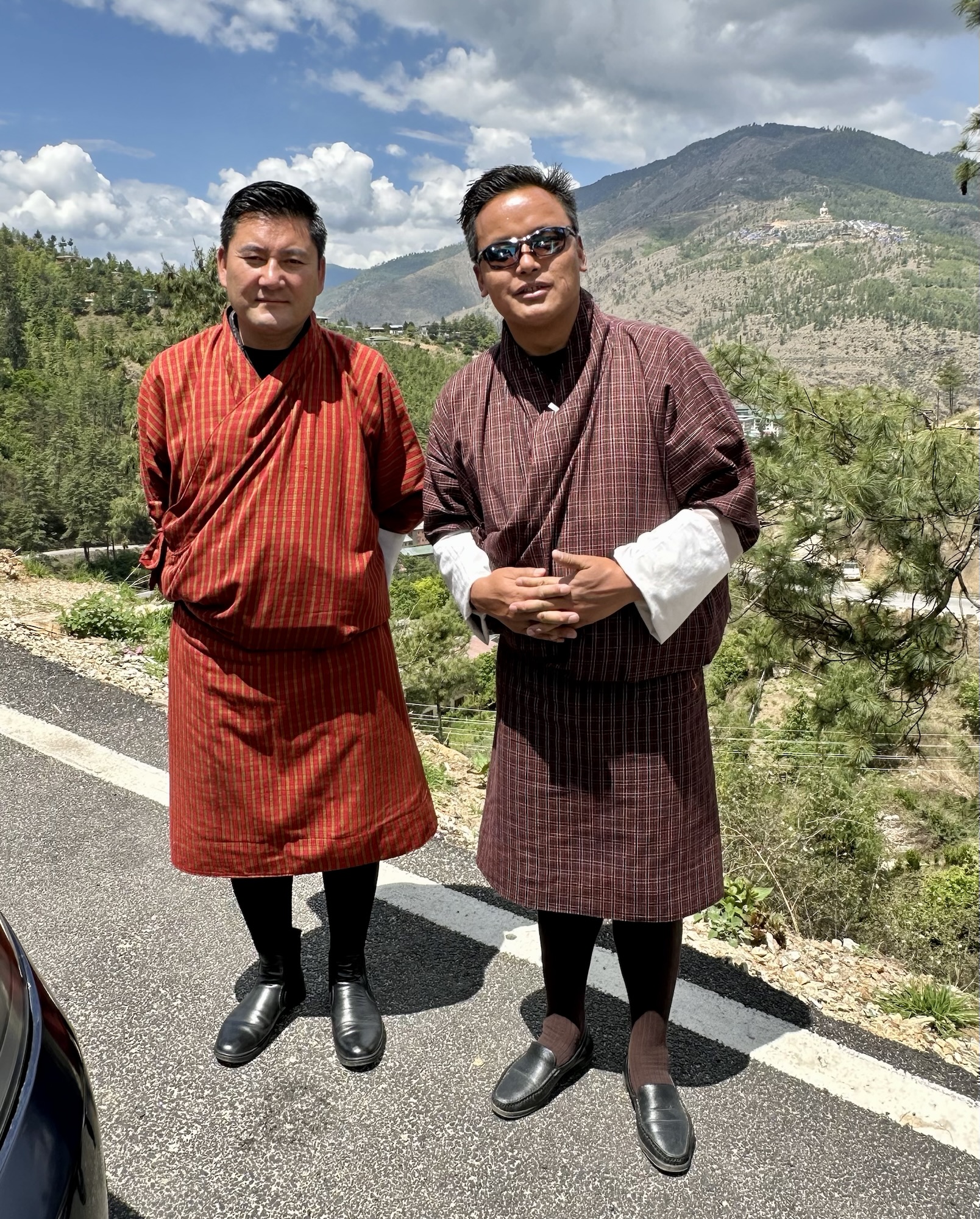
The Travel Guru company organized everything for our trip to Bhutan, including a driver and guide, which are required for foreign visitors

When we think we need help but don’t want to join a group, we may turn to local travel planners, which I find and review online. That’s what we did in Morocco (Best Travel), China (U Travel) and Southeast Asia (Authentic Asia). It’s cheaper to work directly with a local company instead of one based in the United States, which usually outsources the job anyway. Why pay extra for an intermediary?  I can often pay local companies through an international payment app such as Wise.

Do you stay in hotels? Airbnbs? Someplace else?

It depends. Airbnb is great, and we’ve used it often, especially for longer stays or when traveling with others. I use hotels.com, too. Booking.com has broadened beyond Europe and hotels to include more options. Often I’ll dig into Google searches, scroll past the sponsored links and find local listings that don’t have an international markup. I no longer stay in hostels, but they can be a good way to cut costs and meet fellow travelers.

At the Colosseum in Rome.

Ideally, a property is located within walking distance of the main attractions, which are often in historic neighborhoods. This may be pricier, so I often broaden my search to include places further away that are near metro stops. I also check whether Uber or other ride-sharing services are available. I prefer these to taxis, which sometimes cheat foreigners if there’s not a fixed price.

How do you handle reservations for tours and other activities?

I research these in advance. As I wrote in my last post, we often use free waking tours, as well as sites such as Viator and GetYourGuide for day trips. These sites also help me identify promising destinations that I may book more cheaply with a reputable local company. I avoid nonrefundable ticket purchases but make them when necessary, such as when we visited the Colosseum in Rome.

Bus station in Split, Croatia.

How do you move around within a country?

We traveled on Flix buses in Slovenia, Croatia and Italy, using their excellent app. In Italy, we rode high-speed trains, using the Trenitalia app. In big cities like Rome and Frankfurt, we used subways and buses. With their “Tap and Go” systems, we swiped our Visa cards instead of having to buy tickets. During recent trips we’ve also used ferries, funiculars, cable cars, ships, airplanes and a tuk-tuk in Sri Lanka.

In Sri Lanka

What kind of luggage do you use? How much do you pack?

We’ve evolved to just using carry-on bags, even for longer trips — Travelpro for me, Eagle Creek for Champa. Along with small daypacks, that’s all we need. We try to stay at an Airbnb with a washing machine at least every ten days. We’ve found it much easier to travel with smaller bags, which also avoid airplane luggage charges and delays.

Our packing varies according to our destination, as during this trip to Iceland.

How do you handle medications?

We always keep these with us. To reduce space, I buy smaller sizes and use baggies to hold pills.

How about phones?

We both have iPhones and a T-Mobile plan that includes international coverage. We bring two chargers with all of the adapter plugs and cables we need. We use one charger and keep the other in a separate bag as a backup.

Which credit cards do you use?

I’m currently using two Visa cards with cash-back benefits and free international transactions, and a Charles Schwab card that reimburses me for ATM withdrawals. I’ve previously used airline cards that offered generous sign-up miles. I know some people like loyalty programs for an airline or hotel chain, but I prefer more flexibility.

Ngoan Le of Authentic Asia, center, arranged our trip to Southeast Asia with our friends Mitch and Chiyoko. We met with Ngoan in Hanoi.

How do you and Champa divide this work?

Fortunately, I enjoy this process. She doesn’t. However, we discuss everything and she often has helpful suggestions, and we always travel easily together. Before we depart, I compile everything into a detailed document, which I print and put on our phones. 

Needless to say, we also value our time at home, to hang out with family and friends, handle any business, volunteer in the community and catch our breath.

We didn’t want the election to turn out this way but, for now, we’re determined to make the most of it. In fact, I’m planning on it.

Boarding the ferry in Durrës, Albania, with my carry-on bag and daypack for our overnight trip to Bari, Italy.

Thanks to my sister, Nancy Collamer, for suggesting this post. Nancy is a retirement coach who produces an excellent blog and newsletter.


Subscribe to Not Exactly Retired. It’s free!

Our ‘Free’ Local Guides

We traveled on our own but were guided by others during our 6-week trip in the Balkans and elsewhere, from which we just returned home.

In Slovenia, a local professor showed us around the capital, Ljubljana. That’s her, Nina, in the red shirt. 

In Zagreb, Croatia, we received an excellent tour from a lifelong resident, Mirjana, wearing the white hat.

We learned about Split, Croatia, from Roko, top photo, a guide whose family has lived there for generations. In Dubrovnik, our guide was Marko, who you see holding a notebook filled with maps and historical photos he showed us. Like Roko, he said Croatian guides work hard during the busy summer season, then relax during the winter.

As I’ve written previously, we’re fans of free walking tours, which have become available worldwide. We usually book them for our first full day in a city, to get oriented and learn about local history and culture. The guides work for tips, so are motivated to be enthusiastic and helpful. With few exceptions, the ones we’ve used have been excellent.

A group’s size is unpredictable. We were Nina’s only customers in Ljubljana, and also with our guide in Durrës, Albania, the port town where we spent a day before sailing overnight by ferry to Italy. After we landed in Bari and dropped off our bags, we got some fresh pasticciotto at a bakery, then took a walking tour that included more than twenty people.

We’ve also traveled with more traditional guides, such as Ana, an Albanian woman who led the two of us and five Brazilian guys during our driving tour of the Balkans. That’s her in the black outfit at a historic castle in Krujë, Albania.

Our final guide, in Frankfurt, was Haotong, who shared his perspective on growing up there in a Chinese immigrant family. In turn, Haotong was interested to learn about our Asian-American marriage and about my mother’s flight from Nazi Germany as a girl. Conversations like these are as memorable as any of the sights we see.

We’ve used several of the big companies that offer these tours, such as Guru Walk and Sandemans, as well as local companies. We research them online, find a tour that matches our schedule, then book a reservation. They respond with instructions about where to go and what to expect. They send reminders before the tour and, if necessary, let us cancel without a problem. That’s what we did in Naples, where we opted instead for a free Rick Steves audio tour I’d downloaded. We also used Rick’s excellent audio tours in Rome and Florence.

Free walking tours are helpful in another way, too. When we’re figuring out where to stay in a city, we check where the tours start, then seek lodging nearby. That puts us close to major attractions even if we don’t take the tour.

We always tip the guides and post good reviews. After all, they work hard and provide a great service. Are they really “free”? Well, not exactly, but when it comes to learning about the places we travel, “not exactly” is working just fine for us.

My Art Renaissance

I’m an art lover with a confession: a lot of art in museums bores me. Champa and I both love Impressionism, abstract art and other modern genres. But we’re less passionate about much of the art produced before that. We appreciate it but don’t love it.

When we visit great museums, we often stride through the pre-Columbian, Egyptian, African and other galleries, glance at the old European paintings and tapestries and maybe pause a little longer for Rubens, Velázquez and other great masters, especially Rembrandt.

But it’s only when we get to the Monets and Renoirs, to Pollock and Frankenthaler, that we slow down and really begin to savor. For better or worse, that’s the art that speaks to us. 

That is, until we came to Rome and Florence. 

Night view of the Duomo in Florence

We just spent much of the past week in museums, basilicas and other showcases of Renaissance art. I was familiar with Leonardo, Michelangelo and the other greats, of course, and not only because our two sons collected Ninja Turtles. I admired their work, but it didn’t especially move me. My appreciation was dutiful rather than passionate. 

I don’t know what caused my Renaissance switch to turn on after so many years but, unexpectedly, I found myself entranced by much of what I saw in Rome and Florence. 

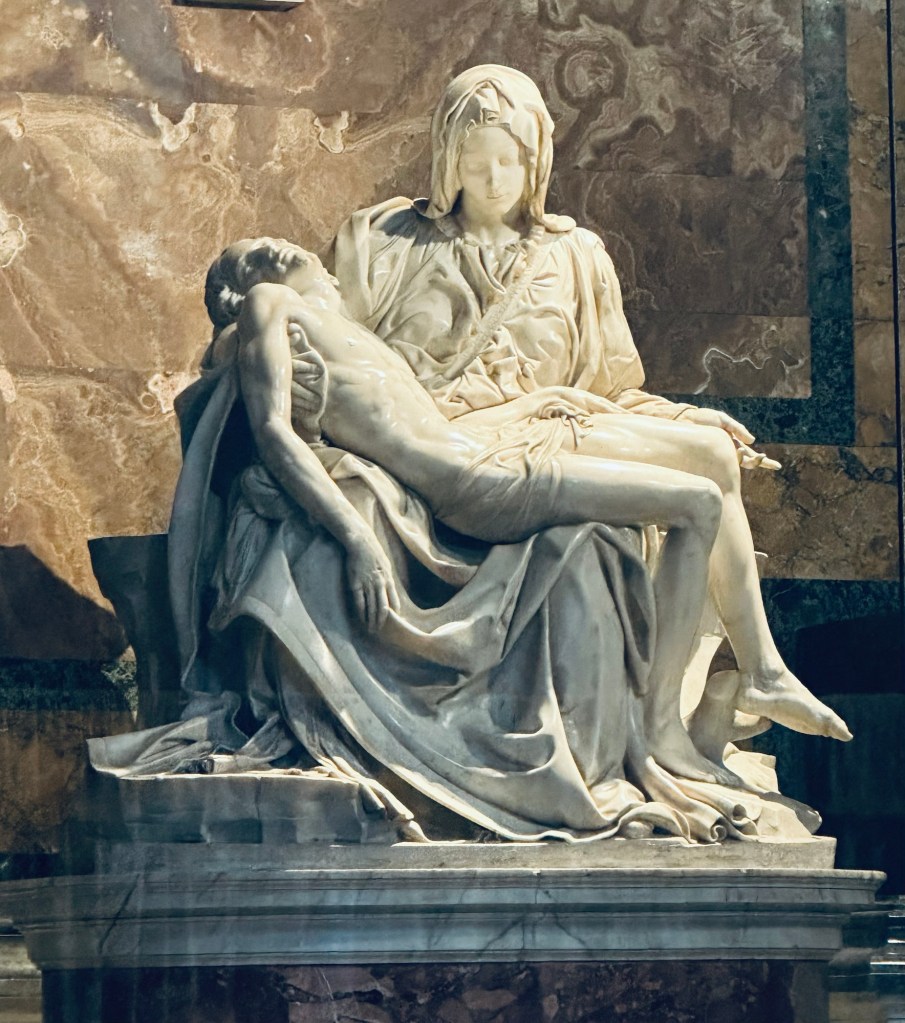
For example, here’s Michelangelo’s famous Pietà, which I first saw in my youth at the New York World’s Fair. Its composition and technical mastery are impeccable, to be sure, but what got to me when we viewed it in Saint Peter’s Basilica was its emotional and spiritual power. I could feel Mary’s grace and anguish. 

Michelangelo’s David, in Florence, also spoke to me. Its anatomical precision and monumental scale command attention, but what stayed with me was the look in David’s eye — his intelligence and determination to slay Goliath. David is my namesake and this has always been my favorite Bible story. Seeing this statue in person made him seem so much more real. 

So did this David statue at the Borghese Gallery in Rome. I was less familiar with this Baroque version by Bernini, but I spent a long time circling it, gazing at its details and feeling the drama of what young David was about to do. Just look at his coiled body, holding the stone that will kill the giant. Bernini demands that I engage emotionally. 

And so I did, not just with these three sculptures, but with many of the frescoes, paintings and other works we saw, some of which I’m sharing here.

Leonardo da Vinci, The Adoration of the Magi, Uffizi Gallery

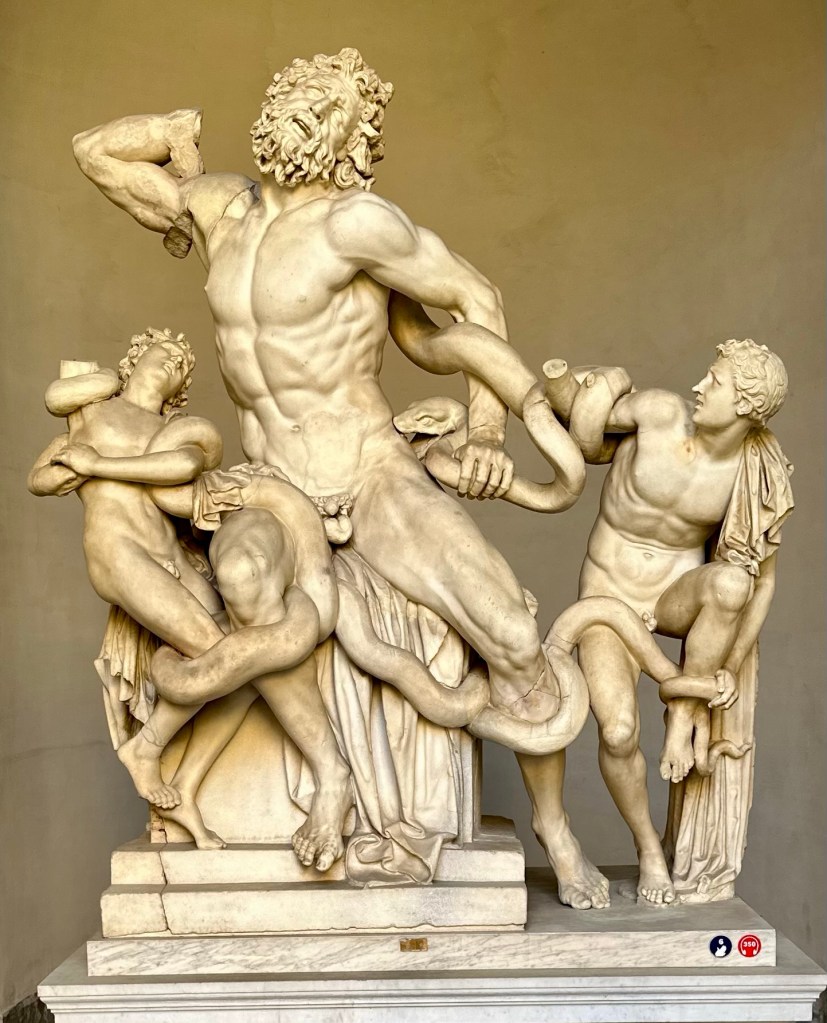
Laocoön and His Sons, Vatican Museum

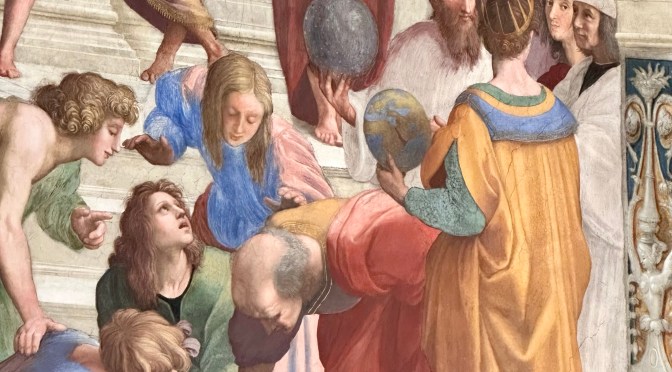
Raphael’s The School of Athens, Vatican Museum

Michelangelo’s Moses, San Pietro in Vincoli

Botticelli, The Birth of Venus, Uffizi Gallery

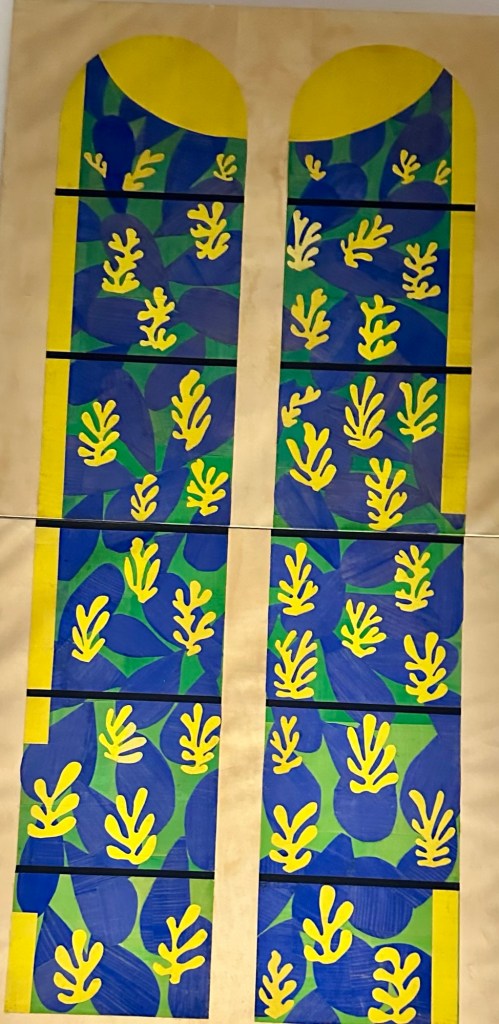
The Vatican Museum’s collection also included some work by newer artists I already loved, such as Matisse and Klee, below, and I was happy to see those, too. 

I’m sure some people will read this, shake their heads and consider me an idiot for taking so long to appreciate Renaissance art, or for not paying proper homage to other old masters, from Goya to Vermeer. I can hear the indignant cries that I’m paying short shrift to other artistic lineages, from China to the Incas. 

I get it. They’re right. But I can’t help what I like or what touches my heart. Art is so personal. I can recognize the greatness of, say, British landscape painters but still not be moved by them. I can’t explain why I prefer Georgia O’Keeffe’s landscapes or Monet’s water lilies, but I do and think they’re gorgeous. 

Monet, Water Lilies, MoMA, New York

Champa and I visit museums often during our travels and have recently steered towards the work we love most. When we went to Amsterdam a few years ago and had only one day to see art, we chose the Van Gogh Museum over the iconic Rijksmuseum. In Paris, we chose a return to the Orsay Museum, which is filled with Impressionists, over revisiting the Louvre. On a recent trip to New York, we went to MoMA and the Whitney instead of the Met.

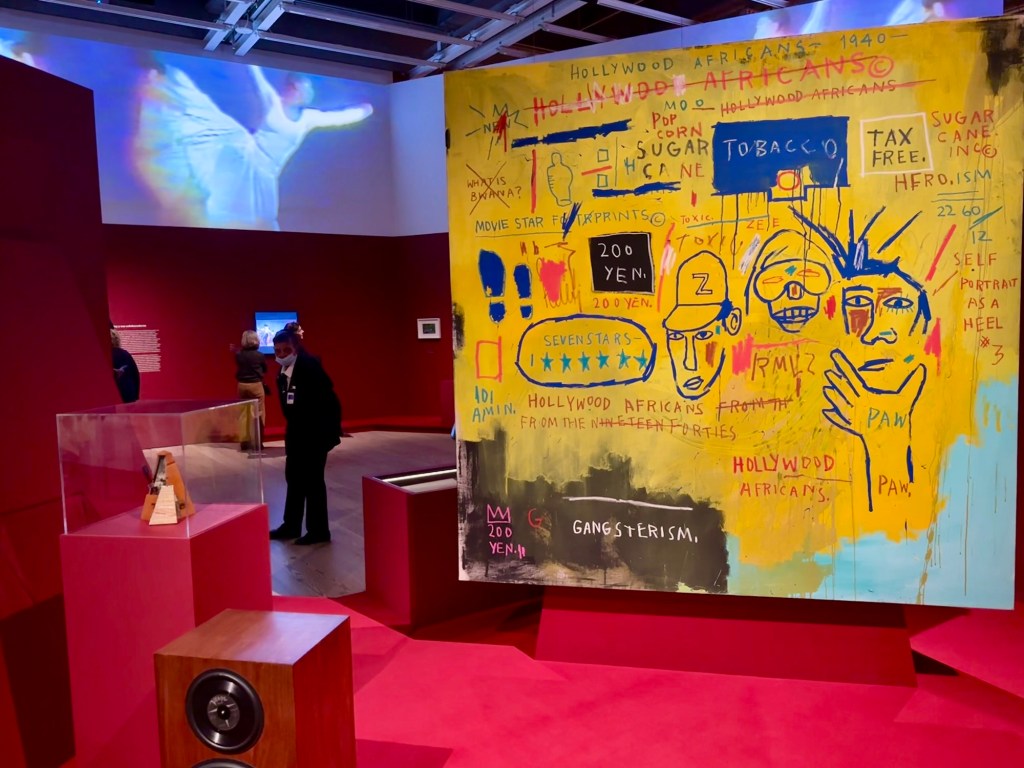
Jean-Michel Basquiat, Whitney Museum, New York

In Rome and Florence, though, we necessarily focused on Renaissance art, which led me to reevaluate how I felt about it. Maybe something similar would have happened if we’d immersed ourselves for a week in some other artistic style. Maybe not. I think it was the art itself that caused this rebirth, or renaissance, in my sensibilities. 

In any case, I now regret that I didn’t open my eyes sooner and acknowledge that my sons were smarter than me to idolize Michelangelo, Leonardo, Raphael and Donatello. I should have paid closer attention when they shouted Cowabunga!

Top image: Detail from Raphael’s The School of Athens, Vatican Museum