
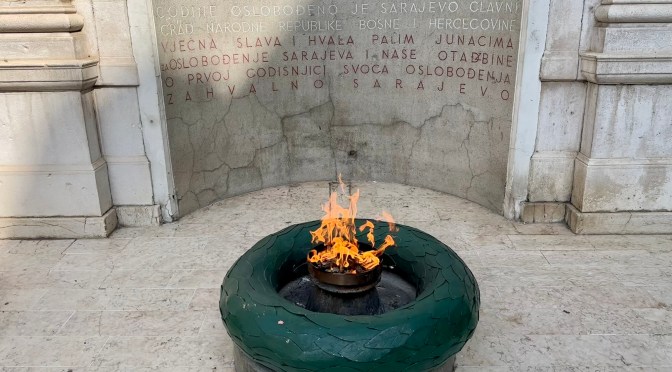
Decades before Russia invaded Ukraine, and before the latest conflicts in Gaza and Sudan, Bosnia commanded the world’s attention for the suffering it was enduring.
In the early 1990s, Serbian forces shot civilians, including women and children, in the streets of Sarajevo. They massacred thousands of Bosnian men and boys in Srebrenica. They killed and terrorized Bosnia until NATO finally bombed Serbia and brought the fighting to an end. Serbian leader Slobodan Milošević was later indicted for war crimes.

Bosnia, which is now part of the nation Bosnia Herzegovina, has largely recovered in the years since then. Its economy is growing. Foreign tourists are visiting, as we just did in Sarajevo and Mostar, home to the famous novi Stari Most bridge, above.
But Bosnia Herzegovina has not forgotten.
Many buildings in both Mostar and Sarajevo remain pockmarked with bullet holes.

Both cities have museums displaying the atrocities that occurred. Their street memorials honor the victims. Special exhibits document what happened. When you talk with people, almost everyone has a story to share.
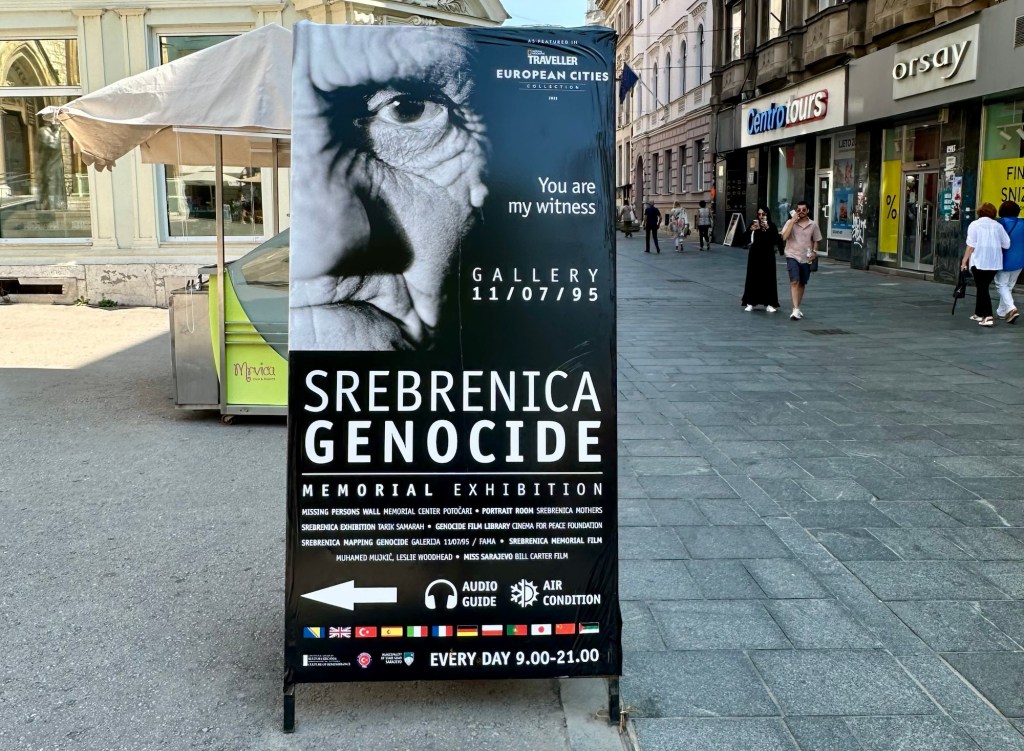

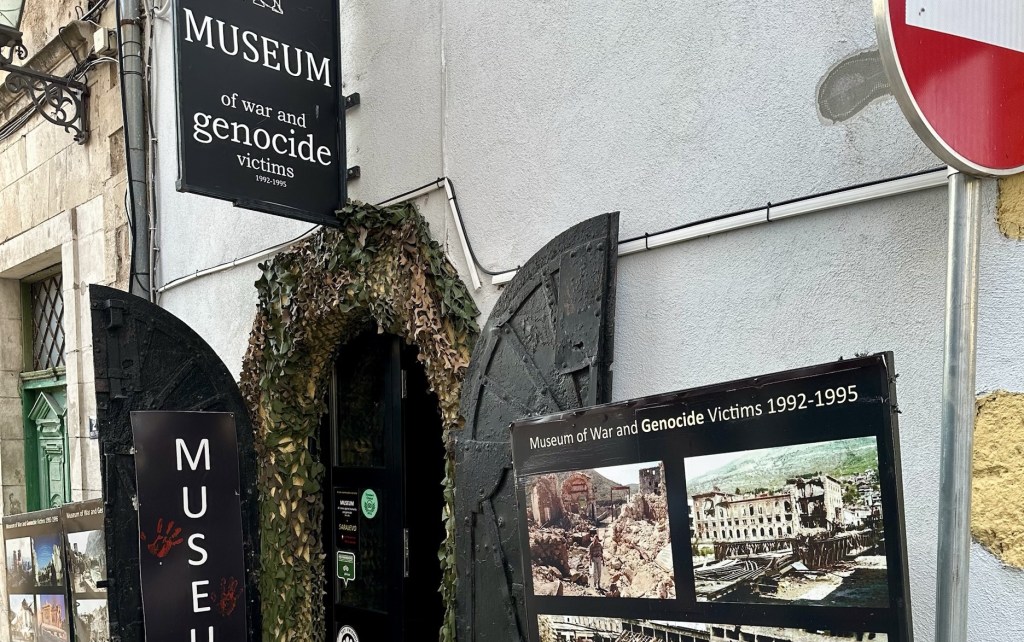
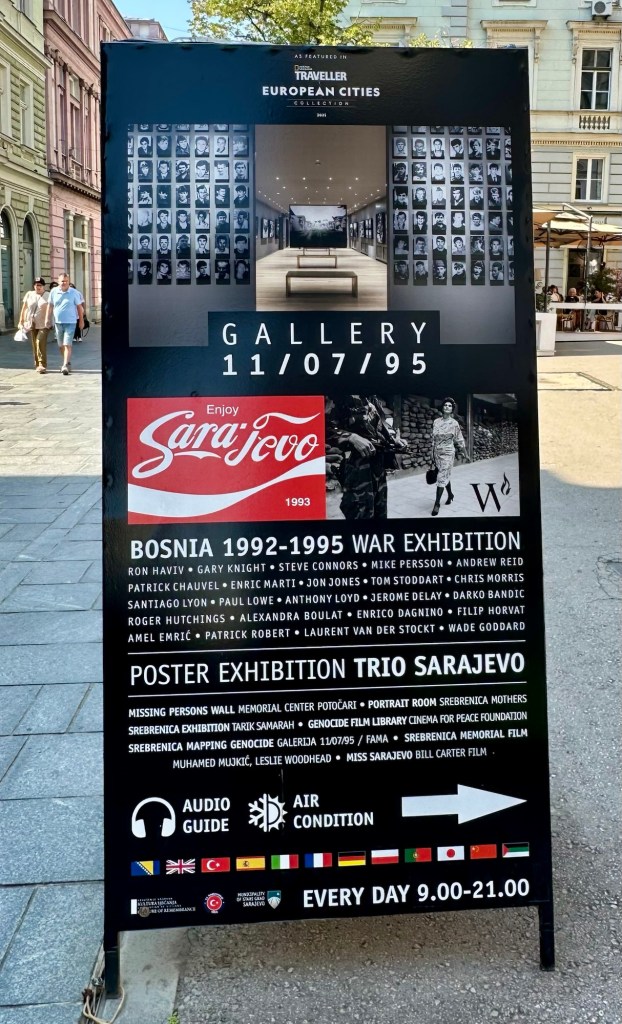
Yet they have tried to move on, like people we met in Cambodia or those I remember from my youth who escaped the Holocaust. Just like a child growing up amid war crimes today, they will never forget what they saw and endured yet they still have the rest of their lives ahead of them.
I was moved by these powerful reminders of Bosnia’s ordeal but was also struck by something else we saw in the city.
Sarajevo is also where a Bosnian Serb shot Archduke Franz Ferdinand and his wife in 1914, beside the Latin Bridge shown below. That’s the car the royal couple was riding. The assassination led to World War One and millions of senseless deaths, which in turn led to World War Two — all sparked on this street corner in Sarajevo.


Today the site is a tourist attraction, a curiosity rather than a raw wound. Visitors take selfies there. Nobody weeps. A century from now, maybe the same will be true at the memorials commemorating Bosnia’s conflict with Serbia, and perhaps for future generations in today’s war zones.
Or maybe not. Visiting Bosnia reminded me how war and genocide take a toll long after bodies are buried. Their pain endures for generations. Their grip is relentless.
Other nations and other conflicts have replaced Bosnia in our headlines today. But having just visited Bosnia, I know these new memories will persist long after the headlines fade.


 "Not Exactly Retired"
A very powerful story, David. I have always been confused by what “really” happened there in the 1990’s and why. I am afraid the pain is still very alive. I will be visiting Bosnia and the Boljanic Airfield in a few weeks. I have no idea what to expect. But I will be in good hands. Thanks for the early exposure!!
LikeLike