New Zealand’s North

You may have seen New Zealand’s sports teams perform the haka before matches, facing their opponents with shouts, glares and bulging eyes.

We saw traditional Māori dances in person at the Te Puia cultural center in Rotorua, on New Zealand’s North Island. This 90-second video (also viewable at http://youtu.be/m5oKvlgeEjM) has some highlights:

The performance was touristy but fascinating, like the rest of the center, which features geysers, kiwis and diverse crafts produced by Māori artisans trained at an on-site school.

We learned about Māori culture throughout our visit to the North Island, just as we had on the South Island. For instance, the Museum of New Zealand Te Papa Tongarewa, in the capital city, Wellington, helped us appreciate the dazzling seamanship of the Polynesian settlers who arrived in the 1300s — centuries before Columbus or Magellan. It showed how they established a thriving society “discovered” by European settlers in the early 1800s.

At the Auckland Art Gallery, in New Zealand’s largest city, we admired portraits of Māori and other indigenous leaders, like the one you see of Tūhoto Arikiat. In Waitangi, we visited the site where Māori leaders and British officials signed a historic treaty in 1840, still recognized as a founding document of New Zealand.

We learned so much about the country during our bus trip, such as about the terrible Gallipoli campaign of World War One, where thousands of troops from New Zealand and other nations suffered and died. A stunning exhibit at the national museum captures the carnage.

At Riverdale Farm in Rotorua, we watched a show about New Zealand’s diverse varieties of sheep. At the Kauri Museum, we learned about the towering kauri forests that once covered much of New Zealand. In several locations, we learned how New Zealand was the first nation to allow women to vote — 27 years before the United States.

We also took a tour about the Wētā Workshop, which created the special effects for the Lord of the Rings trilogy and other movies, as well as for the Gallipoli exhibit. The photo shows me trying out a new look for myself at one of the tour’s interactive stations.

As with any trip. many of the most interesting sights were unplanned, like this sign at a McDonald’s, known locally as Macca’s, as it is in Australia.

We also happened to be in Auckland during its annual International Buskers Festival, which attracts performers from around the world. The photo shows Andy Spigola of Italy.

We visited countless places of natural beauty — lakes, mountains, geysers and more — challenged ourselves with jet boats and luge rides, and sampled the country’s famous Sauvignon Blancs and other wines.

We loved all of it — even more since we were far from the winter weather back home.

New Zealand isn’t a big country. It has just over 5 million people — less than a quarter of its sheep population. But it is filled with beauty, history and fun things to do. The next time I see a New Zealand team competing on television, I’ll be cheering for them, even if I tune in too late to see the haka dance.

Finding Our Tribe

You don’t have to be a Lord of the Rings fanatic to find your tribe in New Zealand.

We met some of the movie trilogy’s devoted tribe yesterday during a tour showing how Wētā Workshop created the special effects for director Peter Jackson.

But we’d already found our own tribe during the preceding 16 days, on a bus trip across New Zealand that connected us with others who share our passion for global travel. 

People like Ron, a retired banker from Toronto who has visited 81 countries and hopes to top 100 with upcoming trips to Bhutan, West Africa and Central Europe. 

Or Vickie, a teacher from Canberra, Australia, who fills her school breaks with trips around the world, from Cambodia to Europe. She’s even spent time in Moldova, where Champa and I served in the Peace Corps together. 

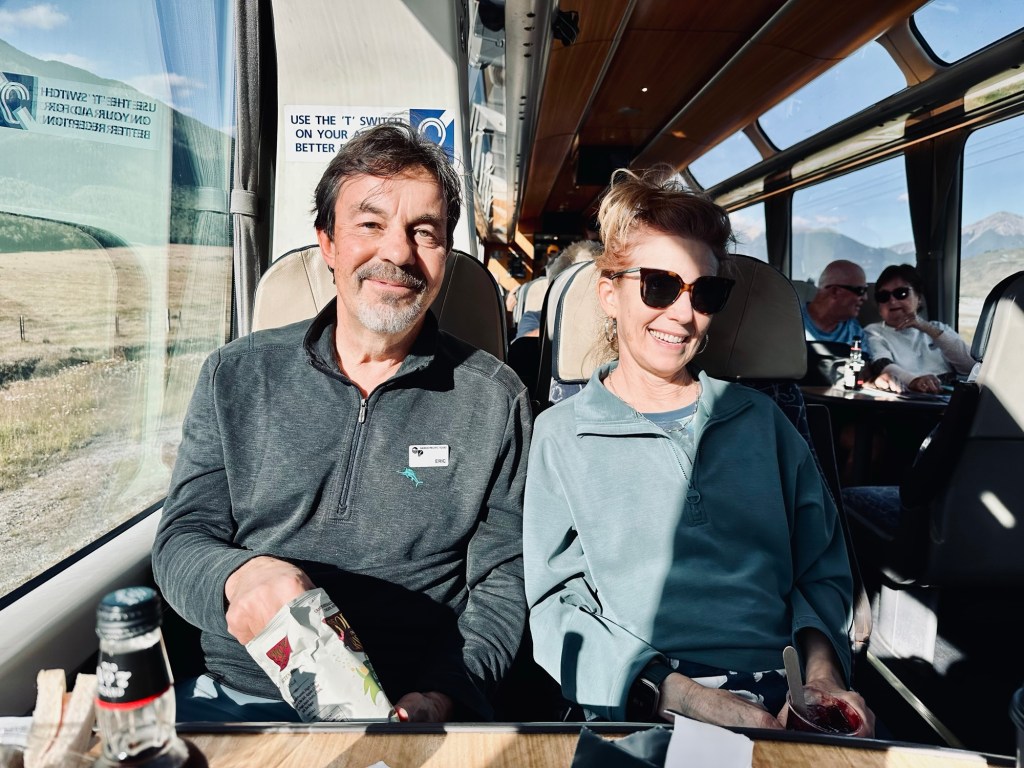
Or Eric and Jyleece , from western Canada, who will remain on the road for the next two months, adding to their extensive travels. 

We loved spending time and swapping stories with this group while exploring New Zealand on a Grand Pacific bus tour that began in Christchurch. We didn’t have to explain or justify to any of them why we feel so alive when we’re exploring new places.

Back home, by contrast, we sometimes feel like outliers. We’re not surrounded by people who share our passion. If you have a passion of your own, from romance novels to politics to sports, you probably enjoy being with your tribe, too.

Our tribe of world travelers gets energy from meeting different kinds of people and learning about new cultures. We feel that travel opens our eyes wider. It gives us new perspective on our lives back home. It adds to the happiness we get from family, friends and the rest of our “normal” lives. It fills every day with new experiences and memories.

To be sure, it’s not for everyone. Travel can be tiring and unsettling. Some people consider it a waste of time and money, preferring to stay home. Others limit their travel to familiar and safe destinations. Still others prefer to chill out at a resort, or gamble, or hike or shop. 

Of course, many people lack the means, freedom or mobility to travel at all, even if they want to. Champa and I traveled far less when we had young children, limited vacation time and future college bills. Even then, we recognized how fortunate we were to travel at all.

We respect that millions of people would rather play golf, watch football, garden or spend their time in ways other than travel. That’s their choice — but it’s not ours. 

In New Zealand, we’ve been reassured we’re not alone. We don’t usually travel with a group but were glad we made an exception this time. 

For instance, we met Dorothy, above, a Scottish woman who has visited every continent, including Antarctica. And Carolina from Perth, now in her eighties but still adding countries to a list that includes Afghanistan, Uganda and many others. 

Interacting with the Lord of the Rings tribe was fun, in other words, but we had found our own tribal partners and were sorry to leave them. 

The Rings character Gollum, whom we saw during the Wētā Workshop tour, might have described our emotions best: Spending time with fellow travelers was precious

A Kiwi Dozen

Champa and I are halfway through a tour of New Zealand, traveling by ferry yesterday from the South Island to the North Island. Here are a dozen images that illustrate some of what we’ve learned so far about this magical country.

For starters, there are unusual things to see and do here. As just one example, we took a boat from Te Anau to a remote cave entrance. There we boarded smaller boats in darkness to see glowing worms, which are more accurately described as maggots.

If you prefer adventurous activities, New Zealand is for you. We’ve seen bungee jumping, paragliding, trail biking and more, including this family luge ride down a mountain top in Queenstown, which we reached on the gondola shown at the top of this post. Our own biggest adventure was aboard a jet boat.

New Zealand’s biggest draw, of course, is its natural beauty, which is breathtaking. This shot is at Milford Sound, which is actually a fjord.

There’s abundant wildlife, too, such as these seals and a wide variety of birds.

New Zealand’s colonial heritage is obvious, such as at this boathouse in Christchurch that offers punting on the city’s Avon River.

Colonial architecture is also striking, such as at this railway station in Dunedin, a city with a resemblance to Edinburgh.

New Zealand embraces its history in many ways, as at this museum in Arrowtown that celebrates miners and others.

Much of the history is complicated. I’ve been impressed by New Zealand’s respect for its Māori origins, but tensions remain in that relationship. This photo is from Picton.

Antarctica looms surprisingly large on the South Island. Christchurch is the starting point for many Antarctic trips.

Christchurch is also notable as the location of devastating earthquakes in 2010 and 2011 from which it is still recovering. This local museum features chilling videos of survivors sharing their stories.

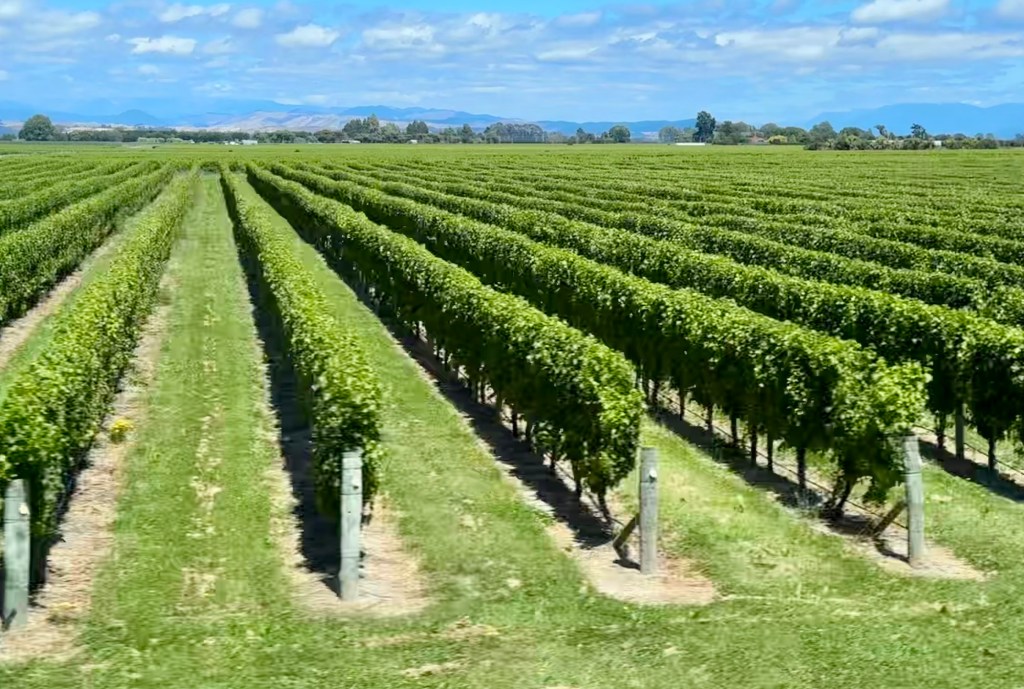
Finally, there are the beautiful vineyards. Wine has become a big business in New Zealand, which is now famous for Sauvignon Blanc, Pinot Noir and other varieties. These vineyards are in Blenheim.

This isn’t all we saw, of course, and we still have the North Island and its hobbits awaiting us on our trip, which we’re taking with an excellent local company. For now, I’ll bid you “Haere rā” — goodbye — and encourage you to enjoy some kiwi fruit and a glass of Marlborough white while we continue our exploration.

Subscribe to Not Exactly Retired. It’s free.

Momos Down Under

We’ve been eating our favorite snack food while traveling in Australia and New Zealand the past several weeks. 

It’s not chips, burgers or pizza, although these are plentiful. No, we’ve been eating momos — the Nepalese dumplings you see in the photo here.

In Sydney, we ate at The Momo Hub, then at Falcha Hall. As soon as we arrived in New Zealand, we ate at Kathmandu Mo:Mo in Christchurch, then at Mela in Dunedin and The Himalaya in Queenstown. 

If you’ve never tried momos, you don’t know what you’re missing. They’re delectable dumplings stuffed with flavorful ground meat or vegetables You buy them either steamed or fried, dip them in sauce and eat them with a fork or your fingers — one or two bites per momo. Our go-to order is a plate of 10 or 12 steamed chicken momos, which we share. 

Momos are ubiquitous in Nepal and have been gaining popularity elsewhere. You can find them in most U.S. cities. In India, some fast food chains now specialize in momos. I think it’s only a matter of time until momos become as common to the American food scene as tacos or ramen, which were considered exotic not so long ago. 

Here in Australia and New Zealand, which both have significant numbers of Nepalis, momo shops have also been a great place for us to meet people and learn about their lives. The above photo shows Champa with a Gurung family we met in Queenstown. The owner, Satya Thapa, is on the right. That’s him cooking in the next photo. 

The following photo shows a young woman who moved recently to Dunedin, on New Zealand’s South Island, to help her brother launch a Nepalese restaurant featuring momos. They were yummy. Like everyone else we met, she was surprised when I placed the order and chatted in Nepali, which I learned years ago while serving as a Peace Corps Volunteer in Nepal.

We’ve also been eating local foods, of course, as well as this region’s famous beer and wine. However, we did skip the kangaroo meat. 

I know it’s odd to write about Nepal’s national snack food while we’re touring Down Under but there’s never a bad time to eat or talk about momos. I’m dreaming of the day when someone opens a momo shop in our hometown of Durham, N.C.

For now, I’ve begun researching where to find the best momos when we arrive in Auckland in a few days. 

Subscribe to Not Exactly Retired. It’s free.

Scenic Sydney

I’ve visited some beautiful coastal cities — Rio de Janiero, Venice, San Francisco, Cape Town — but none captivated me like Sydney.

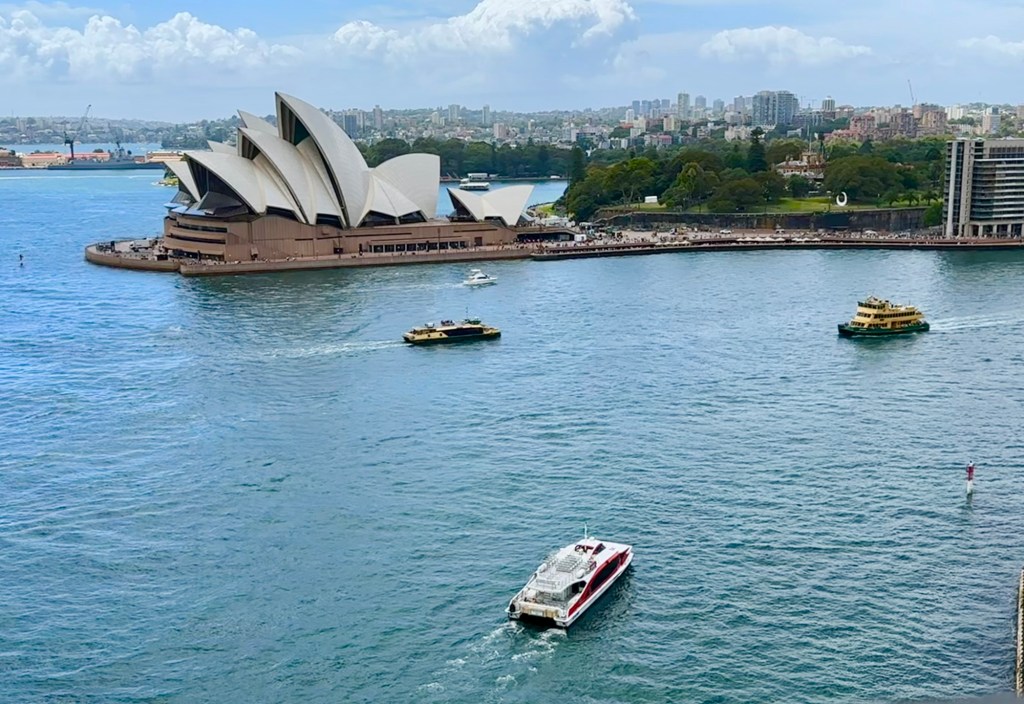
Its famous harbor, flanked by the iconic opera house and bridge, bustles with ferries and sailboats. Locals and tourists from across Asia and the world fill its shops and restaurants. Street performers, gardens, museums and other attractions compete for attention.

The Opera House seemingly changes shape depending on your vantage point.

We just spent nine days in Sydney and filled almost every hour with something interesting. Here are some highlights:

We met this koala at the Taronga Zoo, a quick ferry ride from the Circular Quay beside the Opera House.

A walk across the Harbour Bridge offers a great view of the city.

The Art Gallery of New South Wales has diverse collections in a distinctive setting.

The Sydney Barracks tell the stories of convicts who helped build Australia.

An extensive, easy-to-learn transit system uses ferries, trams, buses and trains.

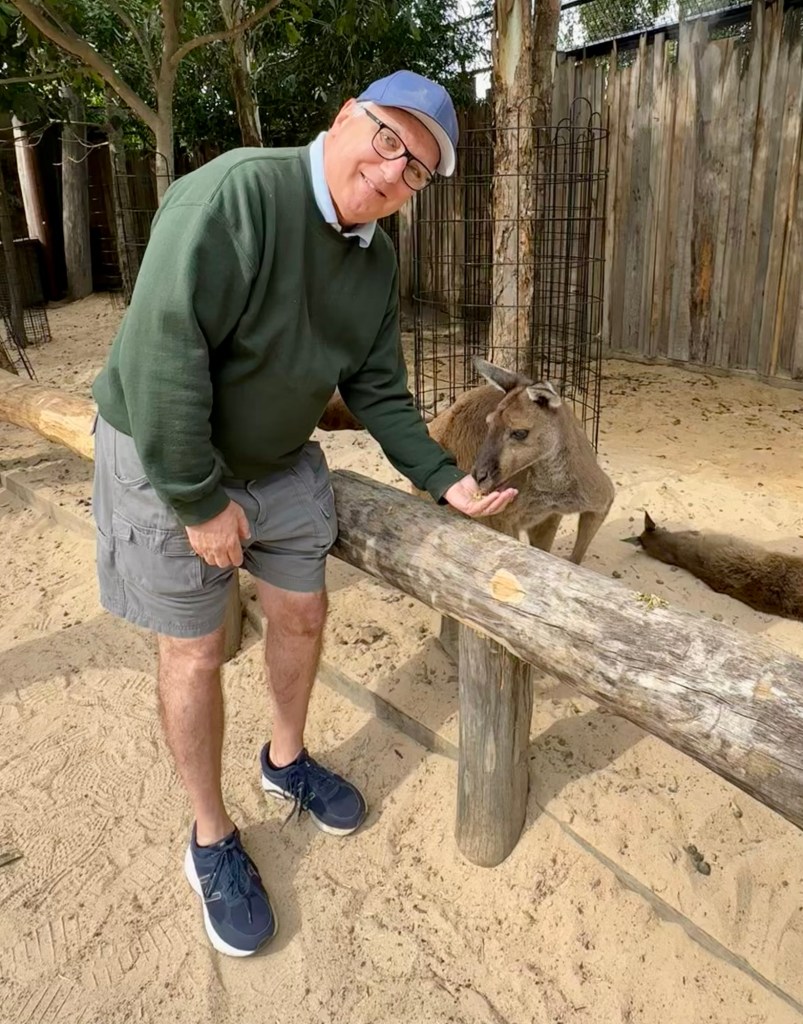
We fed kangaroos and met other residents of another zoo, the Sydney Zoo.

Manly has popular beaches and hiking trails. We traveled there by ferry.

Perhaps the most famous beach hike is the Bondi to Coogee Walk, where we saw swimmers, surfers, volleyball players, body builders and lots of people just enjoying the day.

This crowd was among the million people awaiting the start of Sydney’s famous New Year’s Eve fireworks.

We visited the Blue Mountains, where we saw the famous Three Sisters rock formation.

This concert of Beatles music rocked the Joan Sutherland Theatre at the Sydney Opera House.

Australia’s state libraries, like this one in Sydney, offer museum-quality exhibits.

The Museum of Contemporary Art is adjacent to the Circular Quay and The Rocks, the city’s oldest neighborhood.

Boats are everywhere in Sydney, including at this harbor near Watsons Bay, where we went hiking.

The Australian Museum offers an excellent introduction to the country’s natural history.

It took some adjusting (but only some) to celebrate the holiday season in a summer climate. This scene is at St. Mary’s Cathedral.

A highlight of our Sydney trip was visiting with Nepali relatives who now live there, including our nephew Manohar, with Rukshana.

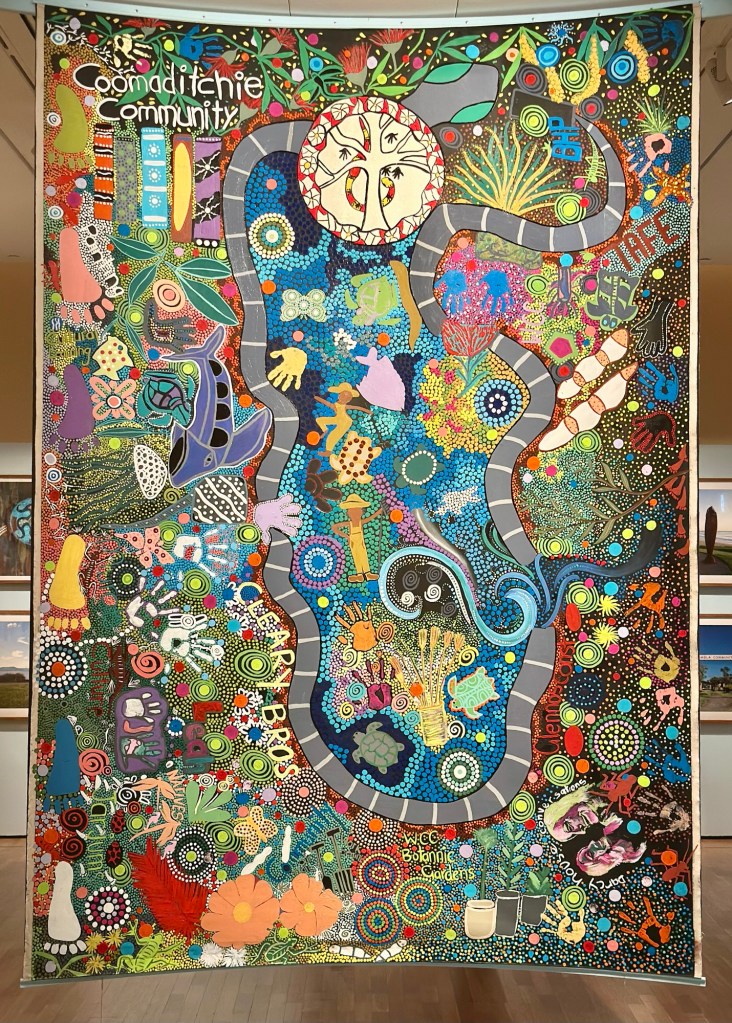
This wall hanging, like the image at the top of this post, is among the Museum of Sydney’s artwork from the Coomaditchie people.